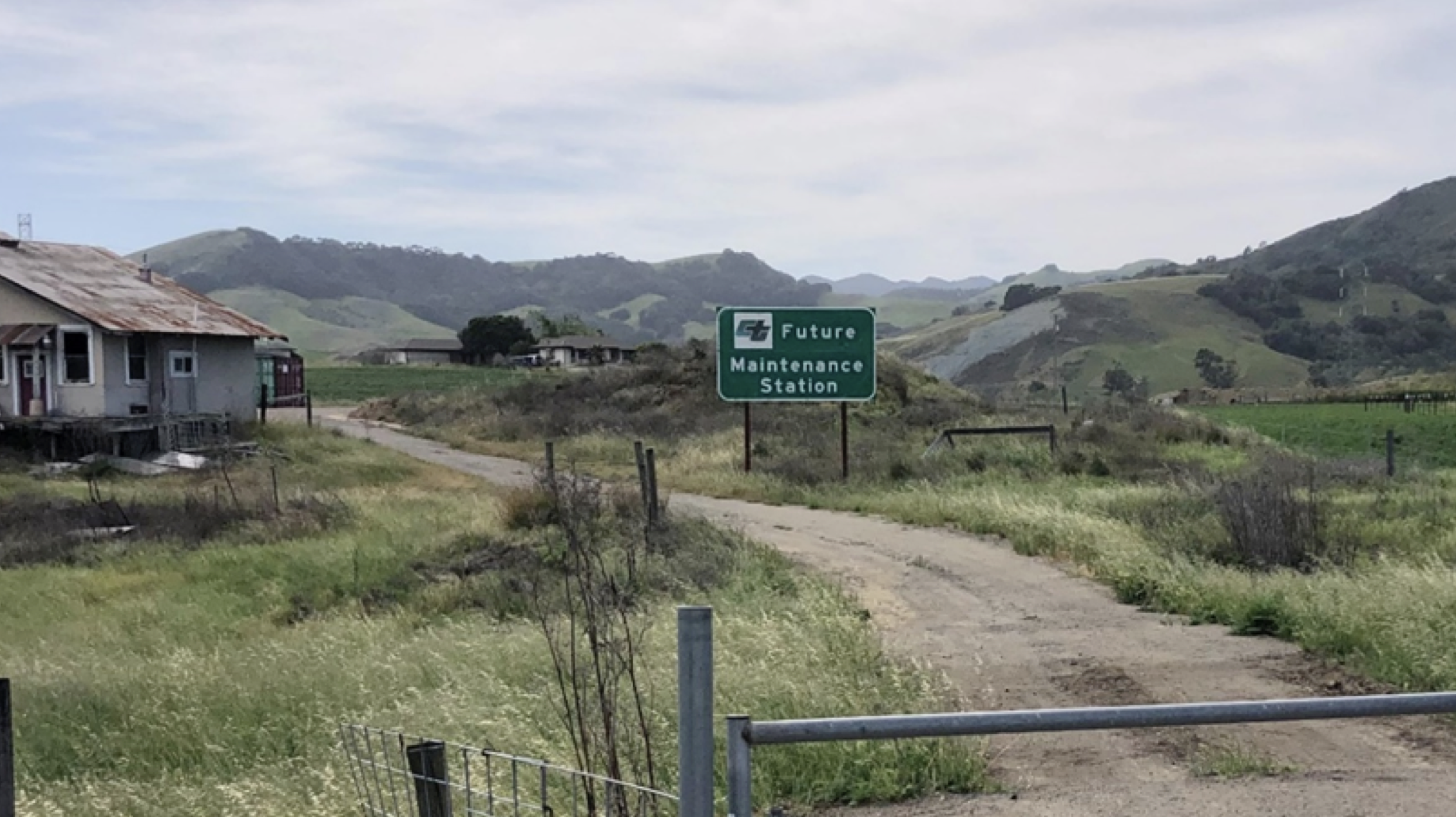
Caltrans is moving forward with plans to build and operate a new District 5 Maintenance Station and Equipment Shop on approximately 56.5 acres of state-owned land at 4485 Vachell Lane in San Luis Obispo County. The project will develop about 24 acres of the site, located south of Buckley Road, and will include new buildings, parking for staff and visitors, utility upgrades, and other site improvements. The site is near the Octagon Barn. This phase 1 does not include relocation and construction of a new District 5 office that could follow once funding is secured. This plan includes constructing new water and sewer utility infrastructure that will connect the facility to the existing City of San Luis Obispo systems. Construction will be completed in phases, allowing for a more efficient buildout that aligns with project scheduling, funding availability, and operational needs. One reason for the move, to decrease flood risk by relocating the Maintenance Station and Equipment Shop facilities outside or above potential flood zones says the EIR on the project.The 2024 EIR also pointed to the fact that the Current facilities are inadequate in size and function and do not meet the
needs for existing staff and equipment and do not meet seismic standards.Construction of the $55.5 million project is expected to begin this fall and be complete in fall 2028. First, the property will need to annexed into the city enabling the agency to hook up to city water. Once construction is complete and staff have transitioned to the new site, Caltrans will decommission the current Maintenance Station and Equipment Shop at 50 Higuera Street and 66 Madonna Road. Decommissioning will involve removing all equipment, materials, operations, and personnel from those facilities—but will not include the demolition or removal of existing buildings or structures. demolition or removal of existing buildings or structures.
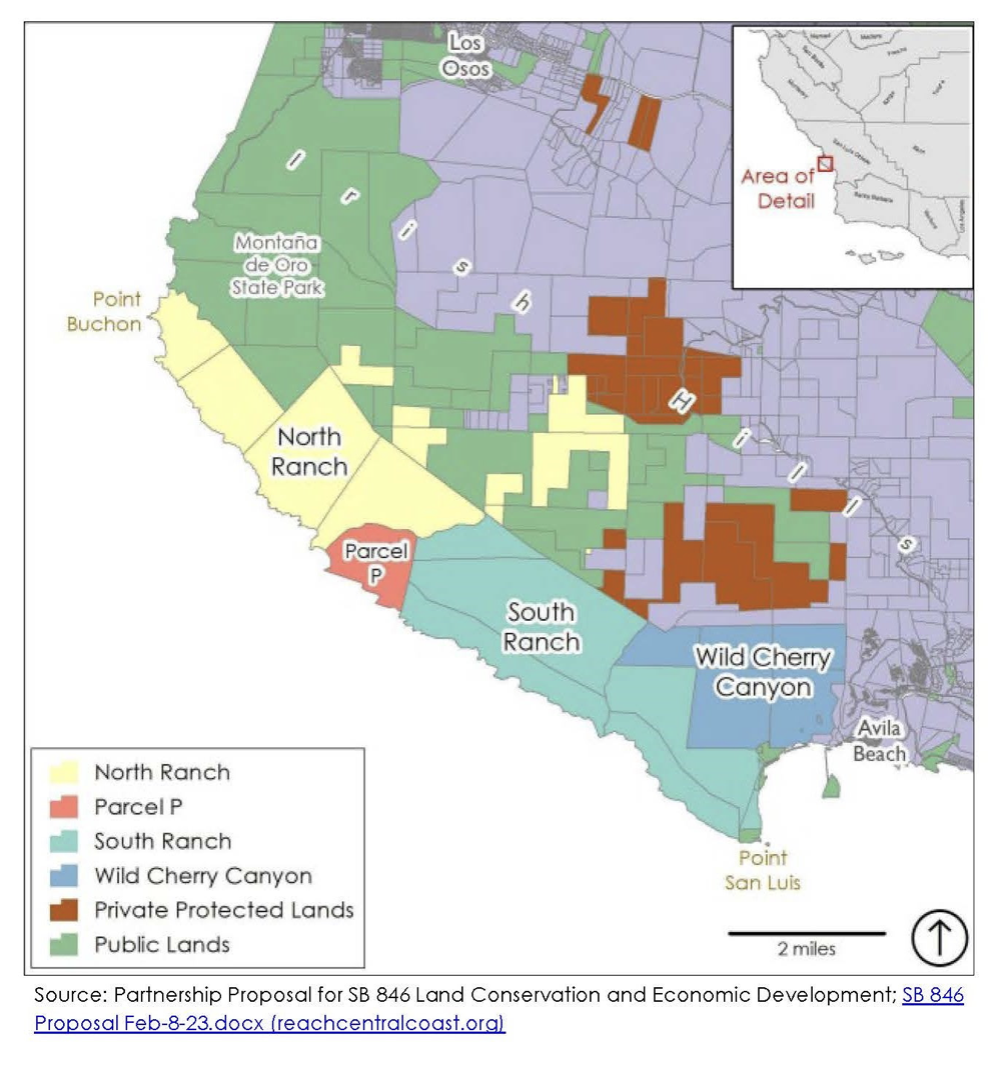
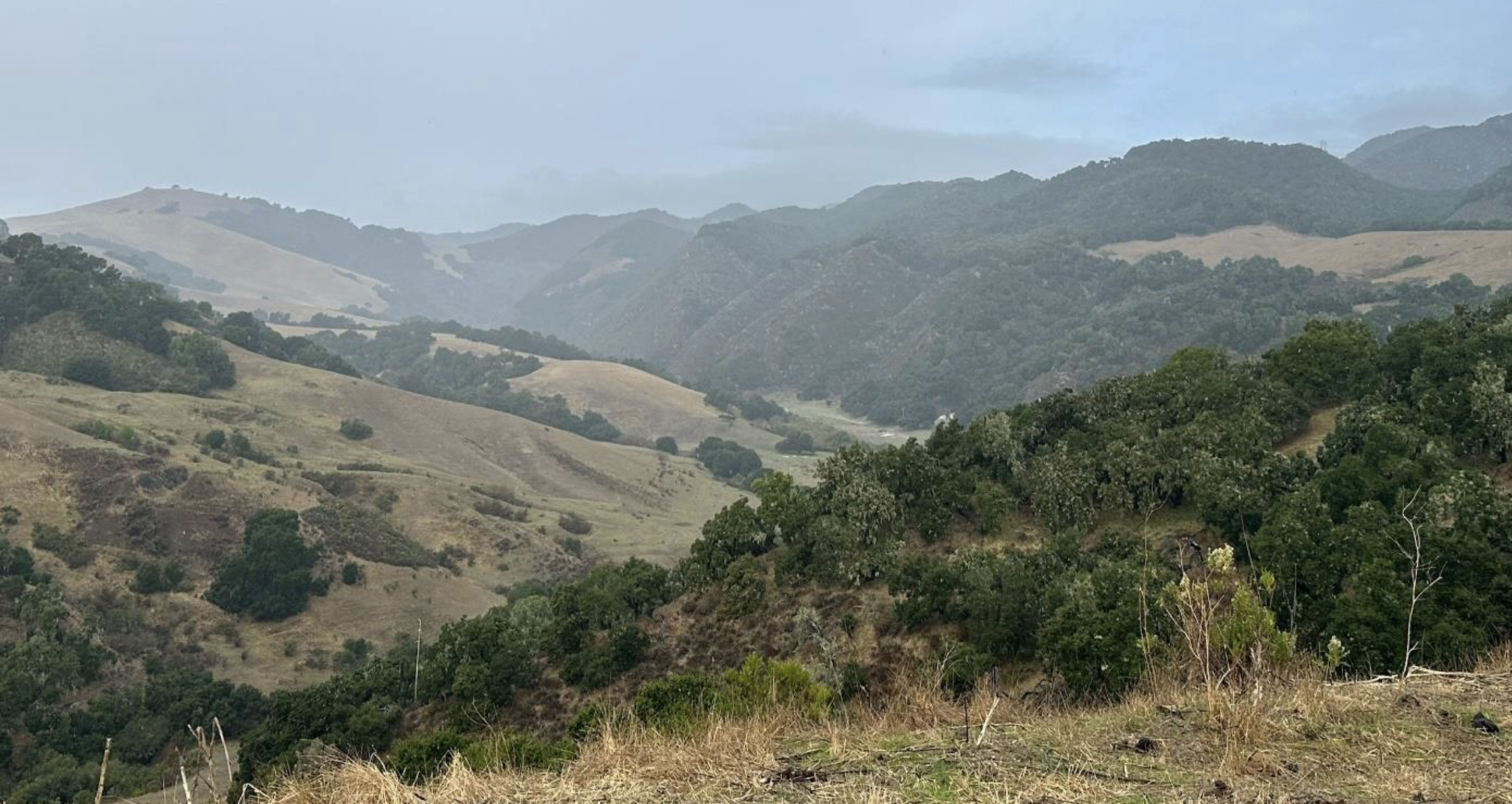
The public agency California State Coastal Conservancy is proposing to give $40 million to the nonprofit organization Wildlands Conservancy who manage some 25 nature preserves around the state. The money will be used to permanently preserve the 2400-acre Wild Cherry Canyon near Avila in San Luis Obispo County. The plan, in limbo for years, looks to remove this part of Diablo Canyon lands from future housing development . The goal is to “protect, restore, and enhance natural and cultural resources; to provide public and California Native American tribal access; to enable potential construction of lower-cost coastal accommodations; and to enable agriculture that is compatible with these uses…”
The next Coastal Conservancy public meeting is September 17 with the matter expected to be on the agenda. A notice was published August 14 saying the sale of the property could happen as soon as 2026 or early 2027.
The Coastal Conservancy is a State agency established in 1976 to protect and improve natural lands and waterways, help people access and enjoy the outdoors, and sustain local economies along the length of California’s coast and around San Francisco Bay.
The notice says that ” For the past 20 years Conservancy staff and its local partners have been attempting to acquire this spectacular piece of the California coast and to protect it from the ongoing efforts to develop the property for private use. Today, the Conservancy has the opportunity to contribute to acquiring the property and to finally deliver to the local community and local tribes their long-sought protection and access to this special place. Funding for this specific project was allocated to the Conservancy in the state’s 2023-2024 budget.
The property is owned by Eureka Energy, a subsidiary of Pacific Gas and Electric Company (collectively referred to as PG&E). PG&E acquired the underlying fee title to the property, subject to a pre-existing lease. The lease, which is held by a private party, allows all uses that are consistent with the property’s zoning including residential use, and can be extended to the year 2166. Because of these exceptionally broad terms, the leasehold interest represents nearly all of the property’s current economic value.
Last fall a Court of Appeal ruled that the real estate development company HomeFed Corp. owns the rights to a 99-year lease on the Wild Cherry Canyon property potentially allowing building there along the ocean-view area. Over the years the company only grazed cattle on the site but has proposed a sprawling development on the site.
A recent appraisal of the property, made republic Aug 11,2026, required the $40 million acquisition price that the Conservancy will pay – the same dollar amount that has been alloted by the state budget process. By law, the state has to pay fair market value.
The appraisal, done this year, says the property”is presently under contract to the Wildlands Conservancy and dated June 1, 2026.The purchase price is $40,000,000, assuming that the appraised value is $40,000,000 or more. The seller is not required to consummate the sale if the appraised value is less. The seller may treat any appraised value over $40,000,000 as a charitable donation.”
Trophy Ranch
The appraisal concludes “the $40,000,000 is best reflective of the market given the lack of competing trophy ranch properties, very long-term lease and property tax savings.”
HomeFed plan of what could have been
The Coastal Conservancy says the acquisition of the property will occur in two transactions. First, Wildlands Conservancy(TWC) will purchase the leasehold interest by the end of 2026 or early 2027. Subsequently, by the end of 2027 TWC will purchase the fee title. PG&E will retain the fee title to approximately 200 acres needed for road access to the Diablo Canyon Nuclear Power Plant as well as approximately 50 acres previously developed with a home. PG&E’s retained rights will be subject to deed restrictions limiting PG&E’s use of these areas to ensure no future uses impair the conservation and protection of the surrounding lands owned by TWC. In addition, Conservancy staff will work with TWC, the local community, and local California Native American tribes to develop one or more conservation, public access, and tribal access easements or other instruments to further protect the community’s vision for the property. Consistent with California Air Resources Board goals, protecting the property for conservation uses will also serve to reduce greenhouse gas emissions. This work is already underway through the Conservancy’s Diablo Canyon Land Conservation Planning Project that began in the fall of 2024 and encompasses the three primary properties that cover the larger 12,000-acre Diablo Canyon Lands project area – Wild Cherry Canyon, North Ranch, and South Ranch.
Wildlands Conservancy shares the Conservancy’s goal to open the property to the public and local California Native American tribes as soon as possible once the necessary planning and facility development has been completed in consultation with the community and tribes.
Connecting to Montana de Oro
The property has been identified by the community as well-suited for public access, including a 5-mile California Coastal Trail segment that will connect to a planned 20-mile route from Avila Beach north to Montaña de Oro State Park. Low-impact camping opportunities will also be explored. Tribes will be invited to develop, review, and approve cultural resource protection and tribal access easements or other instruments that provide tribal access to the property for ceremonial, cultural, or other purposes and protection of cultural resources. In addition, Wildlands Conservancy will create a California Native American Tribal Access and Co-Stewardship Plan that outlines protocols and commitments for tribal access and co-stewardship, such as restoration or enhancement of culturally significant plant species; cultural burning; harvesting native plants for traditional cultural use; development of tribal cultural gathering/ceremonial spaces or ancillary structures necessary to support tribal uses, and interpretive signage or educational programming.”
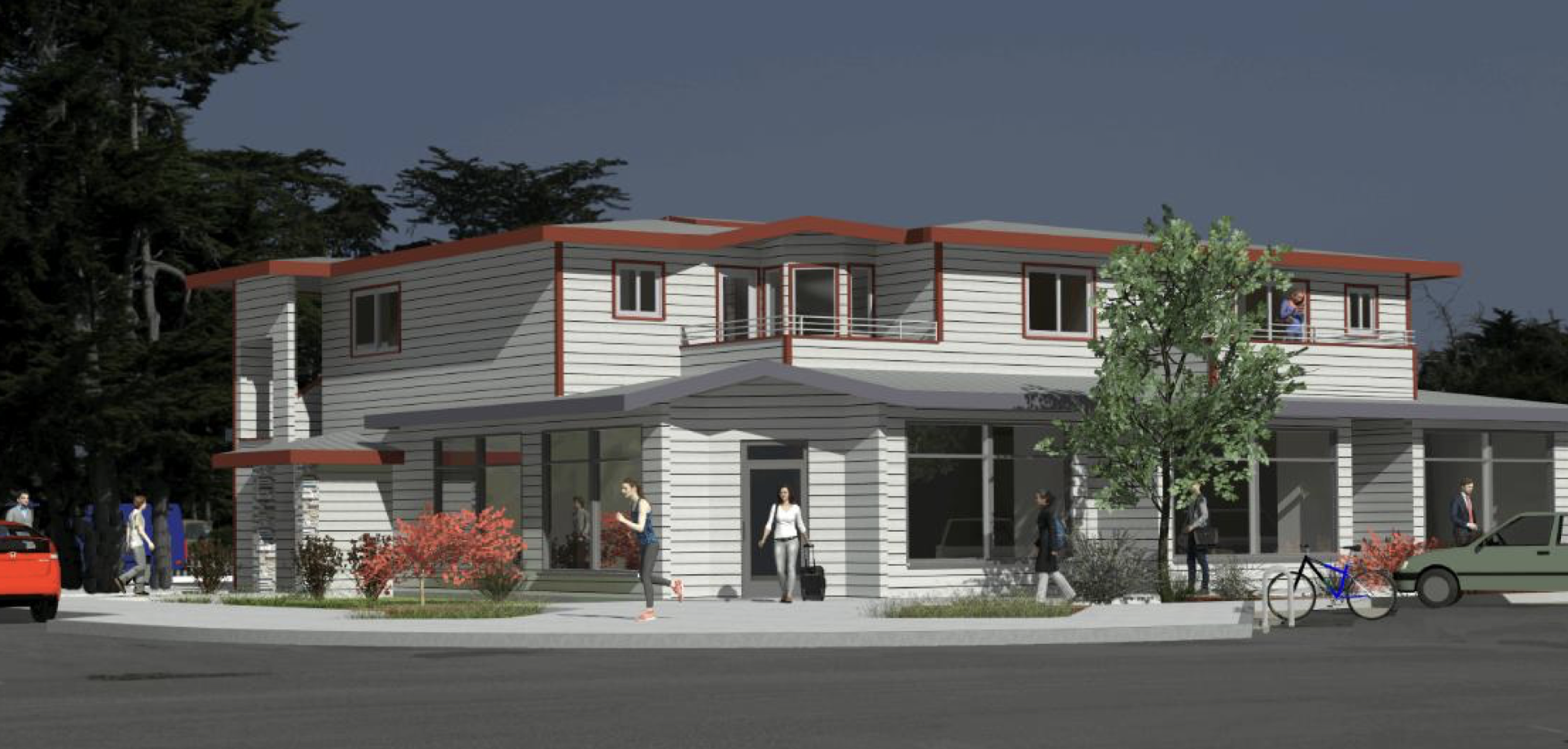
San Luis Obispo planning staff will hear a request by Alex Benson for a Minor Use Permit / Coastal Development Permit (C-DRC2024-00054) to allow phased construction of a new two-story mixed-use project consisting of approximately 3,018 square feet of ground floor commercial retail area and 1,983 square feet of second floor residential area. The residence would have 310 square feet of residential deck area, and associated site improvements.
The hearing is set for April 17 at 9AM.
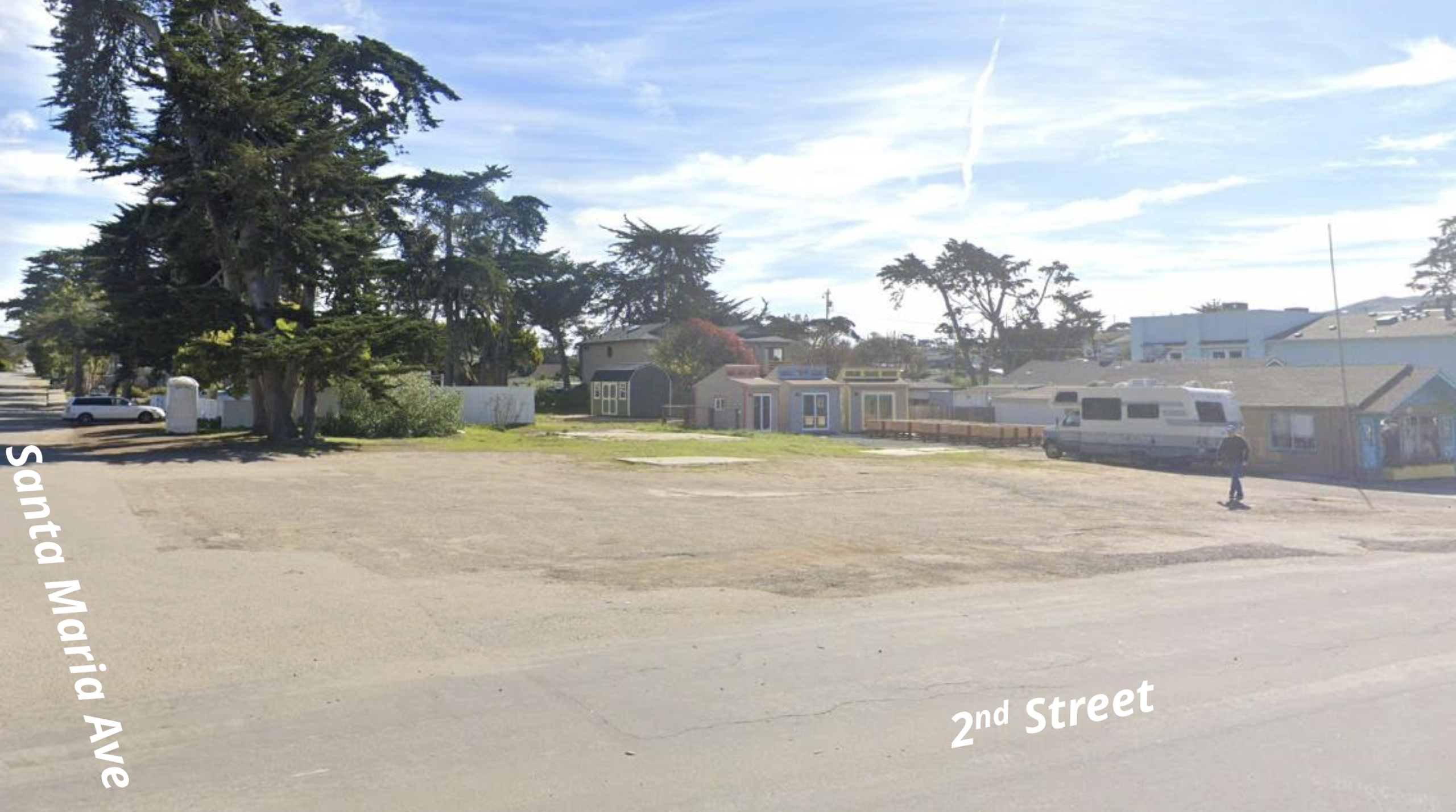
The construction site would fill in the southeast corner of 2nd St and Santa Maria in the heart of Baywood,across from the Merrimaker bar. The empty property has been used in the past for a concert stage.
The ground floor retail could be divided into 3,2 or 1 space, says staff, but would not be permitted for a restaurant.
The project will provide six on-site parking spaces, four of which are required to serve the three one-bedroom residential units, in addition to seven on-street parking spaces along the project frontages for a total of nine commercial retail parking spaces consistent with the Estero Area Plan. The project will result in disturbance of the entire 9,375 square foot vacant parcel.
The project being developed by Mr Benson is located at 1300 2nd Street (APN: 038-182-001), on the southeast corner of 2nd Street and Santa Maria Avenue, within the Commercial Retail land use category in the community of Los Osos. Mr Benson already owns several other commercial properties including two hotels on the same 2nd St block.The project was recommended for approval by LOCAC on May 22nd, 2025.
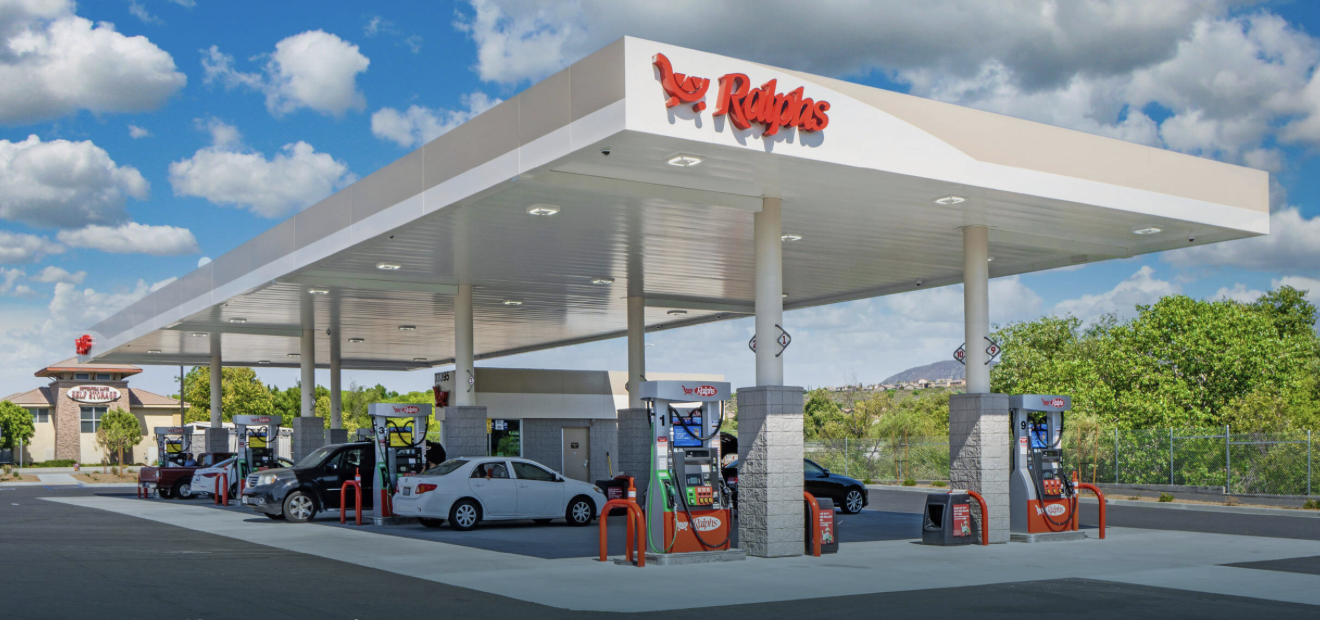
Ralphs has LOVR property in escrow for new gas station
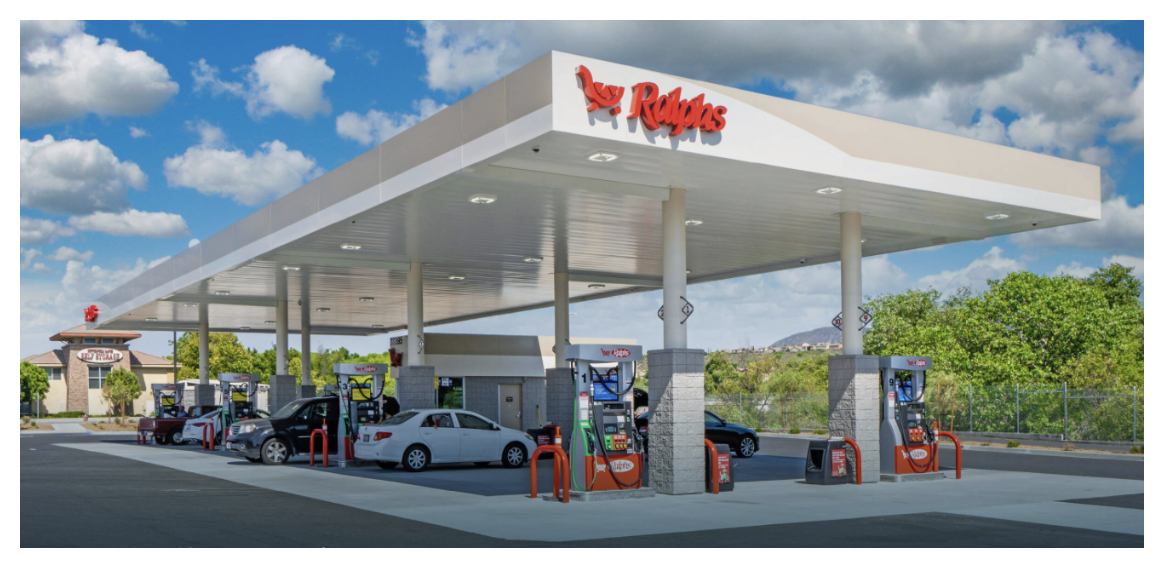
The realtor for the sale of the former gas station on LOVR across from Starbucks says the Ralphs grocery chain has the 1.9 acre property in escrow as it works with the county to get approval to build a new 12-pump gas station after demo of the former station. Ralphs has a half dozen discount gas stations around the state.
Trump admin stiffs Los Osos pipeline funding
Intertie resilience water project still moving forward Disappointment this month as it appears $8 million in funding approved by the US Congress in 2024 continues to be blocked by the Army Corps of Engineers – one of many water related projects approved under the Biden administration that remain redlined by the Trump administration, particularly in Democratic states like California. That doesn’t mean the project to run a pipeline to Morro Bay to connect to state water is dead with the Los Osos CSD working on other funding opportunities like Prop 4 state funding that could at least provide some of it, says retiring CSD GM Ron Munds. Either way the so-called intertie project is going forward with plans later this year to install 1000 feet of the 10-inch diameter pipe in the concrete bedding of the new bridge along South Bay Blvd. Munds says another funding option is 40-year term USDA loans that carry a very low interest rate. In the meantime, he is pushing to get the engineering of the 2 1/2 mile pipeline at least to the 30% level by the end of May.
DESAL discussion set for April 20
Munds adds that another strategy to provide some cushion to our dependence on groundwater is to use the same pipeline long term to bring in desalinated water from a possible plant off the Morro Bay coast in the future.Such a plant could offer an alternative drinking supply to a number of nearby communities that could be connected by pipeline. A hearing on just such an idea will be held April 20 at the Morro Bay Community Center at 6 PM. A County study suggests the Morro Bay location could meter out 6800 to 8,000acre feet per year of drinking water from the ocean that could be shared among a number of local towns (see above). Los Osos uses about 1 thousand acre/ft a year, but a smaller supplement to our groundwater would be welcome. The meeting wont go into alternate technologies to deliver potable water from the sea including OceanWell, based in LA who has a pilot project off the coast of Malibu and SeaWell, based in Santa Barbara, both new smaller scale but environmentally safe technologies compared to legacy technologies.
The Los Osos Community Services District is expected to appoint Greg Kwolek the new General Manager for the Los Osos Community Service District replacing Ron Munds who is retiring. Greg will begin work in Los Osos May 18 states Munds.
Munds says he will “stick around” for a matter of months adding he already knows and has worked with Kwolek who lives with his young family in Los Osos. Kwolek is the current Public Works Director at the City of Morro Bay, a position he has held since 2021.
According to his bio posted online, Kwolek served as Division Manager for the City of Pasadena, where he was responsible for critical maintenance projects for the community while also building job skills for unemployed and under-skilled residents. Greg served LA County as the Small Business Services Program Manager as well as Public Works Management Analyst for the City of La Cañada Flintridge, where he oversaw the capital budget, trails maintenance, and community right-of-way concerns. Greg holds a Bachelor of Arts in Philosophy and English from Hunter College and an MPA from USC.
Greg will be stepping into Ron Mund’s busy shoes at the Los Osos CSD, the closest thing this town of 18,000 has to a local government.
Projects on the front burner right now include the pending community referendum to buy Sunnyside School, working on engineering a pipeline connection to Morro Bay for bringing in state water and seeking funding for construction ,working with the County on a possible desalination project that could in the future deliver potable seawater over the same pipeline; Working to the Los Osos Basin Management Committee on the thorny issues of growth and seawater intrusion and continuing construction of groundwater wells, the only water source for the town for now; Then there is negotiations with CalFire to secure a new contract for fire service for the community. Busy shoes indeed.
Unlike SLOCOG measure, vote requires only simple majority
On January 12 the San Luis Obispo Council of Governments (SLOCOG) announced a plan for a new dedicated local funding source — a countywide, voter-approved ½-cent sales tax — to generate approximately $35 million annually for local roadway improvements and other transportation projects. The proposed November ballot measure carries one very tall order – it needs two-thirds of SLO County voters to approve of it.
Now as of March 1 there is a new advocate for virtually the same measure. Better Roads For All -San Luis Obispo County – has launched a signature drive as of last week to place the same proposal on the November ballot as a citizen-led initiative that requires only a simple majority (50% plus one vote) to pass.
A citizen-initiated road tax measure in California bypasses the strict supermajority requirement typically associated with local tax increases. Ten year ago a similar road tax measure requiring a two thirds majority -lost by a few hundred votes in San Luis Obispo County. But now, a decade later, a new effort has risen from the ashes.
One of the advocates who organized the citizen group, civil engineer with the Wallace Group, Jorge Aguilar, was there ten years ago and argues the key benefit of such a self-help tax is that it leverages far more money for projects than what it raises here.
Aguilar in their presentation to community groups around the county says we have lost out on funding our neighbor counties have enjoyed. When the similar ballot measure narrowly failed in 2016, our county lost access to hundreds of millions of dollars in transportation funding that went to neighboring counties instead. “Over the past decade, San Luis Obispo County has missed out on an estimated $700 million in infrastructure improvements” he told the Los Osos Community Advisory Committee (LOCAC) last week.
Officials with Ralphs grocery store have met with county staffers to discuss the possible construction of a new 12-pump gasoline station on LOVR in Los Osos. A presentation at the most recent Los Osos Community Advisory Council (LOCAC) described that Ralph’s was considering the purchase of the vacant gas station across LOVR from Starbucks that has been for sale for several years.The property is at 1055 Los Osos Valley Rd, has 1.9 acres and is listed for $1.2 million. Ralphs is the largest grocer in Los Osos.
Los Osos motorists often complain they have to travel to Morro Bay or San Luis Obispo to fill up on gas. That is where the competition is.This week in Morro Bay you can still buy gas for the bargain rate of $3.99 a gallon. Meanwhile Los Osos’ two filling stations, a Chevron and a Shell often match each other, each selling regularly today for $4.59.
Heading to San Luis Obispo, the state’s top gasoline retailer Costco is selling gas for $4.29 a gallon.
Ralph’s gas station in Camarillo, the closest Kroger-owned fueling station to San Luis Obispo County, is selling regular today for $4.19. To date there are 13 Ralphs gas stations in the state,all in Southern California. Grocer-owned discount gas stations have grown in popularity in California where the state average prices are high, with Vons having 19 stations in Southern California, including one in Nipomo and Safeway with numerous stations in Northern California. The largest fuel discounter, Costco has 139 gas stations in the state including a new 32-pump expanded station in San Luis Obispo.
Chevron has some 300 company-owned stations in the state typically posting the highest prices.
Climatologists suggest that California’s weather is increasingly extreme, swinging rapidly between very wet and very dry periods. Here we go again, some forecasts say, as March has produced little rain or snow across the state after a wet February. While March can be a wet month in California, reports for the Central Coast show 0.00 inches in daily reports(0.01 in Los Osos) even though for the water year Los Osos has received about 18.4 inches of precip so far, 104% of average since July. After a hot and dry March there is a wet pattern emerging in April according to forecasts that are two weeks out and therefore speculative. Nevertheless it could signal another weather whiplash pattern change that would bring a very wet storm into the whole state around April 2 .Above map is one forecast.
Less than a year after announcing the launching of new daily service from Santa Maria to Phoenix, American Airlines has decided to pull the plug on the service starting in May.
The operator of the flights American Eagle announced the notice March 13 in a state layoff WARN notice that 20 employees of the company would be laid off permanently as a result of the closure of the flight service.
American announced the start of the new service as of last October to great excitement in the community about daily direct access to the Phoenix market that connects to national and international hubs.
Nearby San Luis Obispo already has twice daily service connecting that town to Phoenix on American.
The Santa Maria American Airlines flights were twice daily on a 76 passenger jet airline.
Not only are we all not drinking enough beer and wine any more, the temperature outside is hotter than it should be.All you climate change skeptics pay attention
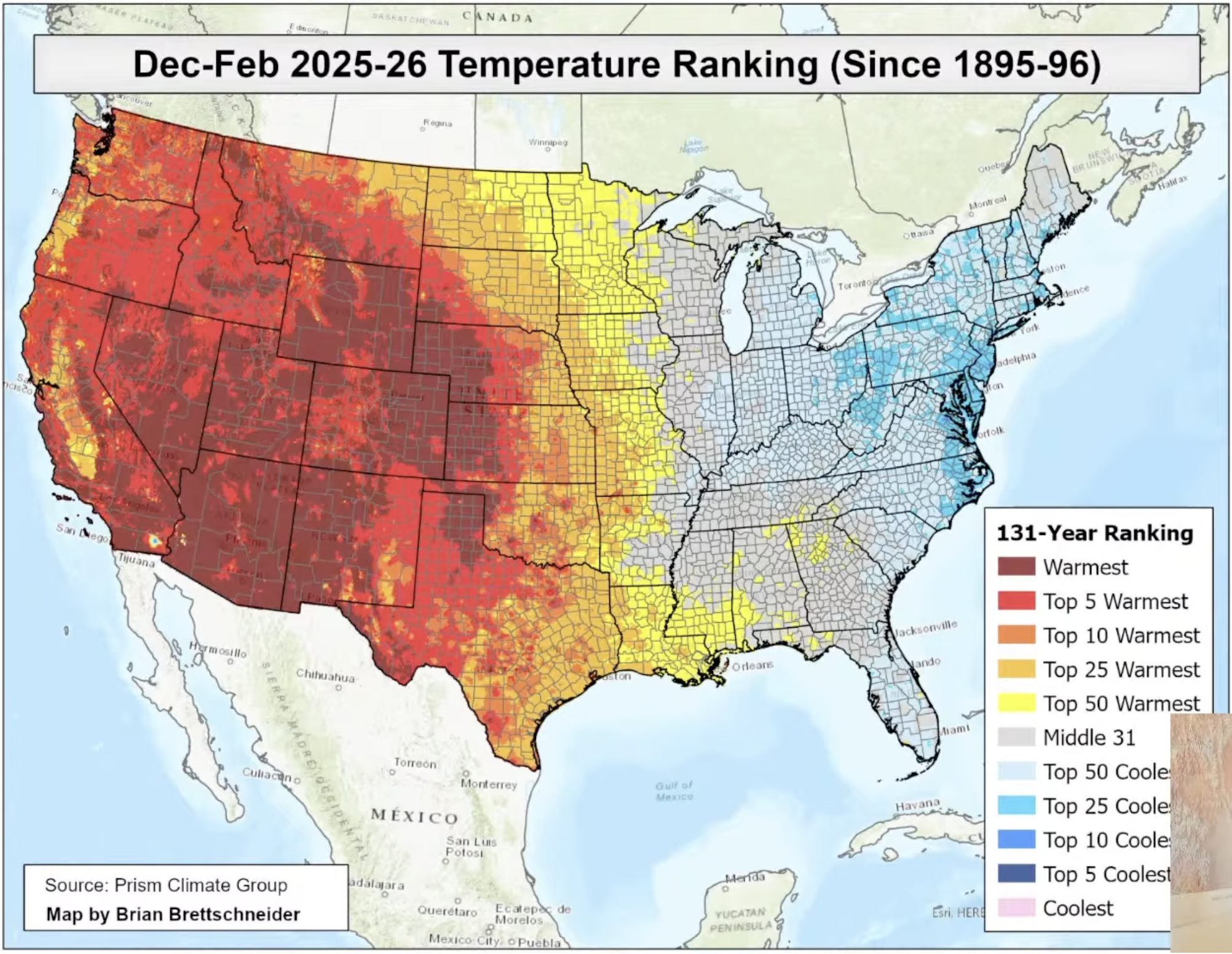
Historically warm Western US contrasted with cooler EastCoast this winter With the exception of the southern San Joaquin Valley, this winter was the warmest on record by far since 1895 across most of the Western US, says climate scientist with UC Agriculture and Natural Resources, Dr Daniel Swain. The map above shows the latest 3-month winter temps (Dec-Feb) that are as much as 10 degrees above the average – shown in dark red on this map. In a podcast earlier this month Swain emphasizes “what a very big deal this is” with all-time record heat covering most of 10 western states.
The dark red includes many parts of California – SoCal, the Central Coast, most of the Sierra and the desert areas. In square miles the largest impacted area is across much of the Mountain West including the all important Colorado River basin across Colorado,Utah and Arizona. Note that it extends east into parts of the Midwest and the Panhandle as well. Further east, cooler temps were seen including very cold events in parts of the East Coast that made headlines while little notice of the western state’s historic heat was made.
The Central San Joaquin Valley is an exception not because it wasn’t warm this winter- it was – but because a dense blanket of Tule fog kept daytime temperatures cool below the fog. But at night, Swain says the weather was warmer than usual, typically not falling below the 40s. Farm advisors say this year’s Tule fog helped raise the number of chill hours for some tree crops in the Valley helping to spur a normal bloom.But the warm nights may not add enough chill hour accumulation for some stone fruit.
Snowpack variation “In the Western U.S., the snowpack is, on average, terrible,” Swain says. “It’s about as bad as it’s ever been in observed history.” Again there are exceptions including the snowpack water content in the southern Sierra that as of March 1 was 80% of average on March 6, says DWR. That said, contrast that number to the northern Sierra that is only 38% of average as of March 6.
What has people talking about is the rapid snow melt in all parts of the state in the past few weeks expected to continue due to extreme warm temperatures up and down California this month.
Case in point was that monstrous snowstorm that hit the Tahoe area with over 8 feet of snow, causing a deadly avalanche Feb 17. Now that snow has mostly melted away in a matter of days, notes Swain. Complicating this situation were the warm storms dropping rain on the snowpack instead of falling as snow. The warm winter is forecast to continue in the next few weeks coupled with more dry weather. That’s true this week in the southern Sierra as well with average temperatures in the next few days in Grant Grove at 6500 feet hitting 60°.
Here is the March 7 forecast posted by Friant Water. “Through the weekend, temperatures are expected to be within 5 degrees of normal in the San Joaquin and Tulare Basins, within 10 degrees of normal in the Southern Sierra, near normal to 10 degrees above normal in the Sacramento Valley, Southern California, and along the Central Coast, and near normal to 20 degrees above normal in the North Coast, Northern Sierra, and northeastern portion of the State. “
This is also happening on the coast with a 93 year old temperature record broken at the Santa Maria airport where the high reached 88° surpassing a daily record of 86° set in 1932 says forecaster John Lindsey. Some desert stations in the past few days have hit 100° in winter.
Lindsey adds that the west coast warmth affected our oceans as well.”This winter has been marked by well-above-average sea surface temperatures (SST), primarily due to a lack of northwesterly winds.” He says the water is cooler this week but for “most of December, January, and February, temperatures remained around 60 degrees, about 5 degrees above normal.”
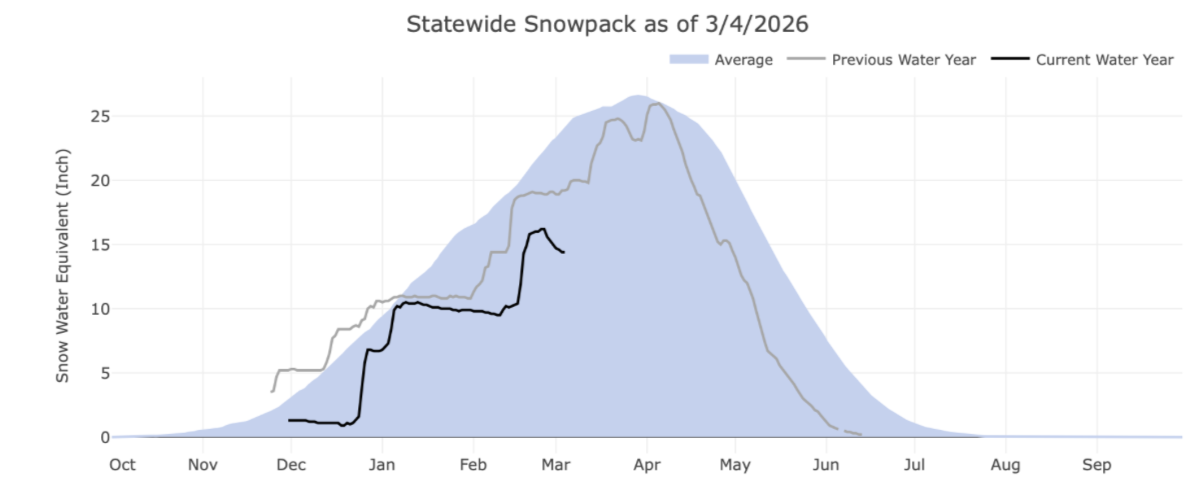
Here is the March 4 Sierra snowpack chart – note the meltdown recently.
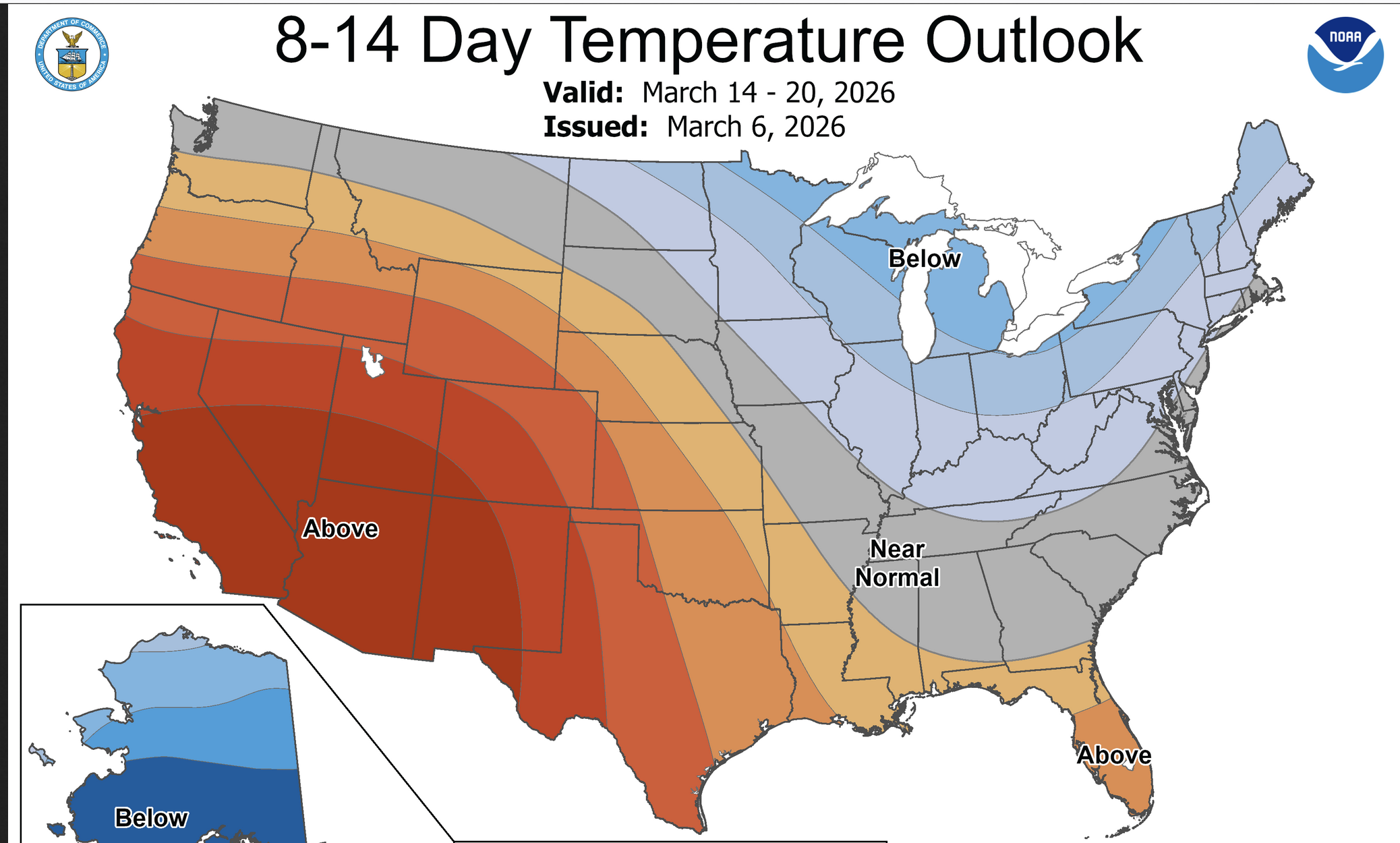
NWS Hanford says this warm/dry pattern is likely to continue through the next two weeks as the Climate Prediction Center maintains above normal temperatures and below normal precipitation through Day 14.
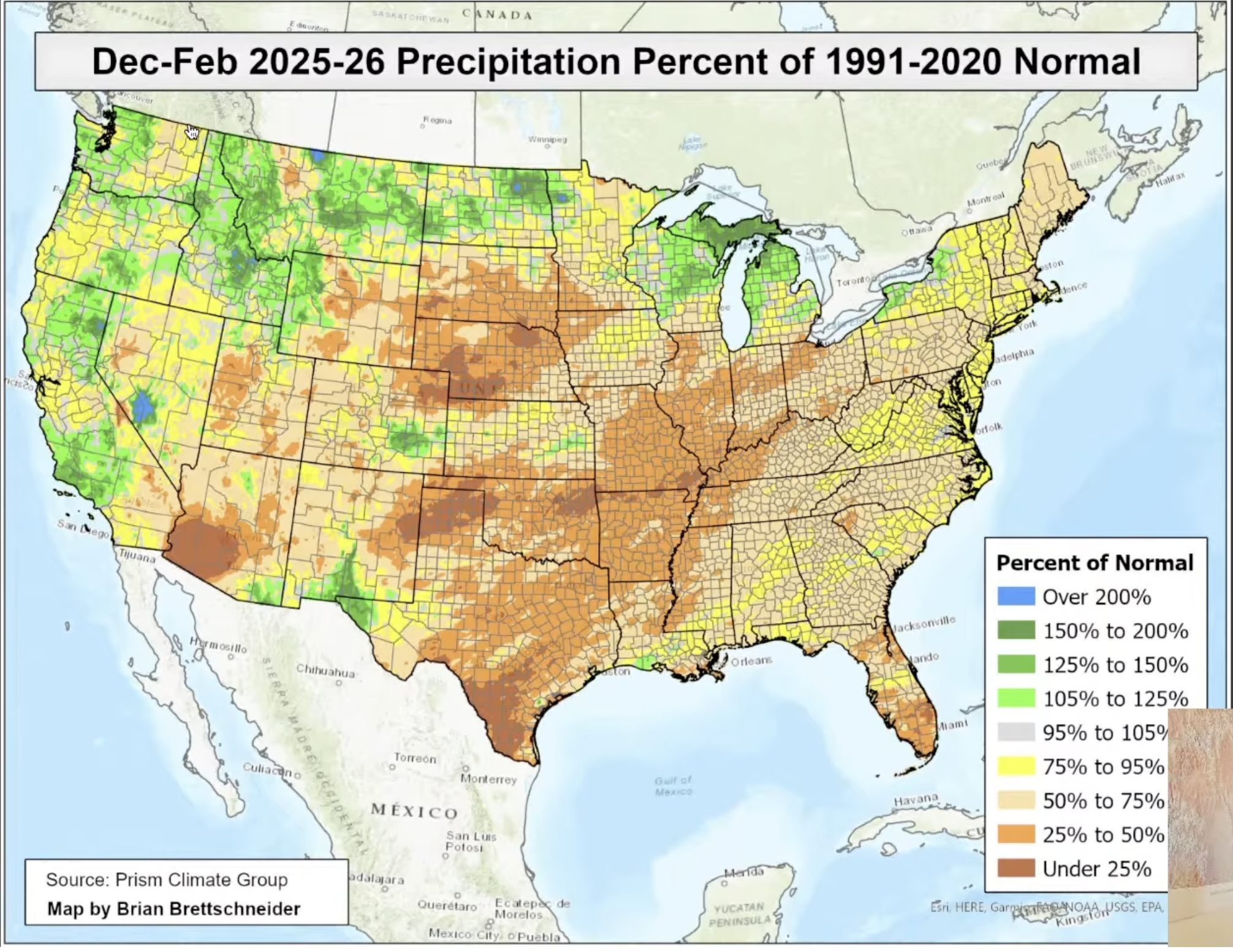
But this winter story has also been affected by rainfall variation as can be seen in this other map. Some parts of the western US were affected by record low rainfall – some places under 25% of normal shown brown on the map.
Swain adds that in California the Southern Central Valley and Central Coast saw normal or even above normal rainfall over the 3 month period.Much of the Colorado River Basin seems to be hard hit by a combination of record heat and low rainfall that will surely impact the water supplies of cities in the western US, including Los Angeles, Tucson, Las Vegas, and Phoenix later this year. Of course it will hit the farming community hard as well as all plans for all those water-hungry data centers in the Southwest.
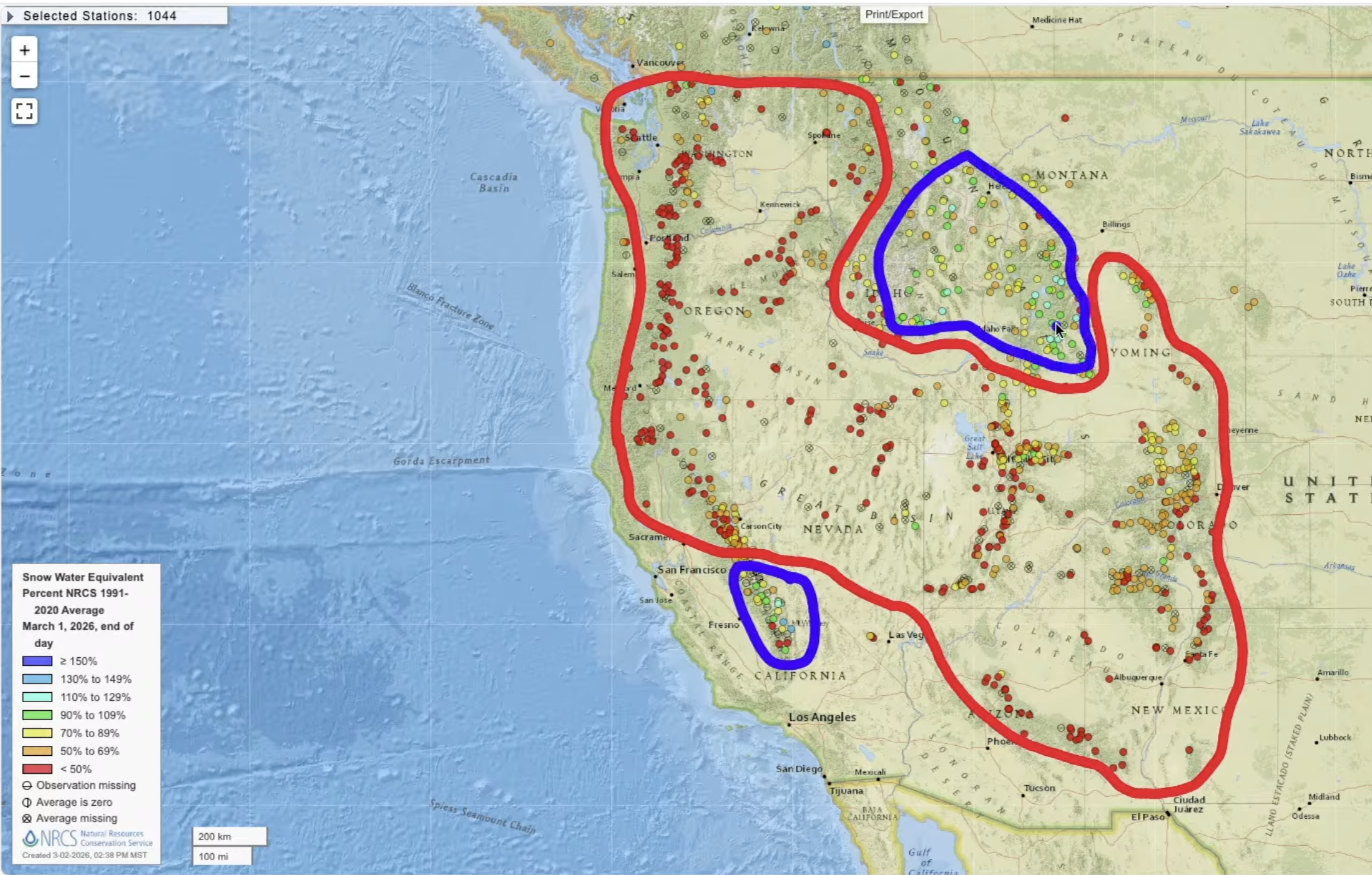
Now take a look at this Swain sketched map showing the few areas in the west that had normal or near normal snowpack outlined in blue including the southern Sierra, parts of Idaho, Wyoming, and Montana. The remainder of the West is suffering a snow drought, outlined in red.
There is of course, some good news for California water supply in that almost all the reservoirs in the state are enjoying above average storage for this time of year and some of them are full. California residents are seeing green fields and foothills across from the state and hopes this also means a low fire season ahead.
The Climate Prediction Center’s current forecast map says it all. Compare the contours on this March temp forecast map with the 3 month map at the lead to this story. The heat continues in the same locations.
‘one more note of interest from Dr. Swain he expects a strong El Niño to develop later this year that should impact next season’s rainfall likely more intense.
Officials with Ralphs grocery store have met with county staffers to discuss the possible construction of a new 12-pump gasoline station on LOVR in Los Osos. A presentation at the most recent Los Osos Community Advisory Council (LOCAC) described that Ralph’s was considering the purchase of the vacant gas station across LOVR from Starbucks that has been for sale for several years.The property is at 1055 Los Osos Valley Rd, has 1.9 acres and is listed for $1.2 million. Ralphs is the largest grocer in Los Osos.
Los Osos motorists often complain they have to travel to Morro Bay or San Luis Obispo to fill up on gas. That is where the competition is.This week in Morro Bay you can still buy gas for the bargain rate of $3.99 a gallon. Meanwhile Los Osos’ two filling stations, a Chevron and a Shell often match each other, each selling regularly today for $4.59.
UPDATE: Chevron Los Osos increased the retail price 40 cents on Tuesday March 3 to $4.99
Heading to San Luis Obispo, the state’s top gasoline retailer Costco is selling gas for $4.29 a gallon.
Ralph’s gas station in Camarillo, the closest Kroger-owned fueling station to San Luis Obispo County, is selling regular today for $4.19. To date there are 13 Ralphs gas stations in the state,all in Southern California. Grocer-owned discount gas stations have grown in popularity in California where the state average prices are high, with Vons having 19 stations in Southern California, including one in Nipomo and Safeway with numerous stations in Northern California. The largest fuel discounter, Costco has 139 gas stations in the state including a new 32-pump expanded station in San Luis Obispo.
Chevron has some 300 company-owned stations in the state typically posting the highest prices.