This week at the Tulare County Board of Supervisors the board will take up a proposed 45-day moratorium on development of a data center in any unincorporated part of the county. Also this week the Visalia City Council will hear a plan to approve a moratorium within the city limits as well. Meanwhile,Tulare City decided not to discuss the issue at their last meeting.
The County agenda item calls for an urgency designation adding that there is “current and immediate threat to the public health, safety, and welfare…” The interim moratorium will require a four- fifths vote to go into effect and would be in place until the board might put in place a permanent regulation.
Meanwhile a Visalia staff report on the agenda says Council member “Brian Poochigian seeks Council consideration of directing staff to return at a future regular meeting with an item regarding a moratorium on data centers and similar high-intensity uses that may require substantial water that results in a net loss and electrical resources that could impact the development of other, more beneficial, economic generators in the community.
The requested future agenda item would provide the City Council with an opportunity to discuss whether staff should evaluate the City’s existing regulations, review actions being considered or implemented by other California jurisdictions, and present potential policy options.”
The Council will meet the evening of August 17 and the County board meets Tuesday August 18 at 9 AM.
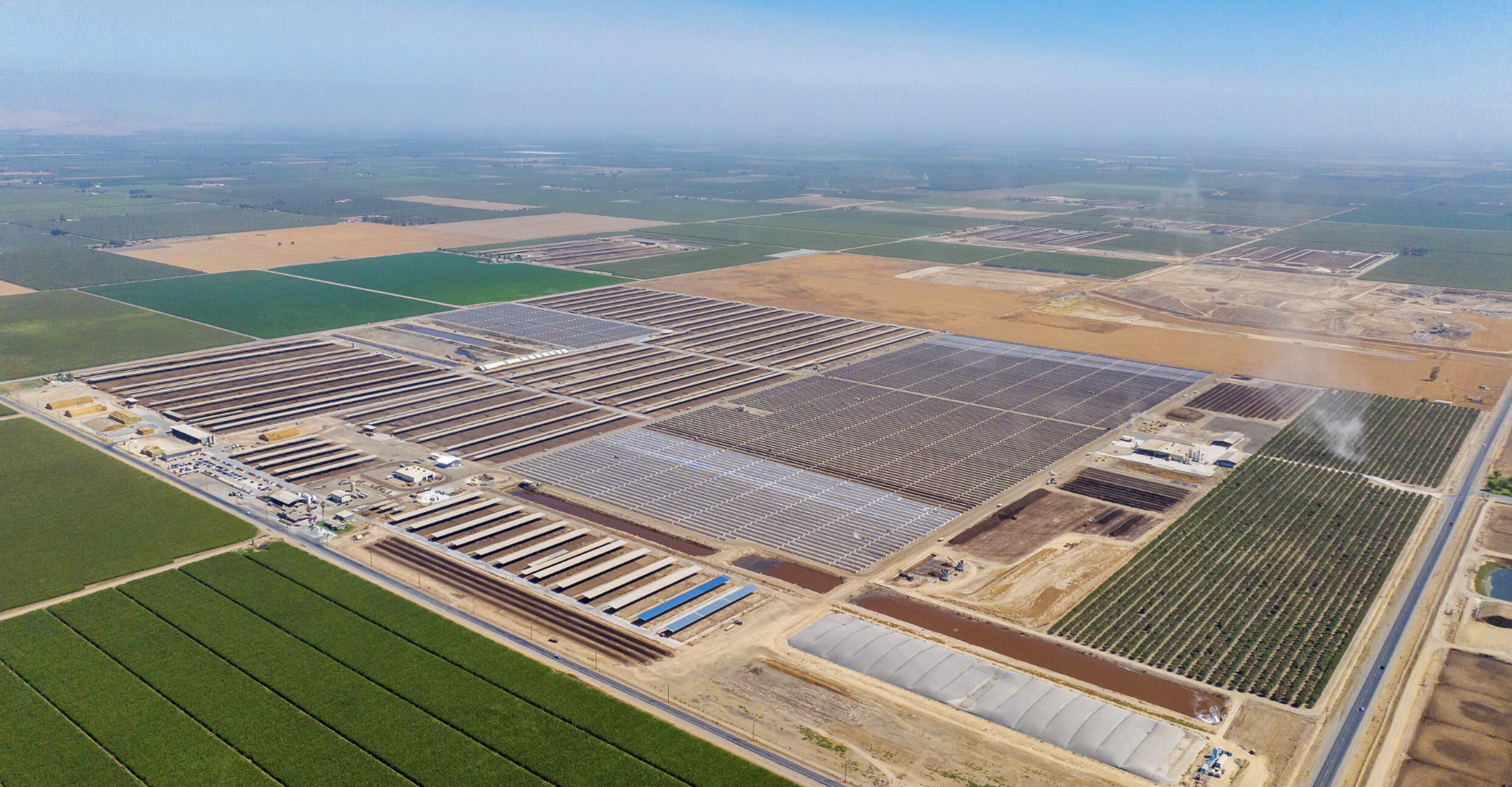
The only proposal in Tulare County is at the Tulare County Fairgrounds for a “small” data center proposed by Global Stack that may not be affected by any jurisdiction other than the Tulare County Fair board. A public meeting a few weeks ago brought out a crowd opposed to the idea. A similar proposal is on the table at the Kings County Fairgrounds. Water and power are key concerns.
The next Tulare County Fair board meeting is Aug. 18 but the data center is not on the agenda.
City of Tulare nixes discussion
Deciding not to get involved for now is the City of Tulare who recently voted not to discuss the Global Stack proposal that could happen in the city limits with the council voting down a proposal to put it on the agenda. The motion was brought by council member Jose Sigala to discuss at the August 18 meeting, but the council nixed the idea by a 4 to 1 vote.
Visalia lost a guiding light last week.Former mayor of Visalia Greg Collins passed away Thursday August 6 at his home after a debilitating illness. Arguably an important architect for Visalia, he started his public service as a city council member in 1975 when the population of Visalia was about 50,000. It is 150,000 today.Greg was 76 years old, survived by his wife Dorothy, daughter Kelcey and son Christopher.He was my friend.
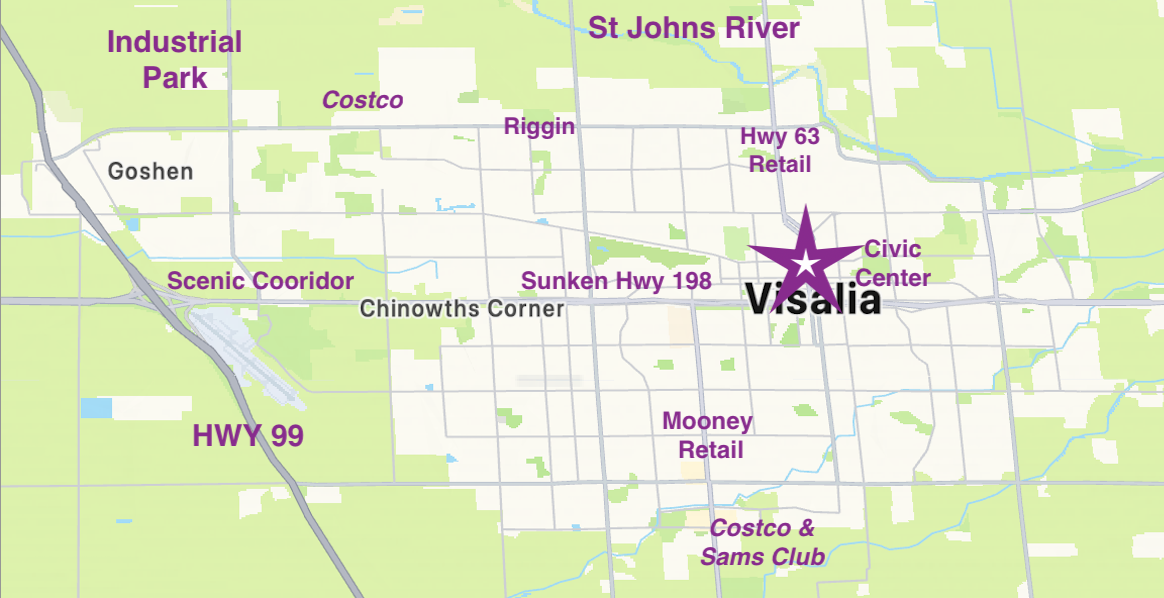
Collins literally shaped Visalia, as can be illustrated from this map of the community.Take a tour and you will see Greg’s hand everywhere in this city.
It was Collins among others who advocated the idea that the town should grow in a concentric manner anchored by Downtown.That theme is now widely accepted conventional wisdom in Visalia.
That meant limiting growth on its perimeters so that today we are the only Valley city that has no presence on Hwy 99.What’s the message? If you want to see Visalia, get off the freeway and walk around to experience this Tree City without the Fresno sprawl.Besides restrictions to the south limits were placed on growth to the north as well with city development not allowed to extend beyond the St John’s River.
To the west Collins carried the idea of saving our heritage oak forest establishing a “scenic corridor” entrance to the city.Collins was only the latest Visalian wanting to protect the oaks, remembering a delegation lobbying the State Highway Commission back in 1957 and a tree planting group in 1920s.
To the east Greg, the conservationist, promoted sinking basins that would replenish our groundwater as he helped save the Kaweah Oaks open space and established an oak tree nursery for the city.
If he backed preservation of agricultural land beyond Visalia promoting a controversial ag land preservation rule,he was a strong advocate of development within the city that has helped make it prosperous and boosted property values within the city.
He lobbied CalTrans to depress the 198 freeway below ground level – limiting noise and traffic impacts and preserving the streetscape in Visalia while speeding visitors to our national parks.
Speaking of the National Parks, Collins was there with other preservationists like his mentor Alan George to save the Mineral King Valley from Disney development years ago, and the pristine alpine Valley is still pristine today, part of Sequoia Park.
Collins won the battle over bringing a national hotel brand to Downtown Visalia, considered highly controversial back then.He was among those who persuaded Downtown merchants to tax themselves to support themselves by forming an improvement district. He has been a big supporter of preservation of our heritage buildings including the Darling Hotel that he convinced the county to finally sell and put the art-deco beauty on the market and on the tax rolls. We know what happened then. Now everyone wants to stay there as well as eat at the rooftop restaurant.
Civic Center plan & Swimming Pool
Speaking of expansion of Downtown, it was Collins’ idea to acquire the old railroad properties in East Downtown – the former Hobo Jungle to become the future Visalia Civic Center – now about ready to open but Greg won’t be there to cut the ribbon,or will he?
By the way, a key unresolved issue for Greg, the former water polo coach, was for the city to invest in a competition swimming pool. Now the current council seems poised to build it and name it after Greg Collins. Still undecided -where to put it? Collins told me two weeks ago -put it the middle of town – around the Civic Center area. Collins backed the idea of selling 21 acres the city owns at Akers and Riggin on the agenda to happen later this summer. The money would be placed in the Parks and Recreation budget who would oversee construction of a new public pool.
Speaking of preserving the economy in Downtown, Collins was a key player in keeping Kaweah Delta hospital in the Downtown area while many lobbied to move the district hospital to the outskirts of town.Today it brings thousands of job to the city center and has attracted competition to do the same like a giant magnet.
Because of the limitation on development over decades, the Mooney strip has been in-filled and renewed along the 3-mile stretch with new players, new retailers and services. So Mearl’s closed but the drive-in became The Habit. Gottschalks became Macys. The ramshackle 20th Century apartments (remember them?) is now Kohls.
Mooney rebirth
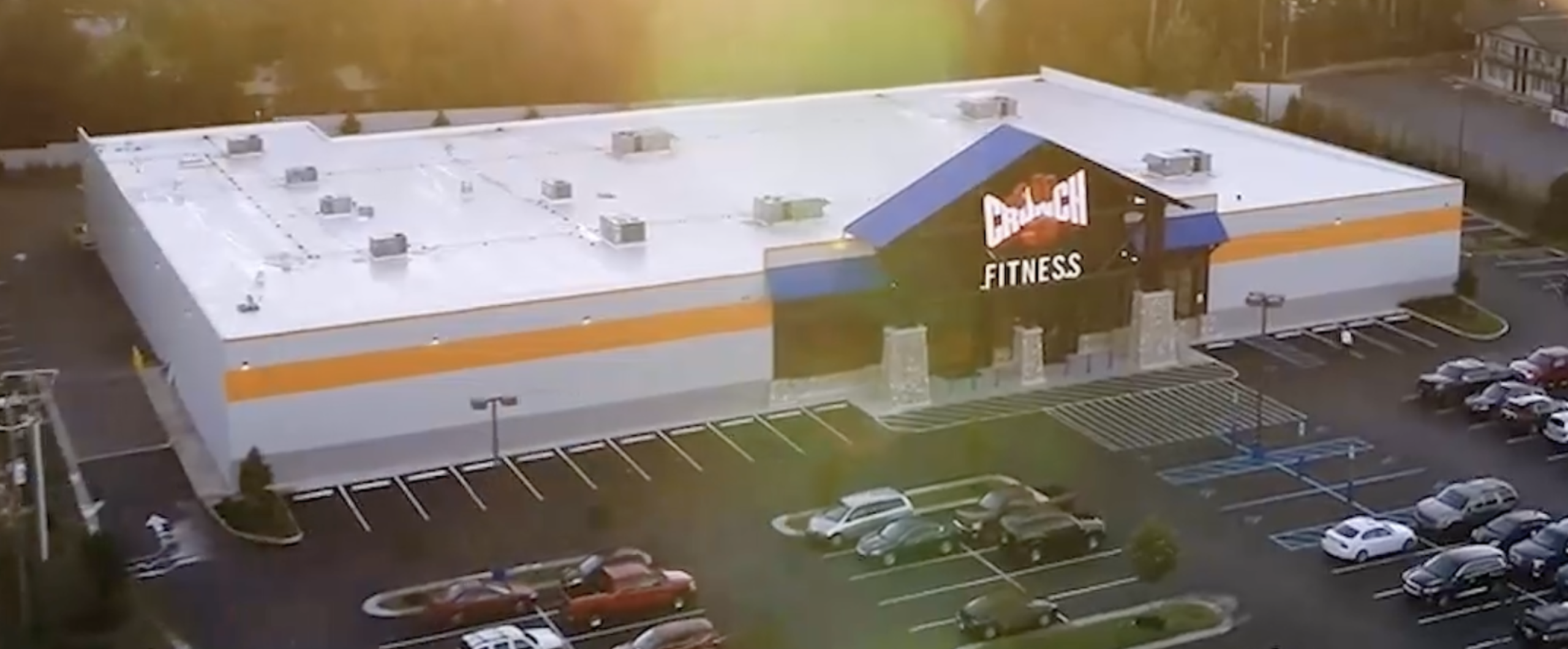
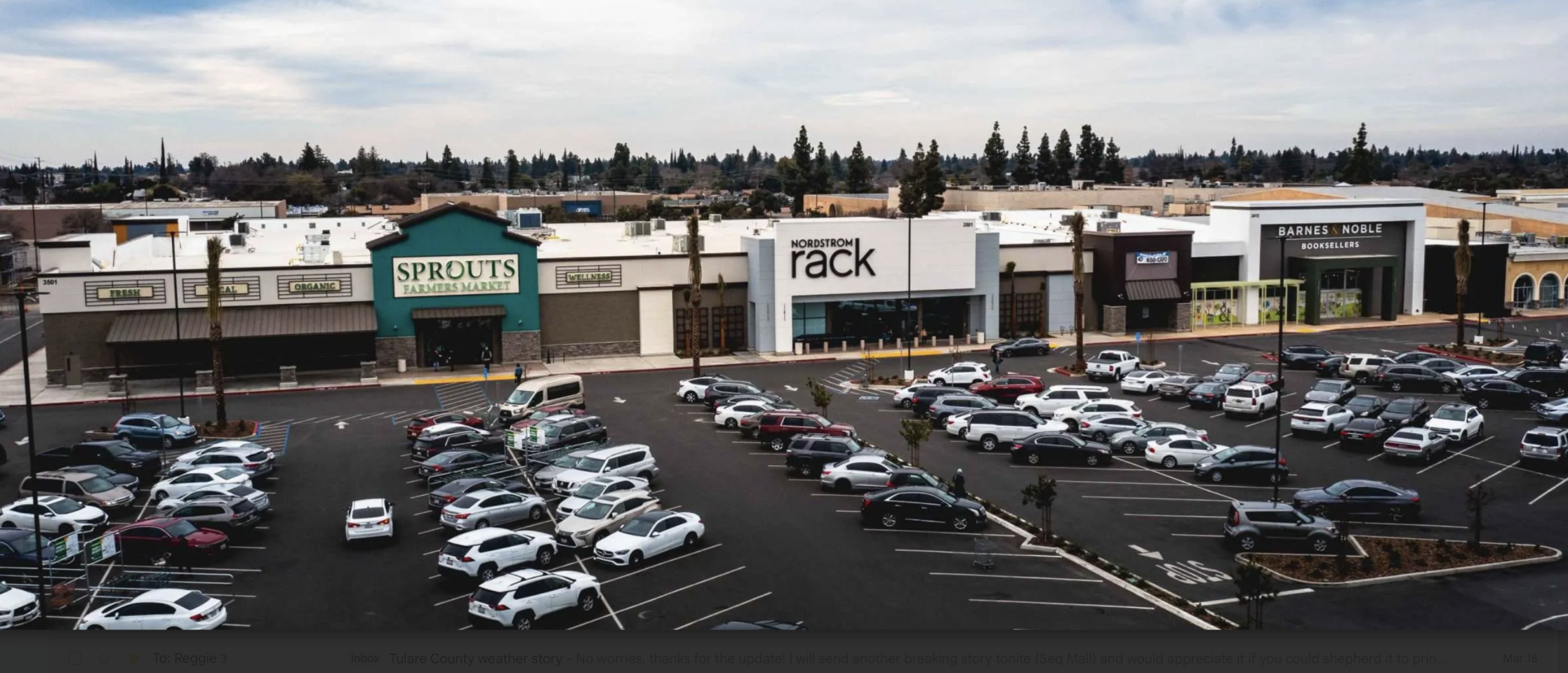
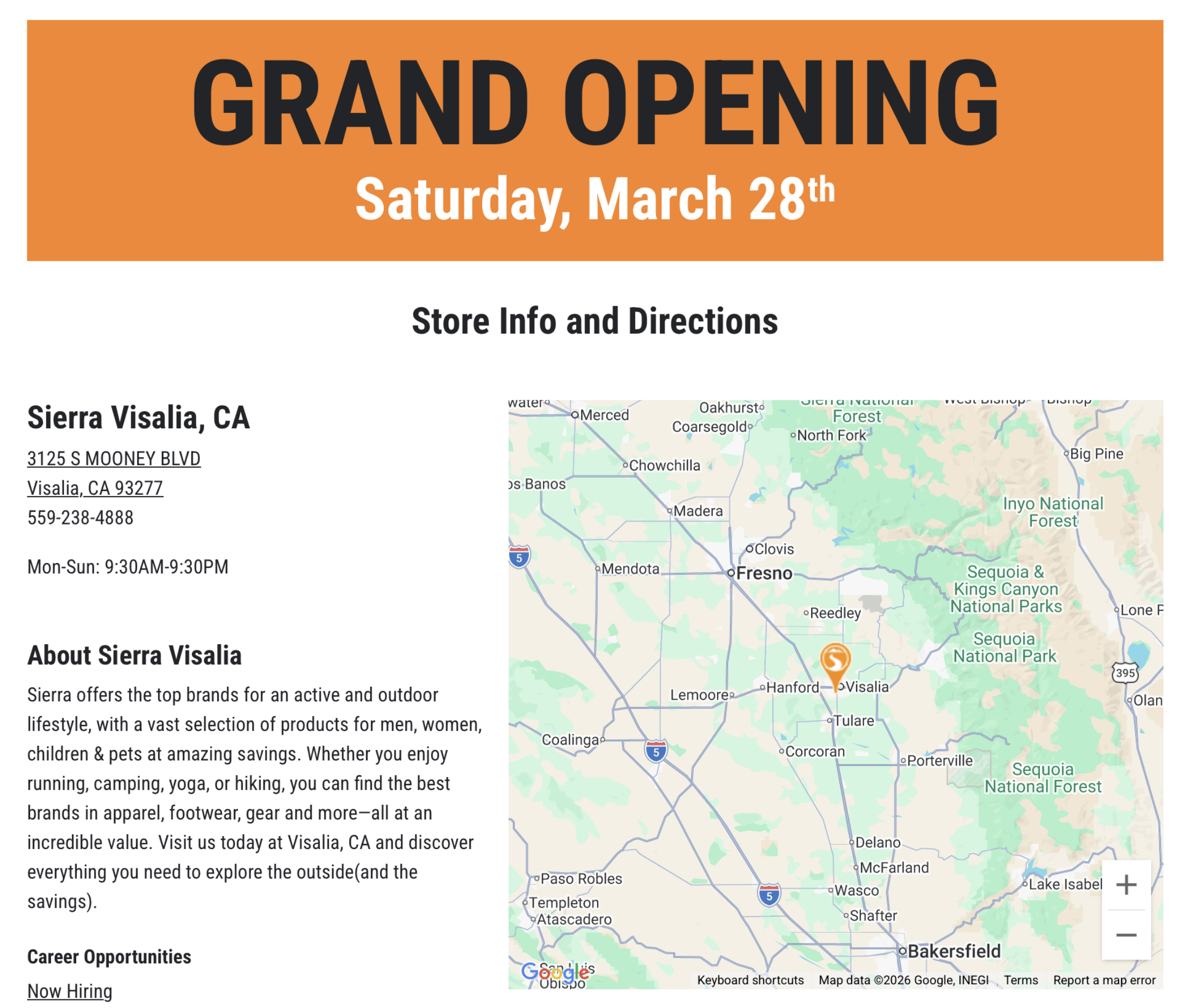
What did the growth limitation do? Take Sequoia Mall. It took a while but Visalia saw a transformation with four new retailers we never had – Sprouts, Nordstrom Rack,Barnes & Noble and now Sierra, an REI type outdoor store. A new gym, Crunch Fitness will replace the old Longs Drugs building.
Keeping the development boundary compact created a critical mass of development opportunity and ease of access for shoppers.
Northside growth
The growth limitation also spurred retailers to invest in a new vibrant shopping area north of Downtown along Hwy 63 as well in a part of the city that has historically been the low income area of town. Today it is the home to many national retailers- Target and Burlington- and restaurants including a second In-N-Out. The nearby retail also anchors new housing for Visalians in the north part of the city connected by walking trails and 4-lane landscaped thoroughfares- and a second way to get to Highway 99.
South Mooney is still strong but the north quadrant of the city snagged a second Costco that draws shoppers from northern Tulare County as the south city Costco draws from the rest of the county.All this boosts city sales tax revenue that has climbed regularly for decades. Now we will get a Sam’s Club and Chick-Fil-A on south Mooney want to be here too.
Collins pushed for design standards for a well planned industrial district that has impressed competing Fresno leaders with why Visalia continues to attract more industry.The city’s series of general plans has protected the big industrial area offering CEQA support against lawsuits while allowing for growth to the north – key to its success today.It is a huge job generator for Visalia with three Amazons, UPS and Ace Hardware and plans for new Carvana inspection center with 700 jobs likely opening next year.
Not every battle won
Collins didn’t win every battle over the decades. Collins fought against rezoning land on Plaza for an auto mall after dealers invested millions in the newly established east Visalia auto district- a battle he half-won with dealers today in both areas.He backed the idea of Mooney auto dealers to move to one of the auto districts leaving the retail strip to retailers Today the Plaza auto area includes used car dealers, CarMax now open and MyCarPark, about ready to open.
He half won the battle to limit retail development south of Packwood Creek.It turns out the city council did vote to allow growth for a large development to the south but the city has halted new projects at the Visalia Parkway. He lost the battle but not war.
He could not convince the County not to allow the Sequoia Gateway project at Hwy 99 and Caldwell proposed in 2018 but it appears market forces and slow pace of freeway construction have done the job to date.
The Visalia Chamber of Commerce announced Greg was Man of the Year in 2025. He was remembered for his strong advocacy for local parks, urban forestry (Tree City USA), and preserving Visalia’s historical character.Greg stepped down from council in late 2022.
Collins was also an author penning a book on water in the Valley in 2024. Called Seven Generations: The Past, Present and Future of the Tulare Lake Basin offering a one sentence summary. “The question becomes, will man learn to manage his water resources, or will he simply revert to business as usual?”
One review of the book suggests “The “Seven Generations” of the title comes from a principle of the Arapaho nation of indigenous people, who believed that decisions should be made in the present that will last through seven generations for that community to remain sustainable. Collins calculates that roughly five generations have elapsed since Californians began tinkering with the natural forces governing water in the Valley.”
Local dairy farmers are getting mixed messages from the marketplace. As more processing plants open in the Midwest and Texas, there are fewer buyers for local milk production. Kings county dairyman Joqaquin Contente says when Leprino closed their Lemoore East plant “farmers lost 80 loads of milk” that means dairies no longer had a” home” for some volume of production. That is happening even as California milk production is up 2.3% and farmers continue to add cows here and nationwide.
So what’s happening?
If there is too much milk, milk co-ops are trying to tap down the volume this spring when production typically ramps up, says the Daily Dairy Report.The report says in the April 17 release that “in California, milk is abundant, and dryers are running as hard as possible. As the spring flush overwhelms processing capacity, a major California cooperative is incentivizing producers to rein in milk output with steep discounts on any milk shipped above their monthly base volume. Last year, avian influenza dragged down California milk output and national NDM and skim milk powder (SMP) production slumped to a 12-year low. The California comeback matters. Last year, despite the bird flu, the Golden State accounted for 44% of U.S. NDMoutput.Now that California’s cows are healthy and happy again, production is up. U.S. milk powder output topped 2024 and 2025 volumes in January and February.”
Contente says he believes all the milk co-ops are exercising production controls, helping to keep prices profitable and penalizing overproduction.
Highest price ever
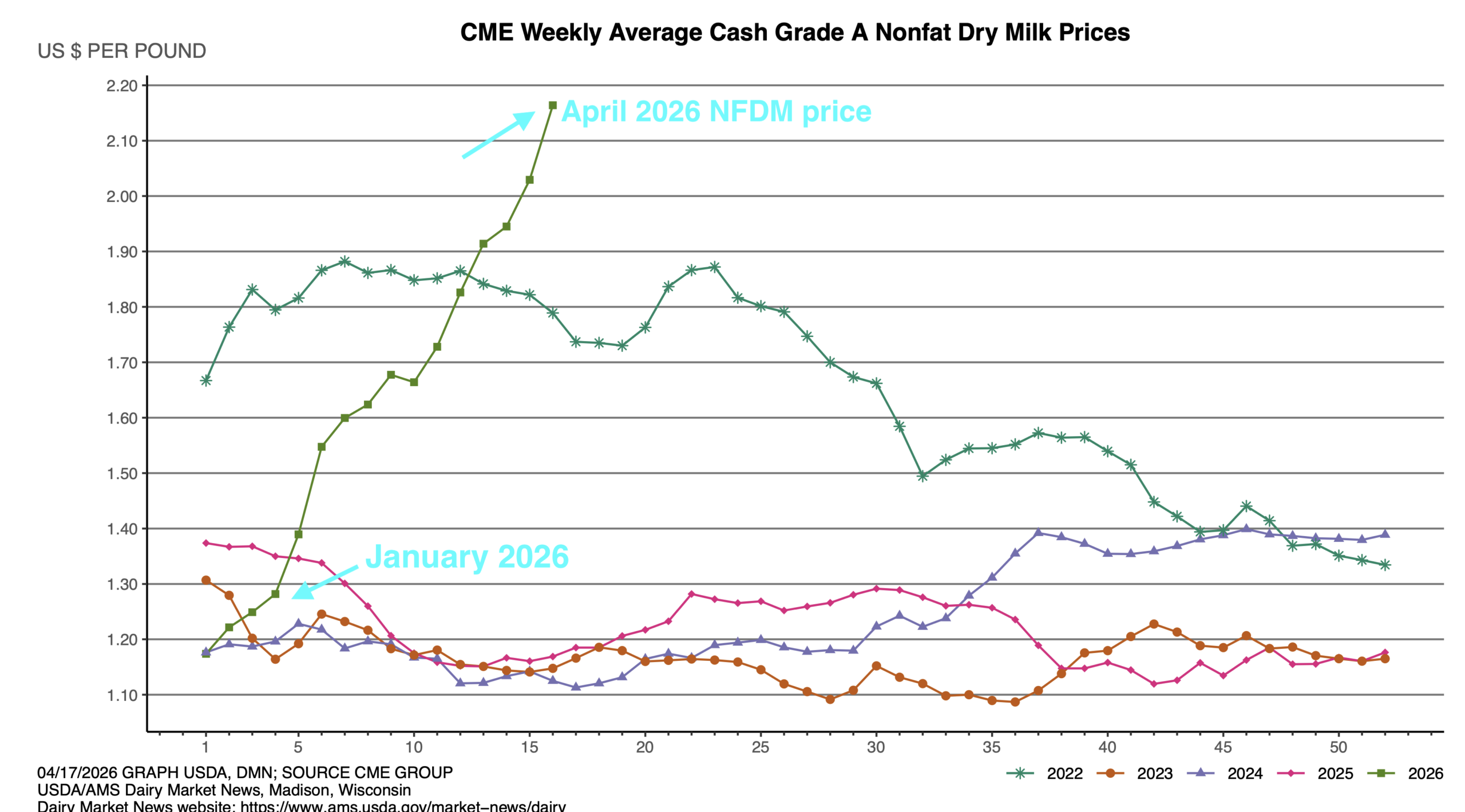
The co-ops appear to be succeeding. The nonfat dry milk (NFDM) price has run up in the past month to the highest price ever at $2.25 a pound today,more than a dollar higher than average on the CME cash market.The last time nonfat dry milk traded above two dollars per pound was in July of 2022.The run-up in price can be seen from the first of the year when the price was more typical at $1.17 lb. It’s almost doubled since then, highly unusual.
The high prices are benefiting the cooperative California Dairies, one of the biggest players in NDFM sales in the US. With headquarters and a big processing plant in Visalia, California Dairies Inc. (CDI), is the largest member-owned milk marketing and processing cooperative in California. They make some 900 million pounds of milk powder annually.The cooperative is co-owned by more than 300 dairy families. California Dairies markets milk powder both domestically and globally. Established in 1995, their DairyAmerica brand has command of approximately 50% of all milk powder produced in the US and is exported to 50 countries.
Processing milk requires high heat to remove the water content and at the CDI plant in Visalia they employ solar thermal heat for the dryers from a thousand solar collectors on the roof of their plant.Use of solar technology cuts the pollution from the plant installed in 2022.
So if there is too much milk, why are NFDM prices skyrocketing?
It seems likely that like other food and drink sectors there are real positive and negative impacts as Americans are shifting consumption choices,many of us on diets.In the case of some ag commodities, demand has dropped including for wine,beer, bread and high carb foods, many snacks and calorie-dense foods like potatoes.
About one in every eight U.S. adults is currently taking a GLP-1 drug, like Ozempic or Zepbound, according to the KFF Health Tracking Poll. Food industry surveys find a negative impact on consumption of fried chicken, fast food, bacon, sausage, pizza, and sugary foods and drinks like soda, candy, pastries, and desserts Since we are eating less pasta and pizza, tomato paste is impacted.All Together, this is a huge portion of the US food industry.
On the plus side, demand for high protein foods like milk powder that is used as an ingredient in hundreds of food products is suddenly very popular as a base for hot sellers like nutritional beverages, ultrafiltered milk and milk protein concentrate. NDFM is still used for sales to countries with little refrigeration like Mexico where about a third of our milk powders are sold.
Social media impact
Demand for protein seems to have a similar benefit for milk producers for formerly sleepy products like cottage cheese also now enjoying a boom. One report says “cottage cheese is experiencing a massive, social-media-driven resurgence (a 65% sales increase since 2021), transforming from a dated diet food into a trendy, high-protein staple. Driven by Gen Z on TikTok, it is celebrated for its versatility, high protein with 12g per serving) and creamy texture when blended.”
Also boosting dairy farmers profits is the generics-led Beef- on-Dairy trend that led to more animals on the farm. The Dairy Report notes ” It is remarkable that producers continued to add cows during the challenging margin period at the turn of the year and this dynamic suggests that other sources of income, such as beef sales, had a fundamental impact on producer decision making”
Demand for beef and high prices has propelled dairymen to convert some of their herd to beef, sending their young male calves to area calf ranches that do a big business with both beef animals and young future milk cows.
Kings County calf ranch
An industry report comments “By 2026, the dairy barn has effectively become the factory floor for the beef industry. Because a dairy cow calves every day of the year, the integrator (the dairy producer) can provide a steady, predictable stream of high-quality protein to the packer every single week. There is no calf crop season. There is only a continuous, scheduled flow.”
The trend is nationwide, says the American Farm Bureau. “Beef-on-dairy crossbreeding is the latest step in the evolution of dairy genetics and is now a key driver of the U.S. supply of both beef and dairy cattle. Some 72% of dairy farms are now incorporating beef genetics into their breeding programs, enhancing the marketability of dairy-origin calves by improving carcass quality and feed efficiency — traits highly valued by feedlots and packers. Crossbreeding, along with the widespread use of sexed semen, is helping stabilize beef supply while creating a reliable revenue stream for dairy producers.”
Beef-on-dairy crossbreeding uses beef semen like Angus on dairy cows to produce higher value calves.
A new proposed shopping center in Hanford has filed plans to include two big name restaurants as tenants. Those big names are Olive Garden and Chick-fil-A. The 6.5 acre shopping center is located on arguably one of the best real estate corners in town and is owned by the Tachi Yokut tribe. Just a country block off of Highway 198, the site is the southeast corner of 12th Ave. and Mall Drive.
The project has been developed by Marcus and Millichap and broker/developer, Chris Ajluni. He says the project is the result of popular demand by Hanford residents who may it clear to City of Hanford officials that these are the type of businesses the community would like to see locate in town. Talks between the city, the developer and the tribe resulted in the plan to develop the vacant parcel after many years of sitting idle says Chris.”It’s really a joint effort.”
Chris says that if all things go right, the two big restaurants should open for business in about a year.
Both restaurants are family favorites known for affordable menus that everyday Kings County residents can afford to visit now and then.
The Olive Garden news was first reported on social media after someone noticed ABC liquor license notice posted on the empty lot. ABC staff in Fresno confirmed the application by Olive Garden Garden saying that it typically takes 30 to 90 days for licenses to be approved.
Mr Ajluni says that plans for the Olive Garden as well as the Chick-fil-A include building more than the standard number of parking places since both are big draws. The Olive Garden would be located on the corner of 12th and Mall Drive and would be about 6500 square feet with 143 parking places.
The Chick-fil-A would build a double drive-through to accommodate heavy customer demand seen typically at this popular restaurant. The 5000 square-foot building would have 93 parking places
The site plan also shows the possibility of a third tenant as yet unnamed.
The Italian-themed Olive Garden is owned by Darden restaurants who operate more than 2,100 Olive Garden, LongHorn Steakhouse, Yard House, Ruth’s Chris Steak House, Cheddar’s Scratch Kitchen, The Capital Grille, Chuy’s, Seasons 52, Eddie V’s and Bahama Breeze restaurants. The Florida based company is publicly traded and has a long time location in Visalia.
Chick-fil-A is privately held and is the largest quick-service restaurant chain in the U.S. specializing in chicken sandwiches.
Based in Atlanta Georgia, they have more than 3000 locations nationwide. The company has been expanding in the Central Vally recently with Visalia getting a location under construction on S Mooney and one location pending in Tulare.
New Sam’s Club expected to open this year on S Mooney
The annual mid-year budget review was heard by the Visalia City Council this week- a crucial component in ensuring financial transparency and stability. It allows the City Council to assess major operating funds like the General Fund Budget, make adjustments if needed, and gain a clear understanding of the City’s current financial health, says a Dept of Finance report. For the rest of us – it’s an unique snapshot of how the local economy is doing.
As in past years, General Fund revenues are up in the major revenue categories.The City is currently in the process of preparing the two year budget for FY 26/27 and 27/28.
General Fund Revenues are projected to be higher than budgeted by $9.5 million, almost 10% more than the city budgeted for. The majority of the increase is due to higher than anticipated Sales Tax, Property Tax, Vehicle License Fee Swap, and All Other Revenue categories. The revenues for the adopted budget were conservative for anticipation of a possible recession, says the report. It’s hard to blame these staff estimates that almost always expect less. You could say the council is almost never disappointed that way.
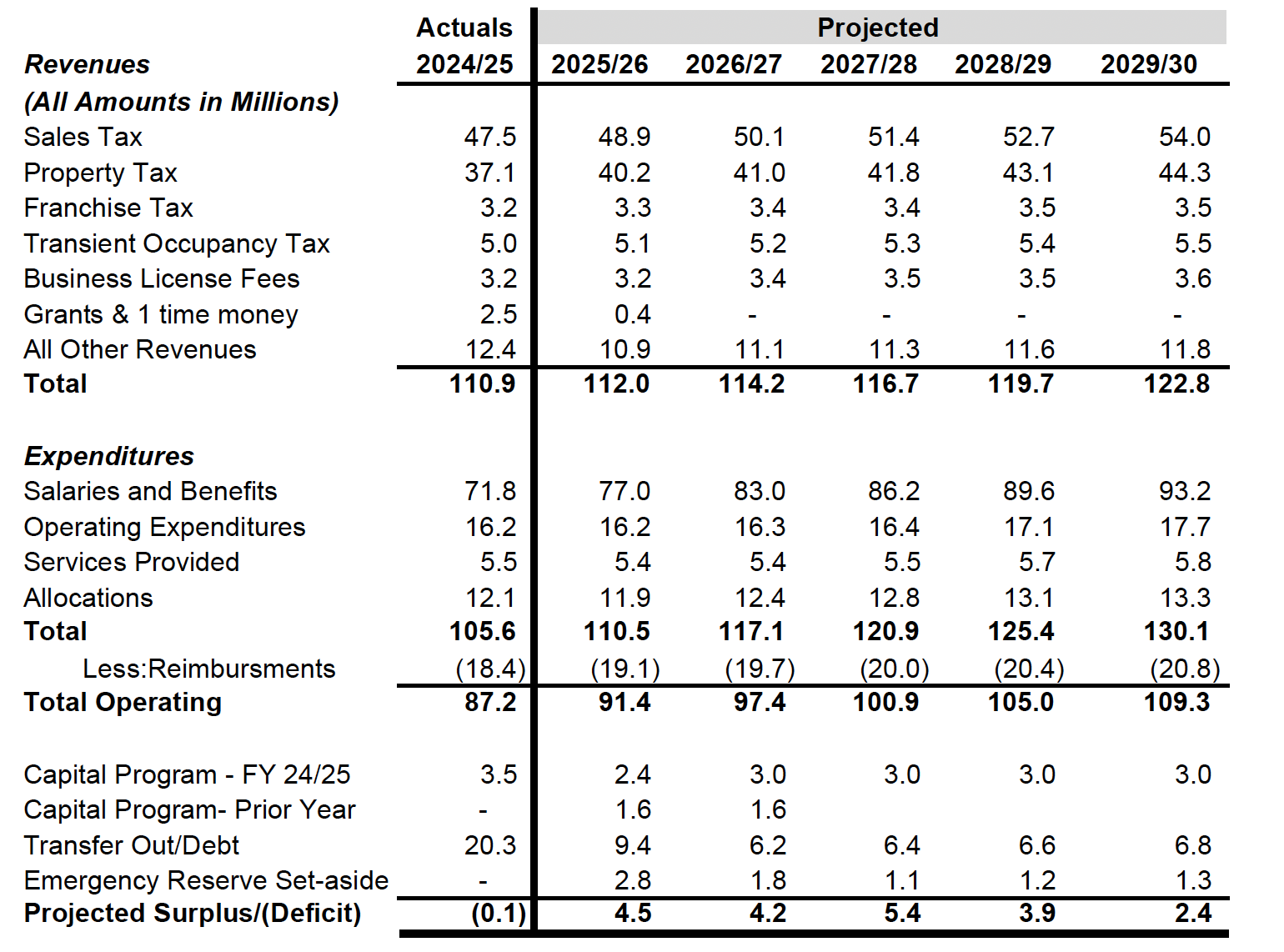
For 25/26 – the current year – Finance had estimated revenue to be $102.5 million. But it came in almost $10 million more at $112 million according to the latest estimate as the fiscal year nears an end, boosted by good sales and property tax increases.
Sales Tax is the largest revenue source for the General Fund and is projected to increase from budget by $2.3 million (5%). Compared to last year’s revenues, sales tax is projected to increase by $1.4 million or 3%.The 3% projected growth is the highest growth since FY 21/22. This increase reflects the City’s diverse economic structure, including business-to-business activity within the industrial parkContinued residential and commercial development is also strengthening the sales tax base and drawing additional taxable activity that might otherwise occur in neighboring cities.
Property Tax is the second largest revenue source for the General Fund and is projected to increase from budget by $3.7 million or 7%. Compared to last year’s revenues, property tax is projected to increase by $2.2 million (10%). This is due to an increase of assessed property values from the County and the continued real estate transactions with higher prices Visalia’s property values continue to increase, which creates higher property taxes when the property is sold. In addition, new commercial and residential growth has continued in Visalia. This projection is provided to the City by the County which is based on the property assessments calculated for the year in September.
Transient Occupancy Tax (TOT) or bed tax is projected to have an increase from the budget of $407,600 (8%).
Operating Expenditures – are projected to be higher than the budget by $3.9 million mainly due to wage and benefit increases that were negotiated with the bargaining units after the budget was prepared. A large portion of the increase comes for the police department budget making up $2.4 mil of the $3.9 mil jump.
Screenshot 2026-04-19 at 6.51.43 AM.png
Revenue looking up in Visalia
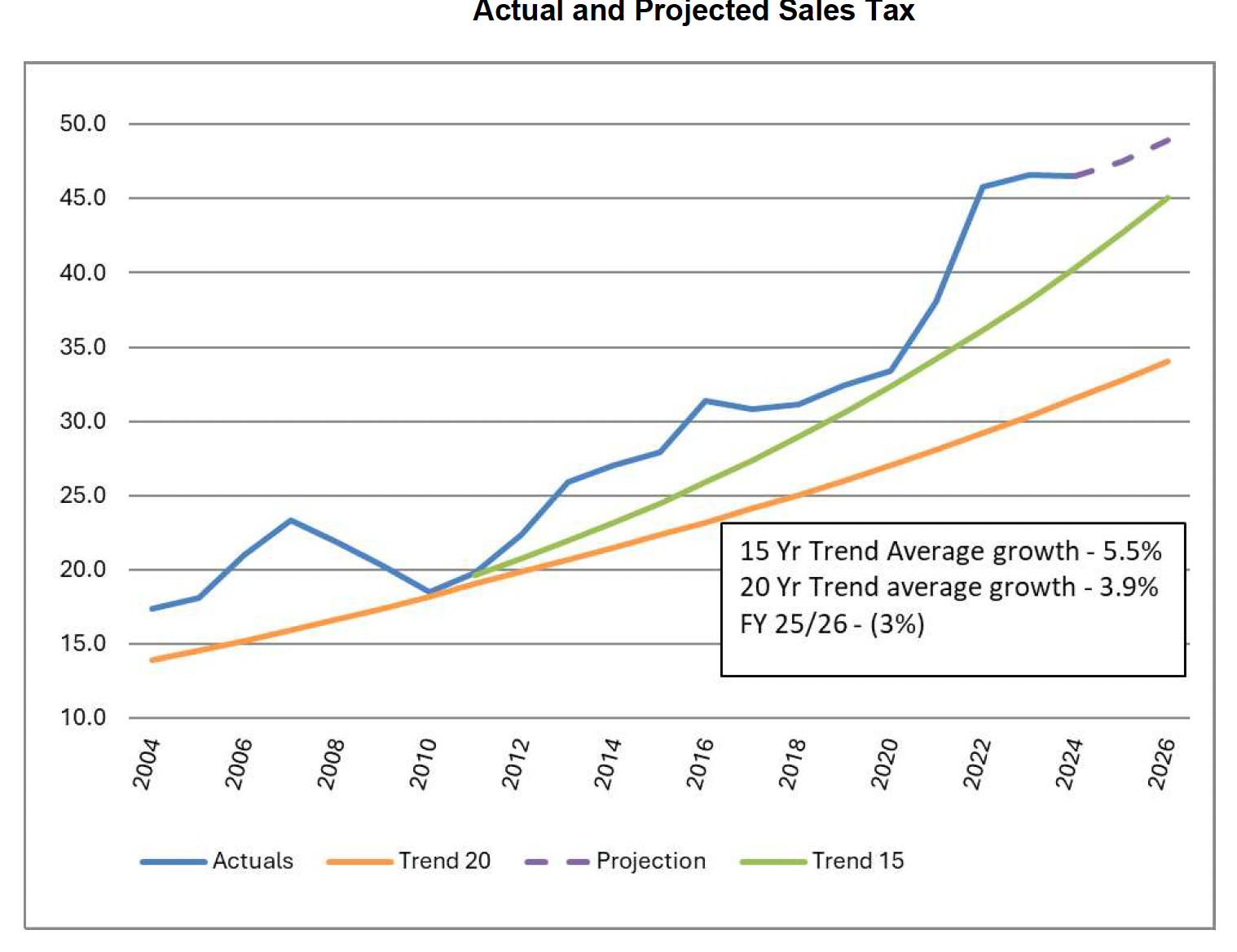
Actual and Projected Sales Tax, shows the projected sales tax revenue has been above the 15-year average growth of 5.5% since 2011. But sales tax continues to compete with the high cost of living such as rent, utilities, health care, and entertainment. These items decrease the amount of money available to spend on tangible items which results in less sales tax.
the city’s largest revenue source- sales tax- was only $18mil in 2010 but should grow to over $50mil next fiscal year
The 3% projected growth is the highest growth since FY 21/22. “This increase reflects the City’s diverse economic structure, including business-to-business activity within the industrial park. Continued residential and commercial development is also strengthening the sales tax base and drawing additional taxable activity that might otherwise occur in neighboring cities.
So what does the Dept of Finance see going forward?The city’s largest revenue source- sales tax- was only $18 mil in 2010 but should grow to over $50 mil next fiscal year, 26/27, says the city. The estimate may not include expected big sales tax revenue generators like the new Costco, the new Sam’s Club and new Amazon that will come on line over this coming fiscal year. The city sees a budget surplus of over $4 mil annually in coming years unless the economy hits the skids.
Derrel’s Mini-Storage plans two new Visalia locations
Storage king Derrel’s Mini-Storage already has six locations in Visalia and is working on two more. One will be across from the new northside Costco on Riggin on a 20-acre site he recently purchased near the SW corner of Riggin and Shirk. A second location is under construction on another 20-acre site east of Visalia near the old drive-in movie property along East 198.
Maverik travel stores plan east 198 store
Maverik Travel Centers are expanding in California with locations serving the Central Valley.The company has an existing location in Lemoore and a site near Cartmill in Tulare under construction. Now they are planning on an East 198 spot just beyond the Visalia city limits.
Sequoia Park visitation up this year
Recreational visits to Sequoia National Park are up about 13.6 % during the first 3 months of 2026 after a banner year in 2025. In the past three years the park has recovered from the low COVID-era numbers in 2020 of 796,000 visitors, ramping up to 1.3 million in 2024 and 1.38 mil in 2025.
UC Berkeley Snow Lab in the Tahoe area after having virtually no snow on the ground last week,they received nearly 4 feet over a 3-day period. Here is their blog.
Plenty more #snow fell yesterday! Here’s a look at the numbers from our recent snowfall: 1-day ❄️: 21.1″ (53.5 cm) 2-day ❄️: 34.6″ (88 cm) 3-day ❄️: 42.5″ (108 cm)
Despite still having a below average snowpack due to the record-warm temperatures that we’ve had all winter, this snow will help a lot. We’ll see it melt and runoff into streams and reservoirs, re-moisten the soil and vegetation, and will delay vegetation drying out, which will help with the fire season. Fingers crossed we see more in the next few weeks!
Tahoe forecaster Bryan Allegretto says as of April 6 “Mostly sunny and mild through Wednesday. Then a pattern change to colder and unsettled weather starting on Thursday, the 9th, possibly lasting for 10+ days into the 3rd week of April. Rain and snow that could bring measurable snowfall to the mountains over the period.” This hopeful prediction comes as the latest monthly Tahoe snow survey found “no measurable snow.”
Indeed the whole state could get some significant rainfall May 15, 18 and 21 according to one GFS forecast.Here is a look at a prediction for May 18
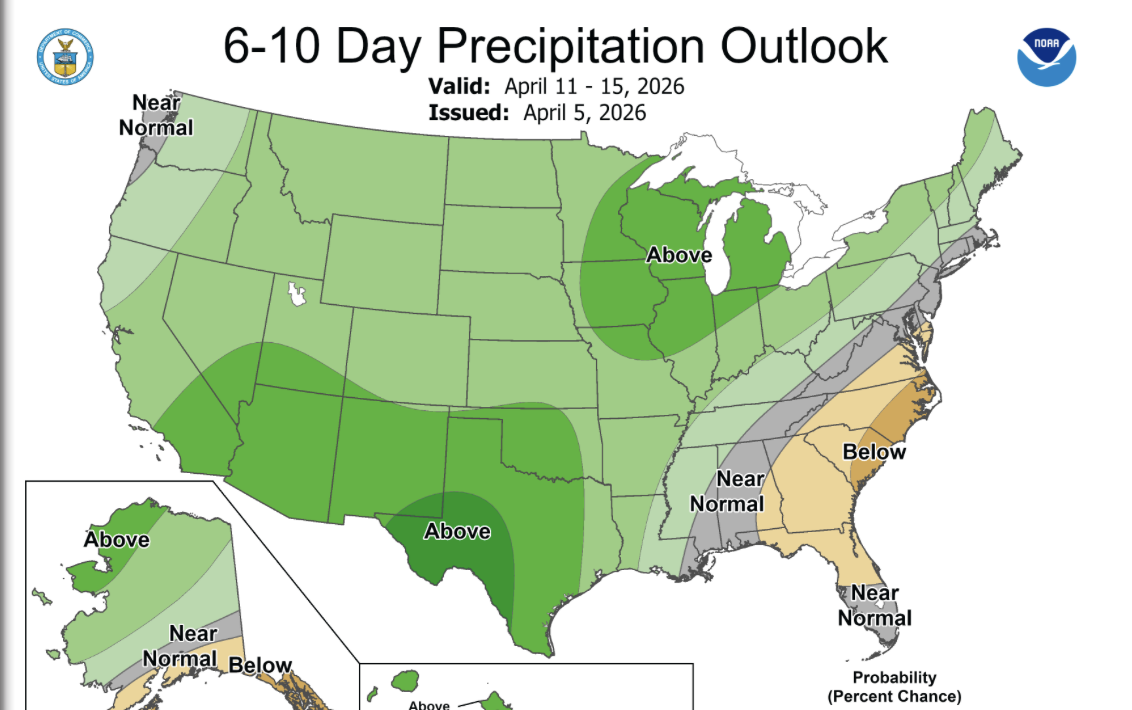
There is more in the offing sooner as well from the Climate Prediction Center map seen below with rain hitting the south coast Thursday of this week.
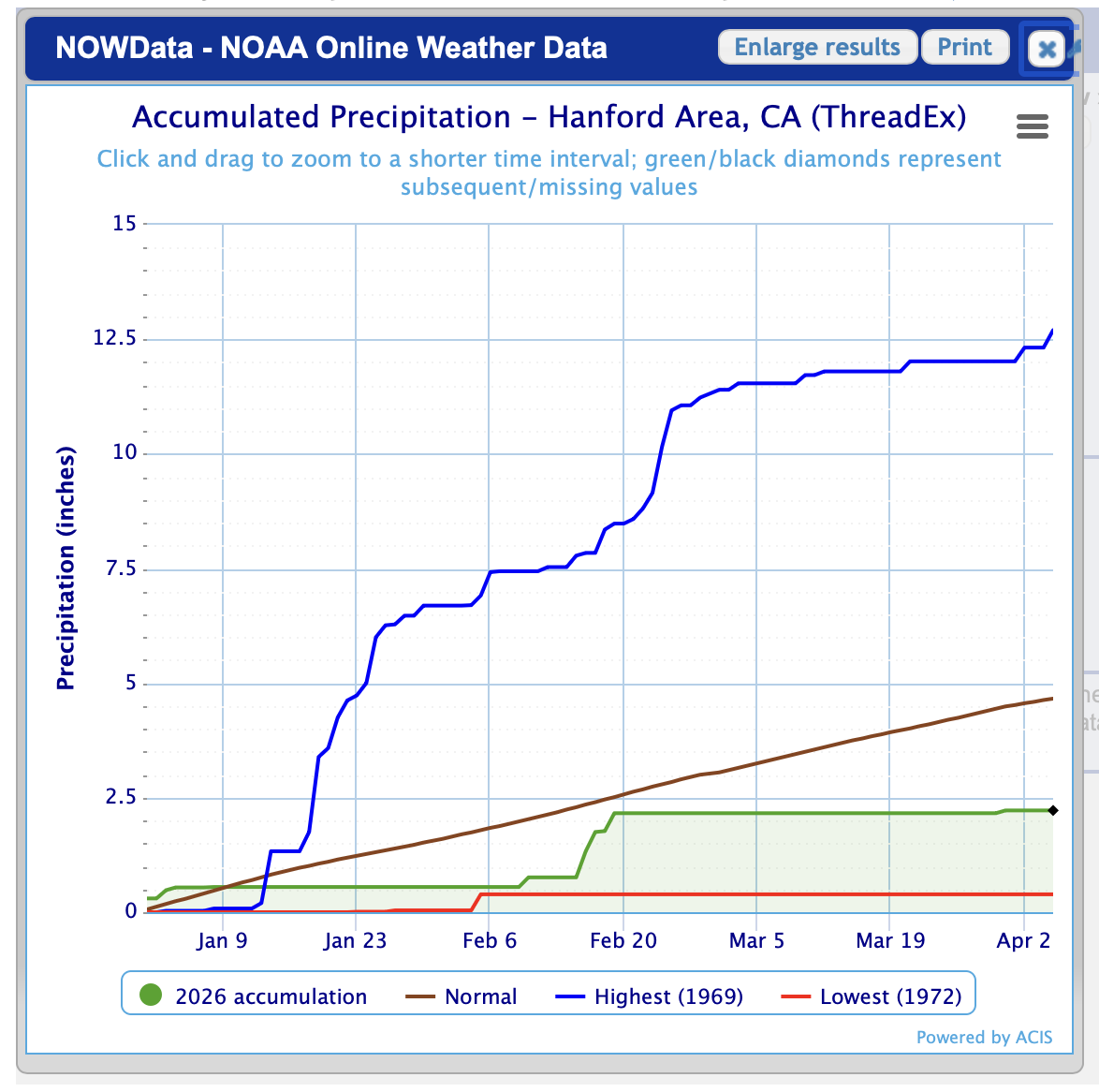
The on -off switch for precip was definitely off in March with the Hanford National Weather Service office receiving just 0.06 of an inch all month when it would normally get about 1.7 inches in March.
Local rainfall picture in two charts
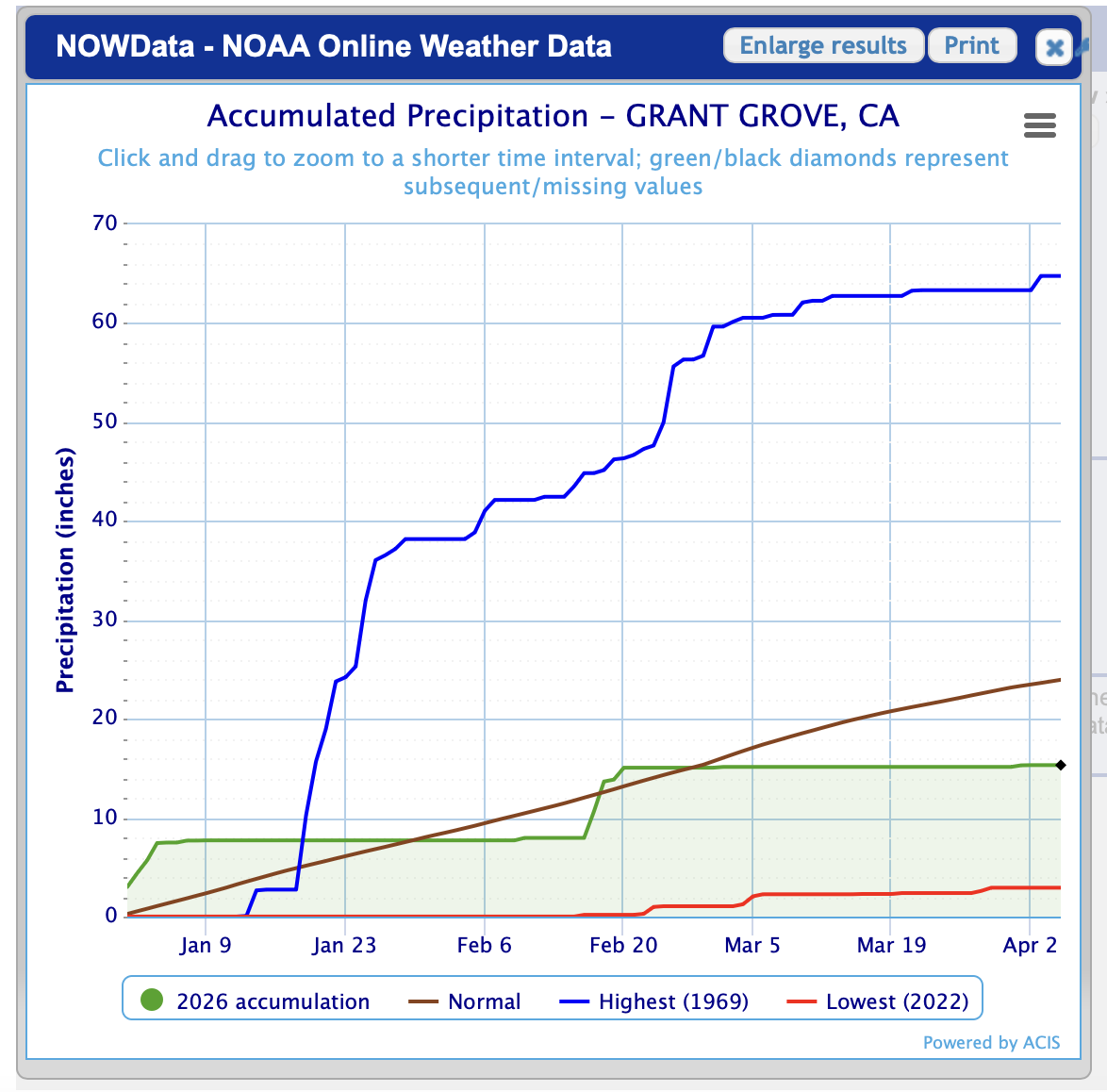
NWS precip charts for Hanford and Grant Grove tells the story of rainfall so far in 2026, both on the Valley floor and in the Sierra. In Hanford the there was 2.4 inches in the bucket since January ,about half the average (brown on chart). In the sierra the picture is brighter at about 15 inches so far compared to an average of 24 in.The 6000ft weather station was pounded with 65 inches in the winter of 1969.
Fast growing Crunch Fitness says it is coming to Visalia at the Sequoia Mall and it’s already inviting prospective members to sign up. In multiple posts on social media, including Instagram, the fitness chain isn’t shy about announcing what would be located in a new 41,000 square-foot facility 3535 S Mooney at the mall’s SW corner, approximately where the former Longs Drug/CVS store was.
Property owner Dave Paynter has filed construction plans to add onto the former 28,000sf drug store to accommodate the requirement for a larger gym typical for Crunch. The construction project is valued at $12 million.But Paynter has not revealed the tenant. Now the tenant has been busy promoting its Visalia plans.
The company has some 550 gyms in 41 states and 7 countries according to their website. Central California locations for Crunch include two gyms in Fresno and one in Santa Maria.
Crunch would sport the largest gym in square footage in Visalia with plenty of competition from numerous fitness centers in town including Planet Fitness who has more locations around the US than Crunch.
The company says once it opens, the Visalia location is expected to offer a full range of Crunch Fitness amenities, including:
Training Areas: HIITZone functional training with indoor turf, Olympic lifting platforms, and free weights up to 120 lbs. Cardio & Machines: “Miles of Cardio” with treadmills, ellipticals, and rowers. Recovery & Wellness: Sauna, HydroMassage®, and tanning services. Classes: Over 50 group fitness classes per week, including Yoga, Pilates, and Ride (cycling). Additional Services: Personal training, Kids Crunch childcare, and full-service locker rooms.
Membership and Offers Crunch is currently offering special “Founding 500” perks for early sign-ups. Base Membership: Starting as low as $9.99/month. Founders Deal: Join for $1 down and get your first month free. Member Swag: Early sign-ups may receive a free limited edition T-shirt, water bottle, and swag bag. Access: Membership options include 24-hour access once the facility is operational. For developer Dave Paynter, the addition of this popular gym to the retail lineup at the mall continues an upgrade of the center with new tenants not yet in Visalia and room to add more. This month the new Sierra outdoor sports store will open in the former Bed Bath & Beyond location.
Mr Paynter has also been busy a block away as well attracting a new national drive-thru coffee place- 7Brew -to the former Cask & Cleaver spot in the Dick’s shopping center.
Looks like Visalia’s midstate location and available industrial acreage has attracted another major e-commerce company that could bring some 700 new jobs to town.
Arizona-based Carvana used car dealer has filed plans to build a 172,000 sf vehicle inspection and reconditioning center (called IRC) in the Visalia Industrial Park. A site plan review hearing will be held April 1 to discuss the $42 million project that will be located at the NE corner of Riggin and Kelsey. The site is next to Amazon on former ag land planted to an orchard (zoned industrial) and now owned by Seefried Industries. It is the first development on a 284 acre industrial parcel that was only recently annexed into the city limits.Seefried acquired the land not far from the new Costco from the Ritchie family on the city’s northern tier.
The site plan says the big auto inspection complex will need 100 acres to accommodate thousands of parking places. Work will carry on daily but customers won’t ever visit the place.
Carvana has filed an operational statement along with their plans submitted to the city describing the facility.”The project creates high-quality jobs, including vehicle technicians,operations staff, and administrative personnel. At capacity the project will generate more than 700 full time jobs. Employee Benefits: In addition to Statutory Benefits, Carvana offers on the job training programs, education reimbursement through Carvana KEYS, and tool,ASE and CDL reimbursement.”
Carvana uses an e-commerce platform to buy and sell used cars. It brings the car to the buyer by bypassing the usual dealer-centered buying process.Like some other auto retailers ,they say they are a no-haggle seller.
The new center will provide vehicle acquisition, inspection and reconditioning of cars and is expected to serve Central California transactions.
The publicly-traded company has several other large-scale inspection and reconditioning centers in the state, including in Tracy and Rocklin, north of Sacramento.
Founded in 2012, Carvana, like other e-commerce companies, pushes to speed customer deliveries-now including same-day service when you can both order and receive your car.
By comparison, the Rocklin center is 190,000 ft.² and sits on about 73 acres. It serves as a major hub for Northern California fulfillment and support same-day delivery to the Bay Area. In 2025 Carvana converted a 150 acre wholesale auction site owned by the company ADESA to a Carvana IRC in Tracy and has almost 25,000 parking spaces that support this regional retail and wholesale reconditioning center. There’s also a center in the LA area and some 17 across the nation.
With the operation of these IRC inspection and reconditioning centers, Carvana touts that it carries on a detailed inspection, mechanical repair,detailing and photography process to market the car. Here you could find a paint booth,mixing rooms, detailing and mechanical repair stations. Every vehicle undergoes a 150-point inspection to ensure it has no reported accidents, frame damage, or fire/flood damage.
The company says based on the inspection results, vehicles receive necessary mechanical work to bring them up to standard. This includes typical vehicular maintenance such as oil changes, fluid checks and top-offs, replacement of worn tires, new brake pads/rotors, and other small-scale repairs.Crucially, the facility is designed for standard maintenance, and will not perform major processes like engine rebuilds or extensive body work.
Battle of rivals
The new Carvana complex follows their rival – used car giant Carmax – who set up in Visalia last year in a 59,000 ft.² showroom on Hillsdale in the industrial park. For Carmax, this was the 250th location for what was said to be the largest used car dealer in the nation.
Both companies say they simplify the buying and selling of used cars online, although Carmax allows the customer to inspect the car at the dealership while the Carvana customer doesn’t see their car until it arrives at their house. Carvana does have a 7-day return policy while Carmax offers a 30-day return.
Now it appears as the e-commerce king. Amazon may enter the car business as well, expected to work with existing automobile dealer networks to help them compete against the onslaught of e-commerce companies. As it is,the traditional car dealers’ hold on car sales for both new and used vehicles continues to be tested.
Sources say Amazon Autos is a dealer-first digital marketplace that’s helping the traditional brick-and-mortar retailers expand their reach through its e-commerce prowess. Llocal dealers will list their vehicle inventory on the Amazon Autos marketplace and will retain control of the transaction, pricing, service agreements, and financing. Buyers will be able to browse Amazon vehicle listings, process a trade-in, submit a down payment, apply for financing, and schedule a pickup time through a typical Amazon shopping experience.
Visalia appears to the turf these e-commerce companies compete on, If Visalia is the host, Seefried is the cook as developer to bring in industrial clients like Carvana here, Amazon in other markets and Ace Hardware who came to Visalia to expand its e-commerce sales a few years ago.
In Visalia, Seefried built and leased the 1.2 million square-foot Ace Hardware distribution center on Plaza Drive — now in full operation. In related news, Ace Hardware has installed a $30 million conveyor system expected to automate deliveries from Visalia to all parts of California in a speedy manner. The end result is expected to be higher e-commerce sales from Visalia that boost the city’s sales tax revenue as well as property tax. Visalia residents are becoming aware of the trend as a Visalia Rotary Club recently toured the huge complex.
By contrast Visalia economic benefits will not include collecting sales tax on each Carvana sale since Visalia will not be considered as the point of sale.
Billions fewer birds are flying through North American skies than decades ago and their population is shrinking ever faster, mostly due to a combination of intensive agriculture and warming temperatures, a new study found.
WASHINGTON (AP) — Billions fewer birds are flying through North American skies than decades ago and their population is shrinking ever faster, mostly due to a combination of intensive agriculture and warming temperatures, a new study found.
Nearly half of the 261 species studied showed big enough losses in numbers to be statistically significant and more than half of those declining are seeing their losses accelerate since 1987, according to Thursday’s journal Science. The study is the first to look at more than the total bird population by examining the trends in their decrease, where they are shrinking the most and what the declines are connected to.
“Not only are we losing birds, we are losing them faster and faster from year to year,” said study co-author Marta Jarzyna, an ecologist at Ohio State University. “Except for forest birds, almost every group is doing poorly. So we need to ask ourselves a question. How do we protect these groups of birds?”
The only consolation is that the birds that are shrinking in numbers the fastest are species — such as the European starling, American crow, grackle and house sparrow — with large enough populations that they aren’t yet at risk of going extinct, said study lead author Francois Leroy, also an Ohio State ecologist.
RELATED STORIES Giant snails and tiny insects threaten the South’s rice and crawfish farms Giant snails and tiny insects threaten the South’s rice and crawfish farms Researchers find Antarctic penguin breeding is heating up sooner, and that’s a problem Researchers find Antarctic penguin breeding is heating up sooner, and that’s a problem Once rare in Nevada, winter bald eagle sightings now common Once rare in Nevada, winter bald eagle sightings now common “The thing is that species extinction, they start with a decline in abundance,” Leroy said, adding that “the decline is somehow maybe giving a preview of what it could lead to in terms of species extinction.”
Cornell University conservation scientist Kenneth Rosenberg, who wasn’t part of the study, said the species declining fastest in the new research “are often considered pests or ‘trash birds,’ but if our environment cannot support healthy populations of these extreme generalists and extremely adaptable species that are tolerant of humans, then that is a very strong indicator that the environment is also toxic to humans and all other life.”
A 2019 study by Rosenberg of the same bird species found North America had 3 billion fewer birds than in 1970, but didn’t look at changes in the rate of loss or causes.
Biggest bird losses in areas warming most A mourning dove perches on a tree Wednesday, Feb. 25, 2026, in Milford, Ohio. (AP Photo/Joshua A. Bickel) A mourning dove perches on a tree Wednesday, Feb. 25, 2026, in Milford, Ohio. (AP Photo/Joshua A. Bickel)
The biggest locations for acceleration of bird loss were in the Mid-Atlantic, the Midwest and California, the study found. And geography proved important when Leroy and Jarzyna looked for reasons why so many bird species are shrinking ever faster.
When it came to population declines — not the acceleration — the scientists noticed bigger losses further south. When they did a deeper analysis they statistically connected those losses to warmer temperatures from human-caused climate change.
“In regions where temperatures increase the most, we are seeing strongest declines in populations,” Jarzyna said. “On the other hand, the acceleration of those declines, that’s mostly driven by agricultural practices.”
Farmland issues speed up bird declines A red-winged blackbird eats from a feeder Wednesday, Feb. 25, 2026, in Milford, Ohio. (AP Photo/Joshua A. Bickel) A red-winged blackbird eats from a feeder Wednesday, Feb. 25, 2026, in Milford, Ohio. (AP Photo/Joshua A. Bickel)
The scientists found statistical correlations between speeded-up decline rates and high fertilizer use, high pesticide use and amount of cropland, Leroy said. He said they couldn’t say any of those caused the acceleration of losses, but it indicates agriculture in general is a factor.
“The stronger the agriculture, the faster we will lose birds,” Leroy said.
Jarzyna said there is a “strong interaction” between climate change and agriculture in their effect on bird populations.
“We found that agricultural intensification causes stronger accelerations of decline in regions where climate warmed the most,” Jarzyna said.
McGill University wildlife biologist David Bird, who wasn’t part of the study, said it was done well and that its conclusions made sense. With a growing human population, agriculture practices are intensified, more bird habitats are being converted to cropland, modern machinery often grind up nests and eggs and single crop plantings offer less possibilities for birds to find food and nests, said Bird, the editor of “Birds of Canada.”
“The biggest impact of agricultural intensity though is our war on insects. Numerous recent studies have shown that insect populations in many places throughout the world, including the U.S., have crashed by well over 40 percent,” Bird said in an email. “Many of the birds in this new study showing population declines depend heavily on insects for food.”
Birds do a lot for humans A great blue heron takes off Sept. 26, 2025, in Cincinnati. (AP Photo/Joshua A. Bickel, File) A great blue heron takes off Sept. 26, 2025, in Cincinnati. (AP Photo/Joshua A. Bickel, File)
This study is both “alarming” and “sobering” because of the sheer numbers of losses and the patterns in those accelerating declines, said Richard Gregory, head of monitoring conservation science at University College London. He was not part of this research.
The paper shows that people need to change the way they live to reduce human-caused warming, reduce agricultural intensity, monoculture of crops and broad application of chemicals, said Cornell University ornithologist Andrew Farnsworth, who wasn’t part of the study.
“Here is why this study is especially important. Birds do a lot for humans,’’ McGill biologist Bird said in an email. ”They feed us, clothe us, eat pests, pollinate our plants and crops, and warn us about impending environmental disasters. With their songs, colors, and variety, birds enrich our lives… and recent studies show that their immediate presence actually increases our well-being and happiness.