USDA reports that the initial 2026-27 California Navel orange forecast is 84.0 million cartons, higher than average over the past decade.
Survey data indicated a fruit set per tree of 388, up 3 percent from the previous year. Fruit set in Tulare County is 421 per tree, higher than average. The average diameter from the survey was 2.176 inches, down less than 1 percent from the previous year.
Bearing acreage of navels is estimated at 109,000, which results in a forecasted yield of 771 cartons per acre. Bearing acres of navels are down from 140,000 in 2020 to 109,000 acres today.Yet growers are producing more fruit on the same piece of dirt in part because trees are planted more densely.
CARA CARA PRODUCTION FORECAST
Cara Cara variety production is forecast at 13.0 million cartons. Survey data indicated a fruit set per tree of 312, up 8 percent from the previous year. The average diameter from the survey was 2.231 inches, up less than 1 percent from the previous year. Bearing acreage is estimated at 15,000, which results in a yield of 867 cartons per acre Bearing acreage of this tangy variety has more than doubled since 2020.
Mandarin Forecast
California Department of Food and Agriculture (CDFA), in cooperation with the U.S. Department of Agriculture (USDA) National Agricultural Statistics Service (NASS), released its 2026/2027 California Mandarin Objective Measurement Report.The initial estimate for Tango and W. Murcott Afourer varieties is 38 million 40-lb. cartons, up 5 million cartons from last year’s estimate.
Fruit set is down 2% from last year at 493 per tree. Diameter is up less than 1% from last year at 1.365 inches. Bearing acreage is estimated at 36,000, which results in a yield of 1,056 40-lb. cartons per acre. This is the fourth year of the Mandarin production forecast.
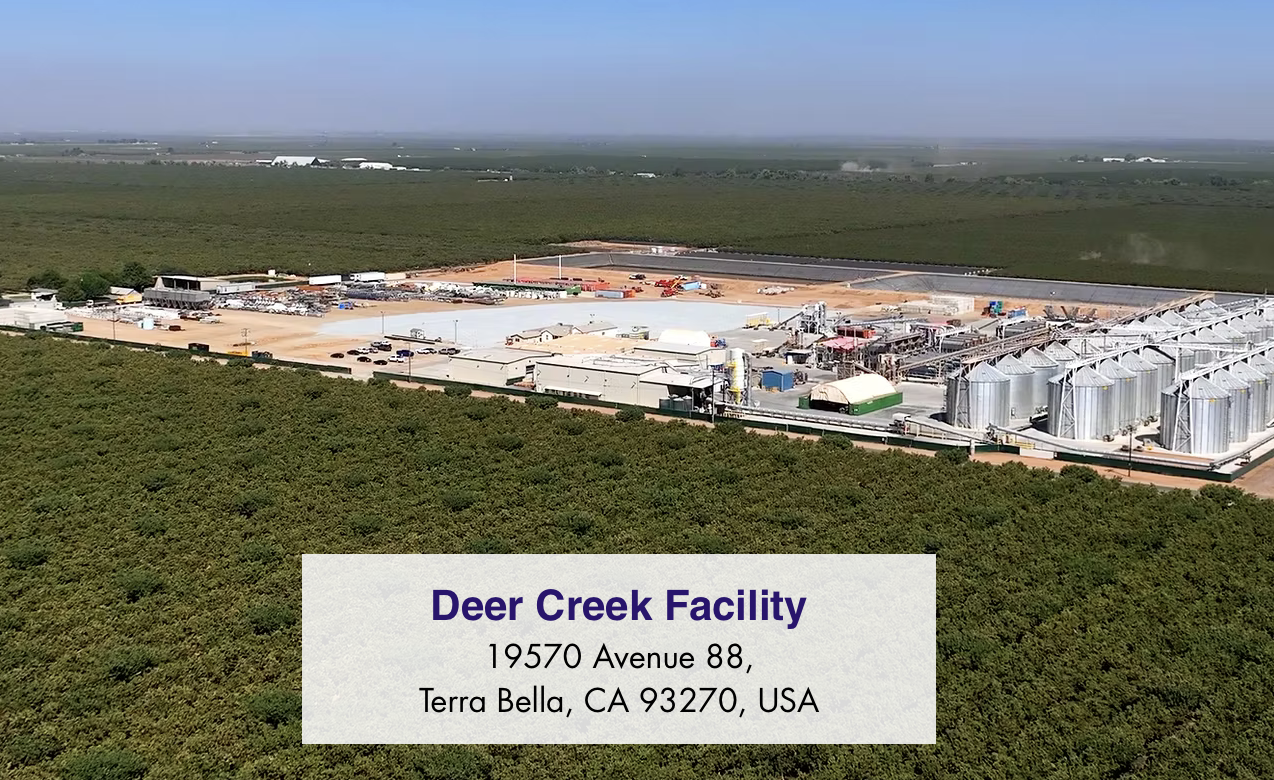
The number two pistachio processor in the nation, Setton Pistachios now has five campuses handling and processing the popular nut in California. There is a new northern California plant near Davis in Zamora,their main plant in Terra Bella California in Tulare County, a plant near Terra Bella that the company bought out of bankruptcy in 2025 (former Touchstone) now called Brooklyn and what they call Plant No 2 or Deer Creek. Back in 2020 the company announced they wanted to expand this plant and recently they updated that plan. Setton has operated its main pistachio processing plant in Terra Bella since 1995. In August 2006, they applied to operate a new satellite plant (Plant No. 2- Deer Creek)on Avenue 80 between Roads 184 and 192, approximately eight miles from its existing pistachio processing plant in Terra Bella (Plant No. 1). Plant No. 2 is designed to receive, hull, dry, and store pistachios. The final processing and packaging is done at Plant No. 1. This summer Setton updated their plan to expand Plant 2 adding two new logistics and shipping buildings ,130,00 square feet each,16 new silos and two new scales with a scalehouse.The facility has some 55 silos currently, key to handling the increase in pistachio volume expected to grow in coming years . This year, the nut crop is expected to decline by as much as 60% due to extremely hot weather during the bloom this past March. But Setton has always planned for the long term. They also have pioneered an organic facility in nearby Ducor.The number one pistachio producer, Wonderful Pistchios has commented on the challenging crop year.
According to the July 2026 issue of Nutfruit Magazine, the official publication of the International Nut & Dried Fruit Council (INC), the upcoming Fall 2026 crop at the time of reporting was forecasted at 315,000 metric tons (about 695 million pounds), which is about 60% below last year’s 2025 on-year crop and about 40% down from the previous off-year in 2024. More recent orchard evaluations project an even greater reduction in crop.:asst year thr indsyty ptdeced a record 1,57 bioolon pound crop.
This level of reduction is solely attributed to extreme heat during the critical spring bloom period, including a record-setting March with more than 10 days exceeding 90°F (~32°C). These conditions led to significant cluster and nut drop, reducing overall yield potential across California orchards.
“These high temperatures and conditions were entirely outside of a pistachio growers’ control,” said Andy Anzaldo, Senior Vice President of Grower Operations at Wonderful Pistachios. “While pistachios naturally follow a two-year cycle, the 2026 crop will be lighter than a typical off year due to these weather dynamics.”
Pistachios are what growers refer to as an alternate-bearing crop, meaning trees naturally cycle between larger yielding “on years” and smaller crops during “off years.” This alternating pattern has been a defining characteristic of pistachio production for decades and is factored into long-term planning across the industry.
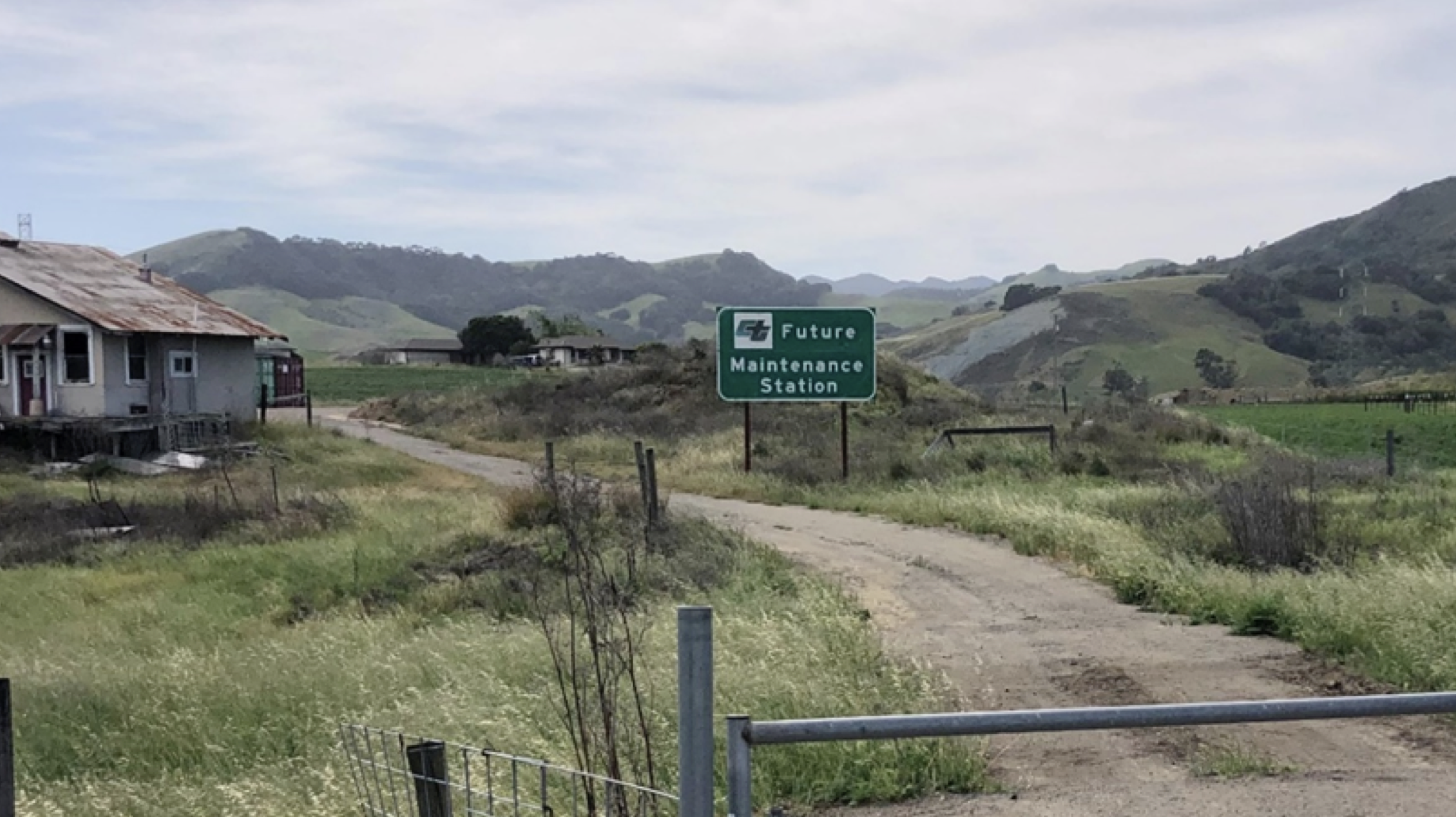
Caltrans is moving forward with plans to build and operate a new District 5 Maintenance Station and Equipment Shop on approximately 56.5 acres of state-owned land at 4485 Vachell Lane in San Luis Obispo County. The project will develop about 24 acres of the site, located south of Buckley Road, and will include new buildings, parking for staff and visitors, utility upgrades, and other site improvements. The site is near the Octagon Barn. This phase 1 does not include relocation and construction of a new District 5 office that could follow once funding is secured. This plan includes constructing new water and sewer utility infrastructure that will connect the facility to the existing City of San Luis Obispo systems. Construction will be completed in phases, allowing for a more efficient buildout that aligns with project scheduling, funding availability, and operational needs. One reason for the move, to decrease flood risk by relocating the Maintenance Station and Equipment Shop facilities outside or above potential flood zones says the EIR on the project.The 2024 EIR also pointed to the fact that the Current facilities are inadequate in size and function and do not meet the
needs for existing staff and equipment and do not meet seismic standards.Construction of the $55.5 million project is expected to begin this fall and be complete in fall 2028. First, the property will need to annexed into the city enabling the agency to hook up to city water. Once construction is complete and staff have transitioned to the new site, Caltrans will decommission the current Maintenance Station and Equipment Shop at 50 Higuera Street and 66 Madonna Road. Decommissioning will involve removing all equipment, materials, operations, and personnel from those facilities—but will not include the demolition or removal of existing buildings or structures. demolition or removal of existing buildings or structures.
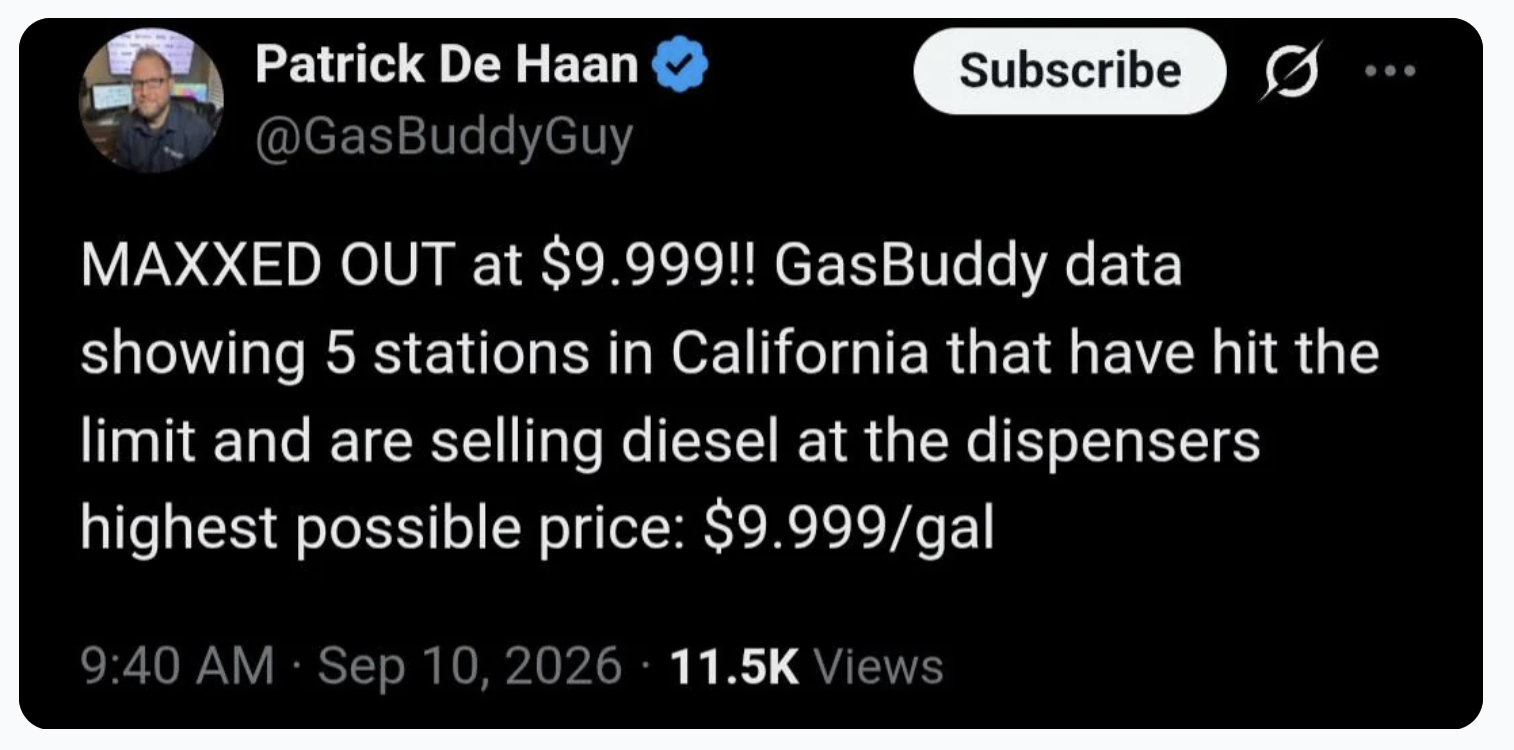
Diesel fuel cost hit a record in Tulare County on a daily basis this week, reports AAA with an average cost of $8.27 a gallon as of Sept 15, up 36 cents in a week, $1.49 over the past month and $3.11 more than a year ago. Bay Area stations have a problem with posted signs running out of room for more than $9.99.
Gasoline is up 66% in the past year while ethanol is up just 3%.That’s one more reason why California state officials look forward to January when more ethanol will begin to be blended (15%) with gasoline offering E-15 fuel instead of E-10 for most cars. This week at an industry convention, gas retailers heard they don’t have to add new equipment to offer the fuel or dig up their fuel tanks. They don’t have to shop for a different vendor and can simply use equipment that they already have. When you pull up to a pump in spring of 2027, you will likely choose the cheapest fuel option which will be E-15 with a 25 cent or more discount.
Californians just made it through the hottest August ever without any rolling power outages. In fact, the state has not issued a Flex Alert since 2022 nor implemented any rotating outages since 2020. What’s the secret – expansion of battery storage in California. The state says as of mid-2026 operating capacity surpassed 21,112 MW, a 2,500% increase since 2019 when the state had less than 700 MW online. Widespread solar battery use may not be popular in Morro Bay where some residents don’t want the technology nearby but it keeps the lights on in town anyway preventing blackouts during record summer heat waves.
The technology has expanded in tandem with solar power installations that have grown in California – now surpassing fossil fuel-based natural gas on the grid for the first time in state history. This shift was unlocked by batteries, which absorb cheap, excess afternoon solar and discharge it when the sun sets when most people are home.
Where is our power coming from?
Electricity generation “grows in line with electricity use,” the federal Energy Information Agency (EIA) said in its latest forecast. Natural gas generation is expected to grow 2% this year and another 1% in 2027, while coal generation falls 8% and 6%, respectively. “As wind and utility-scale solar capacity continues to be added to the grid, we expect solar generation to grow by 21% in 2026 and by 18% in 2027, while wind generation grows 7% in 2026 and 5% in 2027,” EIA said.
The contractor for the new Chick-fil-A drive-thru on S. Mooney Blvd. has received a permit to install a construction trailer at the job site this week. The news means that work on the popular fast food restaurant should begin soon. The new double drive-thru will be in the same retail center as the Sam’s Club gas station where construction is well underway and in the same center to be anchored by a Sam’s Club warehouse in the 4300 block of Mooney Blvd in Visalia.
New Italian restaurant opens in downtown Visalia
The newest addition to the downtown Visalia Italian dining scene is La Piazza Italian Bistro on the corner of Main and Locust. The site is the former location of Sequoia Brewing that closed in Feb 2025. The new restaurant already has a strong following at its Tulare location and now has opened a second eatery at 124 W Main in Visalia.
Kaweah Health opens new Therapy Clinic in Tulare Kaweah Health held a ribbon cutting ceremony for its new Therapy Specialists – Tulare clinic on Thursday, July 23. This Tulare location is now open and accepting new patients.
This new facility is the seventh therapy specialists location for Kaweah Health, the first in southern Tulare County. It is the third Kaweah Health facility in Tulare.
“Having a location in the Tulare area has been a goal for a long time,” said Jag Batth, Kaweah Health chief operating officer. “Being able to care for those patients without them having to make the drive to Visalia extends our compassionate care farther into the county.”
The clinic features physical therapy evaluation and treatment, balance and vestibular therapy, gait training, hand therapy, pain management, range of motion, sport-specific training and conditioning, strengthening, orthopedic joint care, and treatment of neurological disorders. There are plans to offer occupational therapy in the future. The new clinic is located at 1927 N. Hillman St. The clinic is open 8 a.m. to 5:30 p.m. Monday through Thursday and 8 a.m. to 3 p.m. Friday. For appointments, call 559-624-6582.
Kaweah Health will start work on expansion of Mental Hospital
Kaweah Health, is seeking sealed bids for its Kaweah Health Mental Health Expansion located at 1100 S. Akers St., Visalia. This project will expand an existing 48,000 sq. ft. 63 bed mental health hospital by adding a new 12,800 sq. ft. wing. The new wing will consist of two separate units, one with 14 adolescent beds, the other with 8 pediatric beds.
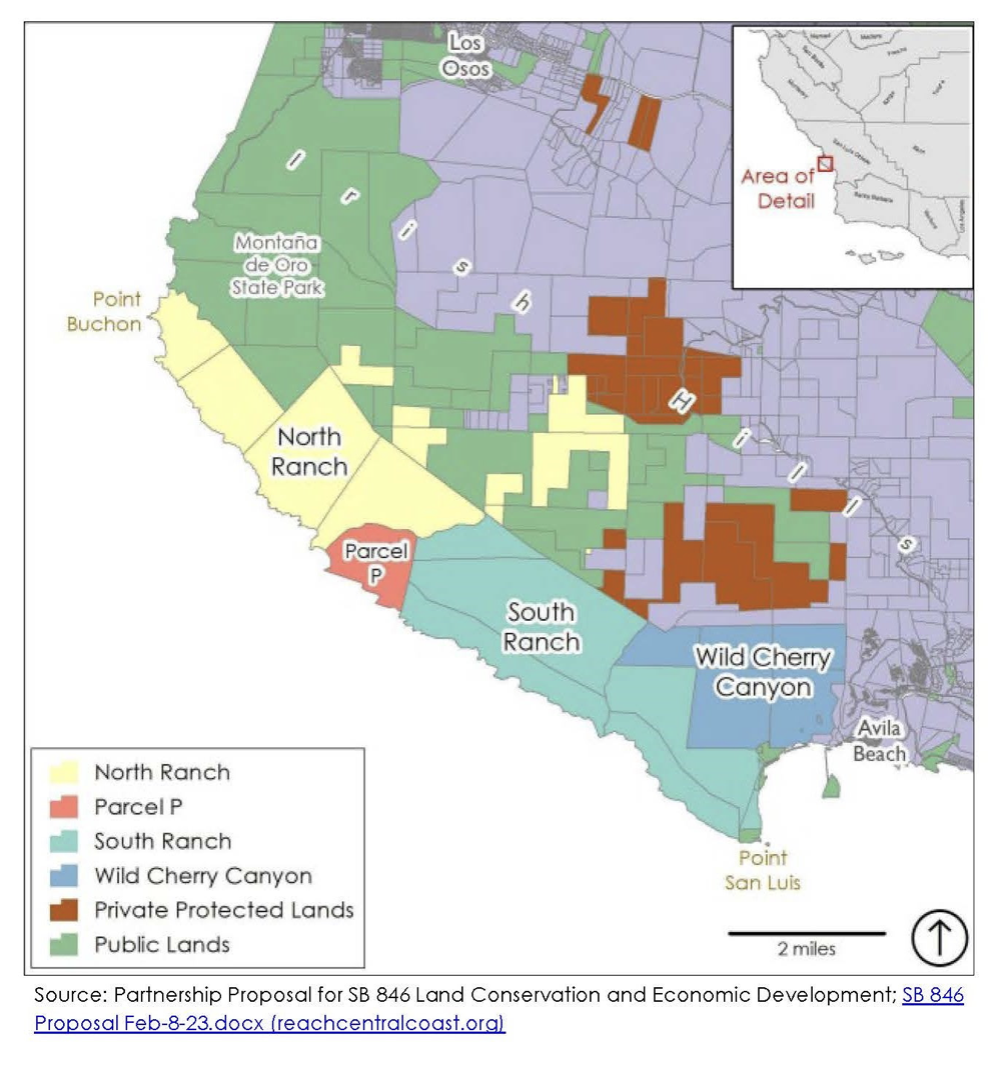
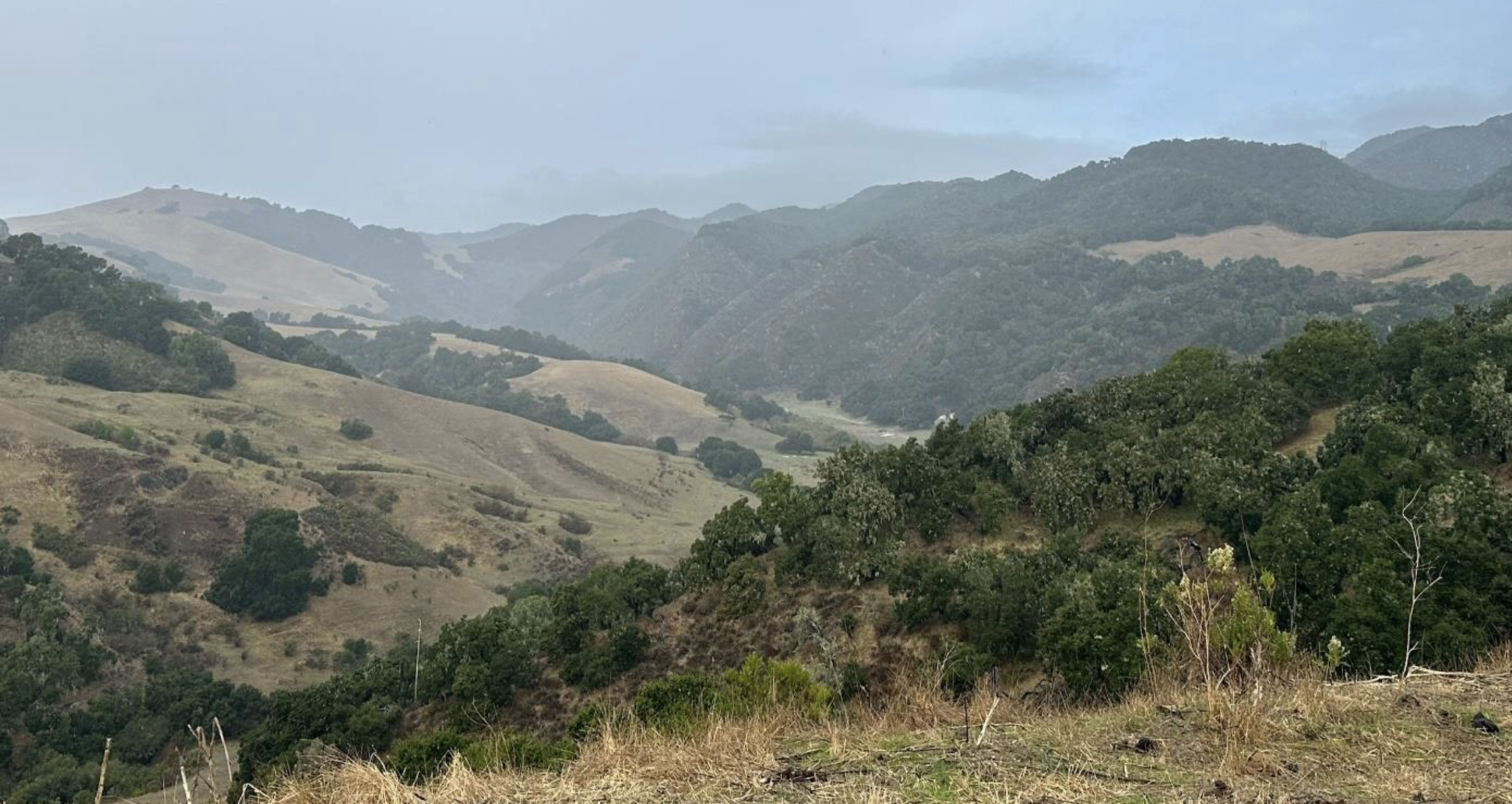
The public agency California State Coastal Conservancy is proposing to give $40 million to the nonprofit organization Wildlands Conservancy who manage some 25 nature preserves around the state. The money will be used to permanently preserve the 2400-acre Wild Cherry Canyon near Avila in San Luis Obispo County. The plan, in limbo for years, looks to remove this part of Diablo Canyon lands from future housing development . The goal is to “protect, restore, and enhance natural and cultural resources; to provide public and California Native American tribal access; to enable potential construction of lower-cost coastal accommodations; and to enable agriculture that is compatible with these uses…”
The next Coastal Conservancy public meeting is September 17 with the matter expected to be on the agenda. A notice was published August 14 saying the sale of the property could happen as soon as 2026 or early 2027.
The Coastal Conservancy is a State agency established in 1976 to protect and improve natural lands and waterways, help people access and enjoy the outdoors, and sustain local economies along the length of California’s coast and around San Francisco Bay.
The notice says that ” For the past 20 years Conservancy staff and its local partners have been attempting to acquire this spectacular piece of the California coast and to protect it from the ongoing efforts to develop the property for private use. Today, the Conservancy has the opportunity to contribute to acquiring the property and to finally deliver to the local community and local tribes their long-sought protection and access to this special place. Funding for this specific project was allocated to the Conservancy in the state’s 2023-2024 budget.
The property is owned by Eureka Energy, a subsidiary of Pacific Gas and Electric Company (collectively referred to as PG&E). PG&E acquired the underlying fee title to the property, subject to a pre-existing lease. The lease, which is held by a private party, allows all uses that are consistent with the property’s zoning including residential use, and can be extended to the year 2166. Because of these exceptionally broad terms, the leasehold interest represents nearly all of the property’s current economic value.
Last fall a Court of Appeal ruled that the real estate development company HomeFed Corp. owns the rights to a 99-year lease on the Wild Cherry Canyon property potentially allowing building there along the ocean-view area. Over the years the company only grazed cattle on the site but has proposed a sprawling development on the site.
A recent appraisal of the property, made republic Aug 11,2026, required the $40 million acquisition price that the Conservancy will pay – the same dollar amount that has been alloted by the state budget process. By law, the state has to pay fair market value.
The appraisal, done this year, says the property”is presently under contract to the Wildlands Conservancy and dated June 1, 2026.The purchase price is $40,000,000, assuming that the appraised value is $40,000,000 or more. The seller is not required to consummate the sale if the appraised value is less. The seller may treat any appraised value over $40,000,000 as a charitable donation.”
Trophy Ranch
The appraisal concludes “the $40,000,000 is best reflective of the market given the lack of competing trophy ranch properties, very long-term lease and property tax savings.”
HomeFed plan of what could have been
The Coastal Conservancy says the acquisition of the property will occur in two transactions. First, Wildlands Conservancy(TWC) will purchase the leasehold interest by the end of 2026 or early 2027. Subsequently, by the end of 2027 TWC will purchase the fee title. PG&E will retain the fee title to approximately 200 acres needed for road access to the Diablo Canyon Nuclear Power Plant as well as approximately 50 acres previously developed with a home. PG&E’s retained rights will be subject to deed restrictions limiting PG&E’s use of these areas to ensure no future uses impair the conservation and protection of the surrounding lands owned by TWC. In addition, Conservancy staff will work with TWC, the local community, and local California Native American tribes to develop one or more conservation, public access, and tribal access easements or other instruments to further protect the community’s vision for the property. Consistent with California Air Resources Board goals, protecting the property for conservation uses will also serve to reduce greenhouse gas emissions. This work is already underway through the Conservancy’s Diablo Canyon Land Conservation Planning Project that began in the fall of 2024 and encompasses the three primary properties that cover the larger 12,000-acre Diablo Canyon Lands project area – Wild Cherry Canyon, North Ranch, and South Ranch.
Wildlands Conservancy shares the Conservancy’s goal to open the property to the public and local California Native American tribes as soon as possible once the necessary planning and facility development has been completed in consultation with the community and tribes.
Connecting to Montana de Oro
The property has been identified by the community as well-suited for public access, including a 5-mile California Coastal Trail segment that will connect to a planned 20-mile route from Avila Beach north to Montaña de Oro State Park. Low-impact camping opportunities will also be explored. Tribes will be invited to develop, review, and approve cultural resource protection and tribal access easements or other instruments that provide tribal access to the property for ceremonial, cultural, or other purposes and protection of cultural resources. In addition, Wildlands Conservancy will create a California Native American Tribal Access and Co-Stewardship Plan that outlines protocols and commitments for tribal access and co-stewardship, such as restoration or enhancement of culturally significant plant species; cultural burning; harvesting native plants for traditional cultural use; development of tribal cultural gathering/ceremonial spaces or ancillary structures necessary to support tribal uses, and interpretive signage or educational programming.”
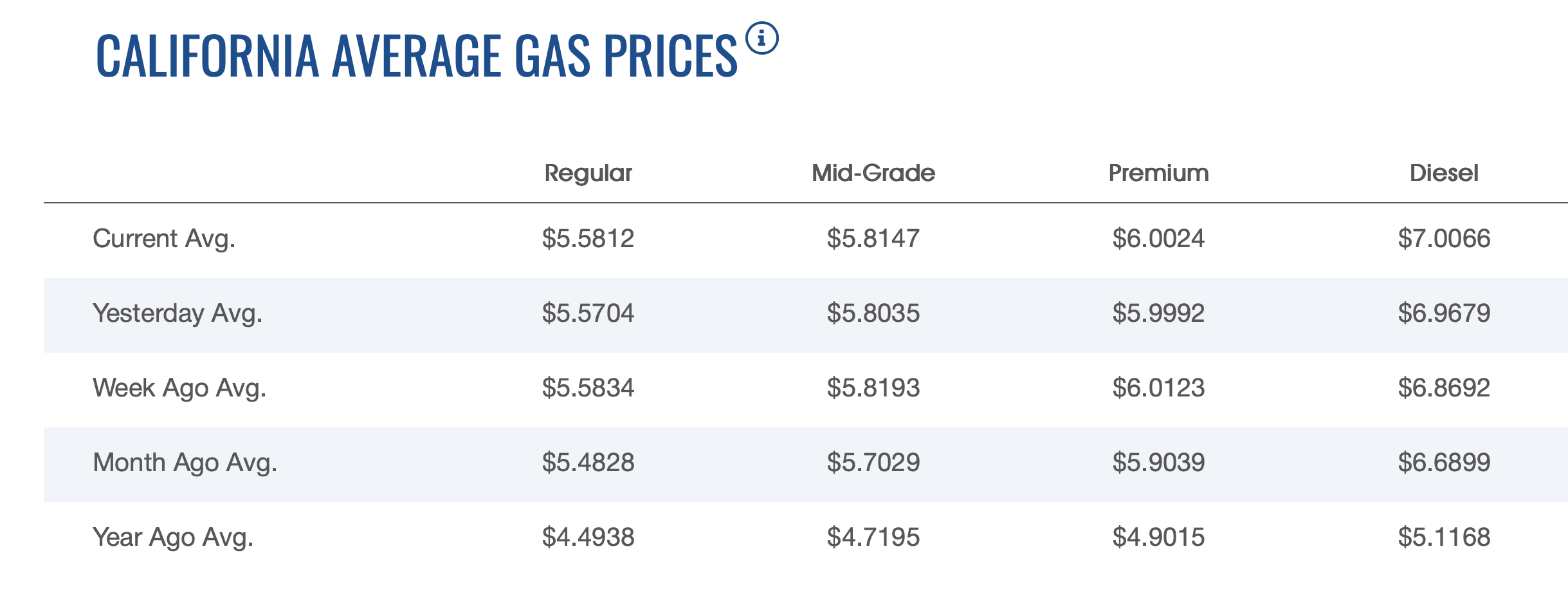
Is California about to get some good news at the pump?Governor Newsom is expected to sign the newly approved E15 Clean-Up Act (SB 795) that passed unanimously in the Assembly and State Senate in the past few days. Approval of the E15 blend in California -15% ethanol with 85% gasoline – comes as motorists are confronted with a daily spike in fuel prices. Oil – due to the war with Iran – tops $90/barrel this week and our state gas prices are ever higher, the most expensive in the nation. Studies suggest that the sale of E15 at your local station could save you up to 25 cents a gallon at the pump. Data from the Department of Energy shows drivers in other regions saving an average of up to $0.47 per gallon. The good news – as a result of the legislation – the new blend could show up at your corner station in the first quarter of next year, experts say. Critics suggest E15 mileage is lower than the current E10 blend in your car now. It is a long running debate we will address. First, the latest news. Another study? You may remember that Newsom signed a bill to make this happen last October. But a bottleneck surfaced over whether the vapor recovery unit on gas station nozzles would do their job with a higher blend? The State Fire Marshal said they needed a lengthy study overseen by a national lab. This new legislation solves that bottleneck by allowing gas stations to use their existing equipment to dispense E15 provided that the equipment manufactures submit a standard statement of compatibility. The vapor recovery systems are already approved for E10 and now the manufacturer would certify that it works the same with the slightly higher blend. Gee, why didn’t they think of that a year ago? It looks like a unanimous vote by the otherwise heavily divided California legislature, red or blue- appreciates that motorists in the Golden State need a break from gas prices that today average $5.80/gal compared to $4.60 a year ago with diesel up to $7.71 on average, rising 80 cents in just one month, according to AAA. Now the California Air Resources Board (CARB) is expected to officially consider and approve this final E15 rule during its upcoming meeting on September 24, 2026. The E15 blend is not new – the fuel is legal in all states except for California. Advocates say E15 is safe and federally approved for use in all light-duty cars, SUVs, and light trucks built in model year 2001 or newer, which encompasses the vast majority of vehicles on the road today. Next hurdle:will state fuel retailers adopt the new standard? Fuel marketers will be pleased that “most fuel tanks in the state are ready for E15”, says Robert White, VP with the RFA. The Renewable Fuel Association (RFA) says they will continue its work to advise California fuel retailers and others about implementing E15 sales, with a set of workshops coming to San Diego Sept. 9 in conjunction with the CFCA Summit.The California Fuels & Convenience Alliance (CFCA) is a nonprofit association that represents California’s fuel marketers, common carriers, gas station convenience store operators, and industry suppliers. Fuel marketers will be pleased that “most fuel tanks in the state are ready for E15”, says Robert White, VP with the RFA. RFA hopes the transition to E15 at your neighborhood station will not be confusing since the same pump that now dispenses E10- your cheapest gas – will now dispense the E15 blend – but the fuel will be cheaper.
The legislation implements a year-end deadline for the final hurdle. “On or before December 31, 2026, the State Fire Marshal shall adopt regulations governing the labeling and safe use of gasoline and ethanol blends containing more than 10 percent and up to 15 percent ethanol with vapor control systems and their components that have been deemed certified or approved pursuant to subdivision (a) of Section 41954.1.” Long road to green light Efforts to allow E15 sales in California have been ongoing for nearly a decade, says the RFA. The process to approve new fuel blends within the state is “uniquely difficult,” which has caused significant delays in approving E15 blends. Under a state law implemented in 1999, any regulatory change to California’s gasoline blend requires a multimedia evaluation and approval by the California Environmental Policy Council—an intensive process unique to California. The multimedia evaluations are conducted by a working group and typically take 2-5 years to complete. They are performed based on a three-tier structure. The California Air Resources Board began the process of a multimedia evaluation for E15 in 2018. A Tier III report, the multimedia risk assessment final report, was circulated to relevant agencies in late 2022, but little progress was made in the following years. The multimedia evaluation process, however, may finally be coming to an end. The California Environmental Policy Council voted also unanimously on Aug. 18 to approve the E15 multimedia analysis—the final step in the regulatory process to formally approve E15. CARB is now expected to approve its E15 regulation at its Sept. 24 meeting Good news for farmers How could all this impact corn demand? Oil companies may not be cheering for E15 – but our farmers are. Full adoption of E15 in California is projected to create a market for an additional 200 million to 250 million bushels of corn annually: The transition could expand California’s ethanol demand to roughly 1.3 billion gallons per year, serving as a major boost for Midwest and national corn growers.Of course that is 1.3 billion gallons of petroleum that we won’t need. According to Ethanol Producer Magazine, “If fully adopted in California, E15 would represent a market for an additional 250 million bushels of corn.Corn growers hope to convince Congress to approve year-round E15 use across the nation as well.
Pluses and Minuses
If E15 is cheaper, critics note that each gallon of ethanol supplies about one third less energy as pure gasoline.So fuel economy drops by about 3% they say. Others point out that the fuel additive hurts some engines.
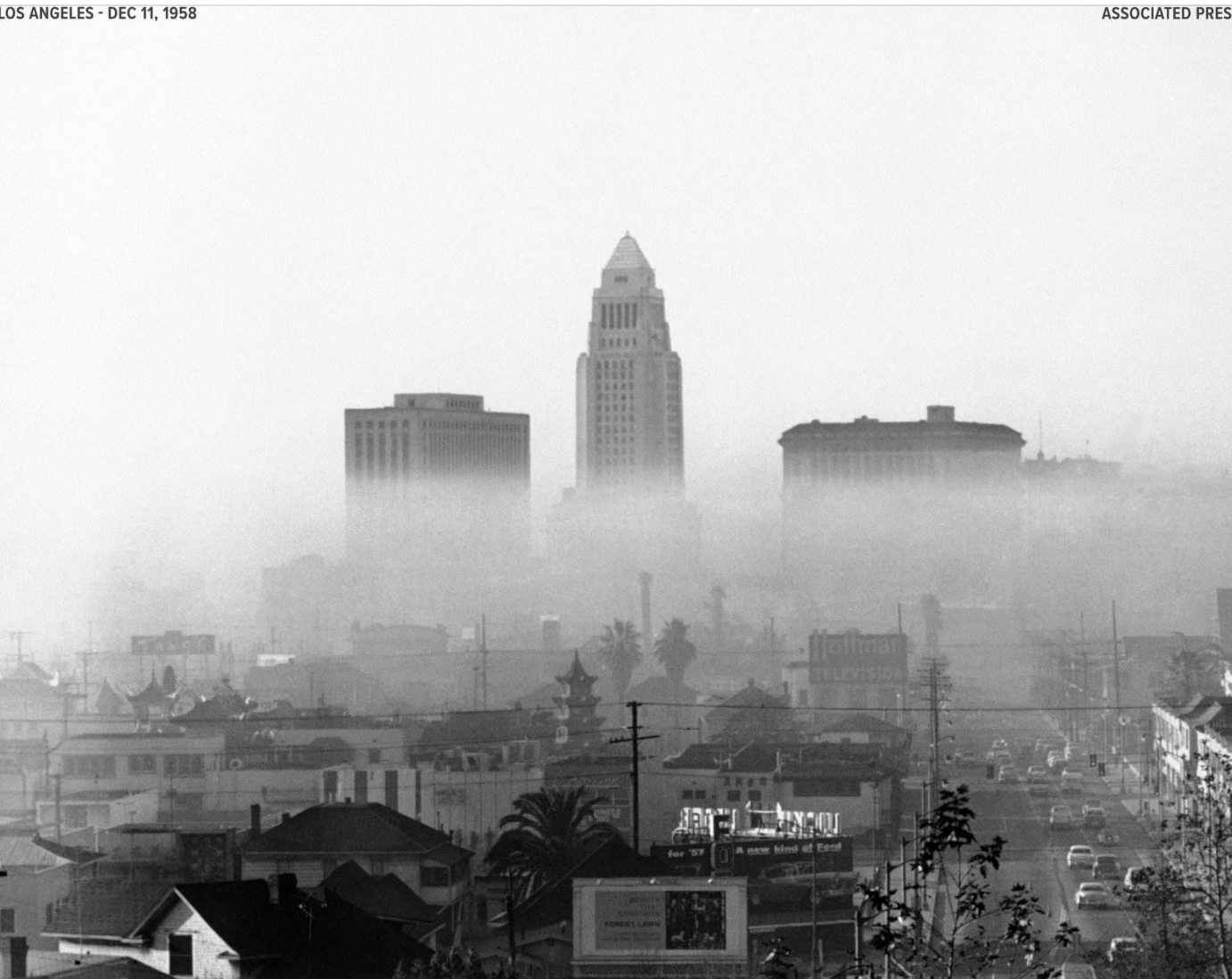
But supporters point out that ethanol, made from corn, is not fossil fuel-based so does not drive-up global warming.In fact,blending plant-based ethanol with petroleum gasoline reduces smog levels that used to choke California cities like LA and the entire San Joaquin Valley.Thank the Clean Air Act signed into law by President Nixon to work to resolve this. “Hydrocarbons were leaking like crazy out of people’s gas tanks,” said the state’s first Air Board chair. “Every time you filled your car at the gas station, huge amounts of hydrocarbons were emitted,” when that action was multiplied daily across the region.”
MTBE saga
While the Clean Air Act demanded cancer-causing lead be taken out of gasoline, it replaced it with an oil-based chemical MTBE – introduced in 1979 as an oxygenate and an octane booster. It increased the compression the fuel could withstand before igniting to prevent engine knocking. While MTBE reduced carbon monoxide, it turned out to be a major pollution problem in communities up and down California, particularly in the San Joaquin Valley. The chemical easily migrated into our drinking water supply.
According to an extensive study by the Environmental Working Group (EWG), 127 public drinking water systems in California detected MTBE contamination, affecting supplies that served an estimated 30 million people. At the peak of the crisis, California had roughly 10,000 MTBE-contaminated sites.It not only contaminated ground water, it polluted surface water. Modern vehicles and agencies like CAL FIRE now use ethanol as an alternate oxygenate to safely meet octane requirements without the same problems.
In 2025, the San Joaquin Valley experienced the cleanest air quality conditions ever recorded in the region’s history- Valley Air Board
Meanwhile the air quality benefits not only impacted Los Angeles but here in the San Joaquin Valley reports the Valley Air Board. “In 2025, the San Joaquin Valley experienced the cleanest air quality conditions ever recorded in the region’s history. Based on monitoring data, every air monitoring site across the Valley recorded levels below the federal 24-hour PM2.5 standardof 35.4 micrograms per cubic meter. For the first time since monitoring began, the entire region met this benchmark, marking a transformative moment in the Valley’s decades- long journey to improve air quality.”The Air Board adds that “95% of the days in 2025 met federal health standards – 20% better than in 2012, and 78% better than in 2002.”
Blending ethanol with our gas supply offers one other important benefit. It adds to our fuel supply that is otherwise tight, particularly in California, made worse when we lose refiners. Lastly, you will never need to worry about sending our troops to make sure Kansas farmers send us our fuel.
The Iran war has propelled diesel prices skyward across the nation with California leading the way – up nearly $2 a gallon in the past year. AAA reports the average price of diesel in California is $7/gallon as of Aug 19,c nearing the all time record of $7.74 this past April. By contrast the average price of gasoline is up in California by about $1 dollar- half as much- from the same time last year.
The high cost of diesel is hitting major users of the fuel hardest including farmers, truckers, logistics and ocean shippers as well as the construction industry who need the fuel to move goods. That increase is, of course, passed on to consumers.
California farmers alone use 240 million to 300 million gallons of diesel fuel each year. This powers about 118,500 pieces of off-road mobile agricultural equipment statewide, including tractors, harvesters, and irrigation pumps.
Tom Kloza, chief oil advisor to Gulf Oil, says that disruption in the global oil market from the Iran war is likely to make this harvest season extremely costly as average diesel prices are well over $5 a gallon, nationally. Harvest season of the big Midwest crops are at-hand.
Besides blaming the conflict for the run-up in diesel, you might as well also blame AI with the surging demand for backup power from data centers underway.
If many of us are paying more for diesel, some companies are making big profits. Diesel refining profits have surged to all-time highs, with the diesel “crack spread” topping a record $102 per barrel.A wider crack spread means refined products are selling at a much higher price relative to crude oil, signaling high potential profits for refiners. Driven by global supply crunches, geopolitical conflicts, and refinery disruptions, major energy companies like Marathon Petroleum and Valero have more than doubled their per-barrel margins.
Loss of refining capacity worldwide has had a big impact according to Forbes. “The world has lost a significant amount of refining capacity, and when you cannot turn oil into gasoline and diesel, prices rise. According to S&P Global, the world has lost 7.5 million barrels a day of refining capacity at this point, and it is not getting any better as the Houthis are now targeting these same facilities in Saudi Arabia. In July, Russia, which is responsible for 10% of global diesel supply, stopped diesel exports for a month; that pause was eventually extended to the end of the year, as it is estimated that Russia has lost nearly 40% of its refining capacity. This leads to the United States sending more diesel to countries around the world to pick up the slack. As of now, U.S. diesel inventories are a full 10% below the five-year average and dropping. This is causing much higher wholesale prices for diesel here at home, and the national average price has reached $5.40 a gallon.”
ABC reported the ” pricing gap has left many drivers wondering why diesel is so expensive. Farhad Sabetan, an economics professor at Cal State East Bay, says the answer comes down to supply and demand.
“Diesel inventories were already low before recent global conflicts,” Sabetan said. “Years of high freight demand, along with limited refinery capacity, have kept diesel stockpiles thin.”
Unlike gasoline, diesel is heavily tied to the global supply chain – powering trucks, trains, ships and industrial equipment. When supply tightens, prices can rise quickly and remain elevated for extended periods.”
Exeter-based California Citrus Mutual announced the selection of Tom Danowski as its new Chief Executive Officer following an extensive search conducted by the CCM Board of Directors.
Danowski brings more than three decades of executive leadership experience spanning agriculture, advocacy, trade association management, and marketing. Most recently, he served for 13 years as President and CEO of the Oregon Wine Board and Oregon Winegrowers Association. During his tenure, he helped drive the Oregon wine industry’s total annual economic impact from $2.7 billion to $8 billion through industry collaboration, strategic advocacy, and public policy work.
Prior to leading Oregon’s wine industry, Danowski held senior executive positions with several nationally recognized consumer brands, including Chateau Ste. Michelle Wine Estates, Starbucks, and Coca-Cola. His background combines strategic marketing expertise, operational leadership, and extensive experience working with both agricultural producers and policymakers.
Danowsoki replaces Casey Creamer who left the trade group in mid-February 2026, after which day-to-day operations have been handled by the existing staff.
The Packer farm newspaper this month pointed to weak regulation of mounting imports of lettuce and other produce from Mexico as a problem citing increases of foodborne illness -Cyclospora in the US.
Salinas-based Taylor Farms has been linked to iceberg lettuce imports from Central Mexico caused by fecal matter contamination of irrigation water and Jalapeno peppers linked to salmonella.
The newspaper pointed to a decline in oversight by the FDA.
“Food and Drug Administration’s ability to oversee imported food, experts say. FDA’s employment fell by 22% in 2026 compared to 2024, according to agency data, in part due to workforce cuts since Donald Trump returned to the White House. Foreign food-facility inspections by FDA fell by nearly 13% in fiscal 2025, while imports have continued to rise.”
The news has hit the US fresh produce industry hard as consumers have balked on purchase of salad makings at their local store. No California grown produce has been linked to any illness.
NBC reports that lettuce prices have recently plunged 16% as the cyclosporiasis outbreak has rattled consumers.
It’s very likely due to the cyclospora outbreak and consumers just not wanting to buy lettuce right now,” said Jeremy Horpedahl, an associate economics professor at the University of Central Arkansas. The “consumer is just wanting to stay away from this product.”
Paraquat out in California
The California Department of Pesticide Regulation (DPR) announced in recent days that all manufacturers of pesticide products containing the active ingredient paraquat-dichloride (paraquat) have voluntarily cancelled their product registrations, beginning the phase-out of the use of paraquat in California.
Exposure to the pesticide has been tied to potential thyroid issues and birth defects in humans, according to reports from the state pesticide regulation agency.
Almond crop sales diverge – exports up, domestic down Chinese sales shrink again
The Almond Board of California has released its final position paper for the 25/26 crop year and it shows export sales continued strong, up 3% over 24/25 but domestic sales were off 11.3%.
While exports overall were strong to Turkey, Pakistan , Morocco,Spain and Italy – sales to a former top customer China /Hong Kong dropped 34%.
Trade war impacts
U.S. almond sales to China have fallen sharply due to high retaliatory tariffs, allowing Australia to overtake the United States as China’s leading supplier. Shipments to China reached 144 million pounds in the 2022/23 marketing year (August–July), but fell by nearly 50% to 51 million pounds in 2024/25.Now as of July 2026 they are down to 33 million pounds for the crop year. That is a drop of 77% from 2022/23.
According to industry reports from the survey company Land IQ, bearing acreage sits at approximately 1.38 million acres, indicating a slight downward trend driven by orchard removals and stricter groundwater regulation
Tractor sales continue downward trend
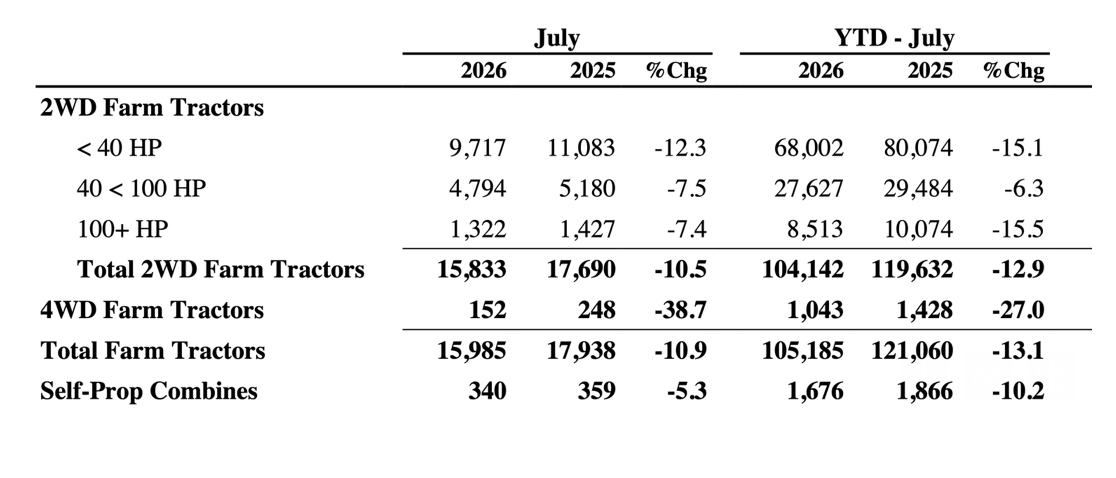
Both 2-wheel and 4-wheel tractor sales were down in July compared to the same month in 2025, says an industry monitor, the Association of Equipment Manufacturers. 4-wheel tractor sales declined 39% and 2-wheels were down 10.5%. and 12.9% on a year to date basis as farmers face uncertainty over the future.
This week at the Tulare County Board of Supervisors the board will take up a proposed 45-day moratorium on development of a data center in any unincorporated part of the county. Also this week the Visalia City Council will hear a plan to approve a moratorium within the city limits as well. Meanwhile,Tulare City decided not to discuss the issue at their last meeting.
The County agenda item calls for an urgency designation adding that there is “current and immediate threat to the public health, safety, and welfare…” The interim moratorium will require a four- fifths vote to go into effect and would be in place until the board might put in place a permanent regulation.
Meanwhile a Visalia staff report on the agenda says Council member “Brian Poochigian seeks Council consideration of directing staff to return at a future regular meeting with an item regarding a moratorium on data centers and similar high-intensity uses that may require substantial water that results in a net loss and electrical resources that could impact the development of other, more beneficial, economic generators in the community.
The requested future agenda item would provide the City Council with an opportunity to discuss whether staff should evaluate the City’s existing regulations, review actions being considered or implemented by other California jurisdictions, and present potential policy options.”
The Council will meet the evening of August 17 and the County board meets Tuesday August 18 at 9 AM.
The only proposal in Tulare County is at the Tulare County Fairgrounds for a “small” data center proposed by Global Stack that may not be affected by any jurisdiction other than the Tulare County Fair board. A public meeting a few weeks ago brought out a crowd opposed to the idea. A similar proposal is on the table at the Kings County Fairgrounds. Water and power are key concerns.
The next Tulare County Fair board meeting is Aug. 18 but the data center is not on the agenda.
City of Tulare nixes discussion
Deciding not to get involved for now is the City of Tulare who recently voted not to discuss the Global Stack proposal that could happen in the city limits with the council voting down a proposal to put it on the agenda. The motion was brought by council member Jose Sigala to discuss at the August 18 meeting, but the council nixed the idea by a 4 to 1 vote.