
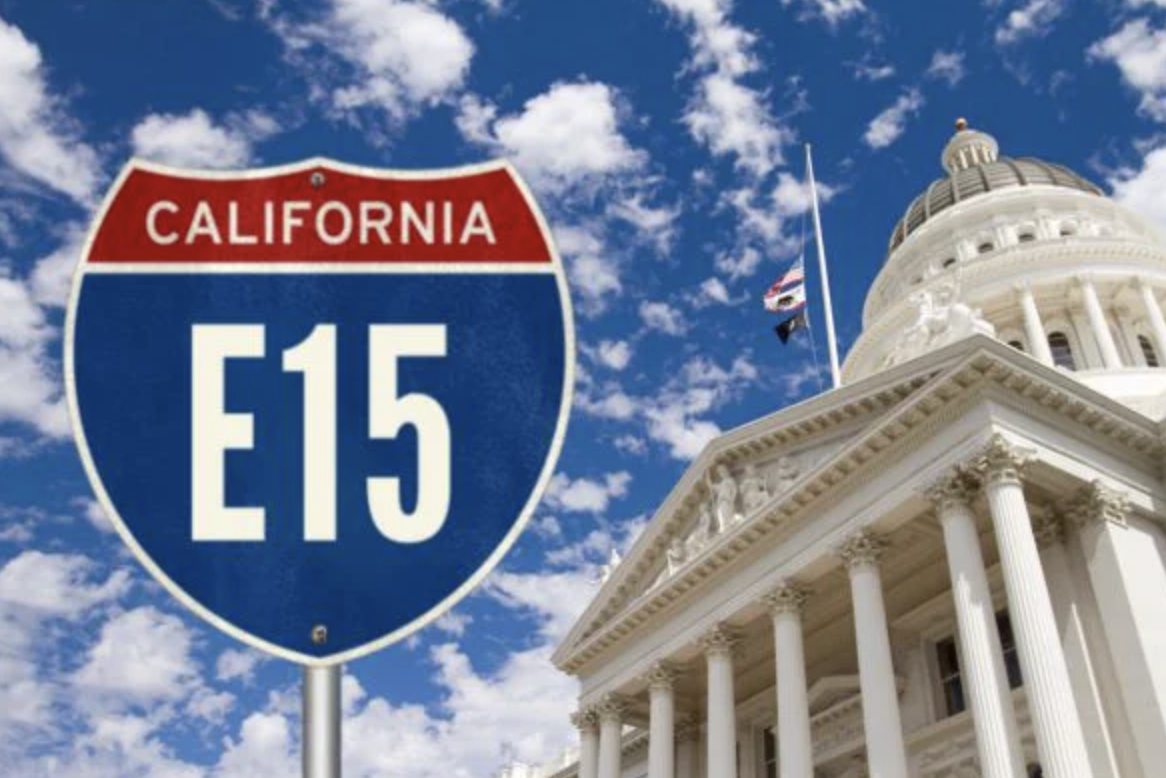
Green Light for E15 in California
Is California about to get some good news at the pump?Governor Newsom is expected to sign the newly approved E15 Clean-Up Act (SB 795) that passed unanimously in the Assembly and State Senate in the past few days. Approval of the E15 blend in California -15% ethanol with 85% gasoline – comes as motorists are confronted with a daily spike in fuel prices. Oil – due to the war with Iran – tops $90/barrel this week and our state gas prices are ever higher, the most expensive in the nation.
Studies suggest that the sale of E15 at your local station could save you up to 25 cents a gallon at the pump. Data from the Department of Energy shows drivers in other regions saving an average of up to $0.47 per gallon. The good news – as a result of the legislation – the new blend could show up at your corner station in the first quarter of next year, experts say.
Critics suggest E15 mileage is lower than the current E10 blend in your car now. It is a long running debate we will address. First, the latest news.
Another study?
You may remember that Newsom signed a bill to make this happen last October. But a bottleneck surfaced over whether the vapor recovery unit on gas station nozzles would do their job with a higher blend? The State Fire Marshal said they needed a lengthy study overseen by a national lab.
This new legislation solves that bottleneck by allowing gas stations to use their existing equipment to dispense E15 provided that the equipment manufactures submit a standard statement of compatibility. The vapor recovery systems are already approved for E10 and now the manufacturer would certify that it works the same with the slightly higher blend.
Gee, why didn’t they think of that a year ago?
It looks like a unanimous vote by the otherwise heavily divided California legislature, red or blue- appreciates that motorists in the Golden State need a break from gas prices that today average $5.80/gal compared to $4.60 a year ago with diesel up to $7.71 on average, rising 80 cents in just one month, according to AAA.
Now the California Air Resources Board (CARB) is expected to officially consider and approve this final E15 rule during its upcoming meeting on September 24, 2026.
The E15 blend is not new – the fuel is legal in all states except for California. Advocates say E15 is safe and federally approved for use in all light-duty cars, SUVs, and light trucks built in model year 2001 or newer, which encompasses the vast majority of vehicles on the road today.
Next hurdle:will state fuel retailers adopt the new standard?
Fuel marketers will be pleased that “most fuel tanks in the state are ready for E15”, says Robert White, VP with the RFA.
The Renewable Fuel Association (RFA) says they will continue its work to advise California fuel retailers and others about implementing E15 sales, with a set of workshops coming to San Diego Sept. 9 in conjunction with the CFCA Summit.The California Fuels & Convenience Alliance (CFCA) is a nonprofit association that represents California’s fuel marketers, common carriers, gas station convenience store operators, and industry suppliers. Fuel marketers will be pleased that “most fuel tanks in the state are ready for E15”, says Robert White, VP with the RFA.
RFA hopes the transition to E15 at your neighborhood station will not be confusing since the same pump that now dispenses E10- your cheapest gas – will now dispense the E15 blend – but the fuel will be cheaper.
The legislation implements a year-end deadline for the final hurdle. “On or before December 31, 2026, the State Fire Marshal shall adopt regulations governing the labeling and safe use of gasoline and ethanol blends containing more than 10 percent and up to 15 percent ethanol with vapor control systems and their components that have been deemed certified or approved pursuant to subdivision (a) of Section 41954.1.”
Long road to green light
Efforts to allow E15 sales in California have been ongoing for nearly a decade, says the RFA. The process to approve new fuel blends within the state is “uniquely difficult,” which has caused significant delays in approving E15 blends. Under a state law implemented in 1999, any regulatory change to California’s gasoline blend requires a multimedia evaluation and approval by the California Environmental Policy Council—an intensive process unique to California.
The multimedia evaluations are conducted by a working group and typically take 2-5 years to complete. They are performed based on a three-tier structure. The California Air Resources Board began the process of a multimedia evaluation for E15 in 2018. A Tier III report, the multimedia risk assessment final report, was circulated to relevant agencies in late 2022, but little progress was made in the following years.
The multimedia evaluation process, however, may finally be coming to an end. The California Environmental Policy Council voted also unanimously on Aug. 18 to approve the E15 multimedia analysis—the final step in the regulatory process to formally approve E15. CARB is now expected to approve its E15 regulation at its Sept. 24 meeting
Good news for farmers
How could all this impact corn demand? Oil companies may not be cheering for E15 – but our farmers are. Full adoption of E15 in California is projected to create a market for an additional 200 million to 250 million bushels of corn annually: The transition could expand California’s ethanol demand to roughly 1.3 billion gallons per year, serving as a major boost for Midwest and national corn growers.Of course that is 1.3 billion gallons of petroleum that we won’t need.
According to Ethanol Producer Magazine, “If fully adopted in California, E15 would represent a market for an additional 250 million bushels of corn.Corn growers hope to convince Congress to approve year-round E15 use across the nation as well.
Pluses and Minuses
If E15 is cheaper, critics note that each gallon of ethanol supplies about one third less energy as pure gasoline.So fuel economy drops by about 3% they say. Others point out that the fuel additive hurts some engines.
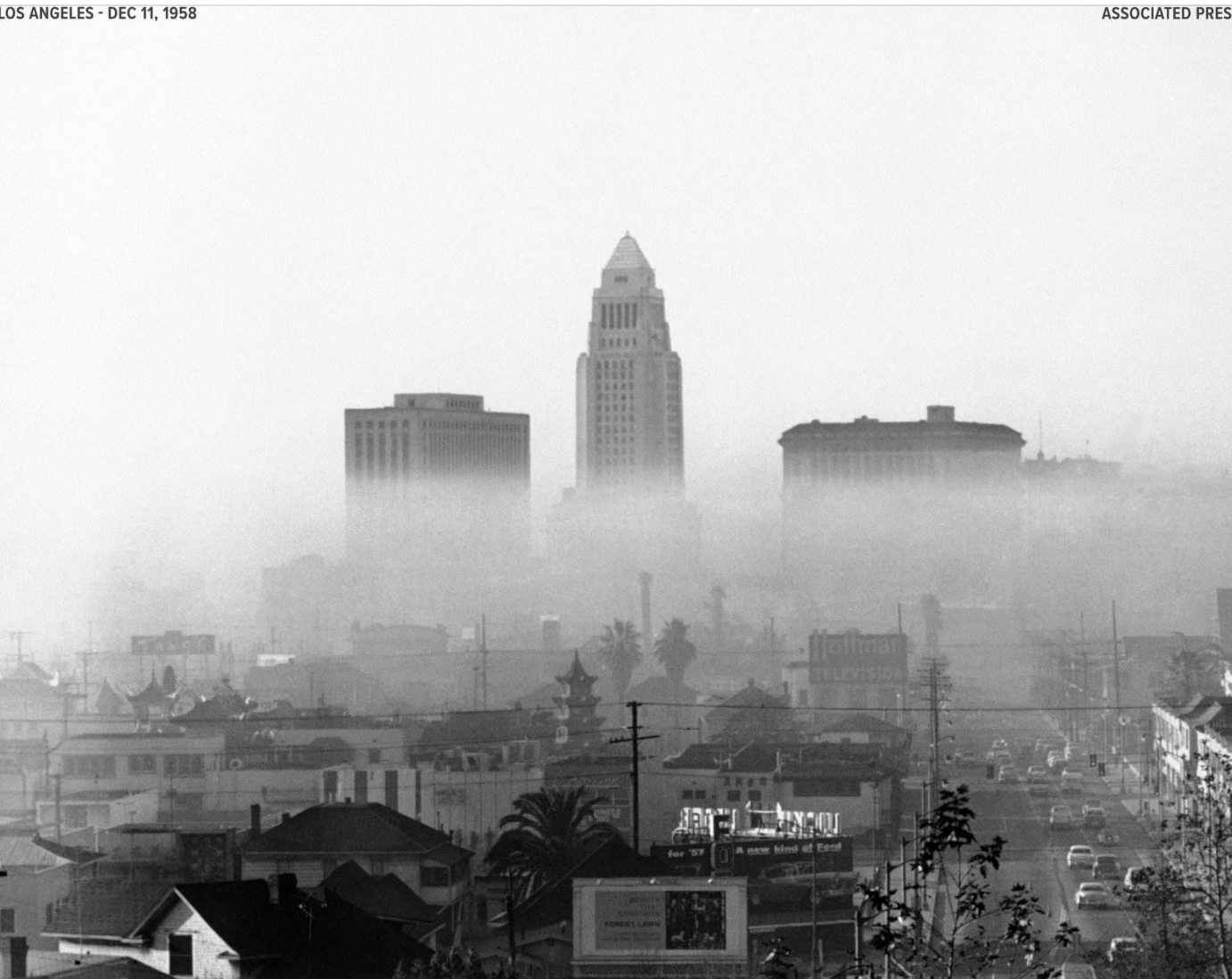
But supporters point out that ethanol, made from corn, is not fossil fuel-based so does not drive-up global warming.In fact,blending plant-based ethanol with petroleum gasoline reduces smog levels that used to choke California cities like LA and the entire San Joaquin Valley.Thank the Clean Air Act signed into law by President Nixon to work to resolve this. “Hydrocarbons were leaking like crazy out of people’s gas tanks,” said the state’s first Air Board chair. “Every time you filled your car at the gas station, huge amounts of hydrocarbons were emitted,” when that action was multiplied daily across the region.”
MTBE saga
While the Clean Air Act demanded cancer-causing lead be taken out of gasoline, it replaced it with an oil-based chemical MTBE – introduced in 1979 as an oxygenate and an octane booster. It increased the compression the fuel could withstand before igniting to prevent engine knocking. While MTBE reduced carbon monoxide, it turned out to be a major pollution problem in communities up and down California, particularly in the San Joaquin Valley. The chemical easily migrated into our drinking water supply.
According to an extensive study by the Environmental Working Group (EWG), 127 public drinking water systems in California detected MTBE contamination, affecting supplies that served an estimated 30 million people. At the peak of the crisis, California had roughly 10,000 MTBE-contaminated sites.It not only contaminated ground water, it polluted surface water. Modern vehicles and agencies like CAL FIRE now use ethanol as an alternate oxygenate to safely meet octane requirements without the same problems.
In 2025, the San Joaquin Valley experienced the cleanest air quality conditions ever recorded in the region’s history- Valley Air Board
Meanwhile the air quality benefits not only impacted Los Angeles but here in the San Joaquin Valley reports the Valley Air Board. “In 2025, the San Joaquin Valley experienced the cleanest air quality conditions ever recorded in the region’s history. Based on monitoring data, every air monitoring site across the Valley recorded levels below the federal 24-hour PM2.5 standardof 35.4 micrograms per cubic meter. For the first time since monitoring began, the entire region met this benchmark, marking a transformative moment in the Valley’s decades- long journey to improve air quality.”The Air Board adds that “95% of the days in 2025 met federal health standards – 20% better than in 2012, and 78% better than in 2002.”
Blending ethanol with our gas supply offers one other important benefit. It adds to our fuel supply that is otherwise tight, particularly in California, made worse when we lose refiners. Lastly, you will never need to worry about sending our troops to make sure Kansas farmers send us our fuel.