

The Iran war has propelled diesel prices skyward across the nation with California leading the way – up nearly $2 a gallon in the past year. AAA reports the average price of diesel in California is $7/gallon as of Aug 19,c nearing the all time record of $7.74 this past April. By contrast the average price of gasoline is up in California by about $1 dollar- half as much- from the same time last year.
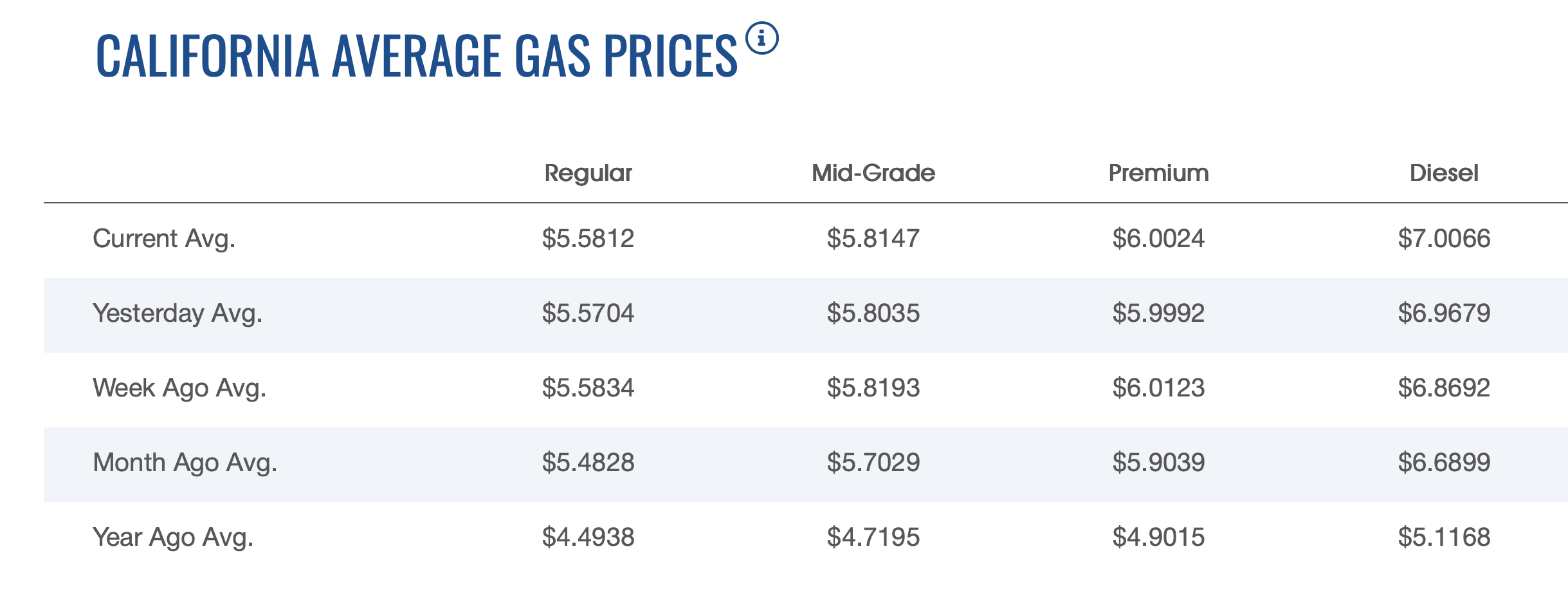
The high cost of diesel is hitting major users of the fuel hardest including farmers, truckers, logistics and ocean shippers as well as the construction industry who need the fuel to move goods. That increase is, of course, passed on to consumers.
California farmers alone use 240 million to 300 million gallons of diesel fuel each year. This powers about 118,500 pieces of off-road mobile agricultural equipment statewide, including tractors, harvesters, and irrigation pumps.
Tom Kloza, chief oil advisor to Gulf Oil, says that disruption in the global oil market from the Iran war is likely to make this harvest season extremely costly as average diesel prices are well over $5 a gallon, nationally. Harvest season of the big Midwest crops are at-hand.
Besides blaming the conflict for the run-up in diesel, you might as well also blame AI with the surging demand for backup power from data centers underway.
If many of us are paying more for diesel, some companies are making big profits. Diesel refining profits have surged to all-time highs, with the diesel “crack spread” topping a record $102 per barrel.A wider crack spread means refined products are selling at a much higher price relative to crude oil, signaling high potential profits for refiners. Driven by global supply crunches, geopolitical conflicts, and refinery disruptions, major energy companies like Marathon Petroleum and Valero have more than doubled their per-barrel margins.
Loss of refining capacity worldwide has had a big impact according to Forbes. “The world has lost a significant amount of refining capacity, and when you cannot turn oil into gasoline and diesel, prices rise. According to S&P Global, the world has lost 7.5 million barrels a day of refining capacity at this point, and it is not getting any better as the Houthis are now targeting these same facilities in Saudi Arabia. In July, Russia, which is responsible for 10% of global diesel supply, stopped diesel exports for a month; that pause was eventually extended to the end of the year, as it is estimated that Russia has lost nearly 40% of its refining capacity. This leads to the United States sending more diesel to countries around the world to pick up the slack. As of now, U.S. diesel inventories are a full 10% below the five-year average and dropping. This is causing much higher wholesale prices for diesel here at home, and the national average price has reached $5.40 a gallon.”
ABC reported the ” pricing gap has left many drivers wondering why diesel is so expensive. Farhad Sabetan, an economics professor at Cal State East Bay, says the answer comes down to supply and demand.
“Diesel inventories were already low before recent global conflicts,” Sabetan said. “Years of high freight demand, along with limited refinery capacity, have kept diesel stockpiles thin.”
Unlike gasoline, diesel is heavily tied to the global supply chain – powering trucks, trains, ships and industrial equipment. When supply tightens, prices can rise quickly and remain elevated for extended periods.”