The Board of Directors of Save Cuesta Inlet announced September 5 that “It is with great pleasure and excitement that our community has raised sufficient funds to purchase Cuesta Inlet! The 100% volunteer team of local citizens worked tirelessly for more than three years to raise awareness and raise the necessary funds to purchase the Inlet. “
Escrow is scheduled to close on the 13 acre Los Osos property October 1, 2025.The group had a goal of raising at least $735,000, the appraised value.
In early 2026, the nonprofit will invite the community to share input as it begins the next phase of ensuring the Inlet’s long-term care and vitality. Donations will continue to be welcomed in support of this next chapter.
We’ve all heard the quip, If it looks like a duck, swims like a duck, and quacks like a duck, then it probably is a duck.
Well the proposed “Package Delivery Warehouse” project publicly noticed by the City of Santa Maria a few days ago with parking for nearly 1,000 vehicles – fits right in. The new distribution complex, made public with the launch of an Environmental Impact Report on August 14, would be located on a 32-acre site, currently planted to crops, at 1680 West Stowell Road in Santa Maria. But nobody says who it is.
The proposed “last mile” delivery center at 169,000 square feet is similar in size and layout to other Amazon centers being built around the country to deliver perishable groceries and other products to your door the same day. News watchers will notice that Amazon on August 14 announced expansion of same-day delivery rolling out over the next couple of years to many rural areas of the country requiring construction of new delivery centers to make it happen.
Amazon says in a news release they would invest $4 billion to expand rural deliveries with an expansion into 13,000 zip codes and creating 100,000 new jobs. Amazon is already the nation’s largest job generator creating 500,000 jobs across the country in the past five years.
The new focus is on groceries delivered to your door on the same day you order them. Perishable products will be delivered in temperature-sensitive insulated bags that are recyclable the company says.
Mum’s the word
Similar to many Amazon construction projects that are shrouded in mystery with the company typically tight-lipped until they start hiring, Amazon nor the Santa Maria project developer Seefried Industrial Properties will make any comments. Seefried has worked with Amazon all across the country, including Florida, Georgia, Texas, Arizona, and California.
The city remains mum as well. Community Development Director Chenin Dow says Santa Maria has been working with the developer for six months but does not expect any kind of public hearing until around the first of the year. A full-blown EIR will be required,Principal Planner Frank Albro expects. Asked if the applicant is Amazon, they agree “we can’t comment.”
Amazon has multiple fulfillment centers, larger distribution complexes, and an increasing number of smaller size delivery centers in California but none north of Oxnard or south of Salinas on the Coast.Speaking of Salinas, Amazon is under construction now on a 5-story, 3-million+ square foot advanced robotics fulfillment center just south of town, visible from 101.These guys are on the march.
Just this week Amazon broke ground on a new delivery distribution center in Redding covering northern California at a 34 acre city-owned parcel with plans to build a 95,000sf facility employing around 100.
Clearly there is a huge swath of California with no Amazon warehouses. Seefried Industrial Properties, based in Atlanta, has developed multiple Amazon facilities on long term leases including a delivery complex in Fresno and the 1.5 million square foot Amazon fulfillment center in Oxnard, California. Seefried is a so-called “spec builder” working on permitting a project ahead of a firm commitment by a tenant.
Amazon has a number of recently built last-mile delivery stations in California that are around the 100,000-200,000 square feet size including Clovis and Bakersfield.These facilities are critical for Amazon’s rapid delivery network and are a key area of expansion for the company.
Almost 600 jobs
This Santa Maria 24/7 package center will feature 345 delivery vans and 34 line haul trucks visiting the complex every day, says the Notice of Preparation for their EIR. The big project will create approximately 588 new jobs with construction potentially starting in March 2026. Community Development Director Dow says the new private employer will be one of the largest in the city.Most of the big non-public employers in Santa Maria are ag-related now.
The facility has some green aspects featuring solar panels, EV charging stations and a battery energy storage system.
While the main warehouse is 169,000sf, the buildings and canopies add up to 244,418sf figuring in the office, fleet service center and other support facilities.
Covering the Central Coast
The city report says vehicles making deliveries could travel up to 125 miles from Santa Maria implying deliveries could cover all of San Luis Obispo and Santa Barbara counties. That would take in a population adding up to 750,000. Heading north, King City is 112 miles and to the south – Ventura is 90 miles.
Critics of the e-commerce giant’s expansion complain that the new surge by Amazon will be at the expense of ‘Mom and Pop’ stores locally.Already Amazon is being blamed for the demise of drugstores like Rite Aid that declared bankruptcy this year as more customers get their drugs online- often with Amazon. It may be grocery stores and other delivery services that feel the brunt of this new competition.After Amazon announced its same day expansion plans the stocks of DoorDash and Kroger each dropped by around 4%, and Walmart lost over 2.5%.
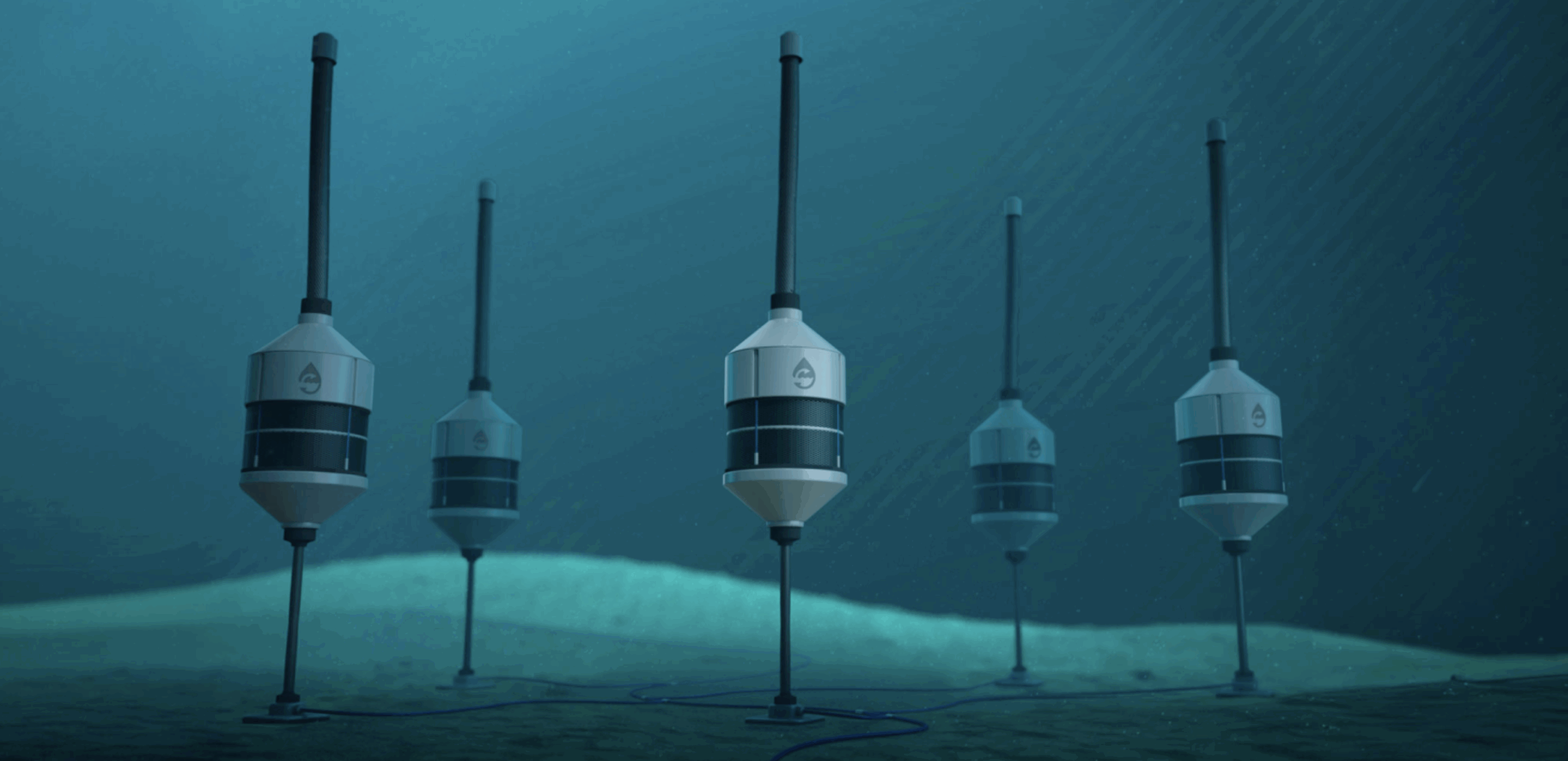
The world is running out of fresh water and now companies are using the high pressure of the ocean depths to push seawater through a membrane leaving salt behind.This month Scientific American reports a breakthrough in strategy of how to apply reverse osmosis without huge energy costs or negative environmental issues by allowing it to” happen naturally” – using technology that harnesses pressure hundreds of meters underwater.
“Reverse osmosis pods are submerged to depths of around 400 to 500 meters (1,600 feet) where immense hydrostatic pressure does the heavy lifting of separating water from salt. Purified water is then pumped back to shore. Far-fetched as it may sound, there are multiple prototypes already at work; the companies behind them aim to take cheap, large-scale desalination from pipe dream to reality.”
One such company with big but achievable pipe dreams for the California Coast is SF-based OceanWell who announced a pioneer project called Water Farm1 (WF-1) with six LA area water agencies this month. The desalination project would pump 60 million gallons per day to drought-prone Southern California by 2030. That would be about 66,000 acre-feet annually, enough to supply some 15 cities the size of San Luis Obispo. The desal pods would be anchored 4.5 miles off the coast of Malibu in Santa Monica Bay.
“California, like much of the world, urgently needs a new source of water to replace dwindling supplies,” said Robert Bergstrom, CEO of OceanWell. “Water Farm 1 shows how we can responsibly and economically harvest fresh water from the ocean by building infrastructure to withstand rapidly melting snowpack, increasing drought, more extreme atmospheric rivers, sea water intrusion, and overdrawn groundwater. Water Farm 1 is a critical milestone toward OceanWell’s goal of adding one million acre-feet of new potable water to the global supply within a decade.”
This spring OceanWell demonstrated the pods in Las Virgenes Reservoir near Calabasa to high acclaim of the water agency leaders gathered there. Las Virgenes manages water for 70,000 SoCal residents.
Looking past the Malibu water farm, OceanWell is close to testing the technology in six north-to-south locations offshore from Cayucos in San Luis Obispo County to around Pt Arguello and down to Pt Hueneme and south to Dana Point and then off Carlsbad under a permit being issued by the EPA. OceanWell has said it is aiming at 15 water farms in California and elsewhere.So far Oceanwell supported by a working group of 25 thirsty California water agencies.
The complaints against current and past desalination projects include high energy consumption, environmental impacts like brine discharge as well as marine life disruption and high costs.Importantly, the Coastal Commission has opposed on-land desal projects. Lack of scale and low volume also haunt existing projects. For example, problems with the Santa Barbara 1990s desal operation include limited capacity of just 3,125 acre-feet per year (20x smaller than the WF-1) requiring 13.8 million kilowatt hours of electricity per year, or 4,416 kilowatt hours per acre foot. This is 42 percent more electricity than it takes to import water from the State Water Project (3,100 kWh/AF).
Land infrastructure can’t deliver
The State Water Project ships water over 700 miles from northern California along the Central Coast to San Luis Obispo County and Morro Bay, Santa Maria, Santa Barbara and south to LA and beyond – all told 29 public agencies and local water districts from Plumas County in the north to San Diego County in the south. But that supply is in jeopardy due to climate change, suggest a number of studies.California is expected to lose 10% of its water supply by 2040 due to climate change, and the State Water Project could lose up to 46% of its delivery capability as land subsidence threatens canal infrastructure. Now a new study this week says if no action is taken, it could fall up to 87% by 2043 affecting 21 million Californians, says DWR.
If there is trouble to the north, LA also has problems importing water from the east – big time.
Los Angeles is dependent on imported water from the Colorado River- the source of about one-third of Southern California’s water supply. Again climate change is impacting rainfall in the Southwest as well as California with Lake Mead predicted to reach the lowest level ever in the next two years. Published research has found that” the Colorado River Basin’s current “megadrought” is the worst dry spell the region has experienced in at least 1,200 years. “ “WF-1 offers a new model that reduces pressure on strained systems like California’s Bay-Delta system and the Colorado River and unsustainable aquifer extraction, helping secure a more resilient, climate-aligned water future,” OceanWell observes.
Collaboration key
Water policy expert Tim Quinn, who knows everyone in the California water world, spent 40 years in the business including ten years as the executive director of the Association of California Water Agencies and more than twenty years as the Deputy General Manager of the Metropolitan Water District of Southern California. Over the course of that career, he was at the center of every major water management issue facing the state of California, including the state’s use of Colorado River water, management of the Bay-Delta, and sustainable groundwater management. After retiring from ACWA, Mr. Quinn became a Landreth Visiting Fellow at Stanford University, where he wrote a white paper titled Forty Years of California Water Policy. Quinn says a”valuable general lesson from that 40-year career is that collaboration works and conflict doesn’t. I learned this by reaching across silo boundaries hundreds of times during my career.”
Bringing his work history up to date, Quinn says as result of publishing that paper he got a call from Robert Bergstrom – currently CEO of OceanWell. “Now I am an employee of OceanWell” says Quinn, adding that he believes this technology is the “most promising water development since the California Aqueduct.”
Construction of the aqueduct launched in the late 1950s delivers water to 27 million people and irrigates some 750,000 acres of farms. It is a key conveyance for the State Water Project that delivers water derived from Northern California snow melt through the Delta to much drier SoCal.
Look West
Quinn remarks that in the past, Southern California “has looked north and east for a water supply and now it’s time to look west” to the ocean for the future.
If some of these land-based water sources are drying up, California’s technological future may be dependent on the rollout of new power and water sources to accommodate the growth of AI-inspired data centers.
Without a new source of both water and electricity both the Southwest and California face tremendous hurdles. Data centers are significant water consumers, primarily for cooling IT equipment and indirectly through electricity generation.Large data centers can consume millions of gallons of water daily, comparable to the usage of a small town.This water consumption is particularly concerning in regions already facing water scarcity and getting drier.
PG&E has recently announced that there are scores of new proposed data centers on the drawing board in their service area to be built in the next few years. We need water not just to exist but for California to prosper. The state has a big trade advantage positioned next to the Pacific Ocean and connected to Asia. Now we can tap that “location-location-location” advantage with a solution to water scarcity not affected by climate change.
Central Coast future?
Is there a future for this technology to help the Central Coast communities north of Malibu? Quinn says talks have been held with water agency officials in the San Luis Obispo region where the County is leading a municipal task force to hammer out an adopted “desal plan” including selecting a site and preferred technology as early as the summer of next year to bring water to this parched region.
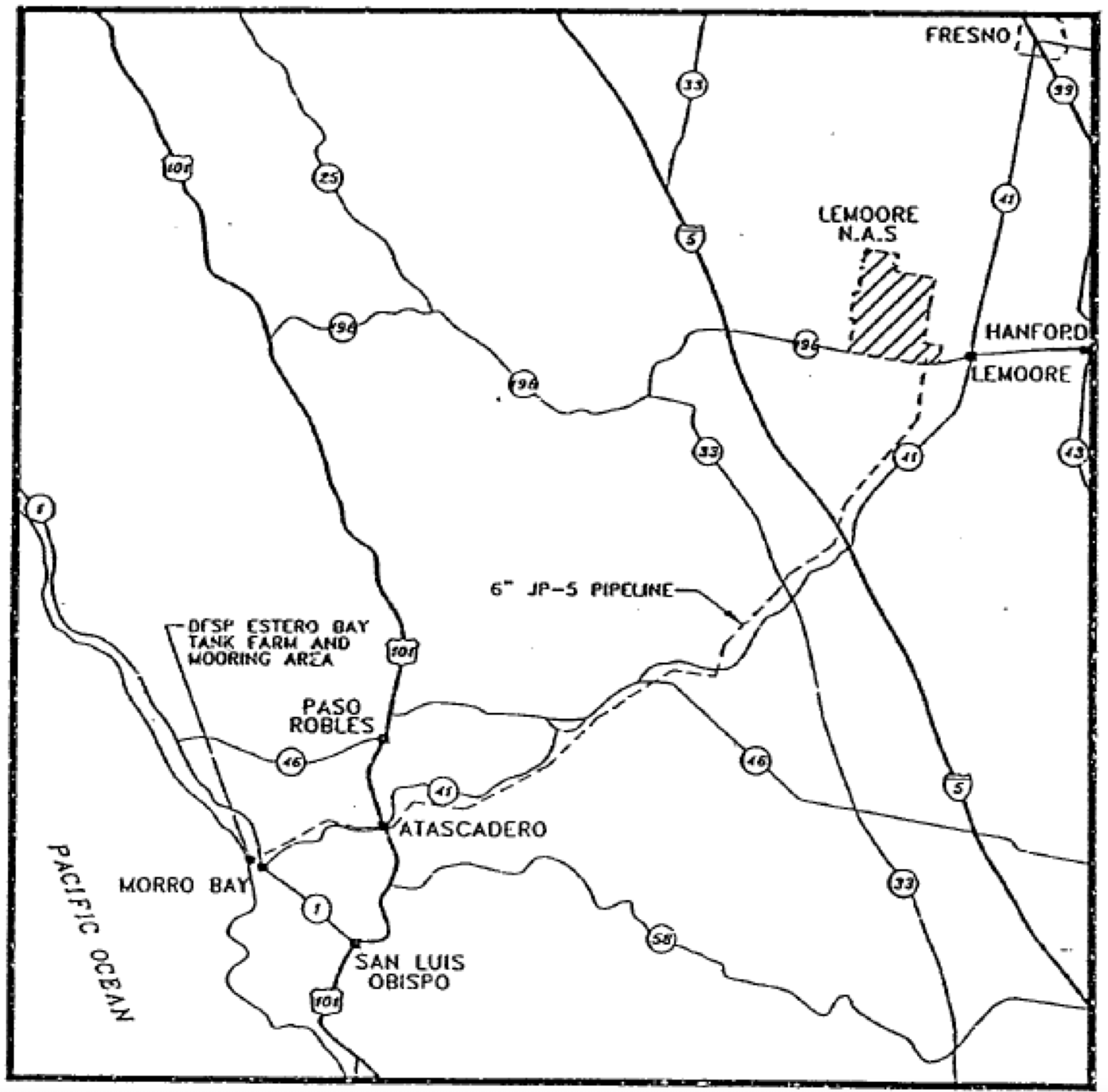
Intriguingly, there are existing pipeline opportunities in Central California from offshore oil rigs that connect to the shore that could carry water instead of oil if the deep sea OceanWell pods were in place nearby.There is also an old 50 mile pipeline that connects seaside Morro Bay to NAS Lemoore and the San Joaquin Valley that used to ship tanker oil to the Navy that is still in place. I know some thirsty Westside farms that would likely spring for that, as would the US Navy.
UCSB study: “There is an abundant, zero emissions source of heat right beneath our feet”
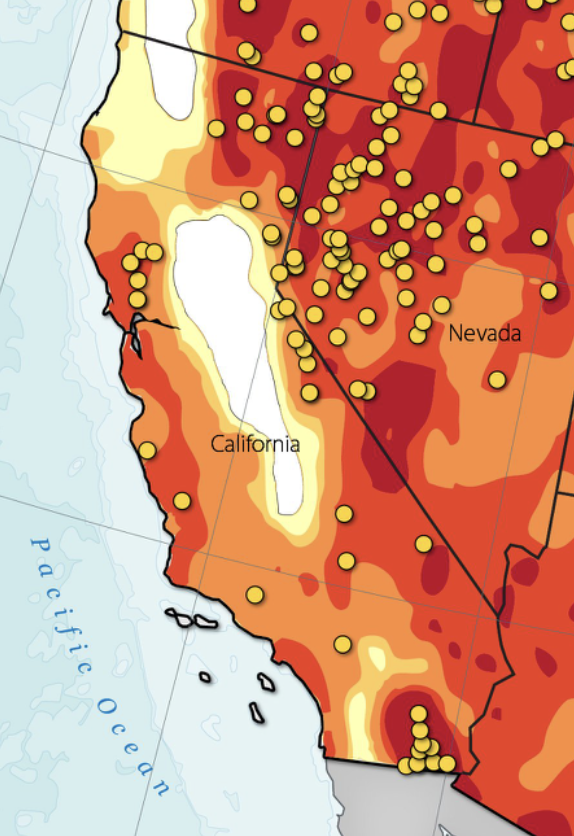
Map: High geothermal potential along the Central Coast (dark red)
President Trump hates not just offshore wind but all wind projects going way back claiming that noise from turbines causes cancer. As a result, big plans across the US to permit more of this natural resource are in trouble even as the country looks for new energy projects to power hundreds of kilowatt-loving proposed data centers. Some call it “Trump’s war on wind.”
Back in January when Trump took office, he made a proclamation that imposed a moratorium on Federal activities associated with offshore (and onshore) wind energy projects including the issuing of federal permits (NOAA, USCG, US F&W, USACE, etc.), federal easements and ROWs, and federal purchases of electric power. This moratorium is still in effect and most believe, will not be lifted. Additionally the White House in the past few days ordered The Bureau of Ocean Energy Management (BOEM) to rescind all designated wind energy areas in federal waters, announcing last Wednesday an end to setting aside large areas for “speculative wind development.
The AP reports that” offshore wind lease sales were anticipated off the coasts of Texas, Louisiana, Maine, New York, California and Oregon, as well as in the central Atlantic. The Biden administration last year had announced a five-year schedule to lease federal offshore tracts for wind energy production. Trump began reversing the country’s energy policies after taking office in January. A series of executive orders took aim at increasing oil, gas and coal production.”
Now the NY Times reports that “The Interior Department also signaled that it would review wind projects that have already been approved by the federal government but are being sued by opponents, and consider rescinding their permits, a step that could halt projects already under construction.” Where does that leave California’s offshore wind projects like the three approved off Morro Bay?
As you might remember, five global companies paid $757 million to the US Treasury to develop wind farms in 376 square miles of federal waters including three that are 20 miles off SLO County’s north coast in a December 2022 BOEM managed auction. They already have given the government three quarters of a billion dollars in anticipation of being in operation in five years and spending millions more on the plans. Once developed, advocates say the wind farms could produce up to 6 gigawatts of clean, renewable energy — enough to power around 3.5 million homes. The state has been planning huge infrastructure upgrades to carry the power to California homes. Now poof…. it’s all gone!
The state and the big wind companies are fighting even bigger political winds as the Trump administration does everything they can to make sure it does not happen. The mostly foreign-based companies have a big target on their back. You have to wonder if their only recourse now is to ask for their money back after securing a legal, sanctioned auction amounting to a contract to move forward.
This week, the BOEM website says “the Department of the Interior and BOEM are implementing President Trump’s memorandum temporarily halting offshore wind leasing on the Outer Continental Shelf.” The memorandum also pauses new or renewed approvals, rights-of-way, permits, leases, or loans for offshore wind projects pending a review of federal wind leasing and permitting practices.”
Planned virtual public meetings on the BOEM’s draft plan for Potential Mitigation of Future Development of Wind Lease Areas Offshore California have now been postponed. The postponement amounts to another way to halt any progress for these companies, not able to secure an incidental ‘takes’ of – say a whale or birds- because the Trump administration won’t allow them to move a feather. The upshot:offshore wind in federal waters may be dead in the water as investors, too get the clear message.
A new July 15 directive by the Dept of Interior announced a new lengthy review of solar and wind projects prompting an outcry from the renewables industry including the American Clean Power Assn.
“The Secretary of the Interior will apparently now be personally reviewing thousands of documents and permit applications for everything from the location and types of fences to the grading of access roads on construction sites across the country. This intentional effort to slow energy production comes at the worst possible moment. U.S. electricity demand is projected to surge 35-50% by 2040, with data centers alone requiring over 100 GW of new capacity. To meet this demand, America needs a true ‘all of the above’ strategy, which includes additional natural gas and intense efforts to accelerate geothermal and advanced nuclear technologies.”
The group points out that “clean energy represented 93% of new capacity added to the grid last year because these sources are the best way to meet demand right now. It’s basic economics that cutting off the fastest and most affordable energy available to the grid just as demand surges will constrain our energy supply and lead to significant cost increases.”
Vandenberg and Humboldt projects
There is one California offshore wind project planned in the 3-mile boundary of state waters off of Vandenberg that could still move forward, considering California is more receptive to offshore wind.
The CADEMO Floating Wind Demonstration Project 2.5 miles offshore from Vandenberg Space Force Base in Santa Barbara County lies entirely within California’s jurisdiction.CADEMO plans to install four floating wind turbines, each capable of generating 15 megawatts, for a total output of around 60 megawatts. Developers have finalized a mitigation agreement with the U.S. Department of Defense to ensure compatibility with Space Force operations. The project was expected to begin delivering power by late 2027.
But a closer look tells you that CADEMO is in the same leaky boat as the larger projects in federal waters are. The problem is that the buyer of the power for this Vandenberg project is Vandenberg itself, a federal entity that as a result of the January 2025 Trump proclamation cannot buy the wind energy they need from this project.
The proclamation imposed a moratorium on Federal activities associated with offshore (and onshore) wind energy projects including the issuing of federal permits (NOAA, USCG, US F&W, USACE, etc.), federal easements and ROWs, and federal purchases of electric power from wind generation.This moratorium is still in effect and effectively blocks Vandenberg from working with the CADEMO offshore wind energy project developers, Cierco Energy.
CADEMO also has a time sensitive interconnection queue position with PG&E requiring a substantial deposit to secure and maintain.Now CADEMO will get some help from a northern California ally – Humboldt-based Redwood Coast Energy Authority(RCEA),one of many nonprofit California Community Choice Aggregators (CCAs) who would like to have a demonstration wind project – out of Trump’s reach – in state waters in their area.
Redwood has two wind developers that have paid BOEM to lease in federal waters that now are likely thwarted. On July 24 the Board of Redwood Coast threw CADEMO a life preserver with approval of a $1,100,500 loan” for the PG&E Second Interconnection Facilities Security Posting for the CADEMO Offshore Project in central California”.
Unlike CADEMO’s project off Vandenberg, CADEMO would also build a wind farm off Humboldt with the power sold to Redwood – not a federal entity like Vandenberg- but a nonprofit Community Energy Authority. The loan is said to be refundable and temporary and according to a Redwood staff report ” due to RCEA prior December 12, 2025, when an additional deposit for the Network Upgrades Financial Security would be due to PG&E. Between now and December the CADEMO team would need to secure public or private financial support that could repay RCEA and post the additional deposit. If this cannot be secured, RCEA would be refunded, and the project would lose their interconnection position.” It sounds like a “hail mary” for this wind farm developer and perhaps RCEA to keep California’s first offshore wind project and hope for renewable energy alive. “The CADEMO project is viewed as the only opportunity to demonstrate floating offshore at this scale in the US within the next 10 years.” summarizes a Redwood staff report.
Concerns over fires
This week Diablo curtailed their generation as a precaution and at press time, Diablo Unit 2 is only operating at 47% according to the Nuclear Regulatory Commission (NRC) website
Vandenberg has a long term goal of becoming less dependent on outside sources for their electric power to carry on its critical defense activities. The base depends on PG&E for power in the evenings and at night when their solar panels don’t generate electricity. A big fire could shut down Diablo Canyon, such as the current situation with the growing Gifford Fire east of Santa Maria,now over 110,000 acres, that threaten the transmission lines that head east to the San Joaquin Valley connecting to the state grid.This week Diablo curtailed their generation as a precaution and at press time, Diablo Unit 2 is only operating at 47% according to the Nuclear Regulatory Commission (NRC) website.
High probability of fires around Vandenberg
The base must have power 24/7 to carry on with their military mission, not only to launch satellites, but defend against incoming attack with interceptor missiles. Here is a map that shows the base’s vulnerability in case of fire, more likely today with climate warming, despite Trump’s war on NASA climate monitoring.NPR recently reported Trump’s NASA now plans to end at least two major satellite missions specifically designed to monitor global carbon dioxide.
Vandenberg has a plan to put in 16 MW of battery power to store the solar power at night that is expected to be installed in the next year. But the base still needs a new source of power, with offshore wind is out- may now look to tap abundant heat underground, a source found up and down California including the Central Coast. Here is a map showing good potential along the West Coast.
Not only is geothermal energy technically available, importantly it may escape Trump’s campaign against renewable energy. In a word, Trump, who values a good soaking in a hot tub, doesn’t hate geothermal.media reports note that geothermal energy was spared in President Donald Trump’s sweeping tax and spending law,The Big Beautiful Bill that made deep cuts to incentives for other forms of clean energy.
It’s not just defense installations that are in the market for a new source of electric power. California as a whole and particularly Silicon Valley are hungry for new”clean” power generation, as Trump crushes other options.
Across the US, companies are announcing plans for new data centers.Now California’s largest utility is getting into the game.
PG&E announcement
PG&E has announced this past week that there has been a surge in demand for power with a recent uptick in new planned California data centers on the drawing board near Silicon Valley. As just about everyone knows the artificial intelligence boom and cloud technology across the nation. is boosting demand for electricity.
PG&E says it is working to serve 10 gigawatts (GW) of new electricity demand from data center projects over the next ten years—that’s enough energy to power approximately 7.5 million homes simultaneously.The 10 GW in PG&E’s data center project pipeline reflects a significant increase from the 8.7 GW of data center demand PG&E reported in May and the 5.5 GW the company reported in February. Just 1 gigawatt can power around 750,000 homes says PG&E.
PG&E estimates the 10 GW of anticipated data center load growth could lead to lower customer electric bills by 10 percent or more by spreading fixed costs across more energy usage; create 50,000 construction jobs and 115,000 associated support jobs; add 5,000 permanent tech jobs and 28,500 permanent support roles; generate $1.25 billion to $1.75 billion in increased property tax revenue; and contribute $2.5 billion to $3 billion in additional sales tax revenue.
The PG&E news release says “Of the 10 GW, 17 data center projects totaling approximately 1.5 GW are in the final engineering phase (the last step before project construction starts) and projected to begin operations between 2026 and 2030. Most of these are in San Jose, Silicon Valley and the greater San Francisco Bay Area, but some are also in the Central Valley and Sacramento.”
Growth in data center demand is good news for all PG&E customers, the utility claims.PG&E estimates for every 1,000 MW (or 1 GW) of new electric demand from data centers it serves, PG&E electric customers may save between 1-2% on their monthly bill in the long term, while serving those customers with some of the cleanest electricity in the United States.”
So where are we going to get this “clean” power from?
Keep in mind the Trump administration’s war on wind includes another renewable source – solar- a huge industry in California. EPA just announced plans to eliminate $7 billion in spending on grants for solar energy, California’s most important renewable energy source.
Where is there opportunity that Trump won’t ban?
Hot Rocks to the rescue?
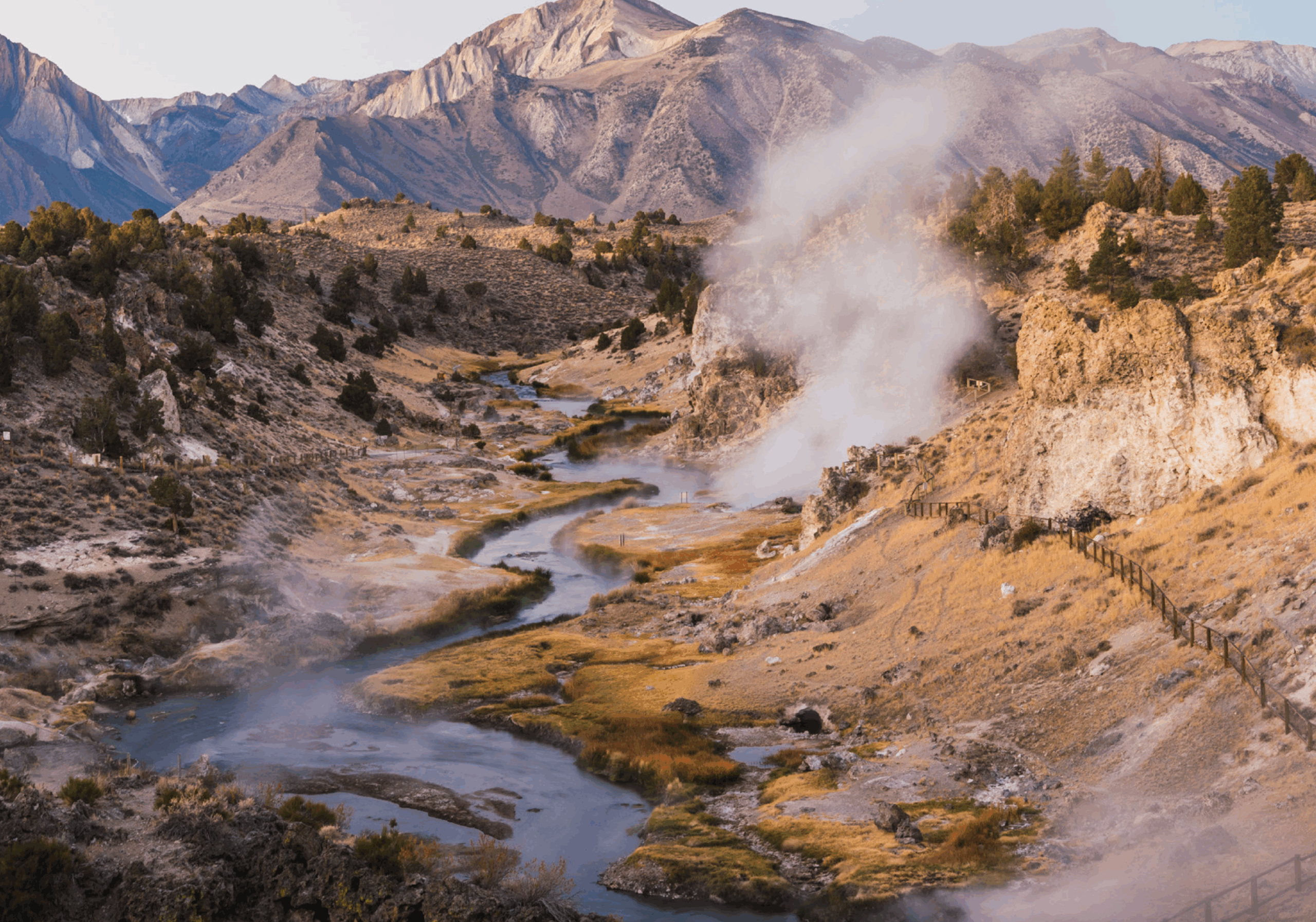
Hot springs near Mammoth Lakes
A new report published by in June by the Clean Air Task Force called “Unlocking California’s Geothermal Potential: A Strategic Opportunity for Clean, Firm Power” says” Next-generation geothermal energy, which uses the earth’s naturally occurring heat to produce power, is well-positioned to play an important role in California’s clean energy mix. It offers zero-carbon, always-available electricity that supports reliability and reduces dependence on fossil fuels during periods when solar and wind are unavailable.”
“”Recent innovations have enabled the emergence and growth of next-generation geothermal. Rather than harnessing pre-existing pockets of hot underground water, next-generation geothermal involves circulating water from aboveground through the subsurface, gathering heat from the rock that is then turned into electricity, and then re-circulating the fluid through the system as a part of a continuous cycle. This new form of geothermal energy can be harnessed in far more locations than traditional geothermal because it only requires access to underground heat – eliminating the need for naturally occurring pockets of hot water. This breakthrough expands the potential for clean, reliable energy almost anywhere on Earth. According to the International Energy Agency, next-generation geothermal techniques could elevate the global market share of geothermal from <1% to more than 8% by 2050.”
Black Gold or Hot Water
Californians may be familiar with the geysers near Sonoma and Lake counties, geothermal near the Salton Sea and Eastern Sierra, all nodes of volcanic activity. But the Central Coast has its own significant resource just below our feet, familiar after 100-plus years of drilling for oil around here. Pioneer drillers were searching for black gold but struck hot water.
Avila Hot Springs were discovered in 1907 by oil drillers who were initially seeking oil but instead found a natural artesian mineral hot spring.In 1886, another group of prospectors drilling for oil also discovered hot mineral water at what is now Sycamore Mineral Springs Resort right off 101 in San Luis Obispo County.
Back to the report – “California is the number one producer of geothermal energy of all U.S. states, and has enormous untapped geothermal potential. Clean Air Task Force’s (CATF) first-of-a-kind modeling estimates that utilizing just 1% of California’s resource potential of superhotock geothermal, the highest-temperature subset of next-generation geothermal, has the potential to generate about 380 GW of electricity – 13 times California’s 2023 electricity consumption.”
A UCSB study says next-generation geothermal systems can unlock an abundant source of clean, renewable energy.In its recent Future of Geothermal report, the International Energy Agency(IEA) found that there is enough geothermal energy to power the world 140 times over.
The IEA projects that by 2035, geothermal will be cheaper than nuclear and competitive with solar photovoltaics (PV) and wind when each is paired with battery storage. Meanwhile, a recent economic analysis put the cost of next-generation geothermal electricity at $64 per MWh, which would be competitive with other renewables before accounting for the cost of battery storage associated with intermittent power sources.
He likes it
Unlike some other clean technologies, next-generation geothermal projects appear poised to receive continued policy support in 2025 and beyond. Multiple recent Executive Orders include geothermal as a solution to improving U.S. energy security, while Trump’s Energy Secretary Wright has hailed geothermal’s benefits.
Department of Defense interest in geothermal predates the Trump administration with the United States Air Force (Department of the Air Force / DAF) announcing an open solicitation call for novel approaches to generate electricity at its installations using geothermal energy as of 3 January 2025.As a result ,the Air Force has published the list of US companies that have been deemed “Awardable” for geothermal projects in all US Department of Defense branches and facilities worldwide.
In the past few days the White House has issued new executive orders that also boost geothermal power
In the past few days the White House has issued new executive orders that also boost geothermal power. The order would ease federal regulatory burdens for AI data centers and supporting infrastructure, including power generation and transmission facilities.In more specific terms, “geothermal power equipment” is included in the order’s “Covered Components” or the materials, products, and infrastructure that are required to build data center projects. Covered Component Projects” under the EO include:Involving an incremental electric load addition of greater than 100 MW;A project that protects national security;A project for which the Project Sponsor has committed at least $500 million in capital expendituresA project that has been designated as “Qualifying Project” by the Secretary of Defense, the Secretary of the Interior, the Secretary of Commerce, or the Secretary of EnergySeveral planned data center projects in the US and around the world are already being developed under agreements to be supplied with geothermal power, including projects planned by Meta in New Mexico, and by Google in Taiwan.
On a county level, this month the expansion of the Dogwood geothermal project in Imperial County California was approved.
Advantages of Geothermal Heat
-Geothermal systems can make steam and hot water without pollution, since they don’t rely on combustion to generate heat. Next-generation geothermal has several advantages that make it a particularly useful technology for the decarbonizing of industry.
-Clean, Around-the-Clock Heat
-Geothermal systems do not produce emissions
-Geothermal resources have no fuel costs
Department of Defense Interest: The Department of the Air Force, in partnership with the Defense Innovation Unit, is exploring the use of advanced and enhanced geothermal technologies for installation energy resilience across multiple Air Force bases, including potentially Vandenberg Space Force. The UCSB report notes geothermal projects can face significant delays due to permitting hurdles. In some cases, a single geothermal project may trigger multiple National Environmental Policy Act (NEPA) reviews. In 2019, the DOE GeoVision report estimated project timelines at 8 to 10 years for geothermal systems.In contrast, oil and gas developers often receive categorical exclusions that exempt them from certain reviews, despite having much more severe environmental impacts than geothermal projects.
Granting the same exclusions to geothermal could accelerate timelines by 2–6 years. Trumps’ Bureau of Land Management has already finalized exclusions for geothermal resource confirmation and is considering further streamlining for indirect evidence of geothermal resources.
Study at Vandenberg may lead to some test wells to be drilled to gauge the potential for geothermal.The hot rocks, perhaps 600 degrees F, may be 10,000 ft down. The base is located near Tranquillon Mountain composed of volcanic and volcaniclastic sedimentary rocks formed through a combination of eruptions and subsequent uplift, akin to our Seven Sisters in SLO County.
Water use
Next-generation geothermal systems use water during reservoir stimulation to create hydraulic fractures underground. Some water is also used during drilling to cool the equipment. Once a well is operational, the circulating geothermal fluid is re-injected into the ground. This means that after drilling, the geothermal system does not actually consume groundwater. Additionally, geothermal doesn’t require freshwater – these systems can make use of “degraded” water sources such as brackish water, treated wastewater, or saline aquifers.
On July 10, the Los Osos Community Service District (CSD) Board of Directors approved a request by general manager Ron Munds to provide $630,000 in funding to design and pre-engineer the proposed intertie pipeline for the community. The pipeline would connect to the State Water Project in Morro Bay and bring 200 to 600 acre-feet of water to supplement the community’s groundwater supply.
The basin pumps about 1800 acre feet of water annually to provide both domestic and ag users with water.
Munds expressed some urgency to provide a new source of water for the town of 15,000 after a bombshell hydrologist study showed pumping of groundwater in town is “not sustainable” at the current level. The study was supported by 5 hydrologists in peer reviews, says Munds.
Recent findings from the Basin Management Committee (BMC), including results from a newly developed Transient Groundwater Model, underscore the urgency of improving water supply sustainability suggesting that seawater is already intruding into the basin and could move 45 feet a year inland long term.
Despite the need, there is no firm commitment of construction funding to build the $8 million, 2.5 miles pipeline.
“I am feeling the pressure to get a shovel ready project ready for an outside funding source. The earliest the Army Corp of Engineers grant funds will be available is their 2027 work plan but there are no guarantees.”
Munds told the CSD board he had a “a great meeting” with representatives for Corps indicating they may fund up to $5 million in the future but this is not guaranteed as of yet. Congress last year earmarked $8 million for the project signed by President Biden.
There are other sources he is working on.
“There are Prop 4, California Climate Bond grants coming up later this year but there are no guarantees there either.”
Munds says an agreement to share costs with all the water purveyors is coming together but not yet in place.
“The CSD does not have a formal agreement with Golden State Water or S&T Mutual at this time, but we are working on it. With the recent update to the status of the groundwater, I’m feeling the urgency to move forward with the project even with the funding unknowns; as a community, we need to do something to address our water supply problems.”
“I believe this project is a giant step forward and a partial solution to our long-term water supply needs. “
Board members agreed the CSD would have a better chance to get funding for construction if the project is shovel ready.
This week the CSD board decided they are willing to take the risk of authorizing the expenditures for the design of the project with no guarantees as long as bids come in no more than 20% higher than estimated.
The board approved funding now of $80,000 toward the $630,00 engineering estimate with the expectation that the other purveyors will partner up.
At the July 10 meeting it was suggested the county should be part of the solution since the rural and ag portions of the basin use about half the groundwater pumped annually but are not paying to fix the water supply shortfall.The urban parts of Los Osos are served by the three water purveyors who are stepping up to the plate.
The staff report says “Given the urgency highlighted by the Transient Model and the importance of project readiness for grant applications, staff recommends proceeding with detailed design services to make the project “shovel ready.” This will better position the project for funding opportunities and will greatly enhance the District’s chances of securing outside funding from state or local sources.
Staff will continue to discuss the project with the Golden State Water Company and S&T Mutual Water Company, both of which are very supportive. As those talks proceed, staff will bring updates and any framework for agreements to the Board for consideration.”
Meanwhile the basin’s watchdog, the Los Osos Basin Management Committee will continue its study of the new Transient Model including evaluating different recycled water and supplemental water supply alternatives to help improve the Basin’s sustainability. This work should be completed in the August/September timeframe. This portion of the study will provide broad cost estimates which can inform future decisions for water supply development.The BMC is set to meet again in the next week.
Not everyone agrees the new model shows we are pumping too much. BMC member and County Supervisor Bruce Gibson says more study is needed before we come to that conclusion.But Gibson is a fan of the pipeline project.
On the other side of the question, Beth Reineke (S&T Mutual Water Co Mgr) BMC board member offered her take at the June 18 BMC meeting. Fellow board member Bruce Gibson tried to convince the board that since consultant Spencer Harris was not present to discuss his memorandum and the new model, policy decisions should not be discussed prematurely. Mr. Harris was said to be under the weather.
But Reineke,who is a water quality analyst, said the consultant’s written report spoke for itself and added that the impressive peer reviewed information prompted her today to make a call to action to address the “dire state of our basin.”
“We are currently over-pumping by a large and yet-to-be-determined amount.”
She advocates a reduction in pumping to stop and reverse seawater intrusion including connecting to the State Water pipeline to help offset pumping from our basin in wet years. This could prevent the pumping of 200-600 acre feet a year (AFY) from our basin. Reineke also has a half dozen water saving measures she advocates.
Famously the unincorporated town of Los Osos on the California Central Coast, was the subject of a 35-year building moratorium that was only lifted earlier this year. The community of 15,000 is overseen by the county Board of Supervisors who has now allowed a few residential projects that would hook up to the local groundwater supply to move forward. Currently Los Osos water supply is 100% sourced by groundwater.The supervisors use a formula that is dependent on the health of the groundwater aquifer as measured each year.
For years, there has been a debate within the community over whether we are pumping too much of that groundwater allowing seawater to intrude into the community’s aquifers.But now a new “more accurate” groundwater model released this month appears to show the town may not have the water to sustain growth without significant new initiatives. Without new hook ups – seawater is already moving in, says the model. What to do?
The Los Osos Basin Management Committee (BMC) is charged with monitoring the basin.The committee made up of the town’s three water purveyors and a public member (Supervisor Bruce Gibson), files an annual report to the court as a result of a 2015 Stipulated Judgment.
For years the BMC has used a “static” older model to estimate how much water the community can pump without causing seawater to move into the aquifers below the town.Overpumping can reduce the pressure to keep the saltwater at bay. For the past few years the BMC board has sought consultant expertise to put together a new updated “Transient” model to guide them.Now the model is in place. The consultant engineering firm that developed the model made big news this past week.
Some background
Seawater intrusion is the movement of saline water into freshwater sources, both groundwater and surface water. It can accelerate its pace not just from groundwater pumping but from rising sea levels says a November study in Geophysical Research Letters that evaluated more than 60,000 coastal watersheds around the world, mapping how diminished groundwater recharge and sea level rise will each contribute to saltwater intrusion while estimating what their net effect will be. The study’s authors found that by the year 2100 rising sea levels alone will tend to drive saltwater inland in 82% of coastal watersheds studied. So this is not just a Los Osos problem.
A JPL report adds “Spurred by planetary warming, sea level rise is causing coastlines to migrate inland and increasing the force pushing salt water landward. At the same time, slower groundwater recharge — due to less rainfall and warmer weather patterns — is weakening the force moving the underground fresh water in some areas.”
If there is less natural pushback against rising seas due to climate change, Los Osos and all coastal communities need to push back harder, increase the volume of recharge to battle seawater intrusion or face contamination.
Here are some key effects of seawater intrusion: -Degradation of Water Quality -Reduced Freshwater Availability -Increased Water Treatment Costs.
This week at the June BMC meeting, a new model was introduced that suggests that the older groundwater flow model was flawed. The change of tune has major implications for the community who just recently, under the county jurisdiction, adopted a new community plan that allows limited growth in this community. Critics say the new information is a wake up call. But for what?
The new so-called “Transient” model released by Spencer Harris and Cleath-Harrris Geologists of San Luis Obispo, the basin committee’s consultant firm, says the new model accounts better for hydrology variation.The transient nature of the model allows for simulating variable hydrologic patterns that include wet and dry cycles over a 45-year modeling period. The current steady-state Model, due to its limitations, simulated constant hydrologic conditions occurring year over year and could not account for the impacts of variable hydrology (i.e. extend drought).”
“Current pumping not sustainable”
The new model indicates “that pumping at current average rates and spatial distribution would cause seawater to intrude further into the Basin which is an indication that current average pumping and distribution is not sustainable.”
The old model suggested the basin could pump 2380 acre feet per year without causing an influx of seawater. The headline here is that the five-year basin average of 1830 AFY of pumped groundwater is already causing seawater intrusion. Just what number is sustainable” has yet to be determined.
Seawater moving inland 24 feet a year
“The extent of the saltwater intrusion over the next 45-years at the current Basin pumping distribution is simulated to advance up to 1,100 feet inland (24 feet per year) in Lower Aquifer Zone D” says the model. “The greatest advance occurs towards downtown from Cuesta-by-the-Sea and would be detected at the new Skyline monitoring well cluster.”
Skyline is just north of Los Osos Valley Rd that divides the town north and south.The 1100 ft penetration is approaching a quarter of a mile inland movement over the next generation.
“In Zone E, the inland limit of the intrusion front stalls at the Community Park, with up to 400 feet of intrusion over 45 years (9 feet per year) continuing at LA11 near Pasadena Avenue. The intrusion front does not reach any active community supply wells, but is close to LA10.”
So now what?
If current groundwater pumping is not sustainable – what is the number? That will be the next task of BMC with more help from their consultant. The committee says it will use the Transient Model to develop updated estimates of sustainable yield for the Basin and to evaluate different recycled water and/or supplemental water supply alternatives to help improve Basin sustainability. This work is currently ongoing.
Initiatives under consideration
On the recycled water front, treated water supplied from the wastewater treatment plant will be replacing pumped groundwater now. The county has used ARPA federal funds to connect recycled water to community Middle School, Community Park and Monarch Grove Elementary School this month, enabling these entities to stop using water pumped from their own wells for their vast grounds. More use of recycled water is a key initiative that could help.
Key meeting on pipeline June 25
As to the quest for supplemental water for the basin, Community Services District (CSD) general manager Ron Munds has been negotiating with the US Army Corp of Engineers on releasing the $8 million funded by Congress and signed by President Biden last year for a proposed 2.5 mile pipeline that would connect to State Water near Morro Bay. But it needs to be approved by the Army Corp of Engineers to move forward with Munds reporting to the CSD board earlier this month that the Corps had put the project on their 2025 work plan, a positive move. So what’s next?
Munds now says that he has an important meeting with the Corps of Engineers June 25 and “we should know more after that.” The original estimate was that the pipeline could bring in 200 acre feet per year of supplemental water although perhaps a higher number could be realized. The water coming in would be drinkable as it is for Morro Bay.
Critics suggest that water would be released based on availability and can’t be counted on. But despite drought and surplus years, next door Morro Bay has never been short of their requested amount that is the majority of their supply.
Call to action – “dire state of the basin”
Beth Reineke (S&T Mutual Water Co Mgr) BMC board member offered her take at the June 18 BMC meeting. Fellow board member Bruce Gibson tried to convince the board that since consultant Spencer Harris was not present to discuss his memorandum and the new model, policy decisions should not be discussed prematurely. Mr. Harris was said to be under the weather.
But Reineke,who is a water quality analyst, said the consultant’s written report spoke for itself and added that the impressive peer reviewed information prompted her today to make a call to action to address the “dire state of our basin.”
“We are currently over-pumping by a large and yet-to-be-determined amount.”
Here are some of her bullet points from her presentation.
Prioritize a reduction in pumping to stop and reverse seawater intrusion. Connect to the State Water pipeline to help offset pumping from our basin in wet years. This could prevent the pumping of 200-600 acre feet a year (AFY) from our basin. Use the 2023 Maddaus Study as a guideline for where conservation is still needed in the community. This would save 118 AFY for our basin. Seek out solutions to reduce the estimated pumping from private well owners (Maddaus reported an average of 390 gallons each house per day). Insist on maximal use of recycled water in each possible area of Los Osos.
Connect all remaining non-sewered homes to the sewer collection system. Cabrillo Estates is ready and willing to connect to the sewer; the BMC should support this project. The other non-sewered areas of Los Osos should also be added to the sewer to maximize the flow of recycled water and reduce nitrate loading into the basin.
Implement a stormwater capture program. Use the Transient Model to identify opportunity areas for capture measures. Educate the community and incentivize household-scale catchment systems.
Add forever chemicals (PFAS) and chromium-6 to our Basin Management Plan. The BMC must take a stance on the contamination in our basin. We need to work vigorously to stop the sources and mitigate the ongoing issues of PFAS and chromium-6 in our water supply.
Reineke believes the entire community needs to be connected to water meters and that this would cut water use in the basin.
By installing meters and increasing water rates, S&T Mutual halved our water use in the span of a decade from 55 AFY in 2013 to 27 AFY in 2023.
“It is imperative that all water users share equal responsibility in terms of both cost and conservation. Financial incentives and monitoring have been crucial in achieving water- saving goals in Los Osos. By installing meters and increasing water rates, S&T Mutual halved our water use in the span of a decade from 55 AFY in 2013 to 27 AFY in 2023. So, I believe it is time to extend this philosophy to the remaining users who also rely heavily on our shared water resources.
By ensuring that all users contribute fairly, we can promote sustainable water management as we strive to bring the basin back into balance.”
The town’s three water purveyors pump around 1000 acre-ft per year for the urban area residents and businesses of Los Osos and Baywood Park.These connections are all metered. What is not metered are the rural resident wells and ag wells that together are estimated to pump almost 700AF a year (see chart). Not in the report but much of the ag water goes to pasture and hay production with limited commodities for human consumption.
In the next few months the Los Osos BMC is revisiting this issue using this model to estimate various scenarios to fight off more seawater influx. Some of these initiatives are controversial and long term.
But if the sustainable yield is 1600AFY for the sake of argument, the adopted policy to do 80% of the sustainable yield would be 1280AFY pumped. That amount can be augmented with imported water from the state pipeline by whatever amount we can secure – 200 to 600 AFY, suggests Reineke. That is water we can use but don’t have to pump.
Ron Munds says connecting the two schools & park to recycled water can yield perhaps 50AFY.
Capturing stormwater might be done in a couple seasons with some engineering.
The county’s Growth Management Ordinance passed last year established a 0.4% growth rate for Los Osos in Calendar Year 2025 including an allocation of 25 new dwelling units in Los Osos.
Given this latest report,the Los Osos growth rate this coming year might arguably be zero.
It is with great pleasure and excitement that the Save Cuesta Inlet board announces that after three years of fundraising, farmers’ market kiosks, and public engagement, we are in escrow to purchase Cuesta Inlet for the community!
Thank you, Los Osos and friends of the Inlet; you made this happen!
We are enormously appreciative of all the donors who have helped us raise funds to get us to this point! They have inspired us to enter escrow and launch a major capital fundraising campaign to acquire this treasure for all the nature lovers in Los Osos.
We need your help, and we need it now!
The agreed upon purchase price, $735,000, is the property’s appraised value. SCI has six months to raise the full amount plus related costs. To date, we have raised over $150,000 in contributions and a generous donor has pledged an additional $100,000 in matching funds to kick off our capital campaign.
We experienced a surge of momentum and support from the community in the past 8 weeks to preserve the Inlet at a time when we thought we may have lost it to another bidder. Now that we’re in escrow, we are really hoping individuals will step up to show their support monetarily, at whatever level is right for them. From small gifts to five and six figures, it will take all of us coming together to make this purchase a reality.
Many of us remember them as Thrifty Payless,once a 1000 store chain in California. Now all that’s left of the name is on the ice cream cartons still for sale at your local Rite Aid – at least for a while.
Philadelphia-based Rite Aid Corporation announced this week that through its second bankruptcy in two years, the chain would shut down all of their 1200+ locations nationwide, including 347 here in California – all in the next few months.
Before their first bankruptcy in 2023 the drug store chain was ranked as the third largest in the nation, mostly clustered on both coasts.
As of May 5, the privately-held company said it would sell or close all of their stores through the Chapter 11 bankruptcy process.They also announced the company has secured commitments from existing lenders to access $1.94 billion in new financing. This financing, along with cash from operations, is expected to provide sufficient funding during the sale and court-supervised process,they said in a statement.
The first time,in August 2023, Rite Aid announced that it was preparing to file for Chapter 11 bankruptcy protection in an effort to settle federal and state lawsuits over the company’s role in the opioid crisis.
Now Rite Aid will now work to sell its prescriptions to another drugstore or grocer who sells pharmacy drugs.
Other US large drugstore chains are CVS with the most retail locations in California, and Walgreens followed by an independent chain – Health Mart with 500 California locations and just two locally Cambria and Arroyo Grande, and then Rite Aid.
Ten SLO county Rite Aid locations . In San Luis Obispo county, Rite Aid has the largest dispersed network of stores, including in smaller towns like Los Osos and Morro Bay. There are 10 locations in the county, the same number as CVS with only one location for Walgreens. All CVS locations are along the 101 corridor while Rite Aid sites include Morro Bay, Los Osos, 3 in Five Cities, 1 in Atascadero, 2 in San Luis Obispo and 2 in Paso Robles.
Managers tell us that the stores will stay open at least for a couple of months, but beyond that they have no idea if the store prescriptions will sell to another company or if the storefront will simply close after failing to sell.
Reportedly the consumer trend to purchase more drugstore items online is hurting all of the chains. For the past year consumers visiting Rite Aid have noticed more empty shelves as the company struggled to convince suppliers to send products. Liquor fills a number of the shelves.
For customers who don’t live in large cities, the uncertain fate of this nearby drugstore is worrisome, particularly for the elderly.For example the prescription list at one location could be sold to a drugstore miles away.
In Morro Bay where the town could be left with no chain drug store, independents are working to pick up the slack. Pill Save Pharmacy from Arroyo Grande recently opened in Morro Bay looking to offer low-cost medications for patients.
In Los Osos, Rexall Pharmacy and Ralph’s offer RXs as well.
There latest GFS forecast map shows some rain possible around January 26 and the 27th although not a big amount. The constant high pressure off the California coast has kept storms at bay for all of January, typically when there is the best chance for rain.These weather models can change in a heartbeat so pay close attention over the next few days. The storm is expected to be cold and may add to our snowpack.
Here is the 6 day forecast from NOAA.Light blue show upward to one half inch
Publicly-traded Kohl’s Department Store has announced the closure of ten “underperforming” California locations by the end of March 2025. The stores include locations in San Luis Obispo, Sacramento, San Diego, Westchester, Fremont,Encinitas , Mountain View, Pleasanton,Napa and San Rafael. Each store employs around 60.
In San Luis Obispo, Kohl’s is virtually the only department store in town and will leave a big hole in the Madonna Shopping Center. The store building is 62,500sf.
Besides the retail closures in the state, the company plans to shut down its big Southern California distribution center in May eliminating 690 jobs according to a state WARN notice filed January 8.
Kohl’s has more than 1,100 stores in 49 states.
In addition to the 10 stores in California the Wisconsin based company announced it will close 17 more stores in other states across the nation.
The retailer has suffered financial setbacks in the past year and its CEO Tom Kingsbury is stepping down as of January 15. The company stock has declined from around $29 a share in April 2024 to around $13.50 today.
A company statement said their San Bernardino, Calif. facility has been in operation for Kohl’s since 2010. It is one of 15 Distribution Centers in Kohl’s supply chain network across the country. In recent years, Kohl’s has increased efficiencies with new technology capabilities at newer facilities and has expanded the company’s ability to fulfill customer orders from store locations, allowing the company to maintain its ability to fulfill orders without the San Bernardino facility.
” While Kohl’s continues to believe in the health and strength of its profitable store base, these specific locations were underperforming stores.”
The statement continues “All associates have been informed, and offered a competitive severance package or the ability to apply to other open roles at Kohl’s. Kohl’s thanks our associates for their work and is working to support our associates during this transition.”
“We always take these decisions very seriously,” said Tom Kingsbury, Kohl’s chief executive officer. “As we continue to build on our long-term growth strategy, it is important that we also take difficult but necessary actions to support the health and future of our business for our customers and our teams.”
Kohl’s had been rumored to weighing store closures back in November at a news conference after” Kingsbury owned up to the fact that many of Kohl’s turnaround tactics have failed and that the retailer is now walking them back. In January, Michaels CEO Ashley Buchanan will replace Kingsbury as CEO” in a press account.