UCSB study: “There is an abundant, zero emissions source of heat right beneath our feet”
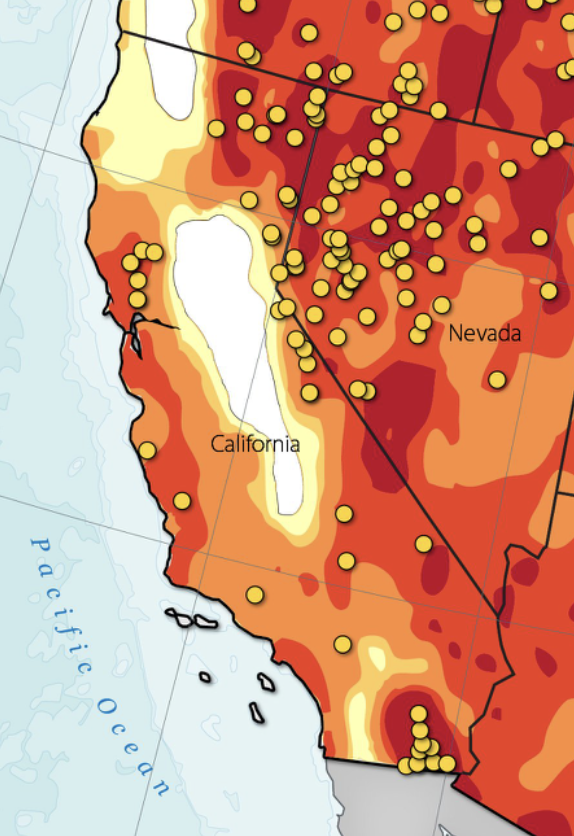
Map: High geothermal potential along the Central Coast (dark red)
President Trump hates not just offshore wind but all wind projects going way back claiming that noise from turbines causes cancer. As a result, big plans across the US to permit more of this natural resource are in trouble even as the country looks for new energy projects to power hundreds of kilowatt-loving proposed data centers. Some call it “Trump’s war on wind.”
Back in January when Trump took office, he made a proclamation that imposed a moratorium on Federal activities associated with offshore (and onshore) wind energy projects including the issuing of federal permits (NOAA, USCG, US F&W, USACE, etc.), federal easements and ROWs, and federal purchases of electric power. This moratorium is still in effect and most believe, will not be lifted. Additionally the White House in the past few days ordered The Bureau of Ocean Energy Management (BOEM) to rescind all designated wind energy areas in federal waters, announcing last Wednesday an end to setting aside large areas for “speculative wind development.
The AP reports that” offshore wind lease sales were anticipated off the coasts of Texas, Louisiana, Maine, New York, California and Oregon, as well as in the central Atlantic. The Biden administration last year had announced a five-year schedule to lease federal offshore tracts for wind energy production. Trump began reversing the country’s energy policies after taking office in January. A series of executive orders took aim at increasing oil, gas and coal production.”
Now the NY Times reports that “The Interior Department also signaled that it would review wind projects that have already been approved by the federal government but are being sued by opponents, and consider rescinding their permits, a step that could halt projects already under construction.”
Where does that leave California’s offshore wind projects like the three approved off Morro Bay?
As you might remember, five global companies paid $757 million to the US Treasury to develop wind farms in 376 square miles of federal waters including three that are 20 miles off SLO County’s north coast in a December 2022 BOEM managed auction. They already have given the government three quarters of a billion dollars in anticipation of being in operation in five years and spending millions more on the plans. Once developed, advocates say the wind farms could produce up to 6 gigawatts of clean, renewable energy — enough to power around 3.5 million homes. The state has been planning huge infrastructure upgrades to carry the power to California homes. Now poof…. it’s all gone!
The state and the big wind companies are fighting even bigger political winds as the Trump administration does everything they can to make sure it does not happen. The mostly foreign-based companies have a big target on their back. You have to wonder if their only recourse now is to ask for their money back after securing a legal, sanctioned auction amounting to a contract to move forward.
This week, the BOEM website says “the Department of the Interior and BOEM are implementing President Trump’s memorandum temporarily halting offshore wind leasing on the Outer Continental Shelf.” The memorandum also pauses new or renewed approvals, rights-of-way, permits, leases, or loans for offshore wind projects pending a review of federal wind leasing and permitting practices.”
Planned virtual public meetings on the BOEM’s draft plan for Potential Mitigation of Future Development of Wind Lease Areas Offshore California have now been postponed. The postponement amounts to another way to halt any progress for these companies, not able to secure an incidental ‘takes’ of – say a whale or birds- because the Trump administration won’t allow them to move a feather. The upshot:offshore wind in federal waters may be dead in the water as investors, too get the clear message.
A new July 15 directive by the Dept of Interior announced a new lengthy review of solar and wind projects prompting an outcry from the renewables industry including the American Clean Power Assn.
“The Secretary of the Interior will apparently now be personally reviewing thousands of documents and permit applications for everything from the location and types of fences to the grading of access roads on construction sites across the country. This intentional effort to slow energy production comes at the worst possible moment. U.S. electricity demand is projected to surge 35-50% by 2040, with data centers alone requiring over 100 GW of new capacity. To meet this demand, America needs a true ‘all of the above’ strategy, which includes additional natural gas and intense efforts to accelerate geothermal and advanced nuclear technologies.”
The group points out that “clean energy represented 93% of new capacity added to the grid last year because these sources are the best way to meet demand right now. It’s basic economics that cutting off the fastest and most affordable energy available to the grid just as demand surges will constrain our energy supply and lead to significant cost increases.”
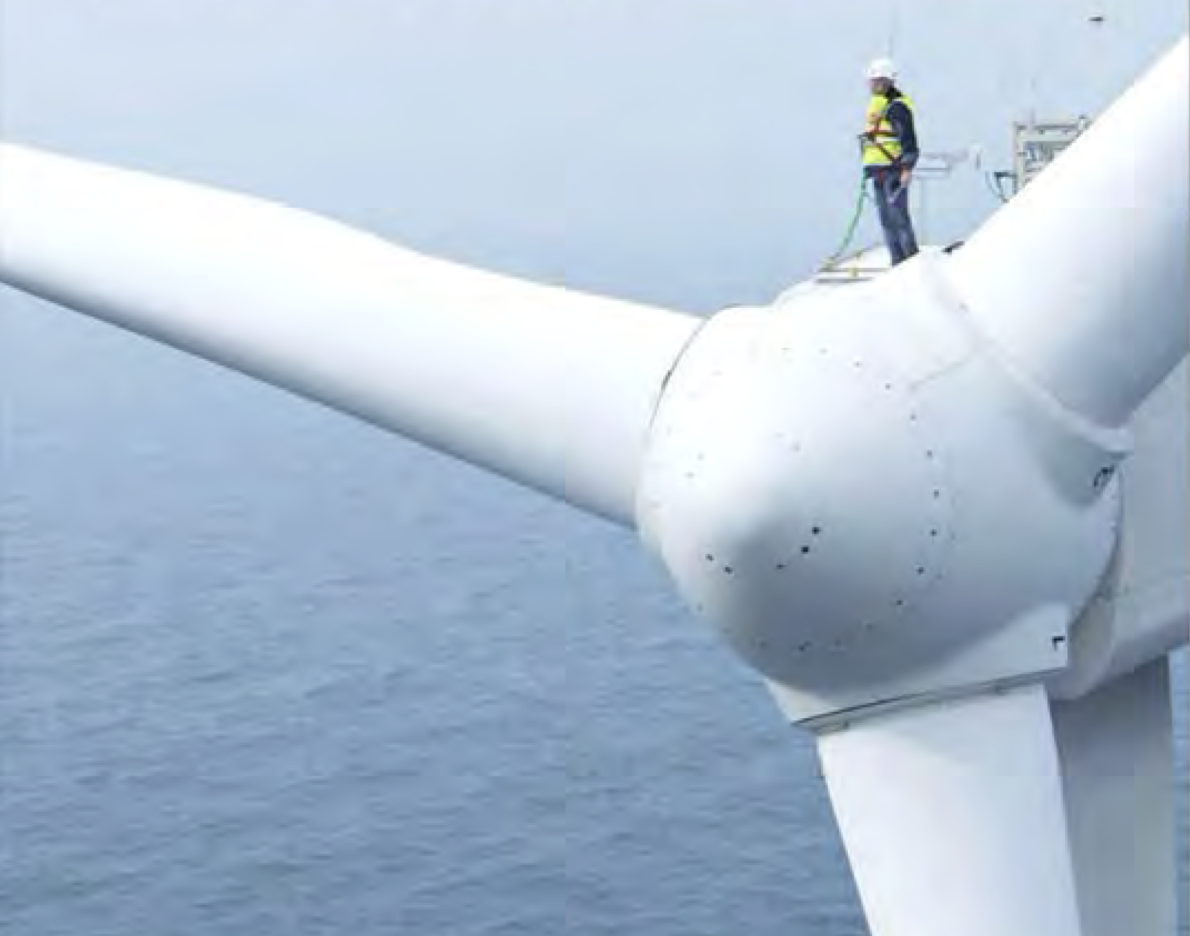
Vandenberg and Humboldt projects
There is one California offshore wind project planned in the 3-mile boundary of state waters off of Vandenberg that could still move forward, considering California is more receptive to offshore wind.
The CADEMO Floating Wind Demonstration Project 2.5 miles offshore from Vandenberg Space Force Base in Santa Barbara County lies entirely within California’s jurisdiction.CADEMO plans to install four floating wind turbines, each capable of generating 15 megawatts, for a total output of around 60 megawatts. Developers have finalized a mitigation agreement with the U.S. Department of Defense to ensure compatibility with Space Force operations. The project was expected to begin delivering power by late 2027.
But a closer look tells you that CADEMO is in the same leaky boat as the larger projects in federal waters are. The problem is that the buyer of the power for this Vandenberg project is Vandenberg itself, a federal entity that as a result of the January 2025 Trump proclamation cannot buy the wind energy they need from this project.
The proclamation imposed a moratorium on Federal activities associated with offshore (and onshore) wind energy projects including the issuing of federal permits (NOAA, USCG, US F&W, USACE, etc.), federal easements and ROWs, and federal purchases of electric power from wind generation.This moratorium is still in effect and effectively blocks Vandenberg from working with the CADEMO offshore wind energy project developers, Cierco Energy.
CADEMO also has a time sensitive interconnection queue position with PG&E requiring a substantial deposit to secure and maintain.Now CADEMO will get some help from a northern California ally – Humboldt-based Redwood Coast Energy Authority(RCEA),one of many nonprofit California Community Choice Aggregators (CCAs) who would like to have a demonstration wind project – out of Trump’s reach – in state waters in their area.
Redwood has two wind developers that have paid BOEM to lease in federal waters that now are likely thwarted. On July 24 the Board of Redwood Coast threw CADEMO a life preserver with approval of a $1,100,500 loan” for the PG&E Second Interconnection Facilities Security Posting for the CADEMO Offshore Project in central California”.
Unlike CADEMO’s project off Vandenberg, CADEMO would also build a wind farm off Humboldt with the power sold to Redwood – not a federal entity like Vandenberg- but a nonprofit Community Energy Authority. The loan is said to be refundable and temporary and according to a Redwood staff report ” due to RCEA prior December 12, 2025, when an additional deposit for the Network Upgrades Financial Security would be due to PG&E. Between now and December the CADEMO team would need to secure public or private financial support that could repay RCEA and post the additional deposit. If this cannot be secured, RCEA would be refunded, and the project would lose their interconnection position.”
It sounds like a “hail mary” for this wind farm developer and perhaps RCEA to keep California’s first offshore wind project and hope for renewable energy alive. “The CADEMO project is viewed as the only opportunity to demonstrate floating offshore at this scale in the US within the next 10 years.” summarizes a Redwood staff report.
Concerns over fires
This week Diablo curtailed their generation as a precaution and at press time, Diablo Unit 2 is only operating at 47% according to the Nuclear Regulatory Commission (NRC) website
Vandenberg has a long term goal of becoming less dependent on outside sources for their electric power to carry on its critical defense activities. The base depends on PG&E for power in the evenings and at night when their solar panels don’t generate electricity. A big fire could shut down Diablo Canyon, such as the current situation with the growing Gifford Fire east of Santa Maria,now over 110,000 acres, that threaten the transmission lines that head east to the San Joaquin Valley connecting to the state grid.This week Diablo curtailed their generation as a precaution and at press time, Diablo Unit 2 is only operating at 47% according to the Nuclear Regulatory Commission (NRC) website.
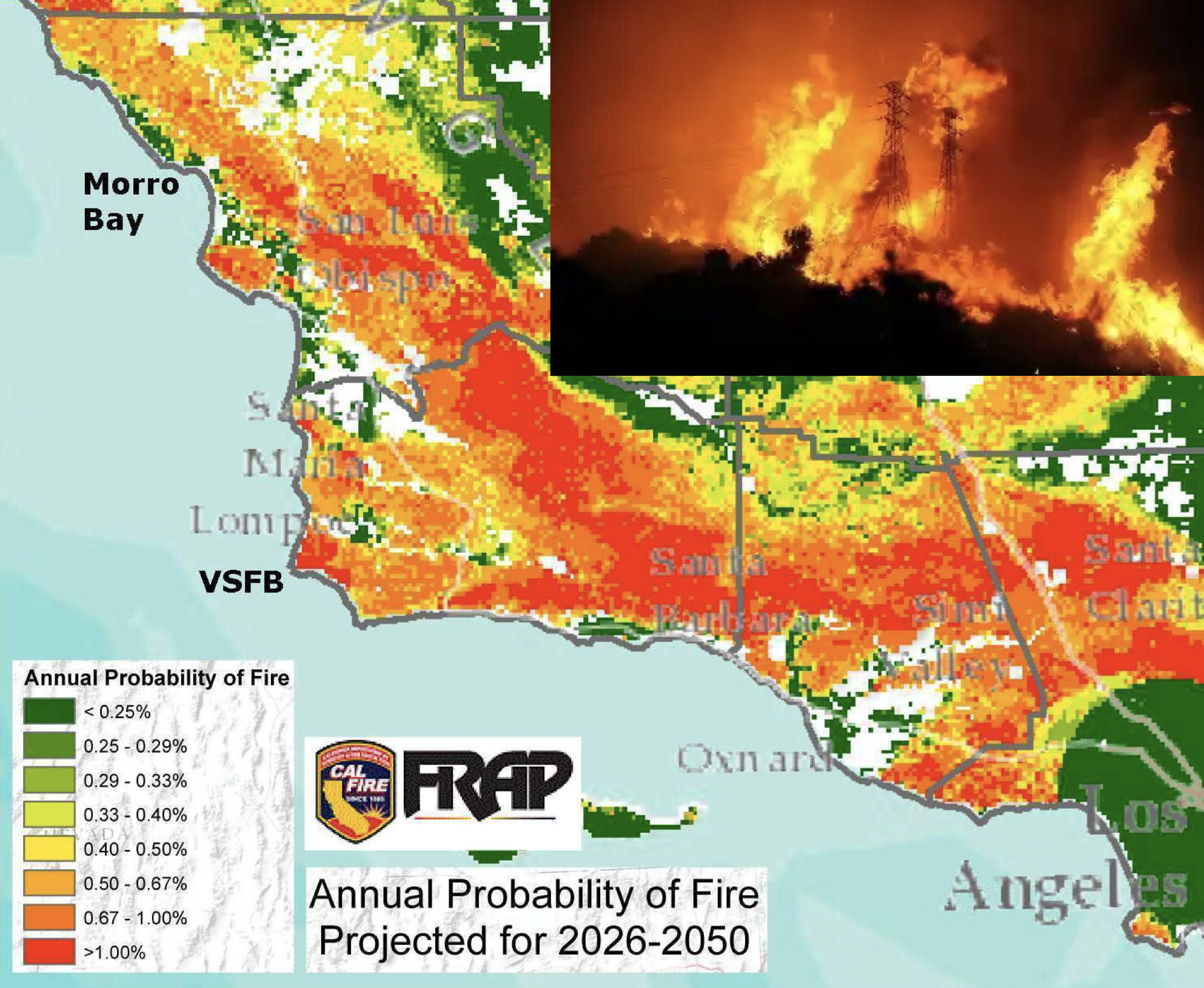
High probability of fires around Vandenberg
The base must have power 24/7 to carry on with their military mission, not only to launch satellites, but defend against incoming attack with interceptor missiles. Here is a map that shows the base’s vulnerability in case of fire, more likely today with climate warming, despite Trump’s war on NASA climate monitoring.NPR recently reported Trump’s NASA now plans to end at least two major satellite missions specifically designed to monitor global carbon dioxide.
Vandenberg has a plan to put in 16 MW of battery power to store the solar power at night that is expected to be installed in the next year. But the base still needs a new source of power, with offshore wind is out- may now look to tap abundant heat underground, a source found up and down California including the Central Coast. Here is a map showing good potential along the West Coast.
Not only is geothermal energy technically available, importantly it may escape Trump’s campaign against renewable energy. In a word, Trump, who values a good soaking in a hot tub, doesn’t hate geothermal.media reports note that geothermal energy was spared in President Donald Trump’s sweeping tax and spending law,The Big Beautiful Bill that made deep cuts to incentives for other forms of clean energy.
It’s not just defense installations that are in the market for a new source of electric power. California as a whole and particularly Silicon Valley are hungry for new”clean” power generation, as Trump crushes other options.
Across the US, companies are announcing plans for new data centers.Now California’s largest utility is getting into the game.
PG&E announcement
PG&E has announced this past week that there has been a surge in demand for power with a recent uptick in new planned California data centers on the drawing board near Silicon Valley. As just about everyone knows the artificial intelligence boom and cloud technology across the nation. is boosting demand for electricity.
PG&E says it is working to serve 10 gigawatts (GW) of new electricity demand from data center projects over the next ten years—that’s enough energy to power approximately 7.5 million homes simultaneously.The 10 GW in PG&E’s data center project pipeline reflects a significant increase from the 8.7 GW of data center demand PG&E reported in May and the 5.5 GW the company reported in February.
Just 1 gigawatt can power around 750,000 homes says PG&E.
PG&E estimates the 10 GW of anticipated data center load growth could lead to lower customer electric bills by 10 percent or more by spreading fixed costs across more energy usage; create 50,000 construction jobs and 115,000 associated support jobs; add 5,000 permanent tech jobs and 28,500 permanent support roles; generate $1.25 billion to $1.75 billion in increased property tax revenue; and contribute $2.5 billion to $3 billion in additional sales tax revenue.
The PG&E news release says “Of the 10 GW, 17 data center projects totaling approximately 1.5 GW are in the final engineering phase (the last step before project construction starts) and projected to begin operations between 2026 and 2030. Most of these are in San Jose, Silicon Valley and the greater San Francisco Bay Area, but some are also in the Central Valley and Sacramento.”
Growth in data center demand is good news for all PG&E customers, the utility claims.PG&E estimates for every 1,000 MW (or 1 GW) of new electric demand from data centers it serves, PG&E electric customers may save between 1-2% on their monthly bill in the long term, while serving those customers with some of the cleanest electricity in the United States.”
So where are we going to get this “clean” power from?
Keep in mind the Trump administration’s war on wind includes another renewable source – solar- a huge industry in California. EPA just announced plans to eliminate $7 billion in spending on grants for solar energy, California’s most important renewable energy source.
Where is there opportunity that Trump won’t ban?
Hot Rocks to the rescue?
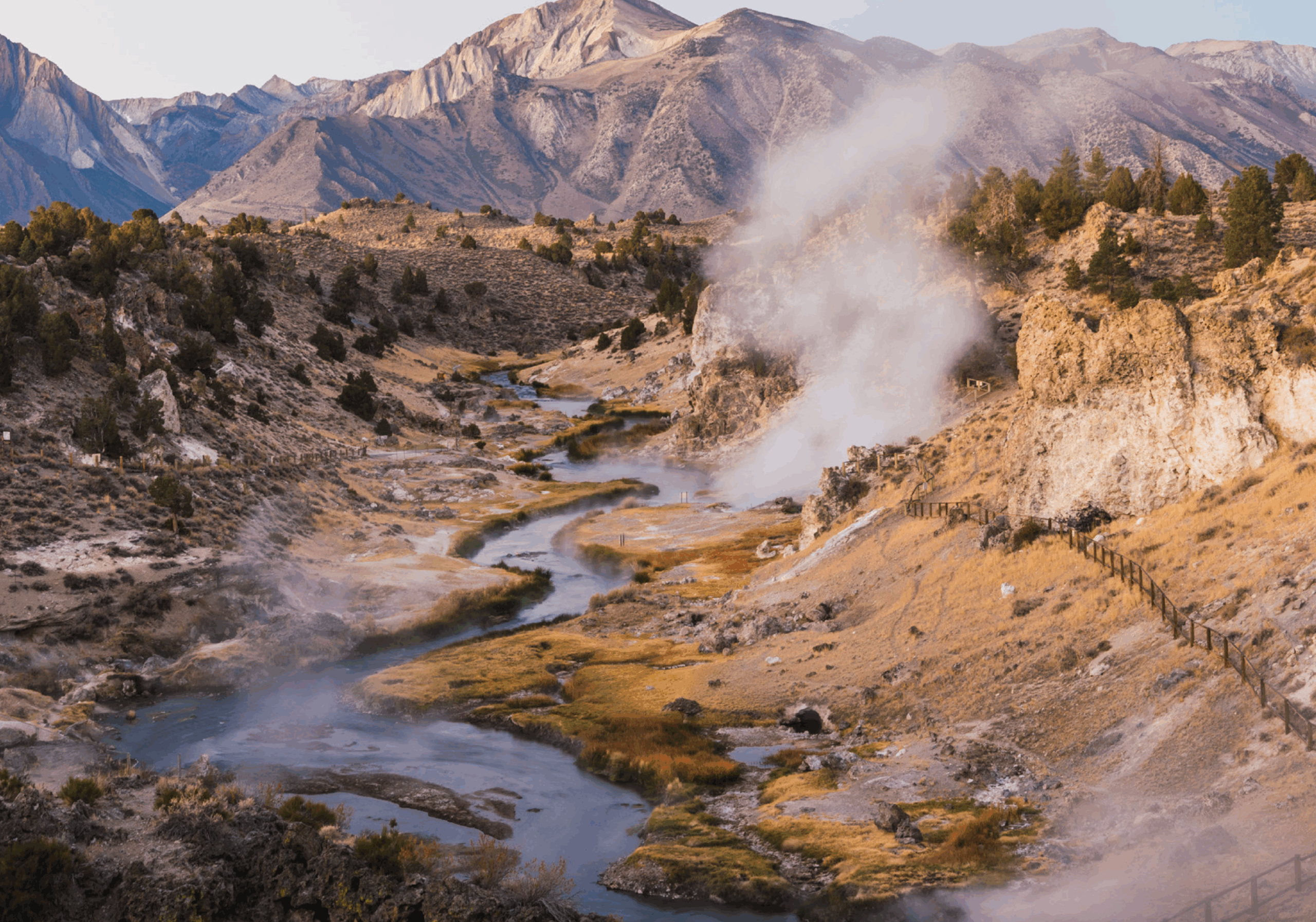
Hot springs near Mammoth Lakes
A new report published by in June by the Clean Air Task Force called “Unlocking California’s Geothermal Potential: A Strategic Opportunity for Clean, Firm Power” says” Next-generation geothermal energy, which uses the earth’s naturally occurring heat to produce power, is well-positioned to play an important role in California’s clean energy mix. It offers zero-carbon, always-available electricity that supports reliability and reduces dependence on fossil fuels during periods when solar and wind are unavailable.”
“”Recent innovations have enabled the emergence and growth of next-generation geothermal. Rather than harnessing pre-existing pockets of hot underground water, next-generation geothermal involves circulating water from aboveground through the subsurface, gathering heat from the rock that is then turned into electricity, and then re-circulating the fluid through the system as a part of a continuous cycle. This new form of geothermal energy can be harnessed in far more locations than traditional geothermal because it only requires access to underground heat – eliminating the need for naturally occurring pockets of hot water. This breakthrough expands the potential for clean, reliable energy almost anywhere on Earth. According to the International Energy Agency, next-generation geothermal techniques could elevate the global market share of geothermal from <1% to more than 8% by 2050.”
Black Gold or Hot Water
Californians may be familiar with the geysers near Sonoma and Lake counties, geothermal near the Salton Sea and Eastern Sierra, all nodes of volcanic activity. But the Central Coast has its own significant resource just below our feet, familiar after 100-plus years of drilling for oil around here. Pioneer drillers were searching for black gold but struck hot water.
Avila Hot Springs were discovered in 1907 by oil drillers who were initially seeking oil but instead found a natural artesian mineral hot spring.In 1886, another group of prospectors drilling for oil also discovered hot mineral water at what is now Sycamore Mineral Springs Resort right off 101 in San Luis Obispo County.
Back to the report – “California is the number one producer of geothermal energy of all U.S. states, and has enormous untapped geothermal potential. Clean Air Task Force’s (CATF) first-of-a-kind modeling estimates that utilizing just 1% of California’s resource potential of superhotock geothermal, the highest-temperature subset of next-generation geothermal, has the potential to generate about 380 GW of electricity – 13 times California’s 2023 electricity consumption.”
A UCSB study says next-generation geothermal systems can unlock an abundant source of clean, renewable energy.In its recent Future of Geothermal report, the International Energy Agency(IEA) found that there is enough geothermal energy to power the world 140 times over.
The IEA projects that by 2035, geothermal will be cheaper than nuclear and competitive with solar photovoltaics (PV) and wind when each is paired with battery storage. Meanwhile, a recent economic analysis put the cost of next-generation geothermal electricity at $64 per MWh, which would be competitive with other renewables before accounting for the cost of battery storage associated with intermittent power sources.
He likes it
Unlike some other clean technologies, next-generation geothermal projects appear poised to receive continued policy support in 2025 and beyond. Multiple recent Executive Orders include geothermal as a solution to improving U.S. energy security, while Trump’s Energy Secretary Wright has hailed geothermal’s benefits.
Department of Defense interest in geothermal predates the Trump administration with the United States Air Force (Department of the Air Force / DAF) announcing an open solicitation call for novel approaches to generate electricity at its installations using geothermal energy as of 3 January 2025.As a result ,the Air Force has published the list of US companies that have been deemed “Awardable” for geothermal projects in all US Department of Defense branches and facilities worldwide.
In the past few days the White House has issued new executive orders that also boost geothermal power
In the past few days the White House has issued new executive orders that also boost geothermal power. The order would ease federal regulatory burdens for AI data centers and supporting infrastructure, including power generation and transmission facilities.In more specific terms, “geothermal power equipment” is included in the order’s “Covered Components” or the materials, products, and infrastructure that are required to build data center projects. Covered Component Projects” under the EO include:Involving an incremental electric load addition of greater than 100 MW;A project that protects national security;A project for which the Project Sponsor has committed at least $500 million in capital expendituresA project that has been designated as “Qualifying Project” by the Secretary of Defense, the Secretary of the Interior, the Secretary of Commerce, or the Secretary of EnergySeveral planned data center projects in the US and around the world are already being developed under agreements to be supplied with geothermal power, including projects planned by Meta in New Mexico, and by Google in Taiwan.
On a county level, this month the expansion of the Dogwood geothermal project in Imperial County California was approved.
Advantages of Geothermal Heat
-Geothermal systems can make steam and hot water without pollution, since they don’t rely on combustion to generate heat. Next-generation geothermal has several advantages that make it a particularly useful technology for the decarbonizing of industry.
-Clean, Around-the-Clock Heat
-Geothermal systems do not produce emissions
-Geothermal resources have no fuel costs
Department of Defense Interest: The Department of the Air Force, in partnership with the Defense Innovation Unit, is exploring the use of advanced and enhanced geothermal technologies for installation energy resilience across multiple Air Force bases, including potentially Vandenberg Space Force.
The UCSB report notes geothermal projects can face significant delays due to permitting hurdles. In some cases, a single geothermal project may trigger multiple National Environmental Policy Act (NEPA) reviews. In 2019, the DOE GeoVision report estimated project timelines at 8 to 10 years for geothermal systems.In contrast, oil and gas developers often receive categorical exclusions that exempt them from certain reviews, despite having much more severe environmental impacts than geothermal projects.
Granting the same exclusions to geothermal could accelerate timelines by 2–6 years. Trumps’ Bureau of Land Management has already finalized exclusions for geothermal resource confirmation and is considering further streamlining for indirect evidence of geothermal resources.
Study at Vandenberg may lead to some test wells to be drilled to gauge the potential for geothermal.The hot rocks, perhaps 600 degrees F, may be 10,000 ft down. The base is located near Tranquillon Mountain composed of volcanic and volcaniclastic sedimentary rocks formed through a combination of eruptions and subsequent uplift, akin to our Seven Sisters in SLO County.
Water use
Next-generation geothermal systems use water during reservoir stimulation to create hydraulic fractures underground. Some water is also used during drilling to cool the equipment. Once a well is operational, the circulating geothermal fluid is re-injected into the ground. This means
that after drilling, the geothermal system does not actually consume groundwater. Additionally, geothermal doesn’t require freshwater – these systems can make use of “degraded” water sources such as brackish water, treated wastewater, or saline aquifers.