Morro Bay resident’s fear of wind is overblown

Editorial by John Lindt

Thank you Gail Johnson for your letter to the Estero Bay News regards any danger of Morro Bay being “industrialized.” Opponents of the proposed offshore wind farm as well as the BESS- the battery storage facility, like Gail, are making the argument that both projects will certainly change the small town character of Morro Bay.

My thesis was Morro Bay has had a history of industrial uses like 450-foot smoke stacks next to our little fishing village and locals and tourists alike have enjoyed the atmosphere despite their presence for the past 70 plus years.

Not that I wouldn’t mind if the giant stacks and the old concrete,150-foot tall power plant came tumbling down to make room for all kinds of uses – even back to nature.

Guess what? That’s just what the company who owns the hundred plus acre property is ready to do.

February 20 meeting

In fact, there is a meeting of the city Planning Commission February 20 to go over ideas to master plan this area for the future after the plant and smokestacks come down.

How is that for less industrialization?

Instead, Gail and opponents of both renewable energy projects, while admitting we need them, fear the ””massive”projects will forever change the character of our little fishing village.

Here is what Gail writes in her opposition piece that dredges up assertions she takes as fact about the projects that are overblown or just not correct.

” A major port overhaul is envisioned“ and “our bay would be unrecognizable.”

“Mother’s Beach would be gone” and the iconic”otters will disappear.” The harbor would be dredged to double the depth.

“The view of our harbor would include massive piers, huge ocean going ships, cranes, and platforms that would dominate the skyline.”

Here is the problem. All of this is wild conjecture- hot air over offshore wind. It’s much more likely that the harbor would not be dredged any deeper than it is now and any boat over 200 feet would not be able to navigate in the small harbor. Larger boats could not turn around.

Morro Bay officials say discussion is in the very early stage but the kind of boat that would service the wind farms would periodically carry employees and spare parts – not giant turbines or blades that would be coming on larger ships from Long Beach where the units will be assembled, the port’s authority has announced.The big industrial stuff is happening there!

Remember that the offshore wind project is still 8 to 10 years away and talks are in the early stage.Gail must be a mind reader! But nobody’s going to change the scale of our tiny harbor to anything like Long Beach! And nobody would tolerate the loss of our otter population.It’s just not going to happen.

As for fears that the battery storage plant would ruin the view along the Embarcadero-again I repeat that the view along the Embarcadero is now dominated by a giant mothballed power plant. What would replace it would not even be seen from the visitor’s walking area, the BESS will likely be screened by trees. The buildings that would house the battery storage units are two-story, maybe 30 to 35 ft tall compared to the 150 foot tall mothballed power plant. The bottom line is you won’t even know it’s there.

This is an opportunity not to be feared. As for answers to questions about the BESS project, the city now expects the Draft EIR will get a hearing in front of the planning commission in May or June.

Asian Coal Plants Feed Mercury To Pacific Fish

MNN Bloggers

Scientists may have solved an old mystery about how mercury gets into ocean fish, but their findings offer a dire outlook for the toxic metal’s prevalence in seafood.

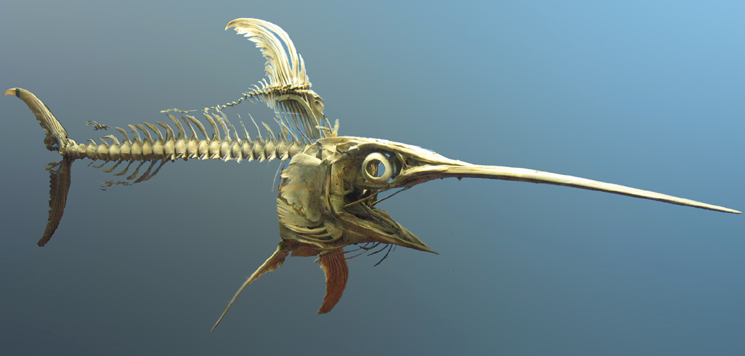
Swordfish is one of several mercury-prone species in the North Pacific Ocean, researchers say, both due to its feeding depth and its position in the food chain. (Photo: Stuart Price/AFP/Getty Images)
Mercury levels in Pacific fish will likely continue rising for decades, a new study warns, based on a groundbreaking discovery of how the toxin infiltrates open-ocean ecosystems.

Researchers from Michigan and Hawaii have spent years investigating how a toxic compound called methylmercury winds up in moonfish, mahi mahi and other North Pacific species. Their findings, published this week in the journal Nature Geoscience, point to a bizarre collaboration between deep-sea bacteria and distant power plants, hinting at potential solutions but also suggesting the problem will only worsen in the near future.

“This study reinforces the links between mercury emitted from Asian countries and the fish that we catch off Hawaii and consume in this country,” says lead author Joel Blum, an environmental scientist at the University of Michigan, in a statement about the research.

Up to 80 percent of all methylmercury in deep-feeding Pacific fish was produced well below the surface, the study found, most likely by bacteria clinging to organic debris as it sinks. But the problem begins much farther away: Using the chemical signature of mercury in fish tissue samples, Blum and his colleagues confirmed the toxin traveled thousands of miles by air before raining into the ocean, pointing to origins in Asia. The North Pacific fisheries are downwind from China and India, two fast-growing nations that increasingly burn coal — a major source of mercury emissions — to generate electricity.

Scientists have long known this mercury tends to fall and wash into water bodies, where certain microbes convert it to methylmercury. Since methylmercury lingers in body tissue, it then “biomagnifies” at higher and higher levels as it moves up the food chain. That’s why big, predatory fish tend to be more mercury-laden than smaller fish, and why they’re the main source of human exposure to methylmercury. The toxin can trigger debilitating neurological effects in humans, especially in fetuses, infants and young children.

But in 2009, University of Hawaii researchers made a confusing discovery: Deep-feeding pelagic fish contain more mercury than surface feeders, and feeding depth is nearly as relevant as food-chain rank to a species’ contamination level. “We knew this was true,” says University of Hawaii researcher Brian Popp, a co-author of the 2009 and 2013 studies, “but we didn’t know why.” Since biological activity is typically highest in the surface layer, scientists thought any open-ocean methylmercury production would happen there.

The new research, however, shows that up to 80 percent of North Pacific methylmercury is produced below the “surface mixed layer,” which extends about 165 feet deep. Microbes are churning out the toxin as deep as 2,000 feet, suggesting it’s the handiwork of anaerobic bacteria that cling to sinking bits of dead plant and animal matter. Thanks to faraway coal-fired power plants, that organic debris may also contain inorganic mercury, which is later converted to methylmercury in the feeding territory of deep-diving fish.

Not only does that help explain how mercury is getting into North Pacific wildlife, but it also hints at more contamination down the road. That’s because Pacific mercury levels are already forecast to rise at intermediate depths in coming decades, possibly doubling by 2050. On top of that, the low-oxygen zones where anaerobic bacteria thrive are expanding globally, a process that’s expected to worsen due to manmade climate change.

The immediate outlook may be discouraging, but Blum says the study could help ongoing efforts to curb global mercury emissions. The U.S. unveiled tougher mercury rules in 2011 after decades of debate, and a newly negotiated U.N. treaty aims to rein in future emissions from a variety of countries. As with greenhouse gases, rapidly industrializing economies like China and India are now some of the planet’s top mercury emitters.

“The implications are that if we’re going to effectively reduce the mercury concentrations in open-ocean fish, we’re going to have to reduce global emissions of mercury, including emissions from places like China and India,” Blum says. “Cleaning up our own shorelines is not going to be enough. This is a global atmospheric problem.”

Making Water Storage Work

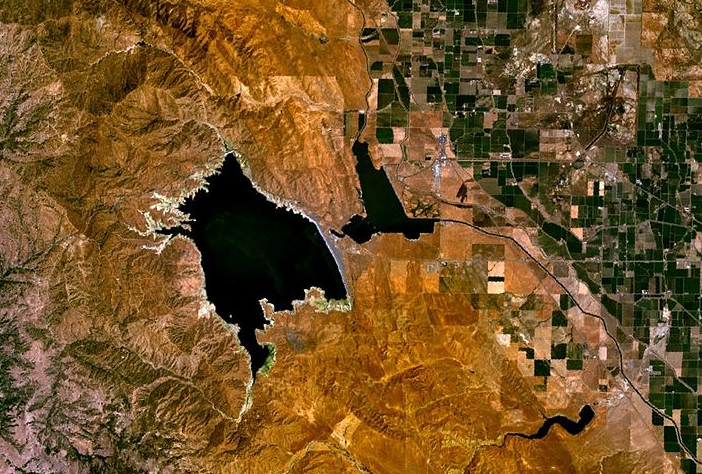
San Luis Reservoir

May 16, 2013
By Nancy Vogel
 California Department of Water Resources
In the last generation, an amount of water storage roughly equivalent to twice the capacity of Lake Shasta, California’s biggest reservoir, has been developed south of the Sacramento-San Joaquin Delta.  That includes nearly five million acre-feet of groundwater storage in Kern County and the Metropolitan Water District of Southern California’s 810,000 acre-foot Diamond Valley Lake in Riverside County.

This storage makes it possible for California to hold ample supplies captured in wet years to help withstand dry cycles.  But California needs a better way to capture water when it is available.

San Luis Reservoir is the largest storage facility south of the Delta that is connected to the State Water Project and Central Valley Project. A full San Luis is essential to making the rest of the south-of-Delta storage system work.  Replenishing groundwater banks is a slow and steady process, so “parking” supplies temporarily behind San Luis is the key first step in the south-of-Delta storage process.

But in the last few years, the ability of water project operators to fill San Luis has degraded from roughly 80 percent to 20 percent.

What happened?  The decline of native fish species in the Delta has led to a series of water project pumping restrictions, because pumping in the southern Delta can trap fish and interfere with fish migration patterns.  The water projects are no longer able to reliably move water from the Delta during crucial wet periods.  California’s ability to store adequate supplies of water is directly tied to addressing the ecosystem problems in the Delta.

The Bay Delta Conservation Plan proposes three new intakes on the Sacramento River in the northern Delta in order to reduce harm to fish species, restore more natural flow patterns, and increase water supply reliability.  These intakes would deliver water to the existing aqueducts of the state and federal water projects through new tunnels under the Delta.  And they would be sized sufficiently to take “big gulps” when the high flows are available.

Had the Sacramento River intakes been in place and operating last winter, San Luis Reservoir may have filled to capacity.  Instead we enter summer with San Luis half full, the emptiest reservoir in the SWP system.

The bottom line?  The BDCP is about making today’s storage system work.  And it is about establishing the improved conditions to set the stage for additional future storage improvements north and south of the Delta.  To learn more about water storage in California, see Appendix 1B of the BDCP consultant administrative draft environmental impact report/environmental impact statement.

559 BIZ BLOG: Stimulating News – 10 Reasons to BE HAPPY

After a rough week for the market the sun came out this weekend with new reports that ought you make people more optimistic coming into the Holiday season. Let me count the ways.
1.A report this weekend says the US economy grew faster than we thought this summer with several respected economists now estimating  that the US GDP in the 3rd quarter did not grow by an anemic 2% as estimated a month ago, but 3.2%  We will know for sure November 29.
2.This news is driven in part by a report a few days earlier that the U.S. trade deficit narrowed to its lowest level in nearly two years as exports rose in September to a record high.
3.The worse is over in Europe says another weekend news report with the DAX market up 18% for the year.
4.US election is over and there was a clear victor so that oft mentioned ”uncertainty”about what policies will govern the US in coming years will be far fewer. ObamaCare will stay as will Green Energy support. Yes, we know some taxes will be higher and some will stay low but the economy is not going off any cliff but ramping up.
5.US Consumer confidence climbed to a five-year high in November  with Michigan  consumer sentiment index rising “to 84.9, the fourth straight increase and the highest since July 2007, from 82.6 in October. Economists projected an initial reading of 82.9 for November, according to the median estimate of 71 economists surveyed by Bloomberg.”
6. On Saturday another report says “ China’s sharp economic downturn has ended after trade and consumer spending improved in October but the world’s second-largest economy is not ready for a recovery and exporters face tough conditions, officials said Saturday. The economy should be able to meet the government’s 7.5 percent growth target this year, the chairman of the country’s planning agency told a news conference during a congress of the ruling Communist Party.”
7. Good News For California Schools As Prop 30 Passes. “California voters chose to pass a tax increase on the wealthy and a sales tax increase of a quarter of a cent in a 54 to 46 vote on Prop 30, a ballot initiative designed to bring funding to both K-12 education and curb tuition increases in the state’s higher education system.
“I know some people had some doubts, had some questions – can you really go to people and ask them to raise their tax?” Gov. Jerry Brown (D) said at an election event near the state capitol on Tuesday, according to the San Francisco Chronicle. “Let’s raise our taxes for students, for our schools, for our California dream.”
8. Recovering Real Estate Market: “Home prices and home sales both showed strong annual growth during the third quarter, according to the latest report by the National Association of Realtors. The national median existing single-family home price jumped 7.6 percent from a year ago, to $186,100 — the strongest year-over-year increase for any quarter since first-quarter 2006, when prices were up 9.4 percent from the previous year.
Sales of existing homes rose 10.3 percent during the third quarter, to a seasonally adjusted annual rate of 4.68 million, up from 4.25 million a year ago.
Median prices posted annual gains in 120 of 149 metros tracked, up from 110 metros showing gains in the second quarter of 2012 and 39 metros with price appreciation during the third quarter of 2011.”
9. Gas prices in California continue a downward plunge even after the election with average sales price in the state haven dropped almost 90 cents in a month.
10. More Jobs Advertised:The US West had a total of 1,102,700 online job advertisements in October 2012, an increase of 7,700 from September 2012 to October 2012. The Conference Board reports; “California, the largest State, gained 1,200 in October and was up 67,300, or 14.5 percent, in the first ten months of 2012.”