Citrus Farmers Deal With Psyllid Restrictions

By Cecilia Parsons

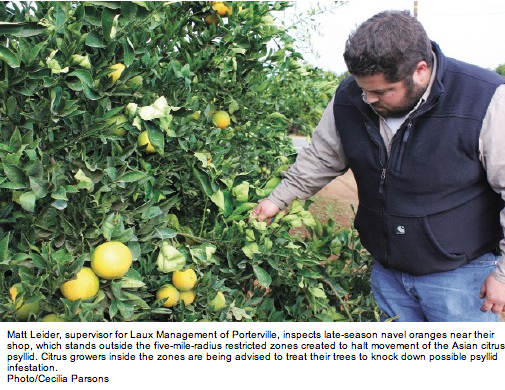
Matt Leider, supervisor for Laux Management of Porterville, inspects late-season navel oranges near their shop, which stands outside the five-mile-radius restricted zones created to halt movement of the Asian citrus psyllid. Citrus growers inside the zones are being advised to treat their trees to knock down possible psyllid infestation.
Citrus growers, packers, nursery operators, applicators and grove managers, as well as state and county inspectors, continue to sort out the implications of an Asian citrus psyllid infestation in the heart of the California citrus belt—even as they move into the peak of the billion-dollar Central Valley navel orange harvest.
The two psyllids found in Tulare County citrus groves last month and the one found earlier in Lindsay marked the pest’s first detected foray into the San Joaquin Valley. The psyllid, which can carry the deadly citrus disease huanglongbing, has previously been found in San Diego, Imperial, Los Angeles and Ventura counties.
Huanglongbing, also known as citrus greening, has not been detected in Tulare County, but was found to infect a citrus tree in the Hacienda Heights area of Los Angeles County earlier this year.
A statement from California Citrus Mutual said the circumstances of the psyllid finds in Tulare County dictate a different course of action than taken in Ventura and other Southern California counties where the insects have been trapped. The finds in Tulare County were more isolated, Citrus Mutual said, and intense trapping and surveying since the initial finds have not turned up any additional psyllids.
For those reasons, the California Department of Food and Agriculture has restricted fruit movement only within a five-mile radius of the psyllid finds in the Terra Bella and Strathmore areas. Previously, 20-mile quarantine areas have been implemented.
Growers were still trying to find out exactly where the boundaries for the five-mile restricted zones are located. The interim restrictions on fruit movement will be in place for the next six months, unless more psyllids are found.
Kevin Severns, manager of the Orange Cove-Sanger Citrus Association and CCM vice chairman, said the belief is that the trapped psyllids were hitchhikers and random finds on the exterior of a citrus grove.
Eradication of the psyllid is the goal, not merely control and suppression, said CCM President Joel Nelsen. The significantly smaller eradication zones would better serve that goal, he added.
Citrus growers and packinghouses with trees inside a five-mile radius of the two locations where psyllids were discovered will have the most responsibility in the eradication effort.
Packed fruit is free to move anywhere, but bins of citrus straight from harvest cannot move outside the restricted zones unless all leaves and stems are removed from bins and equipment. The fruit can be moved to packinghouses inside the restricted zones, or the leaf and stem removal can be done in the field.
Grower and grove manager Gary Laux of Laux Management in Porterville said the added costs of precleaning oranges inside the five-mile restriction zones could tip the profit scales for some growers.
If their packinghouse is also inside the same zone, they won’t have the cost. If not, their options are having an in-zone packer clean and re-bin the fruit before trucking to their own packinghouse, or manually or mechanically removing the debris in the field. Either way, they bear the cost of the operation.
Fruit coming from the restricted zones must be accompanied by a compliance agreement with the county, verifying that all cleaning requirements have been met.
“If they have to spend $5 to $10 a bin for cleaning and are only getting $50 to $60 a bin for low-quality fruit, they still have to take out production costs and they could be right on the line,” Laux said.
Nick Arcure, general manager of Magnolia Packing near Porterville, agreed that there would be additional costs to clean fruit and said he doubted there is enough packinghouse capacity inside the restricted zones.
Severns, who also sits on the committee that determines grower assessments to eradicate the psyllid, said it might be possible to substitute inspections and pesticide treatments for the dry-brush cleaning.
Packinghouses inside the restricted areas will also have to double-bag and dispose of field trash from citrus inside the eradication zone at a designated landfill.
Some mandarin growers leave a leaf or two and the stem on the fruit for certain markets, Laux said.
“For some reason, the Canadian market likes those leaves,” he said.
Under the new restrictions, that won’t be allowed.
Citrus nurseries inside the five-mile zone are also affected. Unless their trees grow indoors, their movement is restricted.
In the restricted or eradication zones, citrus growers are being contacted and asked to apply pesticide to their trees. Laux said last week that he had already been contacted by the county about applying a treatment. Unless growers are going to make a routine pest application, the extra one is another expense, he said.
Bob Blakely of California Citrus Mutual said growers are expected to comply with orders to treat and otherwise do their part to contain the psyllid.
Tulare County began last week treating backyard citrus trees within a five-mile radius of the two psyllid finds to control the insect’s spread, but if it appears growers are not treating their own trees, Blakely said, CDFA has the option to back off its control operation.
“Growers need to step up and do their part,” he said.
Currently, farmers pay a 9-cent assessment on each 40-pound carton of fruit they sell, to fund the psyllid eradication effort.
(Cecilia Parsons is a reporter in Ducor. She may be contacted at ceciliaparsons8@gmail.com.)

CFB News

Hanford Farmer Dino Giacomazzi Receives Conservation Award

Hanford dairy farmer Dino Giacomazzi, a founding member of UC Conservation Agriculture Systems Innovation (CASI), received the prestigious 2012 Leopold Conservation Award for California in acknowledgement of his exemplary land stewardship and management.
The $10,000 Leopold Conservation Award is named in honor of world-renowned conservationist Aldo Leopold. The award, presented annually in eight states, recognizes farming and ranching families who are actively committed to living a land ethic.

Giacomazzi manages the dairy and forage production operations at Giacomazzi Dairy, established in southeastern Hanford in 1939. He lives on the 300-acre dairy property and oversees milking, animal nutrition and feed production.

In the spring of 2005, Giacomazzi initiated a demonstration evaluation of strip-till corn planting in a 28-acre field as part of an Environmental Quality Incentives Program contract he had received from the USDA Natural Resources Conservation Service.
“Dino virtually guaranteed his ultimate success with conservation agriculture by the sheer intensity of this effort and the comprehensive nature of his attention to detail,” said Jeff Mitchell, UC Cooperative Extension specialist in the Department of Plant Science at UC Davis. Mitchell is the chair of CASI.
Though no one realized it at the time, Giacomazzi was beginning to formulate a conservation agriculture systems approach. The systems approach would later become, as he has said, “completely new forage production systems for the entire dairy industry.”
Following this successful trial, Giacomazzi established all of the dairy’s corn acreage using strip-tillage in 2006. However, rather than take a single approach, he set out a comprehensive array of strip-tillage evaluations that included three different strip-till implements, strip-till corn varieties, and twin-row versus single-row planting configurations.
Later that year, he opened his dairy to the public for a Strip-Till Field Day that attracted more than 150 farmers.
“To this day, CASI considers this field day to be the most successful and impacting extension education event that our workgroup has been involved with during the past decade,” Mitchell said.
Over the course of the strip-till evaluations at his dairy, Giacomazzi also shared his expertise with a number of visitors, including representatives of Sen. Dianne Feinstein’s office in Washington, D.C., and the USDA NRCS Regional Agronomist for the Western U.S.
In his quest for the optimal CT forage corn system, Giacomazzi investigated twin-row planting options and is now one of the state’s primary authorities on twin-row production. The idea is to stagger two lines of plants 7.5 inches apart in 30-inch row spacing, giving plants optimal access to resources – nutrients, light, water, etc. From 2007 to 2009, Giacomazzi rigorously tested this hypothesis in a series of comprehensive on-farm studies.
Since the fall of 2008, Giacomazzi has also been collaborating with scientists from the USDA Agricultural Research Service National Soil Tilth Lab in Ames, Iowa, on a major, large-scale quantification of particulate matter emissions under traditional and conservation tillage at his dairy. He worked with Jerry Hatfield, the research director of the Tilth Lab, and a large group from Utah State University. This group quantified dust emissions using LIDAR, laser beam and dispersion modeling technologies and has found significant reductions in particulate emissions in Giacomazzi’s strip-till system relative to his former standard tillage approach.
Last spring, Giacomazzi began using a twin row Monosem planter on his farm that enables GPS precision guidance and application technologies from Trimble Corporation. This instrumentation allows for precision application of seed and nutrients in the same planting pass. He recently showcased his progress on his CT silage production systems by opening his farm to still another public field day that attracted several farmers and media coverage.
“Dino’s contributions to our collective efforts in CASI have been unparalleled,” Mitchell said. “He has made huge contributions to the development of knowledge and to the expansion of conservation agricultural systems in California’s Central San Joaquin Valley

Visalia Shopping Center Seeks Megaplex

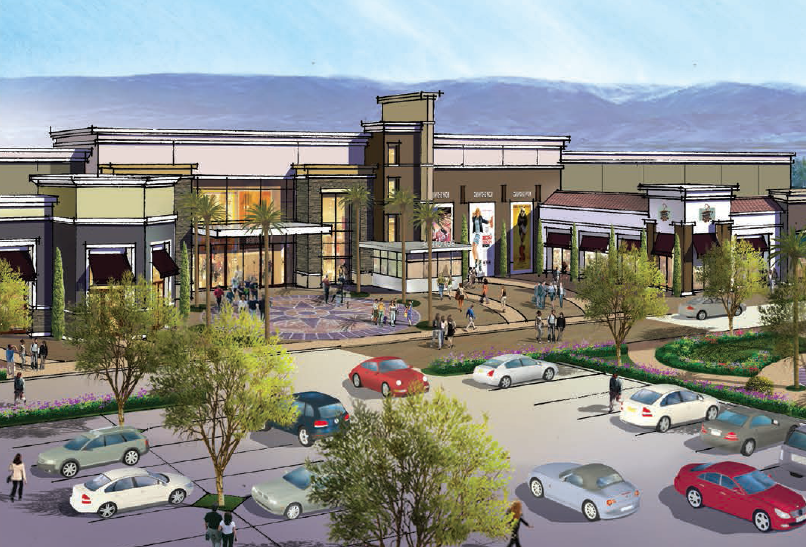
Visalia shopping center owner DBO Development is in advanced discussions with three movie theatre chains to open a multi-screen theatre just east of Mooney at Cameron on the south end of town to anchor the next phase of their Packwood Creek Shopping Center. “We expect to have a commitment from one of the chains by February” says Patrick Orosco of DBO.

Orosco has been marketing the next phase of Packwood Creek – Visalia’s largest retail complex – called The Grove at Packwood Creek, a 25 acre,278,300 sf center on both sides of Cameron Ave with the help of Fresno-based Commercial Retail Associates. On the south side of Cameron, Orosco hope to land big box national tenants facing Costco and on the north side they hope to bring in a large cinema complex. Orosco confirms they are talking to Regal Cinemas who already operates both movie theaters in Visalia.

Orosco says while discussions with movie theater operators are well along none of the other potential retailers or eateries listed in the marketing materials are signed up yet and some are already likely to locate elsewhere if they come to town.

That includes Pollo Loco who recently filed a plan to locate on south Mooney next to BevMo. “This is like a wish list of prospects who might be interested incoming to town.” They include the fast food hamburger chain Five Guys,an East Coast favorite who is expanding in California.

The marketing materials,done in August for the ICSC trade show, also include Burlington Coat Factory who is now expected to locate next to the new Walmart (the former Costco) on South Mooney,not a part of the Packwood Creek center.

Orosco says the key anchor for The Grove will be the megaplex – well suited for the site offering acreage for the hundreds of cars need to park at one time. He maintains that Visalia is losing out to the Tulare’s Galaxy Theatre next to the outlet mall in Tulare because it is far newer than the Sequoia Mall 12plex, a 40,000 sf divided theater inside the mall with no visibility,no other nearby nightspot ( Borders closed in 2011) and very small theater sizes.

Built in 1973 the 353,000 sf Sequoia Mall is anchored by only Sears and Hobby Lobby along with the Regal move complex. The place has seen little new investment in years. A 2012 retail consultant report to the city describes the mall in these unflattering terms.

“While well located at the highest traffic volume intersection in the market and near other strong retailers, the oldest development, the significantly vacant and underutilized Sequoia Mall, is functionally and competitively obsolete. A Hobby Lobby replaced the former Mervyns’ store in 2011. The former Borders store, which offers visibility to Mooney Boulevard, remains vacant as does the former Ross Dress for Less store and other facilities that do not have street frontage.”

Reviews of the movie theater in the back area of the mall posted on a social media website earlier this year describe the experience of going there in vivid terms.

“HORRIBLE! My god the seats were torture. Felt like were in a Middle ages torture chamber, it was all we could do to sit through the movie. In fact since there were only 11 people in the whole theater (now we know why) I got up and stood at the back for about 20 minutes to get some relief from the agony of the chairs. We will NOT be going back to this theater, in the future we will either go to out of town or not see the movie if it means going here. And they have lousy candy selections too!”

Even the candy can’t catch a break.

“I think people agree the Sequoia Mall movie theaters are not a competitive model” sums up Patrick Orosco, the main reason why he  is confident a competitor –  a new state of the art megaplex on the southside of  town is likely to gain traction.

Other than the Sequoia Mall – Downtown Visalia has a 10plex also operated by Regal that works extremely well in the Downtown with its big variety of restaurants within walking distance encouraging residents to make a night of it and boosting overall traffic.

Orosco says helping to move The Grove project forward is both the improving economy and renewed demand for retail space in Visalia as well as the fact this 25 acre center is already zoned properly within the city.

But Orosco has seen some tough marketing years for this property  during the four years of the recession not only due to the economic climate but because this land has no Mooney frontage. The big draw is Costco east of the big Mooney strip behind Lowes that attracts hoards of shoppers each day.The new theater would be located right across the street from Costco. As a destination retail use itself – like Costco – the new theater is likely to draw more eateries nearby as well as help sustain the half dozen major restaurants like Mimi’s Cafe and Olive Garden in the Packwood center now. For the Oroscos it would bolster the overall rent values at their center.

Would the new megaplex hurt Downtown? Orosco thinks no but others might disagree.

SLO Sales Tax,Bed Tax Revenue Climb

Hottest retail area is Los Osos Valley Rd says new report

Sales tax revenue for the second quarter of 2012 was up 7.1% in 2012 after climbing 9.2 % the last quarter.  The trend is positive both here and nationally with an expected increase of of 4.1% in Holiday sales by the National Retail Foundation.

SLO city sales grew strongest Sales the Los Osos Valley Rd corridor up 25.4% in the latest quarter with a 9% increase Downtown but a 10% decline in the Madonna retail area.

Statewide the SLO quarterly newsletter published by their finance  department  reports that auto sales receipts are up 22.8% in SLO with restaurants  and liquor sales up 26%. Speciality stores and sporting goods stores were each up a hefty 34 to 35%.

The city reports says sales tax revenue for all the county for the quarter was up nearly 13%.

On the bed tax front the city reported October TOT tax up 7.3% and 6.9% year to date as more visitors stayed in our hotels.

Next month we will get a report that  will include the newly opened Hotel Granda that will add 17 rooms to the 2127 hotel rooms already in the city.

Long Beach Port Cargo Volumes Up 20 Percent in November


Container traffic gets boost from added service lines

December 13, 2012

Container volumes at the Port of Long Beach rose steeply in November with imports up 20.2 percent and exports up 24.6 percent compared to the same period a year ago.

Port terminals handled 555,513 twenty-foot equivalent container units (TEUs) overall, an increase of 20.8 percent from November 2011.

The rise in container traffic came as more ocean carriers added services to Long Beach in recent months, including CMA CGM and MSC, two of the world’s largest container shipping companies.

Import container traffic rose to 278,534 TEUs, the highest November volume in five years. Export container traffic rose to 138,312 TEUs, the second highest November volume in five years. Empty container volumes rose 18.4 percent from a year ago to 138,667 TEUs. With imports exceeding exports, empty containers are sent overseas to be refilled with goods.

After mostly declining traffic in the middle of the year, the late boost has helped bring Port cargo volumes closer to 2011 levels. For the first 11 months of the year, imports are virtually flat compared to the same period a year ago, down 0.3 percent, and exports are up 2 percent. Overall container volumes are down 1.2 percent through November due mainly to a decline in empty container traffic, which is down 5.9 percent in the same period.

The Port of Long Beach continues to invest long term. It is two years into a decade-long, $4.5 billion program to upgrade its facilities.

Let’r Snow!

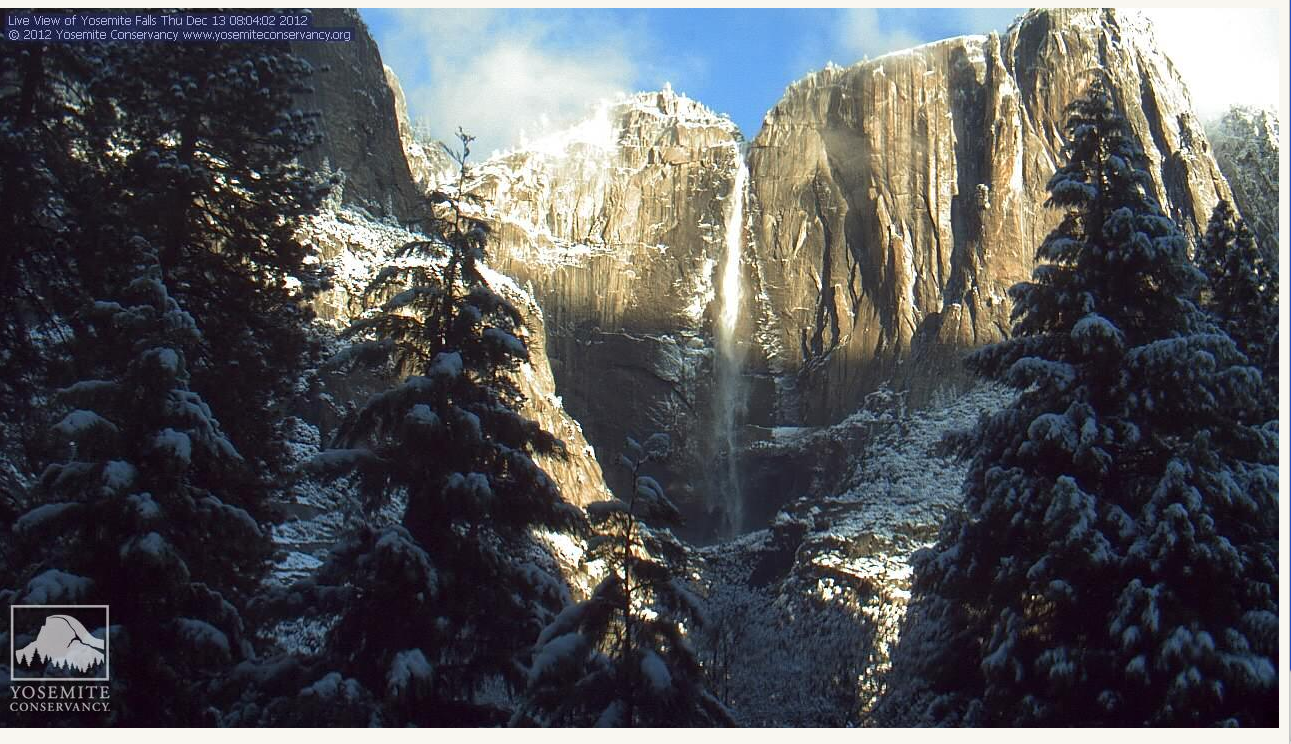
webcam shot  this morning (click to view)

The unseasonably warm temps we have been seeing in California this fall are over today as snow is falling at low elevations in the southern Sierra including the Grapevine this AM.
Ski resorts up and down the Sierra have experienced good snowfall at the higher elevations but ‘nada’ down below -at the base  of the resort.
Such is the case at Central California favorite China Peak above Fresno who are celebrating this morning with 15 inches of new snow and more on the way.
“This storm parked itself on China Peak for hours, dropping way more snow than originally expected. Skies are clear this morning, and should remain that way until Sunday, when another wave of snow hits us, then again on Tuesday, then again on Thursday … WINTER IS HERE!” says their website.

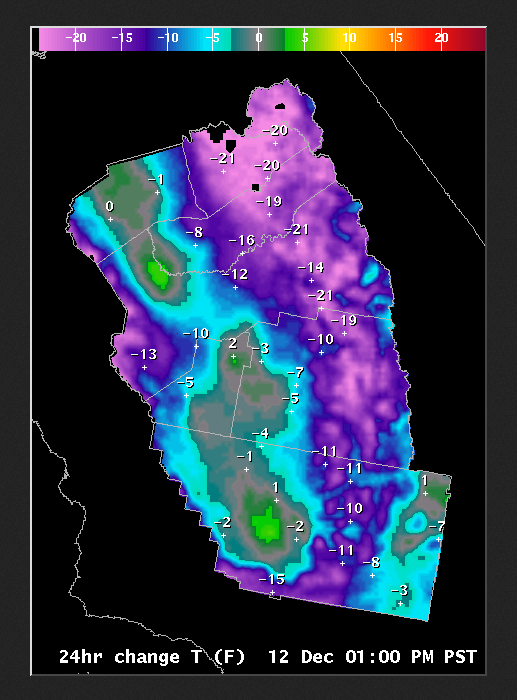
average temps drop 20 degrees(click)

The colder average temps also enable the resort to fill spots with their snow making equipment opening more lifts.
If it is snowing at China Peak farmers are happy too with with the increasing snowpack to deliver water down the hill this coming summer.
Central Sierra water year is about 137% of average according to the state with a series of storms coming to California between now and Christmas say forecasters.N California water year is even better at about 200% of average.
NWS says” cooler than average temperatures are expected for the rest of this week.”
Up at Lodgepole above Visalia the forecast calls for more snow as well.
Great time to visit Yosemite (see webcam pic of this morning,wow!)with snow expected on the Yosemite Valley floor for up to four of the next five days.

Southland Home Prices Up 17%

Pace Of Sales Up 14%

December 12, 2012

La Jolla, CA—Southern California’s housing market continued its gradual recovery last month, logging the highest November sales in six years amid strong demand from investors and move-up buyers. The median sale price rose nearly 17 percent from a year earlier, the result of price appreciation as well as the ongoing shift toward fewer foreclosure resales and more mid- to high-end activity, a real estate information service reported.

A total of 19,285 new and resale houses and condos sold in Los Angeles, Riverside, San Diego, Ventura, San Bernardino and Orange counties last month. That was down 8.5 percent from 21,075 sales in October, and up 14.2 percent from 16,884 sales in November 2011, according to San Diego-based DataQuick.

A decline in sales from October to November is normal for the season. Last month’s sales were the highest for the month of November since 23,005 homes sold in November 2006, though they were 11.3 percent below the November average of 21,730 since 1988, when DataQuick’s statistics begin. The low for November sales was 13,173 in 2007, while the high was 31,987 in 1988.

The median price paid for a home in the six-county Southland was $321,000 last month, up 1.9 percent from $315,000 in October and up 16.7 percent from $275,000 in November 2011. The September, October and November medians are the highest since the median was $330,000 in August 2008. The Southland median has risen or held steady month-to-month for 10 consecutive months and has increased year-over-year for eight consecutive months.

The median and other price gauges are rising mainly for two reasons: First, higher demand, triggered largely by ultra-low mortgage rates, has coincided with a dwindling supply of homes for sale, which has pushed prices up. Second, the market is rebalancing: Discounted foreclosures are becoming a much smaller portion of sales, while more expensive move-up homes are responsible for a larger share of sales. This change in the market mix puts upward pressure on the median sale price.

“The government’s offered people an amazing gift in the form of extraordinarily low mortgage rates. But that’s not the only thing fueling these sales gains. Investor activity and cash purchases remain unusually high, and more buyers feel confident about their jobs, the economy, and the likelihood housing prices have bottomed and are likely to rise. We’re also seeing more non-distressed sales, where people sell at a profit and buy another house, triggering more move-up activity,” said John Walsh, DataQuick president.

Activity rose sharply in most mid- to-higher-cost markets in November. Home sales between $300,000 and $800,000 – a range that would include many move-up buyers – jumped 34.6 percent year-over-year. November sales over $500,000 rose 47.5 percent year-over-year, while sales over $800,000 rose 46.8 percent compared with November 2011.

Last month 24.1 percent of all Southland sales were for $500,000 or more, up from 23.7 percent in October, and up from 18.3 percent a year earlier. Last month’s level of $500,000-plus sales was the highest since July 2008, when it was 26.1 percent.

Lower-cost areas again posted the weakest sales compared with last year. The number of homes that sold below $200,000 fell 18.7 percent year-over-year, while sales below $300,000 dipped 7.8 percent. Sales in the more affordable markets have been hampered by the slowdown in foreclosure activity, which results in fewer foreclosed properties listed for sale. Also, lower-cost markets typically have a relatively high percentage of homeowners who owe more than their homes are worth, meaning they can’t sell and move.

While inventory and sales have declined in many of these lower-cost areas, higher demand has pushed prices up. In November, price levels for the lowest-cost third of Southern California’s housing stock rose 24.4 percent year-over-year, while they increased 11.6 percent in the middle and 8.7 percent in the top third of the market.

Last month foreclosure resales – properties foreclosed on in the prior 12 months – accounted for 15.3 percent of the Southland resale market. That was down from 16.3 percent the month before and 31.6 percent a year earlier. Last month’s level was the lowest since foreclosure resales were 13.6 percent of the resale market in September 2007. In the current cycle, foreclosure resales hit a high of 56.7 percent in February 2009.

Short sales – transactions where the sale price fell short of what was owed on the property – made up an estimated 26.6 percent of Southland resales last month. That was down slightly from an estimated 27.6 percent the month before and up from 25.4 percent a year earlier.

Credit conditions didn’t seem to change much in November, though the share of purchase loans above $417,000 edged higher.

Jumbo loans, mortgages above the old conforming limit of $417,000, accounted for 21.0 percent of last month’s Southland purchase lending, up from 20.7 percent the prior month and up from 14.6 percent a year earlier. In recent months the jumbo share has been the highest since December 2007, when jumbos made up 21.7 percent of the purchase loan market. In the months leading up to the credit crunch that struck in August 2007, jumbos made up close to 40 percent of the market.

With rates on fixed 30-year loans so low, and aversion to risk in the marketplace so high, the use of adjustable-rate mortgages (ARMs) remains extraordinarily low in an historical context. Last month 5.7 percent of Southland home purchase loans were ARMs, compared with 6.0 percent in October and 6.2 percent a year earlier. Since 2000, a monthly average of about 33 percent of Southland purchase loans were ARMs.

Government-insured FHA loans, a popular low-down-payment choice among first-time buyers, accounted for 15.9 percent of all purchase mortgages last month. That was about even with 15.8 percent in October and down from 21.7 percent a year earlier. In recent months the FHA share has been the lowest since summer 2008. To some extent the decline reflects tighter FHA qualifying standards implemented in recent years as well as the difficulties first-time buyers are having competing with investors.

The most active lenders to Southland home buyers last month were Wells Fargo with 8.3 percent of the market, Prospect Mortgage with 2.8 percent and IMortgage.com with 2.3 percent.

Investors continue to account for a near-record share of sales.

Absentee buyers – mostly investors and some second-home purchasers – bought 28.3 percent of the Southland homes sold last month. That was about even with 28.4 percent the prior month and was up from 25.1 percent a year earlier. The record was 29.9 percent in February this year, while the monthly average since 2000 is 17.6 percent. Last month’s absentee buyers paid a median $254,523, up 27.3 percent from a year earlier.

Buyers paying with cash accounted for a near-record 33.0 percent of November home sales, up from 32.8 percent the month before and up from 29.5 percent a year earlier. Cash purchases peaked at 33.7 percent of all sales this February, and since 2000 the monthly average is 16.8 percent. Cash buyers paid a median $263,000 last month, up 27.1 percent from a year ago.

Not all investors pay cash, and not all cash buyers are investors. Last month about 62 percent of the Southland homes bought by absentee buyers were purchased with cash. About 54 percent of the homes purchased with cash were sold to absentee buyers.

Home flipping edged higher. Last month 6.2 percent of all homes sold had sold twice on the open market within a six-month period, up from 6.1 percent in October and up from 3.7 percent a year earlier.

DataQuick monitors real estate activity nationwide and provides information to consumers, educational institutions, public agencies, lending institutions, title companies and industry analysts.

The typical monthly mortgage payment Southland buyers committed themselves to paying last month was $1,146, up from $1,115 the month before and up from $1,049 a year earlier. Adjusted for inflation, last month’s typical payment was 51.7 percent below the typical payment in the spring of 1989, the peak of the prior real estate cycle. It was 60.4 percent below the current cycle’s peak in July 2007.

Indicators of market distress continue to move in different directions. Foreclosure activity, while above long-term averages, continues to drop and is far below peak levels. Financing with multiple mortgages is very low, and down payment sizes are stable, DataQuick reported.


Sales Volume Median Price
All homes Nov-11 Nov-12 %Chng Nov-11 Nov-12 %Chng
Los Angeles 5,859 6,637 13.3% $308,000 $350,000 13.6%
Orange 2,297 2,879 25.3% $400,000 $450,000 12.5%
Riverside 2,971 3,274 10.2% $195,000 $229,000 17.4%
San Bernardino 2,378 2,304 -3.1% $155,500 $183,000 17.7%
San Diego 2,754 3,371 22.4% $315,000 $358,000 13.7%
Ventura 625 820 31.2% $349,550 $370,000 5.9%
SoCal 16,884 19,285 14.2% $275,000 $321,000 16.7%

How Candy Canes Grow On California Farms

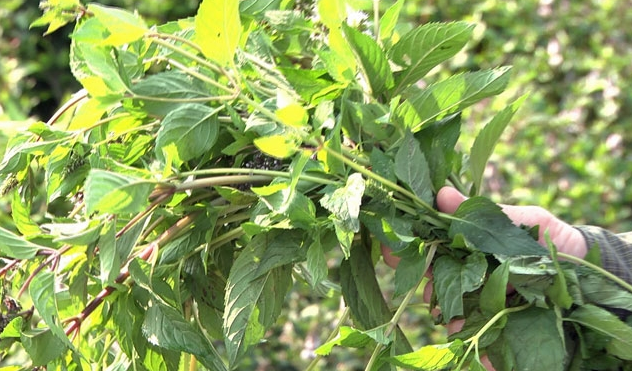
fresh mint

Candy canes have been linked with holiday festivities for more than 100 years. The red and white-striped shepherd’s staffs brighten up the Christmas tree, flavor seasonal lattes, and are found in children’s stockings on Christmas morning.

Many people enjoy the cool and refreshing peppermint flavor without knowing there are ingenious farmers and agricultural researchers working year-round to produce the naturally spicy bite of this holiday icon. Candy canes get their distinctive taste from the oil secreted under the leaves of Mentha × piperita, the bright green herbaceous perennial herb known as peppermint.
Peppermint, a cross between spearmint and wintermint, is America’s most popular mint flavor. Peppermint oil is an important ingredient not just in candy; it is used in toothpaste, mouthwash, gum, pharmaceuticals and beauty products.
The majority of U.S. peppermint is cultivated in the Pacific Northwest, where summer days are warm and long and nights are cool, minimizing the presence of a chemical that imparts a bitter taste in the mint oil. In far northern California – near the University of California’s Intermountain Research and Extension Center in Siskiyou County, plus in Lassen County and in the Fall River Valley of Shasta County – the soil and climate are equally hospitable to mint production.
UC researchers have experimented with mint for more than 50 years, said Rob Wilson, UC Cooperative Extension advisor and director of the Intermountain REC. But it wasn’t until the mid-1990s that interest in commercially producing California peppermint took off. The 2010 peppermint acreage in northeast California was more than 3,500 acres and valued at about $7 million.
“Farmers are excited to have a new cropping choice like mint,” Wilson said, “especially given the fact that we have fewer choices than most areas of California because of our short growing season. Mint has given our farmers a new crop to add to their rotations.”
California peppermint oil producers have stiff competition. A significant quantity of peppermint oil is now produced in China and India. But U.S. growers see the opportunity to set their product apart by applying their agricultural skill to producing exceptionally high quality oil. To do so, the growers rely on research to inform their decisions on irrigation, fertilization and pest control. Extensive work on ideal mint management has been conducted in the Pacific Northwest, but there is a need for additional research to study mint production and economic viability under California conditions.
Peppermint is grown in a fashion similar to other field crops common in the intermountain region and can be harvested with some of the same equipment used for alfalfa and forages, Wilson said. Farmers plant certified verticillium wilt-free rootstock in the fall, and the peppermint stand produces a crop for about five years.
When mint has reached maturity, farmers swath the field like alfalfa and leave the plants to dry a few days before raking them into windrows. Using a forage harvester, the peppermint crop is chopped into small pieces and blown into tubs. At the distillery, steam is forced through the tubs to extract the oil.
“In harvest season, there’s a fragrant aroma of peppermint in the air,” Wilson said. “Even driving by a still along the highway, you immediately notice the smell.”
Peppermint begins bearing a crop the first year after the fall planting, producing 40 to 90 pounds of mint oil per acre. In subsequent years, the crop produces 60 to 120 pounds of oil per acre.
Wilson and Dan Marcum, UCCE advisor in Shasta and Lassen counties, developed a cost study for establishing and producing peppermint oil in the intermountain region. The UC study notes the importance of determining a market channel for the oil before the mint is planted. Annual contracts for the oils are generally negotiated in the winter for the following season at a fixed number of pounds at a set price. It is risky to grow the crop without a prearranged contract because on the spot market growers are competing with imported mint oil, which can be produced in areas where lower wages and limited regulations cut the production cost.
A major risk associated with peppermint farming, the study reported, is producing oil of poor quality, for which there is little or no demand. For example, weeds harvested with the mint lower the quality of oil. Pigweed and other broadleaf weeds contaminate the peppermint oil with a weedy flavor note. Plant stress caused by inadequate water or nitrogen or by insect damage can also reduce oil quality.
IREC has more than five acres of peppermint and a small peppermint still for studying production and evaluating the quality of oil. Wilson, along Intermountain REC superintendent Don Kirby, is using this acreage to compare irrigation, fertilization and harvest management strategies in order to maximize peppermint oil yield and oil quality under local soil and climatic conditions.
The IREC peppermint acreage is also used to study insect management. Among the pests that can reduce peppermint oil quality are spider mites and a recently introduced insect pest, mint root borer. These pests prompt significant pesticide use. Given the highly sensitive watersheds and environment of the intermountain area, wide usage of pesticides is considered problematic. Propargite and chlorpyrifos, the most commonly used pesticides for spider mite and mint root borer control, are under regulatory scrutiny.
In 2010, with funding from a California Department of Food and Agriculture Specialty Crop Block Grant, Larry Godfrey, UC Cooperative Extension specialist in the Department of Entomology at UC Davis, and Kris Tollerup, UC Davis post doctoral researcher, along with Marcum and Wilson, began investigating mint yield and quality response to spider mite infestation, spider mite management methods in mint, and reduced-risk insecticides for mint root borer management.  In addition, a study is under way to determine if sex pheromone mating disruption is a plausible tactic against mint root borer, and whether adjusting the timing of the insecticide improve mint root borer control. These research projects will continue in 2013.

$5 Gas? No Wait….. $3 Gas!

These gas prices are giving me – well,indigestion.

California gas prices that were heading straight for $5 in October are now down – going on $1.10 this week – from a high of $4.65 on average in the state in October to around $3.59 a gallon today statewide says Gas Buddy.

Better yet, there has been a steady drop in the lowest price for gas in the state now down to $3.12 in the San Jose and Lodi area this week.It’s down to $3.29 in Fresno, $3.33 at stations in Tulare and in San Luis Obispo the low price is $3.63 at Costco.

Some areas of the U.S. are seeing prices under $3 a gallon, and here in Southern California there is a lot more room for prices to fall judging by wholesale gas prices,” said Auto Club spokesperson Jeffrey Spring.

“As of Wednesday(Dec 5), Los Angeles reformulated gasoline wholesale prices were $1.20 lower than the current Los Angeles average price. Normally the margin between wholesale prices and prices at the pump is much lower.”

But there is a familiar story bubbling up in the news this week.

Refiners are having some maintenance issues and  there are plans to idle capacity to do annual upkeep after the first of the year.Bloomberg reported December 10 that future prices are up in the past few days and the 7-week drop in retail prices may be ending.

So much for $3 gas.

One issue here appears to be lack of competition.

In May 2012, seven companies made 94% of all sales. The seven companies are all vertically integrated with both retail sales and refinery operations. Sales data is available from the California State Board of Equalization.

Consumer groups last month asked the California State Attorney General Kamala Harris to launch a criminal investigation into the conduct of oil companies in the state based on new information that oil refiners were running refineries and building inventories even when they said that they were performing maintenance when prices spiked over few days in September/October.

Key Downtown Visalia Office Building Changes Hands


5-story medical building next to Downtown Visalia Kaweah Delta campus

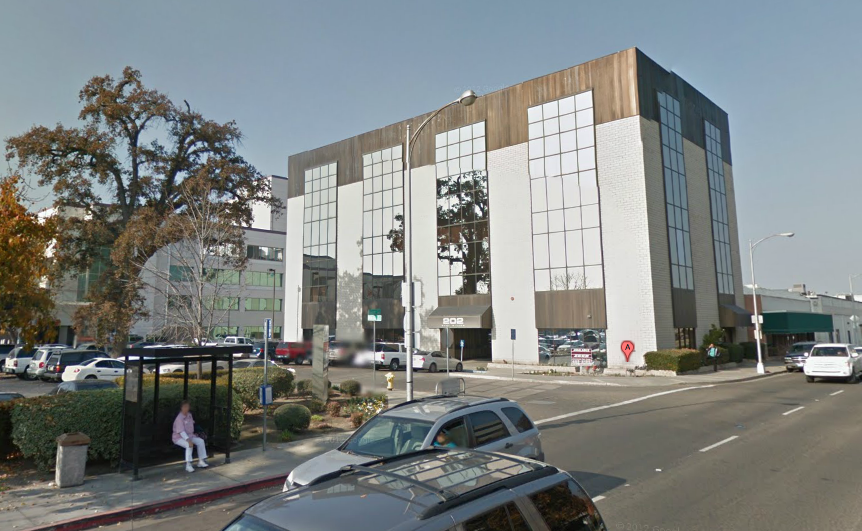
The hospital wanted it but a Tulare dentist and his father ended up buying it. We’re talking about 202 West Willow, the five-story medical building  adjacent the Kaweah Delta campus. Built by Dr Bernie Rudis in 1981 the big building did not meet earthquake standards and ended up in the lenders hands before it was remodeled in the 1990s.Remember when American National Bank‘s branch was there?

It was then purchased by an investment group but was never fully upgraded to Class A medical office standards say sources. Now the building has been purchased by Dr. Sarjit S. Malli who is said to be interested in upgrading the 30 year old skyscraper. “We’re happy Dr. Malli ended up with it” says the hospital’s CEO Lindsay Mann adding he understands Dr Malli would like to attract new physicians to the building at the doorstep to Downtown’s big medical complex. The sale was said to be north of $5 million.Dr Malli did not return phone calls.