Is it tea time? Tea is being grown at UC Kearney Agricultural Research and Extension Center in Parlier to develop best varieties and production practices for California farmers.
The Public invited to learn about potential for new crop at Kearney REC Tea Day on Thursday, March 19, at UC Kearney Agricultural Research and Extension Center, south of Fresno.
Tea is the most widely consumed beverage in the world, aside from water, and can be found in almost 80% of all U.S. households, according to the Tea Association of the U.S.A., Inc. More than 160 million Americans drink tea. Yet tea isn’t grown in the US.
Tea can be harvested by hand or machine.In India it grows in vineyard-like rows in the foothills and is transferred to a nearby tea factory.
KREC Director Atef Swelam would like to see California growers capitalize on this untapped market.
“We import about 120 million pounds of tea into the U.S. annually, spending about $6 billion,” said Swelam.
US consumers drink roughly 84–85 billion servings of tea annually, totaling over 3.9 billion gallons, with more than half of the population drinking it on any given day. About 75–80% of this consumption is iced tea, with high popularity in the South and Northeast, and 84% of it is black tea.
Daily Drinkers: Over 159 million Americans drink tea, with 87% of Millennials being consumers. If young people are drinking less beer and wine and alcohol in general, they are sipping more tea.
As San Joaquin Valley farmland is retired to comply with the state’s Sustainable Groundwater Management Act, Swelam sees the niche crop as a way growers can maximize profit per acre.
Swelam is inviting growers and tea drinkers to see the tea plants growing at Kearney REC, learn about the history of tea in California, explore opportunities for growing and marketing the crop and engage in a sensory experience with teas brewed from varieties grown at the research center.
Tea was first planted at Kearney REC in 1967, when the Lipton tea company funded a tea research project. Although that project ended in 1980, the center has continued to grow and study tea.
UC scientists will present the latest tea research and marketability. Participants will be invited to examine the 18 distinct cultivars planted in the field, and tea plants will be for sale for $25 each from the greenhouse.
UC has a list of top three varieties they recommend that Kearney’s REC team prioritizes for growing in California.
Looks like Visalia’s midstate location and available industrial acreage has attracted another major e-commerce company that could bring some 700 new jobs to town.
Arizona-based Carvana used car dealer has filed plans to build a 172,000 sf vehicle inspection and reconditioning center (called IRC) in the Visalia Industrial Park. A site plan review hearing will be held April 1 to discuss the $42 million project that will be located at the NE corner of Riggin and Kelsey. The site is next to Amazon on former ag land planted to an orchard (zoned industrial) and now owned by Seefried Industries. It is the first development on a 284 acre industrial parcel that was only recently annexed into the city limits.Seefried acquired the land not far from the new Costco from the Ritchie family on the city’s northern tier.
The site plan says the big auto inspection complex will need 100 acres to accommodate thousands of parking places. Work will carry on daily but customers won’t ever visit the place.
Carvana has filed an operational statement along with their plans submitted to the city describing the facility.”The project creates high-quality jobs, including vehicle technicians,operations staff, and administrative personnel. At capacity the project will generate more than 700 full time jobs. Employee Benefits: In addition to Statutory Benefits, Carvana offers on the job training programs, education reimbursement through Carvana KEYS, and tool,ASE and CDL reimbursement.”
Carvana uses an e-commerce platform to buy and sell used cars. It brings the car to the buyer by bypassing the usual dealer-centered buying process.Like some other auto retailers ,they say they are a no-haggle seller.
The new center will provide vehicle acquisition, inspection and reconditioning of cars and is expected to serve Central California transactions.
The publicly-traded company has several other large-scale inspection and reconditioning centers in the state, including in Tracy and Rocklin, north of Sacramento.
Founded in 2012, Carvana, like other e-commerce companies, pushes to speed customer deliveries-now including same-day service when you can both order and receive your car.
By comparison, the Rocklin center is 190,000 ft.² and sits on about 73 acres. It serves as a major hub for Northern California fulfillment and support same-day delivery to the Bay Area. In 2025 Carvana converted a 150 acre wholesale auction site owned by the company ADESA to a Carvana IRC in Tracy and has almost 25,000 parking spaces that support this regional retail and wholesale reconditioning center. There’s also a center in the LA area and some 17 across the nation.
With the operation of these IRC inspection and reconditioning centers, Carvana touts that it carries on a detailed inspection, mechanical repair,detailing and photography process to market the car. Here you could find a paint booth,mixing rooms, detailing and mechanical repair stations. Every vehicle undergoes a 150-point inspection to ensure it has no reported accidents, frame damage, or fire/flood damage.
The company says based on the inspection results, vehicles receive necessary mechanical work to bring them up to standard. This includes typical vehicular maintenance such as oil changes, fluid checks and top-offs, replacement of worn tires, new brake pads/rotors, and other small-scale repairs.Crucially, the facility is designed for standard maintenance, and will not perform major processes like engine rebuilds or extensive body work.
Battle of rivals
The new Carvana complex follows their rival – used car giant Carmax – who set up in Visalia last year in a 59,000 ft.² showroom on Hillsdale in the industrial park. For Carmax, this was the 250th location for what was said to be the largest used car dealer in the nation.
Both companies say they simplify the buying and selling of used cars online, although Carmax allows the customer to inspect the car at the dealership while the Carvana customer doesn’t see their car until it arrives at their house. Carvana does have a 7-day return policy while Carmax offers a 30-day return.
Now it appears as the e-commerce king. Amazon may enter the car business as well, expected to work with existing automobile dealer networks to help them compete against the onslaught of e-commerce companies. As it is,the traditional car dealers’ hold on car sales for both new and used vehicles continues to be tested.
Sources say Amazon Autos is a dealer-first digital marketplace that’s helping the traditional brick-and-mortar retailers expand their reach through its e-commerce prowess. Llocal dealers will list their vehicle inventory on the Amazon Autos marketplace and will retain control of the transaction, pricing, service agreements, and financing. Buyers will be able to browse Amazon vehicle listings, process a trade-in, submit a down payment, apply for financing, and schedule a pickup time through a typical Amazon shopping experience.
Visalia appears to the turf these e-commerce companies compete on, If Visalia is the host, Seefried is the cook as developer to bring in industrial clients like Carvana here, Amazon in other markets and Ace Hardware who came to Visalia to expand its e-commerce sales a few years ago.
In Visalia, Seefried built and leased the 1.2 million square-foot Ace Hardware distribution center on Plaza Drive — now in full operation. In related news, Ace Hardware has installed a $30 million conveyor system expected to automate deliveries from Visalia to all parts of California in a speedy manner. The end result is expected to be higher e-commerce sales from Visalia that boost the city’s sales tax revenue as well as property tax. Visalia residents are becoming aware of the trend as a Visalia Rotary Club recently toured the huge complex.
By contrast Visalia economic benefits will not include collecting sales tax on each Carvana sale since Visalia will not be considered as the point of sale.
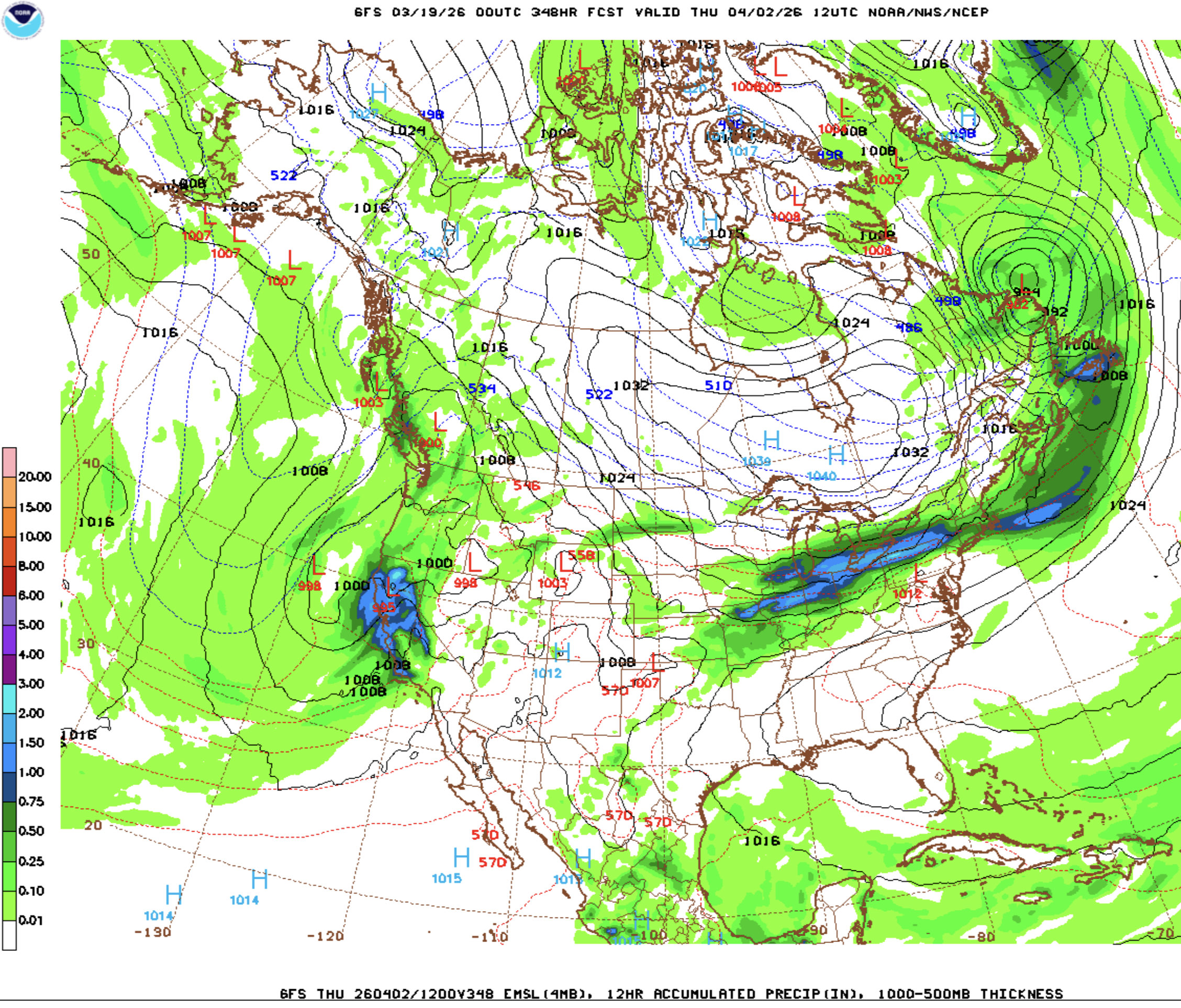
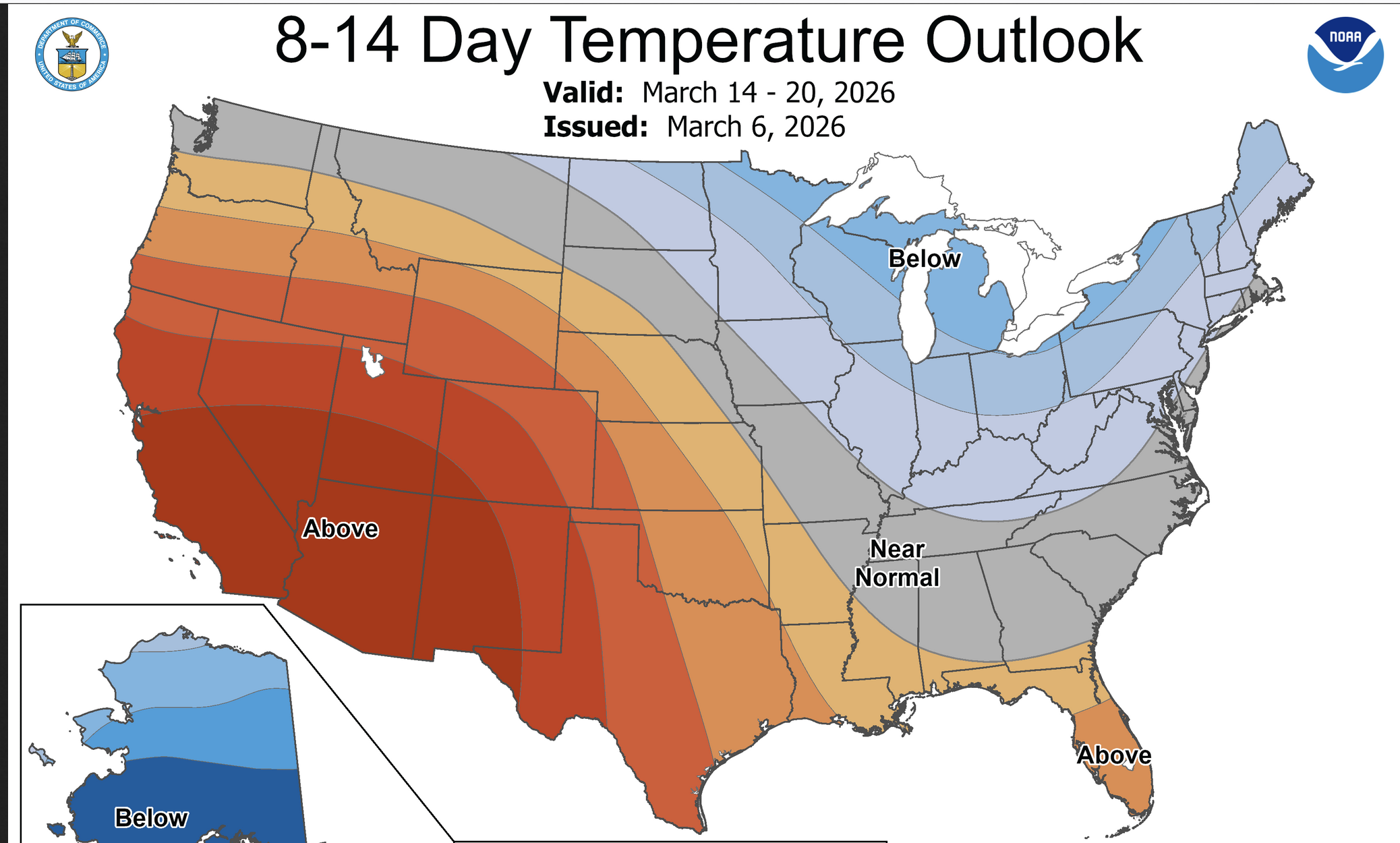
Climatologists suggest that California’s weather is increasingly extreme, swinging rapidly between very wet and very dry periods. Here we go again, some forecasts say, as March has produced little rain or snow across the state after a wet February. While March can be a wet month in California, reports for the Central Coast show 0.00 inches in daily reports(0.01 in Los Osos) even though for the water year Los Osos has received about 18.4 inches of precip so far, 104% of average since July. After a hot and dry March there is a wet pattern emerging in April according to forecasts that are two weeks out and therefore speculative. Nevertheless it could signal another weather whiplash pattern change that would bring a very wet storm into the whole state around April 2 .Above map is one forecast.
Less than a year after announcing the launching of new daily service from Santa Maria to Phoenix, American Airlines has decided to pull the plug on the service starting in May.
The operator of the flights American Eagle announced the notice March 13 in a state layoff WARN notice that 20 employees of the company would be laid off permanently as a result of the closure of the flight service.
American announced the start of the new service as of last October to great excitement in the community about daily direct access to the Phoenix market that connects to national and international hubs.
Nearby San Luis Obispo already has twice daily service connecting that town to Phoenix on American.
The Santa Maria American Airlines flights were twice daily on a 76 passenger jet airline.
Not only are we all not drinking enough beer and wine any more, the temperature outside is hotter than it should be.All you climate change skeptics pay attention
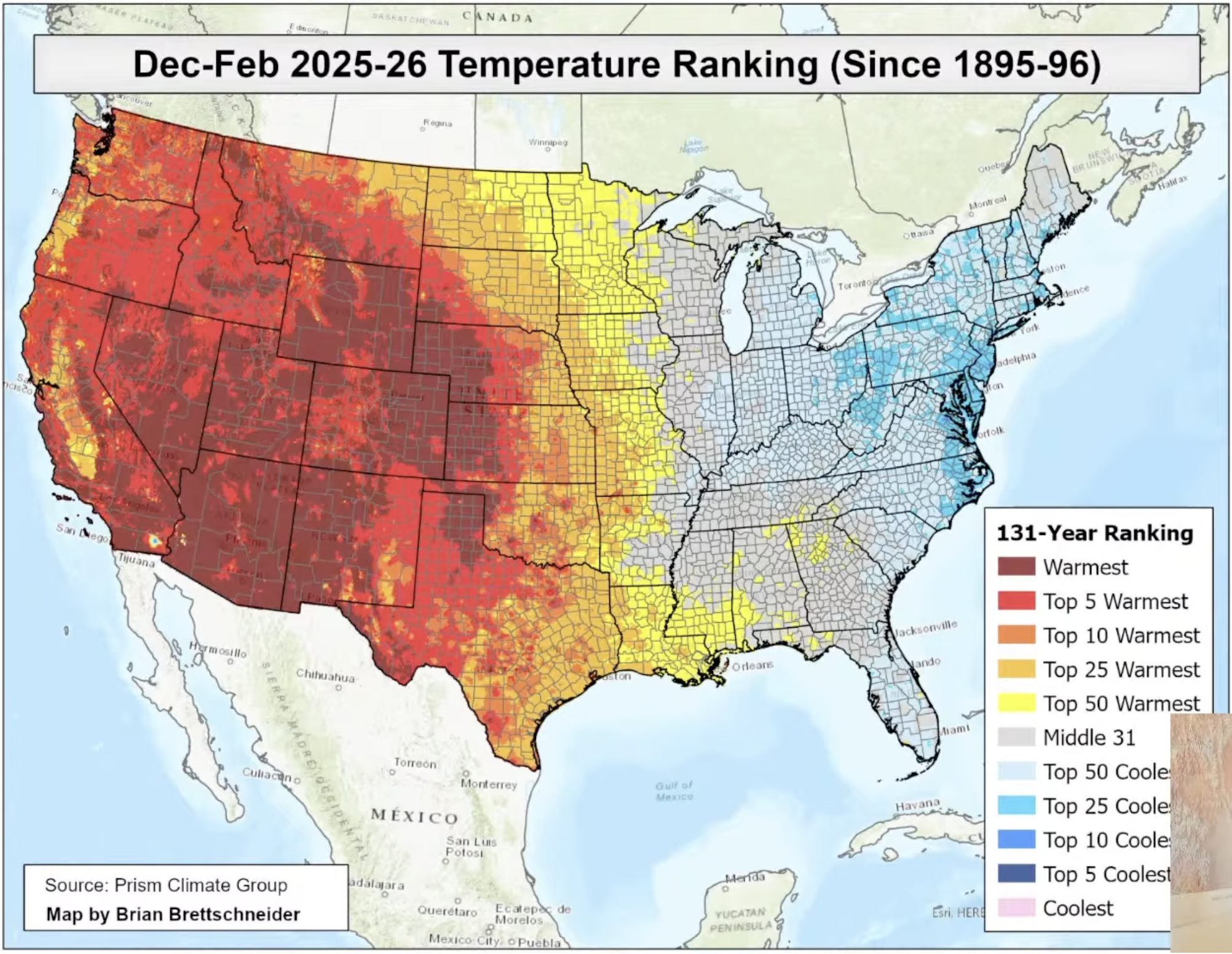
Historically warm Western US contrasted with cooler EastCoast this winter With the exception of the southern San Joaquin Valley, this winter was the warmest on record by far since 1895 across most of the Western US, says climate scientist with UC Agriculture and Natural Resources, Dr Daniel Swain. The map above shows the latest 3-month winter temps (Dec-Feb) that are as much as 10 degrees above the average – shown in dark red on this map. In a podcast earlier this month Swain emphasizes “what a very big deal this is” with all-time record heat covering most of 10 western states.
The dark red includes many parts of California – SoCal, the Central Coast, most of the Sierra and the desert areas. In square miles the largest impacted area is across much of the Mountain West including the all important Colorado River basin across Colorado,Utah and Arizona. Note that it extends east into parts of the Midwest and the Panhandle as well. Further east, cooler temps were seen including very cold events in parts of the East Coast that made headlines while little notice of the western state’s historic heat was made.
The Central San Joaquin Valley is an exception not because it wasn’t warm this winter- it was – but because a dense blanket of Tule fog kept daytime temperatures cool below the fog. But at night, Swain says the weather was warmer than usual, typically not falling below the 40s. Farm advisors say this year’s Tule fog helped raise the number of chill hours for some tree crops in the Valley helping to spur a normal bloom.But the warm nights may not add enough chill hour accumulation for some stone fruit.
Snowpack variation “In the Western U.S., the snowpack is, on average, terrible,” Swain says. “It’s about as bad as it’s ever been in observed history.” Again there are exceptions including the snowpack water content in the southern Sierra that as of March 1 was 80% of average on March 6, says DWR. That said, contrast that number to the northern Sierra that is only 38% of average as of March 6.
What has people talking about is the rapid snow melt in all parts of the state in the past few weeks expected to continue due to extreme warm temperatures up and down California this month.
Case in point was that monstrous snowstorm that hit the Tahoe area with over 8 feet of snow, causing a deadly avalanche Feb 17. Now that snow has mostly melted away in a matter of days, notes Swain. Complicating this situation were the warm storms dropping rain on the snowpack instead of falling as snow. The warm winter is forecast to continue in the next few weeks coupled with more dry weather. That’s true this week in the southern Sierra as well with average temperatures in the next few days in Grant Grove at 6500 feet hitting 60°.
Here is the March 7 forecast posted by Friant Water. “Through the weekend, temperatures are expected to be within 5 degrees of normal in the San Joaquin and Tulare Basins, within 10 degrees of normal in the Southern Sierra, near normal to 10 degrees above normal in the Sacramento Valley, Southern California, and along the Central Coast, and near normal to 20 degrees above normal in the North Coast, Northern Sierra, and northeastern portion of the State. “
This is also happening on the coast with a 93 year old temperature record broken at the Santa Maria airport where the high reached 88° surpassing a daily record of 86° set in 1932 says forecaster John Lindsey. Some desert stations in the past few days have hit 100° in winter.
Lindsey adds that the west coast warmth affected our oceans as well.”This winter has been marked by well-above-average sea surface temperatures (SST), primarily due to a lack of northwesterly winds.” He says the water is cooler this week but for “most of December, January, and February, temperatures remained around 60 degrees, about 5 degrees above normal.”
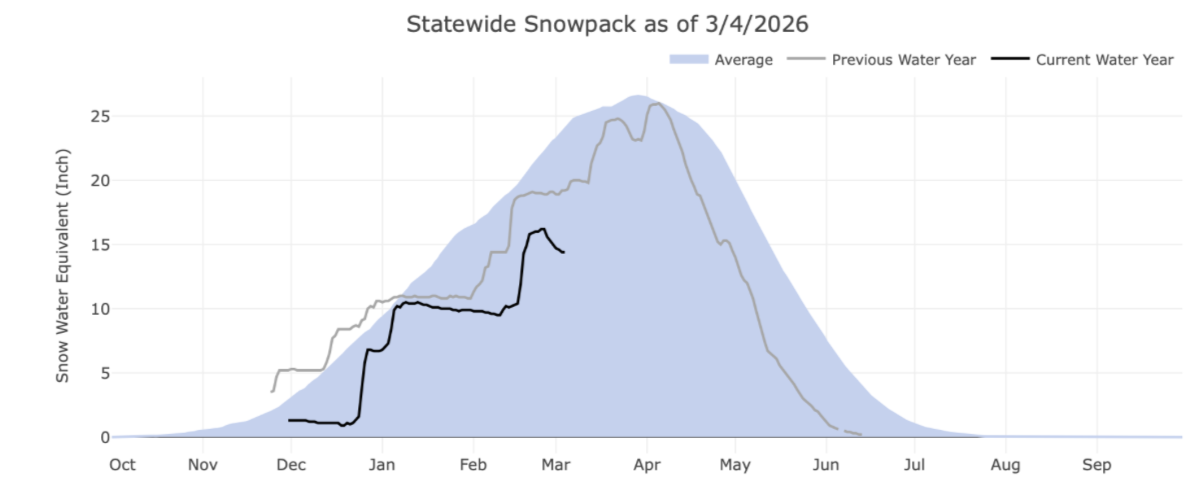
Here is the March 4 Sierra snowpack chart – note the meltdown recently.
NWS Hanford says this warm/dry pattern is likely to continue through the next two weeks as the Climate Prediction Center maintains above normal temperatures and below normal precipitation through Day 14.
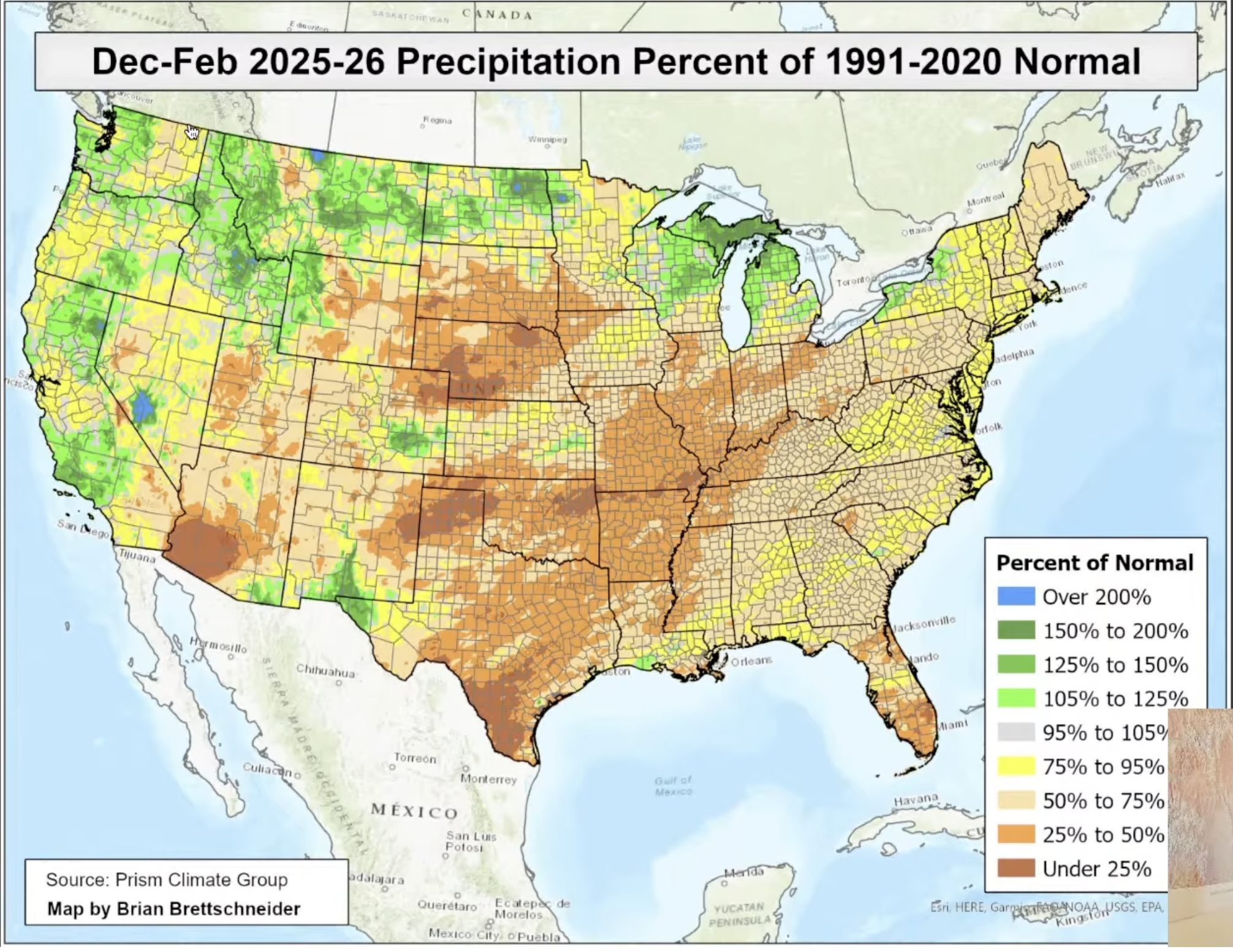
But this winter story has also been affected by rainfall variation as can be seen in this other map. Some parts of the western US were affected by record low rainfall – some places under 25% of normal shown brown on the map.
Swain adds that in California the Southern Central Valley and Central Coast saw normal or even above normal rainfall over the 3 month period.Much of the Colorado River Basin seems to be hard hit by a combination of record heat and low rainfall that will surely impact the water supplies of cities in the western US, including Los Angeles, Tucson, Las Vegas, and Phoenix later this year. Of course it will hit the farming community hard as well as all plans for all those water-hungry data centers in the Southwest.
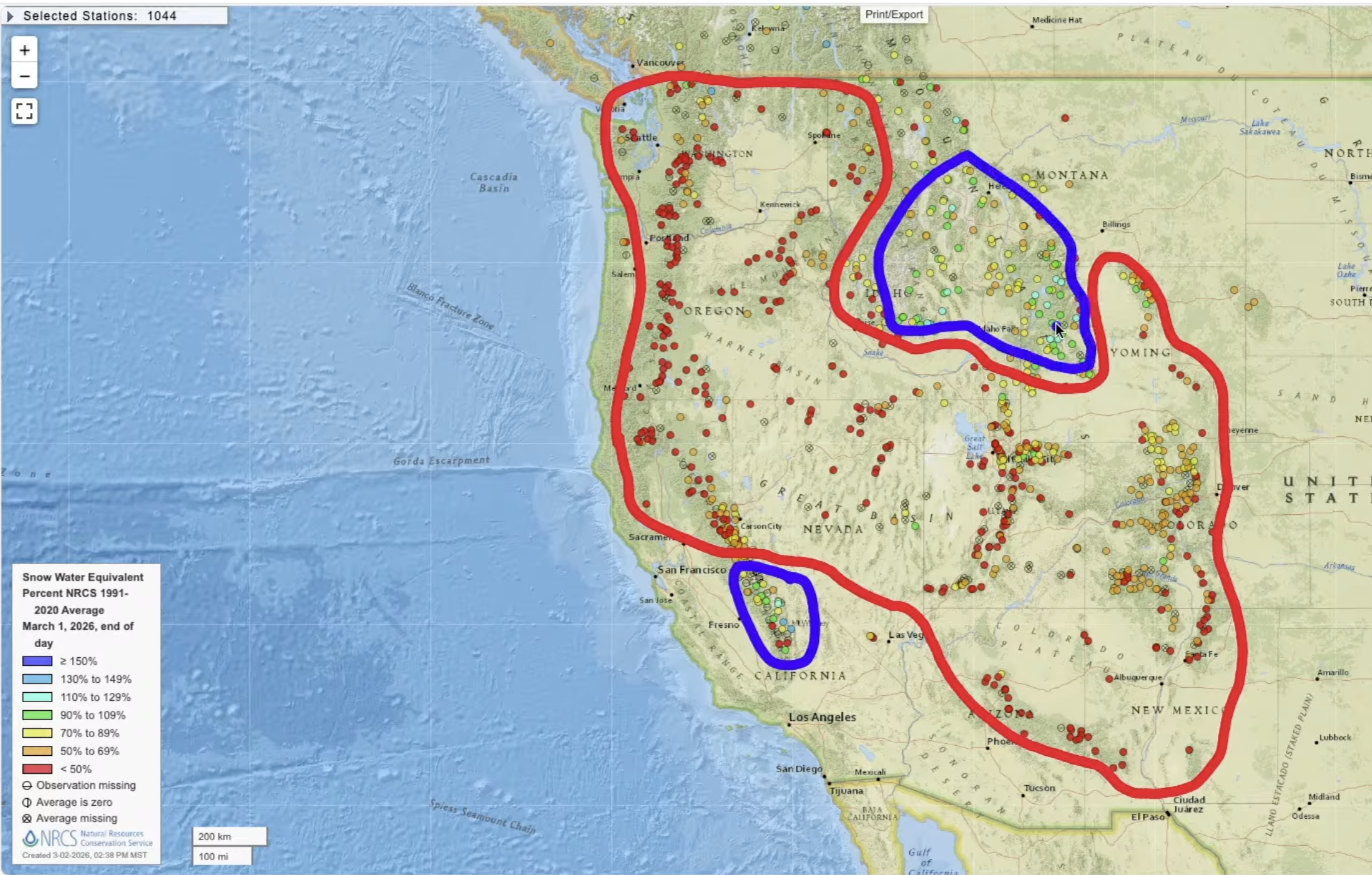
Now take a look at this Swain sketched map showing the few areas in the west that had normal or near normal snowpack outlined in blue including the southern Sierra, parts of Idaho, Wyoming, and Montana. The remainder of the West is suffering a snow drought, outlined in red.
There is of course, some good news for California water supply in that almost all the reservoirs in the state are enjoying above average storage for this time of year and some of them are full. California residents are seeing green fields and foothills across from the state and hopes this also means a low fire season ahead.
The Climate Prediction Center’s current forecast map says it all. Compare the contours on this March temp forecast map with the 3 month map at the lead to this story. The heat continues in the same locations.
‘one more note of interest from Dr. Swain he expects a strong El Niño to develop later this year that should impact next season’s rainfall likely more intense.
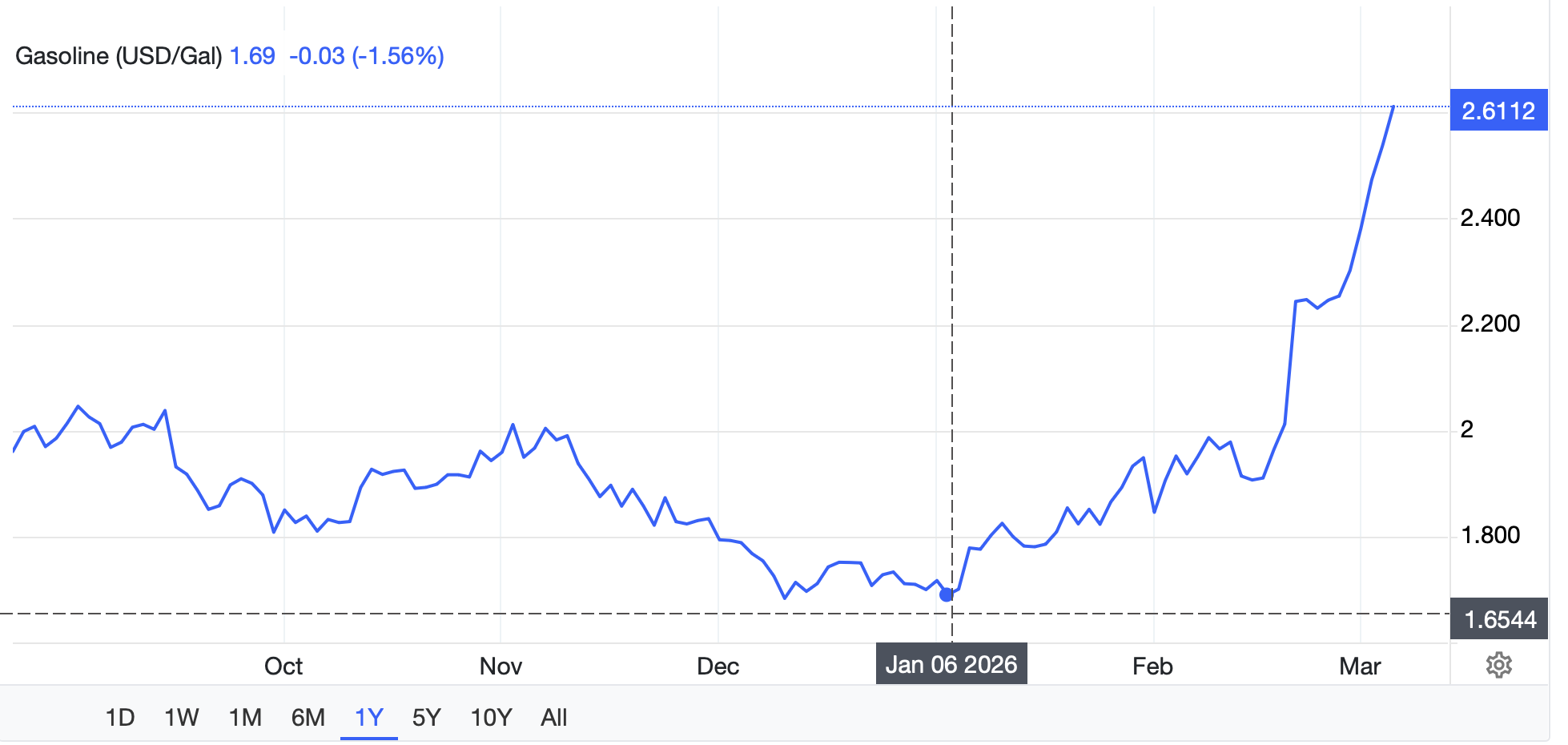
Since January 2026 wholesale gasoline prices have risen just under a dollar as of March 5, an increase of more than 40%. Of course the biggest spike has come in the past week with the war in Iran prompting a steep run up.
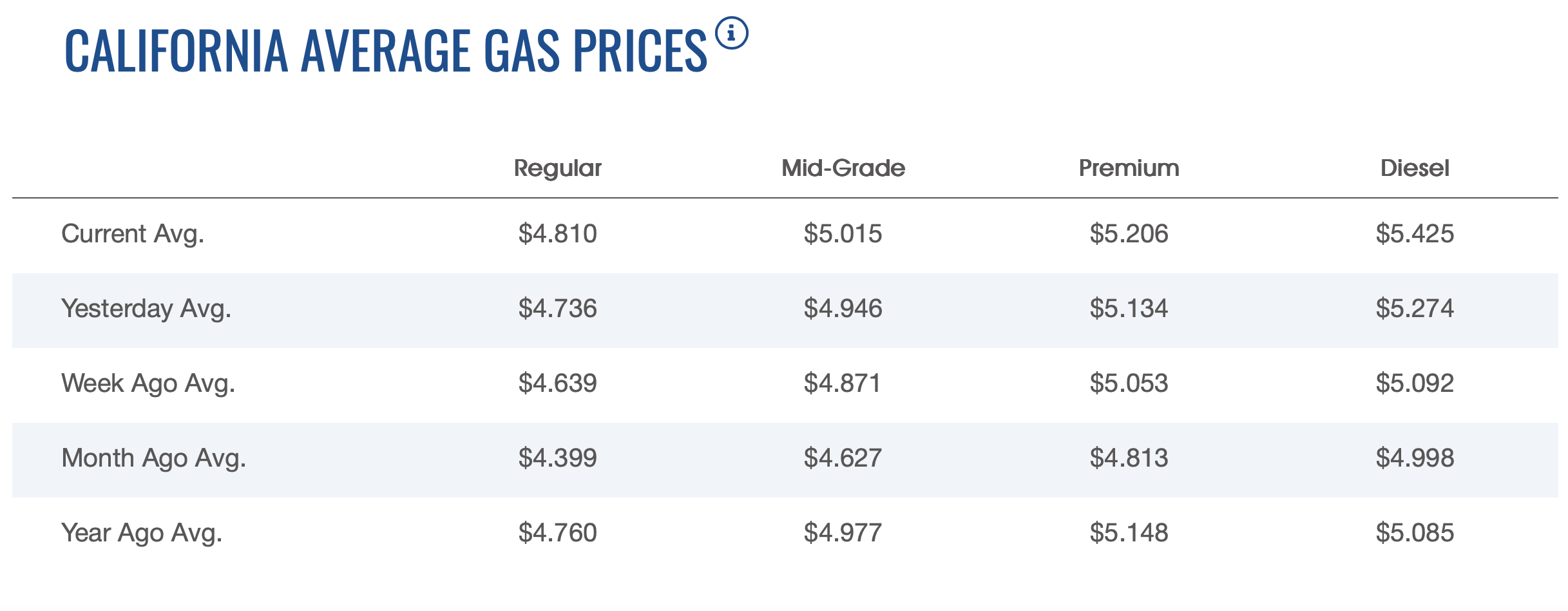
The price increases are hitting both jet fuel and diesel prices with jet fuel reaching $4/gallon today. California gas prices as well as diesel are up about 40 cents from a month ago says AAA.
Billions fewer birds are flying through North American skies than decades ago and their population is shrinking ever faster, mostly due to a combination of intensive agriculture and warming temperatures, a new study found.
WASHINGTON (AP) — Billions fewer birds are flying through North American skies than decades ago and their population is shrinking ever faster, mostly due to a combination of intensive agriculture and warming temperatures, a new study found.
Nearly half of the 261 species studied showed big enough losses in numbers to be statistically significant and more than half of those declining are seeing their losses accelerate since 1987, according to Thursday’s journal Science. The study is the first to look at more than the total bird population by examining the trends in their decrease, where they are shrinking the most and what the declines are connected to.
“Not only are we losing birds, we are losing them faster and faster from year to year,” said study co-author Marta Jarzyna, an ecologist at Ohio State University. “Except for forest birds, almost every group is doing poorly. So we need to ask ourselves a question. How do we protect these groups of birds?”
The only consolation is that the birds that are shrinking in numbers the fastest are species — such as the European starling, American crow, grackle and house sparrow — with large enough populations that they aren’t yet at risk of going extinct, said study lead author Francois Leroy, also an Ohio State ecologist.
RELATED STORIES Giant snails and tiny insects threaten the South’s rice and crawfish farms Giant snails and tiny insects threaten the South’s rice and crawfish farms Researchers find Antarctic penguin breeding is heating up sooner, and that’s a problem Researchers find Antarctic penguin breeding is heating up sooner, and that’s a problem Once rare in Nevada, winter bald eagle sightings now common Once rare in Nevada, winter bald eagle sightings now common “The thing is that species extinction, they start with a decline in abundance,” Leroy said, adding that “the decline is somehow maybe giving a preview of what it could lead to in terms of species extinction.”
Cornell University conservation scientist Kenneth Rosenberg, who wasn’t part of the study, said the species declining fastest in the new research “are often considered pests or ‘trash birds,’ but if our environment cannot support healthy populations of these extreme generalists and extremely adaptable species that are tolerant of humans, then that is a very strong indicator that the environment is also toxic to humans and all other life.”
A 2019 study by Rosenberg of the same bird species found North America had 3 billion fewer birds than in 1970, but didn’t look at changes in the rate of loss or causes.
Biggest bird losses in areas warming most A mourning dove perches on a tree Wednesday, Feb. 25, 2026, in Milford, Ohio. (AP Photo/Joshua A. Bickel) A mourning dove perches on a tree Wednesday, Feb. 25, 2026, in Milford, Ohio. (AP Photo/Joshua A. Bickel)
The biggest locations for acceleration of bird loss were in the Mid-Atlantic, the Midwest and California, the study found. And geography proved important when Leroy and Jarzyna looked for reasons why so many bird species are shrinking ever faster.
When it came to population declines — not the acceleration — the scientists noticed bigger losses further south. When they did a deeper analysis they statistically connected those losses to warmer temperatures from human-caused climate change.
“In regions where temperatures increase the most, we are seeing strongest declines in populations,” Jarzyna said. “On the other hand, the acceleration of those declines, that’s mostly driven by agricultural practices.”
Farmland issues speed up bird declines A red-winged blackbird eats from a feeder Wednesday, Feb. 25, 2026, in Milford, Ohio. (AP Photo/Joshua A. Bickel) A red-winged blackbird eats from a feeder Wednesday, Feb. 25, 2026, in Milford, Ohio. (AP Photo/Joshua A. Bickel)
The scientists found statistical correlations between speeded-up decline rates and high fertilizer use, high pesticide use and amount of cropland, Leroy said. He said they couldn’t say any of those caused the acceleration of losses, but it indicates agriculture in general is a factor.
“The stronger the agriculture, the faster we will lose birds,” Leroy said.
Jarzyna said there is a “strong interaction” between climate change and agriculture in their effect on bird populations.
“We found that agricultural intensification causes stronger accelerations of decline in regions where climate warmed the most,” Jarzyna said.
McGill University wildlife biologist David Bird, who wasn’t part of the study, said it was done well and that its conclusions made sense. With a growing human population, agriculture practices are intensified, more bird habitats are being converted to cropland, modern machinery often grind up nests and eggs and single crop plantings offer less possibilities for birds to find food and nests, said Bird, the editor of “Birds of Canada.”
“The biggest impact of agricultural intensity though is our war on insects. Numerous recent studies have shown that insect populations in many places throughout the world, including the U.S., have crashed by well over 40 percent,” Bird said in an email. “Many of the birds in this new study showing population declines depend heavily on insects for food.”
Birds do a lot for humans A great blue heron takes off Sept. 26, 2025, in Cincinnati. (AP Photo/Joshua A. Bickel, File) A great blue heron takes off Sept. 26, 2025, in Cincinnati. (AP Photo/Joshua A. Bickel, File)
This study is both “alarming” and “sobering” because of the sheer numbers of losses and the patterns in those accelerating declines, said Richard Gregory, head of monitoring conservation science at University College London. He was not part of this research.
The paper shows that people need to change the way they live to reduce human-caused warming, reduce agricultural intensity, monoculture of crops and broad application of chemicals, said Cornell University ornithologist Andrew Farnsworth, who wasn’t part of the study.
“Here is why this study is especially important. Birds do a lot for humans,’’ McGill biologist Bird said in an email. ”They feed us, clothe us, eat pests, pollinate our plants and crops, and warn us about impending environmental disasters. With their songs, colors, and variety, birds enrich our lives… and recent studies show that their immediate presence actually increases our well-being and happiness.
The City of Lemoore plans to increase their Transient Occupancy Tax or bed tax rate to 12% from 8% if approved by voters in November. City Manager, Marissa Trejo says the funds will benefit the city’s general fund and little of the impact will be felt by local residents. The TOT applies to hotels, motels, and other lodging. A review of surrounding cities within approximately a 50-mile radius shows that Lemoore’s current rate is generally lower than many neighboring jurisdictions. Porterville, Selma, Kingsburg and Fresno are at 12% and Visalia and Tulare are 10%.
Meanwhile, Hanford is also planning to raise their bed tax rate to 12% from 8% if voters in June approve a measure on the ballot. If eventually approved, the increase is estimated to generate an additional $375,000 annually for the city’s General Fund, supporting services like public safety, parks, and infrastructure.
Tulare Basin reservoirs storage above average
All Tulare Basin reservoirs are ahead of average storage for this time of year with Pine Flat at 126% of average, Terminus at 191%,Success at 152% and Isabella 132%. Kaweah Conservation District watermaster Vic Hernandez says the Corps of Engineers has ordered a flood release from Terminus in the past few days as storage is much higher at this time of year. The release ensures caution in case of an early snow melt. Hernandez adds that the Corps was worried about the warm storm coming into California in the past few days and the evacuation was a precaution. The storm stayed north.“We should be back to normal storage in about a week.”He adds that the rain outlook for the next two weeks is looking dim. The Corps ordered a similar flood release at Lake Success.
The Visalia City Council is expected to approve a feasibility study that may result in a sales tax ballot measure on the November ballot. This week the city approved a $45,000 study with a consultant to look at public opinion regarding an increase in the local sales tax rate. Right now Visalia sales tax is 8.5%
If they decide to move forward, the city council is expected to say that the sales tax measure would not be for a specific purpose requiring a third majority but a general tax that only requires only a simple majority of voters to be enacted.
Among the arguments to expand funding are the need for enhanced recreational opportunities in town.
During the January 20, 2026 Council meeting, Council directed staff to return with funding options for total and phased approaches to the proposed aquatics facility project, including projected timelines.At that meeting the council heard they may need more than $30 million to build an aquatic center with a 50-meter pool with a large recreation pool.
The increase in sales tax rates in Visalia could be as little as 1/4 cent to a half cent, taking Visalia sales tax rate up to 9%.Plenty of California communities have rates in that range including Los Angeles (9.75%), Clovis at 8.98% and Porterville at 9.25%.Other area cities with simar rates include Coalinga, Fowler, Huron, Kerman, Kingsburg, and Parlier.
Advocates of a sales tax increase point out that approximately 40% of an increase in sales tax here will come from those visiting Visalia to shop, dine and stay- leveraging the strength of Visalia as a regional retail and tourist hub to benefit the quality of life in Visalia.
The Department of Water Resources (DWR) today conducted the third snow survey of the season at Phillips Station. The manual survey recorded 28 inches of snow depth and a snow water equivalent of 11 inches, which is 47 percent of average for this location.
The Department of Water Resources (DWR) on Feb 27 conducted the third snow survey of the season at Phillips Station. The manual survey recorded 28 inches of snow depth and a snow water equivalent of 11 inches, which is 47 percent of average for this location. Statewide, the snowpack is 66 percent of average for this date.
Today’s snow survey results show an increase from last month’s measurements following a series of cold, major snow-producing storms that ended a five-week dry period. Unfortunately, the recent storms were not enough to get the state back to average conditions for this time of year. Warmer storms early this week also caused snow melt at lower elevations.
“Although the storms we saw in mid-February were some of the coldest and best snow-producing storms we have seen since 2023, they were not enough to get us back to average conditions,” said Andy Reising, Manager of DWR’s Snow Survey and Water Supply Forecasting Unit. “The snowpack is in better shape than it was one month ago, but we only have a month left of our snow-accumulation season and time is rapidly running out to catch up. Statewide, we are only about 57 percent of where we hope to be by April 1.”
Storms this season have also been unevenly distributed across the Sierra Nevada. While the Southern Sierra Nevada is 90 percent average for today’s date, the Northern Sierra Nevada, where several of the largest major water supply reservoirs are located, is only 46 percent normal for this date.
Tulare Basin is enjoying 111% of average precipitation. Pine Flat reservoir on the Kings River is 128% of average with nearly 600,000 acre feet stored March 1.
“Water supply in California increasingly depends on a small number of big storms,” said DWR Director Karla Nemeth. “We face higher drought risk when they don’t arrive and greater urgency to modernize infrastructure to capture water when they do. The dramatic wet-dry swings this winter remind us again that ever-warmer average temperatures have reshaped the California water cycle. We must adapt.”
Reservoirs at 122%
While the snowpack remains below average, major reservoirs statewide are currently 122 percent of average. State water managers, including the State Water Project, continue to focus on efforts to capture and store as much water as possible. The monthly snow surveys play a critical role in how the State Water Project allocates water each year.
High-Speed Rail completes Kings structure
The California High-Speed Rail Authority announced late last year the completion of two more structures within the 119-miles of construction underway in the Central Valley. On October 30 the Authority announced the completion of the Avenue 17 Grade Separation project in Madera County. The next day, the Authority announced the completion of the Hanford Armona Road grade separation in Kings County. The completion of these two projects brings the total number of completed structures to nearly 60.
The Hanford Armona Road grade separation is located east of the city of Hanford between State Route 43 and 7th Avenue. The structure spans 209 feet, 80 feet wide, and will take east and westbound vehicular traffic over the future high-speed rail tracks. It is also located less than a mile south of the Hanford Viaduct, high-speed rail’s largest active construction project.