Tahoe forecaster Bryan Allegretto says as of April 6 “Mostly sunny and mild through Wednesday. Then a pattern change to colder and unsettled weather starting on Thursday, the 9th, possibly lasting for 10+ days into the 3rd week of April. Rain and snow that could bring measurable snowfall to the mountains over the period.” This hopeful prediction comes as the latest monthly Tahoe snow survey found “no measurable snow.”
Indeed the whole state could get some significant rainfall May 15, 18 and 21 according to one GFS forecast.Here is a look at a prediction for May 18
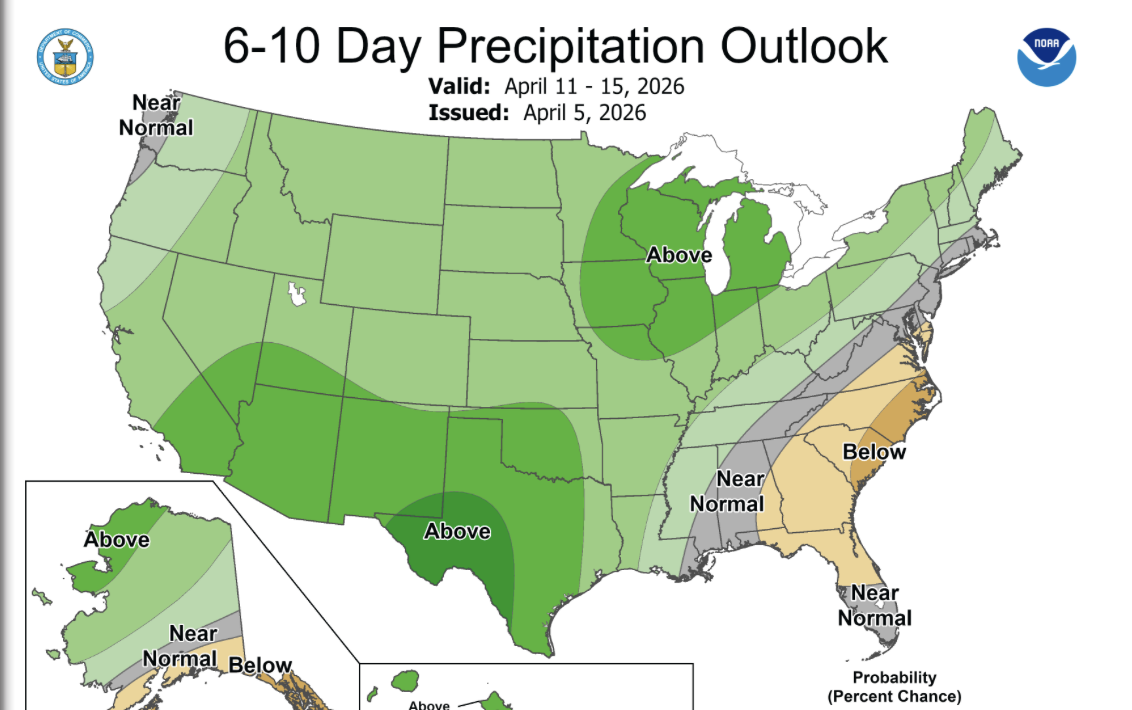
There is more in the offing sooner as well from the Climate Prediction Center map seen below with rain hitting the south coast Thursday of this week.
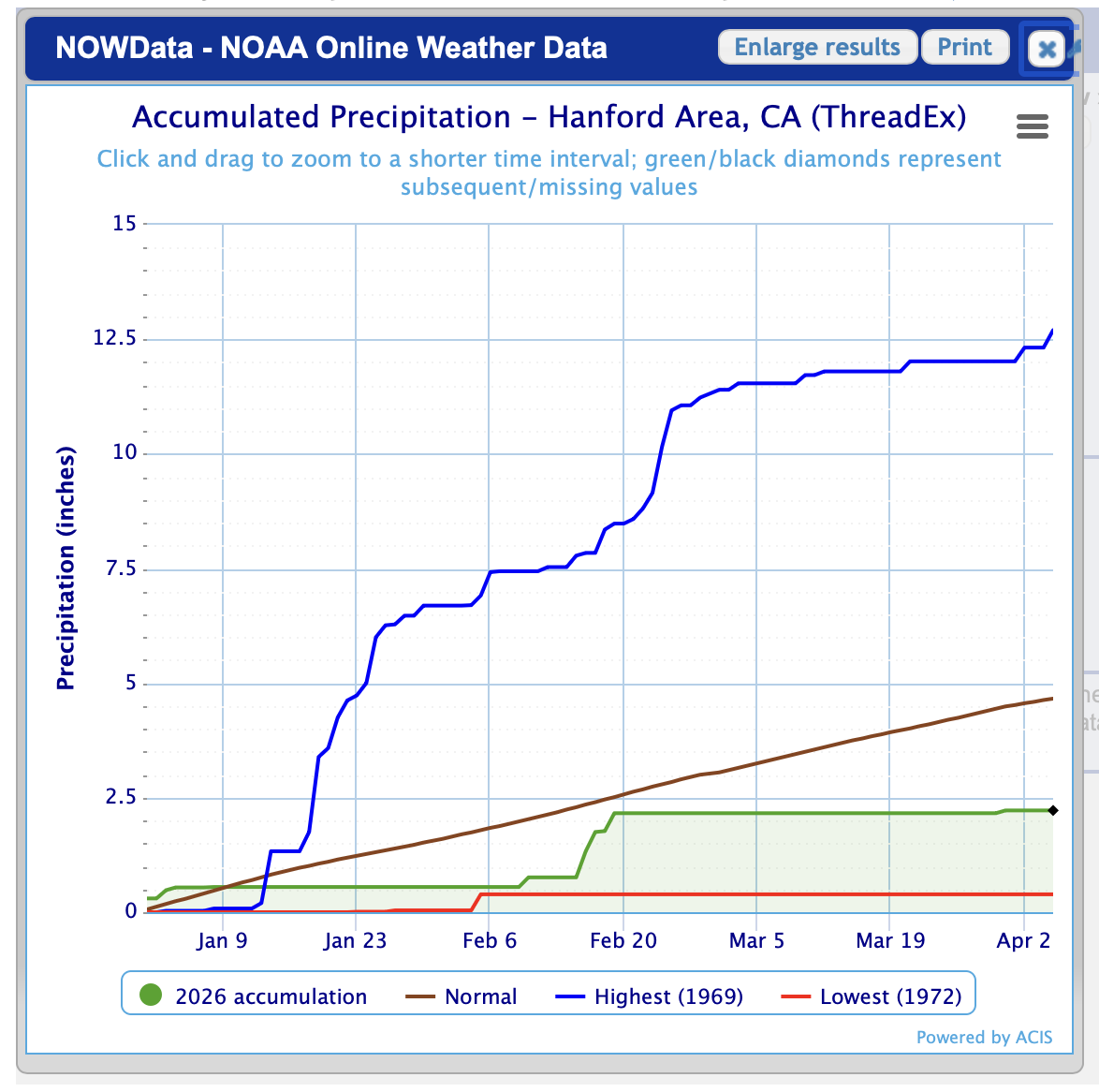
The on -off switch for precip was definitely off in March with the Hanford National Weather Service office receiving just 0.06 of an inch all month when it would normally get about 1.7 inches in March.
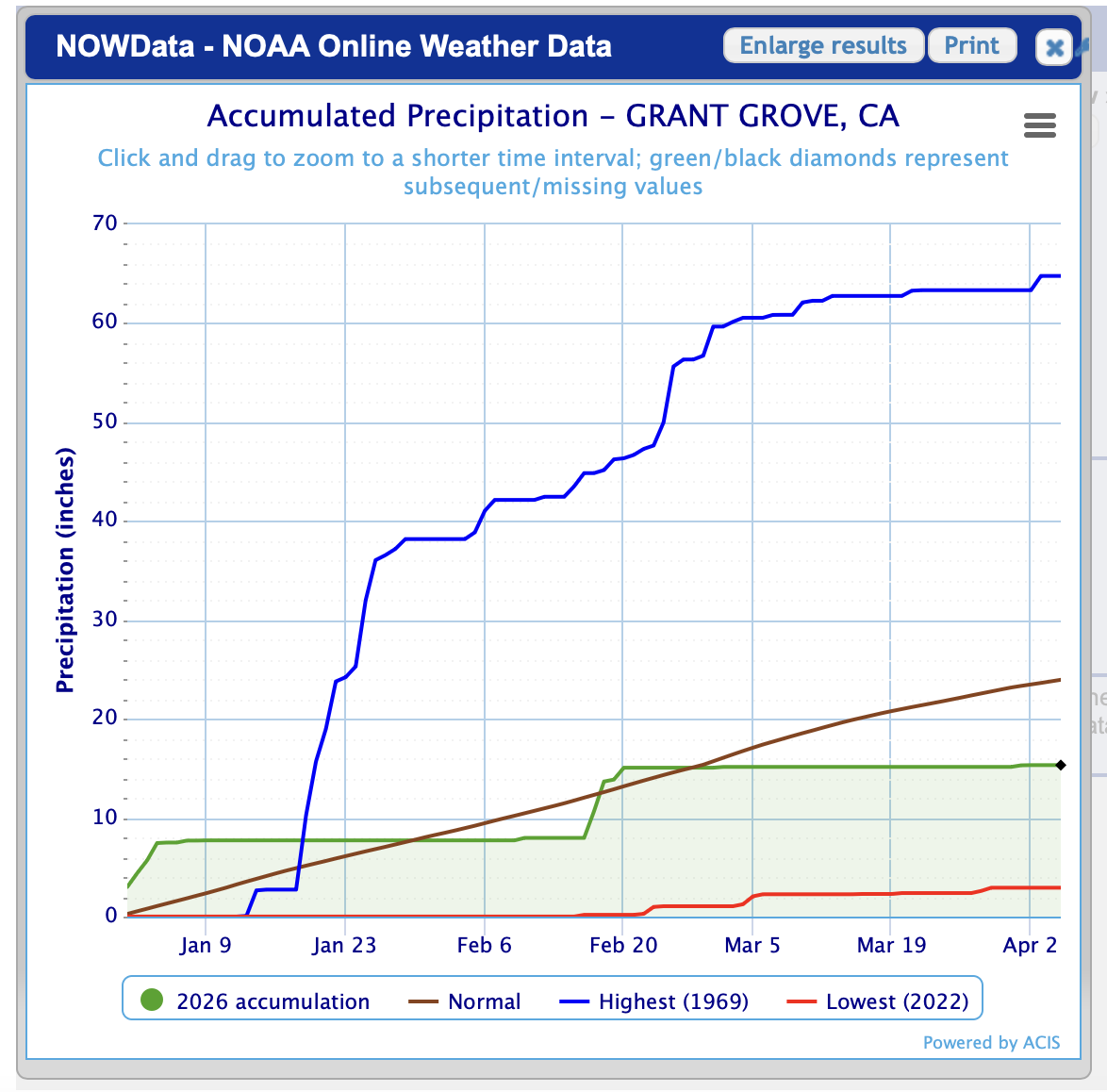
Local rainfall picture in two charts
NWS precip charts for Hanford and Grant Grove tells the story of rainfall so far in 2026, both on the Valley floor and in the Sierra. In Hanford the there was 2.4 inches in the bucket since January ,about half the average (brown on chart). In the sierra the picture is brighter at about 15 inches so far compared to an average of 24 in.The 6000ft weather station was pounded with 65 inches in the winter of 1969.
NOAA has published a listing of Western US counties that experienced the warmest winter since 1895 when records were first kept. Tulare County is on the list. So were a number of other California counties from Riverside in the south to Santa Barbara on the coast. Here is the US map shown in red for the counties who recorded all-time high average temperatures for December through February this winter. The map shows the geography of the scorching temps that extended to 10 states.The map shows the heat wave reaching Oklahoma in the east, Idaho to the north and across southern California. The salmon color on the map indicates counties that were “much above” the average- so the entire western US was extremely hot.
NOAA map of counties that experienced warmest winter(25/26) in 131 years Here are the average temperature graphs for Tulare, Santa Barbara and Riverside counties.
Tulare County’s average three month winter temps according to the graph is about 5°F warmer this year than the turn of the century. Scientist, Daniel Swain says Central Valley temps this winter would’ve been warmer if it wasn’t for a heavy blanket of truly fog this winter.
Visialia to see 95F in a few days This winter’s warm temps are now extending into March with the region about to be hit with summer-like temps- 95 degrees in Visalia and in the Sierra typically snowy Grant Grove at 6500ft, is expected to reach 76 degrees in the next few days.
The warmer winters have of course negative and positive implications. Google offers the following: Agriculture & Ecosystems: Warmer temperatures can cause “false springs,” where plants bloom early only to be killed by later frosts. Many fruit trees, like apples and peaches, also struggle because they require specific “chilling hours” to produce fruit. Water Supply: Less snowfall and earlier snowmelts reduce the natural water storage provided by mountain snowpacks, leading to increased drought risks in the summer. Public Health: Warmer winters allow disease-carrying insects like ticks and mosquitoes to survive longer and expand into new territories, increasing the risk of Lyme disease and West Nile virus. Extreme Weather: Counterintuitively, a warmer atmosphere can hold more moisture, leading to more intense winter storms. Additionally, a warming Arctic can destabilize the jet stream, occasionally pushing the polar vortex south and causing brief but extreme cold waves. In Tulare County, a big negative of warmer winters for both Ag and Sierra environments is where pests are able to over winter and won’t be killed off further weakening crops and forest making them more prone to damage or wildfires.
On the plus side consider these points
Lifestyle and Economic Benefits
More Opportunities for Physical Activity People are generally more motivated and likely to exercise outdoors when the weather is pleasant. Warmer winters make year-round activities like walking, jogging, or gardening more accessible.
Lower Heating Costs Milder winters require less energy for heating homes, which can lead to significant savings on utility bills.
Reduced Wear and Tear There is less need for expensive winter gear and less damage to vehicles and infrastructure from frost, snow, and ice.
Longer Growing Seasons For some agricultural areas, warmer winters can extend the growing season, potentially benefiting plant growth, though this can be a “two-edged sword” due to increased pests and water management issues.
Easier Transportation Less snow and ice can reduce transportation delays and accidents, benefiting both individuals and shipping commerce.
KQED reports on climate scientist Daniel Swain’s view.
Daniel Swain, a climate scientist with UC Agriculture and Natural Resources, said it’s clear from the warm forecast that “there will be no Miracle March,” or when a dry winter turns into a snowy one with late-season cold storms.
“We’re going to get to April 1, and we’re going to have some scary snowpack numbers, essentially everywhere,” Swain said in his latest YouTube office hours.
Swain said the above-average heat is “not going to be a short-duration heat wave” and could last two weeks, even though it “won’t be equally hot the whole time everywhere.”
A record warm winter and a record snowless winter are the “single most obvious” signals of the effects of human-caused climate change, he added.
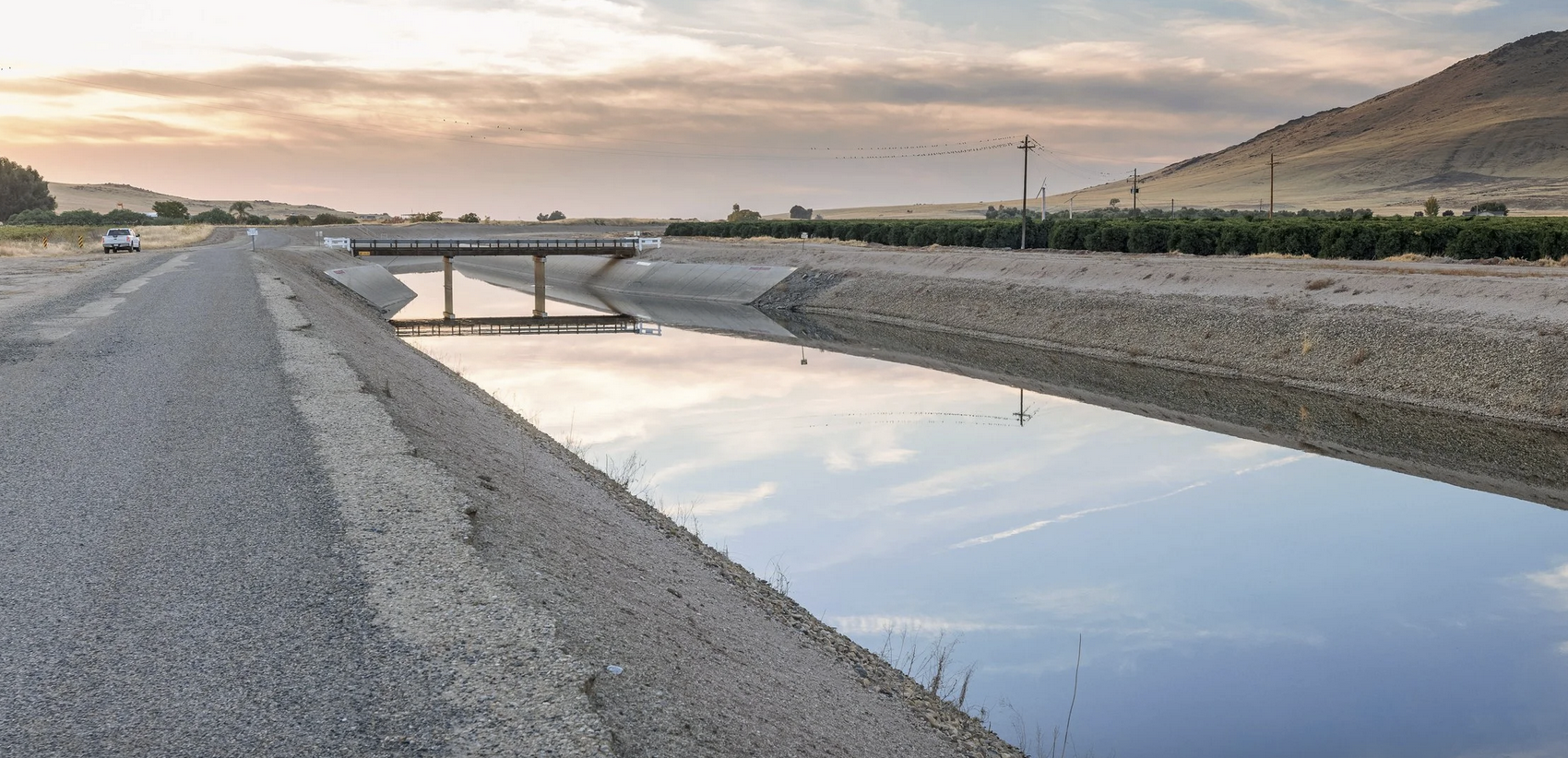
The Trump administration has earmarked $540 million to repair subsidence impacted Central Valley canals and funding to plan the raising of Shasta Dam.
Passed in 2025, the so-called One Big Beautiful Bill provides $1 billion to the Bureau of Reclamation through 2034 to restore and expand existing water conveyance systems and increase surface water storage capacity across the West.
California projects include the Delta-Mendota Canal that like all the canal projects funded – is suffering from land subsidence due to nearby groundwater pumping, The canal will receive $235 million, the largest allocation from the legislation.
Funding will support rehabilitation of the upper canal, including raising canal embankments, repairing check structures and advancing potential construction of a new concrete-lined canal segment.
The Friant-Kern Canal will receive $200 million for subsidence correction efforts along the canal.
In an update the Friant Water Authority board voted this week to use this funding from the federal government to continue more subsidence-related repairs on the canal.
The SJV Water publication reported this week “The canal had sunk over 33 miles from about Pixley to the Kern County line due to excessive groundwater pumping that caused the ground to collapse. Repairs on just one 10-mile section have cost $326 million so far.”
The San Luis Canal will receive $50 million to address subsidence issues affecting water delivery reliability.
The Tehama-Colusa Canal Authority pumping plant will receive $15 million to increase flow rates and improve system performance.
An additional $40 million will support planning and preconstruction activities associated with raising Shasta Dam, which will increase water storage capacity by approximately 634,000 acre-feet. That volume of water is enough to supply about 2.5 million people for a year, says the Dept of Interior.
Unlike SLOCOG measure, vote requires only simple majority
On January 12 the San Luis Obispo Council of Governments (SLOCOG) announced a plan for a new dedicated local funding source — a countywide, voter-approved ½-cent sales tax — to generate approximately $35 million annually for local roadway improvements and other transportation projects. The proposed November ballot measure carries one very tall order – it needs two-thirds of SLO County voters to approve of it.
Now as of March 1 there is a new advocate for virtually the same measure. Better Roads For All -San Luis Obispo County – has launched a signature drive as of last week to place the same proposal on the November ballot as a citizen-led initiative that requires only a simple majority (50% plus one vote) to pass.
A citizen-initiated road tax measure in California bypasses the strict supermajority requirement typically associated with local tax increases. Ten year ago a similar road tax measure requiring a two thirds majority -lost by a few hundred votes in San Luis Obispo County. But now, a decade later, a new effort has risen from the ashes.
One of the advocates who organized the citizen group, civil engineer with the Wallace Group, Jorge Aguilar, was there ten years ago and argues the key benefit of such a self-help tax is that it leverages far more money for projects than what it raises here.
Aguilar in their presentation to community groups around the county says we have lost out on funding our neighbor counties have enjoyed. When the similar ballot measure narrowly failed in 2016, our county lost access to hundreds of millions of dollars in transportation funding that went to neighboring counties instead. “Over the past decade, San Luis Obispo County has missed out on an estimated $700 million in infrastructure improvements” he told the Los Osos Community Advisory Committee (LOCAC) last week.
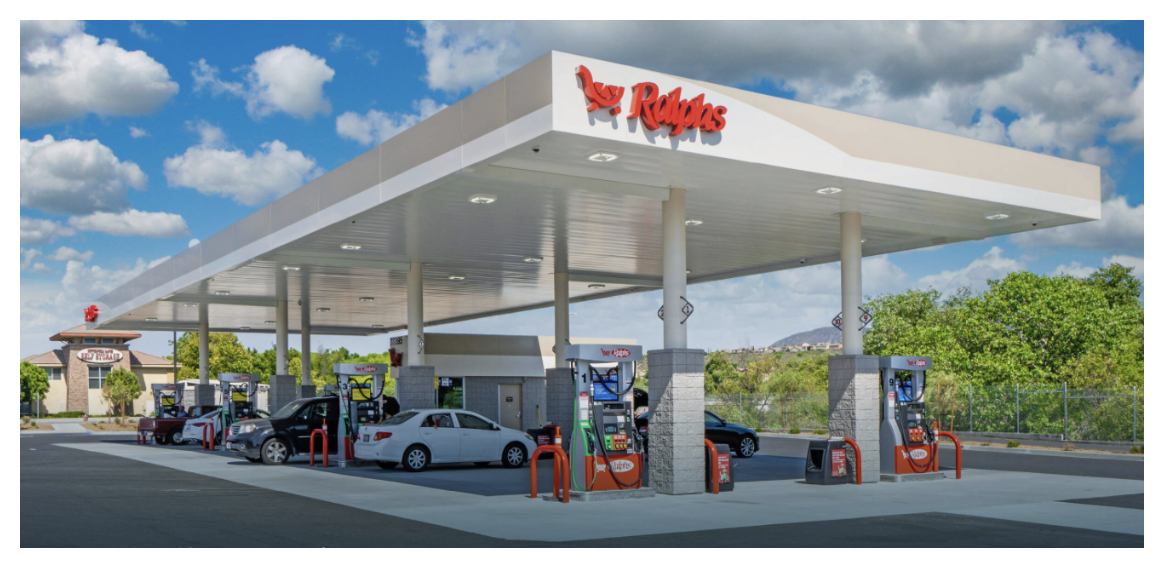
Officials with Ralphs grocery store have met with county staffers to discuss the possible construction of a new 12-pump gasoline station on LOVR in Los Osos. A presentation at the most recent Los Osos Community Advisory Council (LOCAC) described that Ralph’s was considering the purchase of the vacant gas station across LOVR from Starbucks that has been for sale for several years.The property is at 1055 Los Osos Valley Rd, has 1.9 acres and is listed for $1.2 million. Ralphs is the largest grocer in Los Osos.
Los Osos motorists often complain they have to travel to Morro Bay or San Luis Obispo to fill up on gas. That is where the competition is.This week in Morro Bay you can still buy gas for the bargain rate of $3.99 a gallon. Meanwhile Los Osos’ two filling stations, a Chevron and a Shell often match each other, each selling regularly today for $4.59.
Heading to San Luis Obispo, the state’s top gasoline retailer Costco is selling gas for $4.29 a gallon.
Ralph’s gas station in Camarillo, the closest Kroger-owned fueling station to San Luis Obispo County, is selling regular today for $4.19. To date there are 13 Ralphs gas stations in the state,all in Southern California. Grocer-owned discount gas stations have grown in popularity in California where the state average prices are high, with Vons having 19 stations in Southern California, including one in Nipomo and Safeway with numerous stations in Northern California. The largest fuel discounter, Costco has 139 gas stations in the state including a new 32-pump expanded station in San Luis Obispo.
Chevron has some 300 company-owned stations in the state typically posting the highest prices.
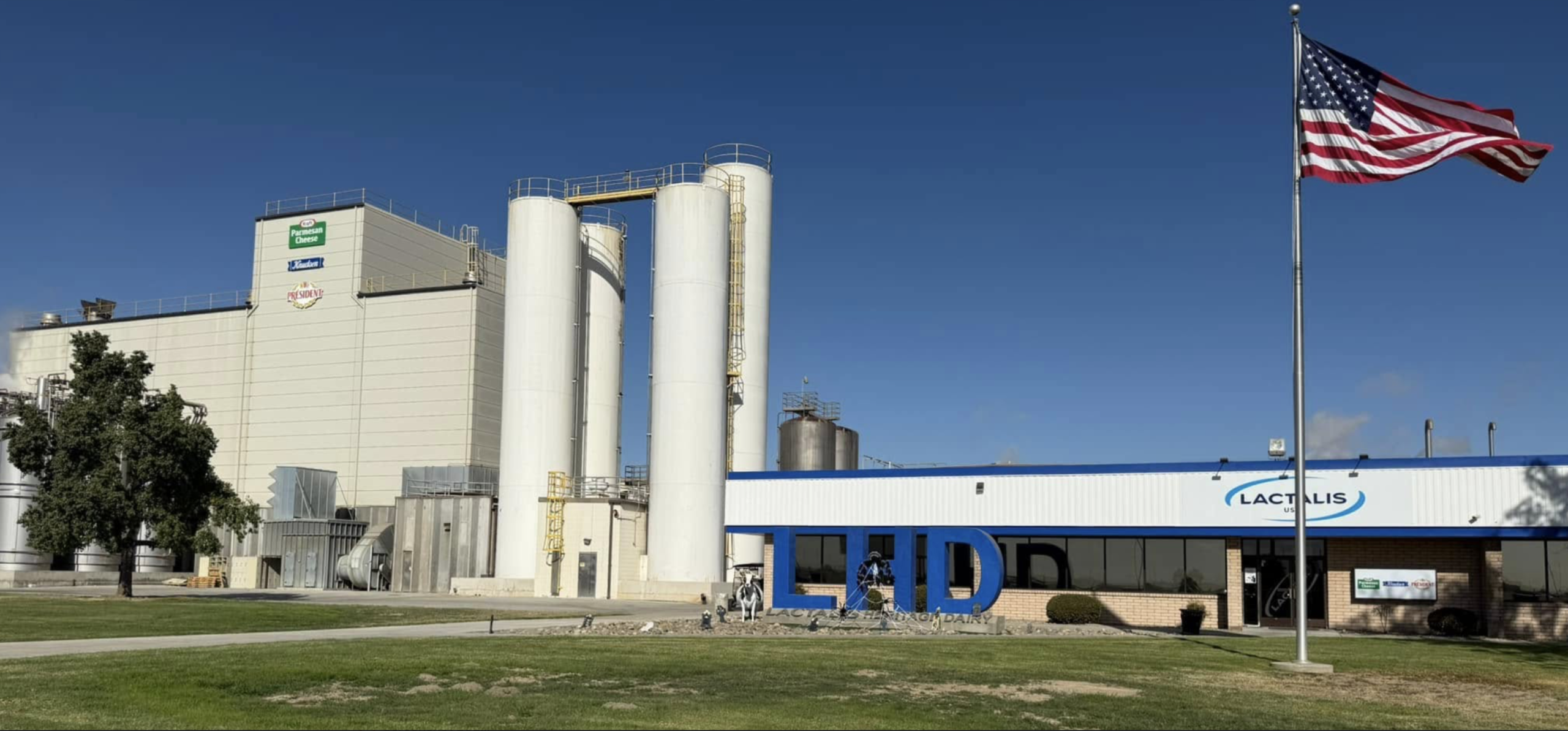
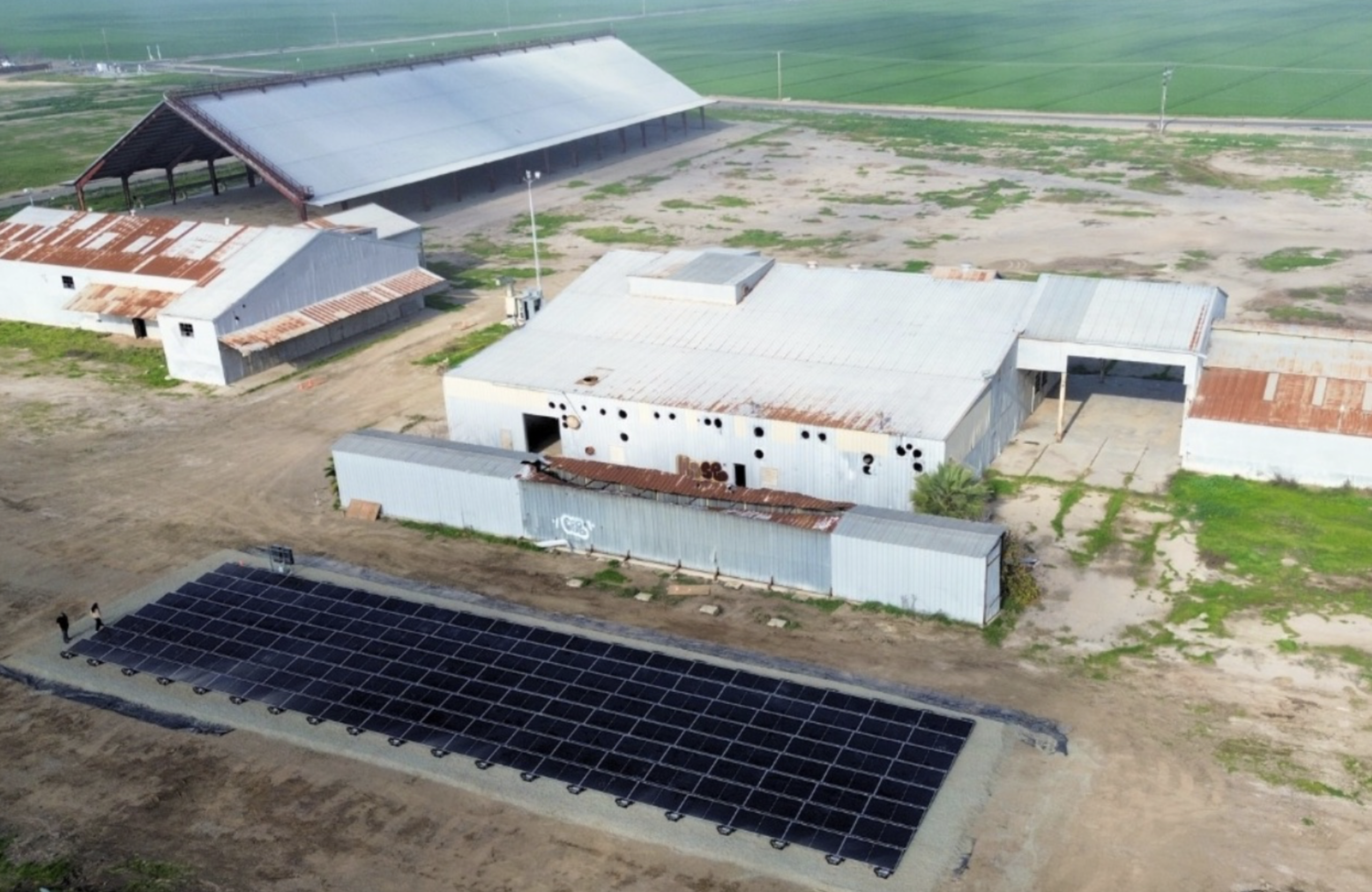
Tulare: French-owned Lactalis cheese already has approval to build a 22MW PV power producing solar array on land next to Highway 99. Now the company has filed preliminary plans to build a second solar farm next to the other – this one a thermal solar facility that generates hot water for processing work at the big cheese plant on the south end of Tulare. The project would install about 4300 collectors connected by pipeline to the plant. Thermal Solar technology is being used in food processing and provides sustainable, low-to-medium temperature heat for critical operations like pasteurization, drying, cleaning, evaporation, and cooking. It utilizes solar collectors to generate hot water, steam, or hot air, reducing reliance on fossil fuels, cutting operational costs, and increasing energy efficiency in dairies, wineries, and processing plants. Lactalis has the largest solar thermal power plant in France that replaced natural gas.
Permit issued for for new $10m Mooney hotel
Visalia: Motorists traveling to Visalia from the south will soon encounter a new 4-story, 51,000sf hotel at 4626 S Mooney Boulevard. Permits have been issued by the City of Visalia to build the $10 million hotel called Woodspring Suites in the Aldi shopping center. The 200 unit nationwide chain has one of its extended stay hotels in Bakersfield.
Visalia new home permits continue strong in February
Visalia: New home builders were issued permits for 64 units in February compared to 53 in Feb 2025. Continuing an accelerated pace seen most of last year, January and February combined saw builders permit 114 units compared to 74 for the same time in 2025.
Regarding existing home sales, the picture is not as bright. The Tulare County Association of Realtors reports in the first week of March that the number of homes for sale in Tulare County is up 10% but home
sales are down 12.5%.
Tribe plans biochar plant in former cotton gin
Tipton:The Tule River Economic Development Corp. is deploying a $14.7 million Environmental Protection Agency grant to build a biochar facility in Tipton allowing the tribe to generate renewable electricity and tap into carbon credit markets.
The plant- a former cotton gin site near Tipton, is expected to process up to 31,500 tons of woody biomass annually, producing about 4,500 tons of biochar and roughly 4,000 megawatt-hours of renewable power each year, according to TREDC estimates.
At current voluntary carbon market prices of about $150 per ton, each ton of biochar — representing roughly one ton of carbon dioxide removed from the atmosphere, depending on carbon content and application — could create an additional revenue stream alongside electricity sales and agricultural distribution.
Thomas E. Wilbur, chief executive officer of TREDC, said the project grew out of a federal Climate Pollution Reduction Grant the tribe pursued as environmental pressures intensified across the Central Valley.
The facility will use pyrolysis technology developed by ARTi, a five-unit system that heats biomass in low-oxygen chambers to convert it into biochar, a stable, carbon-rich material used to improve soil health and water retention. After an initial injection of natural gas, the system recycles its own heat, converting hydrogen and carbon monoxide into electricity.
Raw material is not expected to be a problem. TREDC plans to source material from both the Sierra Nevada and the surrounding agricultural corridor. Orchard trees reach the end of their productive life every 20 to 30 years, leaving behind large volumes of woody waste, Wilbur said.
“We’ve got piles and piles and piles of wood that can be used for biochar, and we’ve figured out a good way to make use of it,” Wilbur said.
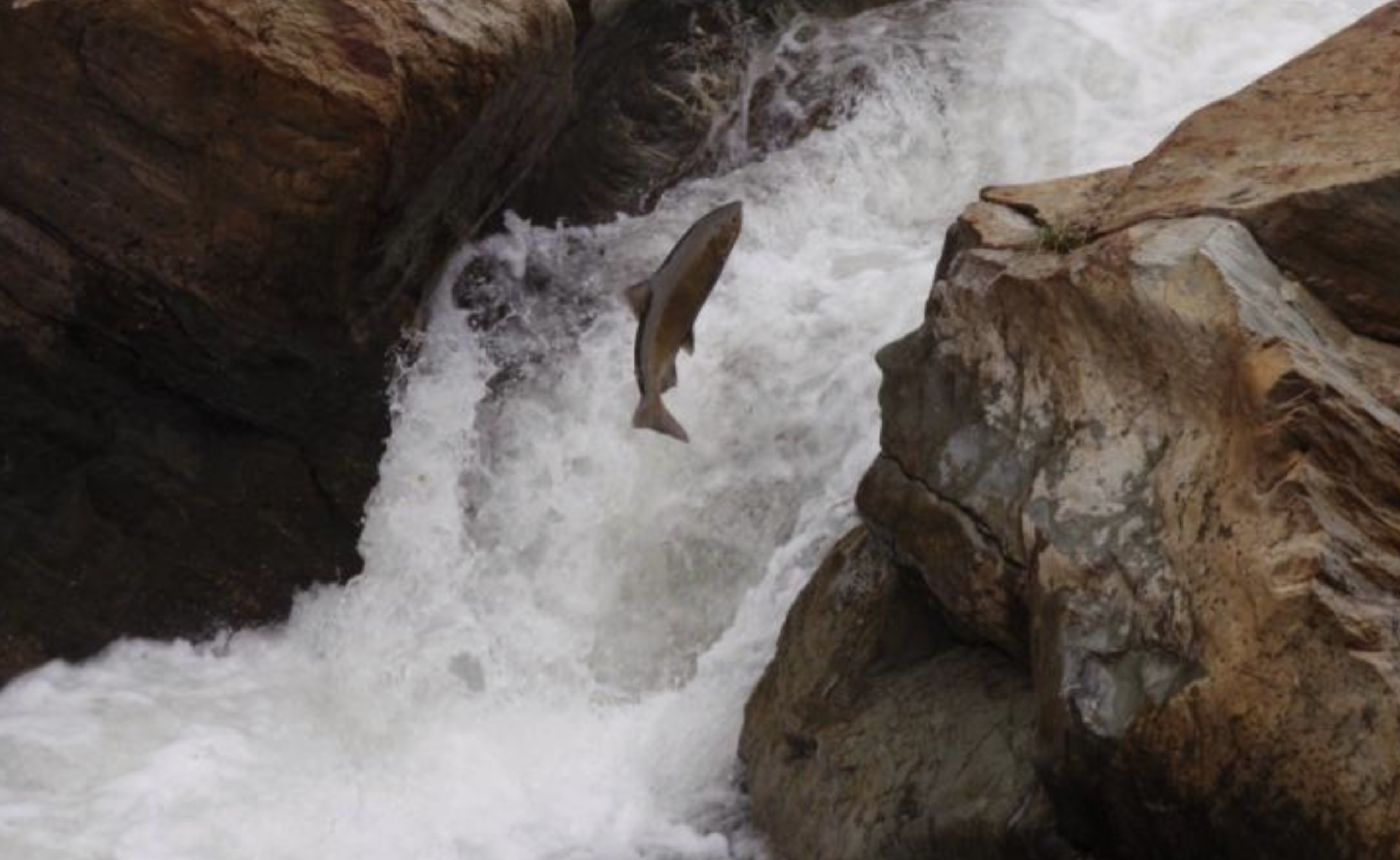
Information from the Golden State Salmon Association and the Pacific Fisheries Management Council forecasts a current adult salmon ocean population of 392,349 in 2026 — more than double last year’s ocean abundance estimate. The Klamath River forecast also jumped to 176,233, up from 82,672 in 2025.
For comparison, the upper Sacramento River saw a return of over 60,000 adult salmon to natural spawning areas in 2025 compared to just over 4,000 in 2024, a 15-fold increase. The number of jacks, or two-year-old sub-adult salmon, jumped almost threefold from around 5,500 in 2024 to about 14,500 in 2025. The number of returning jacks is key to forecasting the adult salmon population in the ocean now, which informs how many salmon fishery managers will allow to be caught this year.
Both some commercial and sport fishing are expected to be approved later this spring by the Pacific Fishery Management Council.
The Salmon Association put the good news down to wet years in 2023 and 2024.
“Heavy spring runoff in 2023 and 2024 moved through the Central Valley, raising river levels, reconnecting floodplains, and sending cold, turbid,oxygen-rich water downstream. For juvenile salmon migrating toward the ocean, those conditions made all the difference. Survival improved. Stronger year classes began to take shape.
That rebound wasn’t the result of chance or rhetoric. It was the predictable outcome of hydrology aligning with biology. When rivers carry enough cold water at the right time, salmon respond.
For salmon, water is not simply habitat. It is the difference between collapse and recovery.”
Young salmon were treated to several years of negative ( cool) PDO pattern, which is beneficial for survival of the fish in the ocean.
On the Klamath River fishermen say the removal of dams upstream has made a big difference in the increase of salmon returning to their home ground.In Oct 2024 free flow to over 400 miles of habitat in California and Oregon was restored with removal of four dams that also benefited tribal communities.
The March forecast for the 2025-26 Valencia orange crop is 17.0 million cartons, good news for fans of this juicy citrus variety. If this production forecast holds, farmers will pick up to 2.4 million more cartons than last year.
While the acreage of this orange variety is the lowest in perhaps 90 years, other signs point to higher production likely this spring. This year bearing acres are down to 24,500 compared to 40,000 acres in 2012. In the mid-1940s California Valencia acreage was nearly 150,000 acres. But plantings over the years shrunk with urbanization in southern California. Acreage has shrunk in the Central Valley in recent times as well. We produced nearly double the cartons of Valencia oranges back in 2012 compared to last year. In recent years, growers have experimented with plenty of the new citrus varieties taking their attention away from standbys like the Valencia orange. More fruit on the trees The most recent survey data indicated an average fruit set per tree of 657, a 19% increase from the previous year and 18% above the five-year average of 557. The average March 1 diameter was 2.555 inches, up 7% from the previous year and 5% higher than the five-year average of 2.445. The Valencia orange was first hybridized by pioneer American agronomist and land developer William Wolfskill in the mid-19th century on his farm in Santa Ana in southern California.Wolfskill sold his patented Valencia hybrid to the Irvine Ranch owners, who planted nearly half their lands in its cultivation. This forecast was based on the results of the 2025-26 Valencia Orange Objective Measurement Survey, which was conducted from January 10 to February 10, 2026.
Funding for the survey was provided by the California Citrus industry.
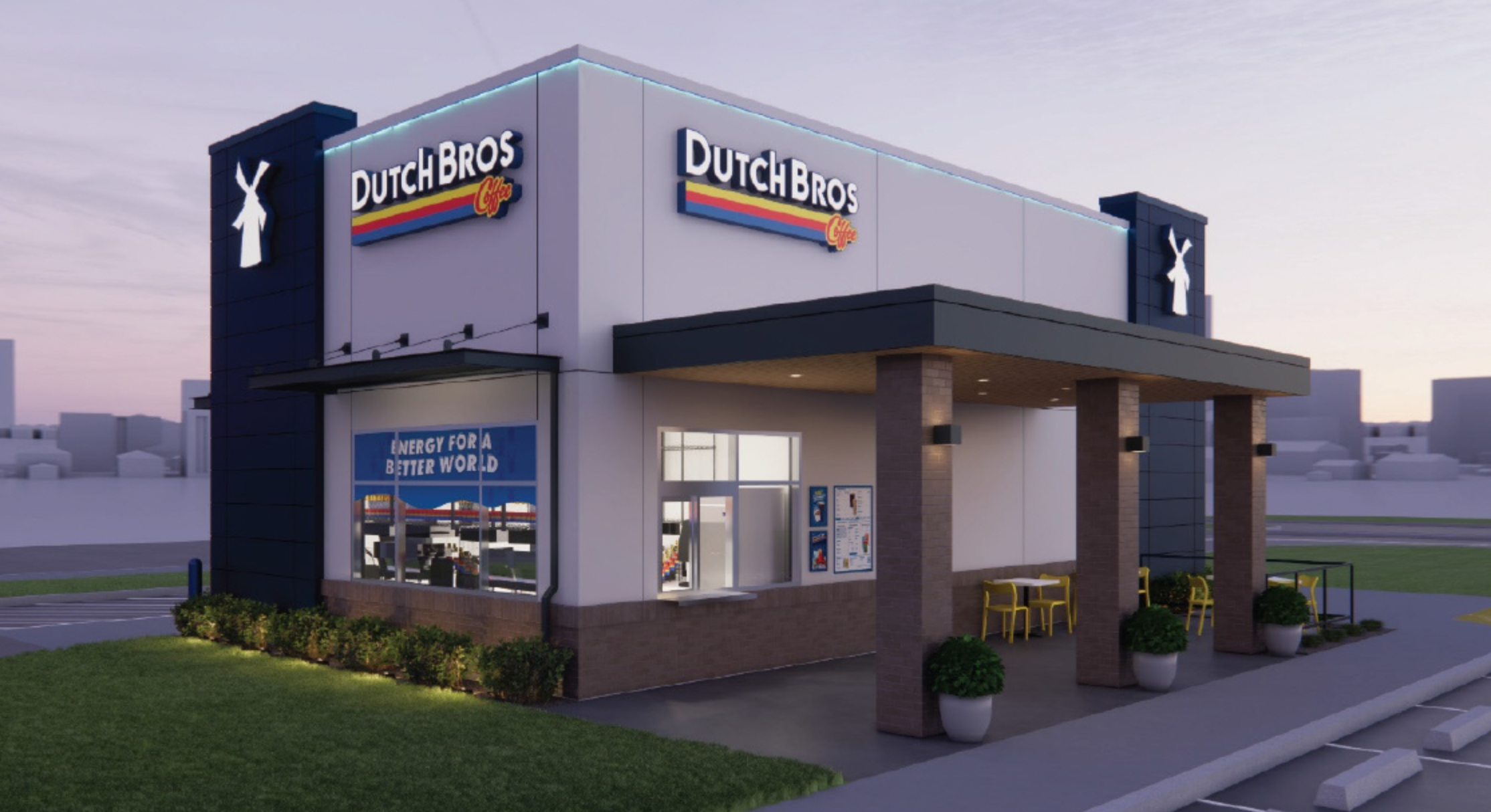
Dutch Brothers have filed plans with the city to build a sixth double drive-through in Visalia, the second company store north of 198 and the first retail outlet to plan a location next to the new northside Costco warehouse. In their plan to be heard by city planners later this month, the publicly-traded company said they hope to open in the fourth quarter of this year. The new Costco is expected to open its second Visalia location in a matter of weeks.Dutch Bros is the first spot of 6 adjacent one-acre sites along Riggin in front of the new Costco that are expected to tenant up this year, prime spots considering this northern tier of Visalia is booming with new growth. Riggin has been recently widened to handle the expected flood of traffic.The coffee chain that attracts a youthful clientele, has been a high flyer on Wall Street but more recently the company stock has declined. Dutch Brothers had a high of $73 a share last August, but as of this writing, its shares have dropped to $50 and are down 22% in the past year.In recent weeks, Dutch Brothers appear to be facing some new competition in Visalia with plans filed with the city to open a rival youth-oriented coffee chain, 7 Brew, near Dick’s Sporting Goods.Founded in Arkansas in 2017, 7 Brew coffee has grown from 14 locations in 2019 to more than 600 around the country. Now 7 Brew has filed preliminary plans with the City of Visalia to replace the former Cask & Cleaver building, a once popular sit-down restaurant on South Mooney Boulevard. The property is owned by developer Dave Paynter.7 Brew is expected to open more locations in Visalia.Coffee Trail Besides these coffee places the big player is ofcourse Starbucks with 10 locations in town. But there are a host of smaller caffeinated chains and locally owned java places numerous enough so the Visalia Visitors Bureau Offers “Coffee Trial” if you care to sample their brews. They include this alphabetical listing: Bombshell Beans,Bread Savage,Caffeine Dose, Common Heart, Component Coffee, Connect Coffee,Farm Fresh Bowls, Jammin Java, Kuppa Joy, Maverick’s Coffee, Mission Coffee, Obscura Coffee,Sol Bol ACAI, The Corner Cafe, The Human Bean, and Watson’s Organic Market and Cafe.
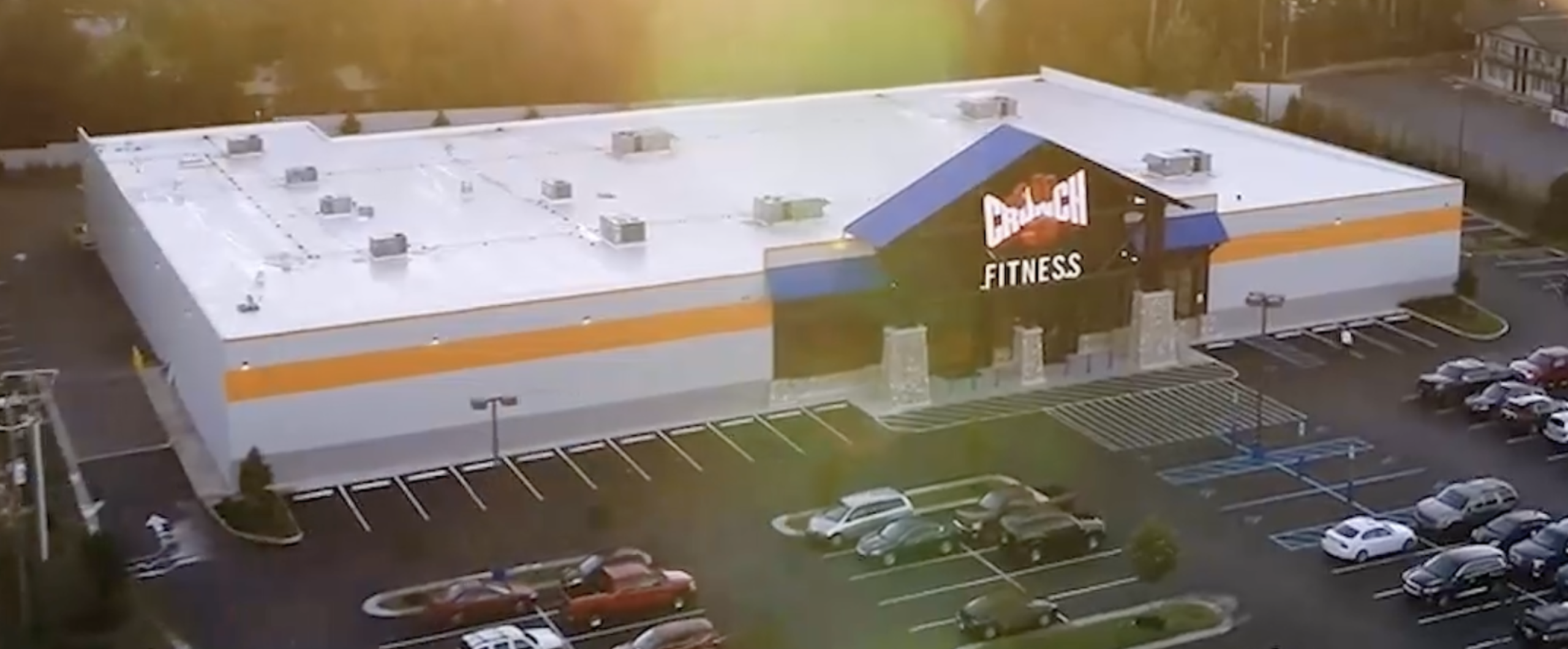
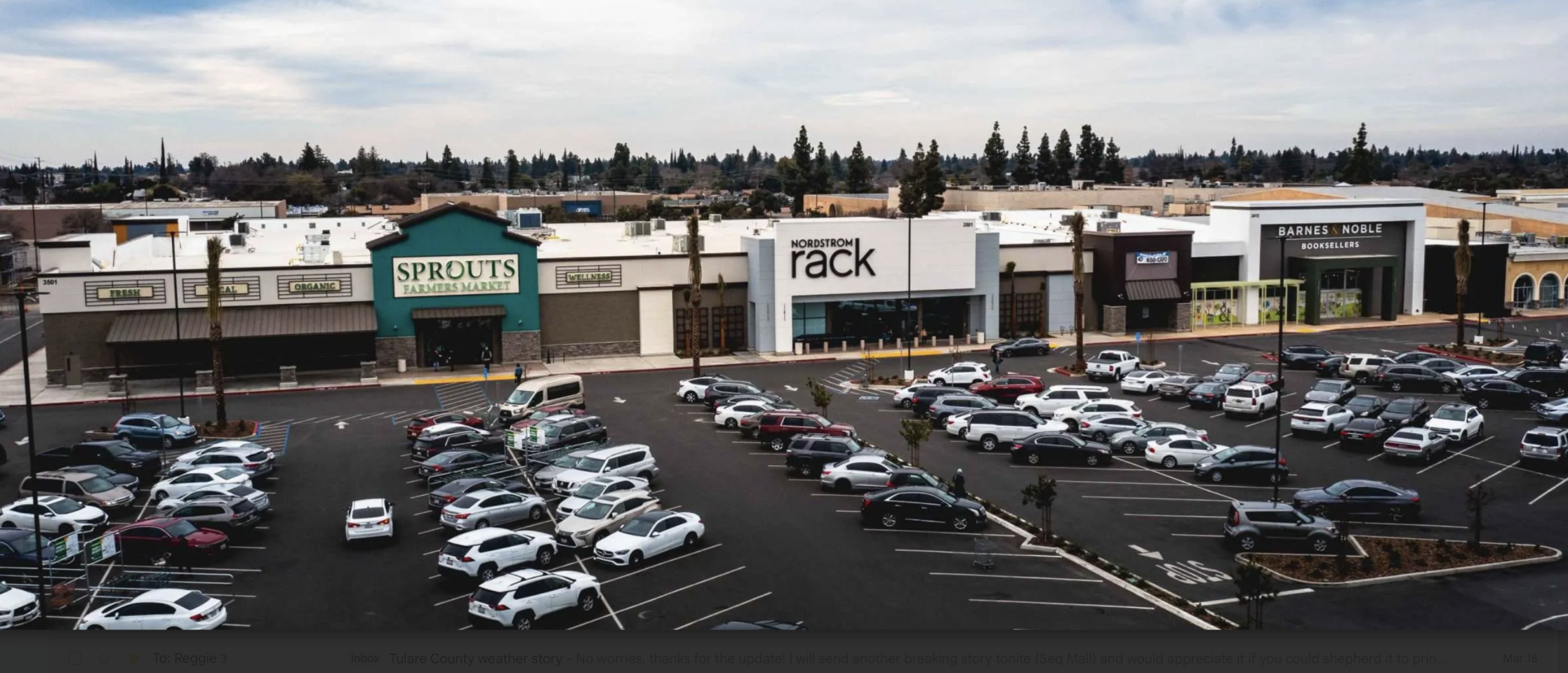
Fast growing Crunch Fitness says it is coming to Visalia at the Sequoia Mall and it’s already inviting prospective members to sign up. In multiple posts on social media, including Instagram, the fitness chain isn’t shy about announcing what would be located in a new 41,000 square-foot facility 3535 S Mooney at the mall’s SW corner, approximately where the former Longs Drug/CVS store was.
Property owner Dave Paynter has filed construction plans to add onto the former 28,000sf drug store to accommodate the requirement for a larger gym typical for Crunch. The construction project is valued at $12 million.But Paynter has not revealed the tenant. Now the tenant has been busy promoting its Visalia plans.
The company has some 550 gyms in 41 states and 7 countries according to their website. Central California locations for Crunch include two gyms in Fresno and one in Santa Maria.
Crunch would sport the largest gym in square footage in Visalia with plenty of competition from numerous fitness centers in town including Planet Fitness who has more locations around the US than Crunch.
The company says once it opens, the Visalia location is expected to offer a full range of Crunch Fitness amenities, including:
Training Areas: HIITZone functional training with indoor turf, Olympic lifting platforms, and free weights up to 120 lbs. Cardio & Machines: “Miles of Cardio” with treadmills, ellipticals, and rowers. Recovery & Wellness: Sauna, HydroMassage®, and tanning services. Classes: Over 50 group fitness classes per week, including Yoga, Pilates, and Ride (cycling). Additional Services: Personal training, Kids Crunch childcare, and full-service locker rooms.
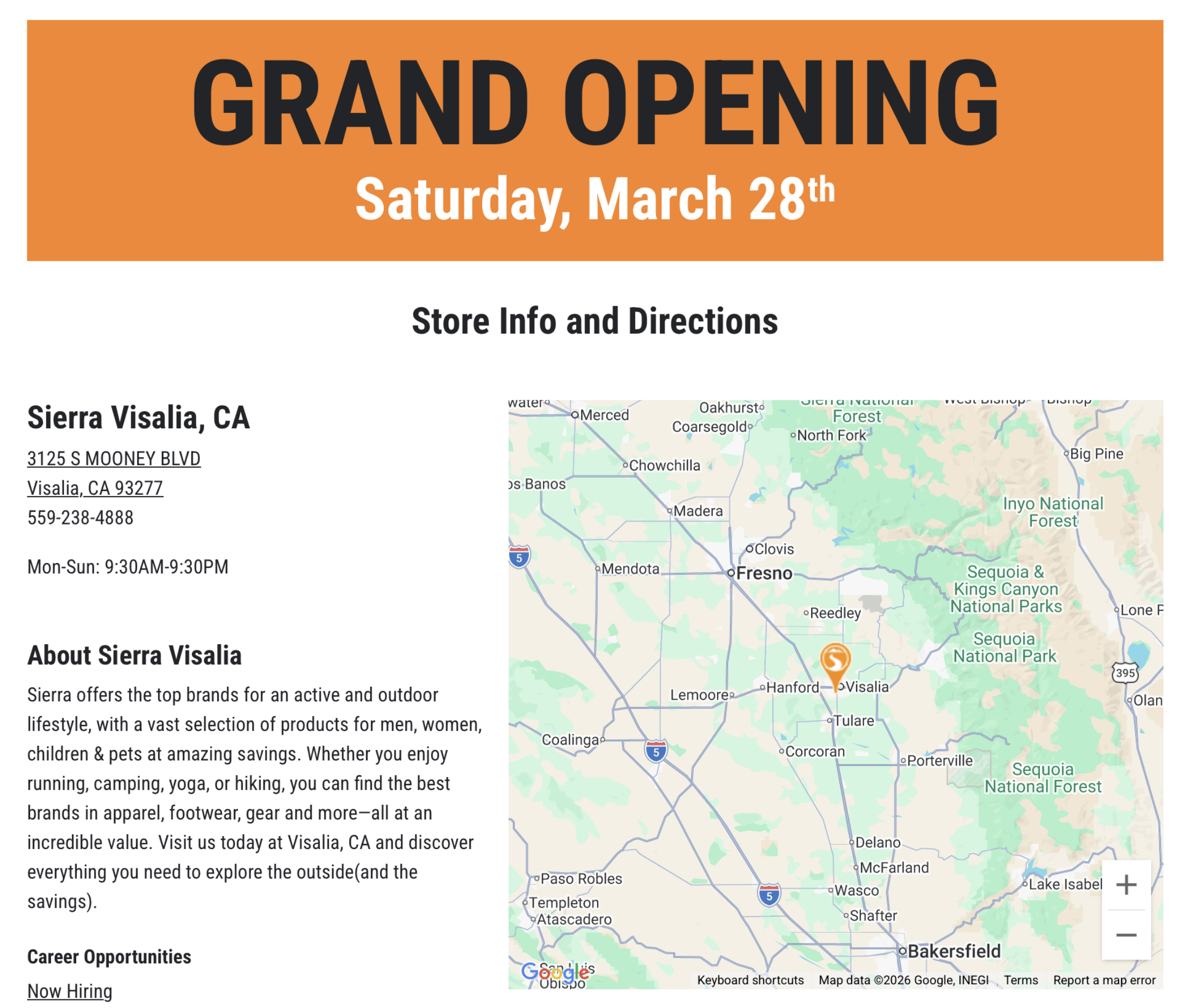
Membership and Offers Crunch is currently offering special “Founding 500” perks for early sign-ups. Base Membership: Starting as low as $9.99/month. Founders Deal: Join for $1 down and get your first month free. Member Swag: Early sign-ups may receive a free limited edition T-shirt, water bottle, and swag bag. Access: Membership options include 24-hour access once the facility is operational. For developer Dave Paynter, the addition of this popular gym to the retail lineup at the mall continues an upgrade of the center with new tenants not yet in Visalia and room to add more. This month the new Sierra outdoor sports store will open in the former Bed Bath & Beyond location.
Mr Paynter has also been busy a block away as well attracting a new national drive-thru coffee place- 7Brew -to the former Cask & Cleaver spot in the Dick’s shopping center.