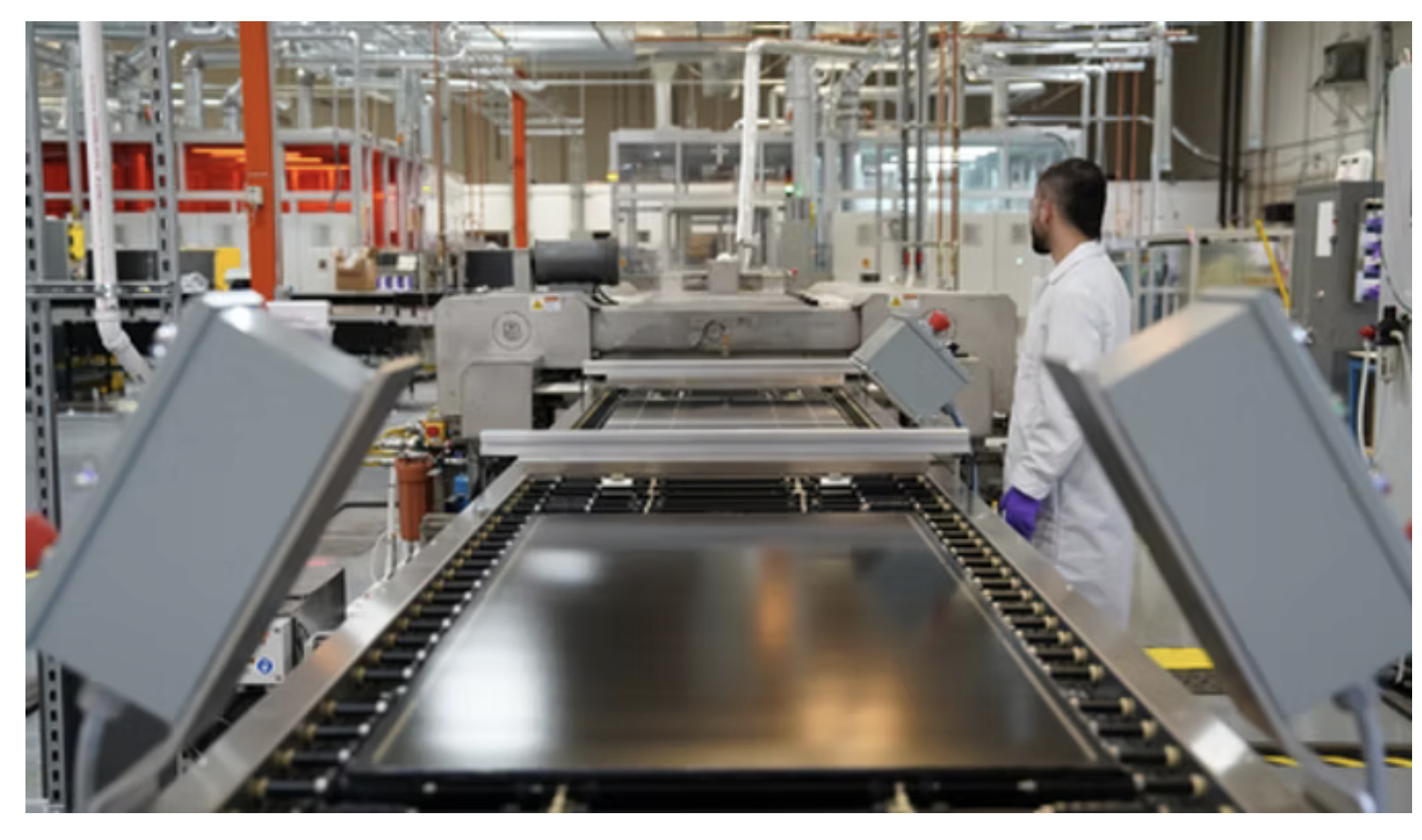
Apr 20, 2026 Advancing perovskite-silicon technology from lab breakthrough to commercial production FREMONT, Calif.–(BUSINESS WIRE)–Tandem PV, a pioneer in high-efficiency perovskite-silicon solar panels, today announced the opening of its commercial demonstration factory in Fremont, California. The facility marks a major step toward commercializing U.S.-manufactured next-generation solar panels for utility-scale projects.
As electricity demand rises, driven in part by data centers and AI workloads, utilities are moving quickly to add new capacity. Tandem PV’s Fremont factory supports efforts to reshore advanced solar manufacturing and reduce reliance on overseas supply chains. The line is designed to demonstrate that perovskite-silicon tandem panels can be manufactured reliably in the United States at scale with high power density, durability, and lower costs.
The 65,000-square-foot Fremont site is producing tandem solar panels using state-of-the-art equipment. The line has approximately 40 MW of annual nameplate capacity, and the panels are roughly 60 times larger than Tandem PV’s R&D-scale devices. The factory is intended to validate large-format production and accelerate market adoption.
“This factory marks the shift from impressive R&D results to repeatable manufacturing at a commercially meaningful scale,” said Tandem PV CEO Scott Wharton. “People have talked for years about the promise of perovskites. This is what it looks like to deliver. It is an important milestone in restoring American leadership in solar manufacturing through the kind of breakthrough engineering Silicon Valley is known for.”
Tandem PV’s proprietary technology combines a thin perovskite light-absorbing layer with a conventional silicon solar cell. By capturing more of the solar spectrum than silicon alone, tandem panels generate more electricity from the same footprint. The higher efficiency lowers overall costs, especially because labor, land, and balance of system costs account for roughly 75% of utility-scale solar deployment costs.
The Fremont opening builds on recent R&D progress that Tandem PV is now translating into production panels, including 29.7% efficiency based on internal testing. In accelerated lifetime testing, the latest-generation panels show less than 1% average annual power loss, about a tenfold improvement versus the company’s results from a year ago. Tandem PV is targeting 25+ year performance consistent with industry standards and warranty requirements for utility-scale solar projects.
“Utility-scale perovskites are here,” said Jennifer Granholm, former U.S. energy secretary. “Tandem PV is delivering an ingenious product that can help provide more clean power with a smaller footprint and meaningful cost savings as we scale deployment in the United States.”
With the Fremont site now operating, Tandem PV has begun producing initial modules, with shipments planned to support customer validation trials later this year. The company plans to sell its first commercial panels in 2026 from this facility and is targeting high-volume manufacturing in 2028.
The Trump plan is to pay $1B taxpayer money to stop wind farms if they invest in oil projects. REACT group wants to do that here
As of April 2,San Luis Obispo attorney Saro Rizzo, VP of the REACT Alliance, an anti-offshore wind group, asked the Trump administration in a letter to pursue lease refund agreements with the five companies currently holding offshore wind leases in California, three of which are off the coast of Morro Bay. A story was published in Cal Coast News.
The paper reported that in 2022, the federal government auctioned off three offshore wind energy sites located between 20 and 30 miles off the coast near Morro Bay for more than $400 million. REACT, like Mr Trump, calls offshore wind “destructive.”
“Wind is for stupid people,” the president has said.
The REACT request to the Dept of Interior looks to replicate a March 23 agreement with TotalEnergies that offered that company a refund of over $928 million to give up their two offshore wind leases and shift their investment to production of fossil fuels – oil and natural gas including off the US coast, if they “renounce” offshore wind projects
A Dept of Interior release says” TotalEnergies has committed to invest approximately $1 billion—the value of its renounced offshore wind leases—in oil and natural gas and LNG production in the United States. Following their new investment, the United States will reimburse the company dollar-for-dollar, up to the amount they paid in lease purchases …”
Cal Coast News says “In Dec. 2025, based on national security concerns, the Trump administration suspended leases of all off-shore wind farms currently under construction in the United States. Since then, many wind energy projects have stalled or ended.”
Well, not quite.
In a development that may have significant impact for the West Coast too, the Trump administration’s Department of Interior missed a final deadline-April 10- to appeal a number of court rulings that Trump lost.
Last December the Trump administration demanded that construction stop at five major wind projects off the East Coast citing national security concerns. But all five developers of the projects challenged his move in court and all 5 won – allowing work to continue. Collectively, they’ll be capable of generating enough electricity to power over 2 million homes.
A news report says the Department of Interior did not appeal the court rulings because a pending bipartisan congressional bill needed to fund public works and transportation projects that would continue to be stalled if the administration did not back off on court challenges to offshore wind. That position was outlined by Rhode Island Senator Sheldon Whitehouse, a supporter of offshore wind.
A news report quotes Whitehouse, more than willing to play hardball given he is Ranking Member of the U.S. Senate Environment and Public Works Committee, holding up a number of key bills the GOP needs to pass.
“We have paused permitting reform negotiations until the attack on clean energy ends and we can have some assurance that a solid bipartisan bill, which we were working on, would actually get implemented fairly by this administration,” Whitehouse said. “So that’s paused. And by the way, good luck with your highway bill — the other bill that needs to come through me. And good luck with the Army Corps of Engineers WRDA bill — the other bill that needs to come through me.”
Canary Media reports that The lack of appeals could be good news for future wind projects as well. A bipartisan group of senators has been debating a long-delayed “permitting reform” bill for months. The bill would speed up environmental review for critical energy projects, make it easier to build interstate transmission lines, and protect clean energy permits from federal interventions like those of the Trump administration. (It would also likely afford the same protections to oil and gas projects such as the Keystone XL pipeline, which President Joe Biden scrapped after taking office in 2021.)
Also California Attorney General Bonta in December celebrated a decision from the U.S. District Court for the District of Massachusetts invalidating the Trump Administration’s action freezing the development of wind energy and declaring that action unlawful. That decision vacates the Trump Administration’s “Day One” executive memorandum, which imposed an indefinite moratorium on offshore and onshore wind energy projects.
Not Stalled
So the projects are not stalled or ended. The West Coast offshore wind projects are very much alive as well. But REACT wants the government to use more taxpayer funds to buy out the 5 leases along the West Coast including the 3 off Morro Bay.
REACT wants to replicate the TotalEnergies formula- trade the wind projects for oil projects. That works for the president.Trump has apparently found a champion for drill-baby-drill in California from a Central Coast group that says they want to protect our environment. Trump is doing everything he can to restart oil drilling off the Santa Barbara coast right now and now apparently a citizens group is ready to help despite the fact that fossil fuels are heating up the global environment, causing havoc both on and off shore.
Does REACT support OIL? Here is the last paragraph in their letter to the Trump administration. Notice the code words “energy dominance”.
“We request the opportunity to discuss how the REACT Alliance can support the Department in securing a future for the California coast that prioritizes genuine conservation and energy dominance over the ineffective economic boondoggle known as floating offshore wind.”
One of President Donald Trump’s major priorities in his second term has been his so-called “energy dominance” agenda to boost fossil fuel production by weakening or eliminating environmental protections.
REACT says “We do not accept donations from fossil fuel companies.” But this letter makes it clear it supports Trump’s energy policies that include West Coast oil drilling both offshore and on thousands of acres of California BLM land including right here next to Los Osos Middle School. Now they support giving the same foreign-owned energy companies they complain about – millions in taxpayer monies to switch to oil.
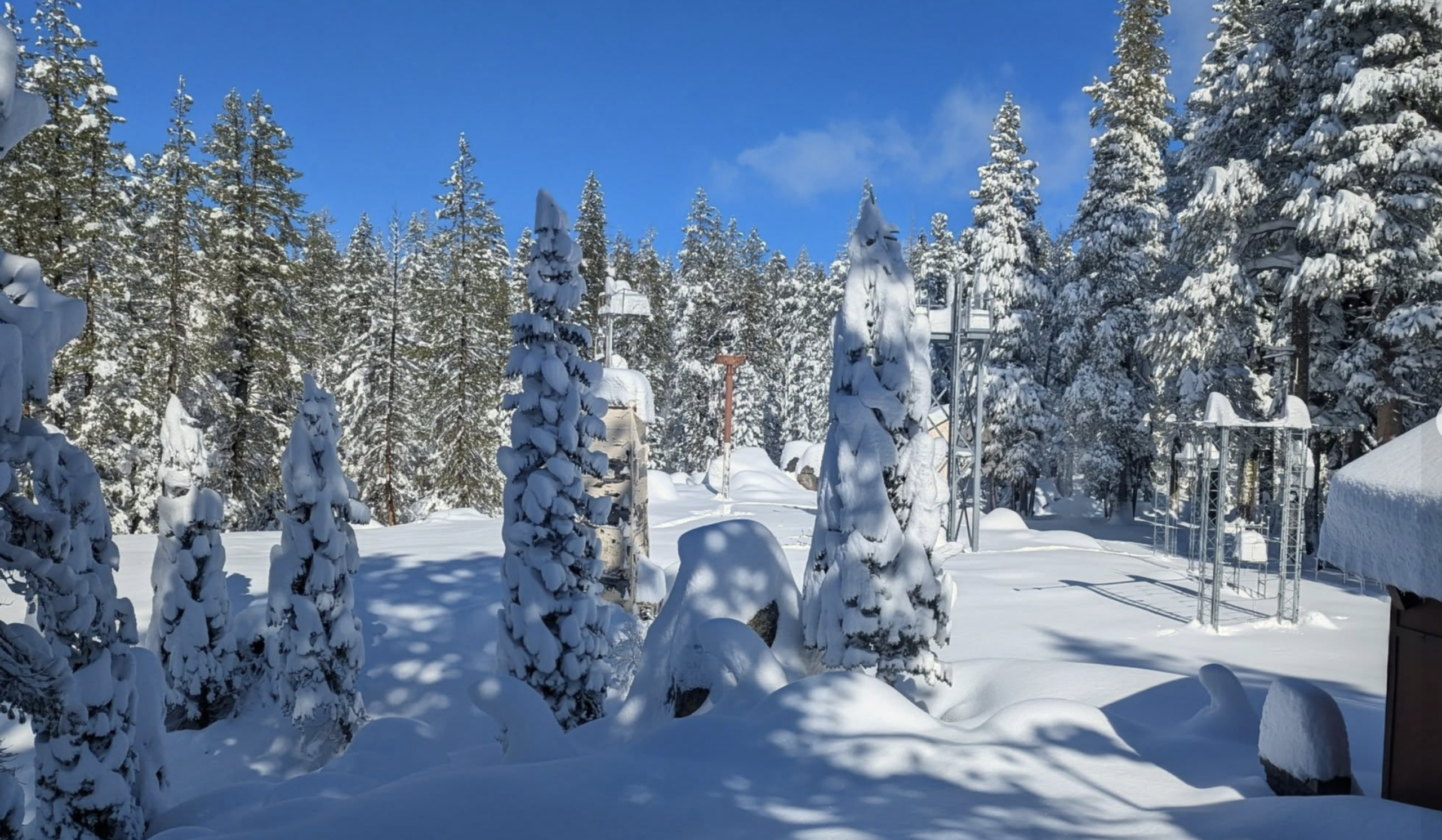
UC Berkeley Snow Lab in the Tahoe area after having virtually no snow on the ground last week,they received nearly 4 feet over a 3-day period. Here is their blog.
Plenty more #snow fell yesterday! Here’s a look at the numbers from our recent snowfall: 1-day ❄️: 21.1″ (53.5 cm) 2-day ❄️: 34.6″ (88 cm) 3-day ❄️: 42.5″ (108 cm)
Despite still having a below average snowpack due to the record-warm temperatures that we’ve had all winter, this snow will help a lot. We’ll see it melt and runoff into streams and reservoirs, re-moisten the soil and vegetation, and will delay vegetation drying out, which will help with the fire season. Fingers crossed we see more in the next few weeks!
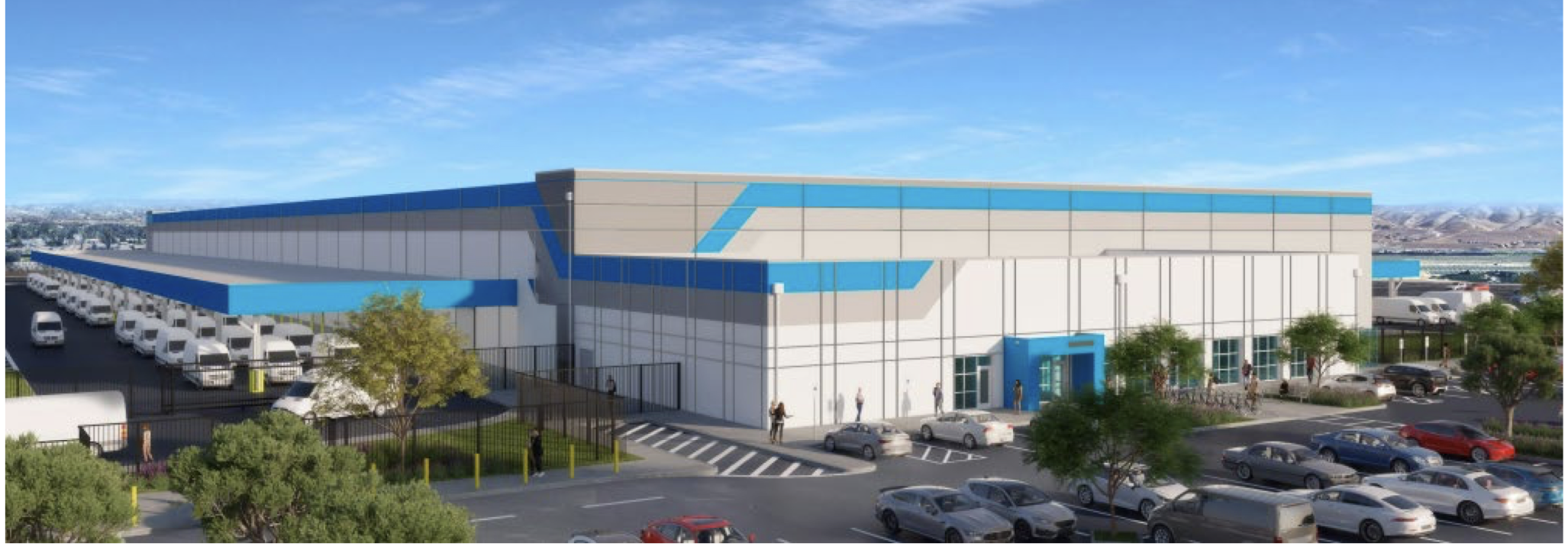
The Santa Maria Planning Commission is expected to make a final decision on a 588 job package delivery distribution center on Stowell Rd at its May 6 meeting. The name of the tenant has not been announced although there are strong signals it is Amazon.
If a project gets a thumbs up from the planning commission, there would be a 14-day appeal period. If the project is not challenged, the applicant after that could move to construction. Construction is expected in stages to start this spring and last into summer of 2027.
Santa Maria city planner Frank Albro says as of May 1 the city will release its final response to comments to the draft EIR for the big project. Concerns have been raised over traffic as a result of the project.
According to the draft EIR, the proposed delivery warehouse would operate 24/7 to support delivery of packages to customer locations between 10:00 a.m. and 9:00 p.m. The main on-site facility would include delivery and distribution, office and processing uses, including shipping and receiving of packages. The operation would support some 588 jobs.
Approximately 34 line-haul trucks (semi-trailer trucks) would be expected to deliver packages to the warehouse each day. The customer packages would be sorted by address groupings, assigned to the delivery routes, placed onto movable racks, and staged for dispatch. Delivery drivers would arrive at the delivery warehouse around 9:20 a.m. and begin queuing for loading.
Steady stream of delivery vans
Up to 345 delivery vans would depart from the delivery warehouse at a rate of up to 72 vans per 20 minutes to facilitate a regulated traffic flow into the surrounding area. Approximately 8–10 hours after dispatch, delivery routes would be completed, and the vans would return to the station intermittently between 8:10 p.m. and 9:50 p.m.
One objective of the parcel delivery facility incorporates sustainability features like EV, solar, and low-water usage, says the EIR. Solar roof arrays would be installed to offset electrical energy demand with a design capacity of 750 kilowatts direct current. To manage energy supply and demand, the project would include an ‘after the meter’ Battery Energy Storage System to store energy for later use by the facility, with a design rating of 650 kilowatts direct current.
The project is being spearheaded by Seefried Industries who manages industrial projects for tenants, including a number in California and elsewhere for Amazon. The Santa Maria Center is thought to be a grocery delivery operation with an aim to offer same-day delivery to customers around the Central Coast.
Visalia issued 562 new home permits in 2025, more than double the 270 permits in 2024. So far in 2026 in only a quarter of the year, builders here have taken out permits to build almost 200 new single family homes. See chart below issued by the City of Visalia.
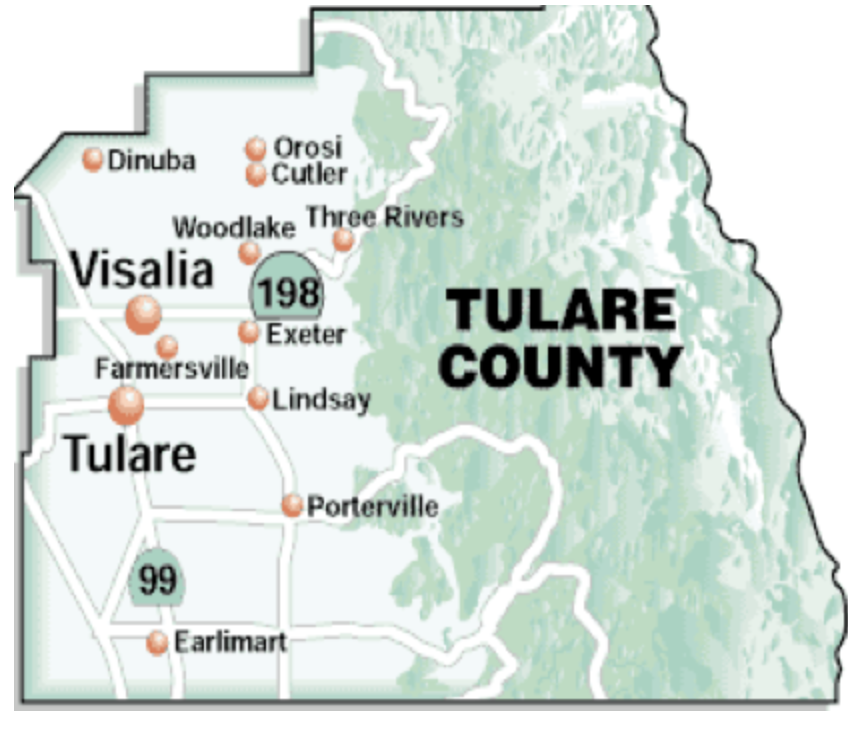
Tulare County existing home sales slow
The latest figures for the Tulare County real estate market point to slow sales the first week of April 2026 with the number of homes sold is down 62% year over year but the number of homes for sale up 6%.Pending sales were also down 25% compared to the same period year ago. A year ago there were some 550 homes on the market in March 2025 and now there are about 600. Late winter is also the slowest time of the year for real estate sales
.
Tulare County Jobless rate climbs EDD reports that the unemployment rate in Tulare County was 11.1 percent in January 2026, up from a revised 10.2 percecent in December 2025, and above the year-ago estimate of 10.9 percent. This compares with an unadjusted une rate of 5.5 percent for California and 4.7 percent for the nation during the same period.
While the county’s jobless rate year over here has climbed slightly, two sectors continue to show strength. Leisure and Hospitality jobs are up by 600 from January 2025 and healthcare jobsare up by 1400 the past year.
A closer look at the numbers shows Tulare County civilian labor force has declined in the past year by over 3500 indicating that these people are perhaps gone and clearly unavailable for work here. Fresno County has the same trend showing his lower labor force, but a big jump in both healthcare and accommodation jobs.
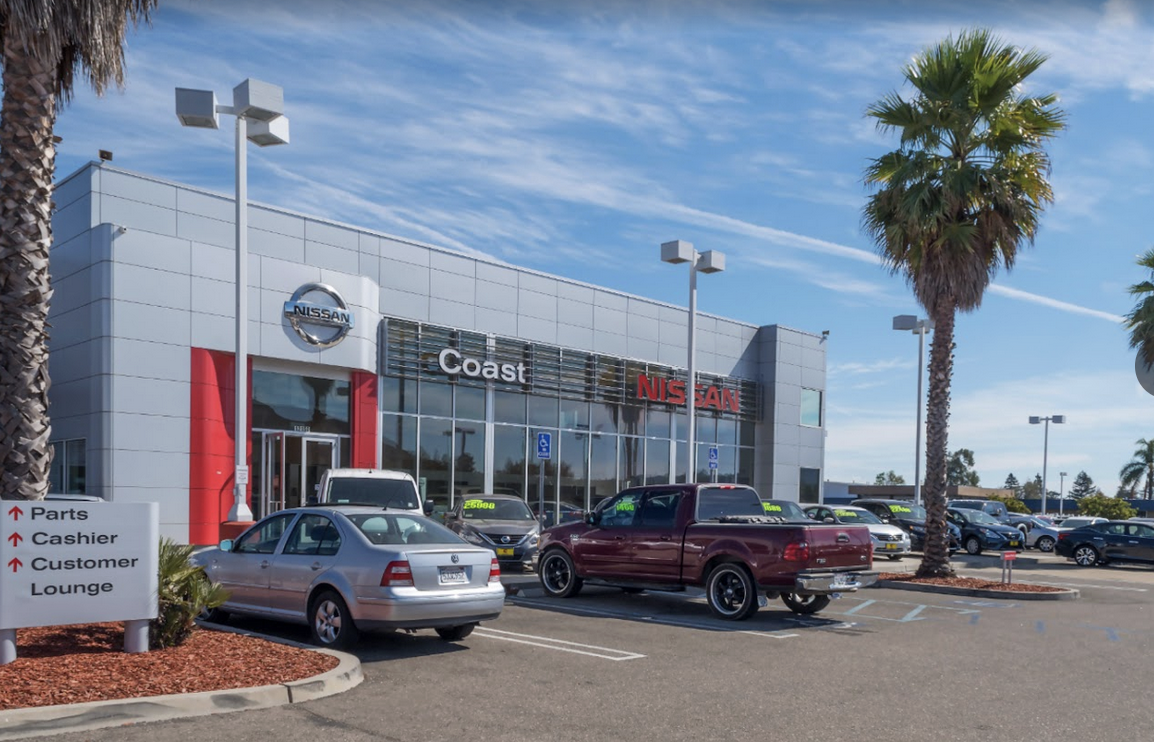
New car dealership Coast Nissan on Los Osos Valley Rd has closed its operation as of this weekend according to the dealer website. Sales members at the Porsche dealership next door say the building is being remodeled to accommodate pre-owned Porsche cars and other high-end sports cars and exostics “including some Ferraris”. Owned by the Cardinale Automotive Group, the company has 26 dealerships in the West including BMW of SLO on San Joaquin St and the Porsche dealership on LOVR. Cardinale posted on the Coast Nissan website that warranty work could be directed to other Cardinale dealerships in SLO. But local Nissan owners who want the car maker to service their vehicle will now have to travel to San Maria.The San Luis Obispo Nissan closure comes as a number if other West Coast Nissan dealerships shut down including North Bay Nissan in Petaluma, CA last summer, Vallejo Nissan converted into a Hyundai location, Nissan of Sacramento who closed in late 2025, Town Nissan (East Wenatchee, WA) who closed in March 2026 and Nissan of San Juan Capistrano who closed with inventory and customer service transitioned to Nissan of Irvine according to its website. Like other foreign-made imports Nissan has been hit by President Trump’s tariffs including many Nissan cars made in Mexico. A new report says tariffs on Mexico-made entry-level vehicles increase per-car costs by $2,500–$3,000. Now Nissan is pressing U.S. officials to ease tariffs on vehicles made in Mexico, citing the need to keep entry-level models affordable as average new car prices hover near record highs.Nissan’s line-up of cars and trucks have faced challenges of tariffs,higher costs and tough competition not just here but overseas from Chinese exports. Most recently the company reported a 7.5% decrease in total U.S. sales for Q1 2026. Car sales were way down but Nissan truck lines improved their sales. In the most recent quarter in California, Nissan had a 4% market share while Toyota enjoyed an 18% share according to the California New Dealers Assn. Last year
Nissan Motor Co. reported a net loss of $4.5 billion for the fiscal year ending March 2025. To address this crisis, the company is cutting 15% of its global workforce (approx. 20,000 jobs) and closing seven manufacturing plants, according to The Japan Times and Automotive News. The company hopes to return to profitability by fiscal year 2026. It’s not just this Japanese car maker that is hitting the brakes. Reports say all U.S. auto sales for March 2026 are projected at roughly 1.37 million units, a sharp drop from the 1.79 million units sold in March 2025. Now high gas prices won’t help.
In the past six months about a dozen huge utility-scale solar projects have launched permitting requests on thousands of acres of former farmland near I-5, the Valley’s driest region,where farmers have been hardest hit by water scarcity worries and SGMA regulation. Many are wondering how they will be able to pay their bills in the future. For more Kern,Kings and Fresno county landowners, harvesting solar energy is the most attractive answer.
More solar in Kern’s oil patch
While the current administration in Washington has downplayed the benefits of renewable energy, even calling it a scam, farmers are watching missiles fly over the Middle East where fossil fuels is what they’re fighting over. Meanwhile there are no missiles flying over I-5.Now it turns out that none other than the United Arab Emirates is investing here – not in oil but in solar.Despite loss of federal incentives it appears solar energy installation is more popular than ever across the US. Mr Trump’s Energy Information Agency(EIA) says utility-scale solar is the fastest-growing source of electricity generation in the United State with almost 70 gigawatts of new solar generating capacity projects scheduled to come online in 2026 and 2027 – a 49% increase in U.S. solar operating capacity compared with the end of 2025.The run up in fossil fuel costs this year is only adding to the momentum of developers looking to supply more solar power and critically, battery storage to the grid including along I-5 in the west side of the Valley.The big highway parallels the state’s largest transmission lines and power stations.
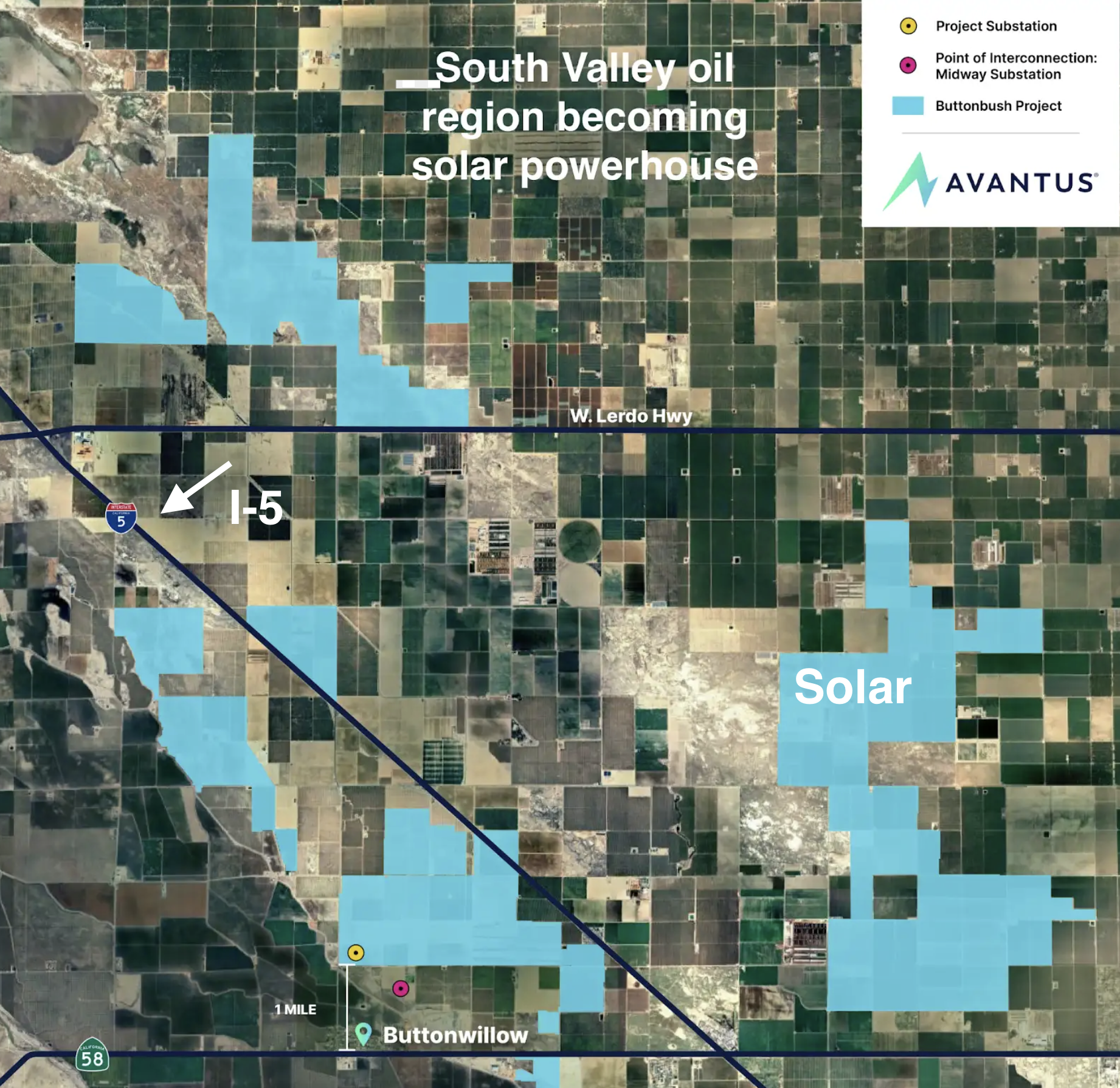
Now we are looking at a massive solar expansion along a 120 mile corridor from the Buttonwillow oil fields to the north extension of the Westlands Water District almost to Los Banos. It was here in 2016 that state regulators, developers and environmentalists mutually agreed this was the best place in the state to juice up the state’s renewable power considering this is where there are fewer disruptive conflicts found, no rare tortoises. Instead, they found thousands of acres of formerly irrigated farmland so high in salts, it could not be tilled again. A long drive on I-5 will tell you this dry and windy corridor features both few people and critters yet enjoys nearby access to the power grid. It is also equidistant between the metro areas of LA and the SF Bay.
Then there is the AI-fueled data center boom in California and the realized need discovered in the past year, for large quantities of electric power that can be installed quickly. Again the sunny west side of the San Joaquin Valley and this technology looks to be in the right place at the right time.
It is of course, ironic that Kern County is the leader of the pack to develop solar power in the Valley, since western Kern County where the California oil industry is still king. It is the home of the still potent Elk Hills oil fields, the former Navy Petroleum Reserve near Buttonwillow.Now in the past few weeks the Kern County Board of Supervisors approved a development that has been described as California’s single largest solar energy project near Buttonwillow called the Buttonbush Solar and Storage project. The sprawling solar farm spans almost 12,000 acres on both sides of Highway Five and will generate 2000 MW or enough power for about 1 million homes. The power capacity is on the scale of Diablo Canyon nuclear power plant.The developer is Avantus,majority owned by KKR.
While eastern Kern County, the Mojave region, was popular for new solar arrays in the past decade, the Bakersfield Californian reports that now “Thirty-five projects that propose to sell their power to the state grid have been approved for construction in western Kern. It remains to be seen how many of them ultimately get built.”
UAE connection
If that 12,000 acre Kern project is big,a Kings County solar application a few miles up the road filed late year is bigger – encompassing 18,300 acres called Rex Solaire Solar and Storage, LLC.This huge development is just one of a dozen mega renewable projects developed by the company Terra Gen with a portfolio of 4.2 GW of wind, solar, and battery storage projects, including 5.6 GWh of energy storage capacity owned by Abu Dhabi Future Energy Company PJSC – Masdar, the United Arab Emirates’ clean energy powerhouse, and Igneo Infrastructure Partners.Of course the United Arab Emirates has been on the receiving end of Iran’s missile barrage hitting their oil fields and hotels.
The big Kings solar farm will generate 2800 megawatts produced from solar panels and include a battery storage facility that will have a capacity of 11,200 gigawatt-hoursThe project site is located on approximately 18,381 acres of agricultural land in unincorporated southern Kings County (County), along the eastern edge of Interstate 5 at Utica Ave, 10 miles southeast of Kettleman City and 3 miles east of the California Aqueduct. Still in the draft EIR stage, their application says construction is expected to begin in 2028 with the initial 900 to 1,500 MW phase to be completed over a period of approximately 24 to 36 months.
Only a few miles away straddling the Kings/Fresno line is another big solar farm called Cornucopia Hybrid, LLC on 2,446 acres between Avenel and Coalinga west of I-5. The project will generate 300MW with construction anticipated to begin in the fourth quarter of 2026 and to last 39 months.Commercial operation expected in the fourth quarter of 2029.
Wall to wall solar in Kings County
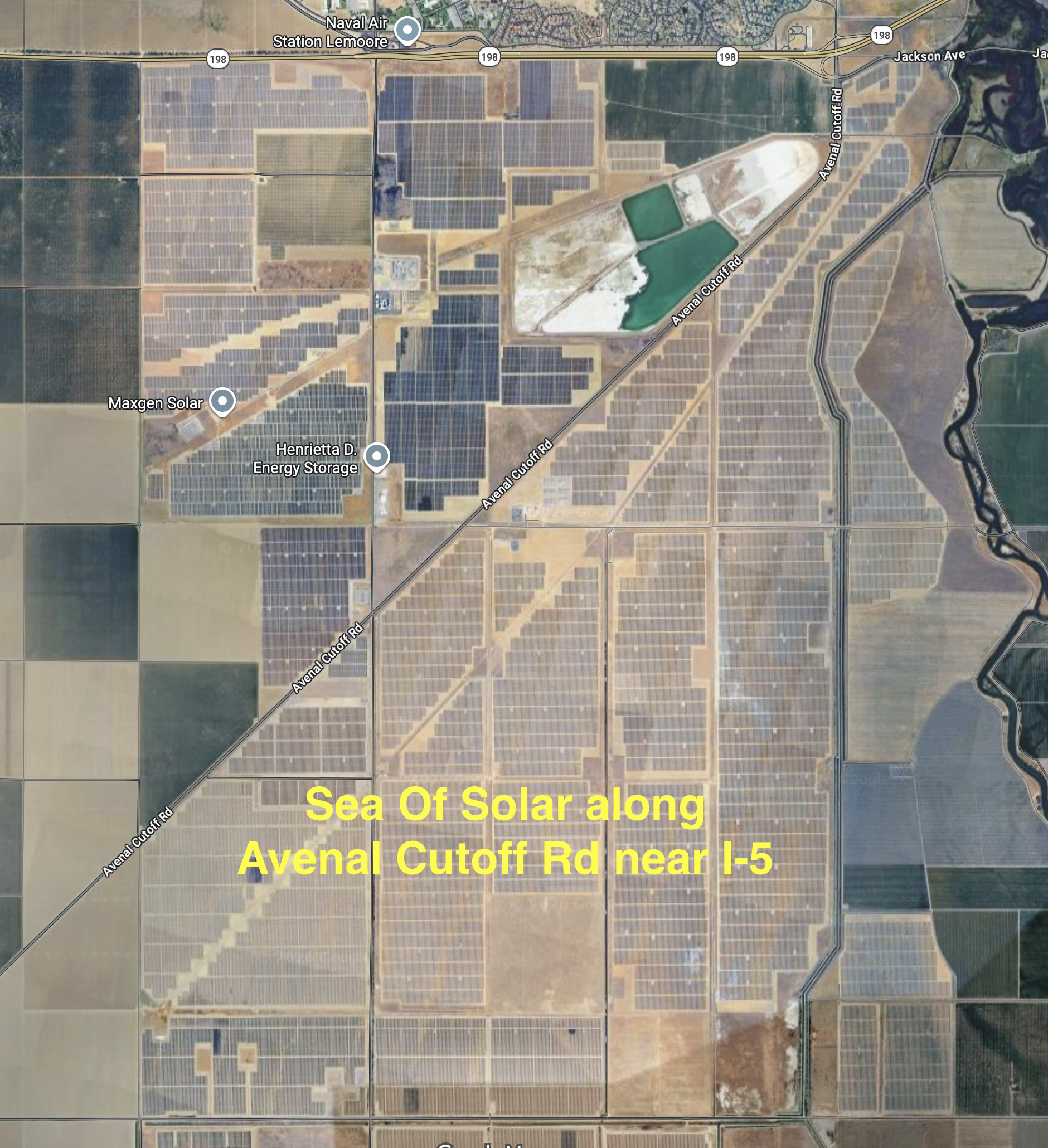
In Kings County an early adopter of the west side solar boom is Westlands Solar Park (WSP) who has been building one by one, a dozen 200MW plus solar farms in Kings County on Westlands Water District bare land just east of I-5 along the Avenal Cutoff since 2016. When the solar park is completed it is slated to spread over 20,000 acres and generate 2276MW plus battery storage.Construction is continuing on new WSP projects with a hearing at the Kings County Planning Commission this month.
Big projects in Fresno County’s westside
Just to the north where thousands of renewable megawatts are in the offing the California Energy Commission recently approved the Darden Clean Energy Project on approximately 9,500 acres in western Fresno County. The project consists of a 1,150 megawatt solar photovoltaic facility with a 4,600 megawatt-hour energy storage system, a 34.5-500 kilovolt grid step-up substation, a 15-mile 500 kV generation intertie line, and a 500 kV utility switchyard. The project would interconnect to the existing Pacific Gas and Electric Company Los Banos-Midway #2 500 kV transmission line. The development will be south of the community of Cantua Creek – just east of I-5.
To be located 5 miles south of the City of San Joaquin in Fresno County, Rosemary Solar, LLC proposes to construct a 1,172 acre, 140 megawatt project and include energy storage capacity of up to approximately 140 MWac.Further along on a construction schedule is San Luis West Solar, LLC who wants to break ground in 2026 on a 125-megawatt solar facility coupled with an estimated 30 MW Battery Energy StorageSystem.The project would be located on seven parcels that total approximately 1,400 acres.
136,000 acre Valley Clean Infrastructure Plan
Fresno County supersized solar
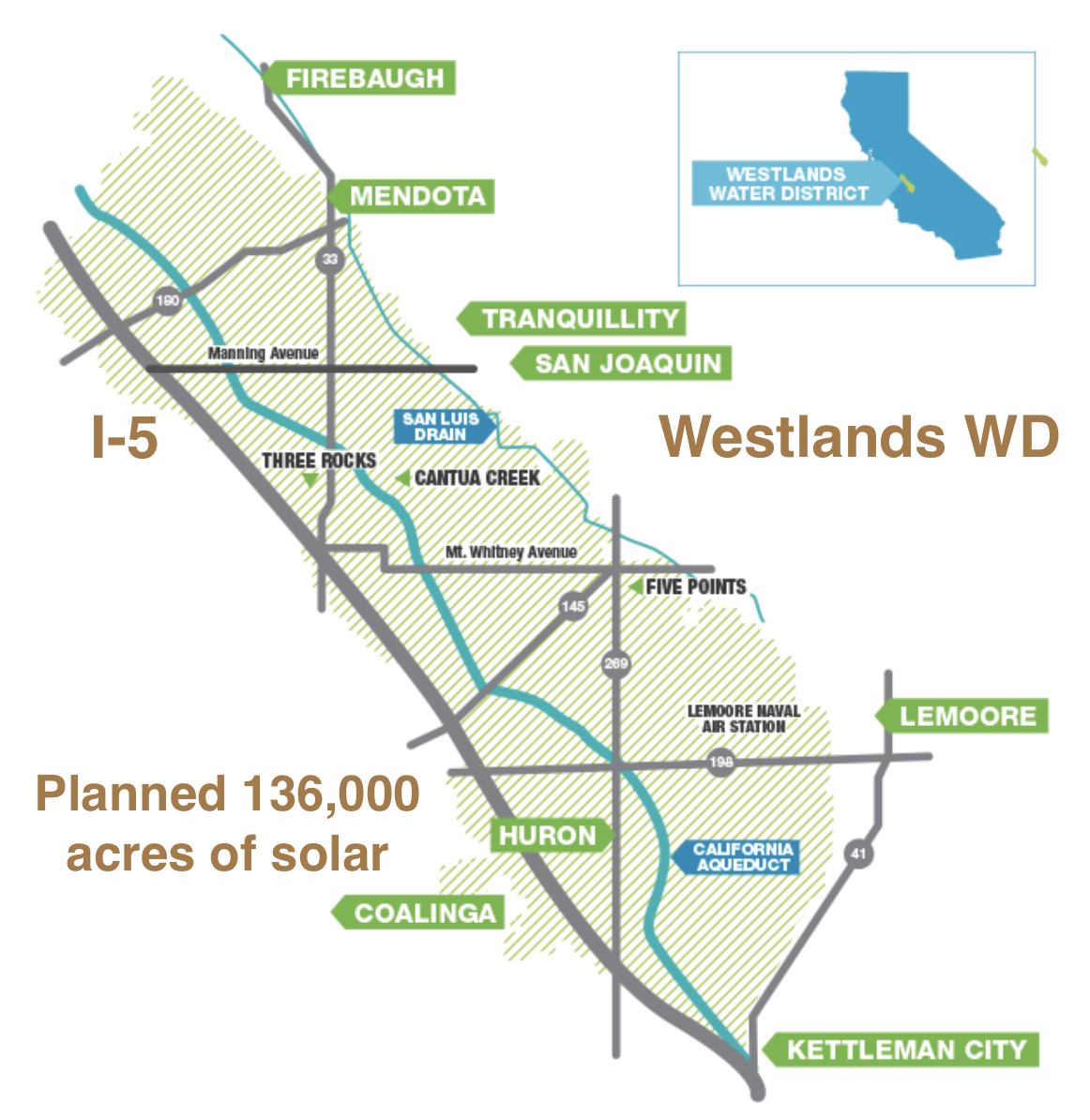
The granddaddy of the super-sized solar farms was just announced by Westlands Water District and their partner Golden State Clean Energy – based in LA – who are also the developers of Kings County’s Westlands Solar Park.The final EIR was approved in December. Called the Valley Clean Infrastructure Plan (VCIP), the 130,000 acre multi-year project in collaboration with Westlands Water District, plans to repurpose drainage-impaired and other agricultural lands within Westlands for solar generation, energy storage, and electric transmission facilities.At full build out, the projects developed under VCIP would generate 20 gigawatts (20,000MW), enough to provide up to one-sixth of California’s electricity requirements in 2035 and up to one-tenth of its requirements in 2050
.The project would be built ion 72,000 acres of district-owned land and 64,000 acres of privately-owned land.The project would also install dedicated transmission lines to connect to the grid.The plan is to erect an average of a 200MW solar farm every year for over 11 years.They want to start in the northern part of the district near Firebaugh and move south.
According to Westlands, over 242,000 acres were idled in 2025 due to unreliable water supplies, including 23,988 acres already repurposed for solar.That will now grow to an additional 136,000 acres so that 160,000 acres of solar will cover almost 70% of this fallowed ag land. Potential construction could begin as early as 2028.
Westland’s managers have taken this step not only because of the drought, reduced water deliveries and SGMA rules but because over the years more of this irrigated land is suffering from a perched water table when irrigation water accumulates above impermeable clay layers near the surface. The impact is that this shallow groundwater lacks natural drainage, leading to salt accumulation in the root zone, damaging crops. Drainage solutions are few and expensive.
There is still another huge challenge for this parched part of the state.The capacity of the westside’s California Aqueduct has been predicted to decline by 87% if subsidence was not corrected. The big canal that delivers water from the north is suffering from reduced capacity each year. Fixing it will cost the public billions. One bill in Congress would pay $1.68 billion dedicated to repairing existing canals, including $830 million for the Delta-Mendota Canal and $850 million for the San Luis Canal and California Aqueduct.
Westlands crops
As we have also pointed out in past articles, Westlands has retired more cropland once dedicated to processing tomatoes as technology has vastly improved yield. The district grew nearly 100,000 acres in 2000 but today earns more money from 40,00 acres of tomatoes. Today cotton suffers from low prices, but once grew on 180,000 acres in the district and now is just a 13,000 acre crop.
In 2000 Westlands grew about 10,000 acres of grapes, mostly wine grapes according to their published crop report. In 2014 that grew to 18,000 acres. As of 2024 wine grape acres were back down to 10,200 as district farmers fallowed unprofitable vines. Grape industry leaders have and still are arguing that growers need to pull acreage to reflect lower demand seen in the marketplace.In other words-market forces are the reason there are fewer grapes needed.
Today one of Westlands larger crop acreage is almonds at 73,000 acres. But even that is down as overplanting of this crop statewide has led to lower prices along with tariff issues and now Westlands almond acres are down from 103,000 acres seen in 2021- a drop of about one third. Some are looking for new drought tolerant crops like Agave.
California’s top exports to China fell by 64% in 2025
Again the tarff wars are taking their toll.California agricultural exports to China saw a 64% decline last year, with the top 13 commodities in total falling from an average of $1.55 billion to $554 million, according to new research published by the University of California Giannini Foundation of Agricultural Economics. The researchers found that California counties with large agricultural sectors experienced some of the biggest estimated annual export losses, including losses of roughly $246 million in Fresno County and $238 million in Kern County.
Nuts are a big Westlands crop but almost all are exported . The study found that export volumes dropped significantly in 2025 with almond shipments to China falling about 77%, while pistachio shipments declined roughly 84%.
The bottom line suggests it’s prudent to use some of this excess land to harvest the sun, never facing tariffs. _
California strawberry growers are harvesting more fruit in the first quarter of 2026 according to the California Strawberry Commission.From January through March, growers have picked 27,500 cartons compared to 17,000 at this time in 2025 and 18,000 cartons in the first 3 months of 2024.
The Santa Maria district is enjoying a particularly bountiful year- double the volume- with over 10 thousand crates picked already this year vs 4800 in the same period in 2025 and 4500 in the same three months of 2024. Of course, the busiest harvest season is ahead of us when California harvests about 240 million crates on an annual basis. The juicy berry crop is the top crop money maker for Santa Barbara, San Luis Obispo and Monterey counties.
Unseasonably warm temperatures are accelerating crop growth prompting this early start to the strawberry season, say industry sources.
One major company, California Giant Berry Farms, is forecasting “a bountiful harvest” of California strawberries, signaling a season of high quality and promotable volumes. “With production hitting its stride in key growing regions, the berry purveyor is prepared to meet surging consumer demand with a steady supply of both conventional and organic” says a news release.
“The Santa Maria region is currently delivering strong production, characterized by strawberries with great flavor and vibrant color. Retailers should prepare for a significant volume surge as the region reaches its conventional peak between Week 14 and Week 19 (April). Notably, the organic harvest in Santa Maria is forecasted to hit its peak during Weeks 16 and 20, aligning with the conventional peak.”
“”We are seeing a strong influx of volume as Santa Maria reaches its full potential,” said Brad Peterson, Director of Business Development at California Giant Berry Farms. “With production hitting its stride and yields coming in strong, we are prepared to meet large-scale demand with a very robust and consistent high-quality supply of fresh strawberries.”
In the San Joaquin Valley UC Farm Advisor Michaeil Ynaf says this season is “like three weeks ahead.”
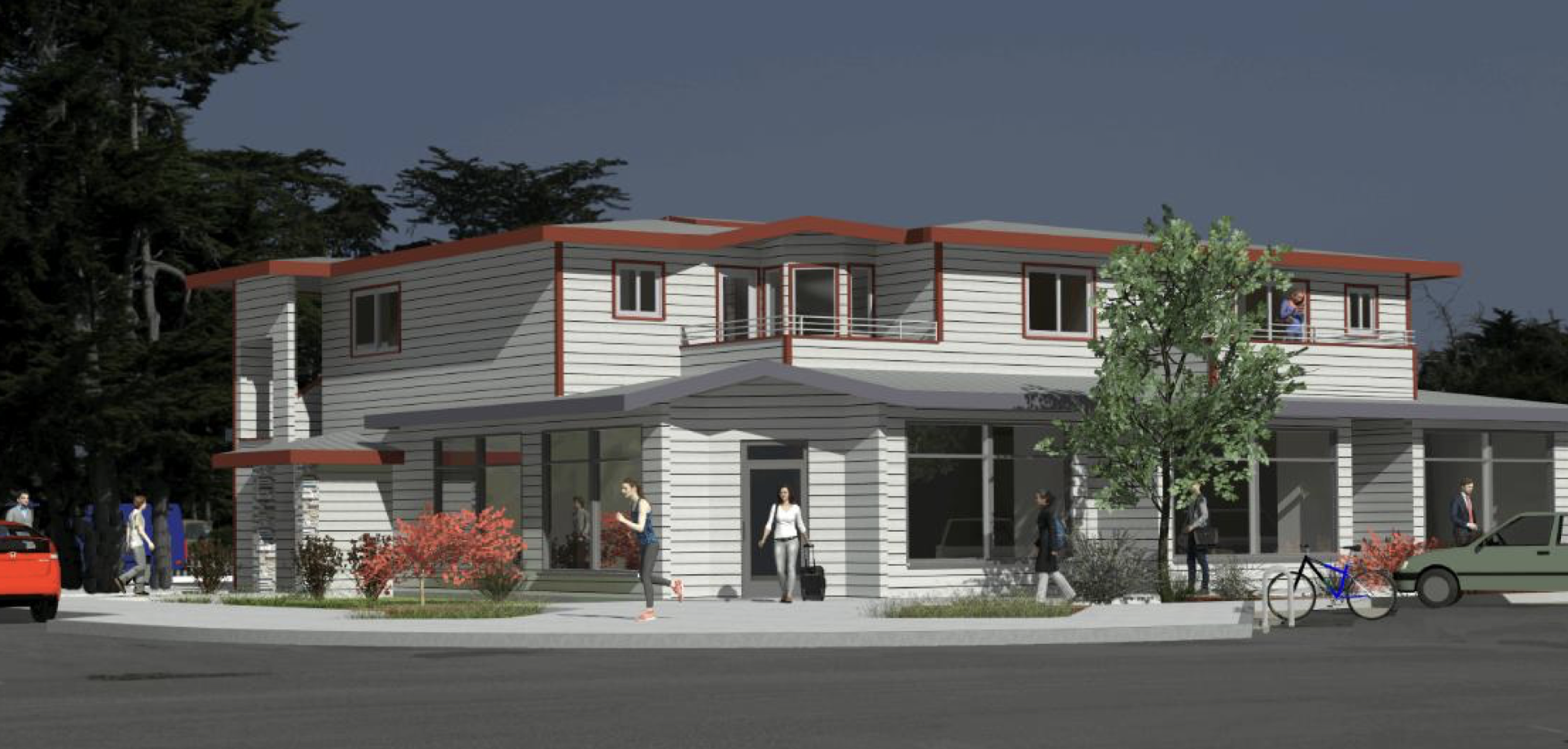
San Luis Obispo planning staff will hear a request by Alex Benson for a Minor Use Permit / Coastal Development Permit (C-DRC2024-00054) to allow phased construction of a new two-story mixed-use project consisting of approximately 3,018 square feet of ground floor commercial retail area and 1,983 square feet of second floor residential area. The residence would have 310 square feet of residential deck area, and associated site improvements.
The hearing is set for April 17 at 9AM.
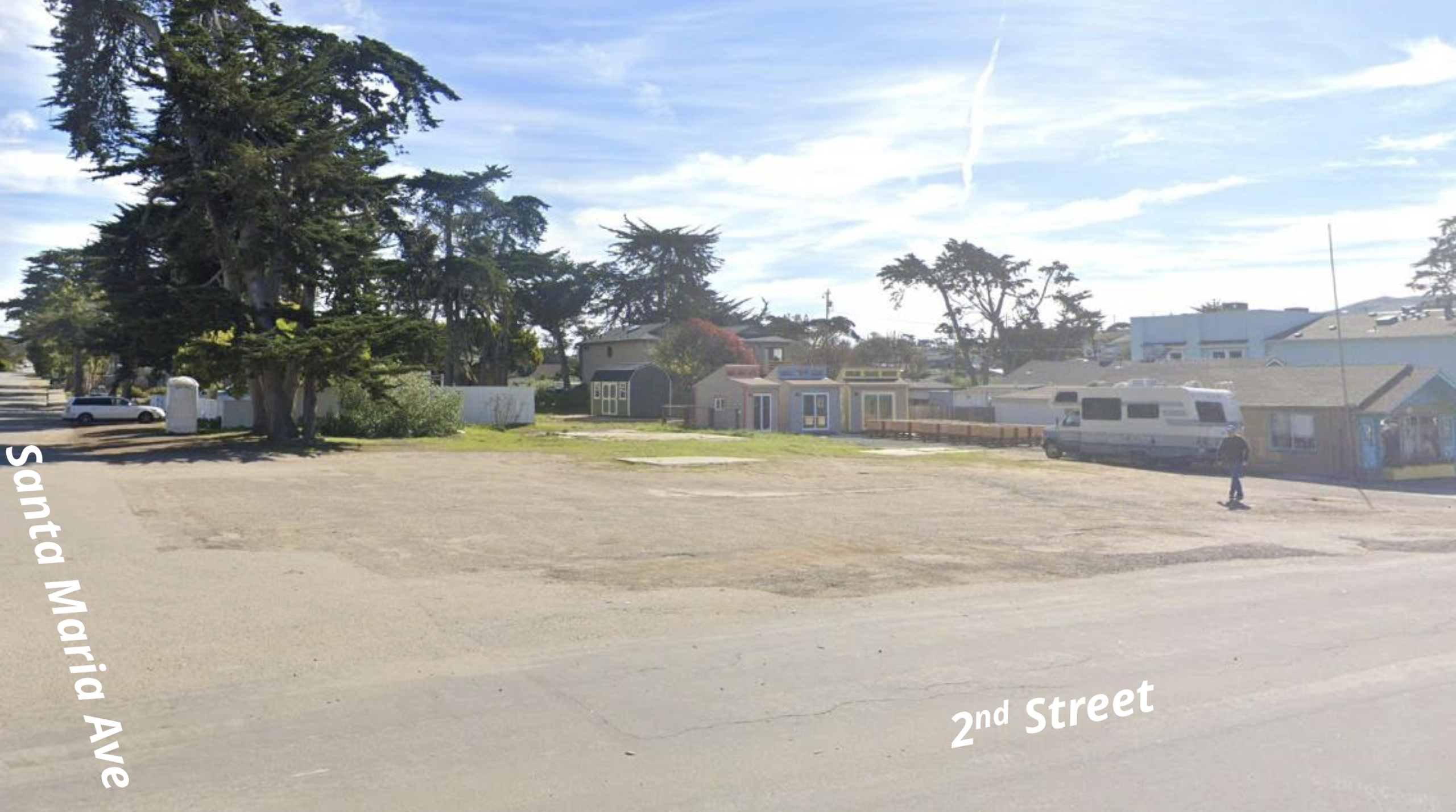
The construction site would fill in the southeast corner of 2nd St and Santa Maria in the heart of Baywood,across from the Merrimaker bar. The empty property has been used in the past for a concert stage.
The ground floor retail could be divided into 3,2 or 1 space, says staff, but would not be permitted for a restaurant.
The project will provide six on-site parking spaces, four of which are required to serve the three one-bedroom residential units, in addition to seven on-street parking spaces along the project frontages for a total of nine commercial retail parking spaces consistent with the Estero Area Plan. The project will result in disturbance of the entire 9,375 square foot vacant parcel.
The project being developed by Mr Benson is located at 1300 2nd Street (APN: 038-182-001), on the southeast corner of 2nd Street and Santa Maria Avenue, within the Commercial Retail land use category in the community of Los Osos. Mr Benson already owns several other commercial properties including two hotels on the same 2nd St block.The project was recommended for approval by LOCAC on May 22nd, 2025.
Ralphs has LOVR property in escrow for new gas station
The realtor for the sale of the former gas station on LOVR across from Starbucks says the Ralphs grocery chain has the 1.9 acre property in escrow as it works with the county to get approval to build a new 12-pump gas station after demo of the former station. Ralphs has a half dozen discount gas stations around the state.
Trump admin stiffs Los Osos pipeline funding
Intertie resilience water project still moving forward Disappointment this month as it appears $8 million in funding approved by the US Congress in 2024 continues to be blocked by the Army Corps of Engineers – one of many water related projects approved under the Biden administration that remain redlined by the Trump administration, particularly in Democratic states like California. That doesn’t mean the project to run a pipeline to Morro Bay to connect to state water is dead with the Los Osos CSD working on other funding opportunities like Prop 4 state funding that could at least provide some of it, says retiring CSD GM Ron Munds. Either way the so-called intertie project is going forward with plans later this year to install 1000 feet of the 10-inch diameter pipe in the concrete bedding of the new bridge along South Bay Blvd. Munds says another funding option is 40-year term USDA loans that carry a very low interest rate. In the meantime, he is pushing to get the engineering of the 2 1/2 mile pipeline at least to the 30% level by the end of May.
DESAL discussion set for April 20
Munds adds that another strategy to provide some cushion to our dependence on groundwater is to use the same pipeline long term to bring in desalinated water from a possible plant off the Morro Bay coast in the future.Such a plant could offer an alternative drinking supply to a number of nearby communities that could be connected by pipeline. A hearing on just such an idea will be held April 20 at the Morro Bay Community Center at 6 PM. A County study suggests the Morro Bay location could meter out 6800 to 8,000acre feet per year of drinking water from the ocean that could be shared among a number of local towns (see above). Los Osos uses about 1 thousand acre/ft a year, but a smaller supplement to our groundwater would be welcome. The meeting wont go into alternate technologies to deliver potable water from the sea including OceanWell, based in LA who has a pilot project off the coast of Malibu and SeaWell, based in Santa Barbara, both new smaller scale but environmentally safe technologies compared to legacy technologies.
The Los Osos Community Services District is expected to appoint Greg Kwolek the new General Manager for the Los Osos Community Service District replacing Ron Munds who is retiring. Greg will begin work in Los Osos May 18 states Munds.
Munds says he will “stick around” for a matter of months adding he already knows and has worked with Kwolek who lives with his young family in Los Osos. Kwolek is the current Public Works Director at the City of Morro Bay, a position he has held since 2021.
According to his bio posted online, Kwolek served as Division Manager for the City of Pasadena, where he was responsible for critical maintenance projects for the community while also building job skills for unemployed and under-skilled residents. Greg served LA County as the Small Business Services Program Manager as well as Public Works Management Analyst for the City of La Cañada Flintridge, where he oversaw the capital budget, trails maintenance, and community right-of-way concerns. Greg holds a Bachelor of Arts in Philosophy and English from Hunter College and an MPA from USC.
Greg will be stepping into Ron Mund’s busy shoes at the Los Osos CSD, the closest thing this town of 18,000 has to a local government.
Projects on the front burner right now include the pending community referendum to buy Sunnyside School, working on engineering a pipeline connection to Morro Bay for bringing in state water and seeking funding for construction ,working with the County on a possible desalination project that could in the future deliver potable seawater over the same pipeline; Working to the Los Osos Basin Management Committee on the thorny issues of growth and seawater intrusion and continuing construction of groundwater wells, the only water source for the town for now; Then there is negotiations with CalFire to secure a new contract for fire service for the community. Busy shoes indeed.