From American Enterprise Institute Blog by Dr Mark Perry
click to enlarge
Carpe Diem
As the housing sector rebounds, lumber prices reached a 7 year high today, while homebuilder stocks hit 5 year high
Mark J. Perry | January 18, 2013, 8:00 pm
The chart above shows weekly framing lumber prices (red line), which closed today at $400 per 1,000 board feet, the highest level since September 2005, more than seven years ago. Over the last year, lumber prices have increased by 43.4%.
Meanwhile, the S&P Homebuilders ETF (blue line) closed today at 28.21, which is the highest closing price since July 2007, more than five years ago. Over the last year, the S&P Homebuilders ETF has increased by 52.7%.
Bottom Line: The chart above shows the close historical relationship between framing lumber prices and the S&P Homebuilders ETF. Now that the housing and construction sectors are rebounding, we’re also seeing that housing boom reflected in rising lumber prices.
Mark J. Perry
Dr. Mark J. Perry is a full professor of economics at the Flint campus of The University of Michigan, where he has taught undergraduate and graduate courses in economics and finance since 1996. Starting in the fall of 2009, Perry has also held a joint appointment as a scholar at The American Enterprise Institute.
Whats a good barometer for how the economy is doing? How about Hawaii travel stats dependent on visitors’ own local economies to sustain its own. So how is the global economy? Well for starters there was a 21% increase in visitors to Hawaii from developing markets around the world.
The numbers are in for 2012 and Hawaii total visitor spending was $14.3 billion and visitor arrivals the highest of any year. Growth in total visitor expenditures and arrivals in every month of the year elevated annual 2012 total visitor expenditures to a record $14.3 billion, according to preliminary statistics released by the Hawai‘i Tourism Authority.
A record 7,998,815 total visitors (+9.6%) came to the state in 2012, exceeding the previous high of 7,628,118 visitors in 2006.
For the month of December 2012, total visitor expenditures rose 14.9 percent (or +$184.6 million) to $1.4 billion, boosted by higher daily spending (+9.4% to $194 per person) and a 6.3 percent growth in total arrivals (to 733,709 visitors).
Annual 2012 Show US West Coast Travel Spending Up 12%
There were strong increases in total visitor expenditures from U.S. West (+12.2% to $4.6 billion), U.S. East (+9.9% to $3.4 billion), Japan (+21.7% to $2.6 billion), Canada (+9.8% to $995 million) and All Other markets (+50.7% to $2.6 billion).
Arrivals among the top visitor markets exceeded 2011: U.S. West (+6.7% to 3,194,975), U.S. East (+3.5% to 1,699,124), Japan (+17% to 1,452,563) and Canada (+4.3% to 498,241).
A total of 992,291 visitors arrived from developing markets, up 21.3 percent from 2011.
Total visitor expenditures and arrivals by air for the four larger Hawaiian Islands increased from 2011: O‘ahu (+18.7% to $7.4 billion; +11.1% to 4,891,540); Maui (+18.8% to $3.6 billion; +5.9% to 2,295,867); Hawai‘i Island (+17.7% to $1.7 billion; +8.8% to 1,434,271); and Kaua‘i (+20.1% to $1.4 billion; +7.3% to 1,084,868).
A total of 283,293 visitors came by cruise ship or by air to board cruise ships, up 16.1 percent compared to 2011. Visitor days for all cruise ship visitors rose 7.5 percent from the previous year.
Disney Theme Parks
California’s Disneyland attracted more visitors in 2012 as well.For the latest quarter Disney reported their parks and resorts business enjoyed the highest revenue growth at the company, rising 9% to $3.4 billion. Operating income climbed 18% to $497 million. Disney dumped $1 billion into its lagging California Adventure Park and it has paid off in higher attendance.
Small Central Coast airports like Monterey, SLO and Santa Maria can only hope that competition and mergers in the airline industry will mean their operations have a future. What is clear is that the decisions will be out of local hands.
“Airlines are in business to make money and if the can get a better return elsewhere” they don’t care so much “there might be untapped demand in our market” says San luis Obispo airport manager Richard Howell.
American Airlines new logo
SLO has been lobbying United Airlines to do a connecting flight from SLO to Denver for many months and although Howell says there is no definitive answer yet he thinks United will say no. ”They are risk adverse.”
As of now, United flies only SF and LA daily routes out of SLO. The airport’s only other flight is to Phoenix flown by US Airways. Phoenix is US airways hub but the merger with American Airlines announced in recent days may change that suggests Howell.”The new airline could see fewer flights to Phoenix and more to Dallas – that bigger American Air hub. He suspects the Tempe Arizona corporate office will be shut down and Phoenix become a a much less traveled city. Arizona press reports says one US Airways office has 750 employees.
The local Business Journal quoted Robert Mittelstaedt, dean of the W.P. Carey School of Business at Arizona State University, saying, “Phoenix is going to lose some jobs” if either merger goes through because of the HQ shift. It also would mean a significant loss of one of the Phoenix area’s largest employers and hometown corporate names. US Airways is Arizona’s 13th-largest employer. With the merger, American and USAir have created the largest US airline from the ashes of Americans filing of bankruptcy in 2011. American withdrew their flights from SLO as did Delta some years ago in those turbulent times.
How about now? Will the new American continue to service little ol’ SLO?
Howell says the West Coast fares are not as lucrative per passenger mile as other parts of the US citing a return of 11% flying out of North Dakota where there is an oil boom vs 4% here where the market is more mature and there are lots of players and mega-airports.
SLO lost seats on flights since 2007 with the coming of the great recession. In the fall of 2008, the airport experienced a 38 percent reduction in seat capacity as airlines responded to high oil prices and a poor economic climate by removing aircraft from their fleets, Howell remembers.
Looking At The Numbers
SLO flights used to attract 350,000 passengers annually but are now down to 260,000 as of 2012. Of that – a little over 100,000 flew on US Airways and rest on United. Some airlines report a pilot shortage that may contribute to tailwinds experienced by our smaller airports.
Boardings for a year period ending Sept. 30, 2012, at airports across the US were up 0.08 percent, according to the trade group Airports Council
International of North America. For small hub airports, scheduled flights are down 4.84 percent and the number of aircraft seats available is off 2.94 percent, the same Airports Council International reports.
Meanwhile airports like Santa Maria cheer the coming of new players like Allegiant announcing flights to Hawaii starting last year drawn in part by the addition of an extra 2000 ft added to the runway allowing larger planes to land. The runway is longer than either Santa Barbara or SLO.
But that decision has now been reversed.
Allegiant airlines “suspended” weekly flight to Hawaii as of December but said the flights would be resumed in March and ramped up this summer when demand would be better. But Howell says the Official Airline Guide that would typically list this summers flights by now has no flight listed from Santa Maria to Honolulu this summer. Allegiance’s website does offer flights but calls to the company for clarification were not answered due to the “high volume of calls.”
Last year when Allegiant announced the Santa Maria flights they also announced flights from Monterey to Honolulu. But that plane never took off. Total passengers through Monterey on all airlines is down slightly in the past few years – similar to SLO.
Still some newer players could make a difference as the big merge with the bigger. Frontier Air just announced they would serve the Fresno to Denver market beginning in May. Frontier also flies from Santa Barbara.
Seaport Airlines may be shopping for other cites to fly from. The airline now has a code share agreement with Alaska Airlines.
One smaller California market that seems to be recovering from the pre- 2008 slowdown is Bakersfield where in calendar year 2012 saw 271,000 passengers,best since 2008 when they had 285,000 users. The high was in 2006.
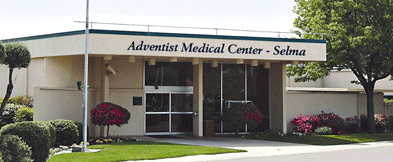
Adventist Medical Center – Selma serves southern Fresno County and its surrounding communities.The hospital plans a new 3-story, 76,400 sf, Medical Pavilion that will be attached to the North side of the existing Selma Hospital in two places creating a courtyard.
Selma City planner Bryant Hemby says the hospital is hoping for approvals of its negative declaration on the 3-story, 58 ft project at the March city planning commission. This week began a 45 day comment period on the new wing.
Hemby says Adventist plans several phases to expand the property including moving some hospital functions from off campus into the new pavilion. The approvals include the merging of several properties. Significantly,two of the three stories planned will be for lease for medical purposes.Bryant says Adventist plans a remodel of the current hospital as well.
Adventist Medical Center-Selma – part of Adventist Health’s Central Valley Network, is a 57-bed acute-care community hospital that serves 13 communities in southern Fresno County in Central California, operating as a satellite campus of Adventist Medical Center-Hanford. Services include a 24-hour emergency, birthing center with five LDRP suites, direct observation unit, surgery, laboratory, pharmacy, cardiology, diagnostic imaging and digital mammography.
The four acute-care hospitals that comprise the Central Valley Network are Adventist Medical Center-Selma (formerly known as Selma Community Hospital), Adventist Medical Center-Hanford, Adventist Medical Center-Reedley and Central Valley General Hospital. Together in 2011, these hospitals had 13,766 admissions, 3,032 deliveries, 100,414 ER visits, 728,555 outpatient visits, 19,709 home health visits and 8,493 hospice visits. The Network is staffed by 484 physicians, 2,768 employees and 167 volunteers. In addition, over $46.7 million in free and low-cost services were provided to the community.
Adventist Health completed their new hospital in Hanford in December 2010.They acquired the 49 bed Reedley hospital in November 2011.Nearby, they opened Adventist Medical Plaza – a new clinic in September of 2012.
The new Selma pavilion will have a east connection will be to the existing hospital Main entrance. The West connection will be an OSHPD permitted project consisting of approximately 2,413 sf of enclosed space and a second entry canopy. The west connection will be to the existing hospital Emergency Department entrance.
Increasing clean transportation options throughout the state, the California Energy Commission today approved $17,223,593 for a wide range of projects.
“These awards are helping to support the expansion of alternative fuels and zero-emission vehicles in California,” said Energy Commission Chair Robert B. Weisenmiller. “Additionally, the funded projects will reduce greenhouse gas emissions and other pollutants to protect our environment and improve the health of all Californians.”
The awards were made through the Commission’s Alternative and Renewable Fuel and Vehicle Technology Program, created by Assembly Bill 118. The program, which is essential to fulfilling the state’s pioneering climate-change policies, is slated to invest approximately $90 million during this fiscal year to develop new transportation technologies, as well as alternative and renewable fuels. It is paid for through surcharges on vehicle and boating registrations, and smog check and license plate fees.
These awards also assist in fulfilling Governor Brown’s executive order directing state government to support the rapid commercialization of zero-emission vehicles (ZEVs) in California, with a 2025 target of having 1.5 million ZEVs on the state’s roads. The order also requires the installation of sufficient infrastructure to support 1 million ZEVs in California by 2020.
The state’s investments in these projects are safeguarded by matching fund requirements for awardees, and by making payments on a reimbursement basis after invoices are submitted.
Central California projects include- FRESNO: Eslinger Biodiesel, Inc., will receive $6 million to build a commercial biodiesel production facility in Fresno. The first phase of this $32 million refinery is slated to be operating within a year of funding, producing 5 million gallons a year of biodiesel made from waste vegetable oils obtained from restaurants and commercial food producers, and animal fats obtained from rendering operations. Eventual production of biodiesel is expected to be 45 million gallons a year. The output will be shipped by pipeline to commercial blending facilities and is slated to be pre-sold to companies obligated to purchase carbon credit offsets. In addition to high-quality biodiesel, the plant will produce pharmaceutical and technical grade glycerin. Pipeline transport of fuel and waterless processing will result in near-zero production emissions at the facility. The new plant is located next to the Kinder Morgan terminal in Fresno. Sacramento Municipal Utility District will receive $1,819,166 to facilitate the completion of a project to demonstrate a patented process developed at the Argonne National Laboratory to optimize the production of biomethane and reduce carbon dioxide from anaerobic digestion. The project will be demonstrated at the American River Packaging organic waste recycling facility in Natomas. Paso Robles Waste & Recycle, will receive $300,000 to build a compressed natural gas (CNG) refueling station to serve a new fleet of CNG refuse haulers, as well as providing public fueling. CNG is much less polluting than conventional diesel. More than 50,000 gallons of conventional diesel fuel will be displaced by CNG annually by the five refuse trucks that will be initially used in the project. Once completed, the project is expected to create two permanent jobs. Paso Robles is located in San Luis Obispo County.
While other local hospitals appear to be struggling financially, Kaweah Delta has reported net income for the first 7 months of their 2012 fiscal year of $12.9 million compared to a budgeted $6.1 million. Through December acute admissions were down slightly but patient revenue was up 4.6% from the same period the year before. Increases in income came from a growing network of rural clinics and other outpatient services. Cardiac cathlab services were up 8%. CEO Lindsay Mann says with these kind of results the district is hopeful they can improve their credit rating by the time they may need to borrow money for a new capital project. “We’ve got a healthy position.”
This July the district will welcome the first 12 of 76 graduate resident physicians that will practice in Tulare County over the next several years. Mann says some 500 applications and 120 interviews were held for 6 Family Medicine positions and 250 applications were received and 100 interviews will be ranked for 6 ER docs.”We are now a certified teaching hospital with boots on ground in July” says a proud Lindsay Mann.
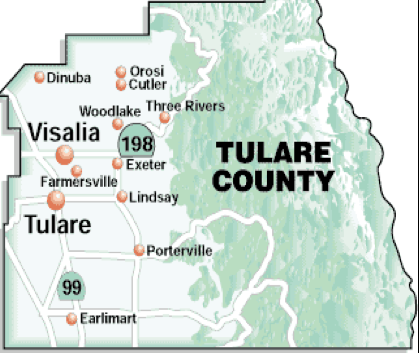
New home construction in Tulare County picked up in 2012 according to figures provided by Construction Monitor. For 2012,permits for 547 news homes were issued vs 291 for all of 2011. That remains a fraction of what was permitted annually in Tulare County a few years back. Commercial permits for all building projects tripled in value in 2012 compared to the year before with permits valued at $129.7 million in 2012 vs $40.4 million for 2011. The top home builders in the county for 2012 were Lennar with 101 units,Woodside with 71 and local firm Smee Builders with 61 homes.
Bank Merger Would Axe Northside Branch.
Fresno-based Central Valley Community Bank’s application to purchase Visalia Community Bank asks for FDIC permission to eliminate VCB’s current north side location at 2136 N Dinuba Blvd. The federal agency is receiving comment on the plan until March 11. Comments can be sent to FDIC,25 Jessie St at Ecker Square,Suite 2300 San Francisco, Ca 94105.
Thirteen Visalia Schools Go Solar
With a $4 million boost from voters who passed Measure E, Visalia Unified will install solar powered shade structures over walkways and parking lots at 13 local schools this summer. The solar panels will also generate big savings over the next 25 years says Assistant Superintendent Robert Groeber noting the project will be a “win win” for all with a nearly $2 million rebate and long term savings that could reach $22 million. Construction value on the project is $10 million.
COS Plans Summer School
Passage of Prop 30 last November and local cuts have helped College of the Sequoias to plan to restore summer school after a two year lapse says superintendent Stan Carrizosa. Some 50 classes will be offered.
Walmart Hiring 65 For New Market
Walmart is ready to unveil its third store in town, a supermarket built at the corner of Demaree and Houston that will open in mid-March says spokesperson Delia Garcia. Also, the city is near to publishing a final EIR to expand the Noble Ave Walmart to sell groceries after they were challenged over the plan in court.
Good news for the Central Valley as the US Navy has given a preliminary nod to basing the West Coast squadron of the next generation of stealth fighters at NAS Lemoore rather than El Centro near San Diego. The F-35C has been developed as the Navy’s next strike-fighter aircraft as a replacement to FA-18C Hornet.
“Beginning in 2016, seven Navy Pacific Fleet FA-18 squadrons (70 total aircraft) currently based at NAS Lemoore would progressively transition to the new F-35C aircraft, with the transition to be complete by 2028. In the 2017 timeframe, the west coast F-35C training squadron (also known as Fleet Replacement Squadron or FRS), consisting of approximately 30 aircraft, will be established to meet the requirements for training Navy pilots” says a Navy news release dated February 14.
The Navy has set March 19 for a public meeting in Lemoore to discuss the findings of the 2 year impact study.In January 2011 he Navy narrowed down its list of potential home bases from 134 military air facilities in the continental U.S. and found that Lemoore and El Centro “best meet Navy F-35C requirements.”
If the Navy had picked El Centro – locals feared the impact would hit Kings County hard.
A 2008 economic assessment study found the Lemoore base contributed $161 million in labor income annually to the local economy and counting the spinoffs – has a total economic impact of just under $1 billion every year. The total population associated with the local base that straddles Kings and Fresno Counties is around 44,000 says the study.
That will grow with the basing of the new fighters here.The Navy established the Kings County base in 1961, the newest West Coast base. NAS Lemoore now hosts the Navy’s entire west coast fighter/attack capability.
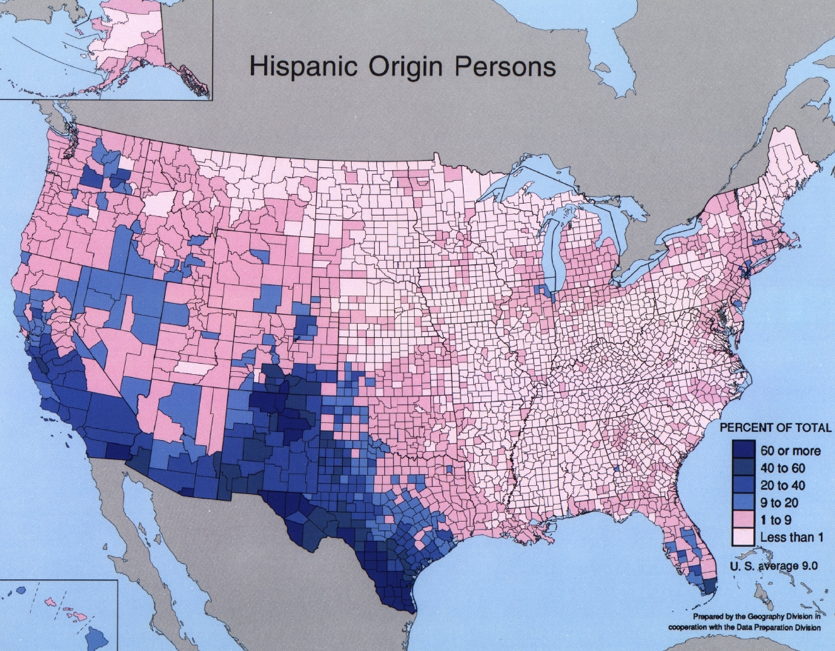
New projections by the California Department of Finance say that 2014 will be the year California will become 50% Hispanic. A number of Valley counties are there already. The growth in the Hispanic population in the south Valley including Fresno,Tulare and Kern counties – is the main reason this region will see some of the fastest growth in the state over the next 50 years.
The population projections announced last week say Fresno County will grow from 932,377 residents in 2010 to 1.6 million by 2060. Today,of the 932,377 people some 470,000 are Hispanic or about half.That percentage will rise to about 60% in 2060. Of the 1.6 million population in Fresno County in 2060 – 989,000 will be Hispanic says the state study.
In Tulare County the Hispanic majority will grow to more than two thirds, about 68% Hispanic in 2060 to 548,000 Hispanics out of a total 836,500. Tulare County is around 60% Hispanic today.
Kern County’s population will grow faster than most large metro counties in the state by 2060 says the projection with 2.05 million residents from 841,000 in 2010. Kern’s Hispanic population will be around 60% in 2060 at 1.22 million says the state. It was 49.3 % Hispanic and 38.7 percent white in 2010. Kern’s growth will outpace Fresno County – roughly matching Sacramento’s expected growth – the two bookends of the San Joaquin. Buoyed by natural resources and opportunity in oil, renewable energy, ag and merchandise distribution, the county is a beacon for investment on multiple fronts.
Mega-counties like Los Angeles is expected to grow more slowly on a percentage basis from 9.8 million to 11.5 million residents in 2060.
By 2060, California will have 13 counties of one million or more, with eight of those with 2 million
or more residents. Six of the counties with at least one million will be inland counties. The four
new counties reaching one million will be Fresno, Kern, San Joaquin, and Ventura. California’s population will cross the 50 million mark in 2049 and grow to
nearly 52.7 million by 2060 says the report.
Other points covered by the report:
– For the population as a whole, the median age will increase from 35.2 to 41.9 years old.
Whites have the highest median age in 2010 (44.5) while Asians have the highest in
2060 (47.0). Hispanics’ median age (27.2 in 2010 and 39.0 in 2060) is consistently
lower than all other race groups other than Multi-Race.
– In 2030, there will be 9.6 million Hispanics in the prime working ages of 25 to 64; Whites
will have 7.2 million and Asians 3.1 million. By 2060, Hispanics will be the largest group
in the working ages by a considerable margin: 12.1 million Hispanics to 7.4 million
Whites and 3.2 million Asians.
– Southern California will lead the State’s growth over the next 50 years (2010 to 2060),
growing by 8.3 million to 31 million in population. For this report, in the interest of
geographic simplicity, Southern California includes San Luis Obispo, Santa Barbara,
Kern, San Bernardino, Ventura, Los Angeles, Orange, Riverside, San Diego, and
Imperial counties
-The San Joaquin Valley will add 3 million new Californians, growing from 3.1 million to
6.2 million. Valley gains will be led by San Joaquin County (growing by 852,000), and
Fresno County (growing by 683,000). For the purpose of this report, the San Joaquin
Valley includes San Joaquin, Stanislaus, Merced, Madera, Fresno, Kings, and Tulare
counties. Please note, for this report Kern County was included in the Southern
California region and not the San Joaquin Valley region.
Earthworms are long revered for their beneficial role in soil fertility, but with the good comes the bad: they also increase greenhouse gas emissions from soils, according to a study published Feb. 3 in Nature Climate Change by a research team that includes a University of California, Davis, soil scientist.
The team found that earthworms do not, as was suspected, stimulate carbon sequestration in the soil, which helps to reduce greenhouse gas emissions. Instead, they actually increase greenhouse gas emissions through a variety of ways.
“There was a hypothesis that earthworms were having a positive effect on the greenhouse balance, but they don’t,” said co-author Johan Six, a plant sciences professor at UC Davis during the study who is now a professor at ETH Zurich in Switzerland. “I would never say you have to take out the earthworms because of greenhouse gases. It’s just that you cannot give them credit for reducing greenhouse gases.”
The scientific team was led by Jan Willen van Groenigen of Wageningen University in the Netherlands, and, along with UC Davis, included colleagues from Trinity College Dublin, and the International Center for Tropical Agriculture in Cali, Colombia.
The team gathered all relevant published research to date: 57 different experiments.
The research team then employed a statistical technique called meta-analysis to discern overall patterns in the data.
They found that the presence of earthworms increased nitrous oxide emissions from soil by 42 percent and carbon dioxide emissions from soil by 33 percent. But they found no indications that earthworms affect soil organic carbon stocks — the carbon stored within the soil.
According to the researchers, earthworms likely increase greenhouse gas emissions several ways: they mix organic plant residues in the soil, which may increase decomposition and carbon dioxide emissions; the earthworm gut acts as a microbial incubator, boosting the activity of nitrous oxide-producing microbes; and the earthworms, by burrowing through the soil, make it easier for greenhouse gases in the soil to escape into the atmosphere.
Small changes in soil greenhouse gas dynamics can have important repercussions for global warming, the researchers said. But lead author Ingrid Lubbers from Wageningen University said it is not yet clear to what extent the effects of earthworms on plant growth may negate earthworm-induced increases in greenhouse gas emissions.
“Our literature search also pointed out a large gap in the published studies,” Lubbers said. “We need more experiments that include growing plants, as well as more long-term studies and more field studies before we can decide to what extent global worming leads to global warming.”