New Biz Activity AROUND TULARE COUNTY

Near Goshen west of Hwy 99 Papich Construction is underway building an asphalt batch plant providing road material for the planned Hwy 99 widening says Dennis Cruce of Papich who also owns Sierra Pacific Materials who has a rock quarry near Orosi.”We will be providing local material for this project and future projects we hope”including high speed rail, he says. The plant should be operational by May located at 29779 Rd 68 – along Hwy 198.

Speaking of Tulare, a Kern County firm, Sunmet Juice is in escrow to buy the 58,000 sf, 12.7 acre – former Structures Plus property near the Tulare airport. The company makes fruit pulp purees for food processors to add as ingredients.The company declined comment.This would be the second juice company to come to a town that virtually swims in milk.

Down in Pixley,French-owned Air Liquide will be build a multi-million dollar carbon dioxide plant to capture CO2 from the ethanol making process at Calgren Renewable Fuels and turn it into a valuable product used to carbonate beverages and as a coolant in the food industry.This will be the first CO2 plant in the Valley.

They have good news in Dinuba as well with the construction under way of new 30,000 sf corporate office for Ruiz Foods replacing portable buildings at their big Alta Ave campus.”We are very pleased the Ruiz family made this commitment to keep their corporate office in Dinuba” said City Manager Ed Todd.

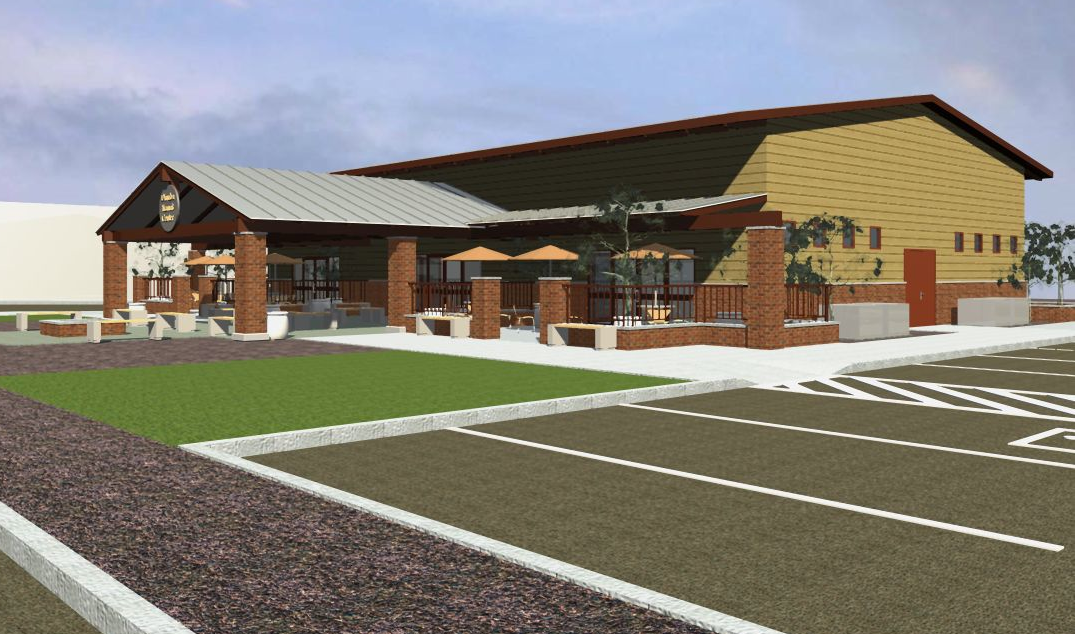
Dinuba Transit Center

Also in Dinuba – work is underway on the new million dollar city Transit Center that will enable residents to travel easily 20 to 30 miles in any direction by bus says city manager Ed Todd.”This will be  the new hub for the community.”The transit center is near a new 70-unit senior apartment complex.Todd says the transit center  that will have new city sponsored manager will be completed by the end of the year. Rendering is courtesy of 4Creeks Inc.

Back in Visalia construction work is underway at 8945 W Goshen Ave by contractors for AT&T who plans to open a 45 worker dispatch garage that will serve the region installing AT&T’s new digital TV service. The center will open in the next few months says spokesman John Britton.

More Central Valley Solar Projects In Works

Tulare County Tightening Solar Farm Locations

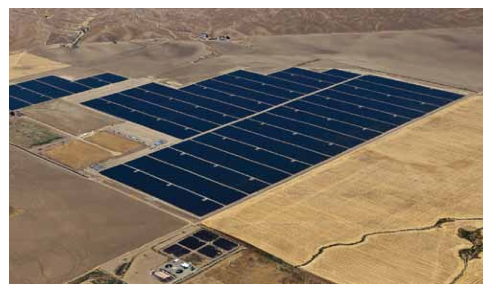
NRG’s Avenal solar facility in Kings County

More large utility-scale solar farms to be located in the Central Valley’s Tulare Lake Basin are on the drawing boards in 2013. Meanwhile, Tulare County appears to be planning to tighten rules on where developers can site new solar farms not yet approved.

In the early stage of permitting locally are a new 80MW solar farm on non-irrigated land south of Ducor in Tulare County,a 150MW solar farm along I-5 in Kings County, a 100MW project owned by SunPower near NAS Lemoore that is set to break ground in 2015 and news out of Westlands Water District that they have approved a preliminary plan to build a new energy transmission corridor through their jurisdiction located in Kings and Fresno counties. Also in an early stage – energy company NRG  plans to expand the footprint of their solar farm near Avenal that produces 45MW of power.

Solar Policy Tweak

In Tulare County where an existing pipeline of some 250MW has been approved by the county, new solar projects are likely to to face restrictions on just where on Tulare County’s farm land they can locate.  The Tulare County Board of Supervisors will take up what  the county’s solar coordinator Mike Washam calls a “compromise” recommendation February 26 offered by the county’s Ag Policy Advisory Committee. The collaborative effort has included the Tulare County Farm Bureau who have raised questions about current policy.

Washam says a key new provision would be that a solar farm could not be located on irrigated land “that has been farmed with a permanent crop in at least one of the past 10 years” although land within a city’s urban boundary might be exempted.

The intent is to push solar developers on more marginal land in the county,land that would not mean a loss of prime ag land for crops. In many cases – land owners have argued they don’t have the water supply to continue cropping on all their land and leasing some land for solar made sense.

New Projects

Regards the new projects larger than 20MW in Tulare /Kings – they include:

Tulare Solar Center:owned by Sacramento-based company Wellhead Energy, the firm filed a preliminary CEQA document this week to build a 80MW,1,142 acre solar farm on nonirrigated land south of Ducor along Hwy 65. The intent is to sell the power to a utility like SCE beginning in early 2015 says spokesman Gary Franzen. The company owns several  natural gas “peaker” power plants in Delano, San Joaquin,Huron,Firebaugh, Yuba City, Chula Vista and Escondido. The power projects are owned by Harold Dittmer.The site is close to a SCE substation.

Grow Holdings: Owner Quay Hays has downsized the original 250MW solar project on acreage along I-5 south of Kettleman City to 150MW in a new filing with  the Kings County planning department. Hays says the project would be be built on fallow,disturbed farmland along a major state power grid that runs along I-5 making it easy to hook up with the grid. The developer continues to hope to build a green community(Quay Valley) on the several thousand acre site proposed five years ago and now seeks approval to build commercial buildings at the site as a first step.

SunPower /Henrietta : Last September SunPower advised that it had signed a Power purchase Agreement with Pacific Gas and Electric (PG&E), which will see the company deploy its SunPower Oasis power plant for the 100MW Henrietta Solar Project in Kings County, California.The site,approved by Kings County, is near NAS Lemoore. “We are very pleased to be working again with PG&E to deliver cost-competitive solar power at a 100MW scale, while creating jobs and economic opportunity for the local community,” said Howard Wenger, SunPower president, regions.  PG&E estimated that the project will provide enough energy to power around 36,000 average California homes.  The company’s anticipate construction starting in 2015, with completion and commercial operation reached by late 2016.

Westlands Water District Moves Into Renewable Power Business:
Its not that unusual for a number of California water districts to be involved in the electric power business often as a means to better store and move water or tap a revenue stream from a dam.But Westlands Water District – on the parched west side of the Valley – has no dam.

What they do have is plenty of sun, hundreds of thousands of acres of tainted and unused land and a location along the main power grid that feeds electricity to much of the state.

Now some Westlands property owners and the district itself are teaming up to develop a huge solar park in Kings County, not unlike an industrial park – to attract solar farm developers. In addition, in news this past week(Feb 19), the district’s water policy committee approved a plan that would make WWD the lead agency in a plan to build a high capacity transmission corridor in coming years and are preparing an environmental notice(NOP) as the lead agency regards the big project.

The proposed “master plan” if implemented – would help steer more utility-size solar farm developers to locate in the Westlands because they could more easily ship their power north and south. The area is already home to major grid transmission lines but not enough to handle the thousands of megawatts envisioned for industrial-sized Westlands Solar Park.

Their biggest competitor in the plan? Those massive proposed solar power projects in the desert of California that could supply much of the renewable power the state needs in the future. Their biggest ally – environmental groups like the Sierra Club who worry about the impact of these sprawling projects on fragile desert habitat and the critter who live there. Instead, the Sierra Club and others  are lobbying the state and federal government to grow solar in the Central Valley – not on prime farmland but on spent farmland with no critters in the Westlands.

A study done for the Westlands Solar Park developers that include  some Westlands farmers says while desert solar PV projects might be able to deliver power 8% cheaper than a west San Joaquin Valley site – that cost advantage would be more than off set in high transmission costs because the grid infrastructure is not yet there. According to estimates prepared by PG&E, the minimal network transmission upgrades that are required to ensure deliverability of 800 MW of solar PV from Westlands Solar Park would cost a total of $70 million, whereas the cost of network transmission upgrades required to deliver power from the desert would likely run much higher. Job one for this landowner group – convince  state and federal regulators who approve where California’s renewable power for coming years will be located.

In Rural Tulare County – Dollar Stores Are Adding Up

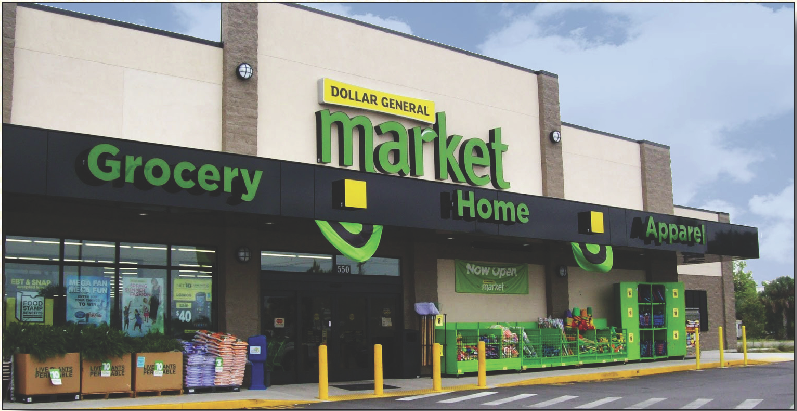
New Dollar General store being built in Porterville

Like a swarm of mini-Walmarts three national “dollar stores” continue to pop up in almost all Tulare County towns.The three largest rival retailers,Family Dollar,Dollar General and Dollar Tree appear to be in a flat out race to open the most outlets in the county and often to be first to do so – in towns never targeted by national retail chains before.

Saving a buck has never been more popular.

Next week construction of the new Family Dollar store on Ave 328 in  the farm town of Invanhoe will start from scratch says the project manager for Construction Developers Inc of Fresno, who plans to have the 8320 square ft building “completed in 90 days.”

The fast growing, publicly traded retailer already has locations open in Dinuba,Farmersville and Woodlake and 3 stores – built or on the drawing board in Tulare – as well as one in North Visalia. Last October, Family Dollar said they want to open 500 stores nationally in 2013.

This week the county’s Economic Development Manager – Mike Washam says new permits have been issued for Family Dollar stores in Cutler-Orosi on Ave 416 and in Terra Bella in southern Tulare County.

Lindsay Plans

Also this week the Lindsay City Council is holding a public hearing for a new Family Dollar store to be built at the southeast corner of Mariposa and Ave 65. And that’s not all.

Even more impressive – at the same meeting – the Lindsay council is being asked to approve an application to build a 9100sf Dollar General – Family Dollar’s big rival – at the southwest corner of Hermosa and Mirage,just down the block. The project would demo two older buildings to make room.

Woodlake/Exeter

There is also a new Dollar General store expected to break ground in Woodlake soon says Woodlake city planner Greg Collins. In addition Collins says a company representative is meeting with him this month in Exeter and wants to build a new Dollar General store in Exeter too, where is also the city planner.

Dollar General has stores ether open or ready to build in Porterville, Farmersville,Visalia,Tulare and now one being planned in previously ignored Earlimart at Ave 56 and Hwy 99, says Mike Washam, part of a small strip development in this low income town of 8500. Dollar General would be part of a new shopping center on the north end – the town’s first.

Not to be left too far behind is Dollar Tree with locations in Dinuba,Tulare, Visalia and Porterville and Farmersville (where all three rival dollar stores will go head to head).

Dollar Tree offers household goods, seasonal items and assorted knickknacks all priced at a $1 or less. The  discount chain has enjoyed  robust sales  -up 14.6% in the latest quarter or $2.23 billion.

Of course there are other players in this category including 99Cent  Only stores in Visalia,Porterville and Tulare and scores of smaller Mom & Pop stores that use the “99Cent” name too.

Analysts say instead of offering a Walmart retail model of a few big stores to attract hoards of thrifty customers from the hinterland – these pint-sized but modern formatted dollar stores are offering a downsized discount store experience close to where the shopper lives. Cash strapped shoppers looking for low prices on basic items can make fewer car trips to the larger communities on items that sometimes include groceries, particularly at larger Dollar General locations.

Consider just a few years ago there were none of these national dollar stores in Tulare County compared to an estimated 25 locations slated to be open in the next year.

Energy Briefs: Biofuels / Mighty Wind / Berry Petroleum / Dry Year

Energy Commission To Offer $5Mil Grant To Mendota Biofuel Maker

The California Energy Commission is expected to award a $5 million grant to Mendota Bioenergy,LLC at their Feb 28 meeting. The agenda items reads as follows: MENDOTA BIOENERGY, LLC. Possible approval of Grant Agreement ARV-12-033 for $4,998,399 with Mendota Bioenergy, LLC to design, construct, and operate the Advanced Biorefinery Center-Mendota Integrated Demonstration Plant. The project includes a 12-month harvest plan for 10,000 tons of energy beets and advanced enzyme and microbial conversion of the feedstock to 285,000 gallons of 200-proof advanced biofuel ethanol. The project also supports the design of a future 40 million gallons per year Advanced Biorefinery Center in Mendota, CA. The feedstock includes beets grown nearby.

Mighty Wind: 59 New Wind Projects On Line
The US Energy Information Service reports that approximately 40% of the total 2012 wind capacity additions (12,620 MW) came online in December, just before the scheduled expiration of the wind production tax credit (PTC). During December 2012, 59 new wind projects totaling 5,253 MW began commercial operation, the largest-ever single-month capacity increase for U.S. wind energy. About 50% of the total December wind capacity additions were installed in three states: Texas (1,120MW), Oklahoma (794 MW), and California (730 MW).
Wind plant developers reported throughout 2012 increasing amounts of new capacity scheduled to enter commercial operation before the end of the year. To qualify for the PTC last year, wind projects had to begin commercial operation by December 31.
On New Year’s Day, Congress enacted a one-year extension of the PTC and also relaxed the rules. Under this extension, projects that begin construction before the end of 2013 are eligible to receive a 2.2 ¢/kWh PTC for generation over a 10-year period.
For 2012 as a whole, the four leading states for wind capacity installations were California (1,789 MW), Kansas (1,447 MW), Texas (1,504 MW), and Oklahoma (1,382 MW). Wind turbines installed during 2012 were concentrated in the midwestern and southern Great Plains regions. These are regions with high-potential wind resources, low population density (thus reducing problems related to siting and permitting), and existing and planned transmission lines to carry wind power to where the electricity is needed.

Kern oil patch

Berry Petroleum With Large Stake in California – Purchased

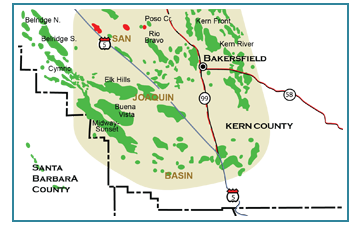
LINN Energy, LLC (Nasdaq:LINE), LinnCo, LLC (Nasdaq:LNCO) and Berry Petroleum Company (NYSE:BRY) last week announced the signing of a definitive merger agreement pursuant to which LINN and LinnCo will acquire all of Berry’s outstanding shares for total consideration of $4.3 billion, including the assumption of debt.  With the buy-out Houston based Linn will up its oil production and increase its holdings in California and the Permian Basin in western Texas increasing its proven reserves by 34 percent and its production capabilities by 30 percent. Berry’s reserves are estimated to be about 75 percent oil and liquids vs lower priced natural gas. Berry’s largest holding here is Midway-Sunset and North Midway in Kern County. About half of Berry’s capital has been invested in California where some expect a oil boom from its Monterey Shale formation. This formation is thought to hold over 400 billion barrels of oil, according to IHS Cambridge Energy Research Associates That would be close to half the conventional oil in Saudi Arabia.

Hydro Outlook Below Normal

The Northwest River Forecast Center’s most recent 2013 projections for April to September—typically the high hydro season—call for normal to below-normal water supply. This outlook is similar to last year’s, and significantly lower than 2011, which was an exceptionally high water year. Within the region, the driest forecasts relative to the norm are in the southeast, and the wettest forecasts are in the northwest. The water forecast is a key driver of EIA’s short-term energy outlook for hydropower generation in the region.
For this year’s forecast, the NWRFC shifted its reference period from 1971-2000 to 1981-2010, reflecting a drier measurement of normal. At the Dalles Dam on the Columbia River (a widely used reference point for the Pacific Northwest), the new 1981-2010 normal runoff is 101 million acre-feet, slightly lower than the 1971-2000 value of 107 million acre-feet.
In California’s Central Valley – runoff could be as low as 61% of average says the state Department Of Water Resources.  DWR’s outlook suggests that the April-July period could produce as little as 770,000 acre-feet of San Joaquin River runoff, or just 61% of average. In 2012, 558,917 acre-feet (44% of average) of runoff was generated by the San Joaquin’s melting snowpack during a very dry year. This water year DWR has dropped the southern San Joaquin Valley’s overall 2013 outlook into a “dry year” classification. After a wet start to the water year  few storms have entered California since the New Year.

Green Light For First HS Rail Segment?

rendering of bullet train along side freight train north of Fresno

The California High Speed Rail Authority is now three for three  combating lawsuits looking to derail the first 60 mile leg of the bullet train’s statewide route.

This week the Authority announced they had reached another agreement to settle a California Environmental Quality Act (CEQA) lawsuit. The four Central Valley businesses which brought
litigation, Timeless Investments, Inc., Millennium Acquisitions, Inc., Horizon Enterprises and G.P,. Everspring Alliance, L.P. have filed a dismissal of their suit which challenged the Authority’s Environmental Impact Report for the Merced to Fresno portion of the high speed rail project.

A few weeks earlier, on January 28, 2013, the Authority announced the settlement of a CEQA lawsuit brought by the City of Chowchilla.

“We greatly appreciate the good faith effort of the plaintiffs to engage in cooperative talks which brought an end to this litigation,” said Jeff
Morales, CEO of the Authority. “This second settlement is another step in moving high speed rail forward, starting construction this summer and creating thousands of jobs.”

Last November, a Sacramento judge rejected arguments for an injunction that included these two plaintiffs and the Madera County Farm Bureau to halt all planning on the project suggesting the lawsuit would likely not prevail in trial. Now this Madera FB case will go to trial in April.

If this last case is dismissed it could give the project a green light to break ground on the first leg this summer. Offers to buy property for the route are in the hands of property owners.

The the focus will then turn south to Kings County where the next segment of the route is being planned as well as litigated. A hearing on the alternative routes through Kings County is expected in April in front of the Authority board.

The board will chose between a route that would head south of Fresno on the BNSF alignment and go around Hanford either on the east or west side of town before returning to the BNSF route near Corcoran. Hanford has rejected any study of a route through their city.

While Kings officials either on the county or city level are not expected to testify which route would be better not wanting to grab what is a hot potato – Tulare County representatives are expected to plead with the board to approve an east side route that would put a station just east of Hanford and Hwy 43, closer to the population centers of Tulare County instead of a possible station site between Armona and Lemoore.

The west side route is rumored to be somewhat cheaper and it could be cheaper still without a station.In fact the CHSRA has never fully authorized what has been called out on the maps as a Kings/Tulare station. Offsetting this argument is the fact the south Valley is expected to be one of the top growth areas in California in coming decades.

Also on the agenda in the next few months – a decision on the preferred location for a heavy maintenance station where the train fleet will sleep each night – expected to employ 1500. The Fresno County location is thought to be favored.

As for the litigation on the 100 mile Fresno to Bakersfield section farmer John Tos, resident Aaron Fukuda and the Kings County Board of Supervisors  have joined in a suit claiming the rail authority’s funding plans violate Prop 1A with a trial set for a Sacramento jury May 31.

FedEx Will Double Size Of Fresno Distribution Center

FedEx site

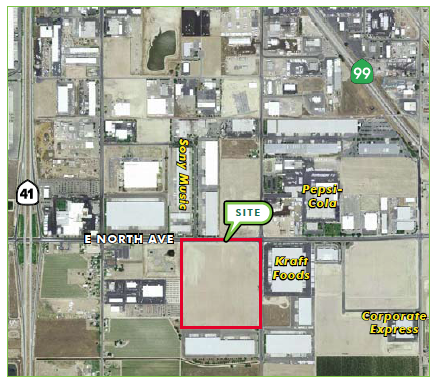
FedEx Ground will double the size of its Fresno distribution center later this year confirms the company. An affiliate firm has purchased a 20 acre parcel at  the southwest corner of East Ave and North Ave  – two blocks from Highway 99, says real estate broker Nick Audino of CB Richard Ellis.
Audino who handled the sale from Buzz Oates says escrow closed on the property in December and that FedEx will take a long term lease. Plans call for a 198,000 sf warehouse, double the size of FedEx’s current ground shipping center on Willow.
The new building is in its design phase says Audino.
FedEx spokesperson Allison Houser offered these remarks.
“FedEx Ground is building a new distribution center at the intersection of East North Avenue and South East Avenue in Fresno, Calif., that will be more than 198,000 square feet when it is completed in July 2014.
The new facility will replace an existing facility nearby, allowing us to continue to meet and exceed customer demands in the region. When the new facility opens, positions will transfer from the existing station, and we will add to the workforce as necessary to support increased demand for service in the area.
The site was chosen because of its ease of access to major highways, its proximity to customers’ distribution centers and a strong local community workforce for recruiting employees. The new facility is part of a nationwide network expansion to boost daily package volume capacity and further enhance the speed and service capabilities of the FedEx Ground network. Since 2005, the company has opened 11 new hubs featuring the most advanced material-handling systems and expanded or relocated more than 500 local facilities.

The network enhancements have resulted in accelerating ground service delivery by one day or more in more than two-thirds of the United States. FedEx Ground delivers more than 61% of packages in two days or less and more than 82% of packages in three days or less.  With these changes, FedEx Ground is faster to more overall locations and FedEx Home Delivery is faster to more residential locations than UPS.”

More new Construction
There are a few more signs of new construction plans for distribution companies in the Central Valley. Just few blocks away from the planned FedEx center – developer Leland Parnagian plans to build a $5 million,92,000 sf ‘spec building’ to be completed this summer says Parnagain.”We have pretty good interest” and expect to fill it by the time construction is complete he says. Parnagian has some 500,000sf under roof in his North Pointe business park that spans 230 acres in southwest Fresno.
FedEx has already been expanding in the Central Valley as it battles with rival UPS for business even as the US Post Office seems to be shrinking
FedEx has just completed occupancy of its new $24 million,32 acre, 200,000 sf transfer station in Kettleman City that takes in both north and south bound shipments allowing the drivers to return home instead of making the entire trip down I-5. The new complex will bring 60 to 80 joss to Kettleman City.
In some good news for breathers in the past few weeks – nine businesses in Kettleman and nearby Avenal, including the new FedEx transfer station in Kettleman City, signed a “good neighbor” agreement  to follow idling laws, work to cut air emissions with new cleaner technology and educate drivers.
“FedEx is committed to the environment and the communities we serve,” spokesman Scott Fielder said.
Big Box Center
Just a few weeks ago in nearby Hanford big box retailer Fry’s Electronics  announced they would remodel the 200,000 sf former International Paper facility in the Hanford Industrial Park to establish a mid-state repair center to service both its northern and southern California stores. The investment will bring about 180 jobs says the Kings EDC.  The hiring for the project is already underway as jobs are shifted from San Jose to Hanford where costs are lower.
Fry’s strategy to use our mid-state location to serve both southern and northern California – each 2 to 3 hours away – has been the mantra of  local economic development officials for decades that clearly makes sense to more firms who can consolidate two regional centers into  one.
Fresno, Kings and Tulare counties each use their location to snag plenty of jobs at companies who not only ship by truck or train but use the two big package express companies to reach  most of the markets in the state overnight by affordable ground shipment.
Visalia in particular has landed a dozen companies or more in the past decade who say they have located in the Visalia Industrial Park to be close to the big UPS hub down the block.
Because of the location a large number of companies can effectively ship to six states: California, Oregon, Idaho, Nevada, Utah, and Arizona within one day primarily through Visalia’s UPS and FedEx facility, the airport, trucking & by way of rail. Seizing this geographical location, Visalia has devoted more than 1,500 acres of the northwestern portion of the city to support industrial growth and employment says a city report.
UPS has been making a splash recently announcing the start-up of 100 clean air delivery vehicles for use in the Central Valley including Fresno.The electric trucks are made in Stockton.

Greener Pastures For BioFuel

Ethanol Makers Want Sorghum As Feedstock,Look To Capture More Co-Products

Aemetis ethanol plant in Keyes 

Looking to wean themselves from corn, California’s ethanol makers are gearing up to use more grain sorghum to make low carbon biofuel and get paid more handsomely for it. Also, looking for profitability – a number of the ethanol companies are adding on-site production plants to capture more co-products that are part of the ethanol distilling process.
On January 15 biofuel company Aemetis idled its 60 million gallon plant near Modesto joining scores of ethanol plants in the Midwest who have shut down at least for a period because of the high price of corn.The industry’s trade group, the Renewable Fuels Association, tells the Associated Press that 20 out of 211 U.S. ethanol plants have halted production over the past 12 months  -including five in January.
But Aemetis announced hope for a greener path a few days ago  saying that it had agreed to contract with local farmers to plant seed sold  by Chicago-based Chromatin for 30,000 acres of hybrid grain sorghum to be used to make ethanol starting this summer.
In a second major announcement February 18 Chromatin and Pacific Ethanol announced a similar agreement to contract with local farmers to plant 30,000 acres of sorghum near their Stockton plant.
“As the benefits of sorghum become more widely known, especially its resiliency, flexibility and its affordability compared to corn, we are optimistic that it will become the feedstock of choice in ethanol production” says Chromatin Chief Executive Officer Daphne Preuss.
“We are pleased to extend our collaboration with Pacific Ethanol, which previously confirmed that locally-grown sorghum is well-suited to ethanol production. We also welcome the opportunity to provide crop producers in California with a new market for their products by providing sorghum feedstocks that serve as an economical and energy efficient source of biofuel.”
“We have taken initiatives to diversify our feedstock base and further reduce the carbon profile of our ethanol. Our agreement with Chromatin represents one of these important initiatives and will help California farmers to produce sorghum for production of low carbon ethanol and high value animal feed,” said Neil Koehler, CEO of Pacific Ethanol.
Pacific Ethanol and Aemetis are not alone.
Tulare County’s Calgren Renewable Fuels has contracted for about 10,000 acres of sorghum this fall and 30,000 acres over multiple years  to decrease the train loads of corn shipped in from the Midwest this year and after says Lyle Schlyer president of Calgren. Chromatin is the seed supplier as well. Calgren did a test run to make ethanol from  sorghum last year that worked out fine says Schlyer.
Air Liquide Plant
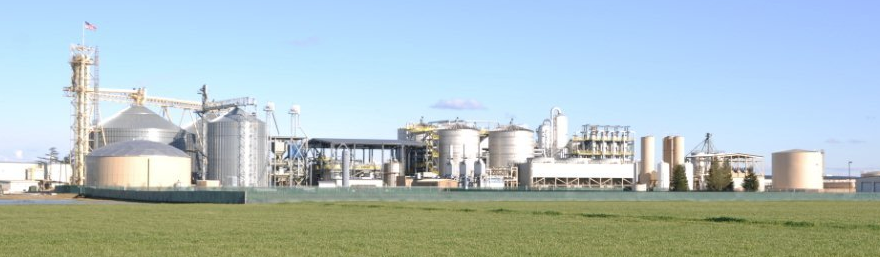
Also in Pixley Calgren has contracted with industrial gas provider Air Liquide to build a multi-million dollar CO2 plant that will help Calgren to demonstrate that it it has captured CO2 emissions that would otherwise contribute to global warming.Carbon dioxide is part of the  fermentation process and all California industry is now mandated to cut  CO2 emissions or pay into a cap and trade program. With the new plant in place the carbon dioxide is cleaned of any residual alcohol, compressed, and sold to other industries for carbonate beverages, or as a coolant in the food industry to name a few uses. Calgren’s neighbor California Dairies uses CO2 as a coolant. The rule of thumb is one pound of CO2 for every pound of produced ethanol (6.5 pounds per gallon).Schyler says the Pixley facility will be the first CO2 plant in the valley.  French-owned Air Liquide who helped build the Calgren plant has said they expect to issue a press release soon on the project
Pacific Ethanol is also adding a corn oil extraction plant at their Stockton facility looking for more ways to boost their income.Corn oil is already captured at the Pixley Calgren plant.Of course the most important co-product from California ethanol plants is wet distillers grain used to feed millions of nearby cows
Advanced Fuel
Shifting some ethanol production from corn to sorghum will please livestock critics of  ethanol in California who have done a full court press both in the state and nationally to try to defund all corn ethnaol incentives that they say have helped drive up their feed costs.
With the agreement of the EPA grain sorghum as a substitute will qualify as an ”advanced biofuel” with half the lifecycle greenhouse-gas emissions of gasoline. U.S. gasoline and diesel producers are mandated to blend 2.75 billion gallons of advanced biofuels with their products in 2013 along with the 16.6 billion-gallons of biofuel that are corn-based.
Chromatin is currently working with California growers who are attracted to sorghum as a grain source because it is easy to grow, uses less fertilizer and water than corn and is tolerant to both heat and drought conditions. It is also an effective double crop alternative behind wheat or in rotation with cotton and vegetable crops. In addition, the residue from the harvest of sorghum grain can be used as high quality animal feed.
In the south Valley sorghum is being planted on more marginal lands with little or no irrigation but its success  will depend on rainfall.
Ethanol plants in California have been seeking alternative crops to corn to reduce feedstock costs, to improve their carbon footprint and to source feedstock from locally grown energy-efficient crops. California-grown sorghum has proven to be cost effective and energy efficient, and using sorghum grain enables ethanol producers to qualify as Advanced Bio-fuel Producers and become eligible for financial incentives.
Just having their feedstock grown locally instead of sent by diesel powered unit trains across the country will help California ethanol makers show a greener footprint.That in turn will translate  into preferred sales in California in coming years according to new state rules.
Advocates say sorghum uses from a third to half the water of corn, needs less nitrogen to produce the same yield, and has greater salt tolerance.
Sorghum has not been a big crop in California with much larger plantings in Texas and Oklahoma. Just 45,000 acres was planted in California in 2008 ,which is the latest period we have records.
Between these three ethanol makers alone, that could jump to 90,000 acres.

Water Supplies Shrink As Officials Act To Protect Fish

February 20, 2013
By Kate Campbell
Curtailed water transfers from the Sacramento-San Joaquin Delta have so far translated into an estimated loss of more than 700,000 acre-feet of water that otherwise would have been stored for future use by California farms and families. State and federal officials said last week cutting back the pumps to protect delta smelt, which in past weeks have been drawn into the water transfer equipment, underscores the need for extensive habitat improvements and a new water conveyance system around the delta.
They conceded that immediate fixes and interim measures to address the current conflict are few, although they did ease the pumping restrictions later in the week.
The U.S. Bureau of Reclamation said it is joining state agencies in discussions about potential alternatives to help simultaneously meet the needs of fish and water users during what is shaping up to be a dry year. The federal agency also re-emphasized its commitment to move forward with the Bay Delta Conservation Plan, a 50-year, multi-species habitat conservation plan.
Calling last week’s curtailment a “crisis,” officials said about 75 percent of the year’s “incidental take” of adult delta smelt allowed under the Endangered Species Act has already occurred, with nearly two months left before the period of concern for the fish ends.
“These ongoing crises will continue to reveal themselves until we fundamentally change the way we manage the delta,” Mark Cowin of the California Department of Water Resources told reporters during a media briefing last week. “We need to be looking at this (around-delta conveyance system and habitat restoration) as a long-term solution so six years from now, somebody is not looking back at today’s headlines and asking, ‘Why didn’t they do anything?'”
Because hydrologic conditions since mid-January have been dry and the water transfer pumps have been cut back, the Fresno-based Westlands Water District advised farmers on the west side of the San Joaquin Valley to anticipate no more than a 20 percent contract-water allocation for the upcoming crop season.
“This notice is not intended to suggest that a 20 percent allocation is either reasonable or acceptable,” Westlands officials said.
During the past several weeks, water from the delta originally destined for farms, homes and businesses has instead flowed to the ocean in an effort to comply with the ESA. The cutback at the pumps is intended to avoid hitting the incidental take limit for delta smelt. By last week, more than 228 adult fish had been lost. Exceeding the incidental take limit of 305 delta smelt would trigger a full shutdown of the pumps until the fish have moved to other locations.
The California Farm Water Coalition said the loss of water for storage in recent weeks represented about 13,000 lost farm jobs, $873 million in lost crop production and a potential economic loss to the state of about $2.2 billion this year.
“This redirection of water could last through March, with water losses escalating every day,” said coalition Executive Director Mike Wade. “Sadly, these regulations aren’t working to protect the fish they were intended to help. It’s time we take a sensible look at how we provide for the ecosystem while at the same time supporting California farms, jobs and people, and our nation’s food supply.”
Experts say the most recent cutbacks in water transfers from the delta to storage in San Luis Reservoir were prompted when delta smelt made an early appearance near the pumps at a traditional time of active pumping, most likely because heavy December storms sent a pulse of turbid runoff down the Sacramento River, signaling the fish to migrate for spawning.
Danny Merkley, California Farm Bureau Federation director of water resources, noted that chronic interruptions in securing water supplies are the “exact reason new and increased water storage is needed in California. Without new storage, agriculture, and California’s economy, get caught in the laws and the science.”
With warmer, more unpredictable precipitation and increasing species protections, none of which were envisioned when the Central Valley Project and State Water Project were built, Merkley said greater storage capacity would build much-needed flexibility into the water supply system.
“The dry weather we’ve had this winter shows that we cannot continue to miss out on opportunities to store water when it’s available,” he said.
(Kate Campbell is an assistant editor of Ag Alert. She may be contacted at kcampbell@cfbf.com.)

Informational Hearing on Drinking Water Set For Feb. 22 In Visalia

The Senate Environmental Quality Committee has scheduled an informational hearing on Central Valley drinking water issues on Feb. 22 in Visalia.

The hearing, titled “Achieving Clean Drinking Water in the Central Valley: An Inventory of Drinking Water Systems,” is set for 2 p.m. at the Tulare County Board of Supervisors Chamber in Visalia.

Agenda details have not yet been posted.

Troubling Honey Bee Shortage in California Almond Orchards

Feb. 8, 2013

Honey bee on almond blossom. (Photo by Kathy Keatley Garvey)

Honey bee on almond blossom. (Photo by Kathy Keatley Garvey)

DAVIS–California almond growers may not have enough honey bees to pollinate this year’s crop of   800,000 acres, says  Extension apiculturist Eric Mussen of the UC Davis Department of Entomology. He attributes the difficulty to winter losses and less populous hives.

“We need 1.6 million colonies, or two colonies per acre, and California has only about 500,000 colonies that can be used for that purpose,” he said. “We need to bring in a million more colonies but due to the winter losses, we may not have enough bees.”

Those winter losses–still being tabulated–and the resulting fewer bees per hive could spell trouble for almond growers, he said.

“Last year was not a good year for honey production in the United States,” Mussen said, “and it could be one of the worst honey production years in the history of nation, although it’s been pretty rough in some of the previous years. Usually when we’re short of nectar, we’re short on pollen, and honey bees need both.  So, 2012 was a bad year for bee nutrition.”

Malnutrition is one of the stressors of colony collapse disorder, the mysterious malady first noticed in the winter of 2006 that has decimated one-third of the nation’s bees every year.  Some beekeepers have reported winter losses of  90 to 100 percent.

In CCD, the adult bees abandon the hive, leaving behind the queen bee, brood and food stores. Bee scientists think CCD is caused by a multitude of factors, includes, pests, pesticides, parasites, diseases, malnutrition and stress.

“We don’t know how many more bees will be lost over the winter,” Mussen said. “We consider the winter ending when the weather warms up and the pollen is being brought into the hives.”

“Many, many colonies are not going to make it through the winter,” said Mussen, an apiculturist in the UC Davis Department of Entomology since 1976.  “We won’t have as large a bee population as in the past.”

In other words, fewer colonies will be available for the almond growers and the colonies that are available aren’t going to be as populous, he said.” Almond growers usually want at least eight frames of bees per hive,” Mussen said, “but this year they may be lucky to get six.  That’s one-third less bees per hive to pollinate the orchards.”

Mussen estimated a good solid hive with eight frames amounts to 2000 bees per frame or 16,000 bees.

Already brokers are getting calls from beekeepers saying “I can’t fulfill the contract. I’m going to be short.”

Mussen said it may all work out well in the end as “bees pollinate almonds on a community basis. The strong colonies will make up for the weak colonies. The strong colonies will clean the orchard of pollen by early afternoon and then go down the street and grab food from nearby orchards.”

San Joaquin almond orchards are already starting to bloom, “but it’s going to be late up here in the Sacramento Valley,” he said.  Kern County grows more almonds than any other county in the state.

“If we hit abnormally warm stretches that push out all the bloom at once,  that will be good,” said Mussen. “It’s likely that cross-pollination will be better if we have a steady period of warm weather, instead of a warm-cold fluctuating period.”

Although the almond growers are paying a lot of money for their pollination services –an average of $150 per hive—there’s no guarantee it will be a good nut set, Mussen warned. “If it’s too cool, fertilization may not occur.  The pollen tubes won’t grow all the way down to the base of the flower to the ovum.  The good nut set occurs within the first three days of pollination or at the most, within five days.”

On the other hand, if the weather is too hot and dry, the tissue dries out, he explained.  “So we need nice warm weather that’s not too hot or too cold to get good fertilization and nut set. It’s not always  the bees’ fault if the nuts fail to grow.”

Many beekeeping operations truck in thousands of colonies to pollinate California’s almonds. One beekeeping operation used to bring 16,000 colonies, Mussen said, “but that 16,000 could be half that this year.”  The bees are trucked here from all over the nation.

Around Feb. 14 the average almond orchard in California is in full bloom, but some orchards bloom earlier or later, depending on the cultivar and the weather.  An almond orchard blooms a total of about two weeks, he said, pointing out that “the season is short.”

“Around March 7 to the 10th is the last pollination period for almonds in California,” he said. That means that some beekeepers can do double duty with their bees , first pollinating orchards in early February and then heading off to other orchards  for the last blooms of the season.”

Almonds are California’s biggest export.  This year the National Agricultural Statistics Service is forecasting a record-breaking 2.10 billion meat pounds, valued at approximately $3 billion. Eighty-percent of the global supply of almonds is grown in California, and about 70 percent of California’s crop is marketed overseas.