Southland Begins 2013 With Sales and Price Gains Vs. Year Earlier

La Jolla, CA—Southern California logged the highest February home sales in six years last month amid relatively strong sales of mid- to high-end properties and a record share of homes sold to absentee buyers. The median sale price edged slightly lower from January but rose nearly 21 percent from a year earlier, marking the 11th straight month in which the median has risen year-over-year, a real estate information service reported.

A total of 15,945 new and resale houses and condos sold in Los Angeles, Riverside, San Diego, Ventura, San Bernardino and Orange counties last month. That was down 0.7 percent from 16,058 sales in January, and up 1.0 percent from 15,780 sales in February 2012, according to San Diego-based DataQuick.

Typically there’s not much change in the number of sales between January and February. On average, sales have risen 0.7 percent between those two months since 1988, when DataQuick’s statistics begin.

Last month’s sales were the highest for the month of February since 17,680 homes sold in February 2007, but they were 9.9 percent below the February average of 17,696 sales. The low for February sales was 10,777 in 2008, while the high was 26,587 in 2004.

“Our January and February stats certainly indicate housing remains a big target for investors. But typically those two months don’t offer much insight into how the market will behave the rest of the year. These are sales that closed in January and February, meaning many of the buyers were out home shopping during the holiday season late last year. That’s when many traditional buyers and sellers drop out of the market, leaving a relatively high concentration of very motivated market participants, especially investors,” said John Walsh, DataQuick president.

“March and April will offer a better view of how broader market trends are shaping up this year. One of the real wild cards will be how many more homes go up for sale. More people who’ve long been thinking of selling will be tempted to list their homes at today’s higher prices. Fewer people will be underwater and therefore could at least break even on a sale. Some investors who’ve held for a while will consider cashing in. A meaningful rise in the supply of homes on the market should at least tame price appreciation.”

The median price paid for all new and resale houses and condos sold in the six-county Southland was $320,000 last month, down 0.3 percent from $321,000 in January and up 20.9 percent from $264,750 in February 2012. The median has eased back slightly on a month-to-month basis since December’s $323,000 median, which was the highest since it was $330,000 in August 2008. The median’s year-over-year gains have been double-digit – between 10.8 percent and 23.5 percent – since last August.

“Most every gauge shows prices are up significantly over the past year, even after adjusting for changes in the types of homes selling, ” Walsh said. “But to keep today’s price levels in context, consider that last month’s median sale price was still around 37 percent below its early 2007 peak of $505,000, and it was about where the median was back in mid 2003.”

Around half of the median’s ups and downs the last five years can be attributed to shifts in the types of homes sold. Last month’s 20.9 percent year-over-year gain in the Southland median sale price reflects the combination of price appreciation as well as a shift toward more mid- to high-end sales in coastal markets and fewer sales, especially foreclosed properties, in inland areas.

Looking at a single sub-category to help adjust for this change in market mix: The median price paid for a 3-bedroom, 2-bathroom, 1,250-to-1,450-square-foot house built between 1950 and 1985 was $316,500 last month. That was down 0.2 percent from $317,000 in January, and up 13.4 percent from $279,000 in February 2012.

Move-up markets continued to show big sales gains from a year earlier. The number of homes sold in February for between $300,000 and $800,000 – a range that would include many first-time move-up buyers – rose 33.4 percent year-over-year. The number that sold for $500,000 or more jumped 54.0 percent from one year earlier, while sales of $800,000-plus homes increased 62.7 percent compared with February 2012.

Last month, 24.9 percent of all Southland home sales were for $500,000 or more, compared with a revised 22.2 percent in January and 17.4 percent in February 2012.

Sales continued to fall on a year-over-year basis in many lower-cost communities. The number of homes that sold below $200,000 in February fell 26.7 percent year-over-year, while sales below $300,000 dipped 15.4 percent. Sales in many affordable markets have been limited not by a lack of demand, but by a lack of inventory, caused largely by the slowdown in foreclosures and the relatively high percentage of owners who can’t afford to move because they owe more than their homes are worth.

Last month foreclosure resales – properties foreclosed on in the prior 12 months – accounted for 15.8 percent of the Southland resale market. That was down from a revised 17.2 percent the month before and down from 32.6 percent a year earlier. In recent months foreclosure resales have been at the lowest level since September 2007. In the current cycle, foreclosure resales hit a high of 56.7 percent in February 2009.

Short sales – transactions where the sale price fell short of what was owed on the property – made up an estimated 22.0 percent of Southland resales last month. That was down from an estimated 24.0 percent the month before and 26.9 percent a year earlier.

Investor and cash buying was at or near all-time highs.

Absentee buyers – mostly investors and some second-home purchasers – bought a record 31.4 percent of the Southland homes sold in February. That was up from 30.4 percent the prior month and up from 29.9 percent a year earlier. The monthly average since 2000, when the absentee data begin, is 17.9 percent. Last month’s absentee buyers paid a median $250,000, up 26.3 percent from a year earlier.

The share of homes that were flipped has risen, too: 6.9 percent of all homes sold on the open market last month had previously sold in the prior six months, up from a flipping rate of 6.6 percent in January and 3.7 percent in February 2012. (The figures exclude homes that were resold after being purchased at public foreclosure auction sales on the courthouse steps.)

Buyers paying with cash accounted for 35.6 percent of last month’s home sales, compared with 33.7 percent both the month before and a year earlier. The peak was 35.8 percent last December. Since 1988 the monthly average is 15.9 percent. Cash buyers paid a median $260,000 last month, up 23.8 percent from a year ago.

Credit conditions don’t appear to have changed much so far this year.

Jumbo loans, mortgages above the old conforming limit of $417,000, accounted for 21.0 percent of last month’s Southland purchase lending, up from 19.3 percent the prior month and 14.4 percent a year earlier. In the months leading up to the credit crunch that struck in August 2007, jumbos accounted for around 40 percent of the home loan market.

With fixed rates on 30-year loans so low, and aversion to risk in the marketplace high, the use of adjustable-rate mortgages (ARMs) remains very low in an historical context. Last month 5.6 percent of Southland home purchase loans were ARMs, the same as the prior month and down slightly from 5.8 percent a year earlier. Since 2000, a monthly average of about 33 percent of Southland purchase loans were ARMs.

Government-insured FHA loans, a popular low-down-payment choice among first-time buyers, accounted for 25.0 percent of all purchase mortgages last month. That was about the same as 25.1 percent the month before and down from 30.9 percent a year earlier. In recent months the FHA share has been the lowest since summer 2008. The decline reflects tighter FHA qualifying standards implemented in recent years as well as the difficulties first-time buyers are having competing with investors.

The most active lenders to Southern California home buyers last month were Wells Fargo with 8.7 percent of the market, Prospect Mortgage with 2.7 percent, and JP Morgan Chase with 2.5 percent. Bank of America, which had 2.2 percent of the Southern California market last month, recently announced that it was gearing up for a “new run” at the mortgage market. The bank had around 8 percent of the Southland market two years ago.

DataQuick monitors real estate activity nationwide and provides information to consumers, educational institutions, public agencies, lending institutions, title companies and industry analysts.

The typical monthly mortgage payment Southland buyers committed themselves to paying last month was $1,154, up from a $1,140 the month before and up from $998 a year earlier. Adjusted for inflation, last month’s typical payment was 51.1 percent below the typical payment in the spring of 1989, the peak of the prior real estate cycle. It was 60.0 percent below the current cycle’s peak in July 2007.

Indicators of market distress continue to move in different directions. Foreclosure activity remains far below peak levels. Financing with multiple mortgages is very low, and down payment sizes are stable, DataQuick reported.


ENERGY BEETS GET $5 MIL

SACRAMENTO – This morning at its business meeting, the California Energy Commission awarded $4,998,399 to Mendota Bioenergy, LLC.
The award will support the design, construction and operation of an advanced biorefinery demonstration plant in the Mendota area (Fresno County), where sugar beets will be used to create advanced biofuel ethanol.
“This award supporting the development of an advanced biorefinery will help to keep California as the leader in alternative fuel innovation,” said Energy Commission Chair Robert B. Weisenmiller. “Developing advanced fuels is essential to reducing greenhouse gas emissions to protect the environment and public health, and to meet the state’s climate change policies.”
The project is slated to use advanced enzyme and microbial techniques to convert 10,000 tons of sugar beets harvested throughout the year into 285,000 gallons of advanced biofuel ethanol. A demonstration plant will be built in Five Points, in the Mendota area. This project also supports the design and development of a future commercial-scale biorefinery center in Mendota, a town of less than 12,000 in western Fresno County. Eventually, the facility could produce 40 million gallons of biofuel annually.
The demonstration project is expected to create about 50 jobs, during construction and operation. The commercial biorefinery is expected to create approximately 250 direct and 50 indirect construction jobs, along with 100 long-term jobs, and 160 agricultural jobs.
The project provides an innovative use for an established local crop. Sugar beets have been grown in the area for more than 100 years, and were processed at a local Spreckels Sugar plant until it closed in 2008.
“This could be an excellent re-establishment of an old crop to a new end – to make advanced biofuels,” said Jim Tischer, project manager with Mendota Bioenergy. Tischer refers to the beets as “energy beets.”
This project is also notable for its technological and green aspects.
“This is the first energy beet project to advance to the pilot and demonstration phase in the United States,” Tischer said. With a year-round harvest schedule, the beet crop delivers ethanol yields that are greater per acre and have a lower carbon index than Brazilian sugar cane or North American corn.
Another green aspect of the biorefinery: Woody plant matter, as well as beets, will be used to produce about 15 percent of the ethanol at the Mendota plant. Also, the water in the beets will be captured during processing and recycled so that little water will be used in the plant.
The project will bring new jobs and opportunities to an area in need, and builds on the collaboration of dozens of beet farmers in the area who formed the Mendota Advanced Bioenergy Beet Cooperative after the local sugar plant closed five years ago. This effort led to the establishment of Mendota Bioenergy, LLC, in 2011.
“This is going to be a great opportunity in an area hard-hit by drought and unemployment,” said Phil Larson, a Fresno County Supervisor whose district includes Mendota. “This puts the possibility of 35,000 acres being put back in production for a crop that disappeared five years ago.”
“We’re in a high unemployment area so these jobs mean a lot,” said Mendota Mayor Robert Silva. “These folks know how to grow those beets; it’s great to see the beet industry get on its feet again.”
The award approved today is made through the Commission’s Alternative and Renewable Fuel and Vehicle Technology Program, created by Assembly Bill 118. For the current fiscal year, the program is slated to invest approximately $90 million to encourage the development and use of new technologies, and alternative and renewable fuels, to help the state meet its climate change goals. It is funded through vehicle and boat registration fees, as well as smog check and license plate fees.

USDA DECLARES KINGS DISASTER AREA DUE TO DROUGHT

The U.S. Department of Agriculture has designated Kings County in the Central Valley as a primary natural disaster area due to damages and losses caused by the drought.On Feb. 27, ten other counties in California received the same designation. Those counties are Fresno, Inyo, Kern, Lassen, Los Angeles, Modoc, Mono, Riverside, San Bernardino and Tulare.

Farmers and ranchers in counties contiguous to the primary disaster counties are also eligible for natural disaster assistance. The earlier primary disaster designation of ten counties applies to 17 additional contiguous counties.The current Kings County designation makes the following five contiguous counties also eligible: Fresno, Kern, Monterey, San Luis Obispo and Tulare.All the counties were designated natural disaster areas March 13 making all qualified farm operators in the designated areas eligible for low interest emergency loans from USDA’s Farm Service Agency, provided eligibility requirements are met.Farmers in eligible counties have eight months from the date of the declaration to apply for loans to help cover part of their actual losses. FSA will consider each loan application on its own merits, taking into account the extent of losses, security available and repayment ability. FSA has a variety of programs, in addition to the EM loan program, to help eligible farmers recover from adversity.

BIZ TRENDS / Rain / Gas / Interest Rates

Rain Next Week: Forecaster John Lindsey says Central California will get a few days of rainy weather from March 20 – 23. For March 11 the southern Sierra is only 52% of April 1 average. Temps in the 80s this week will likely cause some snowmelt in March,what little is there. Big storm would indeed be a ‘March Miracle.’

Gasoline prices are down nearly 10 cents from their high in late February says Gas Buddy. Latest numbers show an average price of $4.14 a gallon.Cheapest in Tulare is $3.83, Fresno $3.82 and in SLO the Costco is selling for $4.14.Gasoline futures in NY are down about 20 cents after rising steadily this New Year.  Back in California, diesel prices have fallen about 15 cents from late February.

interest rates spike up

Rising Interest Rates Curtail Mortgage Activity: Applications for mortgages decreased as mortgage interest rates rose to recent highs during the week ended March 8.  The Mortgage Bankers Association’s (MBA) Market Composite Index, a measure of application volume, was down 4.7 percent on a seasonally adjusted basis from the previous week and 4.0 percent on an unadjusted basis.
The Refinance Index was down 5 percent compared to the week ended March 1 and the refinance share of mortgage activity decreased to 76 percent of total applications from 77 percent, the lowest share of refinancing applications since May 2012.
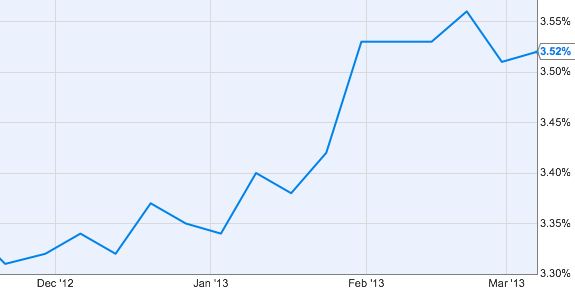
Freddie Mac’s March 7 survey found 30-year fixed-rate mortgage (FRM) averaged 3.52 percent with an average 0.7 point for the week ending March 7, 2013, up from last week when it averaged 3.51 percent. Last year at this time, the 30-year FRM averaged 3.88 percent.

“RIN Credits for Dummies” Sent To Wall Street Journal Editorial Board

(March 12, 2013) WASHINGTON — In response to the latest Wall Street Journal editorial on the federal Renewable Fuel Standard (RFS), the Advanced Ethanol Council (AEC) sent a one-pager to the Journal editorial board entitled “RIN Credits for Dummies.”

The Journal editorial board argues that higher prices for RFS “RIN compliance credits” is driving up the price of gasoline, and alleviating this government-induced burden will bring prices down. But in classic form, the Journal leaves out a few important facts (as taken from “RIN Credits for Dummies”):

  1. A RIN is produced when a gallon of renewable fuel is produced. Oil companies can then split the RIN from the gallon when they buy the gallon of renewable fuel and sell it on the open market. So, in essence, the oil companies are buying and selling RINs to themselves and then complaining about it to the Wall Street Journal.
  2. Oil companies can either buy a gallon of renewable fuel to comply with the RFS or buy a RIN credit on the open market. Oil companies have indeed bid up the price of RINs over the last few weeks, but they are doing so voluntarily to avoid the alternative of adding more ethanol to gasoline. Ethanol is 65 cents cheaper per gallon than gasoline today.
  3. The oil industry’s excuse — that it cannot blend more ethanol because of the blend wall — is smoke and mirrors. Fifteen percent ethanol blends are approved for 75 percent of today’s vehicles which together account for 85 percent of miles traveled. It’s pretty simple; the oil companies will bury the truth and gouge the consumer to avoid blending alternative fuels.
  4. The oil companies helped design and openly supported the open market RIN credit program they are now using to attack the RFS. The problem for the oil industry is the RFS and RIN credits are working to reduce our dependence on oil, break Big Oil’s monopoly on the gas pump, and create American jobs while also reducing gas prices.

In essence, the RFS is telling oil companies (because fuel markets are not free markets) to blend more of a domestically-produced, renewable and cheaper fuel. The oil industry is responding by leaning too heavily on RIN markets to avoid blending more of a domestically-produced, renewable and cheaper fuel. Instead of sniffing out the facts, The Wall Street Journal carries the oil industry’s water to the general public. The RFS is not the problem, it’s the solution.

Clues To Saving Citrus From Dreaded Disease

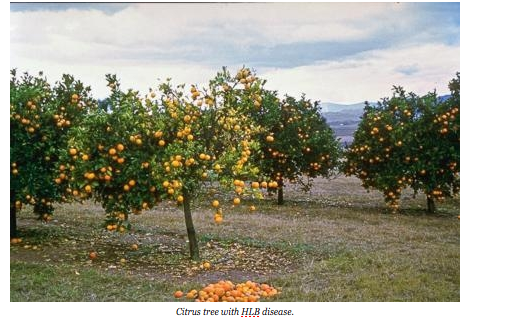
A nutrition expert at UC Davis has discovered important clues to the deadly attack strategy of a puzzling plant pathogen that has destroyed hundreds of thousands acres of citrus across the world. The novel research by Carolyn Slupsky, associate professor in the Departments of Nutrition and Food Science and Technology at UC Davis and the Agricultural Experiment Station, and her team may pave the way for safe, effective ways to treat and prevent the spread of huanglongbing disease of citrus or HLB.

“HLB is not just bad for growers and for the economy,” said Slupsky. “The loss of fresh oranges and other citrus could seriously impact our health.”

HLB is a disease caused by a microbe called Candidatus Liberibacter asiaticus and spread by the Asian citrus psyllid, a tiny insect that feeds on the leaves and stems of citrus trees. There is no cure yet for HLB, so once a tree is infected, it will slowly die. The disease has decimated citrus groves in Asia, Brazil and the Dominican Republic. Florida has lost one-third of its citrus to the disease. Both HLB and the Asian citrus psyllid have recently been spotted in California.

HLB is a silent killer – an infected tree can live for years without symptoms, allowing the pathogen to spread undetected to other trees. Symptoms emerge over time, as a tree’s fruit starts to turn green and misshapen, with a bitter, metallic taste.

Is there a way to spot HLB before visual symptoms occur? The microbe that causes HLB can sometimes be found in a leaf sample, but since the pathogen isn’t evenly distributed throughout the tree, results can be misleading.

“Just because the pathogen doesn’t show up in one leaf, that doesn’t guarantee the tree isn’t infected,” said MaryLou Polek, vice president of science and technology for the California Citrus Research Board. “So when you sample a leaf, there’s a high probability of a false negative result.”

Slupsky and Andrew Breksa, research chemist with the USDA Agricultural Research Service based in Albany, Calif., tried a different tack, searching for clues in a tree’s chemical fingerprint. They used nuclear magnetic resonance spectroscopy to study the amino acid composition of juice from three types of citrus: fruit from healthy tress, symptom-free (asymptomatic) fruit from HLB-positive trees, and fruit with symptoms from HLB-positive trees.

“We found major differences in the chemical fingerprint among healthy, asymptomatic and symptomatic fruits,” Slupsky said.

With further research, the profiles may prove to be a reliable, rapid, and early indicator of the presence of the HLB pathogen. With early detection, growers and regulators can know which trees might need to be removed before the disease spreads throughout the orchard (and beyond).

“These findings are huge for citrus growers, backyard gardeners and everyone who loves fresh citrus,” Polek said.

And there’s more. While analyzing the amino acids, Slupsky and Breksa discovered what looks like a mechanism underlying the microbe’s mode of attack.

“The pathogen responsible for HLB seems to cause havoc with a tree’s ability to defend itself from infection,” Slupsky said.

Trees need amino acids for growth, development and defense. From Slupsky and Breksa’s studies, it looks like the HLB pathogen affects the trees’ ability to create, use and recycle some of those amino acids. For example, a tree can convert the amino acid phenylalanine into cinnamic acid, a precursor to compounds important to the tree’s defense systems. But juice from oranges of HLB-positive trees had significantly higher concentrations of phenylalanine. Also, juice from oranges grown on HLB-infected trees contained a lot less of the amino acid proline, which a tree usually synthesizes when it knows something is wrong.

“It could be that the pathogen is outsmarting the tree by undermining its defenses,” Slupsky said. “That’s a spectacular discovery, because when we understand the mechanisms behind the attack, we have a chance at blocking them.  Maybe we can find ways to enhance a tree’s natural immunity.”

As tough as HLB has been on citrus in Florida, the stakes are even higher in California where so much of the world’s fresh citrus is produced.

“Florida’s citrus industry produces mostly orange juice, and they can use additives and filtration to adjust for the bitter taste of HLB-affected fruit,” Polek said. “It can be reduced to sugar water, essentially, and then built back up to taste like orange juice. We produce fresh citrus here in California, and chemistry is not an option.”

Losing fresh citrus is a real possibility if HLB spreads throughout California, and that prospect is the driving force behind Slupsky’s research.

“From a nutritional standpoint, it’s hard to beat the importance of fresh citrus,” Slupsky said. “Oranges provide energy, pectin, and a wide variety of nutrients, vitamins and minerals. They’re one of the most consumed fruits in the United States. I can’t imagine life without fresh citrus.”

Slupsky and Breksa collaborated with Thomas G. McCollum of the ARS Horticultural Research Laboratory in Fort Pierce, Florida, along with Anne Slisz and Darya Mishchuk of Slupsky’s lab. A peer-reviewed article on their findings was published in the Journal of Proteome Research in June 2012. You can access the article at http://pubs.acs.org/doi/abs/10.1021/pr300350x.

What a Difference A Year Makes – Central California Home Building & Real Estate Markets Way Up

From the Sierra to the Coast, our real estate market is on the mend with new home permits much stronger than a year ago and the value of existing homes for re-sale higher as well.

According to Construction Monitor, San Luis Obispo County reported permits  for 98 new single family homes for the first two months of 2013 compared to just 50 for the same period in 2012.

Comparing the first two months of 2013 in the Central Valley town  Visalia – the city reports home building permits jumped 125% over 2012  with building permits for new single family dwellings at 45 permits issued compared to 20 in 2012.  Total valuation was up 107%, again due to the home building bump, to $19,772,606 for the first two months of 2013.

On a broader scale for the Central Valley counties of Madera,Fresno,Kings and Tulare combined – the region reported 328 new single family home permits for Jan /Feb 2013 compared to 243 for the same period in 2012. In Kern County sfh permits jumped from 156 to 246 in Jan/Feb 2012.

In the larger existing home market  the median sales price year over year in January 2013 jumped 10.9% in Tulare County,15% in Fresno County,19.5% in Monterey and 11.7% in Santa Barbara County.SLO County numbers for January 2013 were not available through Dataquick.

Sales of new homes according to Dataquick were up double digits in most Central California  counties as well. Sales in Kings County jumped from 4 to 25 year over year in January.

California Gas Prices Finally Falling

California gasoline prices fell for the first time this year – down about 3 cents from Feb 28 says Gas Buddy. The average selling price is now $4.20 – up from $3.95 a month ago and $3.45 as of Jan 1. Prices today are still lower than a year ago by a few cents.

AAA fuel report week offers the following.

“The national average increased for 36 consecutive days from Jan. 17-Feb. 22. During this streak retail prices surged 49 cents per gallon from $3.29 to $3.78, which was just below the year-to-date high of $3.79 on Feb. 27. Since this recent peak, the national average has dropped for five straight days and declined a total of four cents.

Motorists in every state are paying more at the pump than one month ago, however many drivers are beginning to feel some welcome relief. 27 states have an average price that is cheaper than one year ago and 38 states and Washington D.C. are paying less than one week ago. With “spot” gasoline prices (gasoline sold for immediate payment and delivery) dropping dramatically across the country it is likely that retail prices will continue to fall in the coming days.”
Oil analysts seem to agree.

“The savings could widen out to 20 cents to 25 cents per gallon this month,” said OPIS analyst Tom Kloza. “The expanding gap should come as much cheaper wholesale prices work their way downstream and are compared with very steep increases that were characteristic of March 2012.”

The WTI oil price is near $90 a barrel this week,down from near $98 a month ago.
In January the US Energy Agency(EIA) predicted lower crude and gas prices this year.”EIA expects that falling crude prices will contribute to a decline in the national annual average regular gasoline retail price from $3.63 per gallon in 2012 to $3.55 per gallon in 2013 and $3.39 per gallon in 2014, about 11 cents per gallon and 4 cents per gallon higher than forecast in last month’s STEO, respectively. Diesel fuel retail prices averaged $3.97 per gallon during 2012 and are forecast to fall to $3.92 per gallon in 2013 and to $3.82 per gallon in 2014.”

Box Maker To Add 200 Jobs In Kingsburg

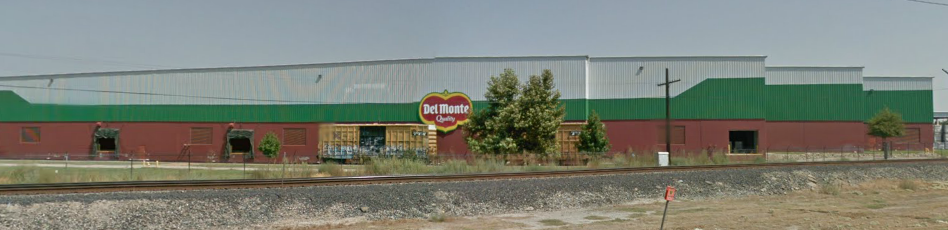
Sacramento Container Corp, manufacturer of corrugated boxes for the food and beverage industry in Northern California, has announced that they will open their second manufacturing and warehousing facility at a building formerly owned by Del Monte and used as a warehouse for their nearby cannery. The vacant 100,000 sf warehouse was sold to Sacramento Container last week.
Company president  Joseph LeRoy says they chose the Kingsburg facility due to its location to current major customers, such as Sun-Maid.  “Initially, there will be approximately 25 employees working at the facility. Over the next 24 to 36 months SCC plans to increase the number of jobs to 200.”
According to Kingsburg Mayor Chet Reilly, “I was excited to hear about Sacramento Container’s plans to expand into Kingsburg and bring with them a significant number of new jobs.  This comes on the heels of other recent announcements of new businesses opening in Kingsburg.   The location of new businesses in Kingsburg is not the result of mere luck but a concentrated effort to let companies know that Kingsburg is open for business.”
Kingsburg lost a major employer last year when Del Monte’s big peach cannery closed  along with the nearby warehouse. The plant itself on 50 acres recently sold to Grace Church of the Valley. The cannery operation used to employ over a thousand workers in peak fruit season.
Nearby, the former Silgan can making plant,also empty – has significant interest by parties, says city manager Don Pauley. Silgan’s closure laid off an additional 60 workers last year.
Now Kingsburg looks to regain some of those jobs.
Sacramento Container Corporation was founded in 1992 by Joseph LeRoy who continues to operate the company. SCC’s current operation is in Northern California at the McClellan Air Force Base with 320,000 square feet of manufacturing and warehouse space.  The expansion into Kingsburg allows SCC to better serve their current and future customers in the Fresno and Bakersfield markets.  SCC plans on manufacturing corrugated boxes in the new facility beginning approximately April 15, 2013.
According to LeRoy, “We’re the largest by volume independent corrugated manufacturer in Northern California.  What differentiates us from our competitors is our adoption of a culture that is focused on a unique approach to service our customers.  For example, our standard lead time is three working days, and we warehouse and just-in-time deliver for the majority of our customers.  We are excited   In 2012, SCC sold 1 billion 130 million square feet of corrugated boxes.  To put that into perspective, one could take a sheet of corrugated 1 foot wide and wrap it around the equator 8 times to equal the amount of corrugated the company manufactured last year.  LeRoy plans on eventually manufacturing that much corrugated in Kingsburg .
“It’s been a joy doing business in Kingsburg.  Everyone, including City Manager Don Pauley, that we’ve dealt with has been extremely helpful and made the transition relatively easy for a new business to move into the market.”  LeRoy said.

Central Coast Hotel Revenue Climbs In January

More visitors translated into higher Central Coast hotel revenue in January compared to the year before.
According to Smith Travel Research San Luis Obispo county hotels posted a 9% increase in room revenues, with occupancy up 3.1%. RevPAR was up 6.7%. SLO’s average rate was $97,08 up form $93.73 in January 2012.
In Santa Barbara county room revenue was up 6.3%,occupancy was up 2.5% and RevPAR increased 3.9% vs January 2012.The average rate was just under $130.
In Monterey County room revenue was up 11.9%,occupancy increased 6.3% and RevPAR jumped 11.2% The average rate was $127.17.
For the state as a whole, room revenue was up a strong 9.5% in January 2013 compared to January 2012.