Cal Poly Pier Will Test Wave Energy Buoy

Harnessing The Ocean In Our Backyard

December 9,2105-

With proposals to study large-scale wind and wave farms off the Central Coast lining up and with some falling by the wayside, one company will likely be first to actually test the waters here, on a much smaller scale.
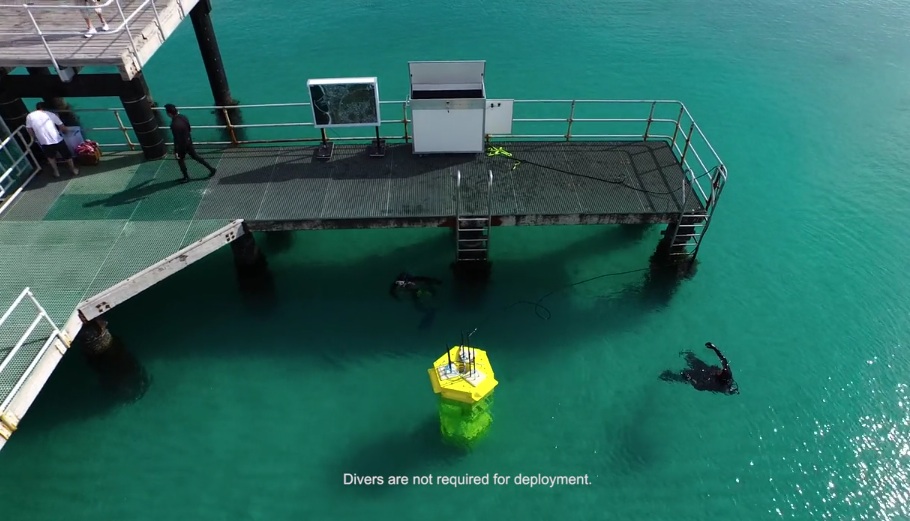
An Australian firm and Cal Poly are teaming up to test a small wave energy buoy off the Cal Poly pier in Avila Bay.The buoy could connect to a energy storage micro-grid that would help power the college’s research lab at the end of the pier, at 3000ft, the state’s longest.
Protean pic at 2.19.26 PM
The Australian company recently renamed Protean Energy plans to deploy their technology around the world and the Central Coast is their US test site.
Protean is among a handful of firms looking to harness wave or wind power off the California coast north of Point Conception where winds and waves are favorable and the potential to tap this renewable resource is greatest. Waves are caused by the wind blowing over the surface of the ocean. In many areas of the world, the wind blows with enough consistency and force to provide continuous waves along the shoreline including here. Ocean waves contain tremendous energy potential say researchers.
Of course California is a receptive market both politically and economically for renewable electric power and has the coastal substation to transmission line infrastructure to accept the power that would be connected offshore to land by cable. The on-land infrastructure is tied into the grid even as coastal power plants are being mothballed or may be. That’s because they utilize once-through cooling,now outlawed by the state due to the harm to fisheries. Likewise Diablo Canyon,the state’s only nuclear power plant, may be facing a similar fate because of the same policy as well as due to fears of earthquake faults.
The upshot,California needs more electric power in the future, much of it renewable. The state has a new 50 percent goal for green power production so they will need scores of large new new solar and wind farms. Then there are hundreds of miles of coastline to consider.
Starting Small
“This first buoy deployment is the initial stage of the program to test seaworthiness and assess the environmental impact of the wave energy convertor off the coast of California” says Bill Toman a former PG&E engineer who is President of Protean’s US division and is also part of the Cal Poly CalWave project to establish a wave energy test site off the Central Coast. Toman ran a wave energy test project in Humboldt County as well as the Wave Connect project with PG&E here a few years back.
Toman says the 3ft-square buoy in Avila Bay could be deployed by April or May.
The device’s simplicity and size give it major advantages over competitors, figures Toman ”Unlike some – our technology is small, flexible, scalable and inexpensive.” Toman says the buoy or wave energy convertor deployment should not make make waves in the fishing community or among environmentalists as other larger wind and wave projects have locally.
But what about the general public?
Wave and wind ocean devices are planned to be located several miles off shore and in general have a low profile, you can’t see them from the shore. Depending on their scale, this makes it less likely the public would object to their deployment because of fears they might ruin the view scape.
In the past few years at least three wave energy projects have said they wanted to study the idea of local deployment – later withdrawing their plan, including PG&E,Green Wave Energy and Archon Energy.
To locate in federal waters –  beginning 3 miles off the coast, companies need a permit from a federal agency Bureau of Ocean Energy Management (BOEM) who require millions of dollars of environmental studies before they get approval, among many other agencies says Toman. They also need a Federal Energy Regulatory Commission (FERC) permit to just study a project.
One of two pending projects is Morro Bay power plant owner Dynegy who has the right to inject 650MW of power from some source into the PG&E substation switchyard next to their mothballed plant. Dynegy has proposed two possible locations off the Morro Bay coast to build a 650MW wave energy park. The wave park would cost a billion dollars.
Last year the Dyngey project was opposed by the Morro Bay City Council over their sites with one council member saying “It looks to me, in the proposal … that they just ignored everything the fishermen said.”
Now a second firm, Seattle-based Trident Winds is proposing to study  a 1000 MW floating wind farm off of Morro Bay.The company hopes to install about 100 floating wind turbines, tethered to the ocean floor, some 20 miles offshore. Trident plans a public meeting from 6-8 p.m. Dec. 10 at the Veterans Memorial Building at 209 Surf St. in Morro Bay to discuss their plan.
Here too fishermen are wary although Trident has met with them and others and may relocate the planned deployment location.With large wind turbines, bird deaths are a concern. So far the City of Morro Bay remains a cautious supporter.
In the case of the Protean project, the company’s pint-size energy devices would cobbled together in a sort of platform once a full project was approved years form now.The project would be in federal waters where approvals are easier than in state waters.
This wave energy device’s scale is in marked contrast to current wave energy devices made in the 1980s and 90s that are the size of a train car or submarine. Two European firms who developed these devices are now in bankruptcy.
Toman says the Protean buoys have an 80% capacity factor, much higher efficiency than solar PV or wind power turbines. Unlike some other technologies, the buoys are not anchored to the seafloor.

Screen Shot 2015-12-08 at 6.04.46 PM
Incremental Approach
Coordinating the wave energy project with the Cal Poly CalWave program allows Protean to use the ocean up to 100ft off the Cal Poly pier to do research with few other environmental approvals needed. Starting small under the umbrella of a university has its benefits -R&D can move forward quickly. But not too quickly.
“Our approach is incremental” cautions Toman “and inclusive” noting he is consulting with stakeholder groups like the Surfrider Foundation at every stage of development.
Toman is part of the CalWave project at Cal Poly working with Sam Blakeslee who heads up CalWave. The research group expects to land a second year $1.5 million grant from the Department of Energy (DOE) to assess the feasibility of locating a National Wave Energy Test Facility offshore of California. The Central Coast is competing with a site in Oregon.
Toman is not surprisingly, an advocate for the Central Coast test site off Vandenberg pointing to multiple advantages including a ready customer at the Air Force base, good power substation infrastructure onshore and a fleet of heavy work boats stationed off Port Hueneme who are ready to maintain units at sea and are here because of the oil platform industry.
Then there is power costs.Unlike the Pacific Northwest that enjoys cheap federally produced hydropower the California electric market offers higher rates, an incentive to bring new innovative power projects to market
Toman notes that as part of this year’s DOE application for funding the CalWave project is partnering with both PG&E and the State of California in matching grants. News of final approval of the federal grant could come in the next few weeks.
Besides this project – Protean plans 30-buoy demonstration wave farm off the coast of Bunbury, Western Australia and a planned commercial pilot wave farm in the Maldives.



Tulare Co Plea For Biomass Help / Kern Crude Falls / Maricopa West Solar

Tulare County Ask Governor & Utility To Extend Biomass Contracts

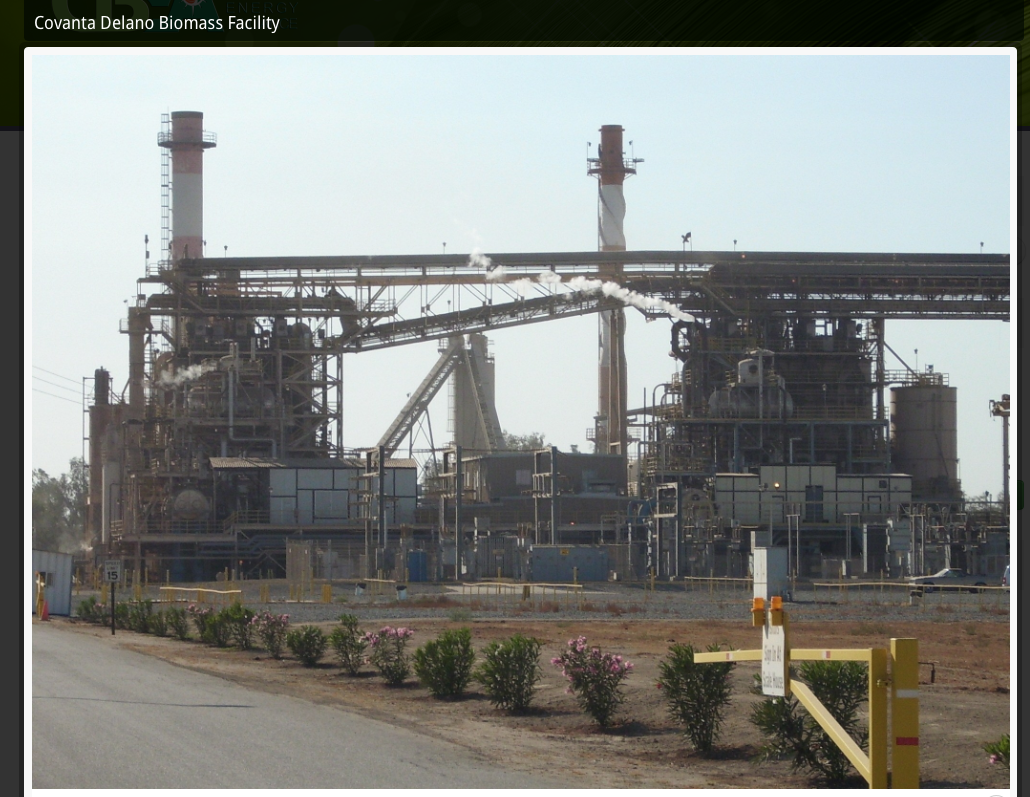
Screen Shot 2015-11-18 at 1.27.52 PMTulare County Board of supervisors is requesting San Diego Gas and Electric extend its contract with biomass plants in the Valley including Convanta in Delano who intends to close December 31. The plant generates 56.5 MW of power from ag and forest waste. In a proclamation December 8 the county is also requesting Governor Brown extend a contract with the Delano operation who burns forest waste that comes from high tree mortality due to the drought.
On December 16 the Valley Air Board is expected to give permission to a handful of growers who have no home for their high volume of  orchard waste due to the drought and give them one-time permission to burn the waste through open fields burning.

Kern Crude Falling To 2009 Levels

Kern crude as measured by Midway Sunset oil posted price should come in around $33 to 34 per barrel Tuesday December 8 as WTI crude has sunk more than 5% today. The low price of Kern crude is at 6-year low with January 2009 coming in at around $29 per barrel then.
The low price of oil comes as OPEC refuses to slow oil exports even as US producers say the too, will not stop drilling.
The falling price of California crude should nudge state gasoline prices lower over the next few weeks. Retail gas prices are already toying with the $2 level in California (one station at $2.09 today) and are averaging below $2.69 a a gallon. US gasoline prices are the lowest in 7 years.

Screen Shot 2015-08-19 at 1.40.32 PMThe EIA says this week despite record drilling reserve supplies of crude and natural gas are up around 10% in the latest survey.
Natural gas prices continue to be near $2 per million btu level.

Kern County’s economy is impacted big time by the price drop.Kern County produces 72% of California’s crude oil, and is home to the state’s five largest producing oil fields.  With a drop in oil drilling two cogen power plants in the county that provide steam for oil drilling have thrown in the towel.

A Western States Petroleum study says in California’s Central Valley, where the majority of the state’s energy production occurs, the petroleum industry supports more than 78,000 local jobs or 13 percent of the region’s entire workforce. Energy production in the region provides local and state government with $3.2 billion in tax revenue.

Maricopa West Solar Farm Near Taft Complete

E.ON Solar, a German owned utility, announced lat month the Maricopa West, a 20 MW (AC) solar project located in Kern County, has completed the construction phase and is set to become fully operational.
“The completion of Maricopa West, ahead of schedule and under budget, demonstrates the E.ON Solar team’s expertise in developing best-in-class projects, as well as our continued success in collaborating with technology, engineering and construction partners, and local, state, and federal officials,” said Steve Trenholm, CEO, E.ON Solar. “We are also proud that the construction of Maricopa West provided a boost to the Kern County economy by creating 160 jobs for electricians, iron workers, laborers and other trades.”
Maricopa West occupies land purchased by E.ON Solar within the Maricopa Sun Solar Complex, a 4,000- acre solar park near Taft, California. The complex has obtained a conditional use permit from Kern County, an incidental take permit from the California Department of Fish and Wildlife, and a habitat conservation plan under Section 10 of the Endangered Species Act from the United States Fish and Wildlife Service (USFWS). The habitat conservation plan for the Maricopa Sun solar complex is among the first of its kind granted by the USFWS.
“We worked closely with U.S. Fish and Wildlife and California Fish and Wildlife to get to the point of a shovel ready project,” said Jeff Roberts of Maricopa Sun. “We are also very grateful for the efforts of federal, state and local officials in Kern County for supporting the complex from day one. The Kern County Planning Department deserves special recognition for encouraging our project through unchartered waters.”The Maricopa West solar project will utilize single-axis tracking and consist of 89,000 photovoltaic panels.
“The future for E.ON Solar is bright, as evidenced by our successful completion of projects in California and Arizona, and our track-record of creating clean, reliable energy that doesn’t use water in the production of electricity, creates more jobs and helps to address America’s energy resource and security needs,” said Trenholm.
E.ON is one of the world’s largest investor-owned power and gas companies, with annual sales of €112 billion and more than 58,000 employees. E.ON, headquartered in Dusseldorf, Germany, plays a leading role in the development of the renewable industry worldwide and is already active in onshore and offshore wind, photovoltaic, and concentrating solar power (CSP).

Samll Wind Turbines Bright Future

December 3,2015-

Global Small Wind Turbines Installed Capacity Will Surge to 4.8 Gigawatts by 2025, says GlobalData

Screen Shot 2015-12-03 at 6.36.17 AMLONDON, UK (GlobalData), 3 December 2015 – Global cumulative installed capacity of small wind turbines will increase more than fivefold from 912.6 Megawatts in 2014 to 4.8 Gigawatts (GW) by 2025, at an impressive Compound Annual Growth Rate (CAGR) of 16.4%, according to research and consulting firm GlobalData.

The company’s latest report* states that small wind power capacity, which refers to wind turbines with capacities lower than 100 kilowatts, is expected to grow in European countries including Germany, Spain, Poland, Sweden, and Ukraine, while India and Japan will lead growth in Asia.

Small wind turbines are used to power individual homes, farms and small businesses. They are mounted on freestanding towers and can be installed on properties with as little as one acre of land, using different materials and technologies to large wind turbines, and have the advantage of not requiring huge project financing.

Harshavardhan Reddy Nagatham, GlobalData’s Analyst covering Power, comments: “Small wind turbines are indispensable, and independent of state-sponsored promotions. The end-user cost is the most crucial factor affecting market growth in both developed and developing countries.

“As energy concerns rise, the small wind turbines will emerge as a cheap and convenient solution to growing anxieties over power supply, and will therefore be in substantial demand.”

While the global market for small wind turbines is set to increase, the US market, which led the world with 37.9% of the global cumulative installed capacity in 2008, will see its share of the market shrink. By 2025, it will command only 20%, behind both China and the UK.

Nagatham explains the shift in market share: “Although the future for small wind looks promising in the US, the market faces particular challenges in the form of the economic crisis, zoning and permitting issues, low public awareness, lack of a federal net-metering program, and certification issues.

“In China, on the other hand, small wind turbines are a feasible option as the region is replete with remote areas that do not have access to the grid. As such, installing these turbines for the purpose of powering homes and businesses is more readily considered.”

GlobalData forecasts that China will lead the world in cumulative installed capacity for small wind turbines with 1.84 GW by 2025, while the UK will be second with an estimated 1 GW.

Fresno County: Solar Powered Biodiesel Plant On-Line

November 23,2015-

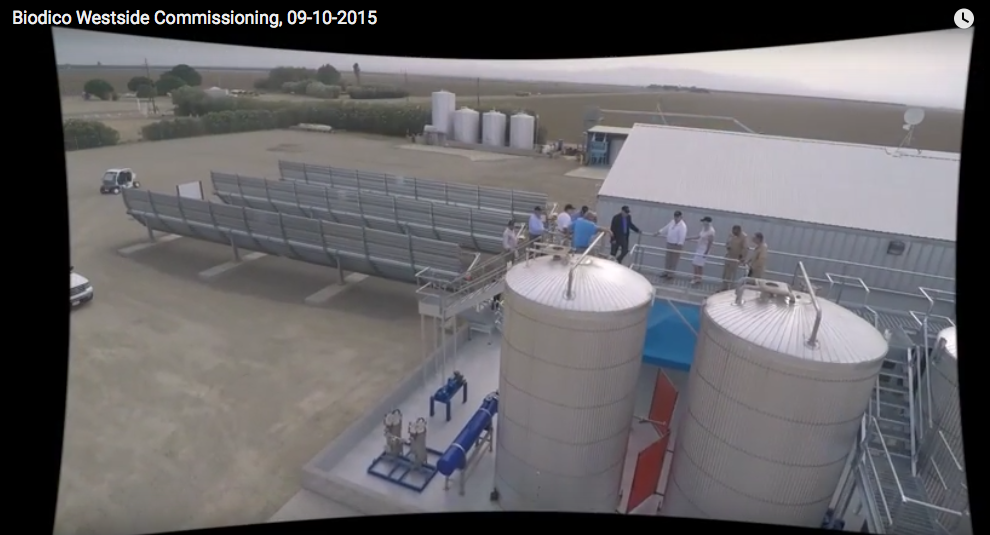
Screen Shot 2015-11-23 at 10.51.05 AMBiodico, a sustainable biofuel and bioenergy company, announced this week its Biodico Westside Facility, the world’s first biofuel production facility that operates entirely on renewable heat and power generated on-site, will go online the first week of December.
The plant located at Red Rock Ranch in Fresno County is powered by solar panels and generates 20 million gallons of biodiesel from vegetable oil, cooking oil and animal fats. The plant is the first prototype of 9 such plants in the works based on research done at an R and D facility the company owns in Ventura, funded in part by the US Navy.
The Fresno County facility is expected to employ up to 45. The biofuel produced at the plant will be sold but no buyer has been announced. The US Navy could be a logical buyer given that the military wants to run more equipment and aircraft using renewable biofuel and they funded research on this project.The plant is only a few miles from NAS Lemoore.
“Our new facility in the San Joaquin Valley produces economically and environmentally viable biobased fuel and energy for local farmers and truckers, and creates new jobs in the community,” said Biodico President and Founder, Russ Teall. “This facility demonstrates Biodico’s commitment to an integrated value chain model that includes accelerated and inexpensive construction and deployment, enhanced throughput with reduced operating costs, and increased monetization of renewable fuel and energy.”
Biodico will host a ribbon-cutting ceremony at the facility on Friday, December 4, 2015, featuring the “Sustainable Rhythm” of the Mendota High School Marching Band’s drumline.
About Biodico: Biodico is a privately held company headquartered in Ventura, Calif. that (1) builds, owns and operates sustainable biofuel and bioenergy facilities, (2) conducts research, development, and validation studies with the U.S. Navy, and (3) collaborates with strategic joint venture partners to commercialize new technology and initiatives. The company and its management have been pioneers in the industry for the past 23 years, with an emphasis on using advanced, patented and proprietary technologies for the sustainable multi-feedstock modular production of next generation biofuels and bioenergy. Additional information about Biodico can be found on the company’s website at http://www.biodico.com.

Largest Valley Biomass Plant To Shut Down


Air District Sees Crisis For Growers As Dead Trees Pile Up
                                              “This Is  A Big Deal”–Dave Warner -SJVAPCD
November 18,2015-
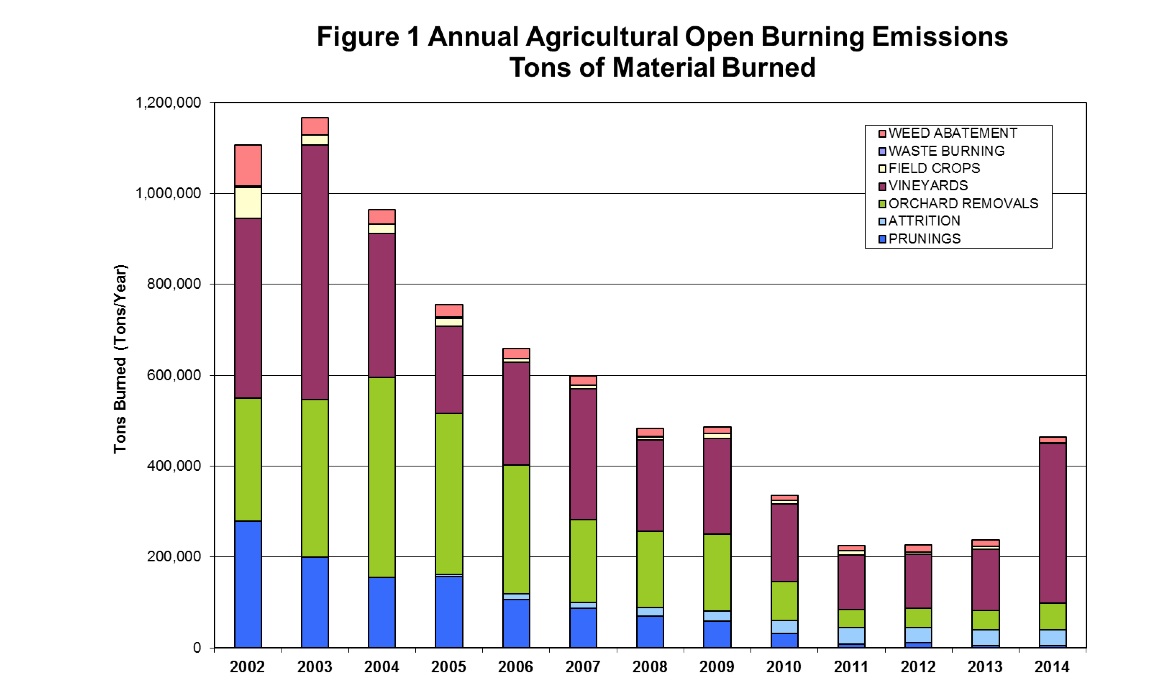
Since 2003, the Valley Air District has worked with farmers throughout the Valley and has instituted a number of measures that have resulted in an 80% reduction in the open burning of agricultural waste.But now the severe drought conditions that the San Joaquin Valley has experienced and the recent demise of the biomass power industry that provided an alternative to open burning for a significant amount of the agricultural waste generated in the Valley – has “created a severe problem that requires urgent attention by the  Air District” says a strongly worded staff report as the board of the district meets this week.
“This is a big deal” says Dave Warner, one of the Air Districts’ top staffers.
Screen Shot 2015-11-18 at 1.27.52 PMThe latest sign of trouble brewing comes as news that the Valley‘s largest biomass plant in Delano will shut down next month.
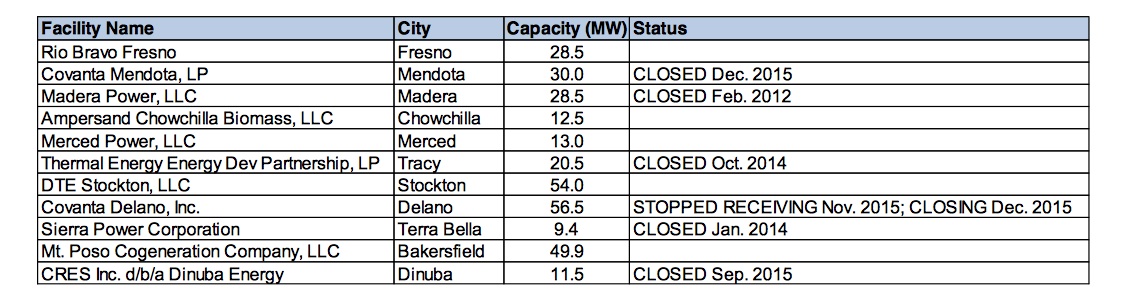
Since 2012, five Valley biomass facilities have shut down operations says the District including a plant in Dinuba in September. The Valley’s largest biomass plant – Covanta Delano has stopped receiving new material as of November 1, 2015, and has informed the District that they “plan to shut down operations at the end of the year because they have been unable to secure a viable Purchase Power Agreement.”
Going To Get Worse
The staff report says“ the District is facing numerous requests from growers to burn agricultural materials due to the lack of sufficient biomass power capacity. If the biomass power capacity does not return to previous levels, this situation will only get worse, especially given the hundreds of thousands of acres of orchards, vineyards and other agricultural crops that have been fallowed in response to the drought.”
If an adequate number of feasible alternatives to open burning are not made available, the Valley may either have to roll back the successful measures that have reduced emissions from open burning of agricultural waste “ or endure the economic devastation of Valley agriculture.”
To assure that open burning of agricultural materials does not cause any violations of health-based ambient air quality standards, open burning has only been permitted under the District’s comprehensive Smoke Management System (SMS), which uses real-time meteorological information to analyze the impact of burning on air quality and appropriately limit burn allocations by area. Under the District’s SMS program, the Valley is divided into 103 zones. The amount of burning allowed in a given zone on a specific day is based on factors such as the local meteorology, the air quality conditions, the atmospheric holding capacity, the amount of burning already approved or happening in a given area, and the potential impacts on downwind populations.
The District’s stringent residential wood burning regulation has also had a significant impact on reducing agricultural burning during the peak PM2.5 season (November through February). In addition to the phase-out implemented through the agricultural open burning program, agricultural open burning is also prohibited on fireplace curtailment days, even when air quality conditions in rural areas would support some level of agricultural burning.
Effects of the Drought on Agricultural Burning

click to enlarge
click to enlarge

Exacerbating the reduction in biomass capacity in the Valley is the increase in agricultural waste over the past few years as a result of the extreme drought emergency currently facing California and the Western United States.  There has been a major increase in agricultural burning as a result of the extreme drought conditions and the inability of agricultural operations to water their crops( see chart). To date hundreds of thousands of acres of orchards, vineyards and other agricultural crops have been fallowed in the San Joaquin Valley in response to the drought warns the report.biomass shutdown

What To Do?
The staff report will ask the board to consider these measures.
1.Allow agricultural open burning for certain crop categories through a class action stipulated order of abatement as an intermediate response to the current lack of feasible alternatives to dispose of agricultural wood waste.
The loss of these facilities has considerably reduced the available options to dispose of agricultural wood waste, especially material from large orchard removals. As a result, many agricultural growers have lost the primary economically feasible disposal options for their orchard removal material. This could not come at a worse time as there has been an increase in the number of large orchard removals over the past year due in large part to the effects of the extreme drought emergency currently facing the state.
“There are currently 11 growers who have approached the District over the past month with orchard removal material sitting in the fields and the lack of sufficient biomass capacity has left no cost-effective options to clear their parcels. Timelines associated with removing and replacing a crop are tight and extremely rigid, with crop services lined up and paid for months or even years in advance.
With the insufficient biomass capacity and inability to burn the material, these growers face losing tens or hundreds of thousands of dollars if they are not able to remove the existing materials and get their new crops planted.”
Under the abatement order rule chg\ange, the class could contain only those situations where there is not a feasible alternative to open burning and where burning the material would not cause a nuisance to neighbors. If abatement orders are pursued as a remedy, the recipient will be required to pay a penalty of at least that which they would have paid to have the material chipped, hauled and disposed at a biomass plant.
2. Send a written request to the California Public Utilities Commission to extend Power Purchase Agreements with existing biomass facilities at current pricing levels similar to what is called for by the Governor’s State of Emergency proclamation on the State’s tree mortality epidemic for existing forest bioenergy facilities receiving feedstock from high hazard zones
Some History
The biomass power industry is primarily the product of the Public Utility Regulatory Policy Act (PURPA), which was enacted in 1978 at the height of the energy crisis to promote the use of alternative nonutility power generation. Today, these facilities are fully depreciated and have lost, or are nearing the ends of, their long-term contracts to sell their power to the utilities.
Much has changed in the energy markets since PURPA was implemented. Natural gas has replaced oil for electricity generation, and supplies of natural gas have increased, driving down the wholesale cost of electricity. California has adopted a Renewable Portfolio Standard (RPS) that requires 33% of the power that is purchased by utilities be renewable. This has driven competition to fill the renewable energy needs of the state. Under the RPS, Investor Owned Utilities (IOUs) have tended to favor lower cost intermittent sources of renewable power, such as solar and wind. This has left the biomass industry in a position where the power that they produce is not desirable, since most biomass plants provide baseload power instead of intermittent power, and the current rate being paid for power does not allow them to remain viable says the report.
Given the current energy policy, the biomass industry does not compete well under the current procurement policies of the state’s IOUs. Historically, the biomass facilities have demanded 12-13 cents per kilowatt-hour, which has been necessary to retain economic viability. Pricewise, this places biomass facilities at a competitive disadvantage with other renewable fuels that can be procured at a much lower cost. Under the state’s RPS, program pricing information is confidential, however, anecdotal evidence is that currently the IOUs are purchasing power from solar and wind facilities at approximately 8 cents per kilowatt-hour.”
Another factor that negatively impacts the competitive position of biomass generated power is due to the fact that such plants provide “baseload” power. As baseload generators, biomass facilities cannot produce power that can be turned on quickly, and therefore, cannot meet the power system’s demand for “ramping services”. The demand for ramping services is compounded by continued increase in the use of wind and solar renewable sources, which is partially triggered by the state’s RPS goals.
“ If current trends persist, this issue will worsen in the future. It is estimated that by 2020, solar and wind will account for three-quarters of the state’s renewable power and 20% of the state’s total electricity supply. The net effect of this is a further transition away from baseload generators to more flexible generators that can be turned-on and turned- off when needed. Under this scenario, not only do biomass facilities have difficulty competing directly on price, but they also do not provide the type of power that is desired. While under this scenario the state can meet its renewable power goals, the potential loss of biomass plants can impact the state’s broader greenhouse gas reduction goals under AB 32 by increasing GHG emissions in sectors that currently rely on biomass plants for disposal of materials including the agricultural industry, landfills, and forests.”
The District argues that “ biomass plants provide other societal benefits that may warrant additional support. Without biomass plants, much of the progress in reducing open burning is likely to be undone.”
Reducing Wildfires
Additionally, reducing fuel loads in the forest is a primary method of controlling wild fires. The biomass industry provides an outlet for forest debris and materials from forest thinning projects.
This reduces the occurrence of catastrophic wildfires and the attendant damage to public resources, property, and air quality impacts. Finally, biomass plants burn materials that would likely be placed in landfills if the plants were no longer viable, so biomass plants play a role in meeting the state’s landfill diversion requirements.
The report concludes “As we pursue potential power pricing remedies, fairness dictates that we explore potential means of compensation for the societal benefits provided by biomass plants.”_____
3 Attachments

Energy Briefs: Mendota Biofuel In Hot Water / Gasoline Prices / Turlock Solar Deal

November 11,2105

Screen Shot 2015-11-11 at 12.42.08 PMFresno Beet Energy Project In Hot Water
MENDOTA BIOENERGY, LLC is in trouble with the California Energy Commission over grant funding it received to pioneer its beets to energy project. At the November 12 CEC meeting staff is recommending terminating their agreement with the start-up biofuel company saying the Fresno County company did not return unspent money. Mendota says in correspondence, it does not have the money to refund the state agency,”completely out of funds” say an August letter to the CEC.The state says they owe just under $1.3 million.


Screen Shot 2015-11-11 at 10.40.13 AMCalifornia Gas Prices Heading Down Again
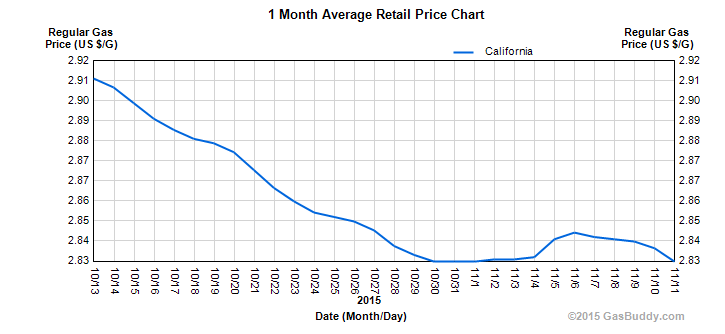
California gasoline prices are on their way down again this month after a brief nudge higher. The state average is now $2.83 compared to $2.91 a month ago. Lowest prices in our reading area are  $2.45 at the Visalia Costco and $2.79 at the SLO Costco.

Turlock Irrigation District Enters Power Purchase Agreement with SunPower

TURLOCK and SAN JOSE, Calif., Nov. 11, 2015 /PRNewswire/ — Turlock Irrigation District (TID) and SunPower (Nasdaq: SPWR) announced today a 20-year power purchase agreement (PPA) under which TID will buy clean renewable solar power from SunPower. To serve the agreement, SunPower is starting construction this month on a 54-megawatt (AC) solar photovoltaic power plant at the company’s Rosamond Solar site in Kern County, which is expected to be operational by the end of 2016. TID anticipates the plant to generate an equivalent amount of energy to serve approximately 20,000 homes.
TID estimates the PPA will move the district approximately 7 percent closer to meeting the State of California’s recently increased Renewable Portfolio Standard (RPS) requirement of 50 percent renewables by 2030. It will also add another significant resource to the district’s already diverse portfolio of certified environmentally-friendly greenhouse-gas-free resources, which include wind, eligible small hydro, geothermal, and photovoltaic solar.

NASA Lemoore Solar Plant Smaller Than Reported

November 9,2015-

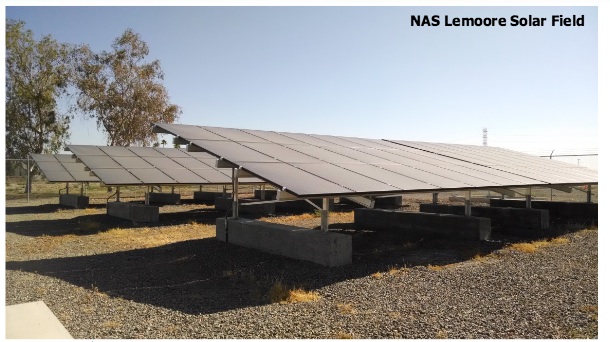
TSolar NAS -10-30 at 6.21.07 AMhe proposed NAS Lemoore solar farm described here a few weeks ago will be big, but not as big as reported in our recent article. We reported the proposed project on military land in Kings County would produce 390MW of power and sit on at least 3000 acres.

The Navy in their environmental study did indicate this size project.

But now that the project study is done and a contract announcement with a private developer is pending next month, the Navy says they plan to award a contract to build a 150MW-DC solar farm that would be constructed on some 930 acres.

The plant would be the largest solar facility in Kings County and the largest solar farm next to an active runway.

The terms of a lease to a developer have not been announced.

“On Friday, 23 Oct., NAS Lemoore hosted an Industry Day where renewable energy developers visited the installation to meet with Navy officials and familiarize themselves with the proposed site.  The contractor proposals are due in early November, and the Navy expects to award the contract in December 2015.” says base spokesperson Marcelo “Marc” Calero.

We regret any confusion our earlier article may have caused.


Solar Powered Oil Production Discussed

Company Says It Can Make Steam From Sunshine, Competitive With Natural Gas

November 6,2015-

Nearly half the oil produced in California requires steam injection to coax the heavy liquid out of the ground. Oilfield steam us a huge user of natural gas consuming about 14% of all natural gas used in the state

Parabolic mirror inside  a glass building heat water to 600 degrees
Parabolic mirrors inside a glass building heat water to 600 degrees

Almost all of that heavy oil and steam injection happens in Kern County which is why GlassPoint’s John O’Donnell attended the  annual Kern Energy Summit a few days ago

His message – GlassPoint technology is competitive in price with natural gas even at today’s bargain prices. Today all injection comes for boilers fueled by nat gas.

With a glass building constructed on site, GlassPoint’s technology uses parabolic mirrors  to capture the sun’s energy and turn water into steam. By piping 600-degree steam deep into the ground to heat rock, the sludge is liquefied and high pressure pushes it up out of the ground.

Glass Point set up a pilot plant in Kern County over four years ago at the Midway Sunset oilfield with Berry Petroleum. ” GlassPoint has proven that solar energy can deliver oilfield energy needs” says O’Donnell,VP for Business Development with the firm

The company has built a solar mega-project in the Middle East  and is now returning  to Kern County where they think they can smell a market opportunity.

“The solar industry pioneered low-cost financing to make their projects more affordable and now we have lenders that can do that. Also we think with the maturity of our technology and the fact our costs have come down combines to make the investment a good buy.”

Another piece of the puzzle is the need by oil companies in California to lower their carbon-footprint in the next few years.

Here’s how GlassPoint pitches that argument.

“California’s Low Carbon Fuel Standard (LCFS) requires a 10% reduction in the carbon intensity of transportation fuels by 2020. The most common compliance approaches include replacing or blending petroleum fuels with bio-based alternatives, such as ethanol. The LCFS also gives credits for Innovative Crude Oil Production when solar energy is used for steam generation.

Solar steam generation creates an economic opportunity for upstream operators. Oil producers can generate new revenue from LCFS credit sales that could completely offset the costs of solar steam generators, making solar steam the lowest-cost source of steam in California. Refiners and other regulated parties can benefit from a long-term supply of low-cost credits, improving profitability and reducing fuel costs for all Californians.

Contributing to California’s Economy

A study conducted by ICF International in partnership with the California Independent Petroleum Association (CIPA), concluded that solar energy is the lowest-cost, lowest-risk, and largest-scale opportunity to reduce the carbon intensity of petroleum fuels in the state. Solar powered oil production can grow California’s economy, reducing imported fuels while achieving California’s regulatory target.”

NAS Lemoore To Host Huge Solar Farm

World’s Largest At An Airport – Contract To Be Signed in December

Solar NAS -10-30 at 6.21.07 AM

October 31,2015-
The US Navy has a goal to develop 1 gigawatt (1000MW) of renewable energy by 2020, enough power to light up 700,000 homes. Now it looks like NAS Lemoore will generate nearly 40 percent of that figure all by themselves, at their base in the Central Valley.
Goals of the nationwide initiative that includes all the branches of service, aim to increase energy security and decrease price volatility,reduce greenhouse gases and dependence on fossil fuels and increase energy efficiency.
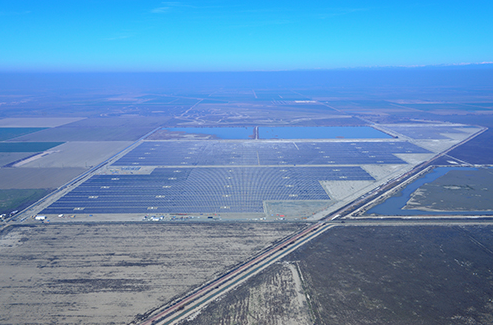
The Kings County base is set to welcome those new F-35 strike fighter jets that will be landing in what will be a sea of perhaps 1 million solar panels planted next to the runway – what would be by far the largest solar plant at an airport in the world.
Similar size projects in California have a construction cost of over $1 billion.
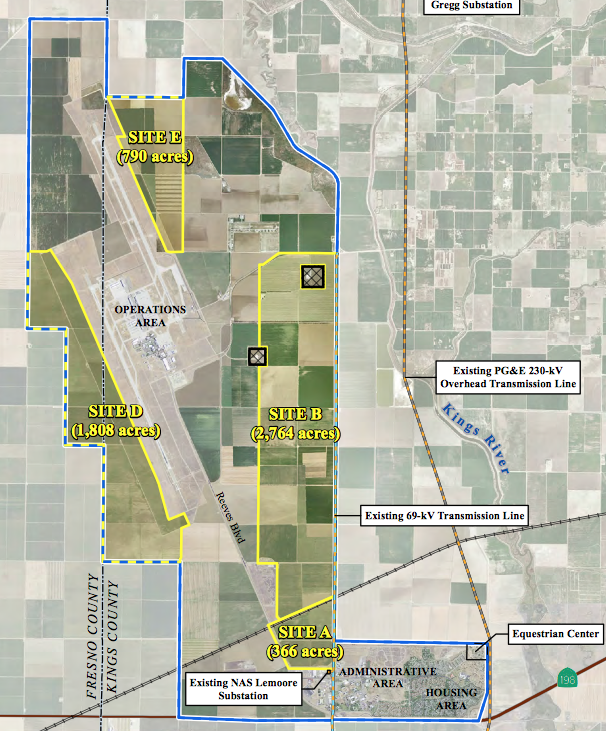
The Navy is looking to lease out 3000 to 5000 acres of land surrounding the NAS Lemoore installation to a solar development company who would build a 390 MW solar farm on the open land according to a solicitation.
By contrast Nellis Air Force base in Nevada is the largest solar military airport now at 15 MW on 140 acres.
The Navy studied the idea at Lemoore a few years back and more formally starting in January of this year. They decided the environmental impact of the proposed project, through a formal environmental analysis this May, was negligible. So now it can move forward if negotiations with a private solar firm, on-going now, go well.
December Contract Seen
“On Friday, 23 Oct., NAS Lemoore hosted an Industry Day where renewable energy developers visited the installation to meet with Navy officials and familiarize themselves with the proposed site.  The contractor proposals are due in early November, and the Navy expects to award the contract in December 2015.” says base spokesperson Marcelo “Marc” Calero.
The military seeks to take advantage of the declining cost of solar having dropped 15- to 20-fold in the last 40 years according to federal studies.
The Navy and a private partner would enter into an agreement to allow the private partner to use Navy land to construct, operate, and own the proposed solar PV system. The partner would sell the generated power to regional customers as they do with other Central Valley solar farms. The private partner would be responsible for maintenance, operation, and the eventual decommissioning of the solar PV system.
Construction of a solar PV system would result in a change in land use on the acreage from agricultural to renewable energy. This change is part of the new NAS Lemoore Master Plan that lays out the construction plan as the base transitions to squadrons of the new F-35 joint-strike fighters over the next few years.
Historically  the Navy seeks to keep development from happening on land around the base and has utilized ag leases in the past to to keep the soil from blowing near the vital military facility where multi-million jets land and take off.
The Environmental Impact Study(EIS) on the project found that that solar PV systems employ glass panels designed for efficiency to maximize absorption and minimize reflection. Solar PV panels consist of dark materials that absorb light, and the protective glass cover is coated with an anti-reflective film. Such panels reflect as little as 2 percent of the incoming sunlight depending on the angle of the sun and as such, pose no hazard to aviation.
Solar photovoltaics (PV) have a low profile and the potential to have low to no impact on flight operations.
Four Year Construction Period

panels would be installed on lands next to the runway

Construction of an up to 390 MW system would occur in two phases and each phase would last approximately 2 years but including the infrastructure – the total construction period for a 390 MW solar system would be approximately 4 years putting it on-line in 2020.
Ag land retirement,at least temporary,of 3000 to 5000 acres will mean some a loss for the farmer who leases the land and farm jobs lost could number 24 over the 37-year lease period the contract covers. Offsetting those loses will be some 300 construction jobs concludes the EIS.
‘Fallow land has increased our susceptibility to bird strikes by making rodents more abundant and visible to large birds of prey that hover in our departure and approach flight paths.  Taking action to shift some of the land use to photovoltaic solar arrays may result in less rodents on our land.  This energy venture is also expected to decrease the agricultural demand for water on our fields, a win-win outcome for our neighboring agricultural industry and the installation.’ adds Calero.
There would be a water savings in the change in use from agriculture to a solar PV system would also decrease or eliminate the demand of up to approximately 3,130 acres for irrigation water. The amount of agricultural water available varies from year to year based on a percentage allocation set annually by the U.S. Bureau of Reclamation against the land’s basic water entitlement. In a 100 percent allocation year, NAS Lemoore receives 29,810 acre-feet for all 11,466 acres it has. NAS Lemoore would either seek cost savings by renegotiating the water lease agreement with the Westland Water District for a lower amount of water, or maintain the agreement as a buffer in dry years to supply the remaining outleases with irrigation water.

At the power line crossroads of the state  both federal and state policies to move to renewable power is transforming the landscape in rural Kings County.

To support the proposed solar PV system, a new 230-kV transmission line would be constructed to the existing PG&E 230-kV transmission line. The new 230-kV transmission line would include approximately fifty-five, 80-foot (24-meter) tall steel poles constructed along the proposed route, adjacent to the northern boundary of the Administrative/Housing Area. With more large scale solar is coming to the Kings County the addition of nearly 400MW of power  would mean the county total either built or  permitted and likely to be built would total nearly 900MW without adding in the prospect of the mega-solar industrial park Westlands Solar Park that could add thousands more MWs in years to come.At the power line crossroads of the state  both federal and state policies to move to renewable power is transforming the landscape in rural Kings County. The Navy’s solicitation seeks a Renewable Portfolio Standard contract with a regulated utility or other third party off-taker. The Navy does not intend to consume any energy on-site, or be a major off-taker. However, in lieu of cash consideration for a potential lease arrangement, the Navy may seek in-kind consideration in the form of energy being provided to NAS Lemoore, for energy security purposes, in the case of a utility grid outage.
Other considerations, such as energy storage and/or microgrid infrastructure to enhance energy security are highly desirable says the Navy solicitation.
“Energy is critical to the Department of the Navy’s ability to provide the global presence necessary to ensure stability, deter potential adversaries and present options in times of crisis – wherever and whenever they might arise.” concludes spokesperson Calero.

Solar Farms To Break Ground / Natural Gas Price Drops

Tulare County Getting 180MW Of Solar

Screen Shot 2015-10-28 at 11.34.24 AMSome 180MW of solar farms set to break ground here. Tulare County will soon see 180 megawatts of utility-size solar break ground in southern Tulare County. County economic development staffer Mike Washam says an 80MW project near Ducor now owned by ConEd, has received a grading permit to begin construction while a few mile away  the 80MW Tulare Solar project will soon be getting their permits.Meanwhile ConEd will start construction of another 20MW solar farm near Atwell Island at the southwest corner of the county. This will put the total megawatts of solar farms in the county to more than 300MW total. In other news ConEd announced a 50% stake in the proposed 240MW Panoche Valley project in San Benito County.The project will have 1.1 million solar panels when it breaks ground late this year.

Natural Gas Prices Fall On Supply Glut

Screen Shot 2015-10-27 at 6.42.25 AMNatural gas prices continue to fall this October reaching the $2 level, lowest since April 2012. The soft price is a result of a worldwide and US supply glut of the product that is nevertheless a boon to both consumers and industry. Natural gas prices typically rise right now just before winter, but the likelihood of a warm winter in the US has reduced demand. In the San Joaquin Valley natural gas not only heats homes  and provides electric power but is also used in the food processing business like those big driers for making milk powder and in greenhouses to grow nursery items, vegetables and flowers. These key industries will enjoy lower costs.

Subsidence Affects PG&E Gas Pipelines

Recent measurements of subsidence carried out by NASA ’s Jet Propulsion Laboratory and U.S. Geological Survey have shown that the groundwater extraction in the Sacramento and San Joaquin Valleys during the recent drought has resulted in increasing rates of subsidence. On September 24,2015,a representative from PG&E indicated that about 80 miles of PG&E natural gas pipelines have been affected by subsidence.The California Energy Commission will hold a workshop on the issue November 10 in Sacramento.

Two New Arco Stations For Visalia

That grading you see happening at the southeast corner of Noble and Lovers Lane in Visalia is the developer Chandi Group’s commercial project to be built in phases and approved back in 2014.The first phase underway is a AM-PM minimart  To follow is a 45,000sf strip mall, a fast food restaurant, a drug store and 120 room hotel if all goes well. Chandi also has a second AM PM ,Arco station that will go to construction in a few months on Plaza at Crowley, the first phase of an approved master plan project,The Square at Plaza Drive.

Visalia’s cheapest gas is now below $2.50 selling for $2.47 as gallon at Costco .Tulare has some lower at $2.45 at several stations. Statewide gas prices are still falling even as the lower cost winter blends are about to start.