New Proposed Lighting Standards Could Californians $4 Billion Says Agency

October 21,2015

Screen Shot 2015-10-21 at 5.39.04 PMSACRAMENTO – The California Energy Commission released a final staff report proposing the first standards for small-diameter directional lamps and light-emitting diodes (LEDs). Directional lamps are often used in commercial track lighting, while LEDs replace screw-based incandescent bulbs and compact fluorescent lighting (CFL) typically found in homes. Prompted by legislation requiring the Energy Commission to adopt standards to reduce energy use of lighting in homes by 50 percent and businesses by 25 percent from the 2007 levels by 2018, the proposed standards will save energy and improve the quality of the light bulbs that Californians are buying every day.

The new standards will have a financial impact. For a $4 investment in the more efficient directional lamps, the Energy Commission estimates consumers will save nearly $250 in reduced energy and lamp replacement costs over an average of 11 years. The savings with LEDs are also significant and growing as purchase prices continue to decline.

“Replacing inefficient, energy-wasting light bulbs with more efficient ones is one of the easiest ways to save money and help California reach its energy goals,” said Commissioner Andrew McAllister, the Energy Commission’s lead on energy efficiency. “Although both small-diameter directional lamps and LEDs have the potential to save significant amounts of energy, there are no federal or state standards for either. The proposed standards also address quality and performance of LED technology in order to avoid problems that consumers have expressed with CFLs.”

In 2029, the total estimated savings for the directional lamps and LEDs standards is more than 3,000 gigawatt hours per year, equivalent to the amount of electricity required to power all the households in Santa Barbara and Ventura counties (about 400,000 average homes) indefinitely.

California’s gasoline imports increase 10-fold after major refinery outage

October 21,2015-

Source: U.S. Energy Information Administration, publication

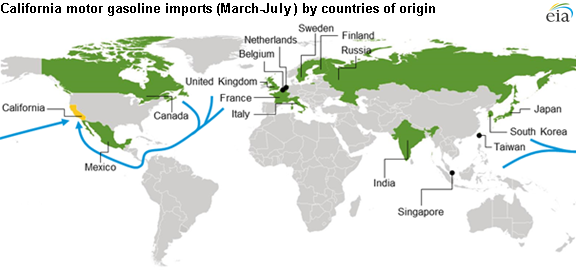
LO gas 2015-07-10 at 11.25.53 AMOver a five-month period following an explosion at a California oil refinery in February 2015, imports of gasoline into California increased to more than 10 times their typical level, drawing from sources that include India, the United Kingdom, and Russia.

Imported gasoline has been arriving from all over the world (see graph above) at rates of 28,000–68,000 barrels per day (b/d) for March through July (the latest data available). These levels compare with an average of 5,000 b/d in 2013-14.

California gasoline markets continue to adjust to the February 18 explosion and fire at the ExxonMobil refinery in Torrance, California, located southwest of Los Angeles. The ExxonMobil refinery is the third-largest refinery in Southern California. The refinery unit affected by the explosion, the fluid catalytic cracker (FCC), is essential to making gasoline. Torrance’s FCC represents 22% of the region’s total FCC capacity, making it a key source of gasoline and distillate fuels that meet California’s very stringent fuel specifications. On September 30, ExxonMobil announced the sale of the refinery to PBF Energy, which will be PBF Energy’s first refinery on the West Coast once the sale is complete.

Because of its unique product specifications and long distance from international gasoline markets, California specifically, and the West Coast in general, does not typically import much gasoline. As a result, the sudden loss of supply from the Torrance refinery resulted in immediate supply shortfalls and higher wholesale and retail prices. The higher wholesale prices covered the costs of importing more gasoline from distant markets into California to make up for the supply shortfalls.

The U.S. Energy Information Administration’s company-level import data show that from March to July, California imports of motor gasoline averaged 52,000 b/d, from 15 different countries. The main supply sources have been refineries in India and the United Kingdom, averaging 13,000 b/d and 11,000 b/d over that time, respectively. California has also imported an average of 5,600 b/d from Russia over that period, along with smaller amounts from refineries across Europe and Asia.

Most of the imported gasoline has arrived in Southern California ports (Long Beach, Los Angeles, and El Segundo). From March to July, more than 50% of the imported motor gasoline volumes have been classified as “all other motor gasoline blending components,” indicating that the gasoline material being imported consists mostly of higher octane blending components such as alkylate and reformate, which are then used to make California-grade gasoline.

map of California motor gasoline imports by countries of origin, as explained in the article text

Source: U.S. Energy Information Administration

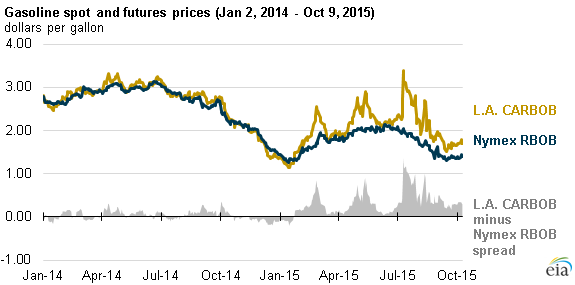
With the Torrance refinery still offline, wholesale and retail prices in California have remained higher than in other areas of the country. Since the outage (mid-February through September), wholesale spot California grade gasoline prices in Los Angeles have averaged $2.17 per gallon (gal). This price represents an average premium of 38¢/gal compared to the front month futures contract of reformulated blendstock for oxygenate blending (RBOB, the petroleum component of gasoline) from the New York Mercantile Exchange (Nymex). In July, Los Angeles spot gasoline prices hit $3.39/gal, or $1.35/gal higher than the Nymex RBOB. In September, Los Angeles spot prices averaged $1.69/gal, an average premium of 31¢/gal compared with Nymex RBOB.

graph of gasoline spot and futures prices, as explained in the article text

Source: U.S. Energy Information Administration
Note: L.A. denotes Los Angeles; CARBOB denotes California Reformulated Blendstock for Oxygenate Blending; Nymex denotes New York Mercantile Exchange; RBOB denotes Reformulated Blendstock for Oxygenate Blending.

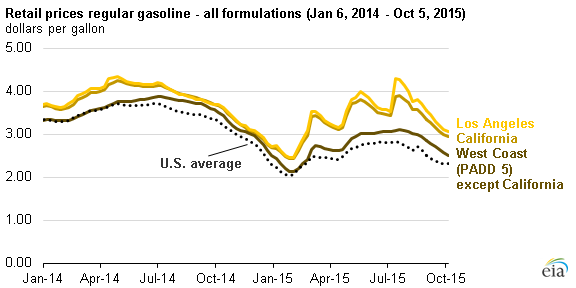
The increase in spot wholesale prices also has resulted in higher retail gasoline prices, particularly in Southern California. California retail gasoline prices are typically higher than the U.S. average as a result of higher taxes and differences in gasoline specifications. However, California and Los Angeles retail prices for regular gasoline averaged $0.96/gal and $1.27/gal higher than the U.S. average in July, respectively, and averaged 76¢/gal and 90¢ per gallon higher in September. However, California and Los Angeles retail prices are 72¢/gal and 62¢/gal lower than the same time last year, respectively, reflecting the broader decline in crude oil prices.

graph of retail prices regular gasoline - all forumlations, as explained in the article text

Source: U.S. Energy Information Administration

out of gas  2015-07-01 at 12.42.34 PM

Following the fuel: How portable biomass energy generation may help rural communities

October 21,2015-

Screen Shot 2015-10-21 at 8.20.47 AMThe forests that surround many of California’s mountain communities tend to have an abundance of woody biomass and a pressing need for thinning to reduce fire danger. Revenue from selling forest residues to biomass power plants could help to support fuel reduction activities, but in many cases the nearest plant is so far away that hauling costs are prohibitive.
The remoteness of such communities can also complicate electricity provision, due to constraints on the power grid.A Berkeley-based company has a new device that may address both problems — and it is partnering with UC researchers to test it.
Under a $2 million grant awarded in April by the California Energy Commission (CEC), All Power Labs will work with two UC research groups — the UC ANR Center for Forestry at UC Berkeley, and the Renewable and Appropriate Energy Laboratory (RAEL) in the UC Berkeley College of Natural Resources — to evaluate the feasibility of small-scale, portable biomass power.
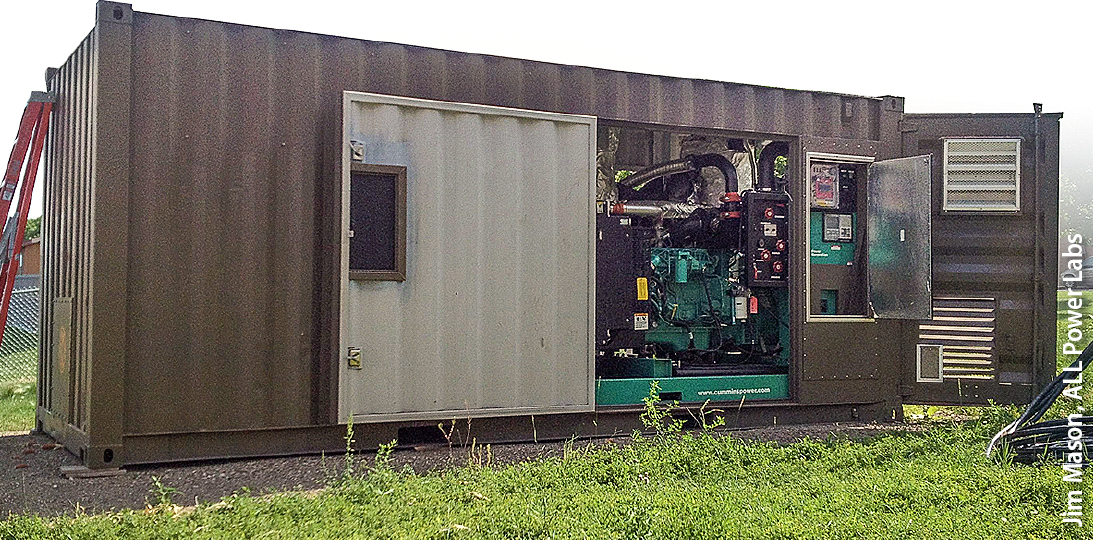
The “Powertainer” — the unit is built in a 20-foot shipping container, hence the name — uses a gasification process to generate up to 150 kilowatts from biomass such as wood chips.The Powertainer is built into a 20-foot shipping container for portability. Fed by woody biomass, it can generate up to 150 kilowatts of electrical power.
The Powertainer’s energy-conversion technology is not new, but its scale and mobility are.
“Our idea was, ‘Let’s do something small that we can take to where the fuel is,’” said Tom Price, director of strategic initiatives for All Power Labs. Price said the Powertainer could be moved, connected to the grid and ready to operate in less than two days, making it easy to follow fuel sources as they become available.
“We could theoretically have a contract with (Pacific Gas and Electric Co.) to deliver energy at a number of sites and migrate like beehives migrate with crops,” he said.
Most biomass power plants in California are much bigger — by a factor of 50 or more — than the Powertainer. Other things being equal, large power plants can produce electricity at a lower cost than small ones. But a very small plant that can be moved as needed has two potential advantages that could reverse the usual economies of scale.
First, by moving close to the site of a biomass harvest, a portable plant can substantially reduce the cost of its biomass inputs. For large, stationary plants that must source feedstock from long distances, biomass trucking costs can easily account for more than half of fuel costs (see, e.g., Springsteen et al., this issue, page 142 ). In addition, because forestry operations tend to be seasonal and biomass can be stored only for a limited time before decomposition begins to create problems, it can be difficult to maintain a steady supply of fuel to a large plant throughout the year, which in turn can lead to shutdowns that increase the average cost of producing electricity.
Second, electricity generated and fed into the state’s power grid in remote locations can sell for a price well above the statewide average. Because of transmission constraints, it’s often difficult to keep the grid functioning properly in out-of-the-way spots — which makes additional generation capacity in those areas worth a premium. In such places, “you can provide a much larger value to the electric power system than you might by producing electricity in the Central Valley,” said Daniel Sanchez, a doctoral candidate in the Energy and Resources Group at UC Berkeley and one of the RAEL researchers on the project

Bakersfield Backs Solar Power – Urges Extension of Federal Solar Tax Credit

There are now over 10,000 households and businesses with solar in Bakersfield, making Bakersfield one of the top cities in the state, not to mention the country, for solar.

BAKERSFIELD, Calif., Oct. 15, 2015 /PRNewswire

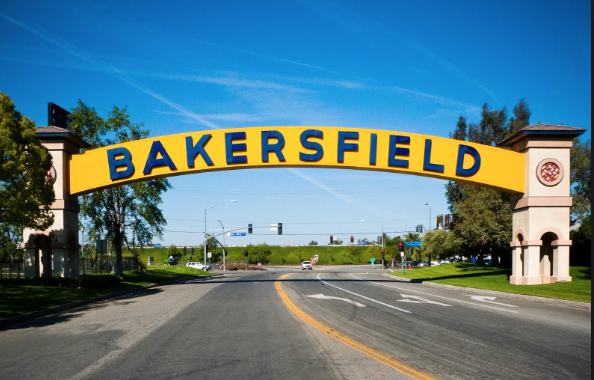
Screen Shot 2015-10-17 at 7.06.52 AMThe Bakersfield City Council passed a resolution in support of extending the federal Investment Tax Credit (ITC) for solar energy, requesting that Congress take immediate action to protect local solar jobs and consumer savings.  Bakersfield is now the first city in the nation to call for congressional support of solar power, highlighting the growing influence of renewable energy in the biggest oil and gas-producing region in the state.
“The federal solar investment tax credit is critical for supporting local jobs and reducing energy bills for Bakersfield homeowners and businesses,” said Councilmember Willie Rivera, sponsor of the city resolution that calls on Congress to extend the federal solar Investment Tax Credit (ITC).  “I am pleased that the Bakersfield City Council passed by 5 to 1 this resolution urging Congress to extend this credit to keep our local solar economy growing.”
The resolution was first proposed at the September 2, 2015 City Council meeting by Councilmember Rivera, following strong public comments requesting the City’s backing of the extension of the solar tax credit.

The resolution highlights how solar energy spurs local economic development and supports local solar jobs, adding more than $15 billion to the U.S. economy and employing 54,000 Californians statewide.  It also emphasizes how long-term policies like the federal solar investment tax credit have helped lower the cost of solar and stimulate the growth of local solar markets.
“Losing these tax credits would cost jobs and increase the cost of solar energy to residents and businesses,” said Councilmember Bob Smith, cosponsor of the resolution. “I strongly support Bakersfield’s growing solar economy, and for the sake of our homeowners and enterprises, these tax credits are worthy of extension.”
The federal investment tax credit (ITC) is a 30 percent credit for solar systems on residential and commercial properties.  Unless Congress takes action, on December 31, 2016, the ITC declines to 10 percent for commercial installations and completely expires for residential projects.
The ITC has helped the solar market grow significantly since it was passed in 2006. The solar industry now employs over 170,000 people nationwide and is growing at a rate nearly 20 times faster than job growth in the overall economy, according to the Solar Foundation.  In addition, long-term supportive policies, such as net metering, and proper incentives have brought about significant cost reductions within the solar industry, enabling the growth of local solar businesses.
“Solar is in the middle of a strong growth phase, creating local jobs and supporting local businesses,” added Glenn Bland, founder and chairman of Bland Solar and Air.  “We’ve been installing solar on homes and businesses in Bakersfield for 30 years and given the current growth of the industry, now is not the time to change course by letting the federal solar tax credit expire.”
There are now over 10,000 households and businesses with solar in Bakersfield, making Bakersfield one of the top cities in the state, not to mention the country, for solar. In fact, according to the California Solar Statistics database, Bakersfield has twice as many solar installations as San Francisco. The city of 363,000 also has comparable amounts of solar installations to much larger cities like San Diego and San Jose.
“Solar is a bright spot in the Central Valley’s economy,” said Kelly Knutsen, policy advisor for the California Solar Energy Industries Association (CALSEIA), which gives voice to the more than 2,000 solar companies doing business in the state.  “We applaud the Bakersfield City Council’s leadership on this issue and urge the valley’s congressional delegation to prioritize extending the solar tax credit now.”
Copies of the resolution will be transmitted to the Speaker of the House of Representatives, Majority Leader of the Senate, and to each of California’s U.S. Senators and Representatives.  A similar resolution passed the California state legislature on September 11, 2015, by a strong bipartisan vote of 38-0 in the state senate, and 77-1 in the state assembly.
“Without the ITC, research shows jobs of more than 100,000 Americans – nearly 34,000 in California alone – are at risk,” said SEIA President and CEO Rhone Resch, which is leading the fight to extend the ITC in Washington D.C.  “More cities should follow Bakersfield’s lead, sending a message to Congress that the American public deserves energy independence and the well-paying jobs that solar produces.”

Rail Traffic Lower As Carloads Of Coal,Petroleum & Metals Are Down

October 15,2015-

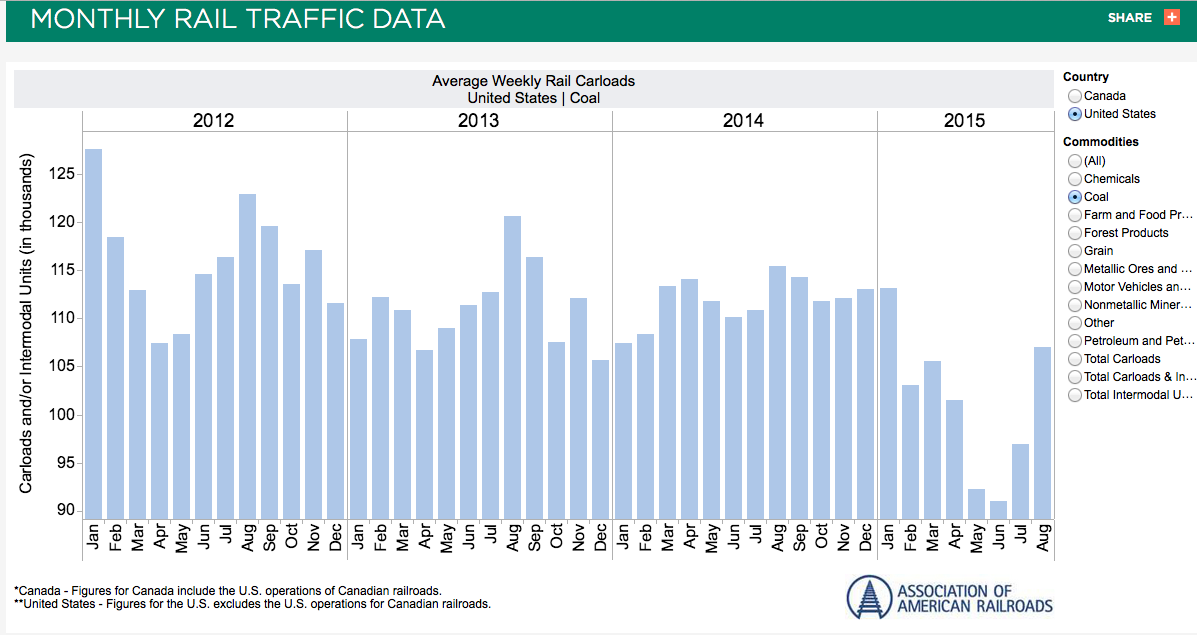
Coal Loses Favor: Chart shows rail carload of coal by year

Screen Shot 2015-10-15 at 7.27.53 AM
Rail operators like BNSF are looking for more business with its  paycheck commodity coal – down 12 % from last year and down 20% from five years ago. Historically there is no more important commodity shipped by rail than coal, in 2013 accounting for 40% of rail tonnage and one fifth of the jobs working on the railroad.
That is all changing with utilities shunning coal to burn for power generation in favor of  cleaner burning and cheap natural gas shipped by pipeline.
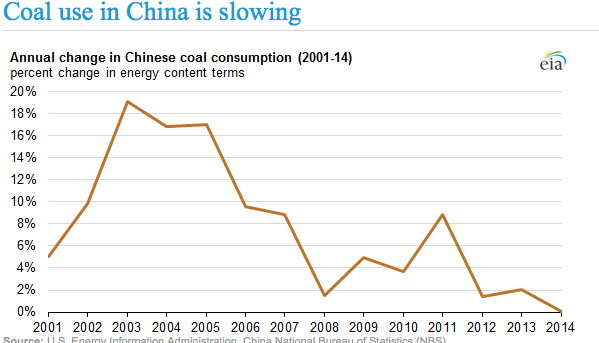
The US is not the only one. In China where coal has been a mainstay suffers an ugly haze hanging over many Chinese cities. Here too,coal use is down.Screen Shot 2015-10-15 at 7.50.49 AM
The world is focusing on climate change and coal is considered a big problem.
But that is not the only commodity that is impacting the rail fright business. Both shipments of metal as well as petroleum with those the low prices pounding the oil patch are pushing overall freight volume lower.
That has rail operators looking for business says Bloomberg looking to snatch freight shipped by big rig currently across country.
The latest snapshot of rail traffic reported by the Association of American Railroads shows overall U.S. rail traffic  so far this month was 556,233 carloads and intermodal units, down 2.8 percent compared with the same week last year.
Total carloads for the week ending Oct. 10 were 281,073 carloads, down 5.8 percent compared with the same week in 2014, while U.S. weekly intermodal volume was 275,160 containers and trailers, up 0.5 percent compared to 2014.
Five of the 10 carload commodity groups posted an increase compared with the same week in 2014. They include: miscellaneous carloads, up 24.4 percent to 10,256; grain, up 21.3 percent to 24,818 carloads; and motor vehicles and parts, up 2 percent to 17,846.
Lower Volume
Commodity groups that posted decreases compared with the same week in 2014 included: metallic ores and metals, down 23.5 percent to 20,084 carloads; petroleum and petroleum products, down 16.6 percent to 13,621 carloads; and coal, down 12.6 percent to 98,637 carloads.
For the first 40 weeks of 2015, U.S. railroads reported cumulative volume of 11,161,759 carloads, down 4.4 percent from the same point last year; and 10,692,427 intermodal units, up 2.4 percent from last year. Total combined U.S. traffic for the first 40 weeks of 2015 was 21,854,186 carloads and intermodal units, a decrease of 1.2 percent compared to last year.

Dynegy Prepares To Demolish Outbuildings Near Power Plant

October 14,2015-

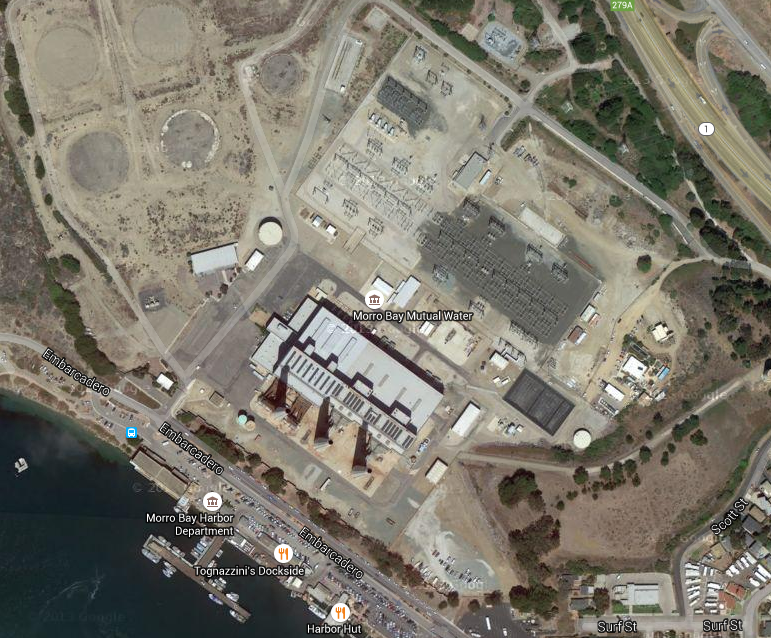
The City of Morro Bay has issued a mitigated negative declaration notice in preparation to demolish some 23 outbuildings around the shuttered Morro Bay power plant. The notice says the review of the Dynegy plan will end by October 23.
Such a notice is a routine procedure saying there is little environmental impact.

Screen Shot 2015-10-14 at 9.56.14 AM

City of Morro Bay Approves Memo With Wind Power Company – 1000 MW Project Envisioned

October 14,2105-

December 10 Public Meeting Planned

Screen Shot 2015-10-14 at 3.00.45 PM

This week the City of Morro Bay approved a Memorandum of Cooperation (MOC) with a Seattle-base firm, Trident Winds LLC, regards a possible 1000 megawatt wind turbine project some 15 miles offshore for the production of electricity.

Unlike other proposals for floating wave power turbines – the wind turbines rise as much as 400ft over the ocean. Europe has plenty of ocean-based wind power including 4MW of floating wind power. Unlike fixed wind projects in the ocean there is no piling or weather concerns.

In their presentation to the city, Trident officials emphasized the renewable energy project will be designed to meet California demand by 2025 and it will be years in development. Construction could start by 2023 at a site north of Pt Estero  north of Cayucos in water 1500 deep.

The city says a December 10 public meeting on the project will be held at a location to be announced.

Key issues discussed at the October 13 city council meeting include the white turbines should be barley visible from the shore with the company providing a photo of what they say it will look like.Screen Shot 2015-10-14 at 2.49.47 PM Pictured are – on left – how it would look to the naked eye and on right – how it would looked zoomed in 4X.

In terms of size the procjt is almost as much capacity as one of the two units at Diablo, and larger than the 600MW Morro Bay plant capacity.

Other point made:

– Floating  offshore  wind  is  now  proven  and  a  maturing  technology
– A  number  of  technology  options  will  be  available  for  offshore  wind  projects  in  deep  water  in  the  post  2025  time frame
– WindFloat  is  the  current  leading  technology,  with  existing  demonstration  plant  and  additional  capacity  under construction. That technology is owned by Principle Power that includes at least one key official with Trident.
– Workforce- All commissioning activity  completed  onshore  –  onshore  labor  rates  infrastructure.
– Reduced weather dependence  – everyone  comes  to  work  every day in shipyard

Vacant Morro Bay Plant Key Issue

The Morro Bay city staff report said under the agreement the municipality makes no commitments but allows a project study to move forward that could connect some 100 wind turbines to the vacant Morro Bay power plant. The plant has not operated since January 2013.

The city staff report notes that “The City has experienced significant negative economic impacts as a result of expired MBPP operational agreements, including, but not limited to, because a vacant power plant on the City’s waterfront is a visual and economic detriment to the future growth and prosperity of the City. Since the closure of the MBPP, various parties have suggested site re-use concepts to the City.”

“Staff and Trident understand the necessity to evaluate and address potential impacts to the marine ecosystem, specifically, water quality and migratory and resident species of concern, as well as other issues, such as visual resources, recreational opportunities, navigable channels, cultural resources and the fishing industry for any proposed re-use of the MBPP. It is also well known, California has a public policy to significantly increase the use of renewable power in the State and to significantly decrease the emission of carbon in the power, industrial and transportation sectors of the California economy.”

Green Energy vs Birds?

Advocates say the pressures of climate change and the need to transition to clean energy, projects like this one are going to be critical to getting off of fossil fuels.
Others like  Lynda Merrill who commented to the city this week argue the “toll for wildlife is just too great” suggesting off shore wind turbines kill “thousands of birds every year.”
Trident would connect export cables from the turbines located 15 miles offshore through outfall pipeline at Morro Rock to the Morro Bay Power Plant switchyard where it would connect to the grid. An underground pipe connects the two sites.

Trident has months of tough negotiations and permit applications to go through with local,county,state and federal authorities as well as interest groups. Key to the plan would be the cooperation of Dynegy who wants to sell the idled power plant. PG&E needs to agree to the idea too.

The Morro Bay-Trident memo has no specific time-period during which the parties are agreeing to cooperate but provides the City can determine, at any time, to discontinue operations under the MOC.

“ The MOC expressly states the City “will,subject to its own rules and regulations and applicable law, and following significant public review and participation, cooperate with Trident to the extent it deems reasonable and in the public interest.” Therefore, at any time the City Council decides the public interest would be better served by no longer cooperating with Trident, the City has the right to withdraw that cooperation.”
For now, the city calls the potential project “environmentally and commercial and recreational fishing industry friendly.” In the past the city and the fishing industry in Morro Bay have found fault with all wave power project proposals that nevertheless, are still pending through FERC, the federal energy agency. These competing plans also hope to use the power plant’s grid connection in Morro Bay.

Some environmental advocates are expected to object to the wind power plan citing bird deaths but supporters counter that bird activity 15 miles off the coast is less than near-shore.

Affiliate Looks to Do Same In Oregon

An affiliate of Trident – Principle Power whose founder is part of Trident  and are working to use the same technology off the Oregon coast. According to news reports ” The Seattle-based company Principle Power needs a guaranteed stream of money from Oregon ratepayers to move forward with the pilot project known as WindFloat, which could have up to five wind turbines as tall as the Seattle Space Needle and cover as much as 15 square miles in the deep ocean off Coos Bay.

A bill in the Oregon Legislature this year would have required investor-owned utilities to purchase power from the WindFloat project, but the legislation died amid opposition by utilities, a consumer group and industrial businesses. They argued that electricity from offshore wind costs much more than from onshore wind. The commercial fishing and processing industries also opposed the bill and continue to raise concerns about the project.”

Atlantic Ocean Wind Projects

A key hurdle  for the Morro Bay project will be to get approval for a lease of federal waters from at federal agency-  BOEM. Coming next month Secretary of the Interior Sally Jewell and Bureau of Ocean Energy Management (BOEM) Director Abigail Ross Hopper  will announce lease agreements on 343,833 acres offshore New Jersey for commercial wind energy development in a competitive lease sale on November 9, 2015.
If fully developed, the New Jersey Wind Energy Area could support at least 3,400 megawatts of commercial wind generation, enough to power an estimated 1.2 million homes, according to the Department of Energy’s National Renewable Energy Laboratory.


Government Report: Gasoline Prices Have Further To Fall

September 14,2015-

Screen Shot 2015-06-04 at 11.03.53 AMRising crude oil prices, strong gasoline demand, and several refinery outages on the West Coast contributed to an increase in U.S. regular gasoline retail prices from a monthly average of $2.47/gal in April to $ 2.80 /gal in June says the federal Energy  Information Administration (EIA).
.
Falling crude oil prices and narrowing wholesale gasoline margins have since contributed to prices declining in August to an average of $2.64/gal.

EIA expects monthly average prices to decline in the coming months as refineries continue to produce high levels of gasoline, as demand begins to decrease following the peak in the summer driving season, and as the market transitions to lower-cost winter-grade gasoline. EIA projects regular gasoline retail prices to average $2.11/gal in the fourth quarter of 2015 and $2.03 by December.

Translating those national costs to California- a California Energy Commission spokesperson estimates that we could see the average California gas price to hit an $2.53 by December compared to around $3.16 today .

California gasoline prices have declined by 75 cents since their high  in late June. Now the prediction is they will fall another 70 cents or so in time for the holidays
Helping to reduce costs is a boost in refining at the big Exxon Mobli plant in Torrence by early October.

In the reading area the cheapest gas is at Costco in Visalia at $2.77 today and on the Coast at the Costco in San Luis Obispo it cost $2.85.

REC Solar and Windset Farms Flip the Switch on 1 MW SOLAR ARRAY

AUGUST 18, 2015

REC Solar, a national provider of commercial solar and energy solutions, today announced the interconnection of a 1 MW solar energy system for Windset Farms®. The Santa Barbara County farm is the largest in Santa Maria and grows non-GMO produce year-round in its state-of-the-art greenhouse facility. The roof-mounted array will enable the farm to run on clean energy, further enhancing its sustainable operations. This installation adds to REC Solar’s portfolio of over three dozen farms and food and beverage facilities in California.

“REC Solar is the clear leader in helping California farms go solar, and deciding to work with them was an easy decision,” said David Wesley, Director of Projects at Windset Farms®. “They helped us overcome some unique construction challenges, like high winds and site access restrictions. To top it off, the system was easy to finance and helped us save money on our energy bills immediately.”

REC Solar installed the 4,032-panel array on the roof of the farm’s shipping and packing building. The system was designed to accelerate the farm’s return on investment by maximizing energy production and offsetting consumption when utility electricity rates are highest. To achieve this goal, REC Solar installed a custom racking system combining flush-mounted panels on the western roof face and southern-tilted panels on the eastern roof face to receive optimal sun exposure. The racking system does not penetrate the roof, which will minimize long-term maintenance costs.

“REC makes it easy for farms to go solar because we cater to their specific business operations and ensure minimal disruptions. Since we work with our customers from start to finish, we can provide tailored financing, design and O&M options that help each business meet its energy savings targets,” said Ryan Park, Director of Business Development at REC Solar. “Windset Farms is already a clear leader in cutting-edge technology and sustainability practices, and we’re pleased to help them to extend their leadership even further.”

Windset Farms® is a leader in deploying cutting-edge sustainable technology, including but not limited to water and CO2 recycling, an Integrated Pest Management system, heat-loss prevention screens and efficient land use. The family-run 128-acre facility in Santa Maria grows many varieties of tomatoes and cucumbers for leading national retailers.

The farm will host a ribbon cutting ceremony for their new solar installation on Tuesday, August 18 at 2 p.m.

In addition to Windset Farms, REC Solar has installed solar systems for large and small growers throughout the state, including Pandol, Vignolo Farms, Castlerock Vineyards, Delano Growers, Peter Rabbit Farms and Amaral Ranches. The company recently acquired Stellar Energy and expanded operations in the agricultural market, adding more than 10 wineries and farms to their portfolio. With financial backing from one of the largest energy companies in the world, REC Solar offers a streamlined PPA that simplifies the financing process to help farms and other businesses go solar with no money down.

About REC Solar
REC is the only renewable energy provider focused exclusively on businesses and backed by one of the largest energy companies in the world. Incorporating experience from more than 500 successful commercial solar installations over 17 years, REC Solar tailors financing and technology solutions to immediately deliver bottom line savings. REC Solar makes commercial solar simple, working seamlessly with customer operations to deliver clean energy for decades. For more, visit RECSolar.com or call 844-REC-SOLAR (844-732-7652).

About Windset Farms®
Windset Farms® is a family-run business that has become one of the largest growers and marketers of greenhouse produce in North America. They operate greenhouses in Abbotsford, B.C., Delta, B.C., Santa Maria, California and Las Vegas, Nevada. Windset products are sold across Western Canada, the Western United States, Mexico and Asia; and products including peppers, cucumbers, tomatoes, lettuce, eggplant, strawberries and endives. The company’s facilities combine state-of-the-art technology and old-fashioned attention to detail to ensure optimal growing conditions and sustainable practices. This has been recognized through a number of awards including the 2014 World’s Best Tomato Grower Award. Visit www.windsetfarms.com for recipes and product information. Also check out www.facebook.com/WindsetFarms and www.twitter.com/WindsetFarms for live updates.

Construction Of Largest Solar Project Underway In West Fresno County

August 26,2015

Tranquillity 2015-08-25 at 4.44.58 PM

Workers install foundations for the Recurrent Energy developed Tranquillity solar project.


Construction of the Tranquillity Solar project, a 200MW solar farm got underway in west Fresno County in July. The utility scale solar energy project is the largest in the Central Valley.

“Workers are installing foundations for the panels right now“says Recurrent Energy spokesperson Jesse Prie.

Being built by Recurrent Energy, based in San Francisco, the company was recently acquired by Canadian Solar Inc. from Japanese- owned Sharp Corporation. The acquisition of Recurrent was pegged at approximately $265 million in cash.

The Tranquillity project is being constructed in two phases. Phase A will be up to 200 megawatts and consist of approximately 1,900 acres. Phase B will be for up to an additional 200 MW and consist of up to approximately 1,832 additional acres under permits from Fresno County.

At 400 MW the sprawling solar farm would rank just behind Topaz Solar at 550 MW in eastern San Luis Obispo County in size.

The Fresno project,located 7 miles southwest of the town of Tranquillity, is expected to generate 500 construction jobs between now and its completion in late 2016. The power is being sold to PG&E.

Tranquillity is being built close to existing high-voltage transmission lines on retired agricultural land with poor soils and no habitat issues, and it requires no surface water allocation. Recurrent bought the land from Westlands Water District who could no longer use it for ag purposes.

Recurrent also built the Adams East solar farm in Fresno County,is building the 170mw Mustang Solar project near Lemoore in Kings County as well as a handful of 20mw size utility-scale solar farms in Kings County.

Located in California and Texas, Recurrent’s 1.0 GW late-stage pipeline is one of the largest utility-scale project portfolios scheduled to be built prior to the federal Investment Tax Credit expiration in 2016, and represents an estimated revenue opportunity of at least $2.3 billion for Canadian Solar under a build and sell business model. Once constructed, Recurrent typically sells the asset to another company who holds it long term for the income it generates.

California leads the nation in solar panel energy with some 3,217mw installed according to the state.Both Governor Brown and President Obama have vowed to help America to install more renewable energy to help cut greenhouse gas emissions from fossil fuels.

This week the White House expanded its efforts for greater renewable energy adoption, announcing fresh financial incentives for solar panels, smart grid technology and other alternative energies for homeowners and builders. President Barack Obama traveled to Las Vegas unveiling an additional $1 billion in loan guarantees for new research projects and  savings for homeowners who use renewable energy.