Visalia Diesel Price Down To $2.29 A Gallon

August 18,2015-

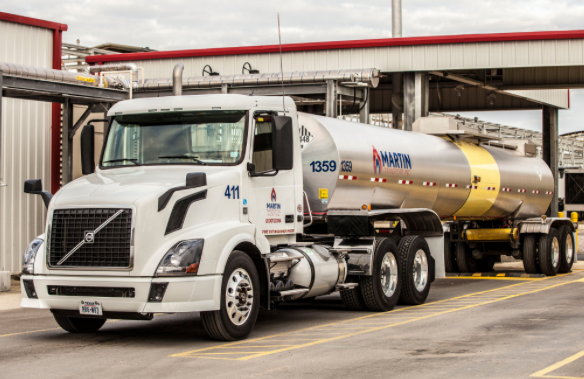
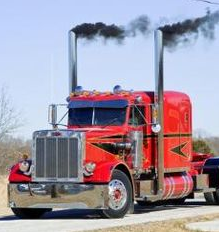
The Visalia Costco boasts the lowest price for diesel in the state according to Gas Buddy – selling the fuel for $2.29 a gallon today. That’s half the price Tulare County residents had to fork out just a few years ago. The California average price this week is $2.94. The low price for diesel is in marked contrast to regular gas price averaging around $3.58 this week and heading down slowly. California diesel prices have not been this low since 2009, a boon for farmers, truckers and pickup drivers.

The EIA says in July, the US average diesel fuel retail price fell below the average regular gasoline retail price for the first time since August 2009. From August 2009 through June 2015, retail diesel fuel sold at an average premium of US$0.34/gal over regular grade gasoline, with the difference reaching more than US$0.90/gal in January.

Screen Shot 2015-08-18 at 10.13.06 AMThe persistent price premium for diesel compared with gasoline from August 2009 until last week reflected a combination of factors including strong global demand for diesel, federal fuel taxes for diesel that are US$0.06/gal higher than those for gasoline, and the higher production cost of ultra low sulfur diesel (ULSD) that was phased in between 2006 and 2010.

Gasoline and diesel have opposite seasonal demand patterns: gasoline demand tends to peak in the summer driving months, while diesel demand generally peaks in the winter heating months.

LADWP Completes Project to Cover Los Angeles Reservoir With 96 Million “Shade Balls”

from ACWA

August 12,2015

Calling it an “important cost-effective water quality investment,” the Los Angeles Department of Water and Power along with several city officials late Monday afternoon placed the final batch of black, plastic balls into the Los Angeles Reservoir to complete a project to cover the reservoir’s 175-acre surface with a total of 96 million “shade balls.”

During a news conference at the Van Norman Complex in Sylmar where the reservoir is located, Los Angeles Mayor Eric Garcetti, Los Angeles City Council Members Mitch Englander and Felipe Fuentes, LADWP General Manager Marcie Edwards, LADWP Senior Assistant General Manager of the Water System Marty Adams and various staff helped pour the last 20,000 shade balls into the reservoir.

LADWP says the project will help it comply with U.S. Environmental Protection Agency water quality requirements for drinking water and save more than 300 million gallons of water annually. The 4-inch black plastic balls are weighted and float on the water’s surface blocking sunlight to reduce evaporation and prevent chemical reactions and algae blooms.

According to LADWP, in-house biologist Dr. Brian White – who is now retired – created the shade ball solution, which has been used in other LADWP open-air reservoirs since 2008.

Vandenberg Best For Wave Test Facility Says Study

August 4,2015-

SLO-based team plans to push technology on wave energy conversion

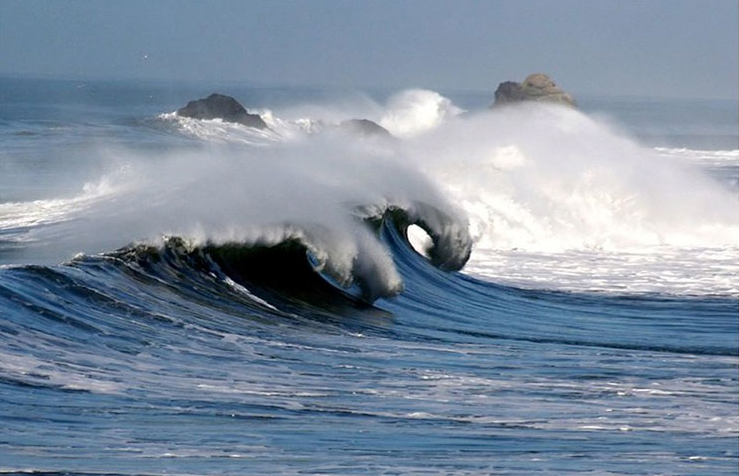
Screen Shot 2015-08-03 at 4.56.16 PMWaters off of Vandenberg Air Force Base in Northern Santa Barbara County are the most promising California location for a national wave park test facility says a San Luis Obispo based think-tank.

In a report filed with the federal Department of Energy (DOE) this month, Cal Poly’s Institute for Advanced Technology and Public Policy led by former legislator Sam Blakeslee,researchers compared the feasibility of a site off Humboldt County in northern California and off Vandenberg for tidal power generation.

Blakeslee’s group received $750,000 in DOE funding to do the study over the past 12 months, part of an effort to boost renewable power from ocean waves.

Vandenberg gets the nod for a number of reasons says a source familiar with the study.

First of all, wave energy is plentiful here but at the same time the northern Santa Barbara coast is already a place where oil drilling happens, it is not in a shipping lane nor is it a key fishing area. The upshot is that compared to Humboldt there are fewer environmental or other type conflicts.

For example the coast off Vandenberg AFB is isolated with few visitors or beach homes compared to much of the rest of the California coast.
.
A key factor to the attraction of this site has is the abundance of electrical infrastructure including some power lines that are connected to Morro Bay power plant that are available to carry power now that this plant is closed. The proximity and availability is a big plus in a state where permitting new lines can take a long time.

Then there is the fact that Vandenberg’s 22 square mile base itself is of course owned by the government, making permitting easier. And they want the power given the mandate that the Air Force get 25% of the future power from renewable sources.

Blakeslee has indicated this project will not be a retail wave energy farm but rather a test facility ready to help companies try equipment and compare results. The Obama administration as said they want to spend up to $40 million to keep the US a leader in wave energy research.

PG&E did a number of years of research on a wave energy park off both Humboldt and Vandenberg before mothballing their study in 2011.

Now Mr Obama is signaling he wants to move the US toward more renewable energy sources as California has done, to cut greenhouse gases from such sources as coal power plants.That works well with California’s plan where Governor Brown and the legislature have said they want the state to get 50% of power generation from renewables here by 2030.

By extracting only 5% of the technical resource potential for the U.S., wave power could provide electricity to 5 MILLION homes says DOE.

Capturing the Energy Prize

Blakeslee and Cal Poly continue to work on utilizing a patented technology to capture wave energy and announced as of July 1 a team  has submitted to go through a DOE sponsored Energy Prize competition with a partner company.

The Wave Energy Prize will encourage the development of more efficient Wave Energy Conversion devices that double the energy captured from ocean waves, which in turn will reduce the cost of wave energy, making it more competitive with traditional energy solutions.A successful Wave Energy Prize could jump-start private sector innovation critical to the country’s long-term economic growth, energy security, and international competitiveness in the wave energy conversion sector. The competition has a purse of $2 million.
The contest has about 100 entrees but DOE promise to pare the list down to 20 by mid August.

Cal Poly’s partner in the DOE competition is Protean Wave Energy, Inc., based in Los Osos, California, is the U.S. subsidiary of Stonehenge Metals Limited and is the sister subsidiary to Protean Energy Australia Pty Ltd. Both of the latter two entities are located in Perth, Western Australia.

The Protean Wave Energy, Inc. approach to capturing wave energy and transforming it to useful electricity or desalinated water is to utilize all six degrees of wave movement. The goal is to design a wave energy converter to be cost competitive to manufacture, deploy, maintain and retrieve. In collaboration with Cal Poly, we hope to advance the Protean Wave Energy, Inc. design by going through the process that is the DOE Wave Energy Prize competition.

Team members in the competition include  Mr Blakeslee who is trained as a scientist having attended U.C. Berkeley where he earned Bachelor’s and Master’s degrees in geophysics. He was awarded a Ph.D. from U.C. Santa Barbara for his work in seismic scattering, micro-earthquake studies and fault-zone attenuation. As a strategic planner and senior research scientist with Exxon, he received a patent for his innovative work in geologic imaging.

Also William Toman is an energy industry professional with more than 25 years of experience managing energy and environmental project development. He has been responsible for the development of over 2,000 MW of generating capacity for utilities and independent power producers both inside and outside the U.S. His current engagement is at California Polytechnic University at San Luis Obispo (Cal Poly) where he led a 12-month U.S. Department of Energy (DOE) funded study investigating siting, cost and feasibility issues for developing a national wave energy testing centre offshore of California’s Central Coast. While with California’s largest energy utility, Pacific Gas and Electric Company (PG&E), Mr Toman led development of the U.S.’s first open ocean, grid-connected wave energy testing and demonstration facility (Humboldt WaveConnect), a 5 MW project, through a Federal Energy Regulatory Commission draft pilot license application in Humboldt County, California.

Mr Toman holds an M.S. degree in Nuclear Engineering and a B.S. degree in Engineering from the University of California, Los Angeles (UCLA) with an MBA from Carnegie Mellon University’s Tepper School of Business. He has a particular depth of expertise with large-scale commercialization of renewable energy technologies. He has extensive experience in the program management of siting and developing utility scale energy projects with special concentration in marine and hydrokinetic (MHK) renewable technologies such as ocean wave, tidal energy as well as floating offshore wind energy.

Hope For Extension of Wind Energy Tax Incentives

Senate committee votes 23-3 to extend federal tax credits
AWEA applauds strong bipartisan support for American wind power, renewable energy tax incentives
industry news release

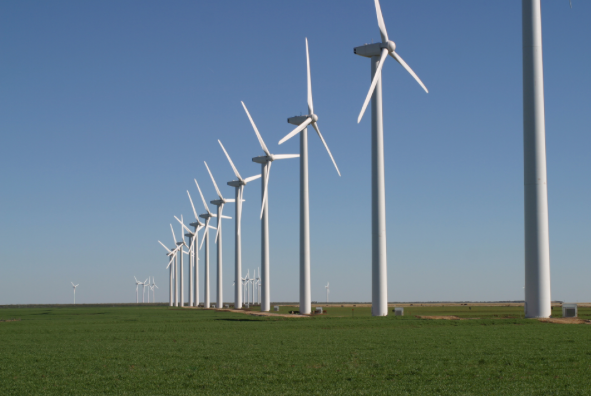
Screen Shot 2015-07-27 at 7.43.52 AMWashington, D.C., July 21, 2015 – The American wind energy industry today praised members of the U.S. Senate Finance Committee for voting overwhelmingly to extend over 50 tax policies through 2016, including the renewable energy Production Tax Credit (PTC) and Investment Tax Credit (ITC) that incentivize the building of more U.S. wind farms.
The committee on a final vote of 23-3 reported out a “tax extenders” bill preserving language that allows wind farms to qualify so long as they start construction while the tax credits are in place.
Those credits expired at the start of this year, again throwing the future of American wind energy into doubt once projects currently under construction are completed.
“This is a big step in the right direction,” said Tom Kiernan, CEO of the American Wind Energy Association (AWEA). “We applaud the committee’s vote because it recognizes that the vast majority of American voters support these policies and want them continued. We urge the full Senate and the House of Representatives to follow the Senate Finance Committee’s bipartisan lead, and quickly pass this tax extenders package, which will continue to grow American jobs and heavy manufacturing, and support rural economic growth.”
The federal PTC and ITC are predominant drivers of new wind farm development, and have helped lower the cost of American wind power by more than half over the last five years, while making the U.S. number one in the world in wind energy production.
Senate Finance Committee Chairman Orrin Hatch (R-UT) in today’s hearing regularly acknowledged the strong sense of bipartisan support for renewing the tax extenders package. Sens. Pat Toomey (R-PA), Dan Coats (R-IN), and Rob Portman (R-OH) withdrew amendments opposing the PTC, while Sen. Michael Bennett (D-CO) made the senators aware of the tremendous amounts of economic benefits and jobs wind power has created in Colorado.
In 2013, after the renewable energy tax credits were allowed to expire even briefly, installations of new wind farms fell 92 percent, causing a loss of 30,000 jobs across the industry that year. After Congress renewed the PTC, the U.S. wind energy industry added 23,000 jobs the following year, bringing the total to 73,000 at the end of 2014.
Wind energy brings taxes and other revenues to rural communities, benefiting county and local services, schools, and health care and public safety facilities. With over 98 percent of all wind farms on private land, wind energy projects already deliver an additional $195 million a year in lease payments to landowners.
Earlier this week, Sen. Chuck Grassley (R-IA) penned an op-ed renewing his call for Congress to extend the tax credits, saying they “bring certainty to investment that helps boost development, sustainability and expansion of homegrown renewable energy,” and that “the facts show that bringing stability and certainty to clean energy policy is good for the economy and the environment. Championing renewable energy that’s engineered by human ingenuity and produced by human hands builds upon America’s centuries-long promise of prosperity.”
Today, more than 70 percent of congressional districts contain operating wind turbines, wind-related factories, or both, according to industry data.
Successful companies in the private sector also recognize why extending the tax credits make sense. This month, Jerry Hunter, Vice President of Infrastructure at Amazon, said his company strongly supports the extension of the tax credits when talking about his company’s decision to operate a new 208-MW wind farm that will deliver energy into the electrical grid that supplies current and future Amazon Cloud data centers:
“This agreement, and those previously in place, puts AWS on track to surpass our goal of 40 percent renewable energy globally by the end of 2016…“We’re far from being done. We’ll continue pursuing projects that deliver clean energy to the various energy grids that serve AWS data centers, we’ll continue working with our power providers to increase their renewable energy quotient, and we’ll continue to strongly encourage our partners in government to extend the tax incentives that make it more viable for renewable projects to get off the ground.”
In June this year, proposed legislation threatened to eliminate the PTC. That led to 85 companies sending a letter to Congress to protest the bill saying if passed, the bill would “take away an effective, business tax incentive that creates jobs, drives rural economic development and reduces energy costs for Americans across the country.”
Wind fosters economic development in all 50 states and has attracted over $100 billion in private investment to the U.S. economy since 2008. American wind power has created a brand new domestic manufacturing sector with over 500 facilities across 43 states.
Savings on wind power are reaching electric consumers. For example, wind energy saved consumers $1 billion over just two days across the Great Lakes and Mid-Atlantic states during the 2014 “Polar Vortex” event, by offsetting price spikes for fuel.
A March 2015 Gallup poll found 84 percent of American voters want the U.S. to put more emphasis or the same emphasis on producing domestic energy from wind. Two-thirds of Republicans and Independents wanted more emphasis.
According to Wind Vision, a new Department of Energy (DOE) report released in early 2015, with stable policy wind could supply 10 percent of the nation’s electricity demand by 2020, 20 percent by 2030 and 35 percent by 2050. By 2030, that could result in wind supporting 380,000 jobs; increase tax payments to communities to $1.8 billion a year; and increase lease payments to farmers and ranchers to $650 million a year.
###

Work To Start On Central Coast Solar Plant

July25,2015-

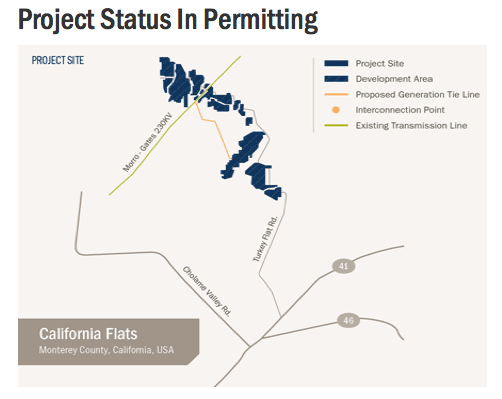
Screen Shot 2015-07-25 at 11.49.29 AMContractors have given notice they will begin construction on the big California Flrst Solar Project to be built just off of Hyw 41 near Chalome. Located in Monterey County First Solar is developing a 280 megawatt (MW) alternating current (AC) solar project located on approximately 2,900 acres of previously dryland farmed, private land in southeast Monterey County, California, near the San Luis Obispo, Kings and Fresno County border.

This week  notice was posted that  they would be exercising a Conditional Use Permit to improve an existing 3.3 mile long agricultural road, and to establish a 4-acre and 0.5-acre temporary construction staging area adjacent to HW 41.

The project site is currently part of the 72,000-acre “Jack Ranch,” which is owned by the Hearst Corporation and currently operated as a cattle ranch.

In a July 10 press release, several conservation groups announced “Over recent months, with the assistance of Gov. Jerry Brown’s office, the conservation groups and First Solar, developer of the California Flats project, have worked together to design and implement strategies to protect and enhance the important habitat in the vicinity of the project in order to better balance environmental impacts of the project while allowing new sources of renewable energy to be built.”

As part toe staging effort,improvements to the agricultural road include widening from approximately 18 ft to 30 ft, drainage improvements and installation of decomposed granite road base. The proposed improvements to the agricultural road are intended to provide access and to serve  construction of the plant, the third large solar farm located in the interior foothills of the Central Coast

The project is expect to be in operation by the end 2016 employing around 500 in the construction effort. California Flats Solar Project has a power purchase agreement (PPA) with both PG&E and Apple, Inc. to deliver clean, solar energy for 25 years.

UC Field Station Powered By Solar

July 21,2015-

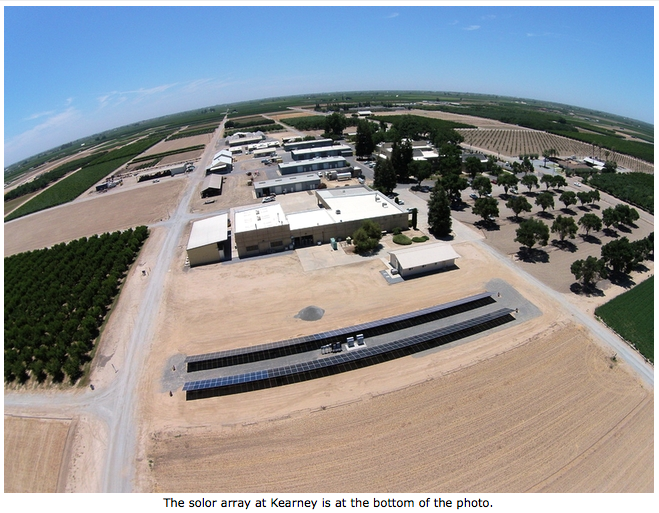
JKB Energy has completed three phases of a solar energy project at UC ANR Kearney Agricultural Research and Extension (KARE) Center in Parlier. The system eliminates thousands of pounds of emissions and saves the center tens of thousands of dollars in energy costs annually, according to a JKB Energy news release. Kearney is one of nine research and extension centers located throughout the state that are part of the University of California Division of Agricultural and Natural Resources (UC ANR).

JKB Energy has worked with Robert Ray, superintendent of the UC ANR KARE physical plant, to maximize their bill offset program. Since 2012, when the program started, UC ANR KARE has steadily cut its energy costs.

After the completion of the final phase, projected for 2016, the center’s “postharvest” meter’s annual electricity costs will be offset by approximately 96 percent. Postharvest research is science conducted after a crop has been harvested and includes such processes as of cooling, cleaning, sorting, and packaging and how these might affect the quality of stored fruits and vegetables.

Screen Shot 2015-07-21 at 11.47.11 AM Solar array in bottom of photo

SunEdison Deploys 50 Megawatts Of Energy Storage For Southern California Edison

July 16, 2015-
— Landmark deal is first of its kind to replace utility power generation capacity with battery storage located at customer sites
— 200 Megawatt hours of battery storage capacity to be built out over 2016 and 2017
— AMS storage assets are first anticipated to be acquired by TerraForm Power
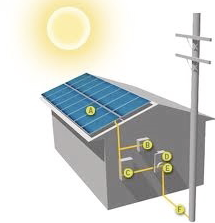
Screen Shot 2015-07-16 at 10.47.20 AMBELMONT, Calif. and SAN FRANCISCO, July 15, 2015 /PRNewswire/ — Advanced Microgrid Solutions (AMS), a  developer of customer-sited energy storage systems that create Hybrid-Electric Buildings™, and SunEdison, Inc. (NYSE: SUNE), the world’s largest renewable energy development company, today announced they have signed a joint development agreement to finance and deliver 50 megawatts of energy storage for Southern California Edison (SCE) under long-term capacity contracts. Once operational, these AMS projects are expected to be the first storage assets to be acquired by Terraform Power, Inc. (Nasdaq: TERP), a global owner and operator of clean energy power plants.

The storage system contracts were awarded to AMS as part of SCE’s 2013 Local Capacity Requirement solicitation, and will be built on commercial and industrial customer sites throughout the West Los Angeles Basin.

SCE will purchase capacity from the storage systems under a 10-year capacity contract, and expects to use the electricity stored in these fleets of hybrid-electric buildings in part to offset the power once produced by the decommissioned San Onofre nuclear power plant and other soon-to-be retired gas-fired plants. This program is part of SCE’s plan to modernize the grid by adding 2.2 gigawatts of newer, cleaner resources including energy storage and renewables by 2022.

Battery storage offers several benefits over traditional power sources: it is cleaner, responds faster, can be located directly at load centers and is increasingly less expensive than other options for tackling peak electricity demand.

“We’re enthusiastic about working with SunEdison as our development and financing partner to deliver these innovative solutions to our host customers and SCE,” said Susan Kennedy, Advanced Microgrid Solutions chief executive officer. “We are creating the future of the energy grid.”

“SunEdison is excited to be working with both Advanced Microgrid Solutions and SCE to integrate today’s leading-edge technology into the energy grid,” said Tim Derrick, SunEdison general manager of Advanced Solutions. “AMS’ energy storage solutions are truly ground-breaking. With these systems, the utility will for the first time be tapping into energy stored by its own customers to provide grid support during times of high demand. SCE deserves great credit for being the first utility to issue local capacity contracts for behind-the-meter, aggregated battery storage.”

The AMS-SunEdison partnership combines Advanced Microgrid’s innovative designs and technology partnerships with SunEdison’s development and financing expertise. The first fleet of energy storage systems is expected to begin commercial operation in 2016 in Irvine, California.

“We are excited to be expanding our clean energy portfolio with a new asset type that provides both attractive returns and strong growth prospects,” said Carlos Domenech, TerraForm Power’s chief executive officer.  “TerraForm Power anticipates acquiring these systems once operational, making them the first storage projects in our fleet. These systems fit well with our contracted clean power generation fleet, as they have long term capacity contracts with SCE, a leading utility and customer with a strong balance sheet and credit rating.”

About Advanced Microgrid Solutions

Advanced Microgrid Solutions (AMS) is pioneering the use of energy storage systems for electric utility grid support. Using a technology-agnostic approach, the company designs, finances, installs and manages advanced energy storage solutions for commercial, industrial and government building owners. To learn more visit http://www.advmicrogrid.com/

About SunEdison

SunEdison is the world’s largest renewable energy development company and is transforming the way energy is generated, distributed, and owned around the globe. The company develops, finances, installs, owns and operates renewable power plants, delivering predictably priced electricity to its residential, commercial, government and utility customers. SunEdison is one of the world’s largest renewable energy asset managers and provides customers with asset management, operations and maintenance, monitoring and reporting services. Corporate headquarters are in the United States with additional offices and technology manufacturing around the world. SunEdison’s common stock is listed on the New York Stock Exchange under the symbol “SUNE.” To learn more visit www.sunedison.com.

About TerraForm Power

TerraForm Power is a renewable energy leader that is changing how energy is generated, distributed and owned. TerraForm Power creates value for its investors by owning and operating clean energy power plants. For more information about TerraForm Power, please visit www.terraform.com.

Forward Looking Statements

Certain matters discussed in this press release are forward-looking statements, including: 200 Megawatt hours of battery storage capacity to be built out over 2016 and 2017; SCE will purchase capacity from the storage systems under a 10-year capacity contract, and expects to use the electricity stored in these fleets of hybrid-electric buildings in part to offset the power once produced by the decommissioned San Onofre nuclear power plant and other soon-to-be retired gas-fired plants; and this program is part of SCE’s plan to modernize the grid by adding 2.2 gigawatts of newer, cleaner resources including energy storage and renewables by 2022.  Such statements involve certain risks and uncertainties that could cause actual results to differ materially from those in the forward-looking statements. Potential risks and uncertainties include changes in applicable regulatory requirements and incentives for production of solar power; and general business and economic conditions, including seasonality of the industry, and other risks described in SunEdison’s filings with the United States Securities and Exchange Commission. These forward-looking statements represent SunEdison’s judgment as of the date of this press release. SunEdison disclaims, however, any intent or obligation to update these forward-looking statements.

Advanced Microgrid Solutions Logo

State Study Backs Fracking

July 15,2015-Screen Shot 2015-07-15 at 1.21.52 PM
California Council on Science and Technology and Berkeley Lab Release Scientific Assessment of Hydraulic Fracturing in California
SACRAMENTO—In collaboration with the(Berkeley Lab), the Lawrence Berkeley National Laboratory California Council on Science and Technology (CCST) today
discusses how hydraulic fracturing and acid well stimulation could affect water, atmosphere, seismic activity, wildlife and vegetation, and human health in California. The report also identifies knowledge gaps and alternative practices that could avoid or mitigate these possible impacts. of hydraulic fracturing and acid well stimulation in California
“We applaud state leaders for seeking an independent scientific assessment to inform policy choices about hydraulic fracturing and acid stimulation. CCST was created as an independent organization via the Legislature to do exactly this kind of careful scientific evaluation,” said CCST Executive Director Dr. Susan Hackwood.
A science team composed of Berkeley Lab researchers and subcontractors developed the findings based on publically available data, original analyses, and a review of relevant literature. released a peer-reviewed independent scientific assessment .The report was prepared for the California Natural Resources Agency in response to
Senate Bill 4. Issued today are the second and third volumes in a three-volume CCST
study released in January 2015.
The steering committee in collaboration with the science team developed under seven major principles designed to improve the safety of hydraulic fracturing and acid stimulation in California:
Maintain, expand and analyze data on the practice of hydraulic fracturing and acid stimulation in California. Based on a review of published literature and official and voluntary databases, one-fifth of oil and gas production in California over the last decade came from wells that had been subject to hydraulic fracturing. Compared to practices in other states, current hydraulic fracturing in California tends to be performed in shallower vertical wells as opposed to horizontal and requires much less water per well. Operators in California use about 800 acre-feet (about a million m3) of water per year for hydraulic fracturing. This does not represent a large amount of freshwater compared to other human water use. Depending on the local scarcity of water, recycling the water used to create hydraulic fractures may have modest benefits. Far more water is used for enhanced oil recovery using water or steam flooding in the same fields, and large volumes of water of various salinities and qualities get produced along with the oil. Produced water from oil and gas production, appropriately tested and treated, has potential for beneficial reuse. The report recommends identifying opportunities for water conservation and reuse in the oil and gas industry as a whole.
The report also points out the need for improving and modernizing public record keeping for oil and gas development
Prepare for potential future changes in hydraulic fracturing and acid stimulation practice in California. Near-term expanded production in the Monterey Formation seems unlikely, but the state should request a reliable, scientific assessment of this potential. The report identifies the footprint of potential production in the Monterey Formation and none of this geography is more than 20 km from existing oil and gas production. The state should monitor drilling into this formation as an indication of potential new production. Use of hydraulic fracturing will most likely continue in and near existing oil fields in the San Joaquin Basin and to a lesser extent in other areas of California.
Account for and manage both direct and indirect impacts. Direct impacts of hydraulic fracturing are caused by the activity of hydraulic fracturing itself. All the major potential direct impacts identified in this study (such as potential contamination of groundwater) are due to the use of hazardous chemicals. The report recommends full disclosure of chemicals used, disallowing the use of any chemical that has unknown environmental properties, and limiting the use of hazardous chemicals to avoid some of the potential impacts.
conclusions and recommendations
Hydraulic fracturing enables oil and gas development where it would otherwise not occur. The impacts of this development are indirect impacts of hydraulic fracturing. The report recommends evaluation of indirect impacts of concern (such as disposal of produced water, habitat disruption, emissions, health impacts, oil spills etc.) for all oil and gas development, rather than just the portion of development enabled by well stimulation.
Manage water produced from hydraulically fractured or acid stimulated wells appropriately. The report finds that operators dispose of over half of the produced water from hydraulically fractured in pits which allow water to percolate into the ground and thus could contaminate groundwater. The report recommends phasing out disposal in percolation pits unless appropriate testing, treatment and regulatory oversight are implemented.
The report also concludes that, to date, there have been no recorded cases of induced seismicity linked to disposal of produced water by underground injection in California, but given the risks seen in other regions and California’s propensity for earthquakes, more research and monitoring is needed.
Add protections to avoid groundwater contamination: This assessment did not find recorded negative impacts from hydraulic fracturing chemical use in California, but no agency has systematically investigated possible impacts. The report does identify a few locations in the San Joaquin Valley and Los Angeles Basin where shallow hydraulic fracturing occurs near protected groundwater. This presents the possibility that groundwater may be at risk and recommends that these situations get closer attention, monitoring and oversight.
One important possible pathway for hydraulic fracturing chemicals to leak is through hydraulic fractures intersecting other nearby wells. The report recommends a review of the effectiveness of regulations designed to prevent these potential subsurface contamination pathways.
Understand and control emissions and their impact on environmental and human health: In California, oil produced from hydraulically fractured reservoirs emits fewer greenhouse gases per barrel than oil produced in other ways, such as steam injection.
The report also notes that toxic air pollutant concentrations may be more elevated near active oil and gas development than regional averages. The report recommends measuring toxic air contaminant concentrations and monitoring health risks and impacts near all oil and gas wells to assess the need for further controls. Such controls may include emissions controls and limits on the proximity of oil and gas development to human populations to protect human health.
Take an informed path forward: The report identifies a set of important data gaps and detailed research priorities to address many remaining unanswered questions
about the impacts of well stimulation-enabled oil and gas production in California, and recommends establishing a standing scientific advisory committee to inform decisions on the regulation of oil and gas development.
http://ccst.us/publications/WST
Volume I, which was released in January 2015, describes how well stimulation technologies work, how and where operators deploy these technologies for oil and gas production in California, and where they might enable production in the future.
Volume II, issued today, discusses how hydraulic fracturing and acid stimulation could affect water, atmosphere, seismic activity, wildlife and vegetation, and human health in California.
Volume III, also released today, presents four case studies that assess environmental issues and qualitative risks for specific geographic regions: Offshore, the Los Angeles Basin, the Monterey Formation, and the San Joaquin Basin.
The Summary Report summarizes the issues in all three volumes and provides all the conclusions and recommendations for the series.
###
The California Council on Science and Technology is a nonpartisan, not-for-profit corporation established in 1988 via a unanimous vote of the California Legislature. Bringing together world-class expertise from academia, the national labs, companies and a broad array of Senior Fellows who are distinguished scientists and technical experts, CCST offers expert advice to the Governor, the Executive Branch and the Legislature on science and technology-related policy issues. In recent years, CCST has produced a series of reports on California’s technical innovation, water, energy, STEM and digitally enabled education. Please visit ccst.us.
The full three-volume report, a summary report and an executive summary can be
viewed at:
Lawrence Berkeley National Laboratory addresses the world’s most urgent
scientific challenges by advancing sustainable energy, protecting human health,
creating new materials, and revealing the origin and fate of the universe. Founded in
1931, Berkeley Lab’s scientific expertise has been recognized with 13 Nobel prizes.
The University of California manages Berkeley Lab for the U.S. Department of
Energy’s Office of Science. For more, visit www.lbl.gov. The Office of Science is the
single largest supporter of basic research in the physical sciences in the United
States, and is working to address some of the most pressing challenges of our time.
For more information, please visit science.energy.gov.

Energy Commission Grants Hydrogen Energy California Suspension, Denies Request to Terminate Power Plant Project

Kern County Project Gets 6 Month Reprieve

July 9,2105-

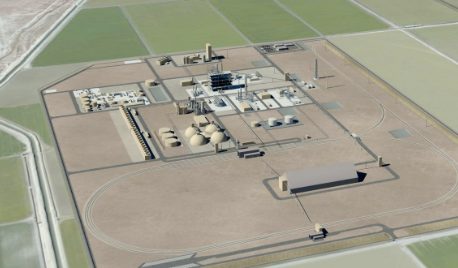
SACRAMENTO – The California Energy Commission committee reviewing the proposed 390-megawatt Hydrogen Energy California (HECA) power plant rejected a motion to terminate the project’s application for certification (AFC) July 3 and granted a separate request to suspend the AFC for six months.

Screen Shot 2015-07-09 at 10.47.04 AMHydrogen Energy California LLC submitted the request for suspension May 5 to allow more time to identify a partner to purchase carbon dioxide (CO2) produced by the plant and negotiate a carbon sequestration agreement, key components of the project’s 2009 revised AFC. According to the application, the plant would gasify blends of petroleum coke and coal to produce syngas that would fuel a combustion turbine to produce electricity. About 90 percent of the carbon dioxide emissions would be captured, and, through an agreement with Occidental of Elk Hills, be transported by pipeline to a nearby oil field where it would be injected into older wells to facilitate enhanced oil recovery.

In 2013, terms of the agreement with Occidental of Elk Hills changed, and the applicant began seeking other buyers for the carbon dioxide and a new sequestration agreement. No buyer had been found by March 2015, when the Sierra Club, HECA Neighbors and the Association of Irritated Residents filed a motion to terminate the AFC alleging the applicant had not exercised due diligence in pursuit of the AFC.

Based on testimony from Hydrogen Energy California LLC representatives at a May 6 committee status conference and hearing, the committee – Commissioners Karen Douglas, presiding member, and Andrew McAllister, associate member – found that the applicant, through no fault of its own and despite continued efforts, had been unable to secure a revised agreement with Occidental of Elk Hills, its successor California Resources Corporation, or other entities.

In granting the suspension, the committee required Hydrogen Energy California, LLC to achieve several milestones by January 6, including executing a carbon dioxide buyer agreement and carbon sequestration agreement, providing an up-to-date listing of commercial items to be produced by the project, explaining in writing whether production of the items comply with Kern County’s general plan and zoning ordinance, and docketing outstanding data requests from various parties. Failure of the applicant to comply with any of the milestones by January 6 could result in the committee moving to terminate the AFC.

‘Carbon intensity’ of economy continues to drop even as state GDP grows

California greenhouse gas inventory shows state is on track to achieve 2020 AB 32 target

July 9,2015-
SACRAMENTO – The Air Resources Board today released the latest edition of the state’s Greenhouse Gas Emission Inventory, which shows that emissions fell by 1.5 million metric tons in 2013 compared with the previous year even while the economy grew at 2.0 percent, a rate greater than the national average.

Screen Shot 2015-07-09 at 8.22.45 AM“This inventory provides convincing evidence that California can grow its economy and continue to fight climate change,” said Board Chairman Mary D. Nichols. “As we move toward an international climate agreement in Paris, California is showing the world how to throw off the shackles of fossil fuel dependency. No longer must economic growth result in smokestacks and pollution.  California is on a sustainable trajectory towards a clean energy economy. ”

California’s annual statewide greenhouse gas (GHG) emission inventory is an important tool for establishing historical emission trends and tracking California’s progress toward the goal set by the Global Warming Solutions Act of 2006 (AB 32).The law set a target of reducing emissions to 1990 levels by 2020.

After rising during the 2000s, the state’s overall greenhouse gas emissions fell in 2008 as a result of the recession. The decline leveled off from 2009 to 2011 and increased by 2 percent in 2012, due in part to the closure of the San Onofre Nuclear Generating Station and a drop in hydropower generation. The drop in hydropower has now been completely replaced by in-state wind and solar power. The 2013 inventory shows a decline of 1.5 million metric tons in emissions compared with 2012.

Overall trends in the inventory also demonstrate that the carbon intensity of California’s economy, the amount of carbon pollution per million dollars of GDP, is declining. Carbon intensity has dropped 23 percent from the peak in 2001, and declined an average of 1.9 percent per year over the past four years as GDP grew 6.6 percent overall during the same period. This demonstrates a decoupling of economic growth and carbon pollution.

Per capita emissions continued their decline. Over the 2000 to 2013 period, per capita GHG emissions in California dropped from a peak of 14.0 tons per person in 2001 to 12.0 tons per person in 2013, a 14 percent decrease overall.

Emissions from most major economic sectors in California either declined or remained flat in 2013. Industrial emissions were about the same as in 2012, while the electric power sector showed a slight decrease from 2012.

Emissions from the transportation sector rose by a single percentage point compared to 2012, but are still down 11 percent from the peak year of 2007. The main source of the rise in transportation emissions was the increased use of diesel by trucks. Transportation remains the largest source of greenhouse gas emissions at 37 percent of total emissions.

The data in the inventory comes from a number of sources including California’s Mandatory Greenhouse Gas Reporting Regulation, the California Energy Commission, and the U.S. Energy Information Administration.

California has developed an integrated set of programs to meet the greenhouse gas reduction goals of AB 32. The primary programs are the Renewable Portfolio Standard, the Advanced Clean Cars program, the Low Carbon Fuel Standard, and the Cap-and-Trade program. Reductions also result from numerous energy efficiency and conservation programs. To learn more about these programs, click here.

Governor Edmund G. Brown, Jr. recently established a 2030 greenhouse gas reduction goal of 40 percent below 1990 levels, an interim target toward meeting the 2050 goal of reducing emissions 80 percent below 1990 levels.

California has also joined with a growing list of states and provinces from around the world in a first-of-its-kind agreement to limit global warming to less than 2 degrees Celsius. To date, 14 states have signed the so-called “Under 2 MOU,” which provides a template for the world’s nations to follow as work continues toward an international agreement at this year’s United Nations Climate Change Conference in Paris.

You can find the California Greenhouse Gas Inventory and a related discussion of trends here.