Low Income Communites To Get Help To Install Solar

July 7, 2015

From The National Journal

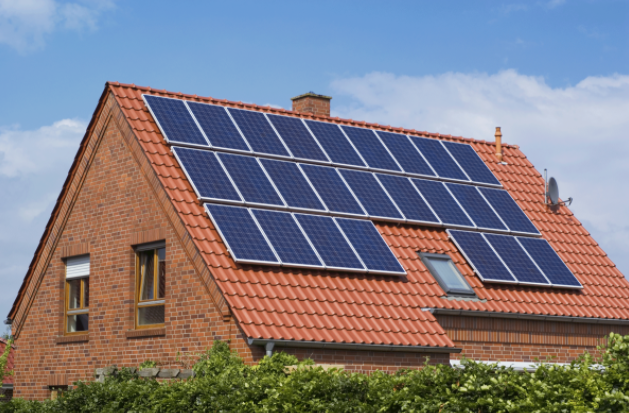
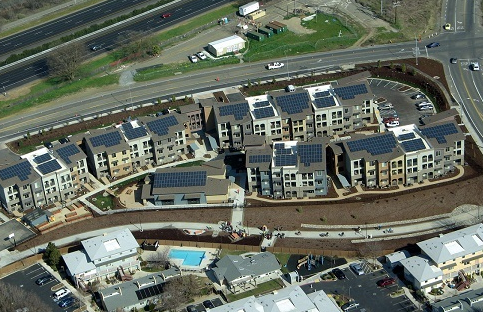
Screen Shot 2015-07-07 at 9.40.47 AMThe White House is unveiling a sweeping effort to increase access to solar power—particularly in low-income communities.

Administration officials will announce a slate of executive actions and private sector commitments on Tuesday designed to help underserved communities power their homes with solar energy while expanding opportunities for Americans to get jobs in the solar industry. The initiative is the latest action in President Obama’s far-reaching energy agenda.

“It is without a doubt a win-win-win,” Maryland Democratic Rep. Elijah Cummings said during a call with reporters on Monday announcing the new initiatives. “Solar energy not only serves our planet by reducing pollution and battling climate change, it also serves people by lowering their energy bills.”

The cost to install solar panels has dropped dramatically in recent years due to technological innovation and new financing models. But solar power still makes up just a tiny sliver of total U.S. electricity generation—and significant hurdles to deployment remain.

The White House is seeking to address some of those obstacles, including a lack of expertise in solar panel installation. As part of the initiative, the Housing and Urban Development Department will dole out technical assistance to affordable-housing organizations as a way of encouraging solar installation. The administration also plans to install 300 megawatts of renewable power in federally subsidized housing.

Innovative Wave Power Device Starts Producing Clean Power in Hawaii

Energy Watch

July 6, 2015 – 6:31pm

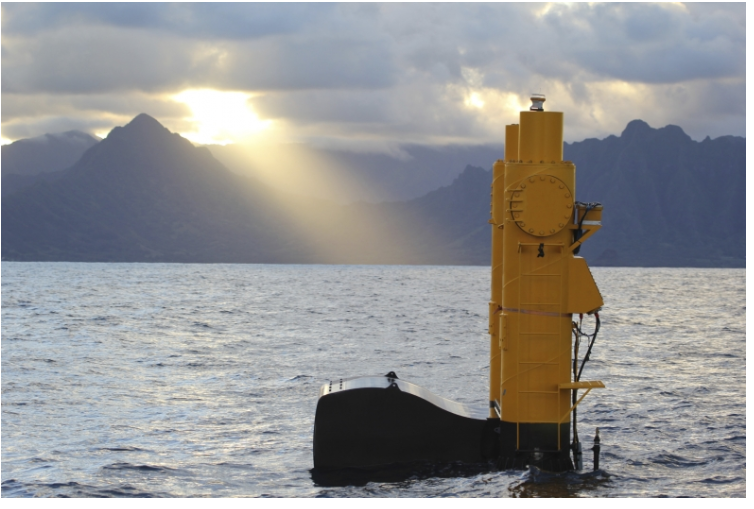
Screen Shot 2015-07-07 at 9.35.07 AMWith support from the Energy Department and the U.S. Navy, a prototype wave energy device has advanced successfully from initial concept to grid-connected, open-sea pilot testing. The device, called Azura, was recently launched and installed in a 30-meter test berth at the Navy’s Wave Energy Test Site (WETS) in Kaneohe Bay, on the island of Oahu, Hawaii. This pilot testing is now giving U.S. researchers the opportunity to monitor and evaluate the long-term performance of the nation’s first grid-connected wave energy converter (WEC) device to be independently tested by a third party—the University of Hawaii—in the open ocean.

The project supports the Energy Department’s mission to research, test, and develop innovative technologies capable of generating renewable, environmentally responsible, and cost-effective electricity from clean energy resources, including water. Marine and hydrokinetic (MHK) technologies, which generate power from waves, tides, or currents, are at an early but promising stage of development. Many coastal areas in the United States have strong wave and tidal resources, and more than 50 percent of the U.S. population lives within 50 miles of a coastline, making transmission from these resources more economical. With further progress towards commercialization, MHK technologies could make substantial contributions to our nation’s electricity needs. To accelerate commercialization of wave energy devices, the Energy Department funds research and development—from laboratory and field-testing of individual components, up to demonstration and deployment of complete utility-scale systems.

The first phase of Azura’s development involved testing a smaller prototype in a wave tank and later deploying a prototype—at the same scale as the new deployment—in a controlled, open-sea area off the coast of Oregon in 2014. Those successful tests helped Azura’s developer, Northwest Energy Innovations (NWEI) of Portland, Oregon, verify the functionality of the device while collecting comprehensive performance data that could lower the cost of wave energy technologies in the future.

To further advance Azura towards commercialization, NWEI recently launched its grid-connected 20-kilowatt demonstration project at WETS. The current phase of in-water testing at the WETS’s 30-meter test berth has already proven valuable in gathering performance and reliability data from the device in deepwater, open-ocean conditions. The data will be used to further optimize Azura’s performance and refine existing wave energy computer simulations, ultimately supporting commercialization of this technology.

NWEI, with $5 million in additional funding from the Energy Department, will apply

Californians Now Pay 6 Cents Lower Gas Tax

July Screen shot 2012-06-09 at 7.35.08 AM3,2015-

As of July 1 Californians are paying 6 cents less to the state for every gallon of gas. But don’t look for a 6 cent saving at the pump even though gasoline prices are trending down. In the past few days gas has gone down only about 1 cent. California’s lowest price is around $2.81 in the Sacramento area.

State Board of Equalization announced that California’s excise tax on gasoline will decrease by six cents per gallon, from 36 cents to 30 cents per gallon, beginning July 1, 2015.

RoofTop Solar Impact: U.S. Solar Is Producing 50 Percent More Electricity Than We Thought

from SEIA

July 1,2015
Actual solar electricity production in the United States is 50% higher than previous estimates, according to new analysis by the Solar Energy Industries Association (SEIA) and kWh Analytics.
All told, analysts found that solar energy systems in the U.S. generated 30.4 million megawatt-hours (MWh) of electricity in the 12 months ending in March 2015. Three states – California, Arizona, and Hawaii – can now say that solar provides more than 5% of their total annual electricity demand.
The new estimate includes generation from behind-the-meter solar systems, which is not included in estimates produced by the Energy Information Administration (EIA). The EIA uses solar power generation information collected with their Form 923 survey, which only applies to utility-scale power plants that have more than 1,000 kW in solar generation capacity (i.e. are larger than 1,000 kWac). Given that the average solar PV system that you will find on the rooftops of houses in the U.S. has just 5 kWac of generation capacity, the electricity that they produce is not captured in EIA statistics.
As a result, the EIA estimated that solar power produced 20.2 MWh of electricity over the 12 months ending in March 2015 compared to the 30.4 MWh published in the analysis from SEIA and kWh Analytics.
According to Richard Matsui, Chief Executive Officer of kWh Analytics, the fact that their estimates are so much higher than the EIA’s is not surprising and is not an indicator of subterfuge:
“It’s an open secret among industry watchers that the EIA has been systematically underestimating energy output from solar. It’s not due to any intentional bias against solar itself; for decades, the EIA only collected data from utility-scale power plants because virtually all power plants were utility-scale. The explosion of distributed, rooftop solar in just a few years has created an enormous data management challenge for the EIA.”

Screen Shot 2015-07-01 at 6.37.27 PM

Kings County: Largest Solar Plant Breaks Ground

June 19,2015–

SunPower Starts Construction On 102-MW Henrietta Project
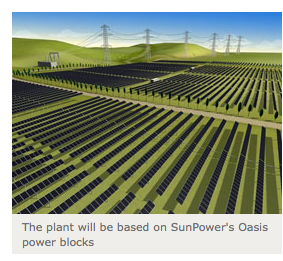
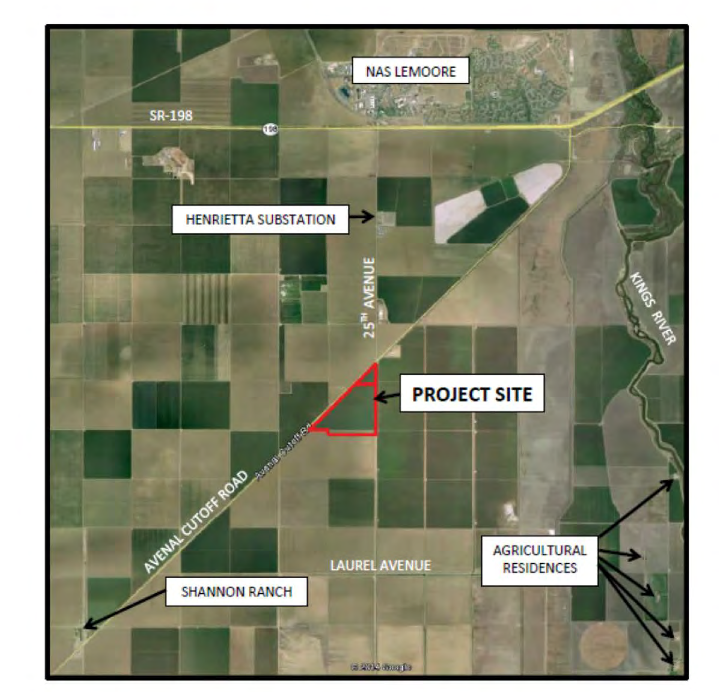
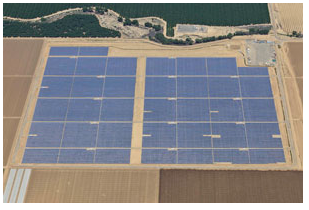
Screen Shot 2015-06-20 at 10.29.42 AMSunPower Corp. last week announced it has started construction on the 102-megawatt (AC) Henrietta Solar Project in Kings County, Calif. The system will generate power for Pacific Gas and Electric’s customers under a long-term power purchase agreement. SunPower expects the plant to be operational by the end of 2016.
The plant near NAS Lemoore is by far the largest solar project in the county and is near where several other solar farms will operate.The site will be a future landmark for travelers heading to the Coast on the Avenal Cutoff.Nearby two other major solar plants will be built totaling over 50MW and also should be operating at the end of next year when federal incentives expire.
SunPower anticipates that about 350 jobs will be created during construction of Henrietta. Approximately $73 million in local economic impact and an estimated $3.8 million in tax revenue will be generated as a result of the project says the company. Once operational, the Henrietta project is expected to generate enough electricity for more than 22,000 homes, according to estimates provided by the Solar Energy Industries Association.
SunPower is constructing a SunPower® Oasis® Power Plant system at the approximately 670- acre Henrietta site. The company will utilize a  technology that includes robotic solar panel cleaning capability that uses 75 percent less water than traditional cleaning methods and can help improve system performance by up to 15 percent.

EPA Study: Hydraulic Fracking Little Impact To Drinking Water

Release Date: 06/04/2015

Assessment shows hydraulic fracturing activities have not led to widespread, systemic impacts to drinking water resources and identifies important vulnerabilities to drinking water resources.

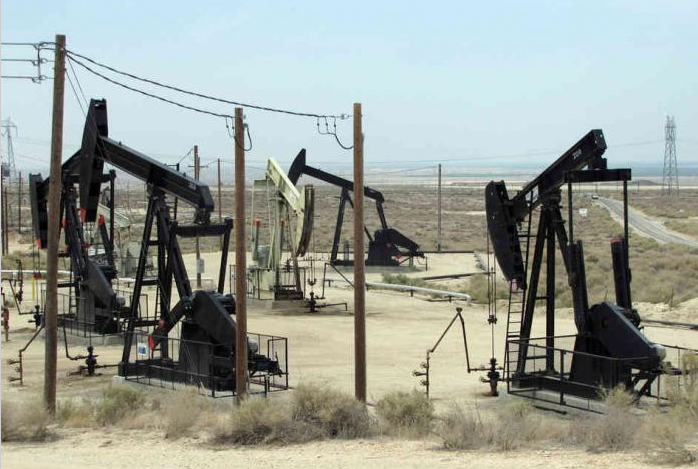
Screen Shot 2015-06-04 at 11.03.53 AMWASHINGTON—The Environmental Protection Agency (EPA) is releasing a draft assessment today on the potential impacts of hydraulic fracturing activities on drinking water resources in the United States. The assessment, done at the request of Congress, shows that while hydraulic fracturing activities in the U.S. are carried out in a way that have not led to widespread, systemic impacts on drinking water resources, there are potential vulnerabilities in the water lifecycle that could impact drinking water. The assessment follows the water used for hydraulic fracturing from water acquisition, chemical mixing at the well pad site, well injection of fracking fluids, the collection of hydraulic fracturing wastewater (including flowback and produced water), and wastewater treatment and disposal [http://www2.epa.gov/hfstudy/hydraulic-fracturing-water-cycle].

“EPA’s draft assessment will give state regulators, tribes and local communities and industry around the country a critical resource to identify how best to protect public health and their drinking water resources,” said Dr. Thomas A. Burke, EPA’s Science Advisor and Deputy Assistant Administrator of EPA’s Office of Research and Development. “It is the most complete compilation of scientific data to date, including over 950 sources of information, published papers, numerous technical reports, information from stakeholders and peer-reviewed EPA scientific reports.”

EPA’s review of data sources available to the agency found specific instances where well integrity and waste water management related to hydraulic fracturing activities impacted drinking water resources, but they were small compared to the large number of hydraulically fractured wells across the country. The report provides valuable information about potential vulnerabilities, some of which are not unique to hydraulic fracturing, to drinking water resources, but was not designed to be a list of documented impacts.

These vulnerabilities to drinking water resources include:

water withdrawals in areas with low water availability;

hydraulic fracturing conducted directly into formations containing drinking water resources;

inadequately cased or cemented wells resulting in below ground migration of gases and liquids;

inadequately treated wastewater discharged into drinking water resources;

and spills of hydraulic fluids and hydraulic fracturing wastewater, including flowback and produced water.

Also released today were nine peer-reviewed EPA scientific reports (www.epa.gov/hfstudy). These reports were a part of EPA’s overall hydraulic fracturing drinking water study and contributed to the findings outlined in the draft assessment. Over 20 peer-reviewed articles or reports were published as part of this study [http://www2.epa.gov/hfstudy/published-scientific-papers].

States play a primary role in regulating most natural gas and oil development. EPA’s authority is limited by statutory or regulatory exemptions under the Clean Water Act, Safe Drinking Water Act, the Comprehensive Environmental Response, Compensation and Liability Act, and the Resource Conservation and Recovery Act. Where EPA’s exemptions exist, states may have authority to regulate unconventional oil and gas extraction activities under their own state laws.

New Yeast For Biofuel Production

  • A yeast engineered by Mascoma and BESC could hold the key to accelerating the production of ethanol in the U.S.
    Oak Ridge National Laboratory

June 4,2015-

Biofuels pioneer Mascoma LLC and the Department of Energy’s BioEnergy Science Center have developed a revolutionary strain of yeast that could help significantly accelerate the development of biofuels from nonfood plant matter.

The approach could provide a pathway to eventual expansion of biofuels production beyond the current output limited to ethanol derived from corn.

C5 FUEL, engineered by researchers at Mascoma and BESC, features fermentation and ethanol yields that set a new standard for conversion of biomass sugars from pretreated corn stover—the non-edible portion of corn crops such as the stalk—converting up to 97 percent of the plant sugars into fuel.

Researchers announced that while conventional yeast leaves more than one-third of the biomass sugars unused in the form of xylose, Mascoma’s C5 FUEL efficiently converts this xylose into ethanol, and it accomplishes this feat in less than 48 hours. The finding was presented today at the 31st International Fuel Ethanol Workshop in Minneapolis.

“The ability to partner the combined expertise at Mascoma and BESC in engineering microbes to release and convert sugars from lignocellulosic biomass has greatly accelerated the translation of basic research outcomes to a commercial product,” BESC Director Paul Gilna said.

Gilna noted that this success and continued efforts through BESC could go a long way toward reducing the cost of ethanol and growing the number of commercial-level ethanol production plants. A key focus of BESC is to use basic research capabilities and expertise to validate the consolidated bioprocessing approach to improve cost competitiveness.

“Driving down the cost to develop, verify and consolidate bioprocessing was at the heart of the BESC effort when we began in 2007, and this achievement allows us to advance to the next challenge,” Gilna said. “This accomplishment represents a clearly impactful example of how our partnering with industry can accelerate the translation of our research capabilities and findings into commercial products.”

Although cellulosic biomass such as corn stover, wheat straw and bagasse (the fibrous remains after sugar is extracted from sugarcane or sorghum) is abundant and cheap, because of recalcitrance—a plant’s resistance to releasing sugars for conversion to alcohol—it is much more difficult to utilize than corn. However, Mascoma’s new strain of yeast, which is one of many strains Mascoma developed as part of BESC over the last two years, proved highly effective at xylose conversion.

While most processing methods simply convert cellulose to sugar, this new approach also converts hemicellulose, which significantly increases overall sugar yield and thereby increases the level of ethanol produced. In fact, the new strain of yeast simultaneously yields 97 percent conversion of xylose and glucose—and does so in a significantly shorter period of time than existing approaches.

Kevin Wenger, executive vice president of Mascoma, a subsidiary of Lallemand Inc., shares Gilna’s enthusiasm and emphasized that the BESC model of collaboration made this result possible.

“The scientific and technical resources that we have had access to as a member of BESC for the past six years have made possible the development of this uniquely high-performing yeast product,” Wenger said. “This is just the start of a pipeline of second-generation yeast products planned by Mascoma and Lallemand Biofuels and Distilled Spirits.”

The next step for BESC will be to demonstrate and again validate the application of the consolidated bioprocessing approach using thermophilic, or heat-loving, bacteria to produce biofuels directly from biomass in a single process.

Led by Oak Ridge National Laboratory, BESC is one of three DOE Bioenergy Research Centers established by the DOE’s Office of Science in 2007. The centers support multidisciplinary, multi-institutional research teams pursuing the fundamental scientific breakthroughs needed to make production of cellulosic biofuels, or biofuels from nonfood plant fiber, cost-effective on a national scale. The three centers are coordinated at ORNL, Lawrence Berkeley National Laboratory and the University of Wisconsin-Madison in partnership with Michigan State University.

Gas Prices Head Lower

May 31,2015-

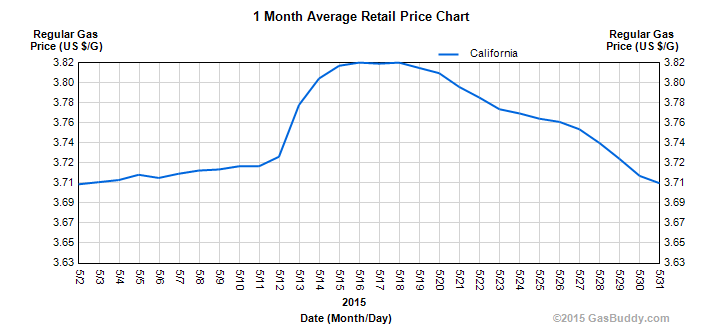
California average gasoline prices are down in the past week more than a dime to around $3.71 a gallon as of May 31. The drop coming after Memorial Day is reflecting moderately lower oil prices as well as an end to refinery issues in the state. Gas prices around the state have been rising since mid-April when they were down in the $3 range.

Screen Shot 2015-05-31 at 8.08.23 AM

Kings County Planners Hear 22 MW Solar Farm Application

May 29,2015-

The Kings County Planning Commission will hear an application to build a 22MW solar farm near NAS Lemoore on June 1. The project is being promoted by Visalia based Westside Assets, would be built in2 phases along the Avenal Cutoff near the Henrietta power station.The project  is expected to be built over the next year with the power being sold to a southern California community.

Screen Shot 2015-05-26 at 11.26.02 AM

Fresno County To Get Two New Solar Projects Tied To University of California

May 29,2015-

Fresno County is processing two new solar farm projects that will deliver renewable power to the University of California system next year.

Last fall Frontier Renewables LLC, a San Mateo, California-based utility scale project developer, announced the signing of two 25-year power purchase agreements (“PPAs”) with the University of California to provide its campuses and medical centers with a total of 80 megawatts of clean, renewable solar photovoltaic energy.

The contracts, representing the largest solar energy purchase by a U.S. higher education institution, are between The Regents of the University of California and Five Points Solar Park, LLC and Giffen Solar Park, LLC, two subsidiaries of Frontier Renewables. The projects are 60 megawatts and 20 megawatts in size and are both located in Fresno County, California.

Screen Shot 2015-05-29 at 9.52.24 AM

This month the county began the processing of the environmental documents for the Five Points project. 

Construction for the Five Points and Giffen projects is expected to begin in late 2015 and early 2016, respectively, and the plants will begin generating clean power by the end of 2016. The two projects combined will produce approximately 206,000 megawatt-hours per year, enough to power the equivalent of 30,000 homes and avoid more than 88,000 metric tons of CO2 per year. The projects are projected to create 237 jobs during their construction and operational phases.

The two agreements are major components of the University of California’s sustainability initiative. Announced by UC President Janet Napolitano in November 2013, the initiative’s goal is to make UC the first research university to achieve carbon neutrality by 2025, in part by re-examining the energy sources powering UC’s 10 campuses and five medical centers.