
 LOS ANGELES, CALIFORNIA – Despite battling a strong dollar and weak economic conditions worldwide, California’s exporters still managed to post impressive gains in June, according to an analysis by Beacon Economics of foreign trade data released yesterday by the U.S. Commerce Department.
The value of goods shipped abroad by California businesses in June totaled $15.18 billion, a nominal increase of 9.7% over the $13.83 billion recorded in June 2011. By comparison, overall U.S. merchandise exports were up by only 8.0% over the same period. While exports to some economies – such as Asia and Europe – have flattened, other important trading partners such as Mexico have moved in to fill the gap.
“With the health of most foreign markets in doubt, June’s numbers continue to demonstrate the resilience of California’s export industries, especially in our hi-tech manufacturing sector,” said Jock O’Connell, Beacon Economics’ International Trade Adviser.
The state’s exports of manufactured goods jumped by 10.7% to $9.71 billion from $8.78 billion last June. Non-manufactured exports (chiefly raw materials and agricultural products) declined by 4.1% to $1.58 billion from $1.65 billion, while re-exports rose by 14.0% to $3.89 billion from $3.41 billion.
For the first half of 2012, Beacon Economics’ reports that California’s merchandise export trade is running about 5% ahead of the inflation-adjusted pace set in 2008, the peak pre-recession year for the state’s exports. This success story may have something to do with the impressive employment numbers being posted in the state. “Over the last few months California has been responsible for close to half of the national job growth,” says Christopher Thornberg, Founding Partner of Beacon Economics. “Some of this can be attributed to improving local demand for goods, but much of it is clearly due to continued growth in international demand for goods and services produced here.”
However, Beacon Economics warns that the next few months are apt to feature a combination of strong headwinds and a reduced pace of export growth. With the dollar currently trading about 12% over its value last summer, U.S. exports are accordingly more expensive in global markets.
At the same time, the European Union’s lingering malaise has been affecting export-oriented economies in Asia and Latin America that had come to rely on European demand for imported goods. Major developing economies like India and Brazil have been stumbling lately, in part because fast-paced growth overwhelmed the capacity of their respective infrastructures. Even China has been seeing a slowdown in its normally torrid economic growth rate as it enters a period of political transition that seems unusually fraught with uncertainty.
There is some good international news. Mexico remains California’s largest and most vibrant foreign market, with the value of the state’s exports to its southern neighbor up nearly 25% over last year – and there is little sign of slowing growth. The same applies to another important U.S. trading partner, Canada. Moreover, California’s Agricultural sector is likely to remain a strong point. The droughts impacting the midwest will likely push up food prices globally, benefiting state agricultural producers.

Morro Bay/Los Osos Hotels See More Visitors
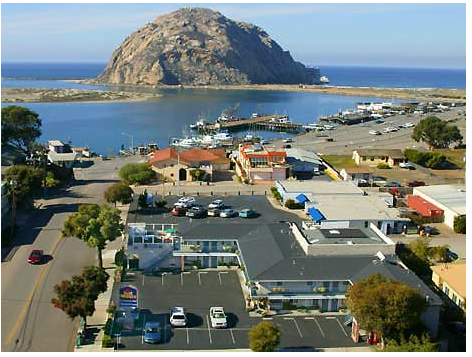
Both Morro Bay and Los Osos appear to be having a busier summer in 2012 than a year ago.
Morro Bay’s Transient Occupancy Tax(TOT) numbers for the fiscal year show nearly a 10% increase in hotel revenues and city bed tax.
Morro Bay has some 920 hotel rooms and they enjoyed improved occupancy in the latest fiscal year that runs June to June. In June of 2011 occupancy stood at 58% and motels did $1.64 million in business. In June 2012 occupancy improved to to 65% and receipts were $1.97 million, the latest number available. July and August are the region’s busiest period.
For the entire fiscal year, motels in Morro Bay did $17.1 million in 2011-2012 compared to $15.7 million in the 2010-11 fiscal year.
For the city the difference will be an extra $160,000 for the fiscal year. In addition the Morro Bay Tourism Improvement district gets an extra $200,000 vs the year before. Morro Bay’s bed tax is 10% and an extra 3% is given to the improvement district to market the community.
Back Bay
In Los Ososo hotel owner Bill Lee says he increased the number of rooms in Baywood in since last year by converting several out buildings to hotel rooms bringing his total to 21 rooms. Across the street at Baywood Inn there are 18 rooms and the other property in town is Sea Pines Golf Course with 41 rooms – 80 rooms in Los Osos in all.
“Our TOT meetings we have show we are up nicely this year” says Lee, like other areas in SLO County.
Smith Travel says the San luis Obispo/Paso Robles metro area recorded a 8.9% increase in hotel occupancy and a 13.8% increases inRevPAR. Room revenue was up 16.4%.Over a longer term, year to date – hotel occupancy was up 6.9%.
Los Osos/Baywood will see the reopening reopening of Mr Lee’s pizza property called Baywood Pizza this weekend.
Lee does not expect much more development to happen in the community until the sewer project is completed over the next few years. ”That’s called progress” he adds saying that while streets are torn up for a while – the long awaited service will enable stalled development,empty parcels and rundown properties to improve.
The project will build 100 miles of collection pipeline laid over two years. The total budget for the project is $173.4 million.Construction activity for the Los Osos Wastewater Collection System is expected to begin in August 2012 and continue through 2014. Check this website (http://www.diglososos.com/traffic-update ) regularly to stay informed of current construction activities.
For merchants like Lee the added stimulus of money being spent and workers here should benefit local business.

UFW Seeks Contract With Fresno Tomato Grower

Sacramento, CA — Dozens of workers from Manteca-based Ace Tomato Inc. traveled Wednesday to the Sacramento headquarters of the Agricultural Labor Relations Board asking the agency to obtain a court order requiring the tomato grower to implement a contract with the United Farm Workers of America.
The ALRB last month ordered the employer to put in place the agreement hammered out by a neutral mediator with the participation of the company and the union. Now the union says Ace refuses to do so in violation of state law and after decades of delaying tactics since its workers voted for the UFW in a state-conducted election for union representation.
Leonardo Gonzalez is an Ace Tomato worker appealing to the ALRB on Wednesday. He was among the majority of 300 tomato workers who voted on Aug. 10, 1989, to have the UFW represent them. Twenty-three years later he is still waiting to enjoy the benefits of the union contract for which he voted, says the UFW.
The union claims that Ace Tomato failed to bargain in good faith for many years. Under a 2002 law allowing farm workers to bring in neutral mediators to work out union contracts when growers won’t negotiate, the mediator’s report, which becomes the legal contract, was submitted to the farm labor board in Sacramento. Ace Tomato objected to the mediator’s report, but on July 25 the ALRB rejected the objections and ordered the company to implement the final report from the mediator as the agreement. Ace Tomato still refused to implement it, says the union.
The ALRB sent the company a letter saying they would give them until 5 pm, Tuesday, August 7th, to respond to the UFW’s request.
Just how will the news last month that the company is changing hands at the end of year will affect negotions is not clear.Reports surfaced that Florida based Lipman Produce has acquired the firm from the Lagorio family of Stockton.
The UFW has had some success in field elections this year. particularly in the tomatoes where they have long sought contracts.
In the Salinas Valley, 422 vegetable workers recently voted to bring in the United Farm Workers at Amaral Ranches. Last week the State Farm Labor Board certified the UFW as the workers representative.Then the UFW signed a first-time union contract with Pacific Triple E Tomato Co., making its 800 fresh tomato workers in the Stockton area the highest paid tomato workers in America.
Then fresh tomato workers at Gargiulo Inc. near Firebaugh in west Fresno County went on strike July 9, and after -260 voted for the UFW on July 11, 186 to 40 (or 82 percent for the union). The state farm labor board certified the UFW as the workers’ representative on July 19, 2012.
The UFW says workers at both companies have elected a committee to take part in the bargaining and they are waiting for talks to begin.

For Dairymen… Heat Wave’s Silver Lining: Screaming Ice Cream Sales
 What’s the scoop on the drought and heat wave drying up half the USA this summer? The Central Valley’s dairy operators know it has suddenly pushed the price of their feed to intolerable levels wilting the nation’s corn and soybean crops. And in the cities and towns across the country, people feel its hotter than they can remember.
This week NOAA confirmed they are right. July was the hottest month on record ever, some 3.3F degrees higher than the average in the 20th century.
What is the only thing left to do?
Scream for ice cream of course.Why not, July was national ice cream month anyway!
That is just what is happening says the CEO of Visalia-based California Dairies cooperative Andrei Mikhalevsky.
“Milk prices are about 30% higher than a month ago” says Mikhalevsky – boosted by a ”significant decline in ice cream supply and cream supply that has helped increase butterfat prices“ he says.In addition, the searing heat has also reduced milk supplies when cows,like the rest of us,don’t like to work so hard when its hot.
The upshot is the higher demand for these milk components coupled with reduced milk volume is helping dairymen survive a period of red ink – if they can hold on.
Indeed, the price of butter on the CME market has improved, rising from around $1.30/lb in mid-May to $1.73 August 8. That helps boost the overall milk check for dairymen although there is a significant lag time, says Mikhalevsky
“Right now it is devastating for our dairymen with the price they get for their milk is not even covering how much they have to pay for feed.”
About 9 percent of all the milk produced by U.S. dairy farmers is used to produce ice cream, contributing significantly to the economic well-being of the nation’s dairy industry. Summer ice cream production is about 50% higher than in December typically.
USDA says the biggest jump in frozen product sales has been in frozen yogurt,up 15% as of June 2012, compared to the year before.
Small operators are reporting big sales in places like Raleigh North Carolina notes a local business paper.
“The record-setting string of 100-degree days in the Triangle has meant a business boom for Yummy Monkey, an ice cream and frozen yogurt shop in Raleigh.
Chaz Evans says sales have been up about 60 percent this week over last as Raleigh endured nine days with triple-digit temperatures. “Our biggest seller as far as ice cream is probably the Carolina Crunch,” he said.
In the ice cream parlor business sector,Baskin Robbins recently reported a 4.6% same store sales increase at their stores owned by Dunkin’ Brands.
At the supermarket and drug stores of the nation sales of ice cream for the latest 12 week period ending July 8 – sales in dollars were up 2.63% for ice cream but up 22.4% for frozen yogurt says the industry tracking group Symphony IRI Group.
In the year ending April 2012, nearly two billion servings of ice cream were ordered at U.S. foodservice outlets, a figure that was up 2 percent from the same period the year prior, according to The NPD Group’s CREST research.
Still it looks like a rocky road for our dairymen. Despite higher milk prices, Mikhalevsky worries a continuation of $8 corn with a 15% smaller crop will hurt California diary operators although export sales of dairy products remains a bight spot. In the meantime, we could see more dairy operators throw in the towel, he worries.
For the rest of us, all you ice cream eaters might as well get your licks in.

California Citrus Acreage Climbing
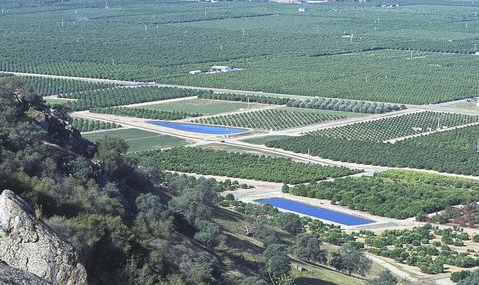
While Florida remains the top US state for citrus production,that state’s orange acreage has declined in the past decade while California’s citrus acreage has diversified and grown. Per acre the Golden State’s smaller citrus crop is far more valuable.
Much of that growth came in Tulare County indicates USDA in their latest citrus acreage report. The report says Tulare County’s citrus acreage by main category in 2012 stands at 71,455 acres of navels,15,742 acres of Valencias, 5257 acres of lemons and 12,358 acres of mandarins.
By comparison, in 2004 when the USDA did another acreage survey Tulare County had 64,360 acre of navels,15,413 acres of Valencias,3600 acres of lemons and only 4826 acres of mandarins. These four main citrus varieties are up about 16,000 acres in the county in the past 8 years.
The fastest growing category are mandarins – varieties of tangerines that came to the market through UC and industry research. Statewide, mandarin acreage has doubled from the 2004 survey from 21,799 to nearly 43,000 acres in 2012.
Within that category it has been the the success of the seedless, easy peel, Tango variety that catches the eye with a 2004 acreage at just 52 acres jumping to 5780 acres this year of with 2556 acres of young trees not yet producing. Some 1600 acres of the tango variety were planted in 2010 by growers in a fever pitch to plant.
Within the mandarin citrus category Kern County leads the state with 15,013 acres compared to Tulare’s 12,358 says USDA.
For some reason the USDA figures do not jibe with the Tulare County crop report for 2011 that shows more navels in the county than USDA at 78,000 acres and more mandarin varieties coupled with tangelos at 15,425 acres.The value of the Tulare County citrus crop approaches $750 million. The ag commissioner’s report lists total citrus acres in the county at 119,086. In 2011, USDA says California citrus acreage was 267,000 acres so Tulare County accounts for about 45% of all California production.
Citrus growers appear to be experimenting more with niche citrus fruit with the acreage of “other” in the survey growing faster in recent years as non fruit-bearing acres.

Impacted by Hurricanes, freezes and menacing citrus diseases- the more tropical in climate Florida has seen its citrus production drop from around 300,000 boxes of fruit in the late 1990s to 159,000 boxes in 2010 and an estimated 146,500 boxes this year, a decline of better than 50%.
USDA says California citrus production this year should be around 58,000 boxes.
While Florida’s citrus production far eclipses California, most the fruit is processed to orange juice while the more valuable fresh eating citrus crop is only a third the size of California’s fresh offerings. USDA says California’s fresh tonnage adds up to 3 million tons vs Florida’s 787 thousand tons in 2011. So the value of California’s total citrus production at $1.3 billion is only slightly smaller in value than Florida’s total of $1.5 billion
Reports so far are favorable about the sizing and quantity of this falls citrus crop.
Of course, California has its own boom and bust periods in citrus. In 1946 just 16% of the state’s citrus acreage was in Central California and now Orange County has very few oranges. Some nasty freezes of our own saw citrus production fall abruptly and tristeza and worries about citrus greening continue to cast a big shadow here.

Chances for Wet Winter Improve

Chances for a wet winter in Central and Southern California improved in recent weeks as the NOAA Climate Prediction Center indicates the likelihood an El Nino pattern will persist through winter. The forecasters say warming tropical Pacific waters this summer means a switch from a La Nina last winter into an El Nino pattern by September.
“El Niño is favored beginning in July-September 2012 and continuing through Northern Hemisphere winter 2012-13.”says the agency statement.
The strength of the El Nino remains in doubt however depending on how warm the equatorial Pacific waters get in coming months.
An El Nino tends to usher winter storms into California instead of the Pacific Northwest as the storm pattern was this past winter when much of Central California was well below average rainfall. Drought conditions can have a major effect on the state’s economy.
Competing models are predicting a modest El Nino while others suggest a strong pattern as a result of very warm water temps around the equator off the coast of South America.
The Climate Prediction Center maps(see above) for Jan/Feb/March show equal chances for average precipitation in areas on the map indicated in white and a 33% chance of wet conditions in the map’s light green areas and a higher 40% chance for wet weather in the dark green areas like Central and Southern California this winter from December through April.
The last El Nino pattern was in the winter of 2009/10

Regional Biz News Nuggets

San Francisco: Bay Area economy appeared to gain strength with June job growth and airport landings each signaling rebound. EDD reports the Bay Area added 17,000 jobs in June with the unemployment rate dropping to 8.5%,down from 8.6% in May and compared to 10.7% for the state. Meanwhile, SFO reports June passenger numbers up 8.9% from a year ago with international visitors up 8.3%. The numbers show an acceleration over earlier this year. Domestic cargo was up 35% in June. As far as SF hotel rooms are concerned – occupancy was up 5.9% in June, says Smith Travel.
LAX stats for June are in showing total passenger numbers up 2% and international traffic up 4.6%. Domestic travel is not as strong as earlier this year while international appears to have picked up.
Lindsay: Pucker up people! Ventura based Limoneira has made more forays into the SJ Valley announcing the purchase of 230 acres of citrus growing land near Lindsay.The publicly-traded company said they would plant lemon trees on about 150 acres of the property.Already, Limoneira has added 1,070 acres of growing land this year including 150 acres near Porterville bringing their holdings to 8,000 acres that are either leased or owned.
Visalia: No ball of fire but building figures through July show modest increases in the pace of activity with single family permits through July up 1% and valuation up 9%, res remodels valuation up 32%, number of new commercial permits up 61%,from 18 to 29 but commercial valuation down because of one large project in March 2011. Commercial additions are up 5% and their value up 10%.
Kingsburg: Closure of the Del Monte cannery in Kingsburg is slated for the end of this packing season – next month says city manager Don Pauley. The plant employed 1100 seasonal workers and about 70 full time. Pauley says Del Monte already has strong indication that their warehouse property will be sold quickly but the old 1920s vintage cannery could be a tougher sell. The city has no other large industrial vacancy, he says.In addition,Pauley says ”Our Downtown is strong and our sales taxes are up.”
Tulare: City council is being asked to support a grant application as well as make a city loan for Harmony Village retirement community on Retherford near the outlet mall. The project is scheduled to open next summer. The project offers 60 assisted living units and 24 memory impaired units as well as expansion to 75 independent living units. The project is part of the Bethel Family Worship Center (a 29-acre campus with an Alzheimer’s facility, nursing home, senior housing and a new church). Construction will create 50 jobs says the company. Some right of way land is needed by the city to redo the Cartmill Interchange nearby. The Aug 7 city agenda item says “Council consideration and direction to staff on the Application for Economic Development Assistance submitted by HSL Tulare A1, LLC and Bill Brown for City assistance in the form of a loan to the proposed Harmony Village Assisted and Memory Care project.”

News Around Tulare County

Visalia Walmart Store Construction To Start: The building contractor for the new Walmart Neighborhood Market at Demaree and Houston has picked up a building permit from the city last week and will begin construction of the new 40,000 sf supermarket this month. Shame Construction of Livermore is the builder. Walmart spokesperson refuses comment but City of Visalia permit says Walmart is tenant
Sequoia Mall has new women’s clothing store – M’Fasis – next to Hobby Lobby – that opened last month. The 9000 sf storefront was formerly Mode Five. M’Fasis has 5 locations in the Central Valley including one at the Tulare Outlet Mall.
Vacant Industrial Park Building To Be Bought By Perfection Pet Foods. Fast growing Perfection Pet Foods is expected to buy the former Food 4Less (Whitco Foods) warehouse in the Visalia Industrial Park. The 54,000 sf building on 8 acres would be used for warehousing to start says owner Kevin Kruse but would be the home to pet biscuit manufacturing later on, he says.”It made more sense to buy this warehouse rather than build a new one” says Kruse noting the building is close to their current manufacturing site. The purchase is set to close next week.
Foreclosed homes in Tulare County in the 1st quarter of 2012 were down 33% from the same quarter a year ago – 607 to 408. Statewide the number was down 48.5% says DataQuick.
Former Market Could Be County Office. Visalia Planning Commission will hear a plan to relocate the county Department of Mental Heath to the former Fairway Market building at 520 E Tulare Ave. The 38,452 sf building has been vacant since 2006.
County/Visalia & Tulare Near Hearings on Their General Plans. Tulare County, the City of Visalia and the City of Tulare are each nearing a milestone on their General Plan updates.
Winning the award for longest wait will be Tulare County who has been working on their 2030 General Plan update since 2003,almost 10 years. The long awaited growth plan will likely come to Board of Supervisors late this month says Dave Bryant,county planner noting there is no firm date yet.
In Visalia the General Plan Update is expected to come to the city council in September after a select committee gets one more look at it August 30. Expect a big debate on growth to follow.
In Tulare the city has to redraw portions of their General Plan in response to a court order based on a a lawsuit brought by Tulare activist Don Manro. In the past few days the city filed a Notice of Preparation for a new study that offered this summary.
“The City of Tulare is revising a General Plan Update that was published in 2007 and underwent CEQA review in 2008. The revision is addressing Tulare County’s Superior Court order requiring modifications to both the General Plan and the General Plan EIR. a) TOD Plan: In conjunction with the General Plan revision, the project includes preparation of a TOD Plan. TOD is a planning and urban design concept that calls for a mix of land uses centered on access to public transit. b) General Plan Revisions: Besides incorporating the TOD Plan, the General Plan revision will largely focus on court-identified modifications. c) Climate Action Plan: In addition to the analysis of the General Plan and TOD Plan, the EIR will analyze potential impacts associated with implementation of the Climate Action Plan, completed in April 2011.”

Group Slams Union Over Solar Greenmail
 The August 6, 2012 meeting of the Kings County Planning Commission will become a forum to condemn what opponents call an” epidemic of union greenmail” against renewable energy projects in the San Joaquin Valley. The August 6, 2012 meeting of the Kings County Planning Commission will become a forum to condemn what opponents call an” epidemic of union greenmail” against renewable energy projects in the San Joaquin Valley.
Critics say construction trade unions (such as the International Brotherhood of Electrical Workers Local No. 100 in Fresno) exploit environmental laws to delay proposed projects with the objective of coercing developers to hand over monopoly control of the construction to unions through a “Project Labor Agreement.” “For too long, construction unions have claimed that solar power is bad for the environment,” said Eric Christen, executive director of the Coalition for Fair Employment in Construction. “It’s all a sham. The unions block or threaten to block solar power projects using the California Environmental Quality Act – commonly known as CEQA – until the developer surrenders to the unions and agrees to sign a Project Labor Agreement.” At their meeting on August 6, the Kings County Planning Commission will consider approval of a 160 megawatt solar power plant in Lemoore called the Mustang Solar Generation Project. The developer of the Mustang Solar Generation Project – Recurrent Energy of San Francisco – signed a Project Labor Agreement with the International Brotherhood of Electrical Workers Local No. 100 in Fresno. Read the Project Labor Agreement here. “We’re going to make sure the Kings County Planning Commission and the people of California and the San Joaquin Valley know why solar power plants are so expensive, why they are taking so long to build, and why local workers don’t get to build them” Christen said. The International Brotherhood of Electrical Workers Local No. 100 has a long history of hiring the law firm of Adams, Broadwell, Joseph & Cardozo out of South San Francisco to dig up alleged environmental problems with solar projects. One of the most prominent was the Fresno Airport Parking solar project in 2007. Adams Broadwell Joseph & Cardozo is cited in the Project Labor Agreement for the Mustang Solar Generation Project. |

Some Valley Solar Projects Remain Stalled

Where They Are Building
The Central Valley has many pending utility-scale solar projects but only a handful are under construction this year. Encouraged by a state mandate requiring utilities to get a third of their electric power from renewable sources – interest in the past several years has been strong to build both large 20 MW and bigger projects and smaller”localized” projects from 1 to 10 MW solar projects in the sunny Central Valley.
It’s the larger projects that seem to be bogged down.Seems like it is harder than you think to save the planet from greenhouse gases.
Over the past two years solar developers have lined up in Fresno County for 40 conditional use permits on farm land but at midyear 2012, only 2 small projects, not owned by the utility, have gone to construction.
Looking closer, 30 of those 40 applications are still plowing through the approval process at the county, 2 have been withdrawn and 8 have their county approvals in place but face some other hurdles.
For those who can wait the process out – there are plenty of hurdles out there – including lawsuits from multiple sources..
One of the projects, Westlands Solar Farms LLC, an 18MW project near Huron, faces a lawsuit from the California Farm Bureau who sued the county over their waiver of the Williamson Act even though the county has some discretion in deciding when the waiver is appropriate. The CFB wants the county to approve solar projects only on marginal farmland.
“Just because the developer is waving cash at him and the county, we don’t think that’s the way the Williamson Act was meant to be administered,” said a CFB attorney last year.
The applicant and county say their land has less access to water than in past years. Some farmers ask why the state Farm Bureau would stand in the way of what a farmer wants to do with his own property?
Last month a judge decided to hear the case in October, a year after the suit was filed. The uncertainty has helped put other solar projects on farmland in limbo.
Likewise. a SunPower project near Santa Nella in Merced County faces criticism from both farm interests and environmentalists.
Lawsuits from farm interests are only one problem. Solar developers face appeals and lawsuits from a statewide labor group who has been accused of “green mail” – opposing projects until they secure a contract to build the facility. Proejects in both Kings and Fresno counties have been impacted.
Then there is the hurdle of getting a power purchase agreement from a utility like PG&E. The utility is mandated to make such agreements but can pick the timing and the least expensive offer,sometimes selecting a low bidder who in the end – can not deliver when its time perform.
Then there are macro factors as to why there appears to be glut of pending applications. The reality is that the economy has slowed business investment and solar companies face financial issues caused by huge Chinese solar subsides and an end of subsides in Europe.
Impressive Numbers or Glut?
A February 2012 report from the Defenders Of Wildlife says there are 59 solar PV projects in the permitting stage within the five southern San Joaquin counties that if built would generate 2,780 MW of power.This is in addition to 45 projects in those same counties that have already been approved that would generate 1,648 MW.That’s 109 solar projects pending in the south Central Valley that add up to 4,428MW, more than double 2 Diablo Canyon nuclear power plants.
But don’t expect any kind like that number to be built, agree many.
One developer Carmine Iadarola of Solargen USA who has a several pending applications in Fresno County says ”I would be surprised if out of those 40 applications in Fresno County that one quarter of them – probably less – were built.” For solar developers who have struggled through the approval gauntlet ” the risk is too great and profit margin too small” admits a frustrated Iadorolla.The company is building two systems in the county but in the cities of Huron and Firebaugh jurisdictions instead of in the county.
One of the Fresno County solar projects being built this summer is owned by Spain’s Gestamp Solar. The company broke ground on a 1.5MW solar farm in June at Fig Avenues near Highway 41. But Gestamp has said Fresno County projects that are pending add up to 400 MW- some 10 projects in total that could be worth $2 billion if they were built. That’s a far cry from the 1.5 MW project that has actually broken ground.
Last year, a Gestamp spokesperson told PV magazine that” In order to achieve our goal, we’ve opened a project development office in Fresno and have a lot of greenfield pipeline. We have contracts and leased land tied up for around 400 MW in Fresno County. We like to think that all of it will go through. We feel that we’re going to get a very strong market out of Fresno. We’re continuing to work with utilities in getting power purchase agreements negotiated and signed.”
In nearby Kings County there are two side-by-side projects totaling 35 MW being built this summer by Recurrent Energy at Ave 21st and Kansas Ave near Stratford. These are projects. approved back in 2011 have a PG&E power purchase agreements. There are however, about 1000 MW of pending applications lined up in the county – that’s 35MW being hooked up to the grid out of 1000 MW.
The County says they have received no word from a number of the larger projects in some time although they are processing 337MW of solar projects at a public hearing this month.
In Tulare County there are nearly 100 MW being built this summer near Alpaugh,some nearing completion that will hook to the grid late this summer.Two of these projects were just sold (for the second time) to ConEdsion of NY.
The biggest news coming down the pike in the county is that a slew of small 1 to 6 MW distributed energy projects will likely break ground later this year being built at scores of neighborhood grid locations around the more populated eastern part of the county by Immodo Solar. These localized projects appear to face fewer hurdles.
Other well publicized mega-solar projects like 50000 MW Westland Solar Park plan in Kings County are not moving forward now admits principal Dan Kim. The group had said they were going to file their EIR earlier this year.
“It doesn’t make sense to do more with the market the way it is” shrugs Kim, saying they are still optimistic long term.
Meanwhile statewide numbers still look promising for solar energy – next article.