Land O’Lakes Net Earnings Decline 22%, Dairy Foods Sales Down 7%

LOL Tulare

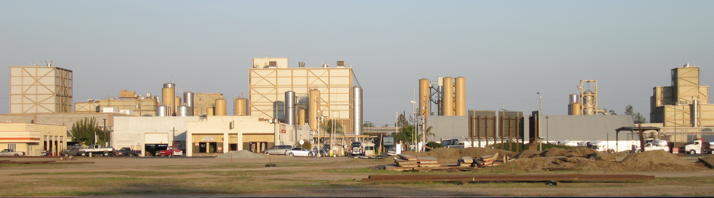
Land O’Lakes, Inc. this week reported continued strong sales across its business portfolio, with net sales up for both the second quarter and the first half of the year. The cooperative has a major presence in Tulare County and one of the world’s largest milk processing plants in Tulare.
Net sales were $3.6 billion for the second quarter, up from $3.5 billion for the same quarter last year. Net sales for the first half of the year (through June) were $7.5 billion, up 8% from $6.9 billion for the first half of 2011. In the Company’s core businesses, first half sales were up 11% in Feed, 15% in Crop Inputs and 17% in Layers, while Dairy Foods sales were down 7%, primarily because of market conditions.
Lower quarterly and first half earnings were attributable to the overall economic environment, declining markets and excess milk supplies which impacted the Company’s Dairy Foods business. These factors were partially offset by exceptionally strong earnings in the Company’s Crop Inputs business, WinField Solutions, which benefited from the early Spring and favorable early growing conditions.
For the second quarter, Land O’Lakes reported earnings of $47.3 million compared with $67.1 million for the same period in 2011. Year-to-date net earnings (through June) were $131.9 million, compared with earnings of $168.1 million during the first half of 2011.
“At the mid-point of the year, we are pleased to report solid sales, with particularly strong results in core branded and proprietary product lines,” said Land O’Lakes President and Chief Executive Officer Chris Policinski.. “We are continuing to successfully introduce innovative new products and build our brands with new revenue generating strategies,” he added.
“Earnings across business units are mixed as we face continuing challenges from the struggling national economy and volatile markets,” Policinski added. “We are addressing these challenges by focusing on growing revenues, reducing costs, improving efficiencies and streamlining processes as part of our Company-wide initiative called Total Margin Management.”
Land O’Lakes is committed to balancing the near-term investment requirements of growth with the long-term objective of maintaining a strong balance sheet. Land O’Lakes’ total debt as of June 30, 2012, was $1.38 billion, up $0.32 billion from the same date one year ago. The increase was due to several acquisitions which are now generating additional cash flow, as well as higher working capital needs related to growth and increased commodity prices.
Land O’Lakes’ second quarter financial results can be found at www.landolakesinc.com. Click on Investors and Quarterly Financial Statements.
Land O’Lakes, Inc. (www.landolakesinc.com) is a national, farmer-owned food and agricultural cooperative with annual sales of nearly $13 billion. The nation’s second-largest cooperative and number 210 on the Fortune 500, Land O’Lakes does business in all 50 states and more than 60 countries. It is a leading marketer of a full line of dairy-based consumer, foodservice and food ingredient products across the United States; serves its international customers with a variety of food and animal feed ingredients; and provides farmers and ranchers with an extensive line of agricultural supplies (feed, seed, and crop protection products) and services. Land O’Lakes also provides agricultural assistance and technical training in more than 25 developing nations

UC: Climate Change Threatens Native Fish

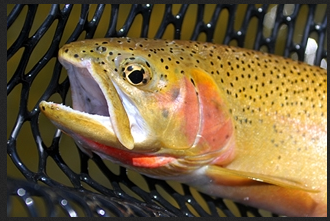
Fish biologist Peter Moyle says most native fishes, like this cutthroat trout, will suffer population declines and some face extinction from climate change.

As climate change threatens to reshape California’s landscape, UC Davis researchers are helping to inform policymakers about the state’s vulnerability and provide strategies for adaptation.

The UC Davis research appears in a report, “Our Changing Climate,” released today by the California Natural Resources Agency and the California Energy Commission. The report is the third assessment from the California Climate Change Center since 2006.
UC Davis scientists authored nine of the 35 studies contained in the report. The UC Davis work addresses climate change impacts on native fishes, agriculture, urban planning, water management and other issues:
* Peter Moyle, a wildlife, fish and conservation biology professor in the UC Davis Center for Watershed Sciences, studied the predicted effects of climate change on native fishes. His team found that most native fishes will suffer population declines, and some will likely go extinct. Fishes requiring cold water are particularly vulnerable.
Meanwhile, non-native fishes are expected to increase, although they will also experience habitat loss during severe droughts.
“California’s unique native fishes are already in steep decline, and climate change is making the situation worse,” Moyle said. “This is likely to increase the complexity of managing California’s water supply. Preventing predictable extinctions is possible but will require planning now for increased water temperatures and more variable flows.”
* James Thorne, a researcher in the Department of Environmental Science and Policy, helped create a model that simulates how rainfall interacts with the landscape. Thorne’s research group looked at hydrologic data from the past and present to help predict what may happen in the future. That model was used for other studies in the report, such as those regarding fire and agriculture, allowing cross comparisons among the researchers’ work.
Thorne also looked at six different policy options for urban growth, including smart-growth, infill and “business as usual” approaches.
“If we want the most lands preserved for a variety of different purposes — agricultural and biodiversity protection, reduced fire threats — the infill policy was best,” Thorne said.
* Studies by Louise Jackson, UC Cooperative Extension specialist and professor in the Department of Land, Air and Water Resources at UC Davis, complemented Thorne’s growth policy conclusion. Her group’s case study focused on greenhouse gas emission mitigation and adaptation to climate change in Yolo County. They found that “channeling much or all future urban development into existing urban areas” will help preserve agricultural land and open space, reduce Yolo County’s greenhouse gas emissions and enhance agricultural sustainability. Their research also found that farmers concerned about climate change were more likely to voluntarily adopt practices that would conserve water and reduce greenhouse gas emissions.
Jackson’s group also developed an agricultural vulnerability index for California that identified four areas as especially vulnerable to the effects of climate change: the Sacramento-San Joaquin Delta; Salinas Valley; the corridor between Merced and Fresno; and the Imperial Valley.
* Jay Lund, director of the UC Davis Center for Watershed Sciences, examined climate change adaptations for managing water in the San Francisco Bay Area. His group’s research suggests that Bay Area urban water demands can be largely met even under severe forms of climate change, but at a cost. The cost includes buying water from agricultural users, using more expensive alternatives such as water recycling and desalination, and some increased water scarcity. A shared connection of public water systems, or interties, recently completed for emergency response, greatly aids adaptation, the study reports.
* Joshua Viers, associate director of the Center for Watershed Sciences, co-authored a study analyzing “water year” classifications.
These indices determine whether a year is considered wet, dry or in-between, as well as how much water is allocated and who gets it.
“Unfortunately, the method to distinguish different water year types is indexed to historical climatic conditions and is intended to represent an equal chance for any given year,” said Viers. “Our science suggests that future climatic conditions are not likely to represent this history, and thus water management agencies may need to reconsider these arbitrary indexing thresholds going forward to achieve a more equitable situation.”
Viers also co-authored a study about climate change’s impact on hydropower production in the Sierra Nevada. It found that an 11 F increase in air temperature would reduce hydropower in the area by about 10 percent, and that most reductions would occur in the northern Sierra Nevada. The central Sierra Nevada would adapt better to changes in runoff, while hydropower generation in the southern watershed would decrease.
Other institutions, including UC Berkeley, UC Santa Cruz, Stanford, the Scripps Institution of Oceanography, and Lawrence Berkeley National Laboratory researched climate change impacts on electricity consumption, sea level, wildfires and coastal flooding.
This assessment will provide a foundation for the state’s 2012 Climate Adaptation Strategy, with completion expected in December 2012. Comprised of scientific studies from several academic institutions, the assessment is directed by the Governor’s Office and intended to help state and local communities protect public health, grow the state’s economy, ensure energy reliability and safeguard the environment.

Fresno St Breaks Ground On Foster Farm Poultry Facility

Ground was broken today, July 27, at Fresno State on the innovative Foster Farms Poultry Education and Research Facility, which is scheduled to open in the spring 2013, semester.

This state-of-the-art educational facility is made possible by a generous gift to Fresno State from Foster Farms, which is contributing to the engineering, design and construction as well as providing ongoing program support.

The 16,000 square-foot building will house an eco-friendly research and training center that replicates professional poultry production for students and faculty in the Jordan College of Agricultural Sciences and Technology. The new unit will have advanced temperature control and monitoring systems, along with ultra-efficient LED lighting optimized for poultry production.

“Our students and faculty are thrilled about this exciting addition to our college,” said Dr. Charles Boyer, dean of the Jordan College. “The center will allow students to perform in-depth research, participate in hands-on learning and gain job skills in one of the leading agricultural industries.”

The Foster Farms Poultry Education and Research Facility will be situated on the Fresno State campus, north of Barstow Avenue west of the dairy unit (between Woodrow and Chestnut avenues).

“The facility will provide students with invaluable experience and will further research advancements in animal welfare, nutrition and environmental practices,” Boyer said.

Foster Farms’ Mike Pruitt, the senior vice president for live poultry operations, represented the company at the ground breaking ceremony. “Foster Farms is very pleased to be able to provide the funding for this facility and looks forward to the contributions that the faculty and students will make in advancing poultry science and husbandry,” he said.

A 2009 report by the American Meat Institute says poultry is one of the fastest-growing segments in California’s agricultural industry, contributing nearly 25,000 direct jobs to the state.

“Our students directly benefit from the close relationship our faculty members have with industry leaders like Foster Farms,” said Dr. Arthur Parham, chair of the Jordan College’s Department of Animal Sciences and Agricultural Education. “Hands-on experience in this field will help our graduates find employment and succeed in a variety of agricultural careers.”

Based in Central California, Foster Farms is one of the state’s leading providers of fresh chickens and turkeys.

The addition of the poultry facility at Fresno State builds upon the relationship between the company and the university. Foster Farms actively recruits Fresno State graduates and has a steady base of students participate in the company’s internship program each year.

Mortgage Rates Drop To 3.49%

Freddie Mac (OTC: FMCC) this week released the results of its Primary Mortgage Market Survey® (PMMS®), showing fixed mortgages rates continuing their streak of record-breaking lows. The 30-year fixed rate mortgage averaged 3.49 percent, more than a full percentage point lower than a year ago when it averaged 4.55 percent. Meanwhile, the 15-year fixed-rate mortgage, a popular choice for those looking to refinance, also set another record low at 2.80 percent.
News Facts
30-year fixed-rate mortgage (FRM) averaged 3.49 percent with an average 0.7 point for the week ending July 26, 2012, down from last week when it averaged 3.53 percent. Last year at this time, the 30-year FRM averaged 4.55 percent.
15-year FRM this week averaged 2.80 percent with an average 0.7 point, down from last week when it averaged 2.83 percent. A year ago at this time, the 15-year FRM averaged 3.66 percent.

According to Frank Nothaft, vice president and chief economist, Freddie Mac, “Market concerns over the strength of the economic recovery brought long-term Treasury yields to new lows this week allowing fixed mortgage rates to reach record levels.  The Conference Board Leading Economic Index showed the largest monthly decline in June since September 2011. Existing home sales fell to 4.36 million homes (annualized) in June and represented the slowest pace since October 2011. Similarly, new home sales fell in June to their lowest level since January of this year.”

Visitors Return To Hawaii

TOTAL VISITOR SPENDING INCREASED 20.4 PERCENT TO A NEW JUNE RECORD WHILE ARRIVALS GREW 11.5 PERCENT
Total Visitor Spending and Arrivals Rose Double-Digits for the First Half of 2012
HONOLULU – Total expenditures by visitors who came to Hawai‘i in June 2012 rose 20.4 percent compared to the previous year (or $207 million) to $1.2 billion1, a new record for the month of June, according to preliminary statistics released today by the Hawai‘i Tourism Authority. Strong growth in total arrivals (+11.5% to 677,218 visitors) and higher daily spending contributed to this increase.
Among Hawai‘i’s top visitor markets in June 2012, arrivals by air from U.S. West were up 4 percent from a year ago to 285,342 visitors, the eighth month of consecutive growth. Total U.S. West visitor expenditures grew 9.8 percent to $410 million. U.S. East arrivals rose 8.1 percent to 173,002 visitors, the tenth straight month of increases, while total visitor spending increased (+10.6%) to $339 million.
Japanese arrivals grew 21.9 percent to 115,788 visitors, but remained below the June 1995 record of 177,299 visitors. A longer length of stay (6.21 days from 5.79 days in June 2011) elevated total Japanese visitor expenditures (+31.4%) to $219.1 million.
Canadian arrivals increased 3.4 percent to 16,705 visitors. Total Canadian visitor expenditures grew 14.9 percent to $30.1 million due to higher daily spending.
Total visitor expenditures (+58.9% to $219.5 million) and arrivals (+39.6%) from all other2 markets showed particularly strong growth compared to June 2011.
Half Year 2012:
For the first half of 2012, all visitor markets showed growth in total visitor expenditures and arrivals compared to the same period last year. Total visitor expenditures climbed 21.4 percent to $7.1 billion, led by double digit increases from Japan (+26.2% to $1.2 billion), Canada (+12.6% to $590.6 million) and all others (+75.9% to $1.4 billion). Total arrivals rose 10.2 percent to 3,932,266 visitors. Combined arrivals from all others market climbed 28.8 percent from a year ago.

Regional Business News

So how is the economy? Take a look at Union Pacific railroad, the largest rail company in the US and the West. Sure,they are shipping 9% less coal but their most recent quarter shows automotive up 25 percent,industrial products up 14 percent, chemicals up 13 percent, intermodal up 10 percent and agricultural up 1 percent.
Union Pacific Corporation (NYSE: UNP) reported 2012 second quarter net income of $1 billion, or $2.10 per diluted share, compared to $785 million, or $1.59 per diluted share, in the second quarter 2011. The company said the results were”best ever.”
Speaking of railroads, Genesee & Wyoming Inc. and RailAmerica jointly announced recently that they have entered into an agreement under which GWI will acquire RailAmerica for an all cash purchase price of $27.50 per share. GWI’s acquisition of RailAmerica will combine the two largest short line and regional rail operators in North America, strengthening GWI’s ability to serve its industrial customers and Class I railroad partners. Rail America owns the San Joaquin Railroad based in Exeter. The SJVR operates 417 miles of track with interchanges with the Union Pacific Railroad at Fresno, Goshen Junction and Bakersfield and the Burlington Northern Santa Fe at Fresno and Bakersfield.
The report of June almond shipments are in and year-to-date looks better than the month of June. YTD domestic sales are up 10.6% while exports are up 15.6%. For June, some export destinations are down including Mexico down12% and Europe down 21% All exports are are down 4% in June.
Car sales look good– witness AutoNation, the country’s largest dealership chain, reported record earnings in the second quarter as revenue rose 17%, to $3.9 billion.
LA area ports are building at a”furious pace” says the LA Times recently with a $6 billion expansion underway. The ports of LA and Long Beach will cut air pollution in half,add more trains and new handling equipment will run on electricity instead of diesel.
US Navy tested a 50-50 blend of biofuel and petroleum earlier this month in a huge maritime exercise off Hawaii. The biofuel is made from cooking oil and algae. Also  the Navy vows to get half its power from renewable sources by 2020.

Tulare County 2011 Crop Value Up 16%

County is the number one citrus producer

Tulare County’s total gross production crop value for 2011 is a record$5,629,396,000. This represents an increase of $765,691,000, or 16% above 2010’s value of $4,863,705,000.

Milk continues to be the leading agricultural commodity in Tulare County with a total gross value of $2,056,043,000, an increase of 28% over last year’s total gross value.

Milk represents 37% of the total crop and livestock value for 2011. Milk prices continued to rebound in 2011, as the overall economy made slow improvement. Total milk production in Tulare County remained relatively stable.

“What that does not measure is the high cost of production with feed costs so high” says ag commissioner Marilyn Kinoshita. Those high costs helped 17 county dairies quit last year.

Livestock and Poultry’s gross value of $624,339,000 represents an increase of 10% above 2010.

Fruit and Nut commodities were valued at $2,201,584,000, representing an increase of 5%. Modest price gains accounted for most of the increased value. The total value of all Field Crops was $615,898,000 for 2011, an increase of 34% from the previous year.
Local demand for dairy support commodities continues to keep prices up in this sector.

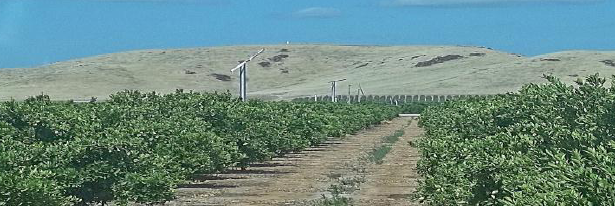
Citrus farmer continue to plant new acreage with non-bearing citrus trees totaling 3067 acres. Tangerine acreage is nearly as large as valencia acreage in the county, a big change from a decade ago.
.
Pistachio farmers have planted the biggest number of new trees with non-bearing acreage at 3600 acres. The almond crop increased from $98 million in 2010 to $128 million in 2011.

“The biggest change is the conversion of more field crop land to permanent plantings” says Kinoshita.

Nursery Products were valued at $65,717,000 representing a increase of 2% from 2010. This minor increase is a reflection of the continuing uncertainties in both the housing and agricultural markets. Vegetable Crops were valued at $19,506,000 in 2011, representing a 4% decline. Harvested vegetable acreage continues to decline in the county.

The number of pigs raised in Tulare County has gone up from 113,00 head in 2010 to 142,000 in 2011.

Korea is the top export partner to Tulare County but ag commissioner Kinoshita notes the relationship has not always bee so cozy.” They should be taking about 6 million cartons of fruit but they have been coming back” from 2009 when they pushed for tougher regulations that limited shipments to about half that.

Tulare County’s agricultural strength is based on the diversity of the crops produced. The 2011 report covers more than 120 different commodities, forty-three of which have a gross value in excess of $1,000,000. Although individual commodities may experience difficulties from year to year, Tulare County continues to produce high-quality crops that provide food and fiber to more than 85 countries throughout the world.

London California’s Few Seconds Of Fame

A Nike U-Tube commercial that began airing today as the London,England Olympics is set to launch – features many of towns named London around the world that are not so famous including our own London, Tulare County, California – not far from Traver. Also called New London to some here, the impoverished town is a farm worker bedroom community.

A Nike film crew came to shoot our few seconds of fame in the commercial last month and the clip shows a quick shot of  skateboarders near the green London population sign as well as a quick shot of a neighborhood ‘homie’ with London tattooed on his back.

Turns out Nike is trying to make the point that everyone aspires to greatness around the world.Nike is not an Olympic sponsor so there is no mention of the London,UK games.

Here a link to the commercial:http://www.youtube.com/watch?v=DqbN7BNjDIE&feature=youtube_gdata_player

Table Grape Growers Report Strong 2012 Crop

By Steve Adler

Kern County table grape grower Mark Hall says this year’s season features normal yields and quality. His harvest began around the Fourth of July and will extend into late fall.
Photo/Randall Barker

As California’s table grape harvest works its way northward from the Coachella Valley to the San Joaquin Valley, growers report very good quality with average crop size.

The one concern voiced universally by growers is a tight labor supply. There haven’t been any crop losses reported yet, but growers said they find themselves having to juggle their crews much more than in the past few years.

Observers attribute much of the labor shortage to increased enforcement by U.S. Immigration and Customs Enforcement, coupled with increased violence on the Mexican side of the border caused by drug cartels.

Karen Brux of the California Table Grape Commission said this year’s table grape crop is being projected at 100.8 million 19-pound boxes. California shipped about 97.4 million boxes of grapes during the 2011 season.

The California table grape sector continues to grow. Total volume has exceeded 90 million box units each of the past five seasons, coming close to breaking the 100 million mark. With just over 20 million boxes shipped in the early 1970s, volume has increased by almost five times during the past four decades.

In 2011, there were more than 90,000 bearing acres of California table grapes.

Sequential harvesting from south to north, combined with advanced storage techniques, allows California table grapes to remain available from May to January, the commission said. California produces 99 percent of the commercial fresh grapes grown in the United States, and there has been steady growth through the years.

“We are in the beginning stages of harvest and we are currently harvesting sugraone seedless grapes, a green seedless grape, as well as flame seedless grapes, which is a red seedless grape. We definitely have a very full crop this year and the quality is one of the best I have ever seen,” said Greg White, who markets grapes for a farming operation in Kern County.

“We will take our season until the end of the year. Weather is always a factor when it comes to growing, but overall this season, we have not been exposed to issues as we have been in the past. Heat is a big factor with table grapes and mildew is another issue and we haven’t seen those issues so far this year,” he said.

Another Kern County grower, Mark Hall, said he started harvesting flame seedless grapes around the Fourth of July and he will continue with a number of other varieties as they mature, wrapping up his harvest around Thanksgiving.

“The crop seems to be about normal in its development this year, but what is normal any more? Cluster counts and grape sizes seem to be normal,” he said. “Labor is always tough, but we pay a bit more for our workers so I have not personally had any problems.”

Grape grower Pat Pinkham of Exeter said growers in Tulare County definitely feel the effects of a tight labor supply.

“We also harvest plums and canning peaches, and the labor supply has been very tight. If you need that third crew, you quite often just don’t get it,” he said. “It hasn’t been so tight that crops have suffered so far; it is just taking a little longer to finish a variety than what you had anticipated.”

Pinkham said he works with more than one farm labor contractor “and it is a situation where we all need to watch out for each other somehow.”

The growers said that there have been very few problems with powdery mildew or other plant diseases this year. Water supplies have been adequate as well, they said.

The California Table Grape Commission markets grapes vigorously, both on domestic markets and worldwide. The commission’s trade and consumer marketing campaigns will run throughout the 2012 season, with a strong focus on the health attributes and versatility of usage of California grapes, said Kathleen Nave, commission president.

With 40 percent of the crop exported to more than 60 countries around the world, key export markets will be supported with retail promotions, merchandising, point-of-sale materials and consumer research, Nave said. In 2011, the top five export markets for California table grapes included Canada, Mexico, China, Indonesia and the Central America region.

“The good news is that nearly all U.S. consumers eat grapes and nearly all prefer grapes from California. The challenge is to get them to eat more, while continuing to open up new opportunities in global markets,” Nave said.

While winegrapes were first planted in California by Franciscan friars who established missions up and down the state, the first table grapes in California have been traced to Kentucky native William Wolfskill, who planted the first table grape vineyard near what is now Los Angeles. Fresh table grapes were first shipped to Eastern markets in 1869.

(Steve Adler is associate editor of Ag Alert. He may be contacted at sadler@cfbf.com.)

Permission for use is granted, however, credit must be made to the California Farm Bureau Federation when reprinting this item.

Brown Offers $14 Billion Tunnels Plan… Get’rrr Done

tunnels would bypass Delta to move water south

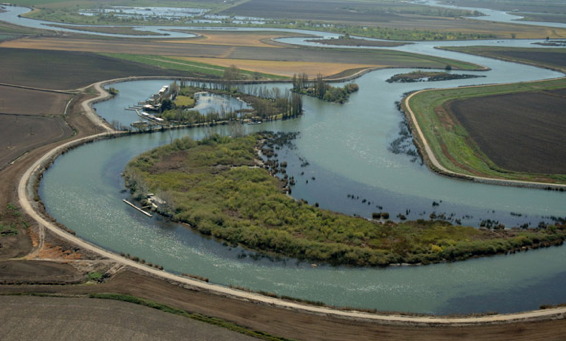
In a joint news conference this week Gov Edmund Brown and Department of the Interior Secretary Ken Salazar outlined their ”path forward” on fixing the Delta, managing wildlife and providing for more water for the state under a revised Bay Delta Conservation Plan (BDCP).

Bringing back a variant of the 1980’s Peripheral Canal idea, Brown unveiled a pair of 37 mile tunnels that could cost $14 billion to be financed by water users including farmers. Habitat and other conservation measures in the BDCP would be financed in part by the water contractors, but would mostly be paid by the state over a period of 40 years, with likely additional investment by the federal government through existing programs, said a news release. A reported $9 billion for environmental protections would be added to $14 billion.

The proposal “will undergo a rigorous public environmental review in the coming months” Brown and Salazar announced. Critics include northern California interest who fear a water grab by southern California cites and Valley farmers.

Ready to charge forward on the idea as he recently was with high speed rail ,Brown startled the news conference audience with the statement ”I want to get shit done.”

The tunnels construction could start in 2017 and be complete by 2026.

There are “dual goals” in the BDCP said Brown – a reliable water supply for California and a healthy California Bay Delta ecosystem that supports the State’s economy.”

The dual tunnels,side-by-side would be 33 ft wide and connect the Sacramento River to the pumps around Tracy without impacting the sensitive Delta lands in between, say supporters.

Farmer Reaction

While some Central Valley farmers oppose Brown on high speed rail, they are supportive of this water project.

“Westlands greatly appreciates the leadership demonstrated by Governor Brown and Secretary Salazar in reaching this point. They had to know that today’s announcement would not be well received by many interested parties, including some public water agencies that had hoped for more certainty with regard to future water supplies. But leadership involves making difficult decisions with the best information available, and Governor Brown and Secretary Salazar have met that responsibility.” said Westlands Water District president Tom Birmingham.

More guarded is Friant Water Authority general manager Ron Jacobsma who notes details need to be sorted out on how much water would be conveyed and who would pay.”We want a fair shake and expect to pay for benefits received but we are supportive of the current process.”Jacobsma says Friant wants more certainty over how the Exchange Contractors would be dealt with.

Balanced Approach?

“A healthy Delta ecosystem and a reliable water supply are profoundly important to California’s future,” said Governor Brown. “This proposal balances the concerns of those who live and work  in the Delta, those who rely on it for water and those who appreciate its beauty, fish, waterfowl and wildlife.”

“As broken and outdated as California’s water system is, we are also closer than ever to forging a lasting and sustainable solution that strengthens California’s water security and restores the health of the Delta,” said Secretary Salazar. “Through our joint federal-state partnership, and with science as our guide, we are a taking a comprehensive approach to tackling California’s water problems when it comes to increasing efficiency and improving conservation. Today marks an important step forward in transforming a shared vision into a practical, effective solution. With California’s water system at constant risk of failure, nobody can afford the dangers or costs of inaction.”

“The status quo isn’t working for fish, communities around or dependent upon the Bay Delta, economic development, or water resources management,” said Dr. Jane Lubchenco, Under Secretary of Commerce for Oceans and Atmosphere and NOAA Administrator. “Our proposed changes to the BDCP reflect important improvements in shaping a comprehensive strategy to fix a broken system. Because this is a complicated issue and we do not have all the answers today, we will continue to evaluate and refine the proposal. We call upon the many participants throughout California to join us in staying focused on science-based solutions.”

Improved Water Management Statewide

The news release offers water management savings.”State and U.S. governments will continue to explore new ways to satisfy competing water demands, including commitments to an Integrated Water Management approach, reducing water demand, increasing water supply, and improving efficiency of operations. The Metropolitan Water District of Southern California and the Santa Clara Valley Water District – the two largest urban regional water agencies– have committed to exceed the urban water savings target established in the 2009 Delta Reform Act by saving 700,000 acre-feet a year based on predicted future demands. This includes a commitment by Southern California to annually save more water through conservation and recycling than it receives, on average, from Northern California, as well as a commitment from the Santa Clara County Water District to meet Silicon Valley’s future increases in demand through conservation and recycling. With respect to agricultural water use, the Bureau of Reclamation has worked with local water agencies to invest close to $50 million over the last eight years in efficiency improvements in California. Reclamation is now partnering with the Natural Resources Conservation Service to provide funding for projects that improve water management and create new supplies for agricultural irrigation. In the last two years, approximately $15 million in federal funding has been invested in this effort. The State of California has invested more than $47 million in similar programs since 2001.”

Conservation: “The BDCP will contain biological goals and objectives to improve the status of a wide variety of listed species and species of concern under the Endangered Species Act, and will quickly implement new habitat projects in the Suisun Marsh and the Delta upon completion of appropriate environmental reviews. “