
Long awaited 19th Ave interchange over Hwy 198 will break ground in coming weeks in Lemoore.The $21 million half clover-leaf project will require 2 years to build with a contract awarded to Granite Construction. The interchange will be the only one on Hwy 198 and tie the rest of the city to its industrial area. The project has been in the planning stages since 1958, about when the navy bases was being built. The surrounding land on the south side is considered prime for freeway commercial.

TJ Maxx Coming To Visalia
 General Plan Update Jan 22
Construction could start later this year on a new TJ Maxx apparel store in the Target shopping center on North Dinuba Blvd. So says consultant Jim Perkins of DeKleer & Associates who works with shopping center developer Donahue Schriber.
The developer has filed a preliminary plan for a 22,127 sf store with the City of Visalia this week that would be located in the last in-line pad available in the Orchard Walk East Center anchored by Target,Ross and Vallarta Supermarket.
Realtor Shane Anderson would not discuss the new store but said the Northside shopping center is attractive to many retailers who already have a presence in Visalia on Mooney Bld – on the other side of town – big players like Target and Ross.
TJ Maxx is a female favorite with locals wondering when the first TJ Maxx would come to Tulare County. The same company owns Marshalls with a store on Mooney as well as a chain called Home Goods, rumored to be coming to town as well. The just purchased Sierra Trading Post, an on line retailer as well.
Anderson says the Orchard Walk East center is likely to break ground on a new 10,000 sf strip building on Dinuba Blvd later this year. Nearby,a new strip center has recently been approved on Riggin and Dinuba Blvd as well.
Strong Financials
TJ Maxx has nearly 1000 stores across the US. The off-price retailer offers an array of fashionable, brand-name family apparel, home fashions and other merchandise such as beauty products. T.J. Maxx differentiates itself from Marshalls with an expanded assortment of fine jewelry and accessories, and in some stores, The Runway, a high-end designer department, the company says.
One financial analysis of the company says” through long-standing partnerships with apparel manufacturers like Polo Ralph Lauren RL, TJX is able to buy brand-name goods at rock-bottom prices, passing the savings on to consumers.” The company stock was up from $32 a year ago to around $45 today.
Ignoring The Northside?
While the well known shopping district in Visalia is Mooney Blvd, by 2007 there was enough demand for the developer Donahue Schriber to plan to build both East and West shopping centers along both sides of Dinuba Blvd as the city planned a 70 acre plus sports park nearby. Home Depot was to be the main tenant in the Orchard West complex but the recession prompted the big home improvement store to back out.Donahue Schriber continues to market that 199,000 sf center. Still, the center across the street where TJ Maxx is going appears to be filing up now in 2013 with recession fading.
Ironically, the Northside as a shopping district doesn’t seem to show up on the radar screen for the city’s General Plan Update led by a consultant who largely ignored the prospect of adding more stores in this part of town but proposing to add a large new shopping center on Hwy 99.
The city is expected to take up that plan January 22 at a joint city council / planning commission meeting.
Mooney Filling
Meanwhile it appears Mooney is filling up as well.
Nasdaq-traded Ulta Beauty will open a 10,000 sf store in Visalia’s Packwood Creek Shopping Center this spring, the latest sign that this city’s big retail strip is back.The fast growing chain who opened 49 stores in the latest quarter and enjoyed a 22.5% increase in sales – plans to open 125 more in 2013,including Visalia.
Shopping center owner Patrick Orosco says the addition of the high end store to the center replacing the shuttered Firkin Hound eatery is the latest evidence of retail strength in the market. “We have a pending lease on one smaller space and then we stand at 100% occupancy.” Orosco adds the beauty supply retailer would be the largest in the Visalia marketplace and “will go a long way toward re-enforcing the image of the shopping center as a destination for female shoppers.”
Besides this deal, Orosco is working on a landing a megaplex movie theatre behind Lowes. and Walmart. Also, El Polo Loco appears to be heading for space next to BevMo and InShape Fitness is remodeling the former 24 hr Fitness in the Sequoia Mall.

Ag Update/ Beef & Milk
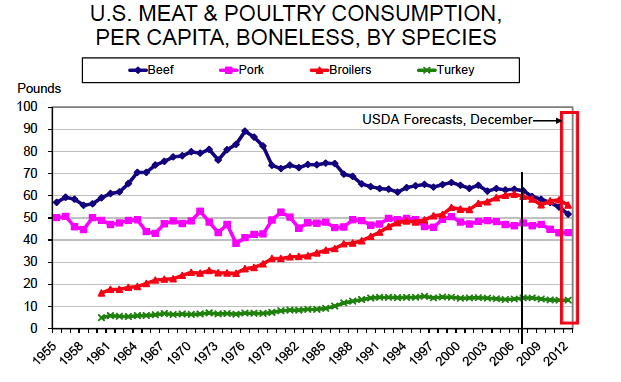
Where’s The Beef? A University of Oklahoma farm advisor is predicting 4.8% drop in beef production this year as consumption continues to drop across the US. In 2011 the consumption drop amounted to 3.8%.
“Beef consumption may drop more sharply in 2014 with a 5% decrease in per capita consumption compared to the lower 2013 level,”Derrell Mr. Peel said. “Furthermore, these decreases in beef production and consumption almost certainly imply higher wholesale and retail beef prices, although other factors will impact the price response to lower supplies.”
USDA figures show per capita beef consumption has fallen 12% from 2007 through 2012.
 CDFA Expected To Raise Milk Prices
California dairymen may get at least temporary price relief from the California Department Of Food & Agriculture who are expected to raise the minimum price of milk in the state for six months. Fresno bankruptcy attorney Riley Walter, who testified at a December hearing on the plan, says he had been working with 60 dairy families who had experience extreme financial pressure due to low milk prices. The pressure has been made worse by record high feed prices due to the Midwestern drought. Around 100 dairy operators in the state are expected to be out of business in the past year.
Michael Marsh, CEO of Western United Dairymen, noted that 50 dairy sellouts have occurred in the last eight months within the organization’s membership. Tom Wegner, director of economics and dairy policy at Land O’Lakes, testified that 43 of its dairy farmer members have discontinued milking this year “in large part due to the financial distress.”
The hearing was called by CDFA Secretary Karen Ross to consider whether market conditions support short-term price adjustments to all classes of milk that would last no longer than six months.
Several proposals were offered at the December 21 hearing that would raise the price California dairymen get for their milk of around 0.75 cents to $1 per hundred weight.
After several rejections of pleas dairymen by Karen Ross in 2012 – some relief is expected this time in part because the hearing was called by Ms Ross herself.
California Milk Producers Council general manager Rob Vandenheuvel says he expects to hear the decision by the end of January with new prices set to go February 1. A CDFA posting suggests a decision by January 22.
Opportunity Knocking? Chinese Babies Short On Formula
California milk producers like Visalia-based California Dairies Inc are planning to increase production of baby formula exported to China in coming months. Domestic fluid milk consumption continues to drop and the industry must look overseas to clear supply. But opportunity knocks as can be seen from news stories like this reported January 3.
Australian supermarkets and pharmacies were running out of popular baby formula Thursday after unprecedented sales reportedly due to Chinese customers trying to secure supplies.
Nutricia, supplier of top-selling formula brand Karicare, said there had been a sudden surge in demand for its products which had seen stocks plummet and left shelves empty.
Major supermarket Coles said it was trying to arrange extra shipments of infant formula. Some pharmacies were rationing sales across brands to a few cans per customer.
Media reports said Chinese residents or tourists in Australia were buying formula in bulk and shipping it back to their native country for family or sometimes sale online.
“Chinese visitors buy as many cans as they can fit into their luggage to take back to China,” one manager of a pharmacy near a major international hotel in central Sydney told the Daily Telegraph newspaper.
Many Chinese people are suspicious of domestically produced milk following a major food safety scandal in 2008 in which six children died and 300,000 others fell ill after drinking milk tainted with the industrial chemical melamine.

Visalia Biz Briefs
November was good month for local hotels. Smith Travel Research reports that November hotel rooms sold in the Tulare/Visalia metro area jumped 7.9% compared to November of 2011. Occupancy jumped 6.4%.The numbers are the best of 2012 with year-to-date rooms sold up a paltry 1.4%.Perhaps things are picking up.
Visalia building permit activity for 2012 paints a mixed picture. The number of single family homes permitted compared to 2011 was down 6% while residential addition valuation was up 11%. The number of new commercial permits was up 35% but their overall value was down 64% largely based on one large project in early 2011, the $22 million VWR complex in the industrial park. Total permits were up 2% while total valuation was down 23%.While the number of new home permits increased most months in 2012 compared to the same month in 2011 – December 2011 saw a flood of 77 permits filed to beat the new sprinkler ordinance that went into effect in January of last year.For the year -Visalia permitted 252 new homes, a far cry from the go-go days of 2003-2007 when builders annually did 1000 to 1450 new homes here.
Visalia’s median price home sold in December for $165,000-up 24.6% from November 2011 when they sold for a median price of $133,000 according to DataQuick.
Growth Issue Returns. Visalia City Council and Planning Commission are expected to take up the 2030 General Plan Update January 22 and we should see a lively debate over growth projections. A citizen committee and their consultant have projected faster growth than several recent studies and as a a result their plan requires more land than may be needed to accommodate population growth between now and then says one council member. Councilman Greg Collins expects we can handle city growth “within the current city limits” with enough room, he says, to add another 40,000 to 50,000 residents.Others will argue for a trigger mechanism to allow expansion. Debate will also be heard on allowing new commercial growth beyond Packwood Creek on Mooney and on Highway 99.

Architectural Firms Merge. Both launched their firms in Visalia over 33 years ago and now the two have joined up. Stan Canby Jr’s Canby Architecture Studio has joined Glen Teter’s larger group,Teter LLP that will now be 87 staffers strong says Canby. The combined company has offices in Fresno,Visalia and Bakersfield. The expanded firm offers both architectural and engineering design and is now the largest such firm between Sacramento and Los Angeles. Canby moved his 10 member group to the Teter building at 125 S Bridge in Downtown Visalia and will lease out his former office on Santa Fe.
Canby is known for his aesthetic design putting his stamp on some familiar landmarks like the Mangano-built Main St Promenade complex and the Visalia Transit Center. Teter is well regarded for his hands management ability of complex projects. ”We are a one-stop-shop for all types building design.” Both firms have built a number of energy- saving, LEED Certified projects.
Teter is well known for their design of other local landmarks including the Buckman Mitchell building in Downtown Visalia and the new Tulare City Council/Library building.The firm is taking on design of a new minor league stadium that ties into a mixed-use project in Bakersfield and has recently completed a new ranch office for Boswell Farms in Corcoran. Teter has both a strong ag and industrial portfolio recently completing one of the largest customer-owned rooftop solar plants in the U.S in Delano for Paramount Citrus.
”We’re bullish on growth for the Valley” says Canby and we “expect to be in forefront. “

SoCal Gas Replaces Kern Gas Pipeline After Inspection
 AFFECTED TULARE COUNTY CUSTOMERS
Southern California Gas Co replaced an 800 ft section of a major gas pipeline that supplies Tulare County after a routine inspection found problems. The gas company took the pipeline in question off line and installed an 800 ft bypass pipe says Andrew Lockman,manager of Emergency Services for Tulare County.
“My understanding is that they dealt withe problem by taking the pressure off and installing a bypass” says Lockman ,who adds around a dozen large gas customers,industrial plants, were effected by a supply problem for about a week with repairs completed in the past few days. All gas customers are now able to return to normal operations.
Lockman says the work by SoCal Gas was done”out of an abundance of caution” remembering with at happened with PG&E and the town of San Bruno in 2010 when a 30 inch gas pipe exploded.
SoCal Gas has a major gas pipeline that supplies Tulare County from Kern County near Delano where the problem pipe was discovered. Tulare County is the furthest north in the company’s service territory.In the interim, some gas supplies came from PG&E.
“We were advised in case residents of Tulare County were going to be without natural gas when there were freezing temperatures” Lockman says. Lockman has been advising local government officials around the county about the incident in the past week.
Southern California Gas Company (SoCalGas) is the nation’s largest natural gas distribution utility, serving a population of 20.9 million consumers through 5.8 million gas meters in more than 500 communities. The company’s service territory encompasses approximately 20,000 square miles of diverse terrain throughout Central and Southern California, from Visalia to the Mexican border.

Natural Gas Price Down Nearly One Third Last Year
Could Help Provide Competitive Advantage

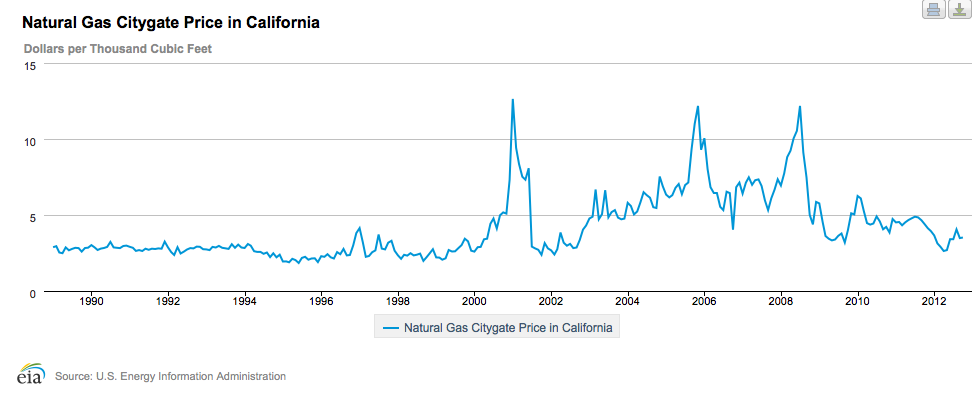
Average wholesale (spot) prices for natural gas fell significantly throughout the United States in 2012 compared to 2011 says the US Energy Information Service.The average wholesale price for natural gas at Henry Hub in Louisiana, a key benchmark location for pricing throughout the United States, fell from an average $4.02 per million British thermal units (MMBtu) in 2011 to $2.77 per MMBtu in 2012. That is isa 31% decline. This was the lowest average annual price at Henry Hub since 1999.
Natural gas meets 24 percent of U.S. energy demand, heats 51 percent of U.S. households and also cools many homes and provides fuel for cooking. It is also widely used to produce electricity, run huge broilers for industry and is a growing source for transportation fuel.
A mild 2011-12 winter, sustained high natural gas inventories, and rising natural gas production in the Marcellus and Eagle Ford basins contributed to lower average spot natural gas prices at Henry Hub. Average spot natural gas prices at Henry Hub fell despite rising natural gas use for power generation, lower overall natural gas net imports from Canada by pipeline, reduced liquefied natural gas imports, higher natural gas exports to Mexico, and temporary production shut-ins related to Hurricane Isaac. Total natural gas production was higher in 2012 than in 2011; however, in contrast to 2011, when production grew steadily over the course of the year, 2012 saw production generally remain flat, close to the level reached towards the end of 2011.
The decline in average wholesale natural gas prices was roughly uniform throughout the United States say the EIA.
The US will become a net exporter of natural gas expects the EIA. “U.S. natural gas production increases throughout the projection period outpacing domestic consumption by 2020 and spurring net exports of natural gas. Higher volumes of shale gas production are central to higher production volumes and an earlier transition to net exports than was projected earlier. U.S. exports of LNG from domestic sources rise to approximately 1.6 trillion cubic feet in 2027, double the 0.8 trillion cubic feet projected last year. The United States becomes a net exporter of LNG in 2016.”
One recent article points out that as a result of growing production here, coaxing natural gas from shale across the US puts the nation at an advantage compared to rest of the world and could even prompt more “in-sourcing” of companies returning to the US to manufacture.
“The United States’ #1 economic advantage against all other countries on Earth is its abundant natural gas reserves combined with its 1 million-plus mile natural gas pipeline distribution system. No other country has the combination of high natural gas production, low natural gas prices, and the ability to economically deliver natural gas to every major metropolitan city as well as to tens of millions of homes and businesses. It is an advantage the country cannot afford to squander.”
By contrast Chinese domestic natural gas production is very low, the country imports its natural gas by coastal terminals and needs to distribute it to the country’s interior.
California’s food processing plants rely heavily on natural gas to dehydrate and can fruits and vegetables.
As horizontal drilling and the controversial extraction technique known as fracking have made domestically produced natural gas more available and sharply cheaper, gas has been widely embraced by industry, electric utilities and trucking fleets.
A recent NY Times article point out the following.
The rapid development of shale gas technology has helped reduce energy imports and, in some cases, encouraged companies producing petrochemicals, steel, fertilizers and other products to return to the United States after relocating overseas. Natural gas exports are growing and terminals built to hold imported supplies are being repurposed for international sales.
The American petrochemical industry, for example, uses natural gas as both its primary raw material, in the form of liquid ethane, and as an energy fuel. And cheaper prices have led to a major expansion of capacity in the United States.
The hydrocarbon molecules in natural gas are split apart and then recombined as building blocks for many products, including bulk chemicals and fertilizers. The chemical ethylene, which is largely derived from natural gas, is used to make things like pool liners, building insulation and food packaging.
According to Kevin Swift, chief economist at the American Chemistry Council, European producers mostly use oil-derived raw materials for making these same products. “The U.S. has a competitive advantage when oil is seven times as expensive as natural gas, but now we have more like a 50-to-1 advantage,” he said. “The ‘shale gale’ is really driving this. A million B.T.U.’s of natural gas that might cost $11 in Europe and $14 in South Korea is $2.25 in the U.S. Partly because of that, chemical producers have plans to expand ethylene capacity in the U.S. by more than 25 percent between now and 2017.”

Valley 2013 Ag Business Updates
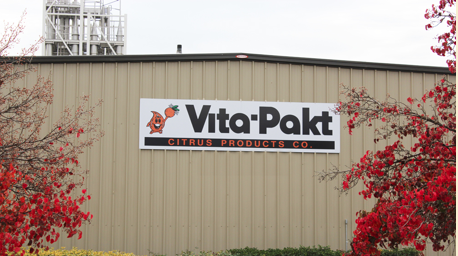 Tulare: Vita-Pakt Citrus Products Co.’s, Chairman and CEO, Jim Boyles, announced the commissioning of its new citrus juice processing facility in Tulare last month. Source says the plant is being expanded and under construction now.
“This new plant utilizes the latest juice processing technologies offered worldwide. Our state of the art equipment is designed to provide the best quality NFC and concentrated citrus juice for our expanding industrial customer base.” – Jim Boyles, Chairman and CEO.
This plant will begin processing the majority of Vita-Pakt’s juice and debittering navel juice beginning in December. All products are offered in bulk tankers, drums and pails says the company.
Vita Pak recently purchased the CCPI juice plant in Lindsay and has two facilities there and now one in Tulare.
Terra Bella: Growers Citrus Packing is adding a 41,350 SFT cold storage facility at its Ave 95 plant site.The independent packing facility is owned by David Evans. The nearly $1 million cold storage building will mean about 6 new jobs with cold storage room for 50,000 boxes of citrus.
Kingsburg: Sierra Packing Solutions will build a 37,500sf office and storage facility at 2491 Ave 400 near Kingsburg. The $800,000 building will allow owner Clyde Ulrich to relocate from a smaller rented facility in Kingsburg.
Lemoore: Wine Tasting Room planned. George Meyer of Farmers Fury Winery is seeking a conditional use permit to open a wine tasting room at at 358 West “D” Street. Other merchandise sold will be shirts, hats, wine racks, wine bottle holders, and other items along with cheeses and olive oil and small appetizer type food. Lemoore city planning commission will hear the plan January 14.

Ag Beat – Crops Update

Corn futures price for March are down to $ 6.90 per bushel from $8.40 per bushel – the record high price due to the drought this past summer. Yield fell dramatically on last years crop say USDA (see chart).
Demand based on price expectations is falling.As one analyst says “ outside speculators and their actions are what is driving the markets today and bringing lower commodity prices right now.
“Yes, those are the traders who want to get out now,” Darin Newsom, senior analyst for Omaha, Neb.-based DTN.Newsom said. “There is supply and demand (impacts), yes, but it’s mainly commodity investors.”
Looking ahead farmers across the Western world are ready to plant more corn. Mansanto says they are selling more seed in South America.”While farmers across the U.S. corn belt suffered from poor yields last year because of drought, that has driven up prices for corn and soybeans, and along with it seed demand, in the U.S. and South America.” says one news story.
Record high prices for corn reduced livestock herds,collapsed dairy profits and cut ethanol production in 2012 for the first time since 1996.
Avocado consumption and supply rise :Americans are eating more avocados these days, and the forecast for the coming year shows a good crop to help meet the demand. According to a report by the US Agriculture Department, the annual per-person consumption of avocados is about 4-and-a-half pounds, more than double the amount from just a decade ago. Initial estimates show that last year’s avocado supply from domestic and imported sources set a record at 1.5 billion pounds.
Mandarin crop could break record :California produces two-thirds of the US mandarin crop, and crop estimators forecast a record season for mandarin and tangerine growers. A government crop report says the total US mandarin and tangerine crop could be up nearly 8 percent from the previous year. Analysts attribute the increase to the maturation of a large number of mandarin and tangerine groves that have been planted in recent years and are now producing fruit.
Ag Giant Cargill Reports 2Q Net Income of $409 Million,Compared to $100 Million in 2Q 2011
Minneapolis based Cargill reported Jan. 9 net earnings of $409 million in the fiscal 2013 second quarter ended Nov. 30, compared with $100 million in the same period a year ago.In the first six months, earnings totaled $1.38 billion compared with $336 million in the prior year.The company is the largest privately held corporation in the United States in terms of revenue.[2] If it were a public company, it would rank, as of 2011, number 13 on the Fortune 500, behind AT&T Inc. and ahead of JP Morgan Chase.[3] Some of Cargill’s major businesses are trading, purchasing and distributing grain and other agricultural commodities, such as palm oil; trading in energy, steel and transport; the manufacture of livestock and feed; producing food ingredients such as starch and glucose syrup, vegetable oils and fats for application in processed foods and industrial use.
Cargill has a major meatpacking plant in Fresno and facilities in Fullerton, San Bernardino, Stockton and Los Angeles. A year ago the company was announcing large layoffs. Now its enjoying 4 times earnings.
CFB contributed to this article

Union Bank Names Branch Closures On Central Coast

As as a result of the purchase of Santa Barbara Bank and Trust last year Union Bank will close some 16 branches on the California coast from Beverly Hills to the Bay Area.
On December 29,2012 the San Francisco-based bank filed notices of closures with the Department of Treasury on the Central Coast at 1140 Morro Street in San Luis Obispo, 335 E Betteravia Rd in Santa Maria,,200 N “H” St in Lompoc, and 1714 Mission Dr in Solvang – all towns with duplicative Santa Barbara Bank and Trust locations. The bank has indicated the closures would take place by April.
All notices are listed on the US Treasury website,Office of the Comptroller of the Currency.
UnionBanCal Corporation (“UNBC”) and its primary subsidiary, Union Bank, N.A. (“Union Bank”), announced in Deecmber that it has completed its $1.5 billion purchase of Pacific Capital Bancorp (“PCBC”), a bank holding company headquartered in Santa Barbara, California. As part of the transaction, Santa Barbara Bank & Trust, N.A. will be merged with and into Union Bank on December 3, 2012, with Union Bank continuing as the surviving entity. The merger received final regulatory approval on November 14, 2012.
Through the transaction, Union Bank acquires $3.7 billion in loans held for investment and $4.7 billion in deposits, as of September 30, 2012.
The Union Bank purchase of Santa Barbara Bank & Trust branches on the Central Coast will result in the layoff of 468 employees,most of them by April, said bank spokesman Dan Weidman. Here is the bank’s statement.
“Union Bank will retain 570 Santa Barbara Bank & Trust employees, including most customer-facing positions across the bank. 468 positions will be eliminated over the course of the next twelve months. 80 percent of those whose positions have been eliminated will not depart the bank until at least April 30, 2013. Union Bank currently has 175 open positions from Los Angeles to San Jose for which impacted employees can apply.”
That would leave about 300 without a job even if they can fill an open position that may be a hundred miles or more from where they live now.
Santa Barbara Bank and Trust had 46 locations from Gilroy south to Beverley Hills. Union Bank has some duplicate locations with Santa Barbara Bank & Trust including San Luis Obispo and Santa Maria in our reading area.
Union Bank is slated to brand all the SBB&T locations as Union Bank.
Using the company figure of 468 position layoffs and 16 branch closures the numbers average around 30 people per branch who will lose their jobs.

Energy Commission Rejects CRPE’s Objections To New Valley Power Plant
 Staff of the California Energy Commission is rejecting criticism of the CEC’s approval of a licensee to operate a long-awaited natural gas fired power plant on the Valleys westside. The proposed project is scheduled to be approved January 9, 2013 by the full commission allowing Avenal Energy Project to begin to operate under an updated emission plan.
The $530 million project, first proposed in 2008, has been the subject of some 5 years of criticism and legal action by various environmental groups including San Francisco-based Center For Race Poverty & The Environment (CRPE) who argue that pollutants from the proposed plant would result in a disproportionate impact to low income or minority populations in the nearby towns of Kettleman City,Avenal and Huron.
The power plant is located in Kings County near the Avenal Cuttoff in the city limits of Avenal – west of I-5.
A December 31,2012 letter to the CEC from CRPE charges that the natural gas power plant will add to harmful emission levels in the nearby towns and that the plan does not meet the EPA’s most stringent rules on maximum emissions allowed on a per-hour basis.
The applicant counters that this facility will be the cleanest burning natural gas power plant built yet.
The project remains caught up in environmental justice concerns surrounding health problems in the Kettleman City area that have focused on a waste dump there as well. Advocates claim emissions from I-5 , toxic waste, pesticide pollution from farms and other air and water problems should limit new development that creates more problems.
Agreeing the project should move forward is CEC staff led by Richard Ratliff, Staff Counsel, who argues Avenal Energy’s latest application lowers the annual emissions of oxides of nitrogen (NOx) and carbon monoxide (CO) so that all criteria pollutant emissions allowed by the Avenal license would be below the threshold limits that require a federal Prevention of Significant Deterioration (PSD) permit. Avenal has received the federal PSD permit from the Environmental Protection Agency (EPA), but that permit is currently being litigated in the federal Ninth Circuit Court of Appeals, and it is unclear when that litigation will result in a decision says the CEC staff report.
The license was originally issued by the Energy Commission in December 2009 but the project faced years of foot dragging by the EPA and after the EPA’s approval ,forced by court action, more lawsuits from environmental groups that are still pending in court.
Because the issue remains tied up in court CRPE says the state Energy Commission should wait before approving Avenal’s latest emission plan.Among other things CRPE argues that the project does not meet a new EPA standard on one hour emissions put in place after the project was approved by the CEC .But the San Joaquin Valley Air Pollution Control District did an analysis that says the project does meet that higher standard.
CRPE questions the SJVAPCD analysis.The area “has worse air quality than any other region in the Nation.”
CEC staff suggest the commission approve the project despite CRPE’s claims,a likely outcome.
“The CRPE request should be rejected for three reasons: (1) As stated above, the amendment imposes more stringent requirements on Avenal, requiring reductions in criteria pollutant emissions; (2) the San Joaquin Valley Air Pollution Control District (SJVAPCD) has performed an analysis of N02 emissions impacts demonstrating compliance with the new federal standard, and Staff has independently reviewed and confirmed the validity of that analysis; and (3) the CRPE request in essence seeks to create a separate state forum in which to re-litigate issues already raised and resolved in the original proceeding, or to litigate the issues it has raised with regard to the federal PSD permit on issues that are outside the State’s purview, and that can only be resolved by the federal courts. “
The 600MW project would provide power to some 450,000 Valley homes and businesses The City of Avenal is hoping it moves forward as it will be the town’s largest property taxpayer and provide new employment. The project owner Houston-based Macquarie Energy , says during the nearly three-year construction period, 300-400 construction workers will be employed at the peak of construction with an average of 250 per month during the three-year construction phase.
During operation, the project will create 19-25 new well-paying jobs.
The California Energy Commission response to CRPE concludes:”Lower emissions equal lower potential environmental impacts. As such, the proposed amendment cannot result in any significant adverse environmental impact, making it eligible for the “common sense” exemption from the California Environmental Quality Act. (Cal. Code Regs., tit. 14,§ 15061, subd. (b)(3) [“CEQA applies only to projects which have the potential for causing a significant effect on the environment.”].)
Accordingly, the amendment would not result in a disproportionate impact to low income or minority populations. “
Even with a victory here Avenal Energy must get a power purchase agreement from a utility to move to a ground breaking.