
Are We Heading to $3 Gas At The Pump?

Screen Shot 2013-11-06 at 1.48.35 PM

Hummer vs Tesla -What's Cool?
Hummer vs Tesla -What’s Cool?

California is growing.There are more cars being sold and an uptick in freight movement too.But that does not mean traditional petroleum fuels are enjoying more demand. Far from it. There is lots of gasoline available in the state even as the oil industry advises there is a coming boom in shale oil production here, rivaling what is happening in North Dakota. What will a huge supply of product do to already weakening prices?

Oil Heads Down

They are already heading down.Oil this week is under $94 dollars a barrel and California-grown heavy oil from the state’s largest field in Kern County – Midway Sunset – is the lowest price in several years – today $92.58.That is nearly $20 lower than September’s price.

Across the US we are producing millions of barrels of new oil even as we use less in our everyday life. To get rid of it – the industry increasingly exports product.

Why should you be cheering for lower oil prices? An economist at Moody’s Economy.com has stated that every $1 decline in the price of oil saves U.S. consumers $1 billion.

Helping to drive consumption down, higher demand from an improving economy is more than offset by improved efficiencies. In vehicles for example the government’s Energy Information Agency(EIA) says fuel efficiency increased nearly 2% in the first half of of 2013.

For gasoline suppliers the result is lower demand in California where higher fuels costs compared to the rest to the nation are legendary.

Last month the state Board of Equalization reported that Californians consumed 3.68 billion gallons of gasoline in the second quarter, a 0.2 percent decline from 3.69 billion gallons used in the second quarter of last year. The average price of gasoline was $4.04 per gallon in California during the second quarter, and nationally the average price of gasoline was $3.67.

Today some stations in California are selling regular for $3.24. EIA say the average price in California this week (Nov 4) is $3.61 compared to $3.94 this week last year.

Clunkers Bit The Dust

Compared to 2008 – Californians are using about 5% less gasoline than we did then.  DMV reports that the number of total vehicles registered in the state fell from 33.5 million in 2008 to 31.3 million in 2013. Translated, some 2 million plus clunkers bit the dust.

Consumers facing years of high gasoline costs have figured out way to cut their use. Here are some things they have done. As more alternative products have become available in recent years California motorists are eager to give them a try.

Tesla In,Hummers Out

Like buying hybrid cars that are less dependent on gasoline to operate. About 585,000 hybrid vehicles were registered in the state in January 2013 – up from 218,000 hybrid vehicles registered in 2008.

Some buyers are switching to electric cars,although more slowly. In a bid to spur electric car sales eight states including our own are pushing to increase EV sales to 3.3 million by 2025 by forming partnerships to build recharging infrastructure across the states. The government backed effort aims to stem emissions that are implicated in global warming largely caused by fossil fuels.

Meanwhile the darling of the California economic rebound is an electric car – Tesla – made in the Bay Area and a new favorite both on Wall Street and with the well healed buyer. Our California dream car has changed from the Hummer to a Tesla!

Also there is a change in the fuel mix that is reducing the amount of traditional gasoline sold. That includes renewable ethanol made largely from corn that has displaced 10% of the US gasoline volume and is moving to a 15% blend including California.Last year, ethanol displaced an amount equivalent to the gasoline refined from 462 million barrels of imported crude oil say advocates helping to make real the idea of energy independence.

The fuel mix is changing for diesel as well.Today California blends petroleum diesel with 5% renewable biodiesel that reduces emissions and harmful particulates.

Then there is the natural gas revolution hailed by politicians,industry and Wall Street investors. Again its not good news for traditional gas stations.

A recent NYTimes article points to the advantages  of converting more vehicles to this lower emission fuel. ”According to Energy Department price information from July, natural gas offers economic advantages over gasoline and diesel fuels. If a gasoline-engine vehicle can take you 40 miles on one gallon, the same vehicle running on compressed natural gas can do it for about $1.50 less at today’s prices. To that savings add lower maintenance costs. A study of New York City cabs running on natural gas found that oil changes need not be as frequent because of the clean burn of the fuel, and exhaust-system parts last longer because natural gas is less corrosive than other fuels.”

The Nat Gas Vehicle Assn adds:

-There are about 135,000 NGVs on U.S. roads today and more than   15.2 million worldwide.
-There are about 1,300 NGV fueling stations in the U.S., and refueling appliances are available for home use.
-In the U.S., about 50 different manufacturers produce 100 models of light, medium, and heavy duty vehicles and engines.
-Natural gas currently costs from $1.50 to $2.00 less per gasoline gallon equivalent (GGE).

While some large vehicles and fleets are switching to natural gas -others like school districts are choosing propane – both cleaner and cheaper than diesel.

Even cleaner is the availability of biogas in the state now. Biogas derived mostly from waste material emits 90% less carbon emissions than diesel or gasoline, according to California Air Resource Board estimates, and requires less energy to extract and process. It  also makes use of methane that would otherwise be released into the atmosphere. Facilities that capture the methane from waste material are being built in the state right now including several in the Central Valley.

Fleets can now fill their vehicles with fuel made from methane and other kinds of organic waste at 40 “gas” stations in California, thanks to Clean Energy Fuels Corp. (Nasdaq: CLNE).The company, which is backed by T. Boone Pickens, expects to sell 15 million gallons of “Redeem” this year in California and has plans for a nationwide network of 400 “gas” stations they say. Customers already include AT&T, Verizon, Mattel and Williams-Sonoma as well as large fleet operators like Hertz and SuperShuttle.

If some can now fuel up in all sorts of new ways these days other than gasoline – the increasing popularity and availability of mass transit  provides another option – leave the car at home.

More efficient mass transit is helping to reduce clogged freeways in places like LA  where for the first time you will be able to travel from Downtown LA to LAX by Metro, under construction now.

That prospect in turn, is changing LA’s sprawling land use patterns, encouraging more residential units along transit lines and reducing car commutes in the future.

No wonder gas prices are falling.
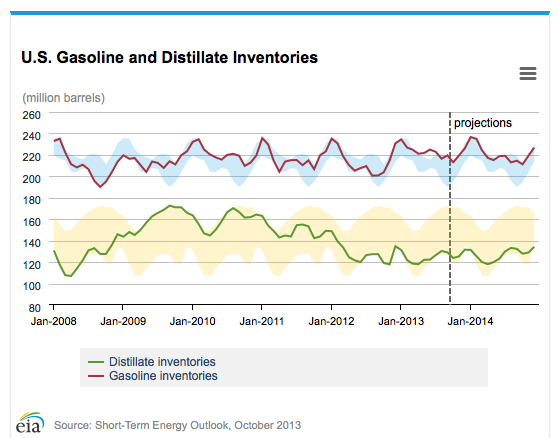
Screen Shot 2013-11-06 at 7.53.45 AMFor the first half of 2013, EIA data show gasoline consumption lower than the comparable 2012 period by 50,000 barrels per day, or 0.6%, lower than in the comparable 2012 period. And supply is epected to grow as you can see from this EIA chart from the past few days.

Other Factors:

There are other factors helping to reduce gasoline prices right now. This is the low driving season,winter fuels are cheaper to produce and so far this year there have been no major Gulf storms to worry about.Add to that the relative stability of the Middle East and you see why some believe California motorists will be paying $3 a gallon for regular before Spring.

Low Carbon Push

The fight to stem the rising tide of global warming is a key factor in the state with the policy demanding the carbon intensity of our fuel be reduced. California’s low carbon fuel standard(LCFS) is now law surviving a court challenge. LCFS gives suppliers tradable credits when they reduce emissions during the production, transportation and use of the fuel. The law requires the oil industry to gradually reduce the “carbon intensity” of transportation fuels by at least 10% by 2020.

Why should you be cheering for lower oil prices? An economist at Moody’s Economy.com has stated that every $1 decline in the price of oil saves U.S. consumers $1 billion.

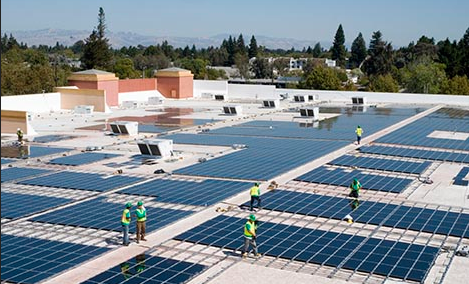
EPA – Top On-site Generation Organizations and 100% Green Power Users

Screen Shot 2013-11-04 at 1.30.47 PMOn Monday, November 4, the U.S. Environmental Protection Agency (EPA) released its updated lists of the top On-site Generation organizations and 100% Green Power Users in the Green Power Partnership (GPP) program choosing to use clean, renewable electricity.

For the first time, the On-site list expanded from the Top 20 to the Top 30 partners generating on-site green power. EPA also updated the 100% Green Power Users list.

The expanded lists help further recognize leading organizations committed to using green power and reflect recent growth within the Partnership – the GPP now includes more than 1,500 organizations that are collectively using more than 28 billion kilowatt-hours (kWh) of green power annually.

Combined, the top 30 On-site Generation partners use nearly 860 million kWh of green power annually, and the 100% Green Power Users consume more than 11.5 billion kWh annually.

The top five on-site generation organizations appearing on the list include:
Wal-Mart Stores, Inc.
U.S. Department of Energy
Apple Inc.
BMW Manufacturing Co. / Greer, SC Facilities
Coca-Cola Refreshments

The top five 100% green power users based on total kWh appearing on the list include:
Intel Corporation
Kohl’s Department Stores
Whole Foods Market
Staples
District of Columbia

Green power resources such as solar, wind, and low-impact hydropower produce electricity with significantly fewer greenhouse gas emissions than conventional power technologies.

To learn more about the Top 30 On-site Generation list visit: http://www.epa.gov/greenpower/toplists/top30onsite.htm

Energy Briefs

Kaweah River Could Get 1MW  Hydro Facility

Florida-based Archon Energy has filed an application Oct 18 with  the Federal Energy Regulatory Commission to build a 1MW hydroelectric facility  on the Kaweah River, 4.7 miles east of  Woodlake.

Visalia Could Earn $96k Annually From Sales Of Carbon Credits

The Visalia City Council approved authorizing the City to amend a contract with Trillium CNG to facilitate participation in the Low Carbon Fuel Standard Program and assist in selling carbon credits associated with the Compressed Natural Gas fueling facility.
An amendment calls for Trillium to retain 20 percent of any credits sold, and the anticipated annual revenue from the sales of credits is $96,000. The term of this contract is six months with two three-month extensions. Funds generated from the contract will be deposited in the Transit Fund.

Screen Shot 2013-10-27 at 8.16.34 AMVisalia Co Technology Adopted

VISALIA, Calif.  October 23, 2013 – Edeniq, Inc., a biomaterials and sustainable fuels company, today announced that Flint Hills Resources Renewables, LLC, a leading U.S. ethanol producer, will expand its use of Edeniq’s Cellunator™ proprietary technology. Flint Hills has confirmed that the Cellunators™ have achieved the desired increase in ethanol production at its Fairbank, Iowa facility and the company will install Cellunators™ at two additional locations.
“Edeniq’s Cellunators™ have met our expectations at our Fairbank plant and we’re looking forward to expanding the applications to two of our other locations,” said Jeremy Bezdek, Managing Director of Innovation for Flint Hills Resources. “Edeniq technologies have helped improve our competitive position in the marketplace.”
Edeniq’s Cellunator™ enables ethanol plants to mill corn and other plant materials into a well-mixed slurry of small, uniformly-sized feedstock that can be more easily converted into sugars needed to produce biofuels and other biomaterials.

Flint Hills has been an investor in Edeniq since April 2012 and a customer since July 2011.

IEA: Wind to generate 18% of global power by 2050
WORLDWIDE: Wind power could account for 18% of the world’s electricity generation by 2050 compared with just 2.5% today, according to a new report from the International Energy Agency (IEA).

More Solar In Works In Central California

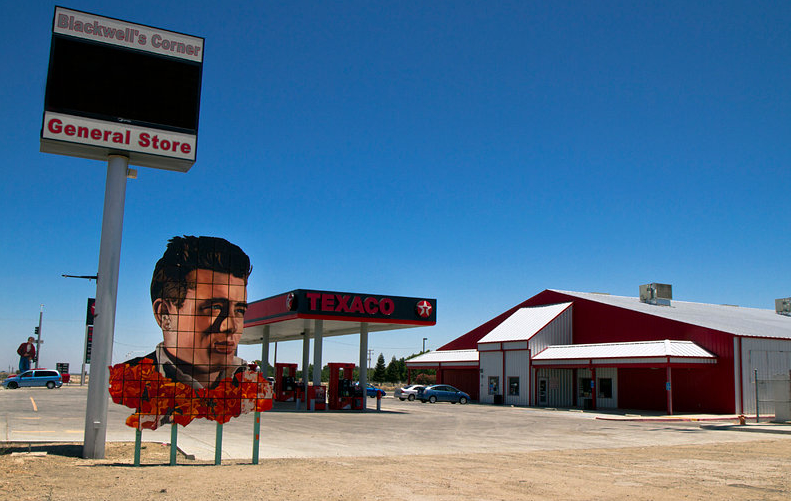
Blackwell Corners on Hwy 46

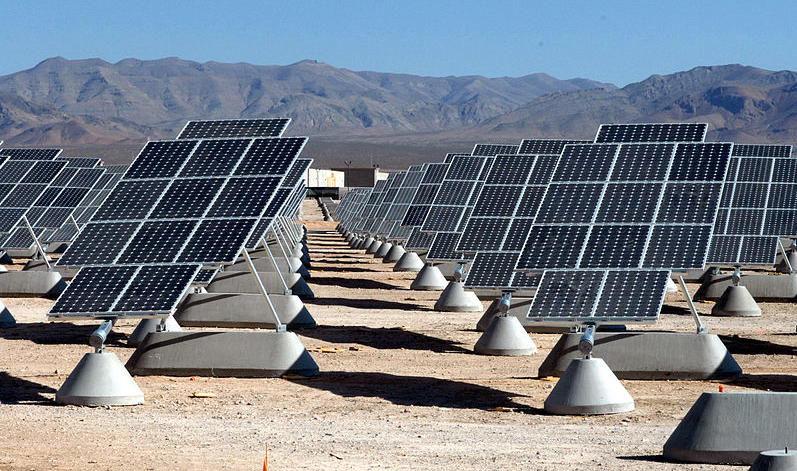
Highway 46 travelers will see a new solar project on the western edge of Kern County with plans filed by Blackwell Solar Park, LLC. The cattle rancher plans a 20MW solar generating facility about 1 mile east of the intersection of State Route (SR) 46 and SR-33, near the community of Lost Hills. An EIR is underway in Kern County.

Spanish company IMMODO who developed about 42 MW of solar projects in Tulare County has filed for a 3MW project in Kings County going through the conditional use permit process. The facility is on the edge of Hanford at 11375 9and 3/4 Ave.

On a mega-scale, San Francisco-based Recurrent Energy has just filed to begin an EIR process as of October 16 in Fresno County for a 400MW solar farm. The 3875 acre project is in Westlands Water District and is named Tranquility Solar. If things go right there will be plenty of activity in Tranquility.

The project was originally proposed in 2011 but the company pulled the application in 2012. Now its back and Recurrent, who has a good record of building what they propose – could begin construction in about a year.The non-prime, dry farm land is 5 miles east of Hwy 5 straddling Hwy 33 at Manning Ave. At 400MW this would be by far the largest Valley solar farm around – on the order of the big Carrizo Plain, SLO County projects being built. The Tranquillity project could boast as many as 2.5 million PV panels and be worth perhaps three quarters of a billion dollars.

Oil/Gasoline Prices Skid

Screen shot 2012-06-09 at 7.35.08 AMOil prices are skidding lower this week with WTI crude down in the $97 range today. This is the first time since late June that prices are below $100 a barrel.In California Chevron Midway Sunset oil that sold for $$105 in September is now down to $95. There is a glut of gasoline in the US says a Wall Street Journal  article this week as refiners enjoy good profit exporting diesel but not on US gas where margins are thin.Some expect gas prices to fall further. In California gasoline is selling as low as $3.35 a gallon around Turlock according to Gas Buddy.
S2S Reading Area
In SLO county the Nipomo Vons has posted a county low of$3.61 and Morro Bay ARCO is selling at for $3.67; SLO’s Costco at $3.69. In Tulare the Valero is is down to $3.48 and its $3.49 at the Costco inVisalia.The California average gas price is $3.74 with prices down about 22 cents in the past month.

GOOGLE INVESTS $103 MILLION IN CALIFORNIA SOLAR PLANT

Blog Entry by gmcheeseman in Energy

Saturday, October 19, 2013 – 3:00am
(3BL Media/Justmeans) – Google is investing big time in renewable energy projects. The search engine’s latest investment is $103 million in a 265.7 megawatt (MW) solar project in Southern California, called Imperial Valley Solar 1 (IVS-1). The project is Google’s 13th investment in renewable energy projects. The company has invested over $1 billion in renewable energy projects that will generate at least two gigawatts of power, enough to power 500,000 homes.

Silver Ridge Power LLC is developing the new solar facility. Silver Ridge is a joint venture between AES Corp., a utility owner, and Riverstone Holdings LLC, a private equity firm investing mostly in energy. Silver Ridge has about 522 MW of power in operation in its global portfolio in seven countries. After it is completed next year, the power from the IVS-1 project will be sold to San Diego Gas & Electric Co. under a 25-year power purchase agreement.

Screen Shot 2013-10-19 at 1.08.59 PMIVS-I will generate enough electricity to power 80,000 homes, and will create over 900 construction jobs in a state that has an unemployment rate of 8.9 percent. IVS-1 is the first of four phases of a 600 MW PV facility. The second stage will be 150 MW and is expected to begin operation at the end of 2005. The third stage is 150 MW and is expected to begin operation by 2016. The fourth stage is 100 MW and expected to begin operation by 2016.

All but two of the other 12 investments are in the U.S., which include the following:
A $200 million investment in a 161 MW wind farm in Oldham County, Texas that will generate enough electricity to power 60,000 homes.
A $75 million investment in a 50 MW wind farm in Rippey, Iowa that will generate enough electricity to power over 15,000 homes.
A $94 million investment in four solar PV projects being built near Sacramento, California with a total capacity of 88 MW that will generate enough electricity to power over 13,000 homes.
An investment totaling a 37.5 percent equity stake in the Atlantic Wind Connection, which will be 250 miles along the eastern coast from New Jersey to Virginia and will enable up to 7,000 MW of offshore wind power to be connected and provide enough electricity to power 1.9 million homes.
A $157 million investment in two wind projects in the Mojave Desert that total 270 MW.
A $100 million investment in an 845 MW wind farm in Arlington, Oregon that will generate enough electricity to power 235,000 homes.
A $38.8 million investment in two wind farms in North Dakota that generate 169.5 MW of power.
A $75 million investment in Clean Power Finance, a company that provides financing for rooftop solar in nine states (Arizona, California, Colorado, Connecticut, Hawaii, Massachusetts, Maryland, New Jersey and New York).
Google has invested in two projects outside of the U.S. One of them is a 94 MW solar PV plant in South Africa called the Jasper Power Project that will generate enough electricity to power 30,000 homes. The other is a solar power facility in Brandenburg, Germany which has a peak capacity of 18.65 MW, generating enough electricity to power over 5,000 homes.

California Pushes Utilities to Use Energy Storage

 From ACWA

The California Public Utilities Commission (CPUC) adopted new rules Oct. 17 requiring investor-owned utility companies to install cutting-edge systems for energy storage.

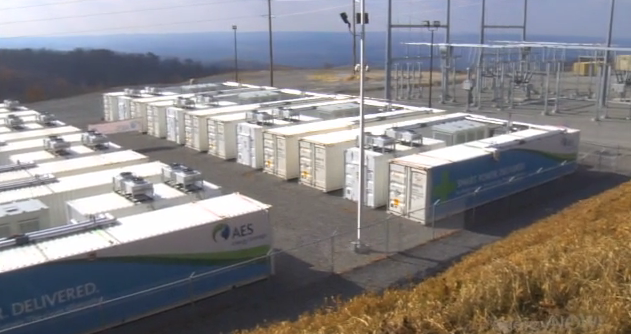
Proponents say the new rules, believed to be the first of their kind in the nation, could usher in a new era of large-scale storage batteries, flywheels and smaller pumped storage systems that help spur more renewable energy development and make the electric grid more reliable. Utilities caution there likely are hurdles ahead to overcome.

Screen Shot 2013-10-19 at 8.04.04 AMUnder the rulemaking, Pacific Gas and Electric, Southern California Edison and San Diego Gas & Electric will need to procure 1.3 megawatts of energy storage capacity by 2020. Meanwhile, electric service providers and community choice aggregators — in which cities and counties purchase or generate electricity for their residents and businesses — must procure energy storage equal to 1 percent of their annual 2020 peak load. Installations must be finished by no later than 2024.

“This decision represents an important first step in encouraging the storage market and supporting grid reliability,” said CPUC Commissioner Carla Peterman, the lead commissioner for this rules proceeding.

The new targets were prompted by 2010 legislation requiring CPUC to study the feasibility of energy storage systems.

Developing and building new storage systems could make investing in wind and solar projects more productive. Renewable energy often is intermittent — meaning the sun doesn’t shine and the wind doesn’t blow all the time. Consequently, renewable energy isn’t always generated when it’s needed on the electric grid the most. Having effective storage systems could help solve the problem.

But the state’s biggest utility companies raised some concerns with the new rules. San Diego Gas & Electric told CPUC the timeline and targets are “arbitrary,” while Southern California Edison said ratepayers might bear of the burden of the new rules.

Worries aside, some analysts are predicting big things for the future of energy storage. A recent IMS Research report estimated the global energy storage industry will rise to $19 billion by 2017 from its $200 million valuation in 2012. The report mentions California’s new rules among the drivers that will help this emerging market grow.

Of note to ACWA members, a program on energy storage is planned for the 2013 ACWA Fall Conference & Exhibition in Los Angeles on Thursday, Dec. 5, at 9:30 a.m. Moderated by Lon House of Water & Energy Consulting, “Maximizing the Value of Your Renewable Project with Energy Storage” will feature experts from Green Charge Networks, NLine Energy and SolarCity.


Building a Wind Farm At Poly Canyon

Screen Shot 2013-09-16 at 5.18.14 PMScreen Shot 2013-09-16 at 5.17.21 PMWith an eye to increasing renewable power generation at Cal Poly, the school’s facility department is preparing a wind study for Poly Canyon to test the wind resources overlooking the big SLO campus.

The campus of course, is more like a city with 5 million square feet of buildings to power up and a daytime population of 20,000 souls.

Facilities staffer Dennis Elliot,assistant director of energy, utilities and sustainability for Cal Poly says his current work program is to move forward on wind tests at Poly Canyon near the 1400 ft elevation to see of the idea of wind power makes sense here.

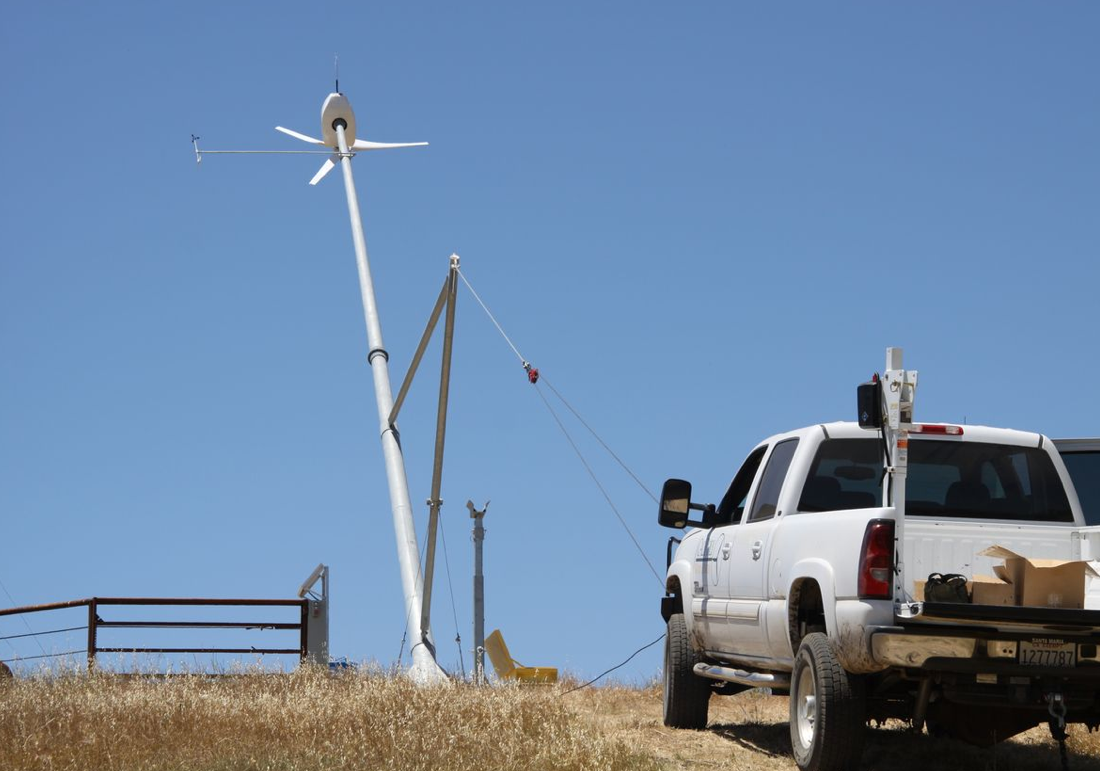
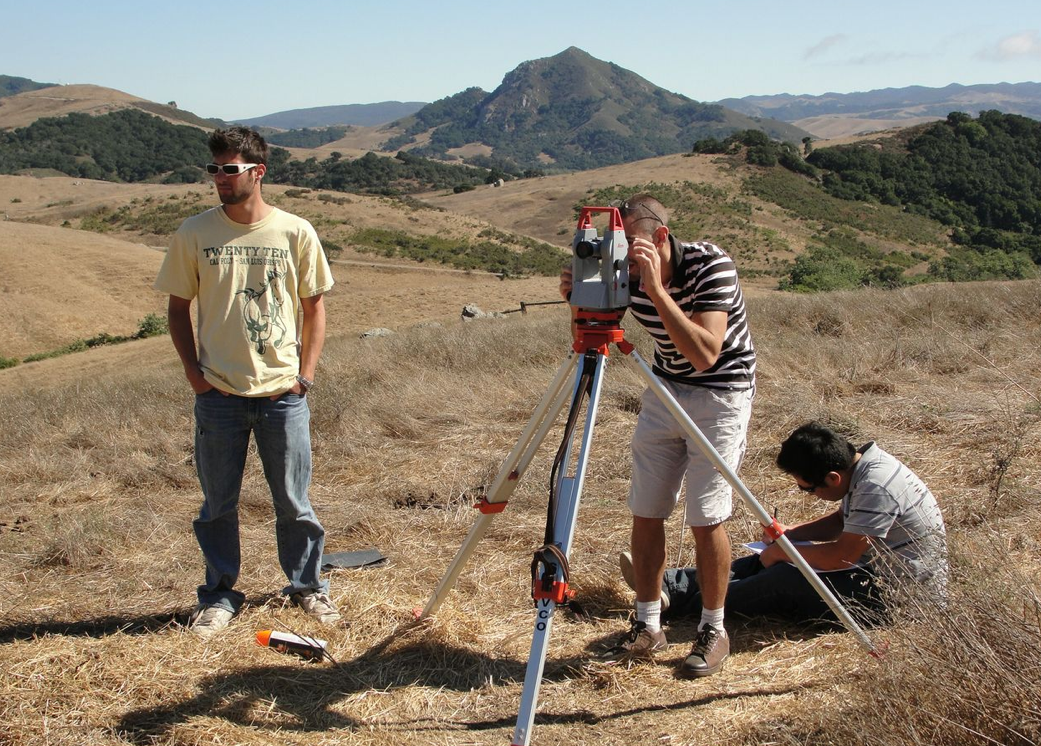
Cal POLY engineering students test a new turbine at Escuella Ranch near Cal Poly

That’s good news to Cal Poly professor Dr Patrick Lemieux who for several years has been working with his engineering class to erect  student engineered wind turbines at Escuela Ranch near the campus and is a believer that the idea of a campus wind farm may work. Lemieux’s wind research center helps prepare students for jobs in the field

Their latest model is a 70 ft tilt-down version of a wind turbine that is easier to maintain,generates about 3kw that has been modified several times to do energy calculations. After 3 years of studies on whether the area could support a potential wind farm – the results were promising and outlined in this student thesis.

“Wind resource assessment at California Polytechnic State University shows there is potential for wind power generation on Cal Poly land. A computational fluid dynamics model based on wind data collected from a campus maintained meteorological tower on Escuela Ranch approximately 5 miles northwest of campus suggests there are areas of Cal Poly land with an IEC Class III wind resource at a height of 80 meters above ground.”

“In addition during the daytime when the campus uses the most energy there are large portions of land with annual average daytime wind speeds above 6.9m/s. These areas have been identified by analyzing the wind speed and directional data collected at the meteorological tower and using it to create the boundary conditions and turbulence parameters for the computer model.”

“Before constructing a wind farm for power generation, additional meteorological towers should be constructed in Poly Canyon to further confirm the wind resource prediction.”

So that’s where we are.

Lemieux says the wind resources that are available track Cal Poly’s power needs with the wind blowing the most from 6 AM to 6PM and typically blowing stronger during the school year months of October through April.

Lemieux says that any Poly Canyon study would be followed by meteorological towers being placed at scattered locations above the campus and left for a year of data collection.

His guess is that perhaps 10 wind turbines,200ft tall could produce 3MW (300kw each) or about half the average power needed at the campus – around 6MW. Elliot says that actual demand varies between 3 to 10MW.

A 200ft tall turbine while large pales in size to 300 meter units that are a standard at big wind farms like Tehachapi with Lemieux hoping their more modest scale will be accepted considering the SLO foothills already sport similar size tower lines.

With a small 300kw solar unit in place for several years on an engineering building Elliot says they continue to plan for a 1MW solar unit to be constructed by a third party under a power purchase agreement with PG&E as the CSU campuses statewide follow mandates to add more renewables.

Fracking Legislation Clears Assembly Floor

A bill that would impose California’s first regulations on fracking has been sent to Gov. Jerry Brown after clearing the Assembly on Wednesday, Sept. 11.

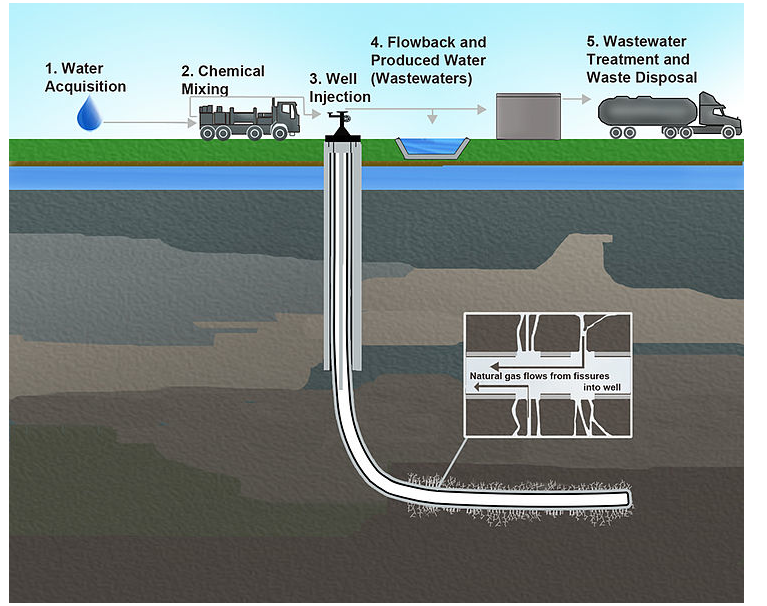
Hydraulic fracturing, or “fracking,” involves injecting a mix of water, sand and chemicals underground through a well at high pressure so that rocks split, allowing extraction of oil or natural gas. A similar method called “acidizing” dissolves rock to reach pockets of petroleum.

SB 4, sponsored by State Sen. Fran Pavley (D-Agoura Hills), would set rules and regulations for both fracking and acidizing. Brown publicly endorsed SB 4 this week and is expected to sign the legislation.

The bill would enact, by 2015, a regulatory framework made up of several components, including:

  • Requiring well operators to obtain permits from the California Department of Conservation’s Division of Oil, Gas, and Geothermal Resources (DOGGR)  in advance of any “well stimulation” treatment such as fracking or acidizing.
  • Enabling owners of property near fracked wells to receive notice of fracking activities and the ability to request water quality sampling.
  • Tasking DOGGR and other appropriate state agencies with amending rules and regulations concerning the construction of wells and well casings.
  • Requiring DOGGR to develop and maintain a publicly available database where fracking activity in California can be tracked transparently.
  • Allowing well operators to keep confidential their “trade secret” chemical mixtures used for fracking, but requiring their disclosure to DOGGR and as necessary to health professionals.
  • Requiring the Natural Resources Agency to complete a study of the possible hazards and risks of fracking.
  • Authorizing civil penalties of between $10,000 to $25,000 per day against violaters of the well stimulation requirements.

Environmentalists and the oil industry engaged in heated debate about the safety of fracking during this year’s legislative session. State lawmakers held hearings on possible impacts to water quality as the California Department of Conservation’s (DOC) Division of Oil, Gas, and Geothermal Resources (DOGGR) began late last year to consider how fracking would be regulated.

Critics contend that fracking chemicals can leach into groundwater and pollute drinking water sources, and some believe that the injection of high-pressure fluids can even cause flurries of earthquakes. Supporters, meanwhile, say that fracking could be an economic boon for the state if the drilling process can tap into the Monterey Shale, an expansive rock formation in the San Joaquin Valley believed to contain a lucrative oil reserve.

“There are still many unanswered questions about the use and impacts of fracking and acidizing, and it is in the interest of all Californians to monitor and regulate these practices,” Pavley said in a statement released Sept. 11 after the Assembly voted 48-17 in favor of SB 4. The state Senate later concurred.

Reaction to the bill has been mixed this week. Some environmental groups claimed that late amendments to SB 4 had watered down the bill and urged Pavley to withdraw the bill.

Earlier this year ACWA took a “support” position on SB 4, citing the need to disclose the amount and type of chemicals and fluids used in fracking in order to protect California’s water quality.


Edeniq, Pacific Ag To Offer Bolt-on Cellulosic Ethanol Solution

Screen Shot 2013-09-10 at 3.01.46 PMVisalia-based Edeniq, a biomaterials and sustainable fuels company, and Oregon based Pacific Ag, the leader in large-scale agricultural feedstock supply chains, have announced a five-year exclusive collaboration agreement to assist existing corn-based ethanol production facilities to add cellulosic ethanol production, thereby diversifying feedstock sources, enhancing long term production margins, and helping achieve the renewable fuel standard (RFS) goal of 36 billion gallons of biofuel production by 2022 in order to provide cleaner fuels, energy security and economic development in the US.
“This collaboration holds the potential to enhance the commercial viability of cellulosic ethanol production in the US,” said Brian Thome, the president and CEO of Edeniq. ”By combining Edeniq’s bolt-on production technologies for corn ethanol plants with Pacific Ag’s agricultural biomass supply capabilities, we will provide the best turnkey solution for today’s producers to economically integrate cellulosic production into their existing facilities.”
There are today about 200 operating ethanol plants in the US in 28 states. They produce nearly 14 billion gallons annually representing approximately 10 percent of all gasoline sold in the US. They rely almost exclusively on corn as a feedstock, a grain that has been subject to wide fluctuations in price and supply over the past decade, driven by competing end uses, market speculation and weather. In 2005, the U.S. DOE issued its “billion ton” study. That study determined that U.S. agriculture and forest resources have the capability to produce at least one billion dry tons of biomass annually in a sustainable manner, enough to produce biofuels to meet more than one-third of the current demand for transportation fuels.

This collaboration agreement brings together two companies at the forefront of solving a big risk factor to commercial production of cellulosic ethanol: getting biomass from the field to the plant with maximum reliability and efficiency and successfully converting that biomass at a low per gallon capital investment for existing production facilities. For Pacific Ag, this potential market represents a key additional sector in our strategy to maximize the role of ag biomass in the nation’s energy supply.”
Bill Levy, founder and CEO of Pacific Ag, said, ”This collaboration agreement brings together two companies at the forefront of solving a big risk factor to commercial production of cellulosic ethanol: getting biomass from the field to the plant with maximum reliability and efficiency and successfully converting that biomass at a low per gallon capital investment for existing production facilities. For Pacific Ag, this potential market represents a key additional sector in our strategy to maximize the role of ag biomass in the nation’s energy supply.”