
From ACWA
The California Public Utilities Commission (CPUC) adopted new rules Oct. 17 requiring investor-owned utility companies to install cutting-edge systems for energy storage.
Proponents say the new rules, believed to be the first of their kind in the nation, could usher in a new era of large-scale storage batteries, flywheels and smaller pumped storage systems that help spur more renewable energy development and make the electric grid more reliable. Utilities caution there likely are hurdles ahead to overcome.
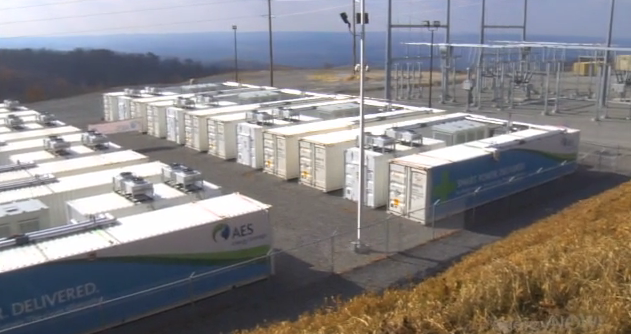 Under the rulemaking, Pacific Gas and Electric, Southern California Edison and San Diego Gas & Electric will need to procure 1.3 megawatts of energy storage capacity by 2020. Meanwhile, electric service providers and community choice aggregators — in which cities and counties purchase or generate electricity for their residents and businesses — must procure energy storage equal to 1 percent of their annual 2020 peak load. Installations must be finished by no later than 2024.
“This decision represents an important first step in encouraging the storage market and supporting grid reliability,” said CPUC Commissioner Carla Peterman, the lead commissioner for this rules proceeding.
The new targets were prompted by 2010 legislation requiring CPUC to study the feasibility of energy storage systems.
Developing and building new storage systems could make investing in wind and solar projects more productive. Renewable energy often is intermittent — meaning the sun doesn’t shine and the wind doesn’t blow all the time. Consequently, renewable energy isn’t always generated when it’s needed on the electric grid the most. Having effective storage systems could help solve the problem.
But the state’s biggest utility companies raised some concerns with the new rules. San Diego Gas & Electric told CPUC the timeline and targets are “arbitrary,” while Southern California Edison said ratepayers might bear of the burden of the new rules.
Worries aside, some analysts are predicting big things for the future of energy storage. A recent IMS Research report estimated the global energy storage industry will rise to $19 billion by 2017 from its $200 million valuation in 2012. The report mentions California’s new rules among the drivers that will help this emerging market grow.
Of note to ACWA members, a program on energy storage is planned for the 2013 ACWA Fall Conference & Exhibition in Los Angeles on Thursday, Dec. 5, at 9:30 a.m. Moderated by Lon House of Water & Energy Consulting, “Maximizing the Value of Your Renewable Project with Energy Storage” will feature experts from Green Charge Networks, NLine Energy and SolarCity.