Rehabilitated Marine Mammals Returned To Sea After Pipeline Spill

August 15,2105-

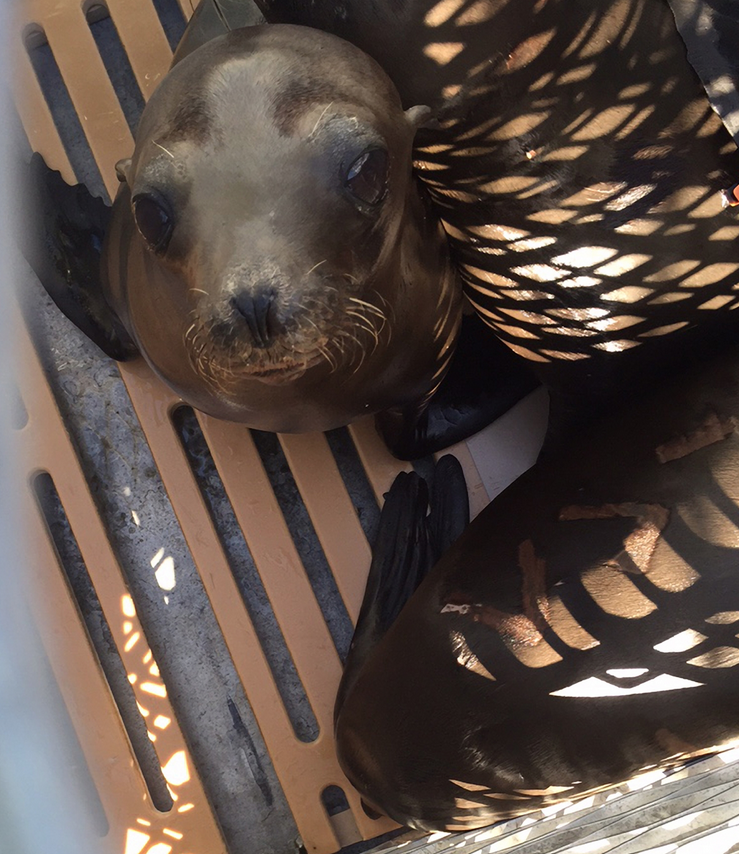
Screen Shot 2015-08-19 at 4.00.40 PMPictured are California sea lions in a holding cage on a boat, headed out on the Pacific Ocean. Three California sea lions returned to the wild off the California coast near San Diego on August 16, after wildlife care experts determined they were ready for release. Wildlife experts captured the sea lions during the Refugio Oil Spill Response that started on May 19, when Pipeline 901 leaked oil into the Pacific Ocean in northern Santa Barbara County. Photo credits SeaWorld

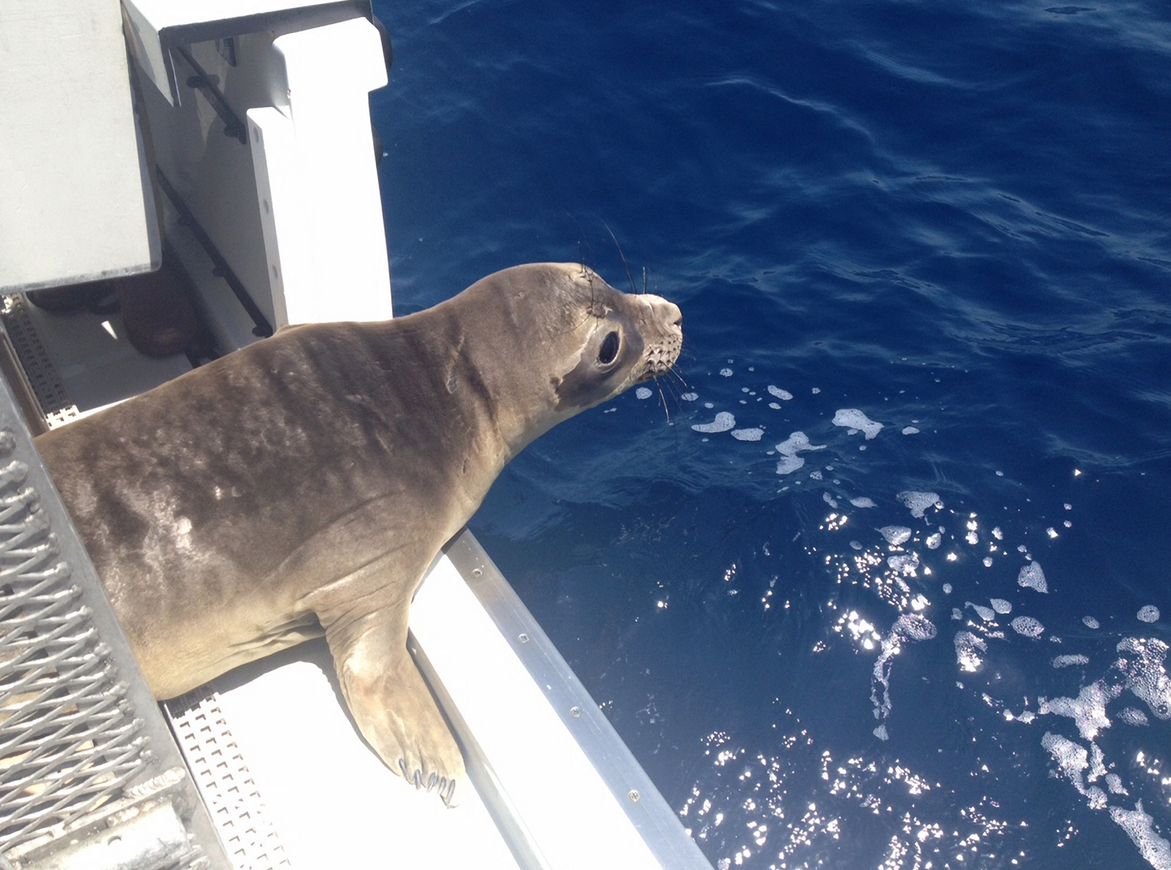
Screen Shot 2015-08-19 at 4.01.14 PMHere California Elephant seal heads toward the water as it is set free following rehabilitation. It was returned to the wild off the California coast near San Diego on August 14, after wildlife care experts determined it was ready for release.
Also (not pictured),California sea lions swim free, wearing satellite tags so scientists can track their activities following their rehabilitation after an oil spill. Three California sea lions returned to the wild off the California coast near San Diego on August 16, after wildlife care experts determined they were ready for release.

Around Los Osos….. Haggen Space Interest

August 18,2015-

Screen Shot 2015-08-18 at 12.47.57 PMLots of Interest In Los Osos Haggen Spot

Shopping center owner Clayton Gambril says news that Haggen will be leaving the LOVR shopping center is a “headache now but in the long run it will be a good thing.”
He adds that since the word was out that the Pacific NW grocer would close in Los Osos “we’ve had a lot of interest and we are not worried the space will stay vacant for long.”

Bigger Bike Lanes In Downtown Los Osos

The paving project on Los Osos Valley Rd this week will result in larger separated bike lanes on LOVR between South Bay Blvd and Bush says county planner Michelle Matson. There will be bigger – 2 ft separation – between the cars and bikes on both sides  of the street she says.That will mean no more parking on the street along this stretch including in front of the Chase Bank.

Montana De Oro To Get New Communication Tower – Will Boost Visitor Wifi

California Department of Parks and Recreation plan to install a new communications antenna near the Spooner Ranch House in Montana de Oro State Park to improve public safety radio coverage, visitor center internet connectivity and visitor wi-fi access.

Big Development Looms In Avila Beach

August 17,2015-

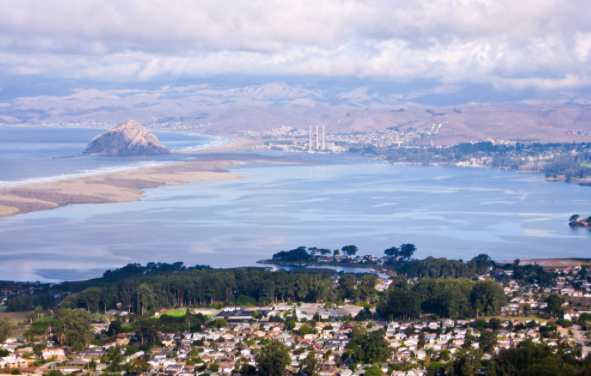
Union Oil (Chevron) seeks to develop the 95-acre Avila Point project from an unused oil tank farm to a plush resort overlooking the ocean above the community of Avila Beach.

Avila Point will start the environmental review process soon as Chevron on July 31, sent the county their application to begin the CEQA process and hold a so-called Scoping public meeting that would kick off the review process.

Chevron needs to do a remediation process before it can begin the restoration and new building on the site. The industrial tank farm has old storage tanks, equipment, buildings and utility lines at the site that ceased operations in1997.

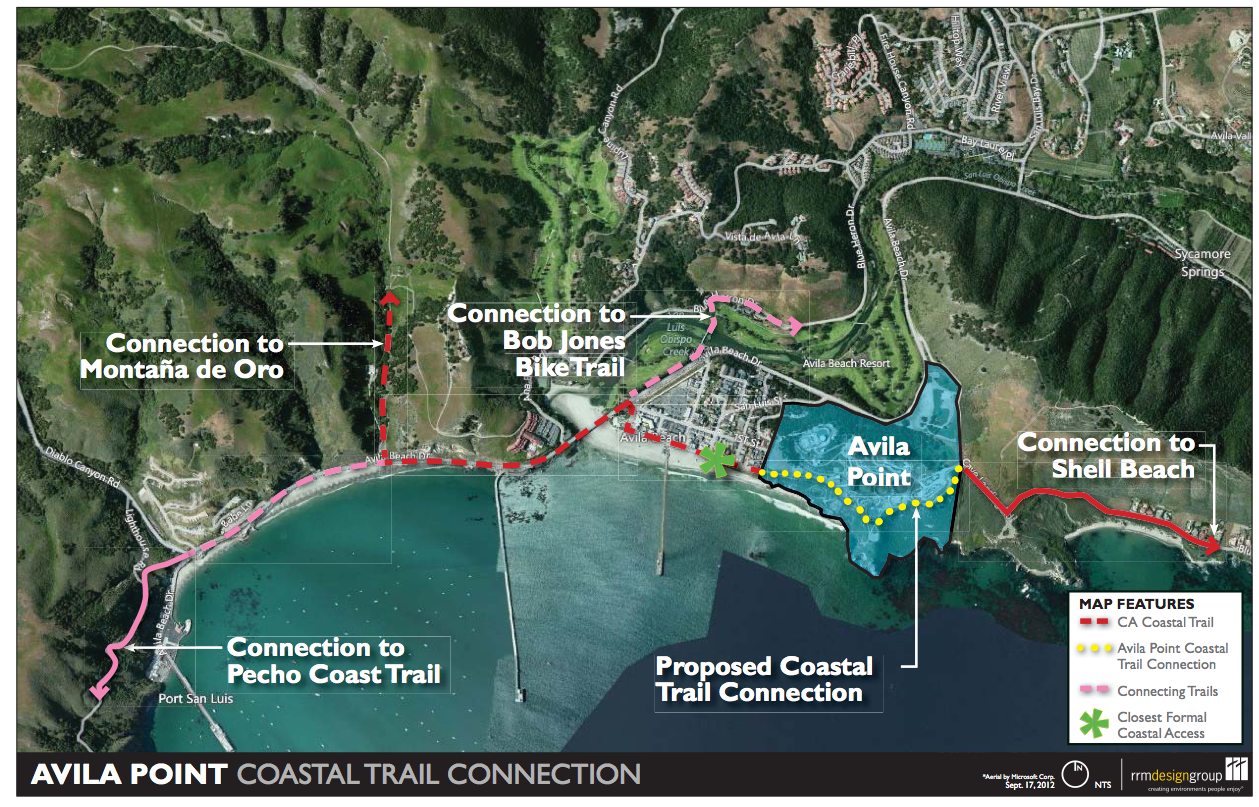
Screen Shot 2015-08-17 at 7.59.17 AMChevron says they plan a 320,200sf resort on the hilltop site as well as connections to the Coastal Trail to Shell Beach, the Bob Jones Trail and  and a proposed trail to Montana de Oro. The proponents say the project could generate $1.5 million in TOT (bed) tax and offer the public access to a site that has been closed for 15 years.

Critics will likely raise water issues, traffic and the fact the resort will cater to mostly high rollers.

Los Osos Haggen Grocery Store Will Close

August 14,2015-
Screen Shot 2015-08-14 at 3.09.35 PMHaggen, the West Coast regional grocer, today announced that in order to continue to improve its business and strengthen its competitive position, it has decided to close or sell a number of locations in California, Arizona, Nevada, Oregon and Washington. Most of the stores being closed or sold were acquired as part of the transaction in which Albertsons LLC and Safeway divested 146 stores.
The list of stores include the Los Osos Haggen on LOVR.
Additional stores will be sold or closed in the future as part of Haggen’s right-sizing strategy. The company has not determined how many jobs will be affected as a result of the closures and sales.
“Haggen’s goal going forward is to ensure a stable, healthy company that will benefit our customers, associates, vendors, creditors, stakeholders as well as the communities we serve,” said Haggen CEO Pacific Southwest, Bill Shaner. “By making the tough choice to close and sell some stores, we will be able to invest in stores that have the potential to thrive under the Haggen banner.”
Through the acquisition, Haggen expanded from 18 stores with 16 pharmacies and 2,000 employees in the Pacific Northwest to 164 stores and 106 pharmacies employing more than 10,000 people in Washington, Oregon, California, Nevada and Arizona. Haggen’s original stores continue to perform well.
John Clougher, Haggen CEO Pacific Northwest, added, “Though Haggen has grown substantially, we remain committed to our core values and to support regional farms, ranches and food producers and strengthen the communities around our stores.”

Los Osos Shopping Center Changes Hands

Starbucks Wants Former Bank Building – Appeal To Be Heard

New center owners are sprucing up the place. Starbucks hopes to move in

Los Osos largest shopping center changed hands in July and the new owners hope to “livin up” the center according to Clayton Gambril of family-owned Gambril Development Inc. The Gambrils purchased the center from a partnership associated with the Williams Brothers. The 94,000sf retail center has a number of shop-size vacancies to fill – the largest being the former Bank of America building.“We hope to encourage the community to see this center as their own” making it ” more bike and pedestrian friendly and having more outdoor seating.”

The SLO-based family is toying with a new name for the shopping center says Gambril, to emphasize it as a gathering place – Los Osos Central is one option, says Clayton.

The multi-generation Gambril group also own Pismo Coast Plaza shopping center anchored by California Fresh Market.

Already the Gambrils are working on sprucing up the LOVR center  improving the outdoor lighting and plans to reduce the center’s water footprint. In addition the family also purchased the large lot next to Haggen grocery store for future development.

The new owners won’t have to wait long to interface with Los Osos residents with plans by Starbucks to lease the long-vacant former Bank of America that includes the drive-thru, to relocate to.

County planner Kerry Brown says a staff analysis of an application from the shopping center would allow Starbucks to use the approvals that McDonalds secured from the county in 2014 before they decided not to move forward in 2015 on a store here.

“We found the application in substantial conformity with the McDonalds application “ says Brown so that Starbucks would need only a building permit to get started. The county did turn down a request by  the big coffee retailer to offer sandwiches at this location. Starbucks move would gain a more visible location with improved access, a drive-thru and more space than they have currently down the block.

But that county staff decision has been appealed by Julie Tacker, a Los Osos activist, and the matter will go the county Planning Commission August 27, says Brown. If that decision is appealed, it would go the BOS like McDonalds did.

Tacker’s appeal asserts there is inadequate water in Los Osos to supply the restaurant and that water calculations by the applicant “supplied inaccurate information” to the county.

A number of concerns are likely to surface as they did in the McDonalds controversy including parking,use of a drive-thru, water and whether the community should welcome chain-type eateries – although the coffee giant is already here.

Gambril says they plan to offer more outdoor seating not just at a new Starbucks but in front of Carlock’s Bakery as well and new bike racks in front of the gym.

Today the Los Osos center is anchored by Haggens, Rite Aid and Miners. The market was a former Vons who in turn had bought  out 19 Williams Bros stores in 1992 although the Williams Bros retained the property in this case, until sold last month.

Record-Setting Bloom of Toxic Algae in North Pacific

August 6, 2015
A record-breaking algal bloom continues to expand across the North Pacific reaching as far north as the Aleutian Islands and as far south as southern California.  Coinciding with well above average sea surface temperatures across the North Pacific and West Coast of North America, the bloom is laced with some toxic species that have had far-reaching consequences for sea life and regional and local economies.

According to a press release from the Monterey Bay Aquarium Research Institute, “During a normal Pseudo-nitzschia bloom, domoic-acid concentrations of 1,000 nanograms per liter would be considered high. However, by mid May concentrations in Monterey Bay reached 10 to 30 times this level.”

Algal blooms in the ocean are made up of microscopic marine plants known as phytoplankton. Not all phytoplankton are dangerous, but certain species produce dangerous neurotoxins. Shellfish and some fish eat the toxic algae as part of their normal diet, which can then expose their predators—including marine mammals and humans—to the neurotoxins in amounts that can cause illness and, in extreme cases, death.
While algal blooms do occur with regularity across the Pacific Ocean, the size and duration of this year’s event, which began in May, has been particularly noteworthy.  Scientists can track the spread and amount of large algal blooms with satellites by looking at chlorophyll concentrations at the ocean surface. As the map below shows, high concentrations of surface chlorophyll were present in coastal areas up and down the West Coast and a across a wide swath of the Gulf of Alaska.  These high chlorophyll concentrations include both harmful and beneficial phytoplankton that produce over 50% of the world’s oxygen.

Screen Shot 2015-08-12 at 7.05.34 AM


With its large size, the bloom has had a large impact on marine life and fisheries up and down the West Coast. According to Alaska Dispatch News in Anchorage, at least 9 Fin whales were found dead near Kodiak Island, AK, in June, potentially related to the algal bloom, although definitive proof that the deaths were caused by toxic algae will be difficult to obtain. In July, the Aleutian Pribilof Islands Association received reports of dead and dying whales, gulls, and forage fish in Alaska’s Aleutian Islands, with samples being solicited to test for algal toxins.
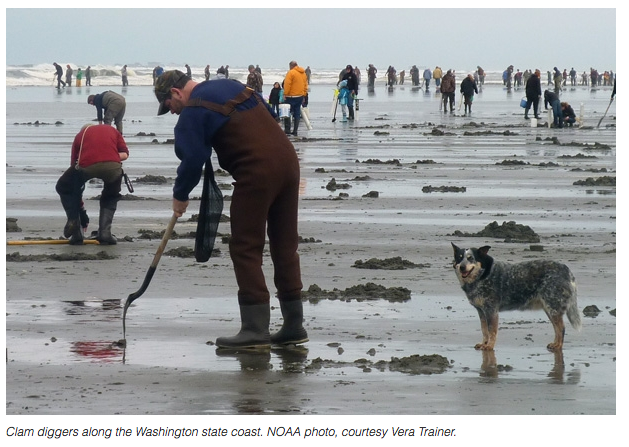
Over the past several months, extremely high levels of an algal toxin called domoic acid, which is produced by a group of phytoplankton called Pseudo-nitzschia, have led to closures of recreational razor clam harvests in Oregon and Washington, as well as closing of large portions of the Washington state Dungeness crab fishery and some of the sardine and anchovy fisheries in California.

Screen Shot 2015-08-12 at 7.05.57 AM

The fishery closures in California were not unexpected; in May, NOAA and NOAA-funded scientists recorded some of the highest domoic acid levels ever observed in Monterey Bay, CA. According to a press release from the Monterey Bay Aquarium Research Institute, “During a normal Pseudo-nitzschia bloom, domoic-acid concentrations of 1,000 nanograms per liter would be considered high. However, by mid May concentrations in Monterey Bay reached 10 to 30 times this level.”
NOAA has awarded grant and event response funding to Washington State in particular to monitor and study the current algae bloom. And NOAA scientists from the Pacific Marine Environmental Laboratory are collaborating on a research cruise in the Gulf of Alaska cruise to determine the extent of harmful blooms in Alaska waters.
With so much at stake for marine wildlife and the economies that rely on them, NOAA scientists are continuing to monitor the bloom along the entire West Coast as it continues to persist and adversely impact a number of fisheries. In the meantime, Climate.gov will talk to NOAA and affiliated scientists about what climate and other environmental factors could be behind this year’s extreme bloom. Check back with us for more information in the next week or so.

Around SLO County

August 8,2015-

Airport Traffic Up 11%

Screen Shot 2015-06-06 at 7.04.29 AMSLO Airport GM Kevin Bumen says as of September 1st 2015 the airport will have 10 daily flights (3 – SFO, 4 – LAX, 3 – PHX); as a result of the conference and additional meeting SLO was able to gain back two of those flights; service development is continuing to be pursued from Denver,Seattle, Sacramento, Portland, and Salt Lake City; SBP is doing better than most regional airports- 2014 passengers up 11.2% at 302,652 from previous year; New Terminal Design will start of construction in fall 2015.

Los Osos Cuts Water Use 38%

It probably comes as no surprise that July is typically the highest water production month of the year in Los Osos. What may come as a surprise is that the heat didn’t stop you from conserving HUGE amounts of water! July numbers are in, and LOCSD customers conserved 38.4% compared to water usage in 2014. Compare that to 2013 (per the governor’s executive order) and the town saved 43.26%!

Los Osos Haggen Lays Off 7

Staff at the Los Osos Haggen grocery store confirm they company laid of 7 workers at the former Vons market.

Tourism Up in SLO City

San Luis Obispo overnight visitors dropped an additional 10% in the till in July compared to last year as hotel RevPAR increased 10.1% even though occupancy rose only 0.1%. RevPAR increased from $126 through July 2014 to $139.29 this July. Meanwhile the city’s bed tax through June 2015 has also increased about 10%.

Vandenberg Best For Wave Test Facility Says Study

August 4,2015-

SLO-based team plans to push technology on wave energy conversion

Screen Shot 2015-08-03 at 4.56.16 PMWaters off of Vandenberg Air Force Base in Northern Santa Barbara County are the most promising California location for a national wave park test facility says a San Luis Obispo based think-tank.

In a report filed with the federal Department of Energy (DOE) this month, Cal Poly’s Institute for Advanced Technology and Public Policy led by former legislator Sam Blakeslee,researchers compared the feasibility of a site off Humboldt County in northern California and off Vandenberg for tidal power generation.

Blakeslee’s group received $750,000 in DOE funding to do the study over the past 12 months, part of an effort to boost renewable power from ocean waves.

Vandenberg gets the nod for a number of reasons says a source familiar with the study.

First of all, wave energy is plentiful here but at the same time the northern Santa Barbara coast is already a place where oil drilling happens, it is not in a shipping lane nor is it a key fishing area. The upshot is that compared to Humboldt there are fewer environmental or other type conflicts.

For example the coast off Vandenberg AFB is isolated with few visitors or beach homes compared to much of the rest of the California coast.
.
A key factor to the attraction of this site has is the abundance of electrical infrastructure including some power lines that are connected to Morro Bay power plant that are available to carry power now that this plant is closed. The proximity and availability is a big plus in a state where permitting new lines can take a long time.

Then there is the fact that Vandenberg’s 22 square mile base itself is of course owned by the government, making permitting easier. And they want the power given the mandate that the Air Force get 25% of the future power from renewable sources.

Blakeslee has indicated this project will not be a retail wave energy farm but rather a test facility ready to help companies try equipment and compare results. The Obama administration as said they want to spend up to $40 million to keep the US a leader in wave energy research.

PG&E did a number of years of research on a wave energy park off both Humboldt and Vandenberg before mothballing their study in 2011.

Now Mr Obama is signaling he wants to move the US toward more renewable energy sources as California has done, to cut greenhouse gases from such sources as coal power plants.That works well with California’s plan where Governor Brown and the legislature have said they want the state to get 50% of power generation from renewables here by 2030.

By extracting only 5% of the technical resource potential for the U.S., wave power could provide electricity to 5 MILLION homes says DOE.

Capturing the Energy Prize

Blakeslee and Cal Poly continue to work on utilizing a patented technology to capture wave energy and announced as of July 1 a team  has submitted to go through a DOE sponsored Energy Prize competition with a partner company.

The Wave Energy Prize will encourage the development of more efficient Wave Energy Conversion devices that double the energy captured from ocean waves, which in turn will reduce the cost of wave energy, making it more competitive with traditional energy solutions.A successful Wave Energy Prize could jump-start private sector innovation critical to the country’s long-term economic growth, energy security, and international competitiveness in the wave energy conversion sector. The competition has a purse of $2 million.
The contest has about 100 entrees but DOE promise to pare the list down to 20 by mid August.

Cal Poly’s partner in the DOE competition is Protean Wave Energy, Inc., based in Los Osos, California, is the U.S. subsidiary of Stonehenge Metals Limited and is the sister subsidiary to Protean Energy Australia Pty Ltd. Both of the latter two entities are located in Perth, Western Australia.

The Protean Wave Energy, Inc. approach to capturing wave energy and transforming it to useful electricity or desalinated water is to utilize all six degrees of wave movement. The goal is to design a wave energy converter to be cost competitive to manufacture, deploy, maintain and retrieve. In collaboration with Cal Poly, we hope to advance the Protean Wave Energy, Inc. design by going through the process that is the DOE Wave Energy Prize competition.

Team members in the competition include  Mr Blakeslee who is trained as a scientist having attended U.C. Berkeley where he earned Bachelor’s and Master’s degrees in geophysics. He was awarded a Ph.D. from U.C. Santa Barbara for his work in seismic scattering, micro-earthquake studies and fault-zone attenuation. As a strategic planner and senior research scientist with Exxon, he received a patent for his innovative work in geologic imaging.

Also William Toman is an energy industry professional with more than 25 years of experience managing energy and environmental project development. He has been responsible for the development of over 2,000 MW of generating capacity for utilities and independent power producers both inside and outside the U.S. His current engagement is at California Polytechnic University at San Luis Obispo (Cal Poly) where he led a 12-month U.S. Department of Energy (DOE) funded study investigating siting, cost and feasibility issues for developing a national wave energy testing centre offshore of California’s Central Coast. While with California’s largest energy utility, Pacific Gas and Electric Company (PG&E), Mr Toman led development of the U.S.’s first open ocean, grid-connected wave energy testing and demonstration facility (Humboldt WaveConnect), a 5 MW project, through a Federal Energy Regulatory Commission draft pilot license application in Humboldt County, California.

Mr Toman holds an M.S. degree in Nuclear Engineering and a B.S. degree in Engineering from the University of California, Los Angeles (UCLA) with an MBA from Carnegie Mellon University’s Tepper School of Business. He has a particular depth of expertise with large-scale commercialization of renewable energy technologies. He has extensive experience in the program management of siting and developing utility scale energy projects with special concentration in marine and hydrokinetic (MHK) renewable technologies such as ocean wave, tidal energy as well as floating offshore wind energy.

PIPE DREAM? Why Not Connect Los Osos To Diablo’s Desal Pipeline?

July 27,2015-

DC Desal 2015-07-21 at 10.55.47 AMSan Luis Obispo County is studying a plan to build a pipeline from Diablo Canyon power plant’s desalination facility to some county destination. The idea is to crank up the PG&E owned desal facility to full capacity that could yield 850,000 gallons of water daily for some thirsty community nearby.

A quick look at the map shows the coastal nuclear power plant is located about equidistant from Avila Beach and Los Osos. In terms of need, it’s hard to imagine a thirstier town than Los Osos.

Unlike almost any other community in the county, Los Osos with a population of 15,000 is totally reliant on groundwater for drinking with both heavy nitrate contamination and surging sea water intrusion to add to the severe drought conditions that together have shut down virtually all new construction here based on lack of water. All purveyors  are soon expected to deny any new ‘will serve’ letters or allow transfer credits.

In June the county and PGE announced a 5-year plan to provide desal water from the utility’s existing Diablo Canyon facility to the county for fire fighting as well as other possible uses. Now a BOS committee study underway led by Assistant CAO Guy Savage is looking at the possible uses of the water and a recommendation to the Board of Supervisors of any next step to implement a plan. Savage says his group has had limited time to study the issue with an August 25 report to the BOS coming up.

At last weeks Los Osos Community Advisory Council (LOCAC) meeting supervisor Bruce Gibson in attendance was asked about the idea of connecting to Los Osos. According to his legislative assistant Cherie McKee, Gibson said he had been contacted by a constituent with the idea and had forwarded it to the committee expressing ”enthusiastic support for it.”Gibson is out of town and cannot comment .

The Diablo Canyon desalination can make up to 1.5 million gallons a day but runs at just 40% of capacity tapping the electricity from the plant to run the reverse osmosis process using seawater.

Under the agreement San Luis Obispo County will pay $3.30 per 1,000 gallons to use the Diablo Canyon water, although for now,that is for fire protection and not potable water.
LO Map at 5.45.03 PMNorth Or South?

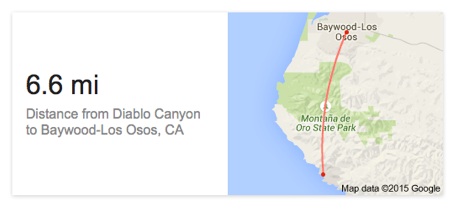
So if the water is available how would it get to some community? Both Avila Beach and Los Osos are about 7 miles away and there are roads that connect to the power plant in both cases. PG&E plans to repair the road to San Luis Bay – so there is an opportunity to lay a pipe if the choice is to send water south.

But PG&E has a road that heads north too to the Coon Creek parking lot and a county road from there goes through state-owned Montana de Oro Park next to Los Osos. Any pipeline right of way could double as a walking and bike trail some say,noting there is no safe way to self propel to the famous state park from Los Osos.

If water is be delivered to either Avila Beach or Los Osos the benefit is arguably much greater to Los Osos – a relatively low income town (median price home $468,000) vs Avila Bay where well-to-do retirees have driven up the median home price to an $857,000, the highest in SLO County!

Los Osos has only groundwater while Avila Bay is connected to surface water from Lopez Lake. Los Osos can’t build anything due to water restrictions while greater Avila Beach has a half dozen mega-projects all of who argue they enough water to build out.

Then there is the fact that Avila Beach has no seawater intrusion problem.

Relieve The Basin

Los Osos Community Services District chair Mike Wright says the crisis over seawater intrusion into the community makes this an opportune time to look at bringing in this water.

“We have major water storage tanks” near the south end of town and Cabrillo Estates and “will have an inter-tie with all three water districts in town” so water can be shared.

“Bringing in a new source of water could help relieve the basin and let it recharge” suggests CSD’s Wright.

The basin is in tough shape right now with the drought and ground water pumping “worsening the sea water intrusion into the community’s groundwater in wells as far inland as the library” says Wright.

”We just lost the Golden State well at Rosina and Fearn in the past few months” adds Wright.
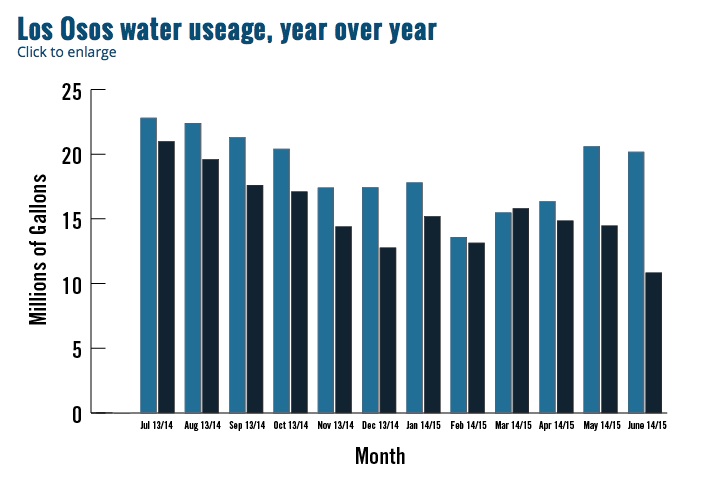
LO Water use 2015-07-26 at 7.57.14 AMIn the meantime Los Osos residents seem to be doing their part to save what we have. “Los Osos CSD customers, you used 46% LESS WATER in June over last year! That is a new record and it’s only possible because everyone is doing their part” says a recent CSD email blast.

Wright says job one in the basin right now is to complete the so-called ISJ process to have a judge approve a plan to to push back the sea water. The county has helped formulate a Los Osos Basin Plan that will be brought before a judge to finalize. Currently, Osos Community Services District, Golden State Water Co., San Luis Obispo County and S&T Water Co. are working cooperatively to manage the basin as part of an agreement in a lawsuit filed in 2004 over water rights and consumption.

Long in the making the Los Osos Basin Plan has no mention of piping water from Diablo Canyon since the idea has only just now been proposed.There is no reason to believe,however that it is not complementary.

Key to the Basin Plan is to use recycled water from the new sewer plant to recharge the underground aquifer as well as dig some new wells and recharge water right in the Los Osos Creek bed near LOVR.

Fear Of Imported Water

The Basin study finalized in July notes that Los Osos as community that has never imported water like SLO city has done and as have most other areas who have already lost their groundwater to over pumping.

The plan recognizes an ethic in Los Osos, perhaps based on its relative isolation, and a strong no growth point of view. Recognizing this, the Plan says it “supports the concept of the Los Osos community living within the means of its natural capital, including water supplies, rather than reaching out to import water from another area.”

It even offers this vision: “Water supplies and demands of the Basin will be managed to avoid the need for imported water supplies in the Plan Area, to the extent possible.”

Philosophically Los Osos does not like importation of water. But what about this situation?

On a recent talk radio show Los Osos activists Julie Tacker and Jeff Edwards discounted the idea of running a pipeline form Diablo to Los Osos saying it is “no magic pill” citing high energy costs to make potable water and the cost of building a pipeline at “ $3 to 4 million a mile.”

”Nobody is going to save us” philosophized Tacker.

This seems to reflect this antipathy to importing supplemental water.

As for the cost, a county estimate in the Basin Plan to pipe water from El Chorro pipeline to Los Osos is estimated at $1.5 million a mile.

As far as the cost of production PG&E says using nuclear electricity for desalination is relatively cheap as Diablo Canyon produces this electricity at “only 4 cents per kilowatt-hour, cheaper than most other energy sources in California.”

A spokesperson says the overall cost will be about a tenth of a cent per gallon, and “monthly water bills might rise $10 or so.”
The Los Osos Basin plan already rejected importation of water from north county’s Nacimiento Reservoir and Whale Rock even though the plan showed just how a pipeline connecting to Los Osos might be located.

San Luis Obispo depends on Nacimiento Lake water and a 70 mile pipeline for about one third of its drinking water.That pipe sprung a leak and was shut down for 10 months until recently repaired. Today SLO relies on reservoir water for most of their supply having suffered groundwater issues including subsidence when they too, wanted to depend only on their basin for supply.

Now Paso Robles is also tied to Namcimiento as a source to help relieve that hard hit basin that has been over pumped.

Nacimiento enjoys better rainfall totals than we do down south. This year you may be surprised to know that lake has received double the rain totals than the year before and has around 90,000af in storage.

As mentioned almost all towns in San Luis Obispo County rely on piped water from reservoirs and other imported sources – not nearby ground water. With the exception of Los Osos and Cambria virtually every other town has a source other than groundwater for customers to fill their glasses and their bathtubs.

SLO county gets 3380 acre ft a year from the 45 mile pipeline from Nacimiento added to 6940 acre ft from other surface water sources  that supplies the 10,471af total.SLO city uses some 6000 af with the help of conservation.

Paso Robles gets 4000af from Nacimiento and Atascadero gets 20000 af, Templeton 250af Cayucos 25af.

The Whale Rock Reservoir is a 38,967 acre-foot reservoir near Cayucos provide water to the City of San Luis Obispo, Cal Poly State University and California Men’s Colony, The Whale Rock Dam captures water from a 20.3 square mile watershed and water is delivered to the three agencies through 17.6 miles of 30-inch pipeline and two pumping stations.

This month Nipomo too hooked up to a new supply from Santa Maria that includes imported state water that comes from Northern California.Locals agreed to the extra cost, the pipeline cost $17.8 million to build, in part to help push back seawater invading Nipomo.

The Tribune wrote that the Nipomo pipeline is the first project to bring new water into San Luis Obispo County in 20 years and the first developed water to be brought into Nipomo ever, said water district manager Mike LeBrun said.

World Of Hurt

“It is past the time when any community should be comfortable relying on a single water source,” he said. “Look at Los Osos and Cambria; both are reliant on a single source of water, and they are in a world of hurt right now.”

Another local official added “If we do nothing about the water shortage we’re facing, there will be extreme consequences in the future,” he said, citing a loss of wells, extreme water rationing and a prolonged shortage leading to falling property values.
He pointed to seawater intrusion that started in 1985 in Los Osos, resulting in six lost wells as saltwater advanced two miles inland.
Today the seawater intrusion in Los Osos is 3 miles inland.

Welcome Soaking Hits Our Reading Area

July 19,2015-

It’s just noon on Sunday and and the Central Coast is getting a record soaking with  remnants of tropical storm Dolores pushing into the state right through SLO and Monterey counties (see graphic).

Just go ahead and blow that drought away! View of the storm today
Just go ahead and blow that drought away!
View of the storm today

Also in the Sierra2thesea reading area  the central Sierra is getting some of the same stuff with the Kaweah River flowing high and muddy. Lodgepole  got over half an inch today.

Los Osos has been receiving a half an inch an hour downpour for the past half hour and to our north in Paso Robles they already have got 3.3 inches in the bucket since the lightning inspired storm started at midnight.

NWS Hanford says rainfall in Fresno set a record today.

Step outside in our front yard in Los Osos and it feels like Hawaii.

Let hope this is all part of the expected El Nino drought-buster!