Hair Raising Forecast As Tropical Moisture Invades California

July 14,2015-

Screen Shot 2015-07-14 at 6.53.50 AM

BAD HAIR DAY?


UPDATE July 15: Hurricane Dolores now appears to move west once it crawls up the Coast so no heavy precip expected in SLO

NWS says look for tropical moisture invading California to light up the skies in the Sierra bringing thunderstorms over the next week. If you are hiking in the mountains – watch the weather closely, they say.

Even more impressive is the likelihood hood that Hurricane Dolores coming up from Baja will veer remnants  into Central California and into the Central Valley on Monday July 20 according to some weather models.

Several forecasts show a blob of moisture coming into California from the west making land around SLO and traveling north and east to the Sierra and up the state dropping potentially significant precip in the middle of summer.

Highly unusual!

Here is what the California Weather Blog says today.

“At the same time, soon-to-be Hurricane Dolores will slowly move to the west-northwest off the coast of Baja California. There is still considerable uncertainty regarding the ultimate track of Dolores, and if the system takes a more westward trajectory, there will likely be few (in any) impacts in California. If, however, the system takes a more northerly trajectory–as recent runs of the GFS and ECMWF models suggest–prevailing southerly flow around the low off of NorCal may draw a considerable amount of remnant moisture and energy from then-former-hurricane Dolores over the state.

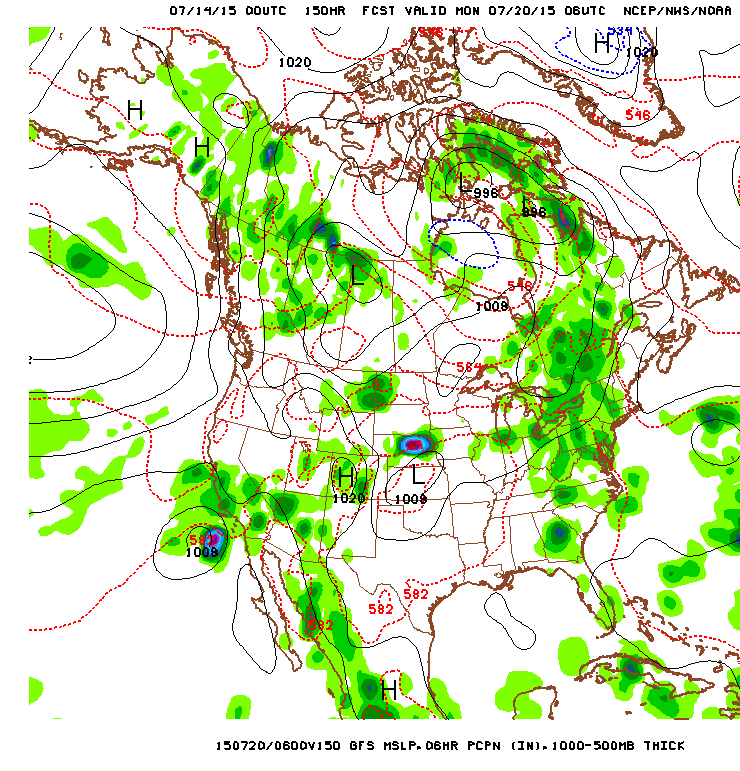
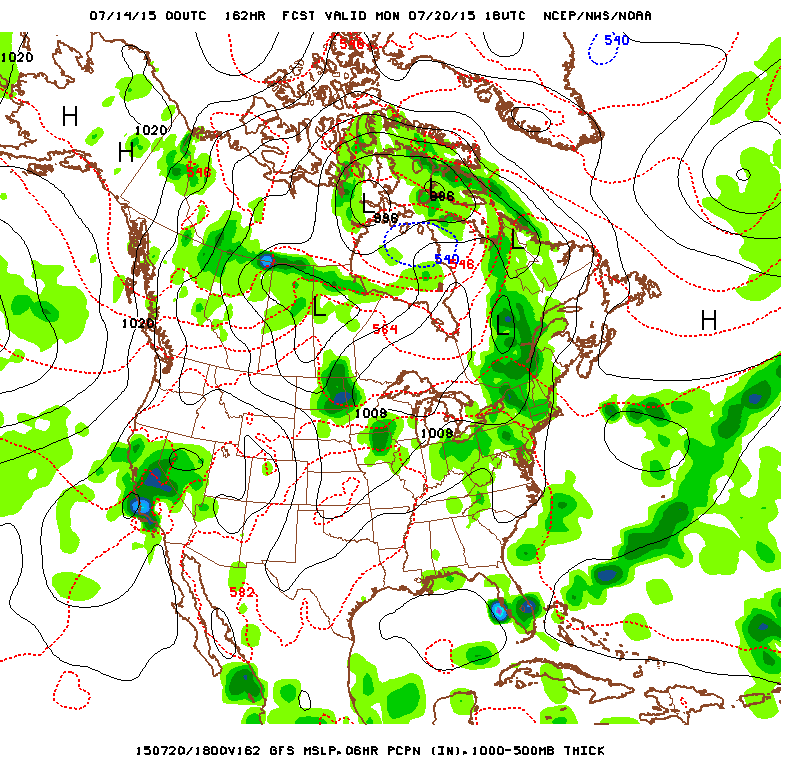
The GFS is suggesting the potential for a large influx of monsoonal and tropical remnant moisture over the coming 7-10 days. (NCEP via tropicaltidbits.com)

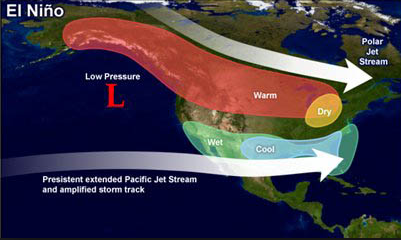
Both of these features together have the potential to produce a prolonged period of mountain and desert thunderstorms. There may eventually be a notable potential for showers and thunderstorms in coastal/valley regions, possibly including (at some point) all of the major metro areas in the state (San Diego, Los Angeles, San Francisco, and Sacramento). It’s worth noting that the remnants of decaying East Pacific hurricanes do occasionally bring warm season precipitation in California–especially during major El Niño years. The likelihood of this kind of scenario unfolding is much higher than usual this summer due to widespread record-warm ocean temperatures throughout the northeastern Pacific Ocean, and Dolores probably won’t be the last tropical system to potentially affect California before hurricane season ends in late autumn.”

Pictured: Forecast maps show (1) Dolores remnant off the Coast and (2) entering the stateScreen Shot 2015-07-14 at 7.02.43 AMScreen Shot 2015-07-14 at 7.03.25 AM

SLO Home Building Mid Year Report

July9,2015-

Screen shot 2013-01-29 at 6.50.28 AMSingle family home builders have increased the pace of building in SLO County during the first half of 2015 according to Construction Monitor. So far through July 9, home builders in San Luis Obispo County had permitted 322 new homes valued at near $112 million. That compares to 276 homes during the same period in 2014 valued at $97.4 million.

Shea Homes remains the county’s top builder permitting 61 homes in the Nipomo area,followed by Coastal Community Builders.

Also higher in 2015 has been solar panel permits in SLO County numbering 1206 during the half of 2015 compared to 517 during the first 6 months of 2014. Their value has gone from $7 million to $19 million during  the first 6 months of 2015.

Total value of all residential permits is $168.5 million this year vs $126.4 million in2014.

Commercial permits are also higher this year at $71 million vs $63 million last year.

July 9 El Niño Advisory: 90% Chance El Niño This Winter

July 9,2015-Screen Shot 2015-07-09 at 7.43.36 AM

Latest forecast from the US Climate Prediction Center released today ups the chances for an EL Nino event this winter and says it is likely the event will be a strong one. That would increase chances for above-normal precipitation for California.

During June, sea surface temperatures (SST) anomalies exceeded +1.0°C across the central and eastern equatorial Pacific Ocean . The largest SST anomaly increases occurred in the Niño-3 and Niño-3.4 regions, while the Niño-4 and Niño-1+2 indices remained more constant through the month. Positive subsurface temperature anomalies weakened due to the eastward shift of an upwelling oceanic Kelvin wave, which reduced above-average temperatures at depth in the central and east-central equatorial Pacific . In many respects, the atmospheric anomalies remained firmly coupled to the oceanic warming. Significant westerly winds were apparent in the western equatorial Pacific and anomalous upper-level easterly winds continued. The traditional and equatorial Southern Oscillation Index (SOI) were both negative, which are consistent with enhanced convection over the central and eastern equatorial Pacific and suppressed convection over Indonesia

Collectively, these atmospheric and oceanic features reflect an ongoing and strengthening El Niño.

Nearly all models predict El Niño to continue into the Northern Hemisphere winter 2015-16, with many multi-model averages predicting a strong event at its peak strength (3-month values of the Niño-3.4 index of +1.5°C or greater; Fig. 6). At this time, the forecaster consensus is in favor of a significant El Niño in excess of +1.5°C in the Niño-3.4 region. Overall, there is a greater than 90% chance that El Niño will continue through Northern Hemisphere winter 2015-16, and around an 80% chance it will last into early spring 2016 (click CPC/IRI consensus forecast for the chance of each outcome for each 3-month period).

The 90% prediction is up from 85 percent last month and 50 percent from four months ago

Across the contiguous United States, temperature and precipitation impacts associated with El Niño are expected to remain minimal during the Northern Hemisphere summer and increase into the late fall and winter (the 3-month seasonal outlook will be updated on Thursday July 16th).   El Niño will likely be a contributor to a below normal Atlantic hurricane season, and above-normal hurricane seasons in both the central and eastern Pacific hurricane basins .

Diablo Canyon’s Desalination Facility to Help Fight California Drought

July 3,2015-

  • PG&E enters five-year agreement with county
  • Desalinated water to fight wildfires; other uses under study
  • Integrated nuclear and desal facilities used in Japan, India and Kazakhstan

June 18, 2015—As California suffers through its fourth straight year of drought, increasingly severe shortages of water are raising alarms. The state has issued stringent water conservation measures for cities and towns as well as in the state’s vast agriculture industry.

San Luis Obispo County, on California’s Central Coast, has found an innovative way to supplement its rationed supply of fresh water. The Diablo Canyon Nuclear Power Plant has an on-site desalination facility that it uses to generate fresh water from seawater, both to cool the plant and for its employees’ drinking water needs.

Desalination at Diablo Canyon

Water from Diablo Canyon’s desalination facility will help fight wildfires
Photo: PG&E

Plant operator Pacific Gas & Electric Co. has entered into a five-year agreement to use the facility’s excess capacity to provide the county’s Office of Emergency Services with fresh water to help tackle the ever-present risk of wildfires.

PG&E characterized the agreement as an extension of Diablo Canyon’s safety mission.
“We live and work in this county, too, and ensuring its safety and well-being is our highest priority. We look forward to continue working with the county in identifying ways to provide further support during this ongoing water crisis,” Senior Vice President and Chief Nuclear Officer Ed Halpin said.

As Halpin suggests, PG&E has not ruled out other potential uses for its fresh water. Company spokesman Tom Cuddy said the utility and the county are considering a plan to connect the nuclear plant’s desalinated water supply to the county’s water system. He expects a feasibility study to be finished by the end of the summer.

Diablo Canyon’s desal facility can produce 1.5 million gallons of water per day, much less than a dedicated plant but still substantial enough to be useful. Diablo Canyon uses only about 40 percent of the facility’s full capacity, which would make available to the county 825,000 gallons a day.

Desalinating seawater to create potable water is a process used around the world. There are about 15,000 plants in operation, many of them in the Middle East and North Africa. The largest is in Saudi Arabia.

Almost two-thirds of the desalination conducted worldwide, including at Diablo Canyon, is accomplished by reverse osmosis. The process pressurizes seawater and forces it through a semi-permeable membrane to extract the salt. A different process, accounting for about a quarter of the world’s desalination capacity, uses a multi-stage process to flash the saltwater into steam and distill pure water out of it.

The agreement between PG&E and San Luis Obispo is a small but practical step forward for nuclear energy-based desalination in the United States. Because desalination uses substantial amounts of energy, tying nuclear power plants to desal facilities is an idea that has been successfully tested in other countries. Kazakhstan’s Aktau facility produced up to 135 megawatts of electricity and deposited 80,000 cubic meters of water per day into the municipal system between 1972 and 1999. India and Japan have used nuclear power plants for both electricity and fresh water production for plant use, as Diablo Canyon has done.

The major reason desalination has not been more broadly implemented in the United States has been its comparative cost. The U.S. Environmental Protection Agency estimates that tap water averages about $2 per 1,000 gallons. The Coquina Coast Seawater Desalination Project in Florida, which is fossil-fuel-based, estimates its costs at between $6.27 and $7.74 per 1,000 gallons.

However, using nuclear electricity for desalination can achieve exceptional economies of scale. Forbes’ James Conca calculates that the amount of electricity needed to desalinate seawater via nuclear energy is relatively low and that Diablo Canyon produces this electricity at “only 4 cents per kilowatt-hour, cheaper than most other energy sources in California.”

Conca says the overall cost will be about a tenth of a cent per gallon, and “monthly water bills might rise $10 or so.” PG&E’s Cuddy said San Luis Obispo County will pay $3.30 per 1,000 gallons for the Diablo Canyon water, although the current agreement will only provide it for fire protection and not potable water.

More desalination, nuclear-powered or not, may be needed sooner than expected. According to new NASA satellite data, the world’s largest underground aquifers, which supply fresh water to hundreds of millions of people, are rapidly emptying. The value of nuclear energy-based desalination could well increase as the need for fresh water escalates.

In the meantime, California is building the Carlsbad Desalination Plant near San Diego. Powered by the neighboring Encina gas-fired power station, it will produce about 50 million gallons of fresh water per day beginning in 2016, all of it committed to the San Diego Water Authority as a hedge against drought.

The Diablo Canyon desalination effort is less a full-scale demonstration of its potential as a supplier of fresh water than a civic effort writ large. If it also provides further evidence of the viability of the process, it will be a bonus.


Community invited to Morro Creek Bike/Pedestrian Bridge Ribbon Cutting

July 3,2015-

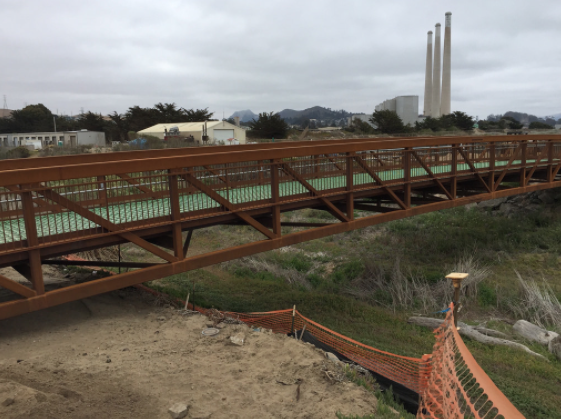
Screen Shot 2015-07-03 at 10.54.35 AMThe City of Morro Bay is inviting the community to celebrate the official opening of the Morro Creek Bridge during a ribbon cutting at noon July 4.

The long-awaited project provides a northward extension to the popular, award-winning Morro Bay Harborwalk and non-motorized crossing over Morro Creek to North Morro Bay and Morro Bay High School.

July 4 festivities will take place at the north side of the newly completed bridge. The conclusion of the ribbon cutting ceremony will initiate the beginning of the Morro Bay 4th of July Bike Parade to Tidelands Park. Festivities for the whole family will continue at Tidelands Park until 5 p.m. For more information on the July 4 Family Funday, click the link below.

The Harborwalk provides pedestrians and cyclists scenic views of the bay while providing a link to Morro Rock from the Waterfront commercial district. The Bridge and Multi-Use Trail will extend the Harborwalk with a pedestrian boardwalk and separated Class I bike path along the dirt portion of the Embarcadero to Atascadero Road. The bridge is a pre-fabricated steel structure, sufficiently wide and strong enough to provide essential access for emergency vehicles. The bridge will closed to non-emergency motorized vehicles. Additional amenities provided with this project include viewing areas, stone seat walls, and bicycle and surrey parking on the south side of the creek.

The project was made possible by a collaboration of funding efforts including grants from the National Scenic Byways Program, Federal Highway Transportation Enhancement Funds, the SLOCOG Regional Transportation Improvement Program, as well as City of Morro Bay local funds. Project design and permitting was performed by a consultant team led by RRM design of San Luis Obispo. Construction was done by CalPortland Construction of Santa Maria. RICK Engineering of San Luis Obispo supports City staff in performing construction management. Total project construction costs were approximately $1.8 million.

Around SLO: Home Sales & Jobless Rate Fall

June 19,2015-

Jobless Rate At 4.3 PercentScreen Shot 2013-12-15 at 6.56.20 AM

The unemployment rate in the San Luis Obispo County was 4.3 percent in May 2015, unchanged from a revised 4.3 percent in April 2015, and below the year-ago estimate of 5.1 percent.Farm jobs remain the same as last year while nonfarm jobs registered higher by 2300.

SLO Median Home Sales In May $498,000

Existing home sales in San Luis Obispo County fell in May both month over month ( down 3.8%) and year to year down 5.6%. The median home price was $498,000 compared  to $522,000 in April and $487,000 in May 2014.
The yearly trend in SLO falls short of other parts of California where sales this May compared to last were up by 9%statewide and  22% higher in Santa Barbara County and up 12%in Santa Cruz.  Sales were down in Monterey County by 9%

Starbucks Wants Drive-Thru In Los Osos

June 9,2015-

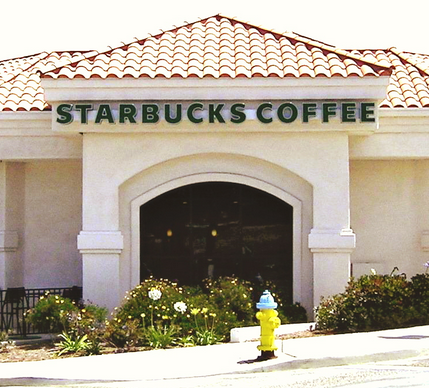
Here we go again. The vacant Bank of America building on LOVR in Los Osos sought by McDonalds this time last year before they walked away from a deal – is now being courted by another national chain – Starbucks.

SLO county planner Kerry Brown confirms Starbucks has asked the county to consider if they might approve a new Starbucks location at the site that would include utilizing the existing drive-thru.

“We are still studying the plan” says Brown.Screen Shot 2015-06-09 at 8.21.48 AM

If the plan moves forward the community and likely the Board of Supervisors in the end- would face months of hearings and controversy over the drive-thru idea, unpopular among a sizable group in Los Osos.

Last year the BOS approved a controversial plan by McDonalds to put a restaurant in the space with the BOS approving use of the drive-thru but not 24 hour operation as requested. The fast food giant said they needed a drive-thru to make the deal profitable.Critics raised parking and water issues too.

McDonalds walked away from that compromise.

Now a year later Starbucks, who already has a place in town a few blocks down the road, would lease the old B of A space getting arguably a better location, a larger space and a drive-thru option they do not have now.

For opponents it  will be another chance to heap scorn on another corporate giant,anathema to some Los Osos folks.

Brown says the county has decided not to approve any new applications for a drive-thru in Los Osos but that utilizing an existing drive-thru would be up to the supervisors who split on this last time.

One bank in town – Rabobank – has a drive-thru.

Avila Bay Development Faces BOS Appeal

June 9,2015-
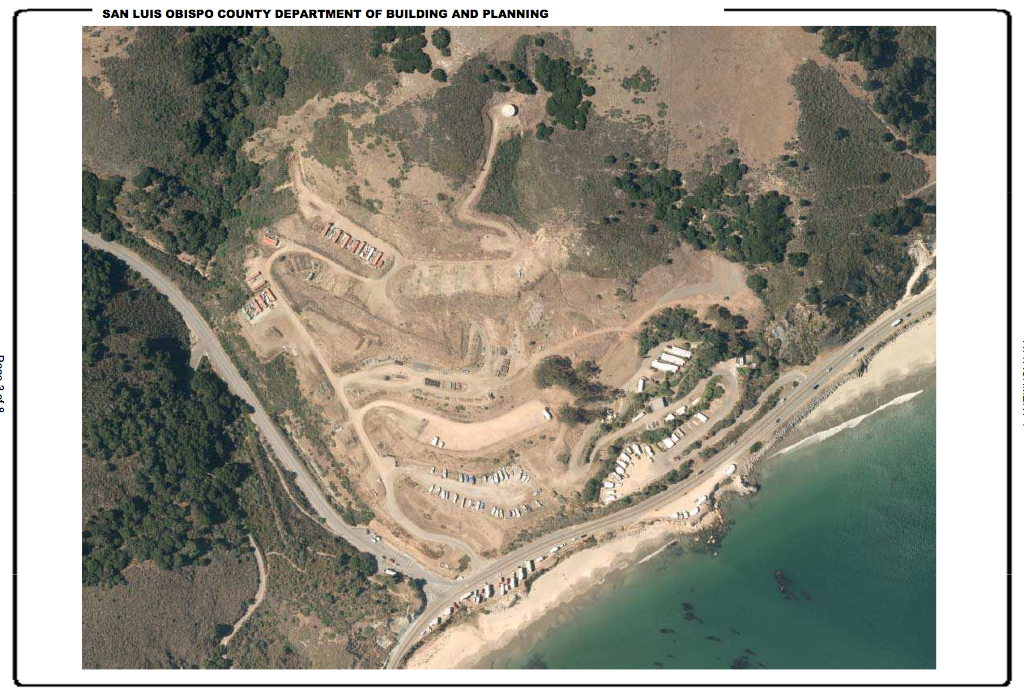
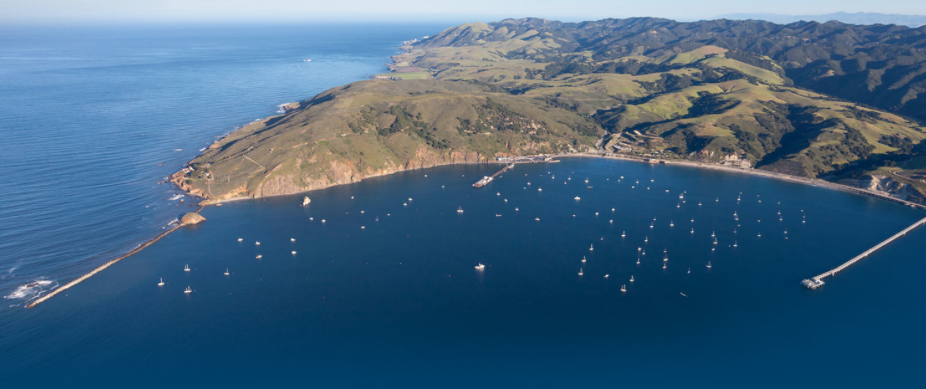
The Port of San Luis proposed Harbor Terrace project,a 32-acre camping, cabin and RV-use facility on Avila Bay faces an appeal from a local citizen at the SLO Board of Supervisors meeting June 16.

The proposed visitor facility that would hug the hillside overlooking Port San Luis, was approved in an unanimous decision by the county planning commission in March.

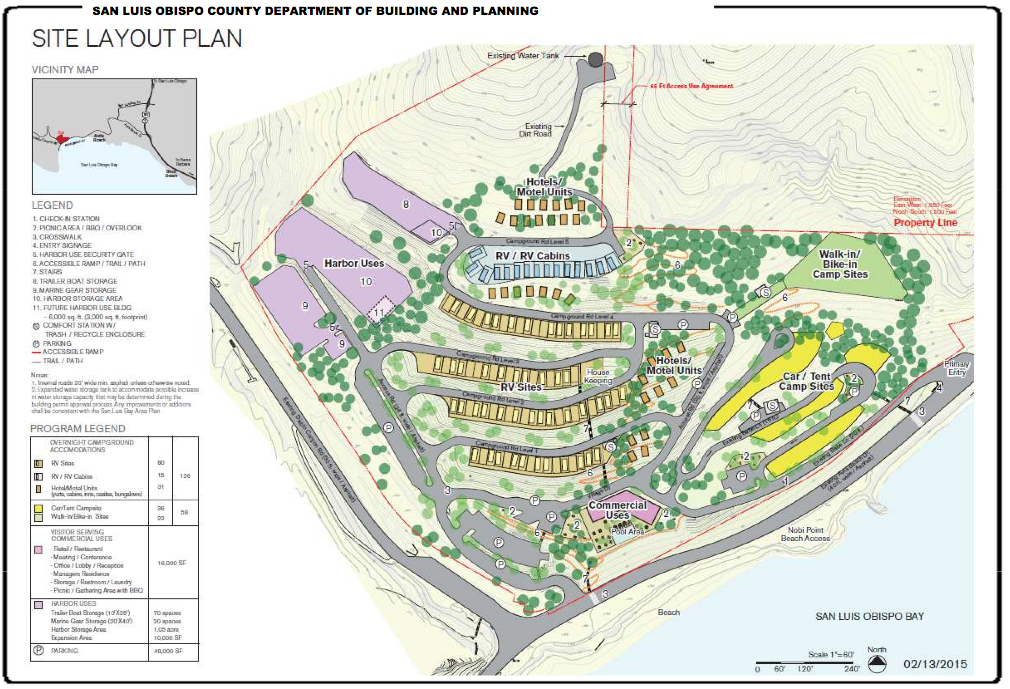
Screen Shot 2015-06-08 at 1.54.49 PMScreen Shot 2015-06-08 at 1.55.12 PM

The big development is touted as an “affordable,low-cost option” for visitors to come to SLO County. Proponents argue establishing an RV park will remove RVs from Avila Beach Drive where they park currently. In addition they say the project to be built on already disturbed land will have little negative impact while providing multiple benefits. The project displaces an older trailer park, The idea has been in the works since at least 1988.

Most recently Harbor Terrace EIR was certified in January of this year  after the Harbor Commission in December approved Homefed Corp as  the developer and potential operator of the visitor-oriented overnight park.

But in April, Avila Bay resident Michael Kidd filed an appeal that will now be heard suggesting “the severity of the drought” in California and locally make it clear, he argues,  that the project “should be postponed.” He cites the fact that Lopez Lake has less than 20,000 acre ft and is “dropping daily.”

Kidd also points to the need to update the Avila Community Plan  before such a project is approved and notes that other nearby “mega resorts” are in the works and wonders about the cumulative impacts.

Lastly Kidd says the traffic study is inadequate given the holiday traffic issues. Also raising some questions is the Avila Valley Advisory Council  wondering if a geotechnical study should be done first, noting no study of how many trucks trips are required and questioning if RVs will be off of Avila Beach Dr.

Among those supporting the project are the San Luis Obispo Coastkeeper organization – cheering the fact the project has been downsized and lauding its plan to protect the watershed. Also backing Harbor Terrace is the Port San Luis Fisherman with the idea that more local caught fish will be sold . They say the visitor complex will also support of the harbor district financially helping to pay for the infrastructure that the fishermen depend on.


Screen Shot 2015-06-09 at 7.23.20 AM

The Harbor Terrace project would include a range of low-cost overnight accommodations including 80 recreational vehicle (RV) sites, 15 RV/RV cabins, 35 car/tent campsites, 21 walk-in/bike-in campsites, and 31 cabin/bungalow/yurt-type units. The project will also include 16,000 square feet of visitor serving commercial uses, harbor uses (e.g. trailer boat storage, marine gear storage, harbor storage area, expansion area and 6,000 square feet for future harbor use building), restrooms, and 48,000 square feet of parking. Additional features include on-site paths between parking areas and campsites; an accessible ramp between the commercial use and pool area and the proposed crosswalk across Avila Beach Drive; a check-in station near the primary entrance, and trash and recycling enclosure within a screening wall and swinging doors.

Avila Bay Development Faces BOS Appeal

June 9,2015-
The Port of San Luis proposed Harbor Terrace project,a 32-acre camping, cabin and RV-use facility on Avila Bay faces an appeal from a local citizen at the SLO Board of Supervisors meeting June 16.

The proposed visitor facility that would hug the hillside overlooking Port San Luis, was approved in an unanimous decision by the county planning commission in March.


Screen Shot 2015-06-08 at 1.54.49 PMScreen Shot 2015-06-08 at 1.55.12 PM

The big development is touted as an “affordable,low-cost option” for visitors to come to SLO County. Proponents argue establishing an RV park will remove RVs from Avila Beach Drive where they park currently. In addition they say the project to be built on already disturbed land will have little negative impact while providing multiple benefits. The project displaces an older trailer park, The idea has been in the works since at least 1988.

Most recently Harbor Terrace EIR was certified in January of this year  after the Harbor Commission in December approved Homefed Corp as  the developer and potential operator of the visitor-oriented overnight park.

But in April, Avila Bay resident Michael Kidd filed an appeal that will now be heard suggesting “the severity of the drought” in California and locally make it clear, he argues,  that the project “should be postponed.” He cites the fact that Lopez Lake has less than 20,000 acre ft and is “dropping daily.”

Kidd also points to the need to update the Avila Community Plan  before such a project is approved and notes that other nearby “mega resorts” are in the works and wonders about the cumulative impacts.

Lastly Kidd says the traffic study is inadequate given the holiday traffic issues. Also raising some questions is the Avila Valley Advisory Council  wondering if a geotechnical study should be done first, noting no study of how many trucks trips are required and questioning if RVs will be off of Avila Beach Dr.

Among those supporting the project are the San Luis Obispo Coastkeeper organization – cheering the fact the project has been downsized and lauding its plan to protect the watershed. Also backing Harbor Terrace is the Port San Luis Fisherman with the idea that more local caught fish will be sold . They say the visitor complex will also support of the harbor district financially helping to pay for the infrastructure that the fishermen depend on.


Screen Shot 2015-06-09 at 7.23.20 AM

The Harbor Terrace project would include a range of low-cost overnight accommodations including 80 recreational vehicle (RV) sites, 15 RV/RV cabins, 35 car/tent campsites, 21 walk-in/bike-in campsites, and 31 cabin/bungalow/yurt-type units. The project will also include 16,000 square feet of visitor serving commercial uses, harbor uses (e.g. trailer boat storage, marine gear storage, harbor storage area, expansion area and 6,000 square feet for future harbor use building), restrooms, and 48,000 square feet of parking. Additional features include on-site paths between parking areas and campsites; an accessible ramp between the commercial use and pool area and the proposed crosswalk across Avila Beach Drive; a check-in station near the primary entrance, and trash and recycling enclosure within a screening wall and swinging doors.

Baywood / Los Osos To Get Three New Eateries

Nardonne's pizza
Nardonne’s pizz


June 8,2015-

Sleepy Baywood Park will get two new eateries in coming weeks – a  new family pizza place and a traditional American-style restaurant.Also, sister city Los Osos will get a new sushi joint.

In Baywood,developer/property owner Bill Lee will reopen the former Maya Mexican restaurant space  next to the Back Bay Inn hotel – calling the eatery,what else, The Back Bay Inn.  The place is getting a remodel from top to bottom.The sit-down restaurant will have both indoor and outdoor service with only breakfasts to start, says Lee. “We will transition into a full breakfast,lunch and dinner place, one Los Osos residents can be proud of.” Look for traditional American comfort food here by the bay. Lee also has the popular Bay Bay Cafe coffee place.

Around the corner Nardonne’s Pizzeria is expected to open in the next few weeks according to their facebook page. Their new address is 715 Santa Maria Ave, Baywood Park 93402 or follow them on facebook @Nardonne’s Pizzeria Baywood Park. The new Italian eatery is located in the Baywood Plaza retail center at 3rd and Santa Maria across the street  from Baywood Ale House, good for what ails you, they say. The corner hangout has take the town by storm in the past year. Nardonne’s’ owners closed a Santa Barbara location they had in recent days.

Also new in town the past year is a tasty fish and chips place in Baywood called The Naked Sea Cafe run by the same folks that bring you Noi’s Thai food.

The Naked Sea is located at 1325 Second St, Phone (805) 439-2441.

Finally over where the 10th St Grill closed at 2011 10th St in Los Osos, look for the opening of Oso Sushi in coming weeks. Their phone number is (805) 528 6767.