Processing tomato acreage & tonnage shrinks

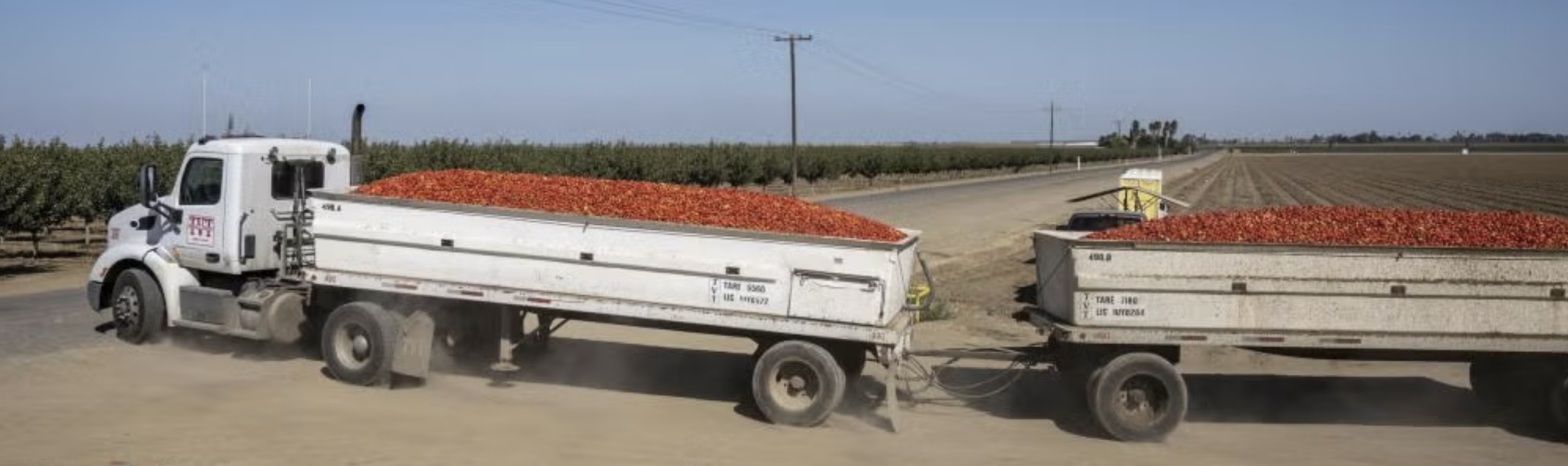
Central Valley tomato growers are producing more per acre in an economy that is facing lower consumer demand.The latest report published January 23 regards 2026 tomato contracts, highlights the dilemma.

Like the wine industry,processing tomato growers face the need to reign in production and not overproduce.

As of January, California’s tomato processors reported they have, or will have, contracts for 9.8 million tons in 2026, a decrease of 11% compared to 11.0 million contracted tons forecast in the August 2025 California Processing Tomato Report.

Tomato grower Don Cameron who serves on the board of the California Tomato Growers Association says “the processors cut their contract by 15% as US consumer demand has dropped.” Eating and drinking habits are changing and some people are eating less and making new food choices as a result of the popularity of weight loss drugs.”It’s happening in the almonds too.” Meanwhile, Cameron worries about the prices paid for contracted tomato product that have been lower recently although the 2026 price has not been agreed-upon yet between growers and processors.

Processors estimate that the contracted production for 2026 will come from 185,000 acres with an average yield of 53 tons per acre. This year’s contracted planted acreage forecast is 10% below the 2025 estimate of 205,000 planted acres under contract in the August forecast.

Shrinking acreage

Growers have been shrinking their planted footprint for processing tomatoes from over 300,000 acres statewide as recently as 2007 to 205,000 acres planted last year. Now that will shrink again to 185,000 acres in 2026. Meanwhile farmers have been producing more product on fewer acres as the yield has increased over the years from 23 tons per acre in 1977 to 53 tons expected in 2026. The big difference, drip irrigation technology.
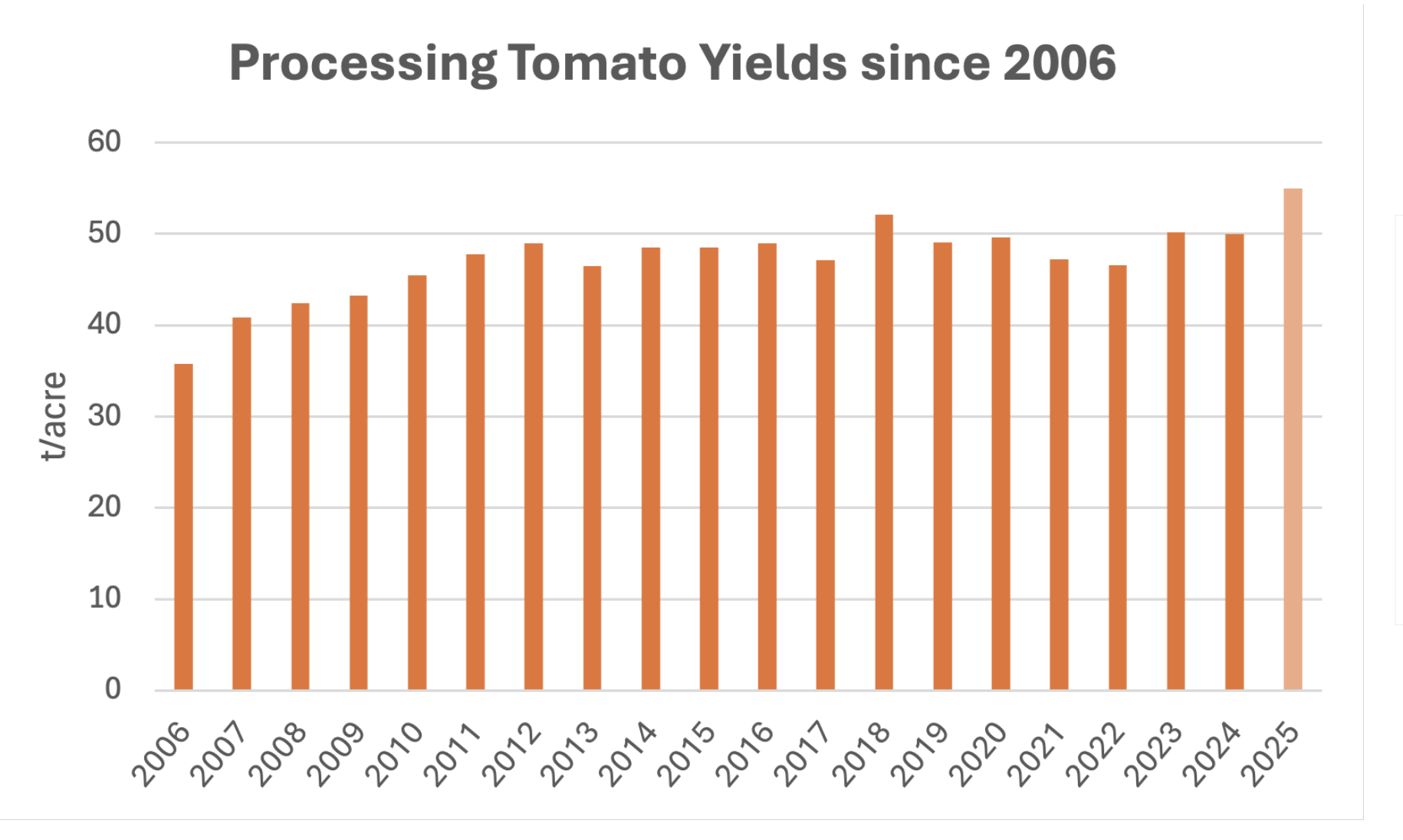
While yields have more than doubled, total California production has shrunk from a high of 14.3 million tons in 2015 down to an expected 9.6 million tons this year.

Among the factors affecting the industry are the high cost of farming inputs including labor and water, and increasing temperatures. But a slow decline in U.S. per capita consumption may be more telling as oversupply has led to farmers disking crop that had no contracted buyer.

Consumption may have peaked with changes in dietary guidelines that urge reduced sodium in processed food. Now pizza sales may have peaked, suggests some news reports.

California continues to produce 95% of the U.S. processing tomato crop and approximately one-third of the global supply.

Covid’s effect

An Ag Alert story quotes Valley tomato grower Mike Montna,CEO of the California Tomato Growers Association in 2025.. After consumption of processing tomatoes and other canned goods spiked during the COVID-19 pandemic, Montna says the industry is still adjusting to the post-pandemic “new normal,” as consumer eating habits have changed.

Responding to the surge in demand during the pandemic, which zapped tomato inventories, canneries contracted more acres in 2023—some 254,000 at a record-high price of $138 a ton for conventional and $190 a ton for organic. Growers delivered more than 12.7 million tons of tomatoes that year, an all-time high.

“While COVID wreaked havoc on many industries, it brought higher margins to California’s processing tomato industry,” said Matt Woolf, a specialty crop analyst for Terrain, a part of Farm Credit Associations, in a 2024 report.

But product movement during the past two years has stayed “relatively flat,” Montna noted, necessitating the reduced acreage this year to get “inventories a little bit back in line.”

Except for the early years of the pandemic, U.S. per-capita consumption of processing tomatoes has been declining since the 1990s, Woolf reported. And the downward trend will likely continue “as the pandemic fades further into history,” he wrote.

Fresno County grower Bret Ferguson, who also serves on the grower association board, said it’s not just changing diets that have eroded sales of processing tomatoes. He pointed to the struggling fast-food industry, a major buyer of ketchup and other processing tomato products.

“They’re mindful of the cost of the product, and they’ve cut back,” he said, noting how fast-food chains in his area no longer generously give out handfuls of ketchup packets with every meal.

With contracted tomato acres down, Ferguson said he has left more ground fallowed because commodity prices for corn and other grains also are down. Processing tomatoes remains a good option for growers who can get a contract, he said, though he expects contracted acres to shrink.

Despite stagnating domestic consumption, Montna said export demand has remained “relatively consistent.” To open and grow new markets, he said the association has been working with the Trump administration to offer comments “on markets that we think might be beneficial” to processing tomato growers.

But grower Ferguson said he doesn’t believe the sector can “export its way” out of an inventory problem, considering other tomato-growing regions around the world also have produced sizeable crops in recent years. He said the high value of the dollar remains an obstacle for expanding export growth.

“It’s so cost prohibitive,” Ferguson said.

Lots of pressure

Lastly, retaliatory tariffs on our exports are concerning, says Don Cameron.Roughly 20% to 30% of California’s processing tomatoes (used for paste, ketchup, and sauce) are exported with Canada being a primary destination. President Trump has threatened a more vigorous trade war with Canada that has already severely hurt wine sales from California and all products from the US.

Cameron notes some piece of good news is the declining value of the US dollar that makes our exports cheaper to the overseas buyer.

Don adds that if you sum it up “there is a lot of pressure on the California tomato industry right now.”

One of the industry’s main players Morning Star Tomatoes has submitted comments about the 2026 crop on their website recently.

California’s processing tomato industry is driven by scale efficiencies and yield performance. The 2025 season delivered exceptional yields, with average yield per acre approximately 10% higher than historical levels. This resulted in roughly one million additional tons of production with minimal acreage expansion, largely due to improved varieties and favorable growing conditions. Higher yields lowered per-ton production costs, which improved California’s competitiveness in export markets. Exports to Canada and Mexico have remained relatively stable, suggesting that future export growth will need to come from markets outside of NAFTA, where elevated global inventories are creating a highly competitive environment. To support longer-term growth, California is likely to reduce production from 2025 levels to help draw down inventories, while continuing to expand exports beyond NAFTA in order to sustain demand and justify increased acreage in future seasons.

Focus Central Valley: Jobs in Construction & Manufacturing are down 

Healthcare a bright spot


California’s EDD reports that jobs in key sectors like construction and manufacturing are down in the Central Valley in November, reflecting what is also a nationwide trend.

Kings County

Case in point is the latest employment report for Kings County for the month of November. The jobless rate in the county was 8.8%, some 6.1% higher than a year earlier. There were 900 fewer people working in the non-farm sector, but 500 more jobs were seen in agriculture from November to November. The biggest decline in non-farm jobs year over year was in manufacturing with the loss of 400 jobs. Healthcare jobs climbed  400 year over the same time.

Fresno

Meanwhile in Fresno County, the jobless rate was also up from 7.8% in November 2024 to 8.1% in November 2025. 

Among the biggest sectors to lose jobs were in construction – down 700 people and manufacturing with a drop of 300 jobs.

Business services were down 700 jobs and transportation and warehouse jobs fell by 900. State government jobs declined by 900  as did federal jobs by the same number. 

The big winner in Fresno County were healthcare jobs up a whopping 5700 jobs year over year.

Kern jobs

In Kern County the jobless rate fell year over year from 8% to 7.8%. But again the losses were seen in the same sectors.

Construction jobs were down 5% year over year and manufacturing jobs dropped by 2.3% in the county. Other significant drops were seen in department store jobs, down 4.2% in the past year.
 Again the sector that was positive was healthcare where jobs were up 6% in the year in Kern county.

Tulare jobs

In Tulare County  the jobless rate declined year over year  from 10.2% to 10% while the number of non-farm jobs were up by 400 in the past year.  But it was the same sectors that showed weakness with construction jobs down 500 and manufacturing jobs down 400 – similar to other counties. Tulare County saw healthcare jobs jump by 1100 year-over-year.

Nationwide numbers 

Economists have noted  similar trends across the country with manufacturing  soft and building activity down, hurting construction jobs.

Manufacturing drops 10 months in a row

Weakness is seen in the latest ISM manufacturing report for the nation that came out last week. The report says economic activity in the manufacturing sector contracted in December for the 10th consecutive month, following a two-month expansion preceded by 26 straight months of contraction.

American manufacturers shed about 8000 jobs in December, adds the Wall St Journal.

New residential construction in the U.S. saw a steep drop in the month of October, according to a report released by the Commerce Department on Friday.

Another report from the Census Bureau says housing starts in the United States fell by 4.6% from the previous month to a seasonally adjusted annualized rate of 1.246 million units, the lowest since the Covid pandemic triggered a plunge in starts in the second quarter of 2020. The decline was marked for housing with five or more units (-25.9% to 347,000), offsetting the increase for single-unit houses (5.4% to 874,000). Among different regions, housing starts fell sharply in the US West- down 21%.
Beacon Economics employment analysis for the state says “while growth remains positive in California, employment levels are down 120,900 over the past year, a 0.8% decline, without the gains in Health Care. 

California’s labor supply is growing slowly, expanding by just 43,200 from September to November. Since February 2020, the state’s labor force has grown by just 277,500 workers, a 1.4% increase. This trails the nation’s 4.3% growth over the same period. California’s chronic housing shortage continues to be the greatest constraint to labor supply growth.The recent ICE raids do not appear to be having a significant impact on California’s labor force, however the state’s chronic housing shortage continues to limit its ability to gro

w.”

Trainee in Fresno County class

Bird Flu returns to California


CDFA lifts ban on exhibitions

USDA reports that highly contagious avian influenza that hit the state hard in 2024 has surfaced again in California even as it has severely impacted the Midwest poultry industry in 2025. Last year bird flu hit 26 states in the US but almost half the cases were in Indiana and Ohio, reports Watt Poultry news. Last year some 285 commercial bird flocks were lost, says the industry publication.

As for California, the bird flu was last found in any big numbers in February last year even as the headline news in January 2025 was how high egg prices had become. Now as of this fall there are signs it could return. In late October an egg ranch in Sonoma County was hit that resulted in the destruction of 231,000 egg layers, the only way to stop the spread.

USDA reports that six farms in California have been hit since October including a flock in Placer County.

As of January 2, 2026, USDA is reporting that in the new year an affected flock of 34,600 gamebirds in Butte County had to be destroyed. Also on that date in North Carolina 14,000 turkeys tested positive.Two more commercial upland gamebird flocks in Kansas have also tested positive in the new year The virus is worldwide with new reports in Israel and Russia.

The California’s poultry industry hopes there is no repeat of what happened in 2024 into early 2025. A UC Davis report says in California, the disease led to the destruction of around 10.6 million laying hens, with another 1 million table-egg pullets (young hens about to start laying) also destroyed. Meat birds in the Central Valley including in Kings County were hit as well. But the biggest loss was a majority of the egg laying flock in the state that had to be rebuilt over many months.

Vaccinations urged

Considering that bird flu could return in big way in 2026, carried by the annual influx of migratory birds,another industry publication Egg News reports that as of December 11th, senators representing both sides of the aisle addressed a letter to the White House urging adoption of vaccination as an adjunct to biosecurity to address the endemic and widespread incidence of highly pathogenic avian influenza (HPAI) manifest as an epornitic (Attacking many birds in a region at the same time) since 2021.

“The group of 23 senators including Senate Majority Leader John Thune (R-SD), with Mike Rounds (R-SD) and Amy Klobuchar (D-MN), respectively Chair and Ranking Member of the Senate Committee on Agriculture, Food and Forestry, urged Brook Rollins, Secretary of Agriculture to implement “renewed action” to address the problem of HPAI. The letter stressed the need to apply science and to take into account the needs of all stakeholders. This implies balancing enhanced protection afforded to farmers against the possible loss of export markets for broiler leg quarters.

Besides the California egg industry, bird flu in 2024 spread to the state’s huge dairy industry affecting a majority of herds by early 2025 with industry suffering a drop in milk production that has since recovered.

CDFA lifts ban on county fair exhibitions

Meanwhile CDFA is loosening restrictions on shows.

In late December the California Department of Food and Agriculture (CDFA) said they are closely monitoring the status of H5N1 Highly Pathogenic Avian Influenza (HPAI) in both poultry and dairy cattle throughout California. Since the implementation of the statewide exhibition ban, CDFA has conducted ongoing surveillance, reviewed viral trend data, and consulted with epidemiologists and animal
health partners at both the state and federal levels.

“Based on a comprehensive review of current H5N1 infection trends, improved understanding of transmission dynamics, and enhanced mitigation measures now in place, CDFA has determined that the risk associated with poultry and dairy cattle exhibitions has sufficiently decreased. Effective immediately, the statewide ban on poultry and dairy cattle
exhibitions at fairs and shows is hereby lifted.”

The next big show in the state is of course the Tulare Farm Show – World Ag Expo set for Feb 10-12.

Human cases

The U.S. CDC says between January 1 and August 4, 2025, 26 human infections with avian influenza A(H5N1) viruses (H5 bird flu) have been detected globally, of which 23 were identified in 7 countries outside of the United States, including 11 infections that resulted in death.The three cases in the United States were previously reported, and there have been no cases reported in the United States since mid-February 2025.

Cigna packs up Visalia office space

CV Regional Center will backfill County-owned space

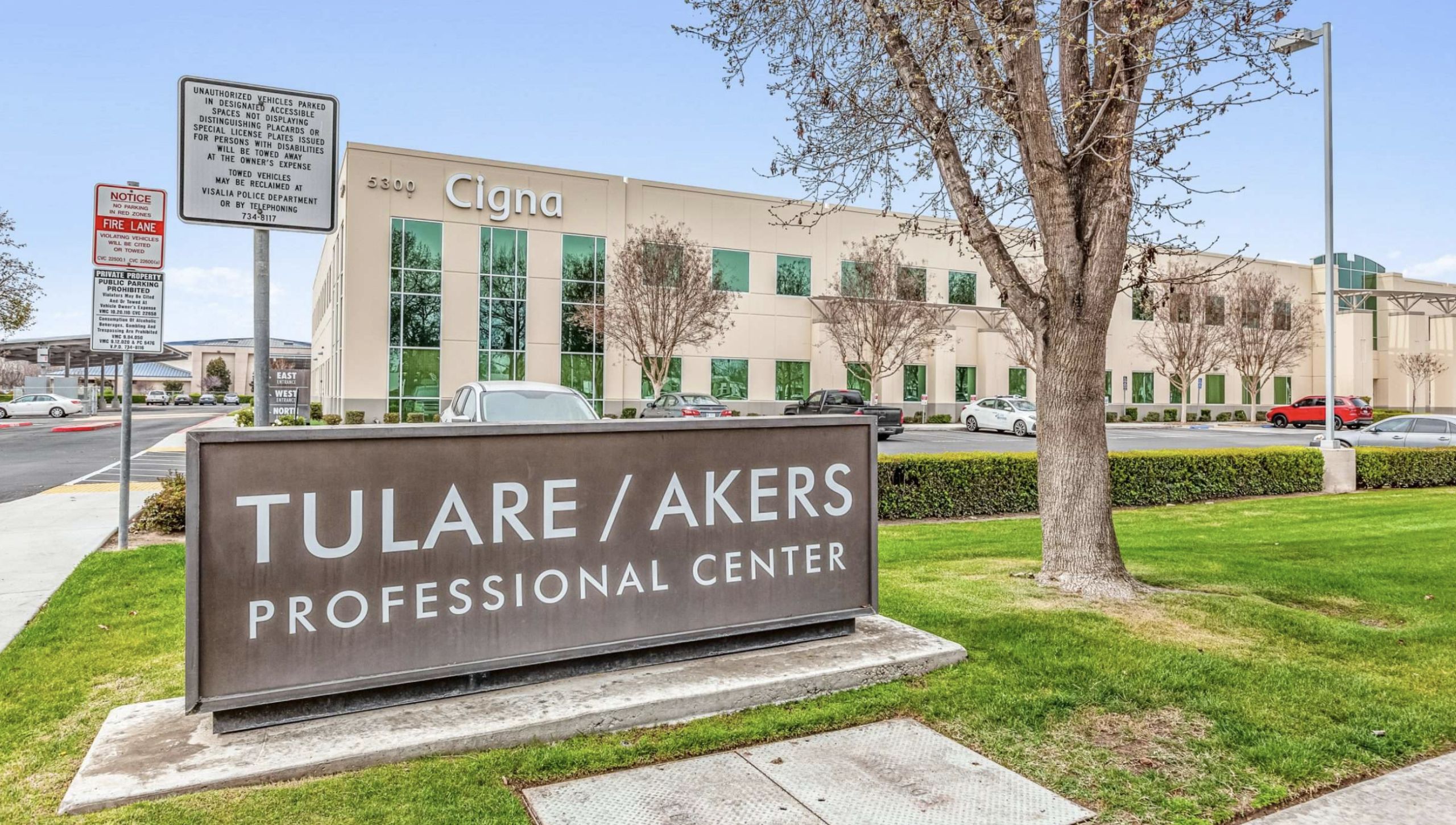
As of the new year, insurance giant Cigna has terminated any leased premises for their office complex in Visalia. That big building is now owned by the County of Tulare. The company has whittled down their square footage in the 180,000 square-foot Class A complex over the years. In 2001 Cigna still leased 96,103 ft.² but reduced that roughly in half to 49,503 ft.², a lease that was set to expire in May 20,2026.Now under a new agreement, Cigna will vacate the building by the end of this month, ending a saga of a company that was once of the largest employers in Visalia with some 1400 workers operating a call center

Cigna was why the building was constructed in 2001. The County purchased the property in 2015. Over the years Cigna transitioned employees to work remotely lessening the need for a large office presence.It is not known if many Cigna employees still work for the company from home in Visalia.

The good news is the county has an agreement with the Central Valley Regional Center to backfill space being vacated. This past year the county also leased some space to Kaweah Health.

Once known as the “Cigna building” the property at 5300 W Tulare Ave (along Akers) in Visalia, is now called the Tulare/Akers Professional Center (TAPC).

The matter was heard this week by the county Board of Supervisors. A staff report says that on September 30, 2025, the County and Cigna entered into a Third Amendment toreduce Cigna’s leased premises, retroactive to September 1, 2025, by 17,210 sq ft from 44,637 sq ft to 27,427 sq ft.

Bringing the negotiations up to date, the staff report says the proposed Fourth Amendment would mutually terminate the Original Lease,including all amendments, and any remaining payments due by Cigna to the County,retroactive to December 31, 2025.

Local Congressman David Valadao joins 17 GOP House members supporting extension of Obamacare subsidies

Local congressman Republican David Valadao bucked his party’s leadership this week voting with 17 GOP House members to extend Obamacare subsidies.

On January 8, 2026, 17 Republican House members joined all 213 Democrats in a 230–196 vote to pass a three-year extension of enhanced Affordable Care Act (ACA)premium subsidies. The vote followed a successful discharge petition that forced the legislation to the floor despite opposition from GOP leadership. The measure now goes to the Senate where its prospects are uncertain.

Even if it passes in the Senate it must be signed by President Trump who has been a major opponent of Obamacare.

The 17 Republicans who voted for the subsidy extension are:
Robert Bresnahan (PA)
Mike Carey (OH)
Monica De La Cruz (TX)
Brian Fitzpatrick (PA)
Andrew Garbarino (NY)
Jeff Hurd (CO)
Dave Joyce (OH)
Tom Kean Jr. (NJ)
Nick LaLota (NY)
Mike Lawler (NY)
Ryan Mackenzie (PA)
Carol Miller (WV)
Max Miller (OH)
Zach Nunn (IA)
María Elvira Salazar (FL)
David Valadao (CA)
Covered California- the Obamacare agency in the state, estimates that as of July 2025, about 202,000 residents in the San Joaquin Valley, from San Joaquin County in the north to Kern County in the south, were enrolled in Covered California. More than 90% have at least part of their costs for premiums subsidized by tax credits,says report from nonprofit newsroom Stocktonia.

Earlier this year, Covered California projected that its subsidized enrollees in Valley counties would experience large increases to their monthly health insurance premiums if the enhanced tax credits expired:

Fresno County: Average increase of 160%.
Kern County: Average increase of 160%.
Kings County: Average increase of 147%.
Madera County: Average increase of 139%.
Merced County: Average increase of 388%.
San Joaquin County: Average increase of 129%.
Stanislaus County: Average increase of 112%.
Tulare County: Average increase of 140%.
Despite the expiration of the enhanced credits, lower-income Covered California members would continue to benefit from the standard level of Affordable Care Act credits.

Visalia: 2025 building permits strong

Visalia building permits for all of 2025 seem to reflect a strong economy in the city as we go into the new year. The numbers have just been published.

The total value of all building permits hit $525 million compared to $343 million in 2024. New home permits  numbered 562 compared to 270 the year before.  By contrast, multifamily permits were down at 142 compared to 327 permits in 2024.

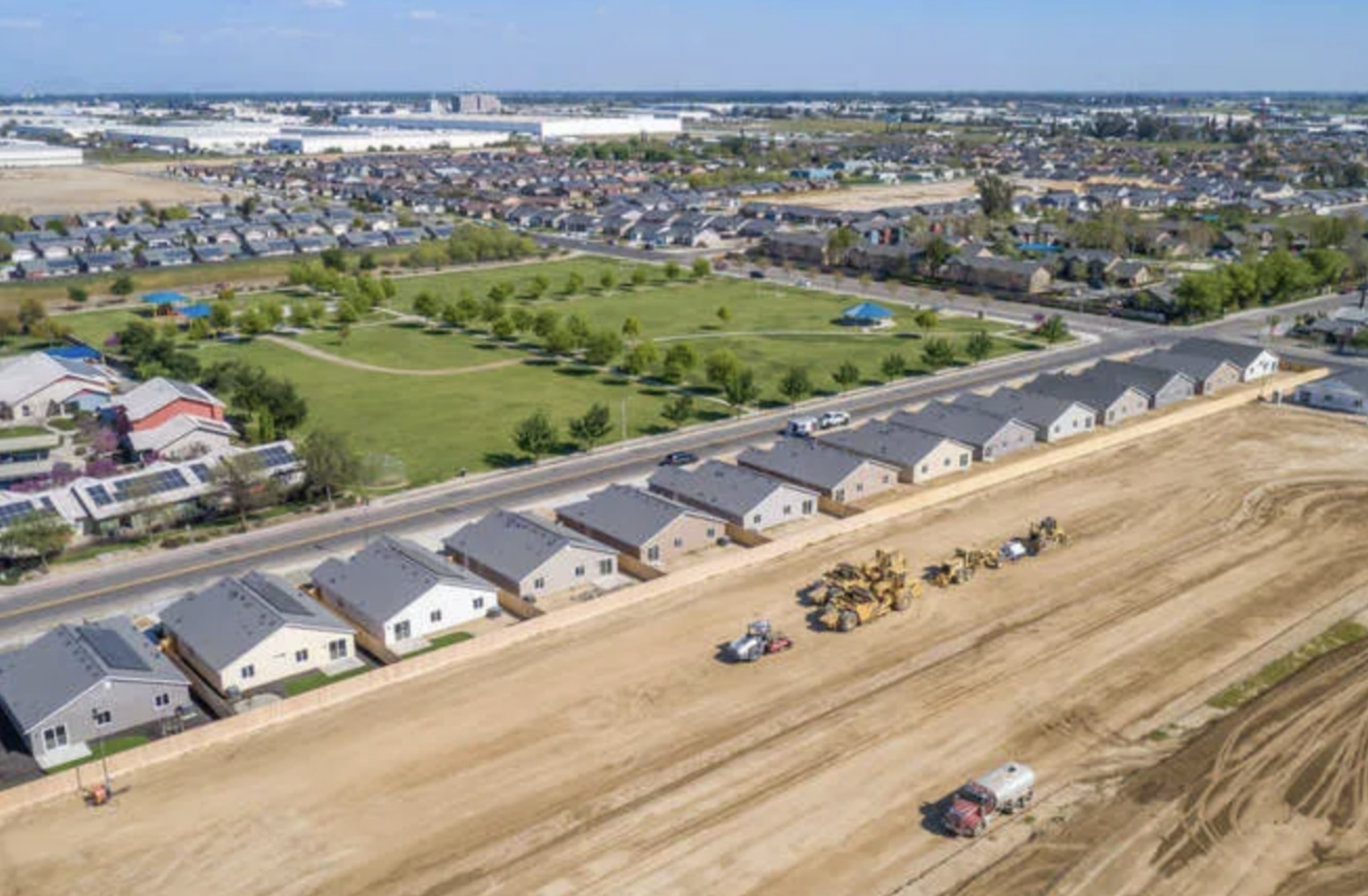
More than 1.1 million square feet of new single-family homes were permitted in Visalia last year with an average dwelling cost of $363,600 ,up from $326,349 in 2024.Compared to most cities in the state, the average cost to buy a new home here is attractive.

Visalians spent more $40 million fixing up their existing homes last year.

If new home construction was humming, so were permits for commercial alterations as businesses set a record pace fixing up their stores and buildings. They spent $108 million on projects last year,up 140% from the year before.

New commercial permits added up to $151 million in 2025 compared to just $63 million in 2024 but down from 2023 when new commercial permits added up to $191 million, boosted by industrial park construction.

Construction in the Visalia Industrial Park slowed last year compared to the record pace in 2020 to 2023 when total square footage all over the city hit over 3 million sf each year. In 2025 it added up to 2 million  sf compared to just 1.1milliion sf in 2024.

The strong pace will likely benefit the city’s 2026 revenue stream that counts on performance in residential and commercial activity for sales and property tax monies. 

Former car dealership Downtown may get mixed-use project with 41 apartments

Downtown Visalia’s Main Street could see a mixed-use development with up to 41 apartment units according to a plan filed with the city this week.The quarter block development is planned where the Giant Chevrolet car dealership was for decades, at the SW corner of Main Street and Liberty, east of Santa Fe.

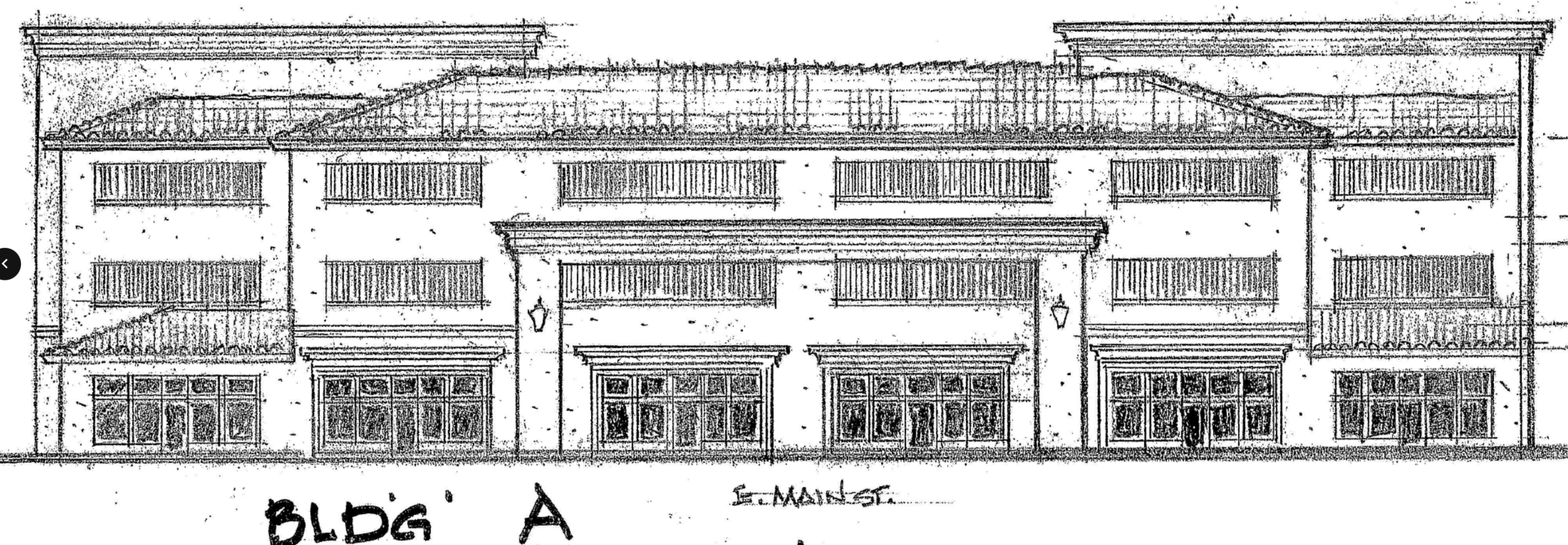
According to the preliminary plan to be heard by planners this week, the project involves two proposed buildings, one of which would have a retail ground floor space. One building would be four stories and the other would be three stories and include gated parking for the 41 residential units in the project.

The site is vacant, having been cleared years ago where the Chevrolet dealership once stood. The location is next to a transitional growth area for downtown and current site of a number of popular retail and restaurant spots including Barrel House,Simply Brewing and Sierra Bicycle Werks.

This part of downtown was known as the auto sales and repair district for the city but has, over the years, been reinvigorated with new investment in retail and restaurant spaces.Now the area could see its first major residential project right on Main St, only blocks from where the new Visalia Civic Center is being built.

The $7 million project at 617 E Main St is being proposed by Seng Saephan with Visalia architect Norwood David Williams submitting the plan. Buildings would add up to 65,000 sq feet with the ground floor retail space (in building A) of 11,722 ft.² feet being split into six different size storefronts. The design would replicate the small storefront frontage found next door along Main.

Biz & Energy Notes / Floating Wind / Oil glut / more

Floating Wind powers up in Japan / Trump U.S. ban struck down 

News reports say that off the coast of Japan the Goto Floating Wind Farm that employs  floating technology under consideration on the U.S. West Coast, announced the start of commercial operations this week, pumping nearly 17 megawatts of power onto the Japanese grid. Japanese officials last year raised the country’s goal for installed capacity of offshore wind to 10 gigawatts by 2030 and 45 gigawatts by 2040.
Last month  US Groups that promote offshore wind power are hopeful that a big win in court will convince the federal government to consider permitting new projects.

​In December  a federal judge struck down President Donald Trump’s day-one executive order that halted all offshore wind approvals and argued that the Biden administration unfairly favored renewable energy over oil and gas.

“Now each individual project is still going to have to continue the route it’s on,” said Benjamin Collings, offshore wind advisor for the nonprofit Elected Officials to Protect America. “For example, projects like in the Port of Humboldt, they can continue without being permanently stopped, which the White House was trying to do.”

California has five offshore wind projects in development: two off of Humboldt Bay and three off the coast of Morro Bay. Companies are doing environmental studies as they prepare to apply for state permits.

US manufacturing contracted in December 10th month in a row


The Institute for Supply Management reported this week that the Manufacturing PMI® registered 47.9 percent in December, a 0.3-percentage point decrease compared to the reading of 48.2 percent in November and the lowest reading of 2025.
The overall economy continued in expansion for the 68th month after one month of contraction in April 2020. (A Manufacturing PMI® above 42.3 percent, over a period of time, generally indicates an expansion of the overall economy.) 

The New Orders Index contracted for a fourth straight month in December following one month of growth; the figure of 47.7 percent is 0.3 percentage point higher than the 47.4 percent recorded in November.


EIA: Crude oil prices fell in 2025 amid oversupply


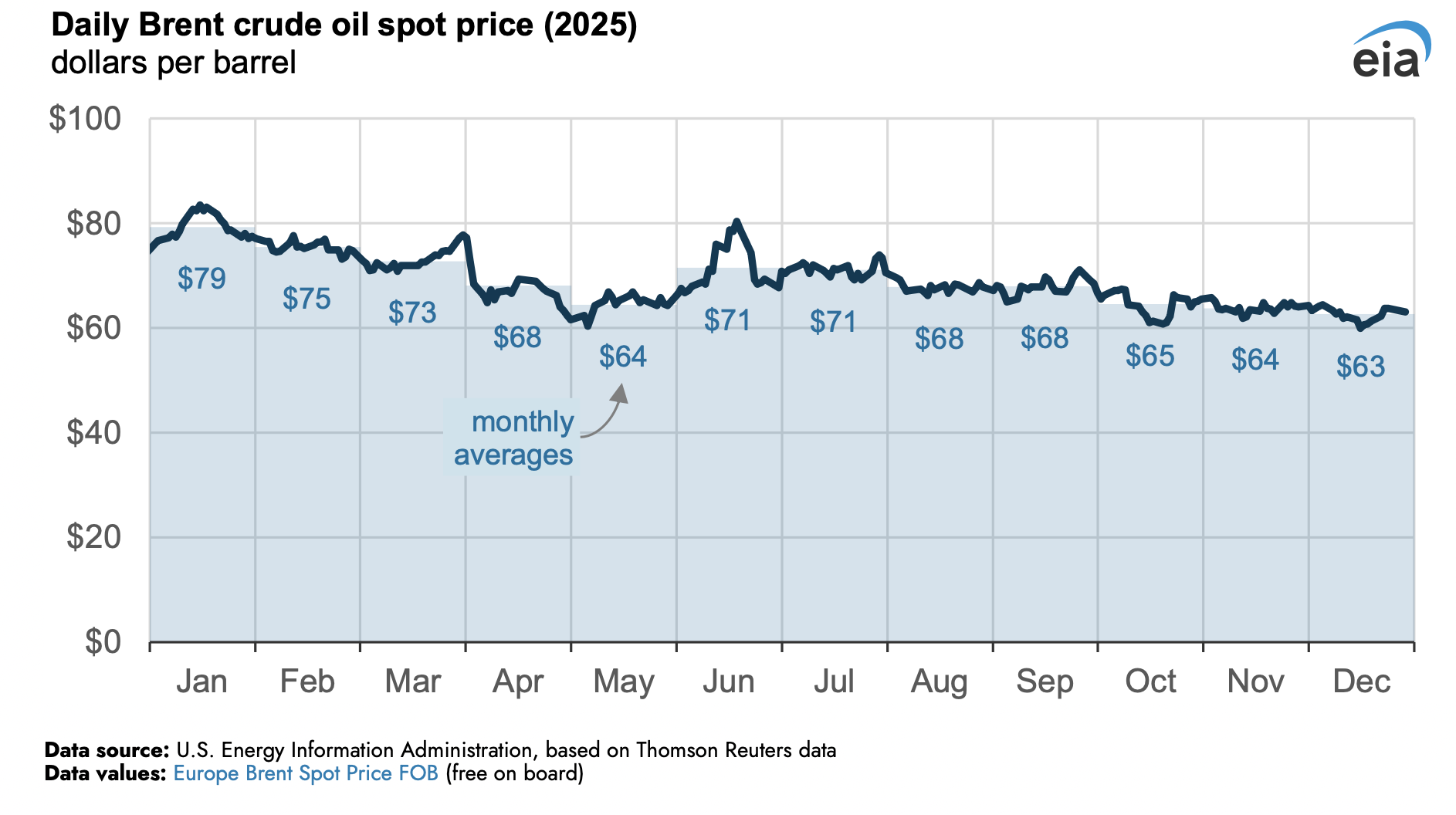
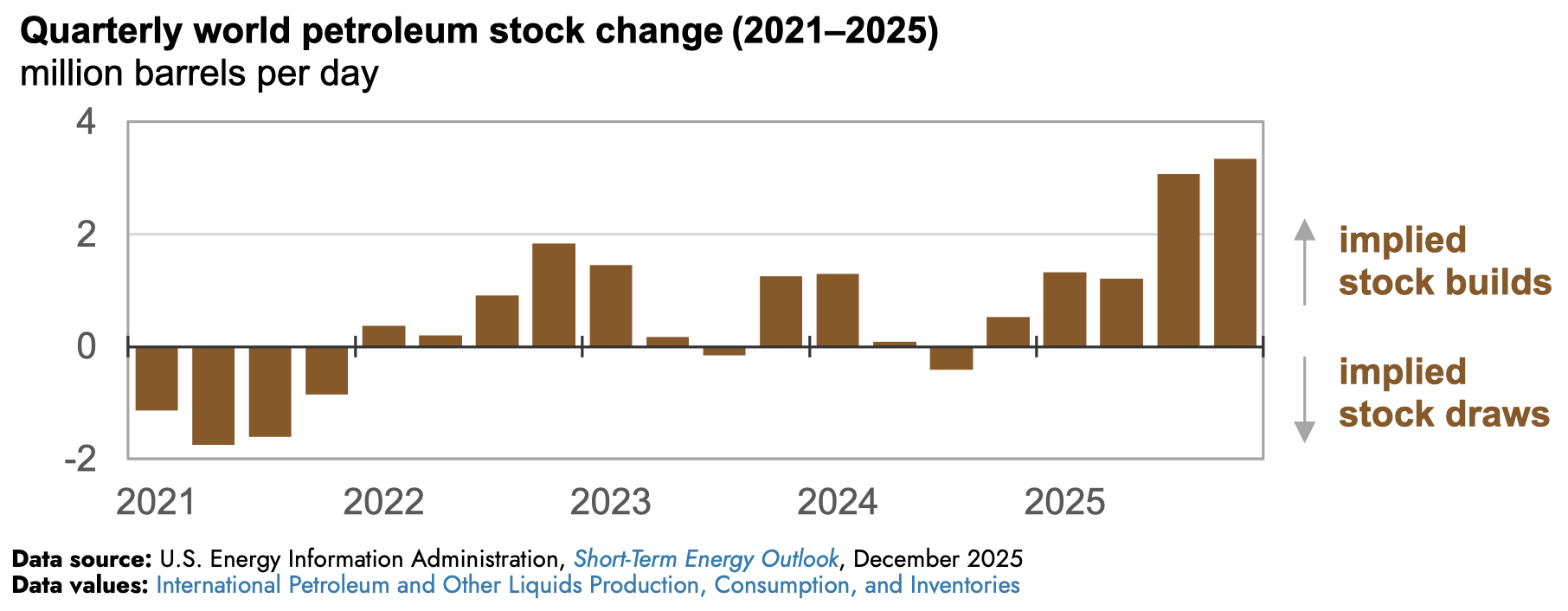
Crude oil prices generally declined in 2025 with supplies in the global crude oil market exceeding demand. Crude oil inventory builds in China muted some of the price decline. Events such as Israel’s June 13 strikes on Iran and attacks between Russia and Ukraine targeting oil infrastructure periodically supported prices.

On a monthly average basis, the price of Brent crude oil declined from a high of $79 per barrel (b) in January to a low of $63/b in December, which was the lowest monthly average price since early 2021. The annual average price was $69/b, the lowest since 2020, even when adjusting for inflation.


World supply of oil continues to build in 2026. EIA forecasts that global crude oil production will increase by 0.8 million barrels per day (b/d) in 2026, with supply from Brazil, Guyana (next to Venezuela), and Argentina accounting for 0.4 million b/d of the expected global growth forecast in our December Short-Term Energy Outlook (STEO). Global crude oil production growth since 2023 has been driven by countries outside of OPEC+.

The price drop bodes poorly for reviving Venezuela’s oil industry in the wake of the U.S. raid on Caracas and arrest of the South American country’s President Nicolás Maduro. At such low levels, investments in new infrastructure may be difficult to justify. say some analysts.

High pressure returns to California after weeks of wet weather

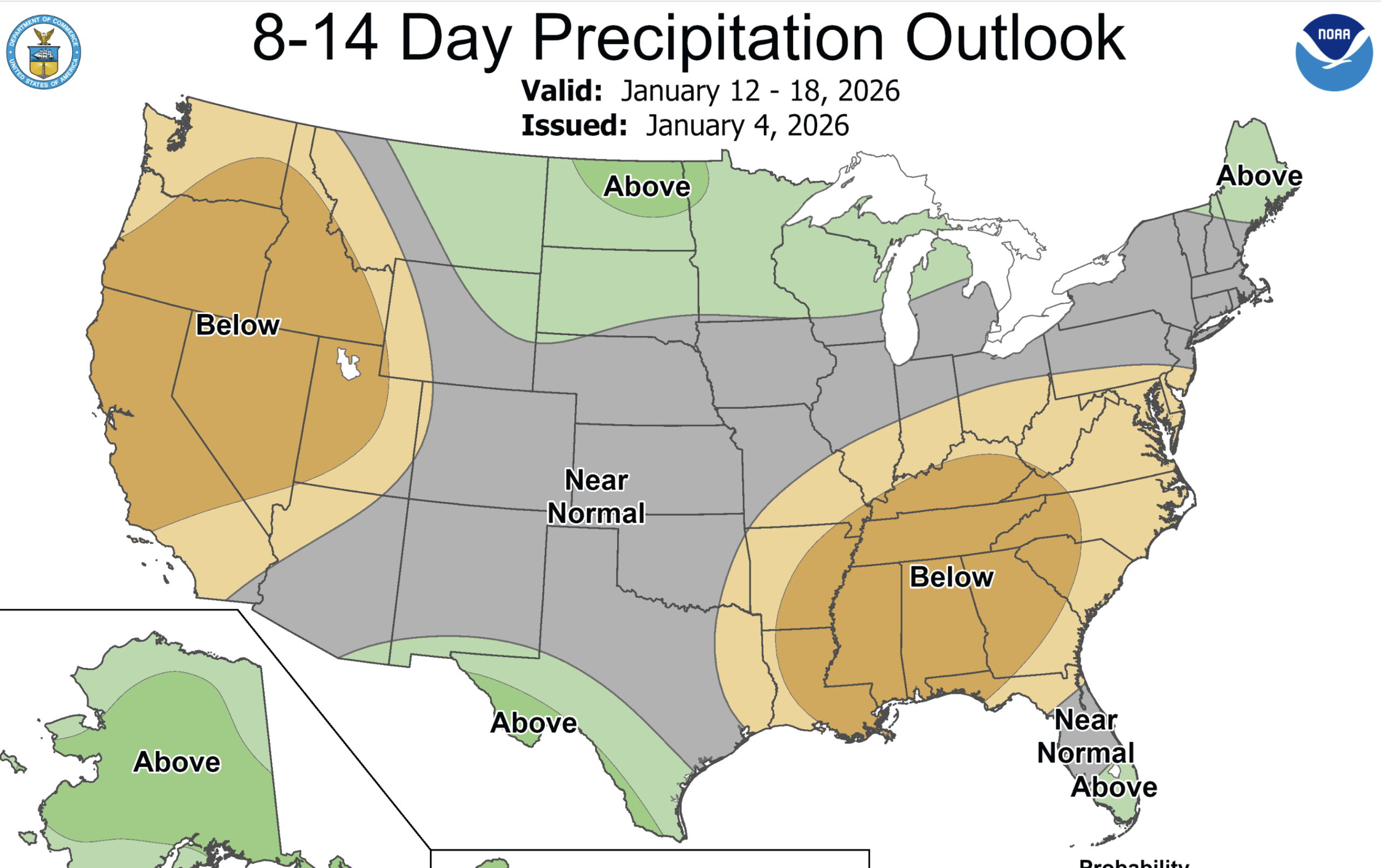
Like a switch being turned on and off, the AR led wet weather and waves of storms coming in from the Pacific that most of California saw over the holidays will feel the return for at least 10 days of “the blob” – high pressure off the coast and warm and sunny blue skies across the Golden State but likely fog in the SJ Valley.
Here is the Climate Prediction Center January 4 forecast for 12th -18, 2026.

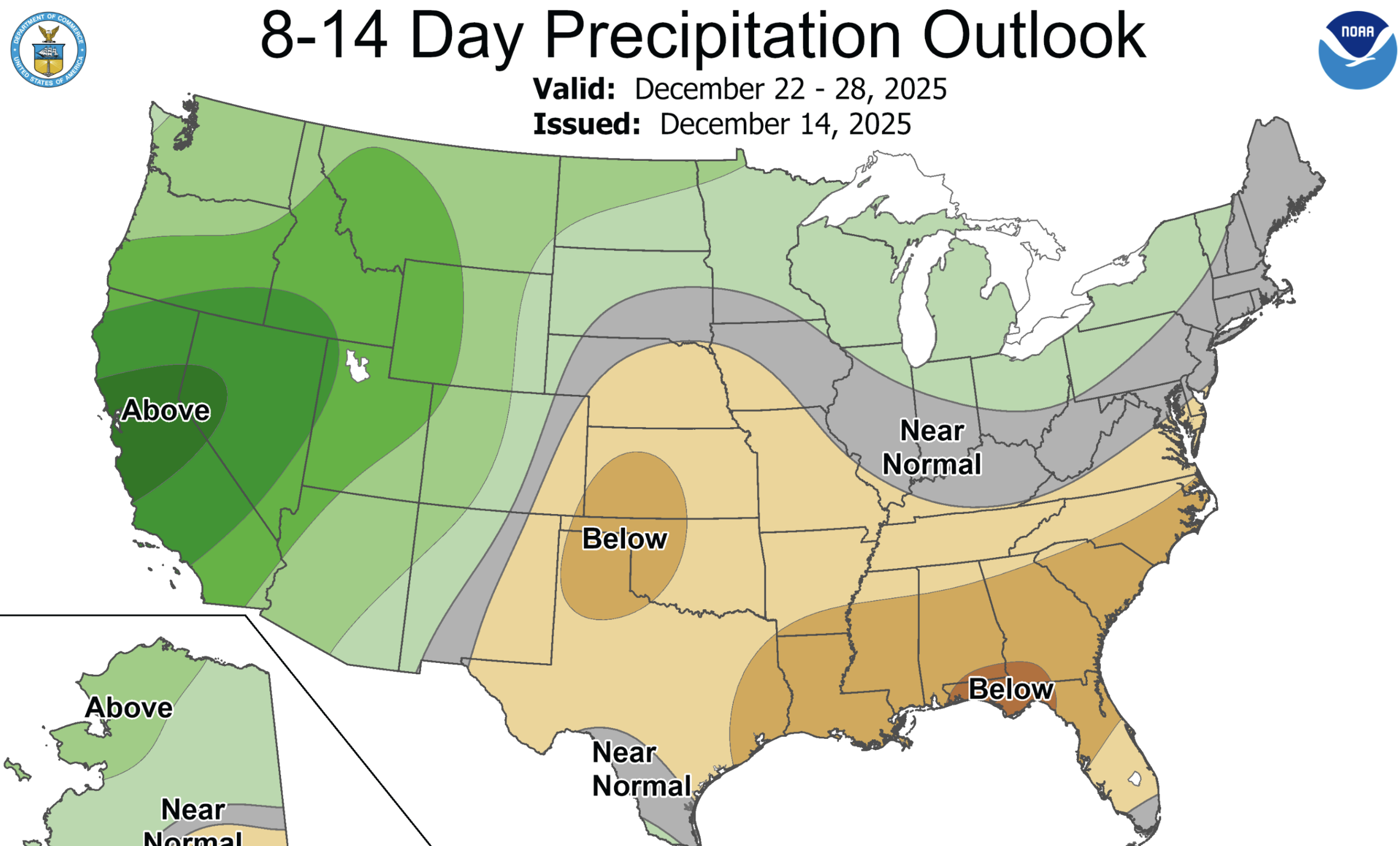
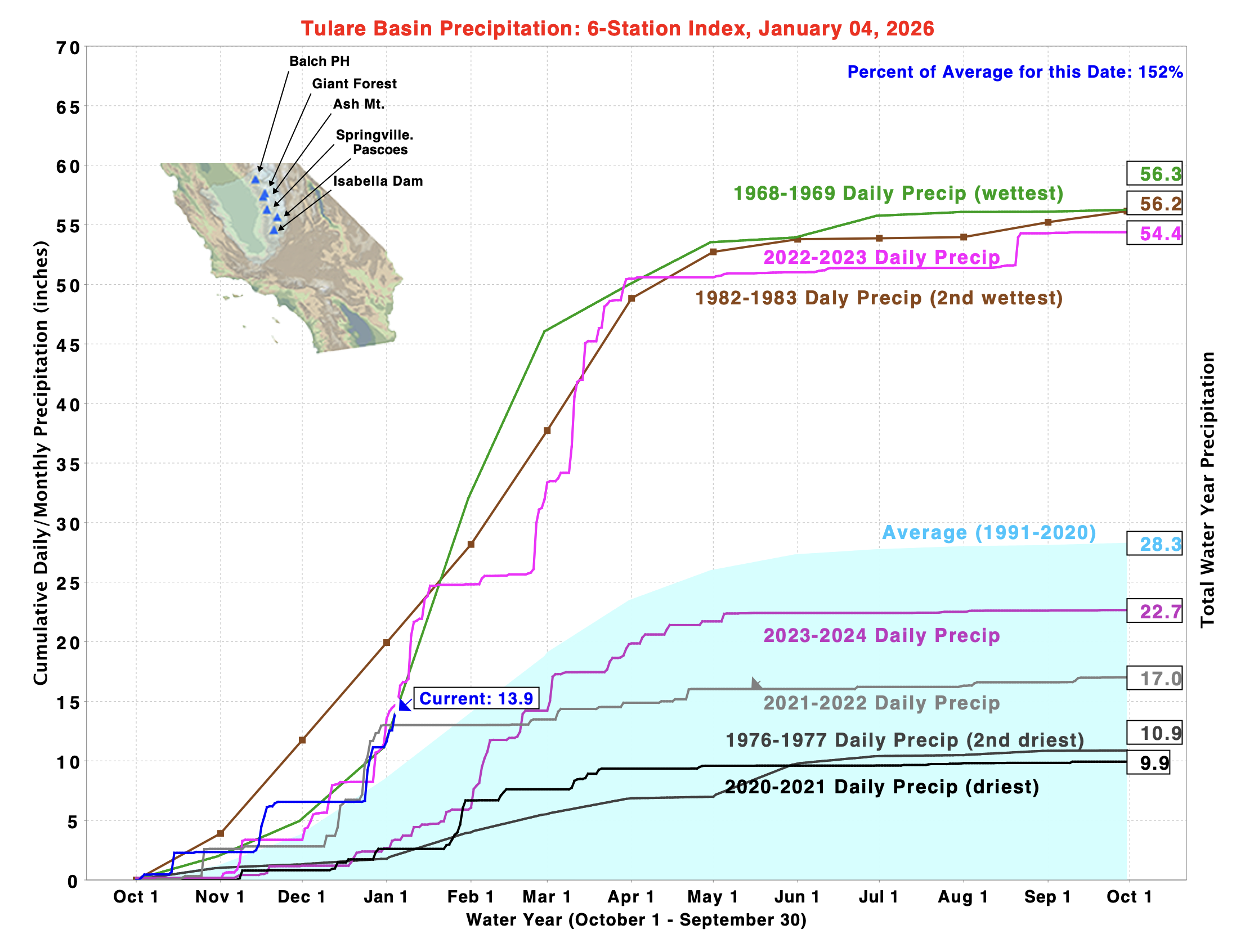
Multiple atmospheric rivers resulted in above-normal precipitation and flooding across California and the Pacific Northwest during mid to late December. 14-day precipitation, from December 18-31, averaged more than 200 percent of normal throughout California with southern parts of the state receiving more than 4 times their normal amount of precipitation during this two-week time period.

Contrast the latest map with what was predicted a few weeks ago

Precipitation is above average across the state, including in the San Joaquin and Tulare Basin stations – both about 150% of average for this time of year.


On the coast Lake Nacimento has received 7.25 inches of rain so far this water year compared to 2.29 inches this time last year. The lake is the water supply for San Luis Obispo and other towns. In our hometown of Los Osos we have received 12 inches of rain so far, 2/3 the average amount of 18 inches for the year.

The state’s most important reservoirs are doing well with Shasta storage at 128% of average and Oroville at 141%.

Visalia plans new Downtown Fire Station

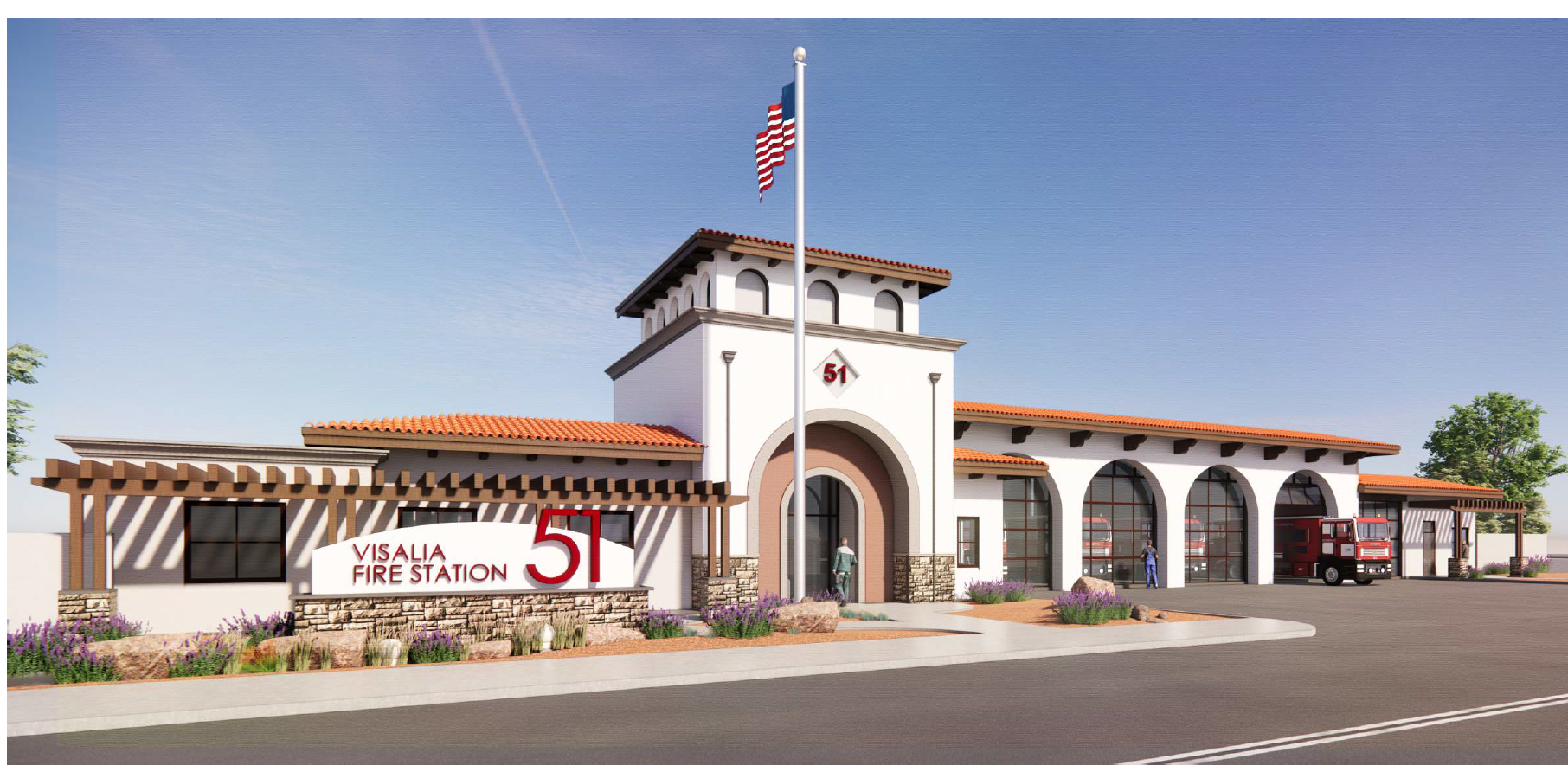
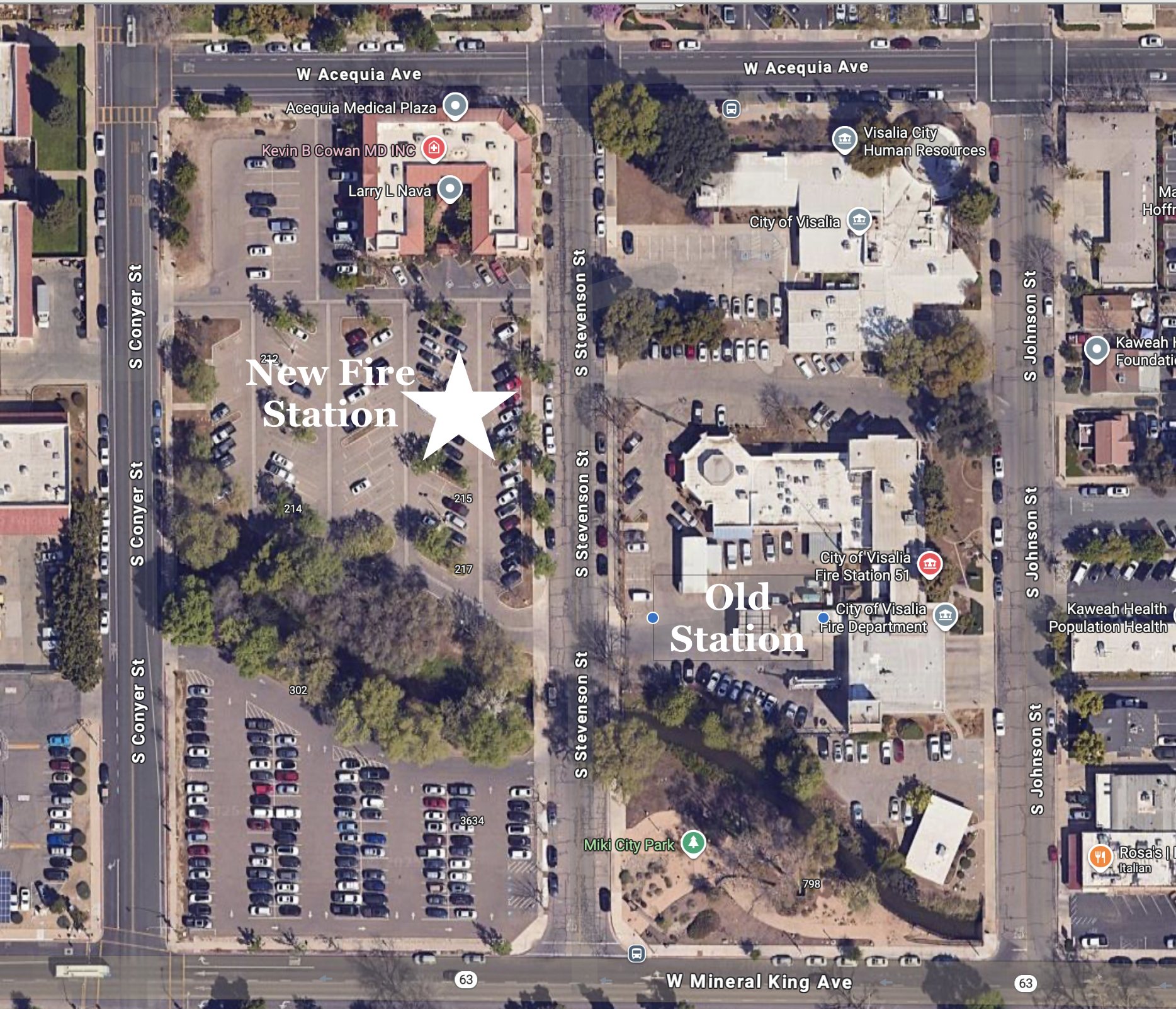
The City of Visalia has submitted plans for a new downtown fire station 51 located across the across from the current station that is part of the old City Hall complex between Conyer and Stevenson.The new 19,000sf station would be located across Conyer from Redwood High School to be built on a city parking lot.

The plan appears to clear the way for conversion of the several buildings of the old city hall cmplex on Acequia /Stevenson to other uses now that the police and fire administration and the existing fire station won’t be needed.Those other uses could mean sale of property once the new civic center is compete with construction underway now.

The new station will operate as a fully staffed, 24/7 emergency response facility serving the surrounding community. It will house an engine company, truck company, a 24/7 battalion chief, and a paramedic squad during the day.
The facility will include:

  • Battalion Chief’s office for administrative and operational oversight
  • Space to accommodate at least twelve (12) personnel, including the current eight (8) firefighters, two (2) paramedics during the day, one (1) reserve/visiting firefighter, and one (1) Battalion Chief
  • Apparatus bays for two (2) large fire apparatus, one (1) paramedic squad (large SUV), and one (1) battalion chief command vehicle (large SUV)
  • Storage space for a reserve ladder truck and engine
  • A refueling station for emergency vehicles and a general supply depot to support nearby fire stations
  • Training and meeting rooms for ongoing education, drills, and coordination
  • Secure storage areas for firefighting equipment, medical supplies, and hazardous materials
  • Dedicated parking for staff with fourteen (14) standard spaces, one (1) ADA space, and two (2) overflow spaces
  • Eleven (11) new public parking spaces
  • Emergency vehicle circulation routes designed for safe and efficient ingress/egress
    The total building footprint will be approximately 18,691 square feet, with a single-story design. The site will be developed to meet all applicable local zoning and safety requirements, including appropriate setbacks, landscaping, and stormwater management systems.
    Sustainability features will include solar panels, low-impact landscaping, and energy-efficient HVAC systems supporting the City’s environmental goals and reducing long-term operational costs.