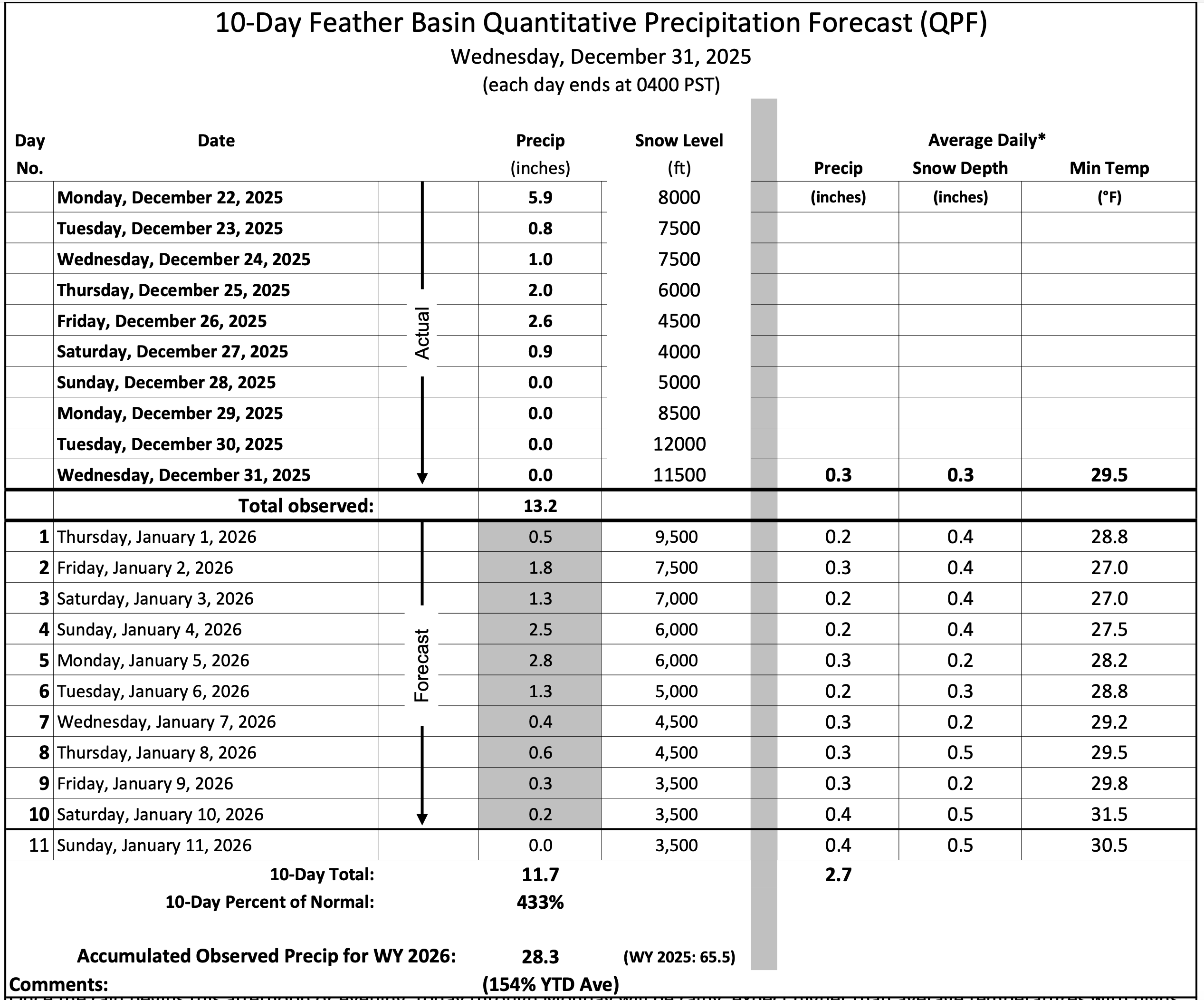
Here is the 10-day rain and snow forecast for the first 10 days of the new year focussing on the Feather River watershed around Oroville Dam, anchor reservoir for the State Water system that supplies 27 million Californians. It says rain expected through Jan 11 amounts to 11.7 inches or 433% of normal.For the water year it is 154% YTD average.The graph details the arrival of those important colder storms with snow levels down to 3500 ft as opposed to 9500 ft on New Years day. This time year ago it looked to be a dry January.
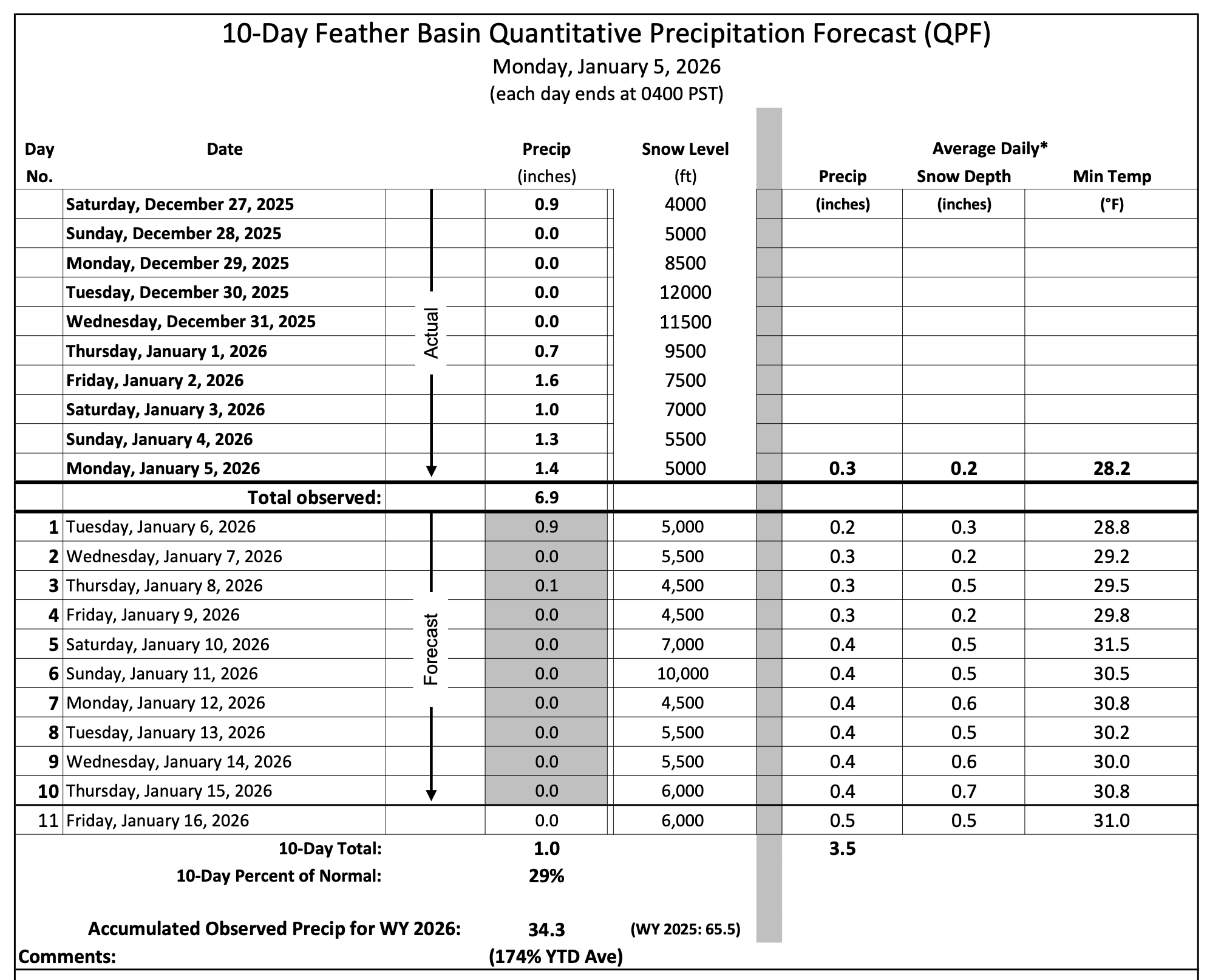
UPDATED JAN 5
Big Switcharoo
What a difference a few days make as the Jan 5 Feather River forecast calls for just 1 inch of precip over the next 10 day period.
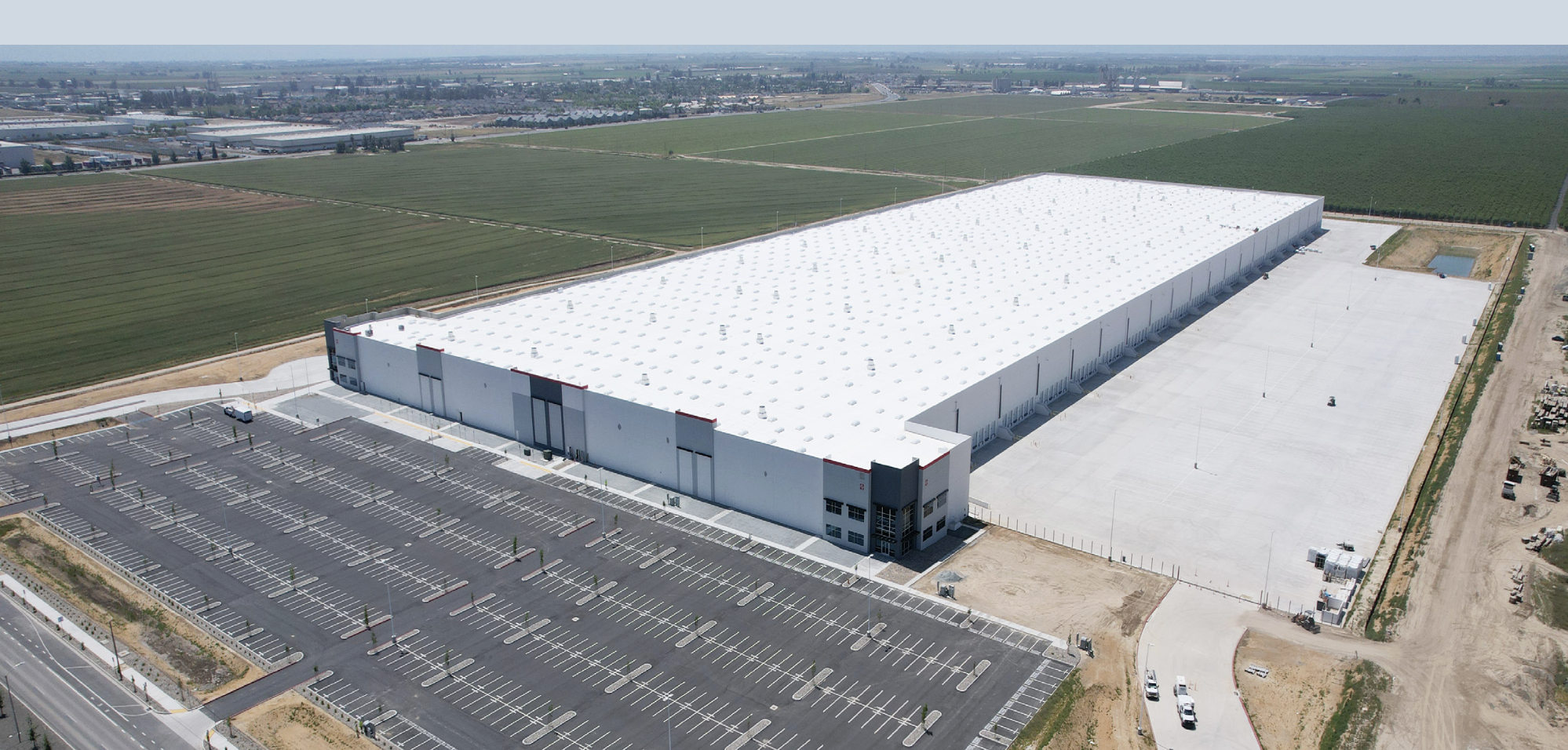
A plan filed with the City of Visalia January 2, 2026 shows logistics giant Amazon opening a third warehouse distribution center in Visalia, the first new job creating development in the industrial park in a while. This time it’s on Plaza Drive where a 1.27 million square-foot warehouse has been constructed but remains vacant. It sits on 75 acres.
When it was built by CapRock partners in 2024 the proposed tenant was rumored to be Amazon. Now the rumor is fact with the company filing an operational statement with the city that names Amazon as the tenant and saying when the fulfillment center opens, it would employ 471. The huge building is ready for tenant improvements, making it likely that Amazon could begin operations at the site at 4001 Plaza Dr. later this year. The site is north of Riggin.
On the outside the company rep noted, it only needs to paint their typical blue stripe around the building as they do at almost all Amazon warehouses.
Newport Beach-based CapRock was the developer of the two other Amazon warehouses in town. They own the land.
The new building will have associate parking for 731 cars with room to park truck trailers in 524 spaces.
The goal of the new project is “faster delivery” says their statement Here is what it says.
The “building(is) designed to improve efficiency and delivery speed to allow for high-velocity products to be fulfilled faster due to the broader selection availability. OGS9 will operate for 20 hours per day for 6.5 days per week and will have a maximum headcount of 471 Amazon associates.
Operations include inbound and outbound operations on north and south sides of the building accordingly. Inbound and Outbound docks will be(a) combination of MHE conveyors and pallet staging pots. PIT on these docks will transport packages in and out of trailers(his is a broad category of mobile, power-propelled vehicles used in warehouses, factories, and distribution centers to move, lift, push, pull, stack, or tier materials) while associates will do appropriate segregation for hydrogen-powered PIT to stow packages into respective storage racks, until required to be fulfilled. Once fulfillment is required, hydrogen-powered PIT will procure the relevant packages and drop-off in dedicated drop-off zones in outbound to be sent out. Associates will then segregate and palletize the packages for electric-powered PIT on the dock to load the pallets into the outbound trailer.”
Amazon uses green hydrogen, produced by electrolyzers from water and renewable electricity, primarily to power fuel-cell forklifts in its fulfillment centers for cleaner operations, with plans to expand to heavy-duty trucks, aiming for net-zero carbon by 2040 through partnerships with companies like Plug Power to create onsite hydrogen production and secure supply
The industrial project is part of the larger CapRock Central Point master plan that will be a total of a 2.7-million-square-foot, four-building campus.
The 12,000sf space formerly occupied by Forever 21 at the Visalia Mall is slated to be re-tenanted to a kids’ amusement center- a colorful children’s play land in the new year. Plans were filed this week with the City of Visalia.
The large space is located next to JC Penny’s .Mall officials were out of town this week and could not comment.
Called Candeeland Wonderpark, the company calls itself a” vibrant indoor play center where kids explore a real-life Willy Wonka adventure through imaginative, active play.
The company says it has some 15 locations mainly in Southern California that are open or “coming soon” including the new Visalia store and another Valley store at Valley Plaza in Bakersfield.
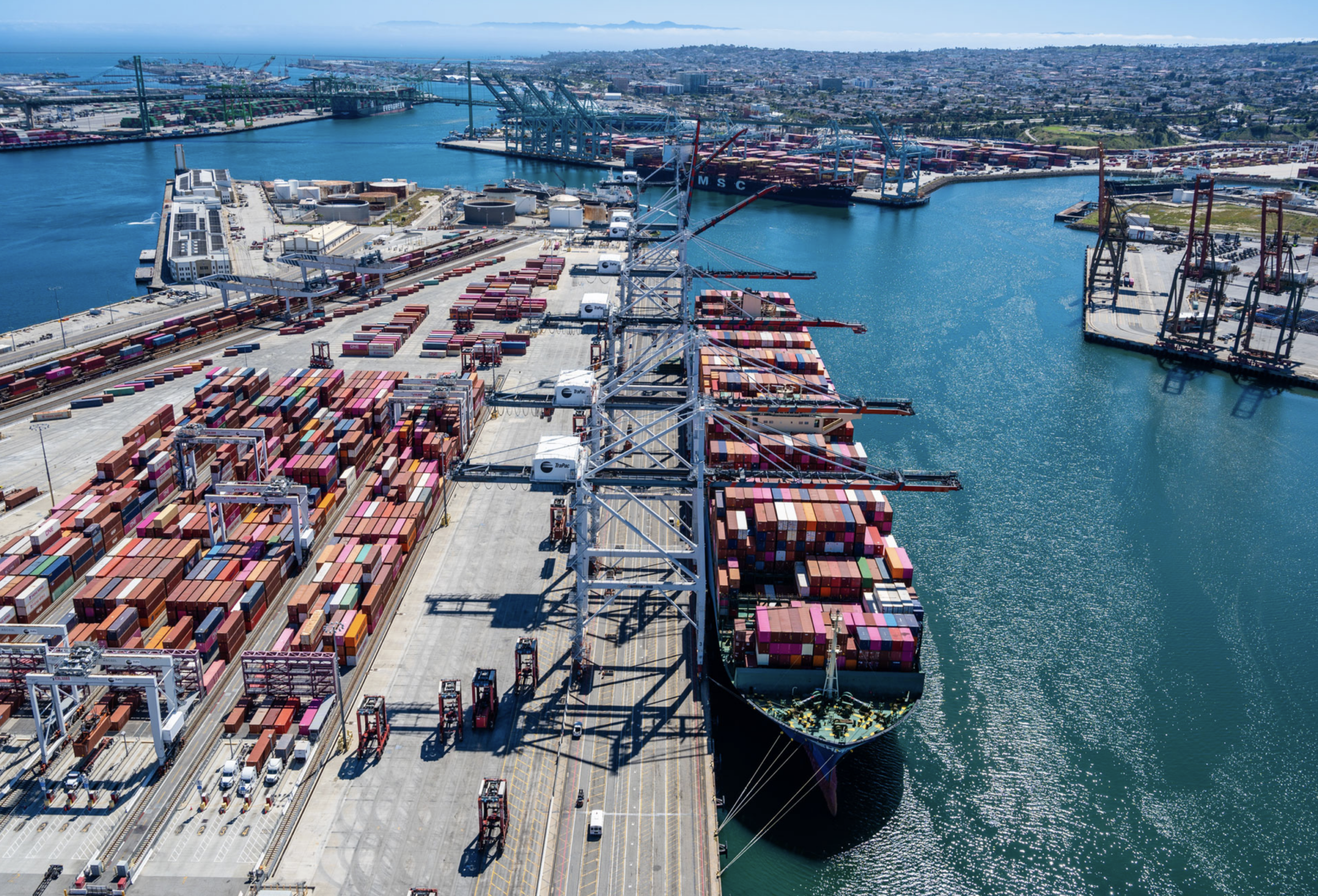
Chinese state-backed money is remaking the hemisphere’s ports —from Santos to Chancay — reshaping grain routes to Asia and squeezing U.S. farmers as tariffs deepen the split with Washington For decades, U.S. soybeans fed China’s growing demand, binding the two economies together.
The share of U.S. soybeans going to China has at times been more than 60% by value, making China America’s most important agricultural customer.
Two main corridors carry U.S. soybeans to China: Pacific Northwest shipments take a direct trans-Pacific track, while Gulf exports move through the Panama Canal to ports in southern China. Since 2013, China has been investing in infrastructure projects around the world. In Latin America, the Asian giant has invested in more than 23 seaports, building a logistics network to support its growing trade with the region.
These seaport investments range from multi-billion-dollar deep-water terminals to smaller upgrades that improve rail links, storage capacity, and ship turnaround times.
The partnership between the US and China began to crumble in 2018, when tariffs during President Trump’s first term triggered a sharp drop in U.S. soybean sales to China.
Brazil quickly filled the gap and has remained China’s top soybean supplier ever since.
“What are the signs that China’s here to stay [in Latin America]? Really, the infrastructure,” said Henry Ziemer, an associate fellow with the Americas program at the Center for Strategic and International Studies (CSIS), a U.S. nonprofit policy research organization that reports 23 ports across Latin America have some degree of Chinese investment.
“Ports, railways, roads, bridges, metro lines, energy, power plants are probably the best signs that China has a long-term commitment … These are long-term projects.”
Daniel Munch, an economist with the American Farm Bureau Federation, said that when a country gains control over ports that make trade faster, cheaper and more reliable, such as the Port of Chancay, trade flows tend to “lock in.” Reversing that trend, he warned, would require the United States to narrow its efficiency gap, noting that none of its container ports rank among the world’s top 50.
“It could entrench patterns,” Munch said.
This is bad news for American farmers, particularly soybean growers.
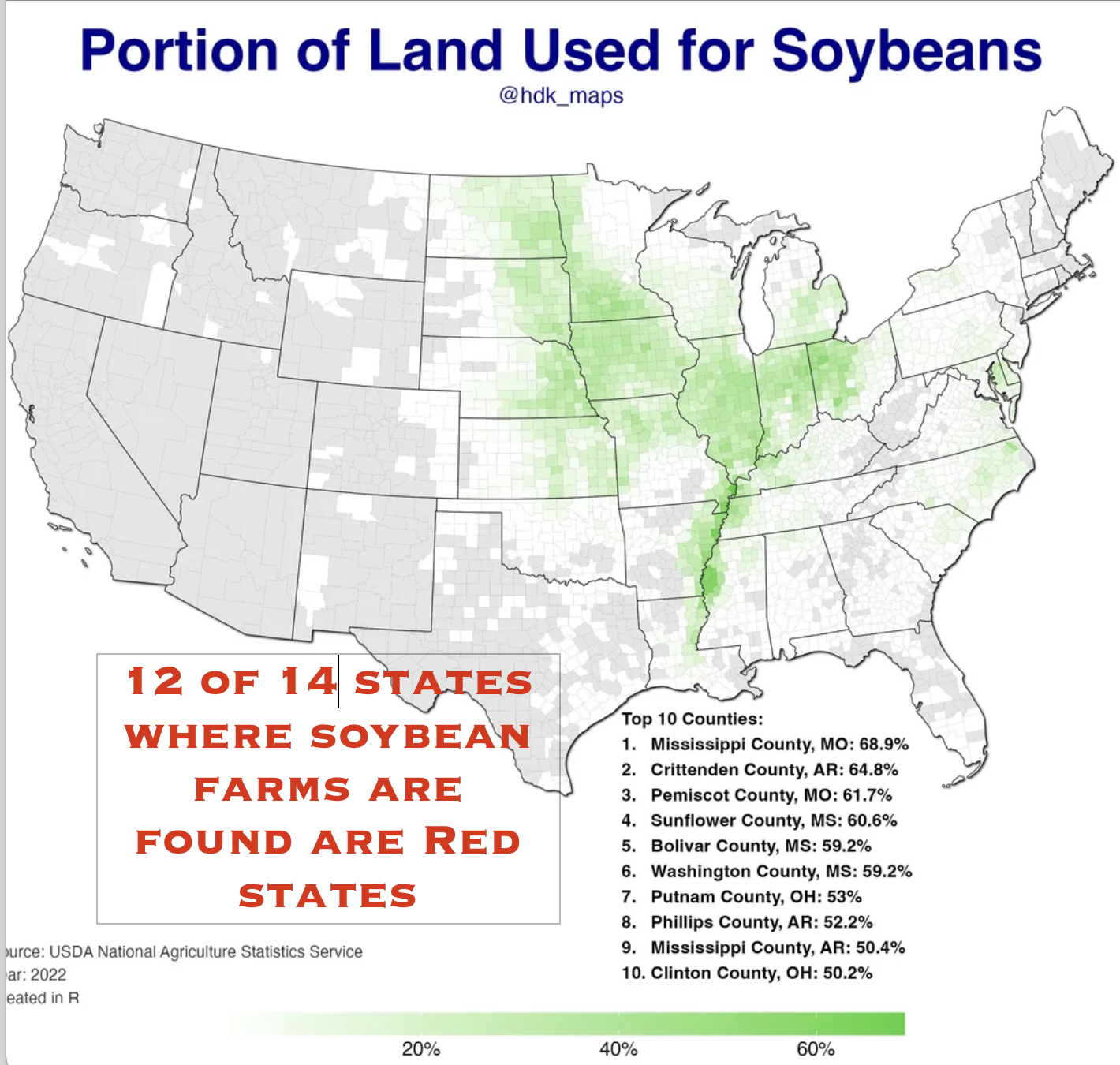
Soybeans are a cornerstone of American agriculture, particularly in the Midwest. Nationwide, more than 270,000 farms grow the crop, according to the latest Census of Agriculture. In Illinois, nearly half of all farms depend on soybean production, and in Iowa and Minnesota, about four in 10 do.
Much 0f the crop[ is shipped down the Mississippi but the Port ofLA has counted soybeans as the top ag commodity shipped from there .
“Exports in general have been very soft and we attributed it to the retaliatory tariffs that have been put in place by China,” said Gene Seroka, executive director of the Port of Los Angeles. “Our single biggest export sector is agriculture … of that, soybeans are the number one export commodity.”
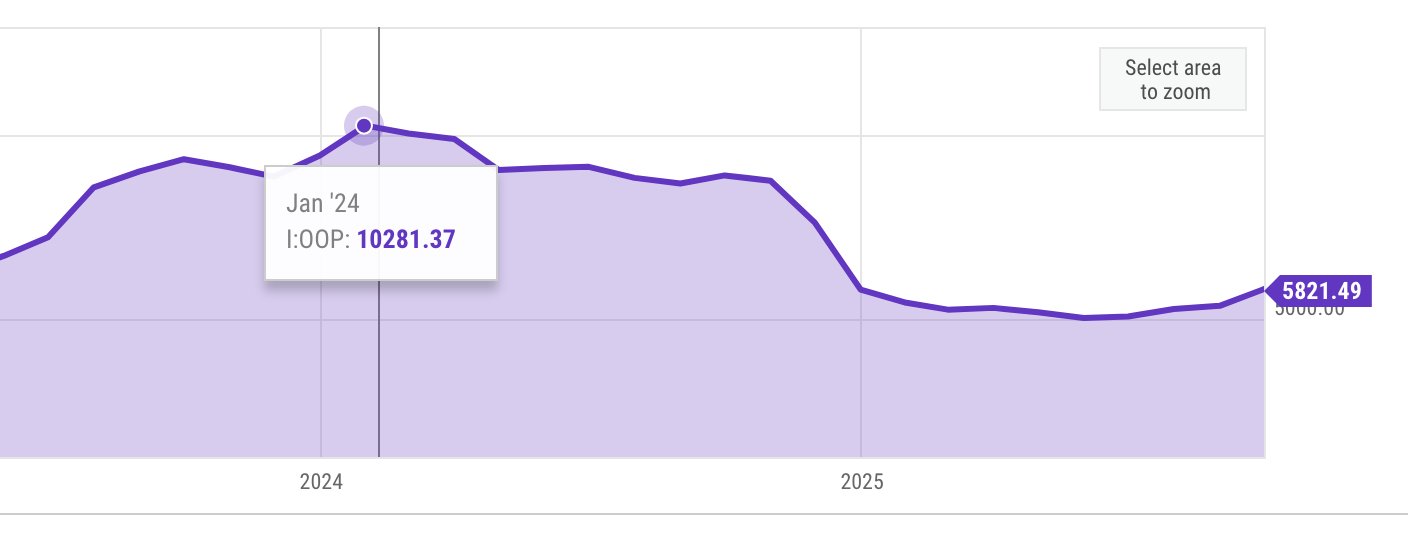
Another California ag commodity under pressure. Olive oil prices have dropped almost 50 percent from January 2024.
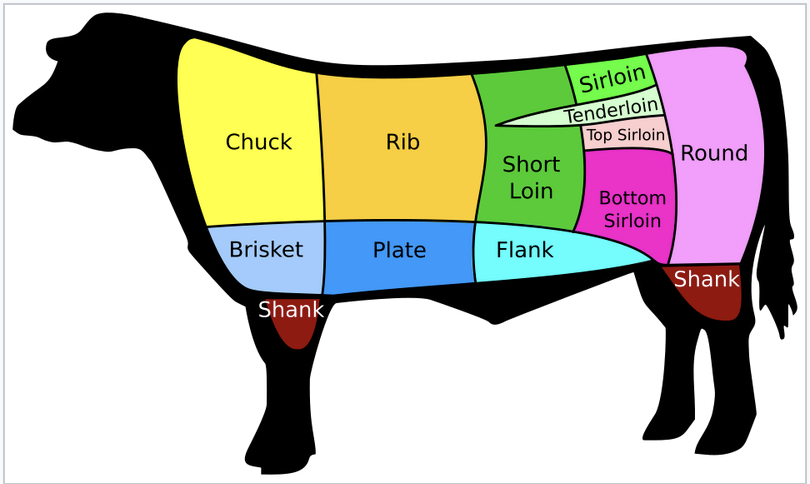
Beef packer closure could hurt beef prices
On November 21, Tyson Foods, one of the largest beef packing companies in the United States, announced it will close its cattle slaughter facility in Lexington, Nebraska and reduce its beef operations in Amarillo, Texas down to a single, full-capacity shift. Based on estimated slaughter at both facilities, it will reduce capacity to slaughter fed cattle by more than 7 percent says USDA.
USDA is predicting the 2026 beef price forecast is lowered $11 to $235 per cwt, which is still a 5-percent year-over-year increase.
USDA sees lower milk prices in 2026
A Dec 15 USDA forecast for 2026 says ample milk supplies and weaker-than-expected demand are expected to lower cheese and butter wholesale prices. Robust demand for whey-based protein products will likely reduce the availability of dry whey and hence put upward pressure on dry whey wholesale prices in 2026.Updated 2026 forecasts for wholesale dairy product prices (in dollars per pound) are: Cheddarcheese $1.675 (-6.5 cents), butter $1.675 (-2.5 cents), and dry whey $0.635 (+1.5 cents). The forecast price for NDM remains unchanged at $1.170 per pound.
The updated 2026 forecast for Class III milk is $17.05 per cwt, $0.60 lower than the previous forecast. The projected Class IV price is $14.40 per cwt, $0.10 lower than the previous projection. The all-milk price for 2026 is now forecast at $18.75 per cwt, a $0.50 reduction from last month’s forecast.
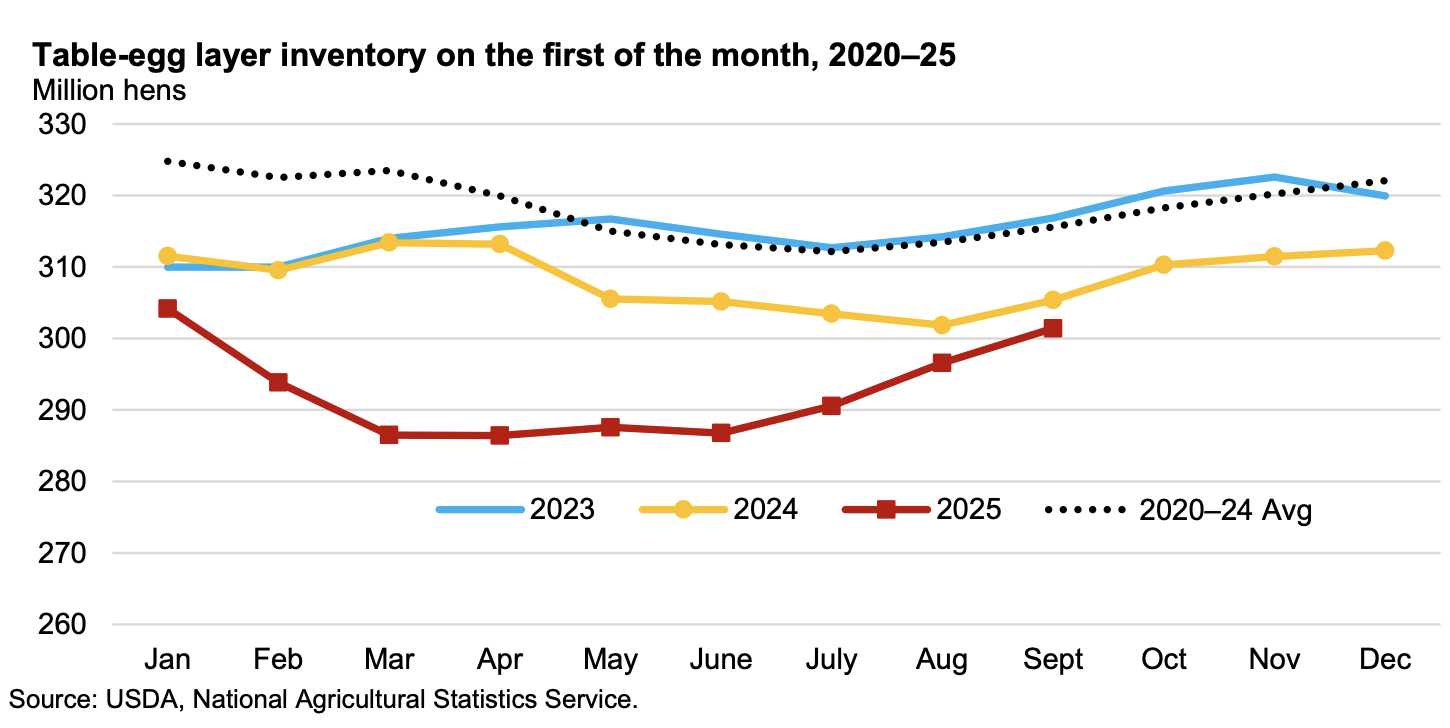
Egg Layer inventory coming back
The population of egg laying chickens is coming back from January of this year but still far behind numbers seen in 2023 or 2024 after bird flu hit the nation’s chicken flock.
Wonderful donates Wasco ranch to UC Davis
Despite a win in court, the UFW has not heard a final word from the ALRB who has not yet decided whether the UFW can represent Wonderful’s employees at a Kern County grape nursery.But the issue may be moot as the company decided to close the Wasco nursery and donate the property to UC Davis, ending chances for a union at the 600 employee ranch.The UFW won an election in 2024 but the employer claimed wrong doing by the union and argued the card check law was flawed. Regarding the closure, Wonderful said the grape industry has seen“significantly decreased sales and record losses, with no expectation of a turnaround anytime soon.”
Are you thinking about draining your silverware drawer you got from grandma? Here is a practical question. What are you going to eat with?
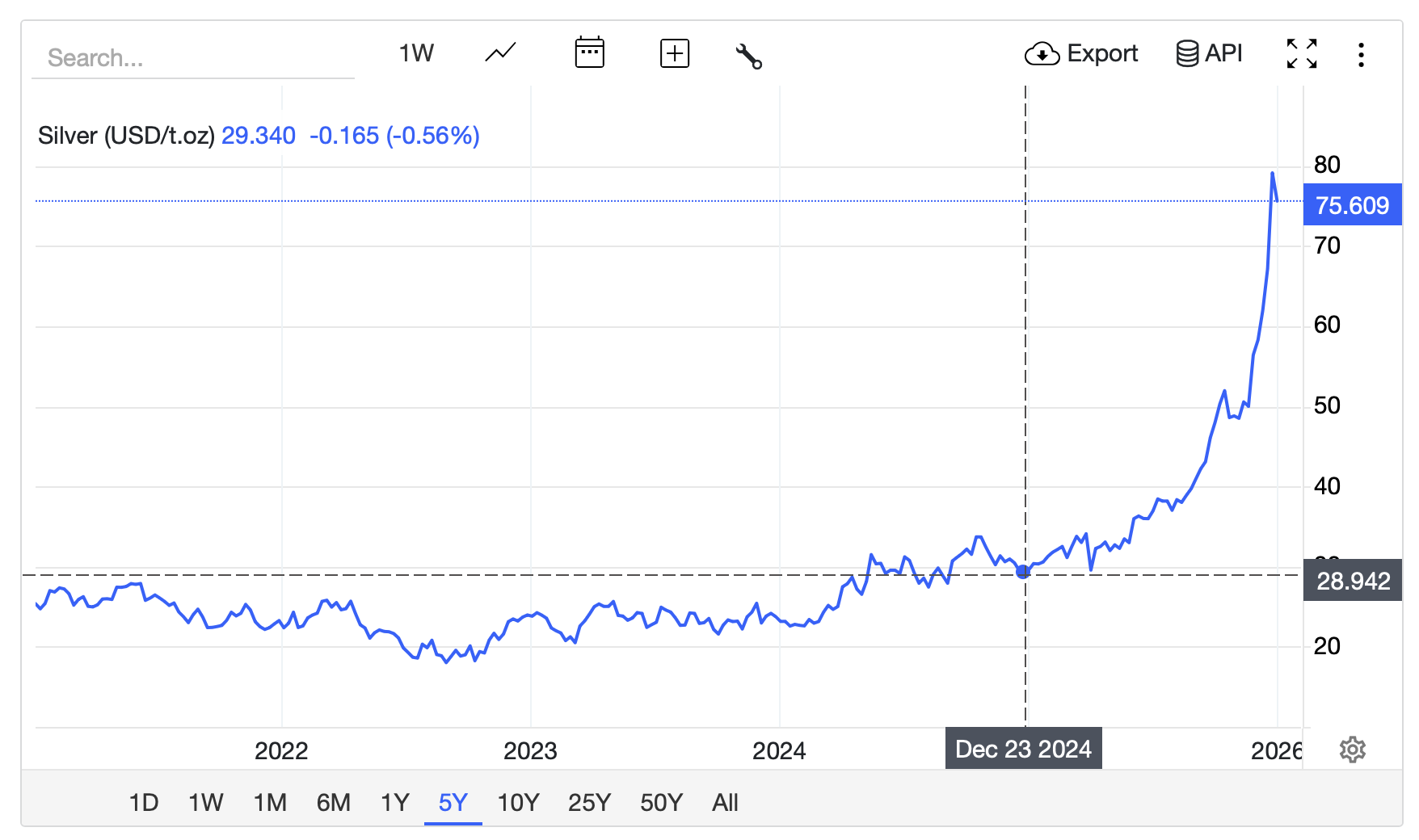
Silver prices have more than doubled in 2025, reaching levels over $75 an ounce, up from $28 a year ago. That is a 161% increase.The. uptick in demand for the metal is based on a combination of factors. Supply Deficits: Global demand has outpaced new supply for several years. Industrial Demand: The expansion of green technologies like solar energy has dramatically increased industrial consumption. Think about data center expansion demand! Investor Demand: Investors are increasingly turning to precious metals as a hedge against global economic uncertainties and persistent inflation fears. In this context, the rapid rise in silver is not just a cause of inflation itself but analysts suggest is rather a market signal that investors believe inflation will persist or worsen, potentially leading to hyperinflation in the coming years.
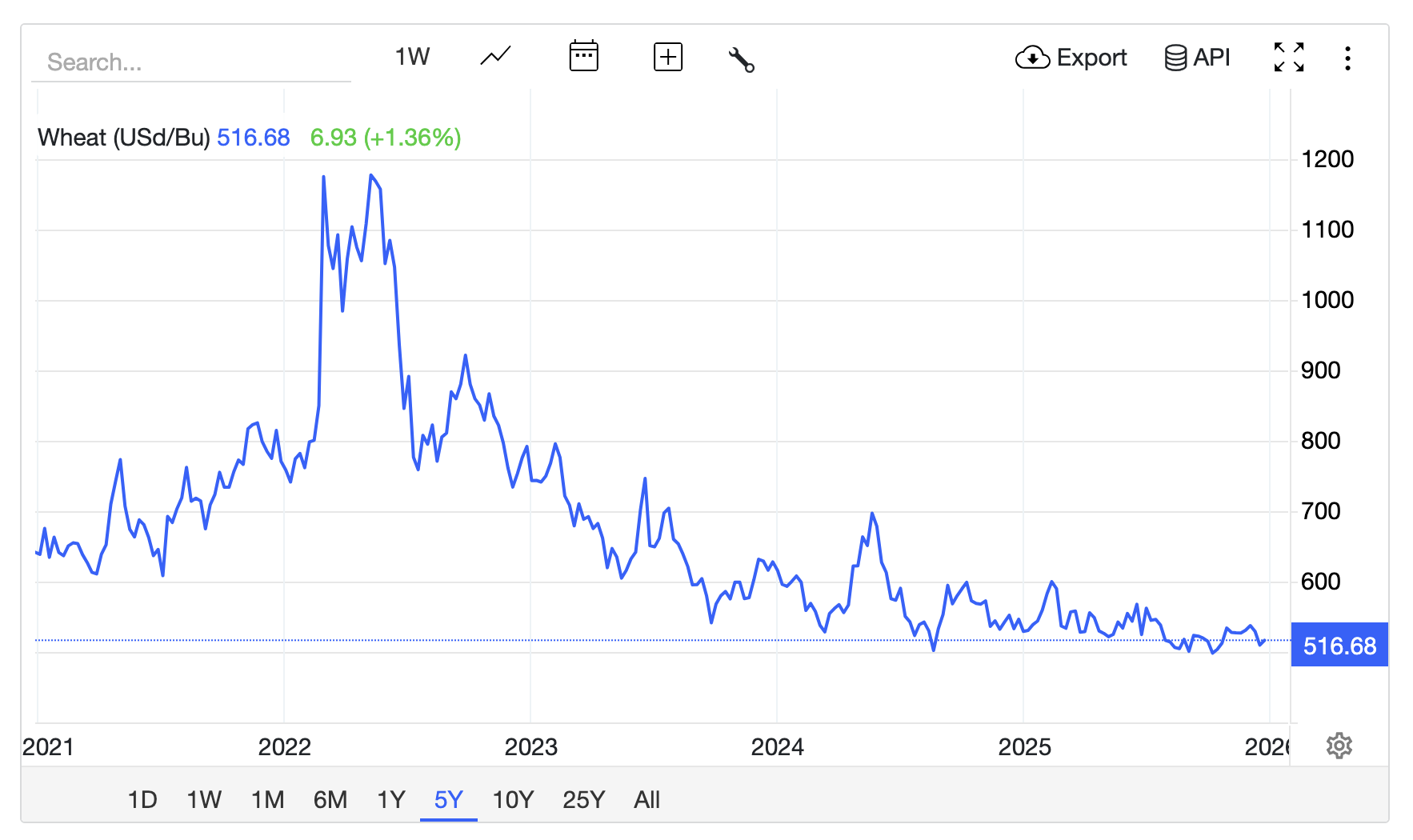
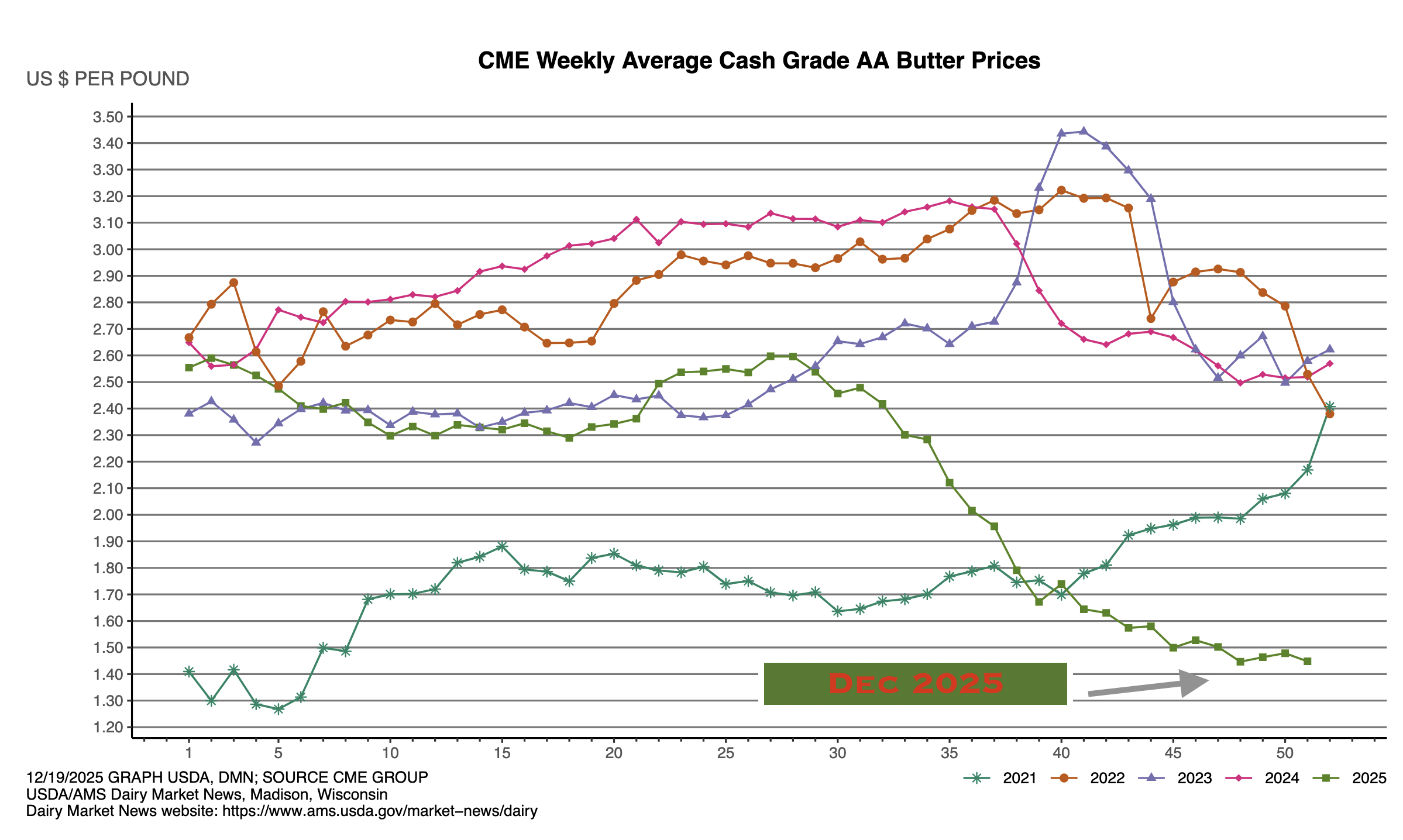
If you want to know how farmers are doing just consider what is happening with bread and butter, as basic food as you can think of and arguably a building block of civilization.
Well, wheat prices are at a 5-year low on abundant global supplies and record harvests among major exporters like Argentina and Australia.
Meanwhile, if you want to butter up that slice of bread, the CME average this week is $1.40 lb compared to $2.62 lb in January 2025, about half the per pound price.
Theses low commodity prices are hitting the ag economy hard.
UCLA climate scientist Daniel Swain notes Monday Dec 22 that “Rain has been occurring today as high as 10-11k feet in the northern/central Sierra, and as high as 12-13k feet in the Southern Sierra. That means that only the tops of the very highest peaks of the Southern Sierra have been seeing snow today, as opposed to rain virtually everywhere else.”
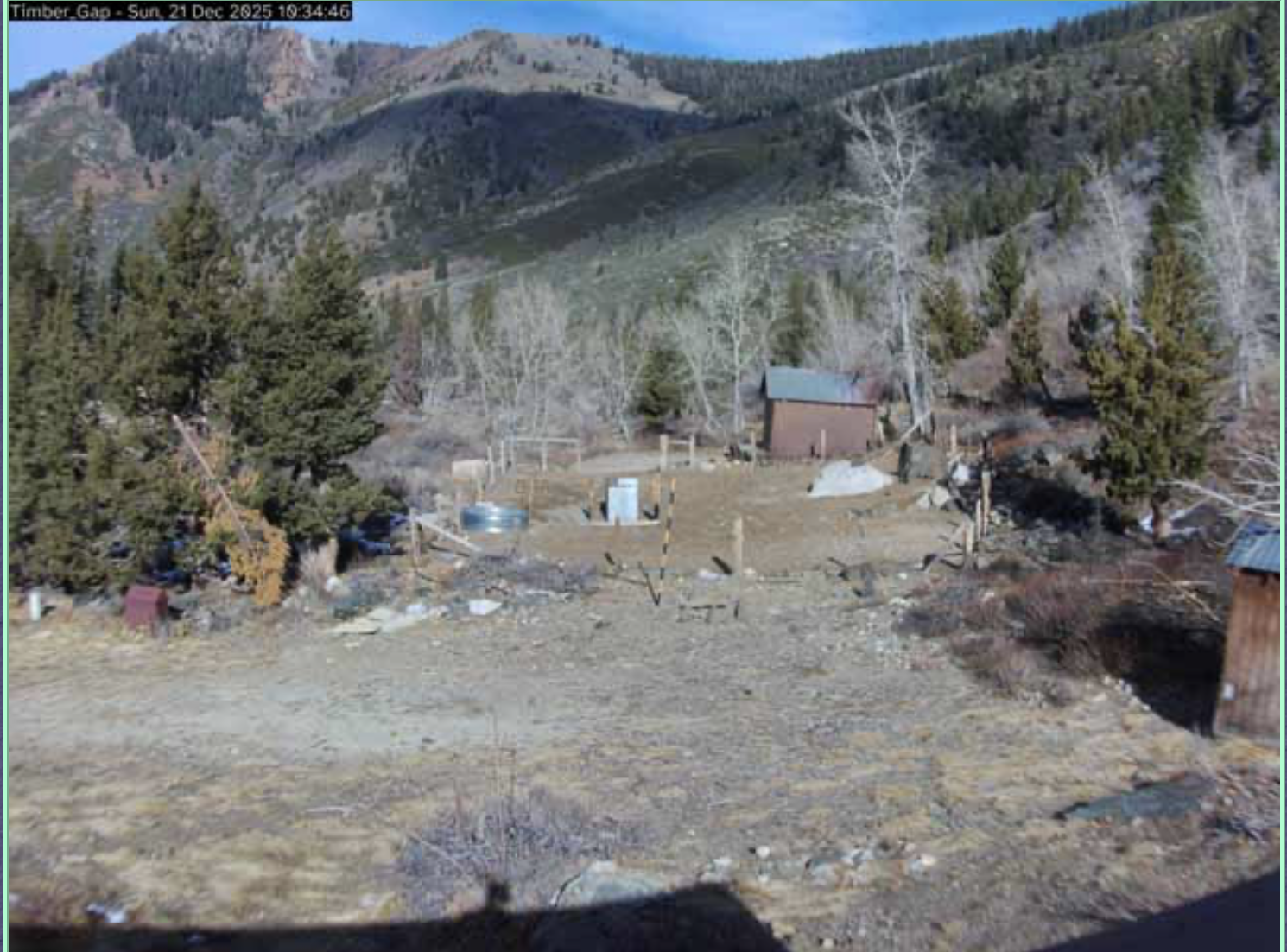
That appears to be true in the upper Kaweah River watershed in Mineral King as can be seen online on the Mineral King webcam for Dec 21 shop at the horse corral around 7800 ft.The website says “snow is gone” at the corral in the alpine valley.
Swain offers some hope that things will change later this week.” Snow levels will remain extremely high–8k to 10k feet or even higher–until early Wednesday when they will (finally!) begin to fall behind the strong cold front. Until then, nearly the entire Sierra will see rain (quite heavy, in some cases, which will further erode whatever snowpack remains below 9-10k feet). From early Wednesday onward, however, a much more seasonable airmass will allow snow levels to fall considerably to around 6k feet (or locally lower). That means that Lake Tahoe and surrounding ski resorts should finally see meaningful snowfall during this period–and that the high Sierra will see very heavy snowfall in the multiple feet.
So…for the next 48-72 hours, warm rains will continue and most of the mountain chain will be rebuilding its snowpack essentially from scratch. But I promise that Sierra snow is coming later this week!”
Cold weather is needed with China Peak ski resort reporting that is 45 degrees at the resort today.For Mineral King Valley the high today is 33 degrees dropping to a high of 11 by Friday with heavy snow forecast.
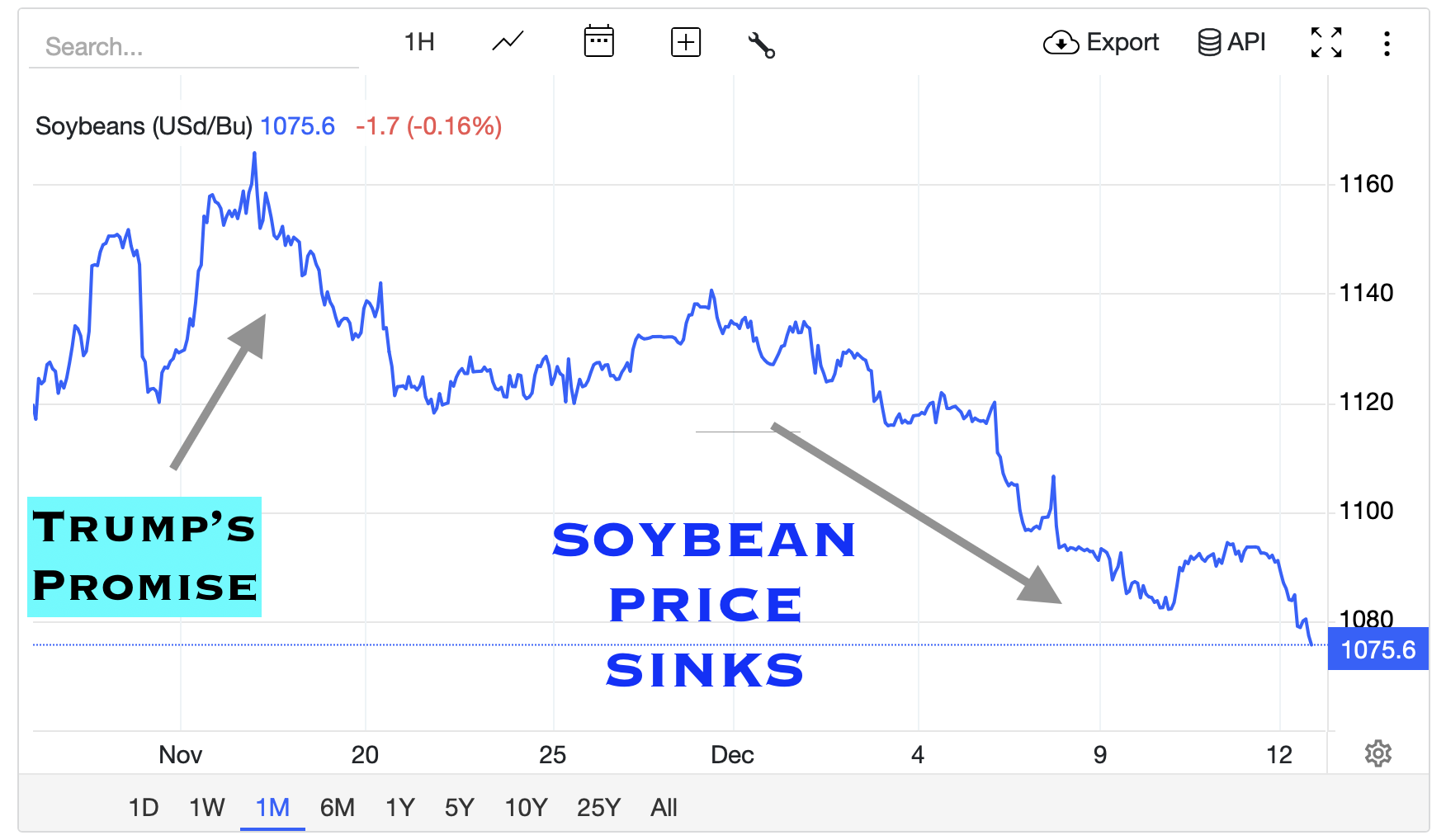
One Ag report notes that farmers “are growing more skeptical of the Trump administration’s promises that China will buy U.S. soybeans. Indeed, administration officials now suggest that China will buy 12 million metric tons of U.S. soybeans – about half of their typical annual total – by the end of the 2025-26 crop year next August rather than by January” as he had promised.
CNBC reports that a fact sheet issued by the White House says the deadline for the purchases, pursuant to China’s recent trade agreement with President Trump, is the end of December.Now it’s August.
Soybeans are the largest agricultural export in the U.S. The legume covers more than 81 million acres — or 10% — of all U.S. farmland, the U.S. Department of Agriculture reported in September, and more than 40% of the nation’s soybeans are exported to other countries.
Now a Bloomberg news report says Brazil’s record soy harvest could flood global markets and crush prices. Brazilian growers brace for potential oversupply as 2026 harvest projections hit record highs, threatening to destabilize international commodity markets, it states. Brazil is now China’s biggest soy supplier.
The bad news for soy farmers may have political impact in coming elections as 12 of the 14 states where soybean farms dominate the ag landscape have favored Mr Trump and are solid Red states.
American Soybean Farmers have posted this notice on their website this month.
Rising input costs for farmers has been an issue the Trump administration has made a policy priority as it advances through its first year – and with good reason. Soybean producers are staring down the barrel of a third year of negative market returns.
Soybean growers find themselves in a precarious position as the 2025 harvest season wraps up. When harvest began in September 2025, November futures prices were between 25% – 30% lower than at the same point in 2022. The lower revenue levels limit the amount of liquid assets farmers have available to pay off 2025 expenses this fall.
It’s not just the revenue side of the income statement where soybean farmers are being squeezed. Farmers are facing elevated prices for land, machinery, seeds, pesticides and fertilizers. According to USDA, farm production expenses are expected to reach $467.4 billion for 2025 – a $12 billion increase over 2024.
According to annual soybean cost of production reports published by USDA’s Economic Research Service (ERS), land (28%), machinery and repairs (28%), seeds (12%), pesticides (7%), and fertilizers (7%) are the most critical inputs for soybean production and account for 83% of a soybean operation’s annual expenses per planted acre.