
 Sacramento, CA — In a major step forward for California High-Speed Rail, the U.S. Federal Railroad Administration (FRA) has issued a Record of Decision that approved the alignment from Merced to Fresno, allowing construction to begin next year. The Merced to Fresno section is the first of several key project sections that make up the back bone of a high-speed rail system that will ultimately connect millions of Central Valley residents to San Francisco and Los Angeles in less than 2 hours.
“Today is a significant move forward for California’s high-speed rail system,” said Dan Richard, Chair of the Authority’s Board of Directors. “Governor Brown’s leadership brought major improvements to the plans, management and delivery of high-speed rail and has in large part made this day possible. The Authority is committed to a close partnership with the public in the building of high-speed rail. Currently we are gathering public comment on our environmental documents for the Fresno to Bakersfield section and we look forward to again delivering an alignment that is the best for the communities along the route as well as for all Californians.”
Approved by California voters, high-speed rail has the strong bi-partisan support of the Mayors of Los Angeles, San Francisco, San Jose, Sacramento and Fresno as well as major business, labor and environmental leaders. California High-Speed Rail is a statewide rail modernization plan which not only delivers high-speed rail but also invests billions of dollars in improvements to local and regional rail lines. These investments in local rail projects will improve connectivity across the state for rail systems that provide over 950 million trips per year.
“No economy can grow faster than its transportation network can carry it,” Federal Railroad Administrator Joseph C. Szabo said. “The Record of Decision clears the way for California to begin construction on the first segment of its high-speed rail project. Over the next several years, this project will put thousands of Californians to work and provide the state with the transportation capacity and connectivity needed for long-term economic expansion.”
“The Federal Railroad Administration’s action is both an historic step forward for the high-speed rail project and great news for local businesses and workers,” Fresno Mayor Ashley Swearengin said. “The start of the Fresno to Merced segment will provide a much-needed economic boost for our area through the high-paying construction jobs that will be created. Over the long term, building high-speed rail is essential to creating jobs in the San Joaquin Valley and connecting us economically to the state’s other population centers.”
“I applaud the Federal Railroad Administration on this bold, courageous, historic decision that will propel America forward,” said Fresno County Supervisor Henry Perea. “Not only will it provide an incredible new form of transportation but it will also put our residents back to work, this is the game changer we have all been waiting for.”
“With the Federal Record of Decision, we are now poised to move forward and break ground next year,” said Jeff Morales, CEO of the California High-Speed Rail Authority. “This is now a statewide rail modernization plan which will not only deliver high-speed rail but also will invest billions of dollars of improvements to local and regional rail systems around the state immediately. These improvements will provide countless benefits to commuters and travelers in the near-term, while paving the way for high-speed rail in the future.”
The FRA approved the “Hybrid Alternative” which was selected by the Authority’s Board of Directors in December. The Board’s decision came following extensive outreach and robust public comment. The Board carefully considered the public’s input choosing an alternative that maximized the public benefits while minimizing impacts.
The “Hybrid Alternative:”
Minimizes the need to acquire property.
Requires the shortest length of elevated track.
Is the least expensive to build.
Entails the fewest potential noise impacts.
Minimizes the impacts on parks and other public space.
To access the FRA’s Record of Decision:
http://www.fra.dot.gov/rpd/freight/fp_California_HST_%20Merced_to_Fresno.shtml

Gas Prices Finally Falling
California gasoline prices are finally on a downward slide this week well after the traditional Labor Day decline in high summer prices. Across the US, AAA has reported gasoline prices “were the highest ever for September”.
This week, oil prices fell from near $99 to around $93 a barrel while California average retail gasoline prices were falling to around $4.10 a gallon from around $4.15 to $4.25 a week ago according to Gas Buddy.
The California Energy Commission shows gas prices down 2 cents from Sept 10 to Sept 17 at an average of $4.15
Around the S2S reading area, Visalia’s Costco is selling regular for $3.99 and several stations in Tulare are at $3.95 today.
In Fresno, Gas Buddy reports prices as low as $3.87 today and in Bako as low as $3.89. In San Luis Obispo, the lowest price remains $4.09.
The lowest prices in the state are in the Sacramento area falling to as low as $3.83
On Sept 13, AAA reported that following eight straight weeks of increases, gasoline prices in various Southern California regions dipped only slightly. The state average for that date was $4.169 a gallon for regular – 1.6 cents higher than last week.
“Prices throughout the region dropped very slightly during the past week for the first time since July,” said Auto Club spokesperson Jeffrey Spring.
The average price of self-serve regular gasoline in the Los Angeles-Long Beach area is $4.170 per gallon, which is seven tenths of a penny less than last week, 7.5 cents higher than last month, and 21 cents higher than last year. In San Diego, the price is $4.151, six tenths of a cent below last week, 7.2 above last month, and 18 cents higher than last year. On the Central Coast, the average price is $4.223, down four tenths of a cent from last week, 11 cents higher than a month ago, and 24 cents above last year. In the Inland Empire, the average per gallon price is $4.137, down a penny from last week, 7 cents higher than last month, and 20 cents more than last year.
That slow trend should improve this week.
Keeping A Lid On Oil
With lower oil prices this week CNBC reported that “the White House promise that it could release oil from strategic reserves if prices get too high is keeping a lid on crude prices, already under pressure from slower global growth.
In what appears to be a calculated move to keep oil prices under control, the White House Tuesday reiterated its comment that “all options are on the table” when it comes to the oil market, including a Strategic Petroleum Reserve release.”

Today Reuters reported that “Brent crude oil futures slid to a six-week low on Wednesday, as the market digested comments from the world’s largest oil exporter Saudi Arabia that it would take action to keep prices in check, raising expectations of increased supply.”

LA Ports Cargo Volumes Mixed In August

Cargo container volumes at the Port of Long Beach climbed in August, the start of the “peak season” when shipments begin arriving for the end-of-the-year holiday shopping season say the port authority.
But nearby the Port Of Los Angles recorded a 4% drop on imports and 10.5% drop in exports compared to August 2011. But on a calendar year to date basis the Port of LA ‘ overall volume is up 5.1%.
At Long beach imports were up 2.9 percent compared to the same period last year. Port terminals handled 274,977 twenty-foot equivalent container units (TEUs) of loaded inbound cargo last month compared to 267,198 TEUs in August 2011. The modest rise in August points to a slight recovery during peak season and the second half of the year.
Exports were up too in August, rising 5.7 percent to 128,225 TEUs compared to 121,277 TEUs a year ago.
Overall, container volume through the Port was up 1.4 percent in August. The total includes imports, exports and empty containers, which declined 4.9 percent. With imports exceeding exports, empty containers are sent overseas to be refilled with goods. With the gains in exports, fewer containers moved back to Asia in August.
For the calendar year, overall container volumes at the Port of Long Beach are down 4.6 percent because of the continuing weakness in the economy, and the cutbacks in ship calls by several niche vessel operators at the end of 2011 and early 2012. Imports are down 4.6 percent and exports down 1.2 percent through August, compared to the same period a year ago.
The Port of Long Beach continues to invest long term. It is two years into a decade-long, $4.5 billion program to upgrade its facilities.

Smart Phone Helps You Park….
 From Kristin Eberhard’s Blog,NRDC
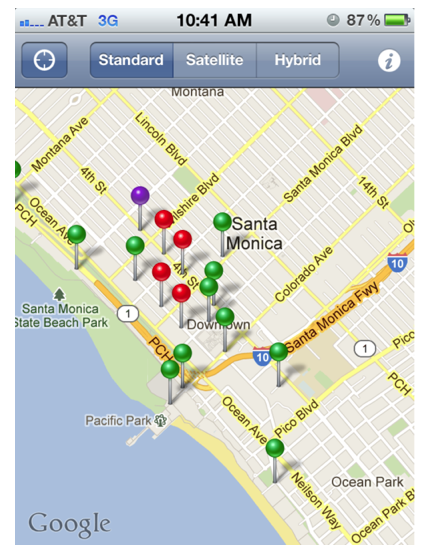
“Have you tried parking in Santa Monica recently? You probably found it helpful to see the electronic signs outside public parking structures telling you how many spaces are available. But did you know that, if you have a smart phone, you don’t even have to drive by and look at that sign? An app called SaMo Park lets you see all parking structures in Santa Monica, their prices, and real-time space availability. How cool is that?
Say you are approaching downtown… you pull up SaMo park and see (screenshot below) that a few structures are already full (the red pins), but many still have availability (the green pins). (The purple pin means the lot is getting close to full).
You click on a green pin, and the address and number of spaces appears (see below: 556 spaces available at 215 Colorado Ave. – great!).
You then click on the blue arrow to the right of the address and it takes you to a screen showing the operating hours and pricing info for that parking structure.
Now you can go straight to that lot, assured that there is a space and you know exactly how much you need to pay.”
The technology saves time and air pollution, says Kristin.

California Home Sales Down But Median Price Hits 4-Year High
 LOS ANGELES (Sept. 17) – California home sales declined in August but continued to maintain a strong pace, recording five consecutive months of year-over-year sales gains, while the median price reached a four-year high, the CALIFORNIA ASSOCIATION OF REALTORS® (C.A.R.) reported.
“A lack of inventory remains an issue, as the housing supply fell more than 30 percent from last year,” said C.A.R. President LeFrancis Arnold. “Inventory levels are at the lowest levels we’ve seen in seven years, and we are starting to see the supply shortage conditions having a negative impact on sales in the Central Valley and the Inland Empire, where REO properties are in short supply.”
August marked the fifth consecutive month that sales were higher than the previous year, with closed escrow sales of existing, single-family detached homes in California totaling a seasonally adjusted annualized rate of 511,240 units, according to information collected by C.A.R. from more than 90 local REALTOR® associations and MLSs statewide. Sales in August were down 3.4 percent from a revised 529,430 in July but up 2.3 percent from a revised 499,880 in August 2011. The statewide sales figure represents what would be the total number of homes sold during 2012 if sales maintained the August pace throughout the year. It is adjusted to account for seasonal factors that typically influence home sales.
The statewide median price of an existing, single-family detached home rose 3 percent to $343,820 in August, up from July’s $333,860 median price. The August figure was up 15.5 percent from a revised $297,660 recorded in August 2011, marking the sixth consecutive month of both month-to-month and year-to-year price increases. August’s median price was the highest since August 2008, when the median price was $352,730. The year-to-year increase was the largest in more than two years.
“The median price is gaining in part because of a shift in the mix of what is selling. The increasing share of sales in higher-priced coastal markets at the expense of the inventory-scarce distressed markets has been the primary factor in fueling the statewide median price,” said C.A.R. Vice President and Chief Economist Leslie Appleton-Young. “While higher-priced markets with a robust economy are experiencing a strong demand in equity sales and posting double-digit year-over-year price increases, sales in lower-priced markets that rely more on distressed properties were stagnant or even declined, as the inventory of REO properties continues to wane.”
Local Numbers
In the S2S reading area the San Luis Obispo county median was $386,180, down from $423,530 in July but up from $352,310 in August 2011,a 9.6% increase year over year. Sales year over year were up 1%.
In Fresno County the median was $151,110 in Aug 2012 up from $141,050 in Aug 2011.Year over year sales were down 10.4% but up 4.7% from July 2012.
InTulare County the median was $130,800 – up 7.4% since July 2012 and up 4.9% year over year. sales were up10.5% since July but down 1.7% year over year.
Other key facts of C.A.R.’s August 2012 resale housing report include:
• California’s housing inventory continued its downward trend in August, with the Unsold Inventory Index for existing, single-family detached homes declining to 3.2 months, down from a revised 3.5 months in July and a revised 5.2 months in August 2011. The index indicates the number of months needed to sell the supply of homes on the market at the current sales rate. A six- to seven-month supply is considered normal.
• Interest rates edged up slightly in August after four consecutive months of decreases. Thirty-year fixed-mortgage interest rates averaged 3.60 percent during August 2012, up from 3.55 percent in July, but down from 4.27 percent in August 2011, according to Freddie Mac. Adjustable-mortgage interest rates edged down in August, averaging 2.67 percent, down from 2.69 percent in July and down from 2.93 percent in August 2011.
• Homes moved faster on the market in August, with the median number of days it took to sell a single-family home falling to 41.1 days in August 2012 from 43.2 days in July and down from a revised 52.5 days for the same period a year ago.

Around Tulare County… Seq Energy / Northside Complex / New Clinics
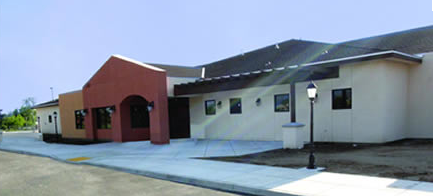
Sequoia Energy Services (SES), a local energy efficiency company, has launched a new solar energy division.
Sequoia Energy Services provides energy efficient upgrades and solar energy services for residential and commercial customers. They perform a comprehensive energy assessment and design a customized energy plan based on the needs of your home or business. Services available include air conditioning, energy efficient windows, duct tightening, air leak sealing, solar energy systems, and more.
A ribbon cutting ceremony will be held on Wednesday, September 19, at 10:00 am and an open house will follow. All guests who provide their name to Sequoia Energy Services will be eligible for $500 off the purchase of a solar energy system.
“We are very excited to launch our new solar energy division,” said Steve Earl, President/CEO of Sequoia Energy Services. “What sets us apart is our comprehensive approach to energy efficiency. We will evaluate your home or business and then recommend upgrades and solar based specifically on your needs.”
Sequoia Energy Services is a for-profit subsidiary of Community Services Employment Training (CSET), Tulare County’s Community Action Agency. For more information, call (559) 636-6453 or visit www.MyEnergyUpgrades.com.
Plans for 28 Unit Pixley Village: The Corporation for Better Housing plans to build a 28 unit single family housing complex in Pixley called Pixley Village. The Corporation is applying to USDA for partial financing of the project that will sit on 7.3 acres in midtown.
Shannon Village Market, a $5 million retail complex on Riggin at Mooney in North Visalia will open February 1 2013 says owner Eric Shannon. The retail center will have a sit-down Mexican restaurant, a convenience store, car wash and Valero gas station totaling 8500sf.The center would service the additional traffic using Riggin as a major roadway on the city’s north side now that Rigging will connect to Hwy 99 at Betty Drive on a 4 lane expressway.”We have more people using Riggin with the sports park,the new elementary school and the connection with the industrial park.” says Shannon.
Chuck E Cheese in Visalia is getting a 2500sf addition as well as a remodel to the tune of approximately $740,000.
Farmersville will get a Roundabout at 198 offramp according to a plan filed with TCAG this month.The highway project would be funded under a federal grant program which will save local Measure R monies.
Family Healthcare Network will open a new clinic at Terra Bella elementary school in early 2013 say FHCN’s CEO Harry Foster. The move is made possible with the relocation of the modular clinic building from Goshen says Foster. now that the new permanent Goshen clinic is opening October 26.The new Goshen clinic is similar in layout to the new FHCN clinic in Woodlake and features 18 exam rooms and 9 dental rooms.
Tulare will get a new Tulare Community Health Clinic located on the southeast corner of Bardsley and Morrison.The 4200sf medical facility would the non profit group’s second location in Tulare.The clinic sees more than 90,000 visitors a year – up from 18.000 when they opened in 1998.

Farm Credit West Announces Tulare Ground Break Ceremony
 Farm Credit West is pleased to announce they will host a Ground Break Ceremony for the new regional office facility to be constructed in Tulare at 10:00 a.m. on Thursday, September 20. The ceremony will be conducted at the building site-the Northeast corner of Cartmill Avenue and M Street, Tulare.
During the ceremony, Farm Credit West CEO Mark Littlefield, City of Tulare Vice Mayor Skip Barwick and City Manager Don Dorman will make a few comments and then man the gold plated shovels to officially begin the construction phase of this 22,500 square foot building.
The building is scheduled for completion on or around September 1, 2013 will house approximately 50 Farm Credit West employees currently working in the Visalia and Tulare offices, as well as administrative staff currently working in Visalia. In addition, the building will serve as a regional training and meeting center for Farm Credit West.
Farm Credit West is a lending institution of the Farm Credit System. Other Farm Credit West offices in addition to Tulare and Visalia are located in Carpenteria, Dinuba, Hanford, Bakersfield, Templeton, Ventura, Woodland, Yuba City and the corporate headquarters are in Roseville, California. The Farm Credit System is a nationwide network of borrower-owned lending institutions and specialized service organizations created by Congress in 1916. The System provides loans, leases, and related services to farmers, ranchers, rural homeowners, agribusinesses and agricultural and rural utility cooperatives nationwide.

News Round Up… Seismic Testing / Morro Bay Incubator Plan
Central Coast Seismic Testing Gets State Lands Commission OK
A legal notice as been posted that is a State Lands Commission Record of Decision(ROD) as of 8.20/12. The project has drawn opposition from people concerned the seismic testing will harm sea creatures off the coast.Critics are urging people to contact the California Coastal Commission as well as the California Fish and Game Commission.
The subject of a PG&E EIR this Spring, Lands Commission says the project consists of a high-energy seismic survey to better characterize various fault zones in the vicinity of the Diablo Canyon Nuclear Power Plant, in Avila Beach, San Luis Obispo County. The Project includes (1) an offshore survey component, consisting of a geophysical vessel towing a series of sound-generating airguns and sound-recording hydrophones, and (2) a nearshore commercial of onshore geophones, strings of seafloor geophones and onshore sound generation. The Project will be conducted between October 15, 2012 and December 31, 2012, including mobilization and demobilization, and between October 15, 2013 and December 31, 2013, if the Project is not completed in the first year. State Lands Commission action is a non-exclusive Geophysical Survey Permit valid from October 15, 2012 through December 31, 2013.
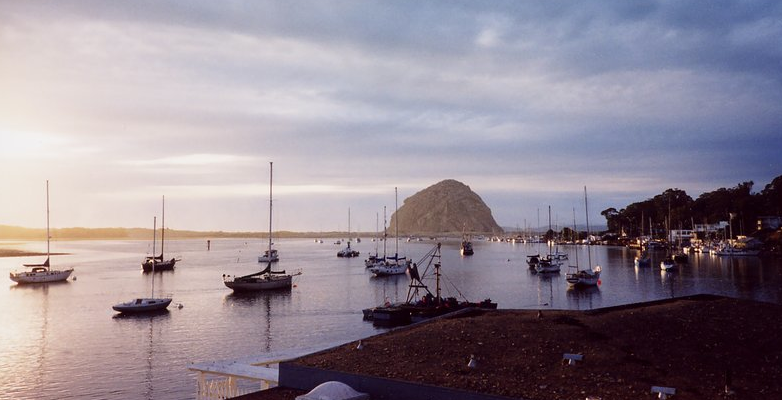
Morro Bay Chamber Incubator Center Plan Still Pending
Morro Bay Chamber wants to move to the soon-to-be vacant city fire station at 695 Harbor St.The city council is considering the chamber proposal to lease the 2400sf building for $1 year for three years with the chamber promising to operate a business incubator center in the building. The incubator would be called the Small Business Resource Center.
According to CEO Craig Schmidt, council at their most recent meeting, heard some push-back from some property owners in town that the city should not subsidize new businesses, But the chamber CEO points out that “these new start-ups are not ready to make a go of it on their own” and that helping them launch will result in more rented space in town and the new jobs more mature businesses would bring.
According to the chamber, the center will offer help to access capital for fledgling businesses,affordable but time-limited rent,counseling,education,marketing and other measures of support.
Schmidt says the chamber has a $58,000 contract to do economic development for the city but longer will do marketing for visitors. That has been assigned to a new tourism bureau who will hold forth at the chamber’s current location at the Visitor Center on the Embarcadero as of January.
Schmidt expects council,who tabled a city staff approval of the plan most recently, will get enough clarification in the next month to make a decision.
The alternative is the transportation building that would not have room to add the incubator program but only space for the chamber and its Economic Development program says Schmidt.

Visalia News RoundUp
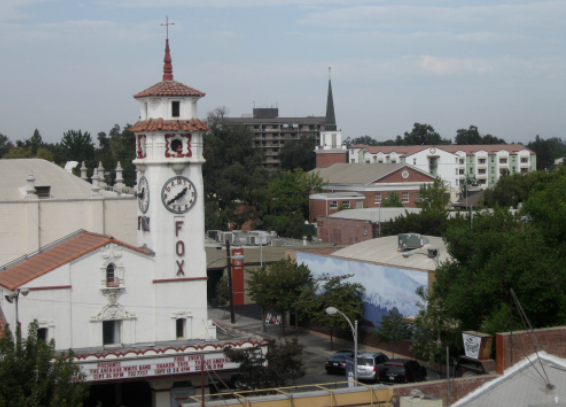 A General Growth-owned mall in Bakersfield – Valley Plaza Mall – will be getting an Apple Store this fall but don’t look for one soon in Visalia. That is the assessment of Visalia Mall general manager Richard Feder who says an Apple site team also came through town recently to look at the Visalia Mall owned by General Growth as well, but said Visalia was not yet ready for a store. We’re too close to the larger metro areas (Fresno-Bakersfield) that will now both have Apple Stores.Too bad for Visalia and the mall as one of these popular outlets can boost mall traffic by 12%.
 Feder says business is way up at the Visalia Mall from the past few years.”We’re back to pre-recession sales numbers.”The mall now sports a Forever 21 store and a new Yogurtland store is opening.The big news this week is that G by Guess will open in a 4500sf space across from Lens Crafter with clothing for young men and women. Although there is concern on Wall Street over the future of JC Penny, Feder says new marketing is in place with the remodeling of the Visalia store into distinct sections and featuring more brands.
Sequoia Mall may be on the sales block again with local realtors saying a New York investment group toured the mall in the past week.
The City of Visalia’s new 911 Center moved two steps closer to a reality at the Sept. 4 City Council meeting with unanimous approval of the location and the architect. The Council approved one of four proposed sites on land southeast of Goshen Avenue, just east of Burke Street.The locaion was picked in part to be away form the creek and railroad line for safety sake. The planned Civic center is expected tobe on Oak,a half block away.In addition to approving the site location, the Council also authorized contract negotiations with the team of Darden Architects and LPA for architectural/engineering design consulting services.
Council also approved to co-locate the public safety dispatch services with the County. In doing so, Council made it clear that it does not intend to delay the progress of its own 911 Communications Center project. It also identified three items the County needs to address to achieve co-location: Agree to a negotiated cost analysis for additional architectural work to accommodate the increased size of the facility required for a co-location by Nov. 1; accept the Council-approved site selection for the project; and agree to a long-term lease agreement, for perhaps as much as 20 years, with the City for the County’s portion if they request to lease rather than co-own .
Council also approved to co-locate the public safety dispatch services with the County. In doing so, Council made it clear that it does not intend to delay the progress of its own 911 Communications Center project. It also identified three items the County needs to address to achieve co-location: Agree to a negotiated cost analysis for additional architectural work to accommodate the increased size of the facility required for a co-location by Nov. 1; accept the Council-approved site selection for the project; and agree to a long-term lease agreement, for perhaps as much as 20 years, with the City for the County’s portion if they request to lease rather than co-own .
Nearby at Tipton and Oak st, building plans for the new ImaginU Childrens Museum are big drawn up this month. Withe government money involved the project will require payment of prevailing wages. They expect to open in early 2014.
Is Downtown all full up? Story in the TD this week suggested little space is available in the Downtown to add new tenants. But PBID participant Basil Perch says there is plenty of opportunity in the second stories of Main Street buildings and all it takes is for property owners to have the —- (think nerve) to do some remodeling “like we did in the old Togni building” in which Perch is a partner.The building has an office use(school) and apartment on its 2nd floor. Realtor Marty Zeeb says maybe it is time to build something on the old Razzari lot on Main that is still for sale.
Cigar chewing Basil Perch, the town’s former mayor, who now sits as the president of the Downtown property owners assn, penned a letter to the city recently objecting to plans for a shopping center on 99 at Caldwell even though he says he used to advocate for an outlet mall out there before it went to Tulare.” Now that we have decided to put retail on South Mooney – it does not make sense to compete” with the existing shopping district,he says.As to claims the county will move to allow a shopping center on 99 if the city does not -Perch has a few choice words for that idea- suffice to say he does not think that will happen. In another example of strange bedfellows, this puts former rivals on land-use – Perch and council member Greg Collins – on the same side of this one. City council will take up the issue in October.

Greener Diesel Is Here
Fresno Terminal Blends Diesel With Biodiesel
Permit Filed For Local Biodiesel Production Plant
A version of this story first appeared in Fresno Business Journal
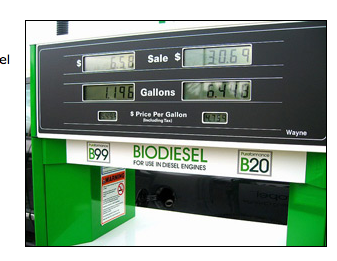 Deserved or not, Fresno is known as the nation’s smog capital.
But our fuel supply has been getting greener with California gasoline blended today with 10% ethanol, up from 5.7% and as of last month Fresno diesel shipments being blended with 5% biodiesel. That’s what one of the nation’s largest fuel pipeline owners and the largest refinery and pipeline operator in California – Kinder Morgan – began doing in August at their key Fresno terminal that connects Bay Area refineries to the mid-state’s downstream users.
Kinder Morgan spokesperson Emily Mir says the company began blending ”in response to strong interest from …customers” investing “several million dollars to allow both its Fresno and Colton terminals to blend up to 20 million gallons per year of B100. In both terminals Kinder Morgan has invested in offloading capabilities” says Mir, and is now blending” the B100 at a 5% ratio into the incoming diesel pipeline manifold” that goes to their customers.
In a Kinder Morgan financial report the company said they are spending $16.2 million to build biodiesel blending facilities in four Western US cities that include Fresno.
Kinder Morgan is not alone.Major players like Chevron and Exxon are helping to push the new fuel standard to 5% biodiesel in response to both federal and state mandates.Kinder Morgan is doing the same in other states, in Arizona and in Nevada. These new rules help the diesel fuel supply to ‘green up’ on both its carbon content to reduce global warming and on the toxicity of its pollutants with vegetable or animal fat-based biodiesel estimated by EPA to be 78% cleaner than petroleum-based diesel when it burns.
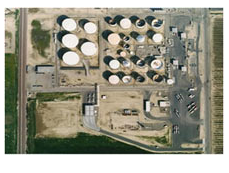
Diesel pollutants like particulates have been implicated in severe air problems in the Central Valley that have a cost us in both community dollars and lives. 100% biodiesel cuts particulate matter emissions compared to traditional diesel by around half. Regards greenhouse gases, biodiesel makes a 57% cut says EPA.
45 Million Gallon Biodiesel Plant Next Door
In a move coordinated with Kinder Morgan, Fresno entrepreneur Jeremy Eslinger has filed for a conditional use permit from the city for a 45 million gallon biodiesel manufacturing facility next to the same Fresno Kinder Morgan terminal on Malaga. Eslinger say his start-up company will lease 15 acres for the project from Kinder Morgan as they will supply biodiesel for blending into California diesel fuel market underway now by Kinder Morgan.” We have a memorandum of understanding“ says Eslinger, suggesting they hope to get the green light on their CUP application around October 1.
The first phase of the project that is expected to be operational next summer is pegged at about a $20 million investment says Eslinger. Construction would start in January.
Plans for the production plant have been in the works for several years says Eslinger,originally slated for a site in Firebaugh. But locating the production plant next to Kinder Morgan is literally a pipeline to the market and Eslinger’s business plan calls for Kinder Morgan to utilize 15,000 gallons a day within 6 months on the way to gearing up to 135,000 gallons a day.There are no hazardous waste or water use associated with the 18,500 sf plant he says.The facility would employ 48.
Eslinger says the biodiesel will be made from various biomass feedstock including algal oils,seed oils,animal fats and waste vegetable oils.Eslinger says they may use soybean,camelina or canola oil grown on Fresno westside’s degraded land for some feedstock.
Eslinger and family are in the custom harvest business in Dos Palos and expect to supply the plant with some Valley grown feedstock, another economic benefit of the project.
Initial production is set at 5 million gallons a year in what will be a three-phase project offering a “continuous supply” of biodiesel for Kinder Morgan to pass on to their customers that include Chevron,Shell,Valero,Conoco Phillips and Tesoro says Eslinger’s application. As with ethanol blends, the industry wants a standard blend that will go to most customers. Sounds like there is good chance this Fresno mix will end up in your pickup’s fuel tank although others in the Valley already make or want to make biodiesel.
Eslinger believes teaming up with Kinder Morgan will help cut transportation costs to customers that will help convince them to buy from his start-up company.Cutting costs will help keep the price of biodiesel – a few cents higher than diesel – from getting out of hand, he expects.
Mandates for cleaner fuel
Incentivising investment in new blending capabilities are two major regulations – one federal and one state – that are mandating a gradual shift of our fuel supply to increasing use of lower carbon sources. The federal Renewable Fuels Standard(RFS) as revised in 2007 expanded the RFS program to include diesel, in addition to gasoline and increased the volume of renewable fuel required to be blended into the nation’s transportation fuel from 9 billion gallons in 2008 to 36 billion gallons by 2022. The amount increases over time.
California Energy Commission staffer Gary Yowell says California’s share of biodiesel to be blended into the diesel supply adds up to 120 million gallons in 2013 under RFS compared to current blending of about 36 million gallons.”That’s the big driver” says Yowell. California biodiesel plants are running under 50% of capacity right now, he says.
“We are at about 1% biodiesel now” with the new 5% standard sweeping into the state this summer. California is using nearly 4 billion gallons of diesel fuel a year now.
Under RFS there is an incentive to do the blending where refiners can also earn more Renewable Identification Numbers (RINs), worth about $1.50 to $2 per gallon of biodiesel,say sources,encouraging self production.
The state mandated Low Carbon Fuel Standard is another driving force despite the fact it faces a court challenge on appeal. The standard enacted by California in 2007, with specific eligibility criteria defined by the California Air Resources Board in April 2009 took effect in January 2011. The law was ruled unconstitutional by a Fresno judge at the encouragement of out of state energy providers.The LCFS requires fuel providers to reduce greenhouse gas emissions to 1990 levels with a 10% reduction in the “carbon intensity” (CI) of transportation fuels in California by 2020. That could further drive up demand for biodiesel produced in the state.Despite the lawsuit. the state ARB is issuing credits for low carbon fuel that are being traded now providing a few cents of profit for advanced biofuel, low in carbon content.
Helping to stimulate interest in buying,government agencies including the Navy and GSA are bidding for advanced biofuels that include biodiesel – this year.
If biofuels live up the promise,it will be a home run for the Valley were virtually all of the experimenting is being done for a simple reason; it’s where the crops grow and the animals feed and the waste material from both pile up – creating a golden opportunity.