CalCann Holdings Plans Large Scale Marijuana Greenhouse in California

January 26, 2016–

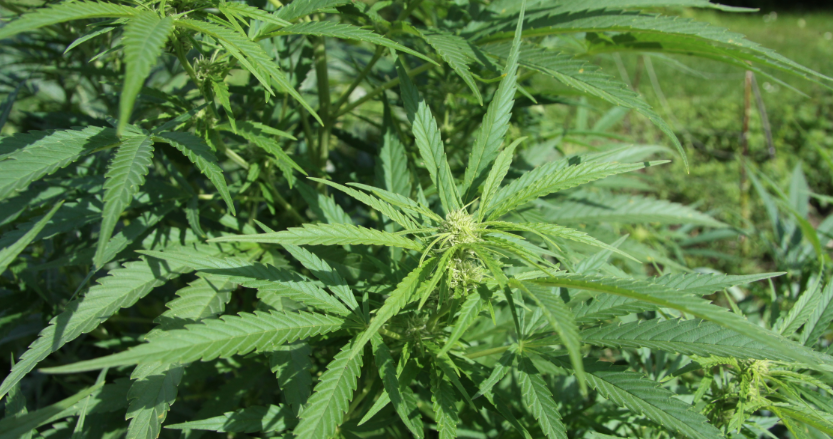
Screen Shot 2016-01-26 at 12.53.14 PMCalCann Holdings is set to build the state’s first large scale marijuana greenhouse that is eligible for state licensing under MMRSA in Desert Hot Springs, CA.  The facility will serve over 30,000 medical marijuana patients, create 40 full time jobs, and bring the city over $400,000 in annual revenue after it’s anticipated opening in 2018.

“This project is the final piece of the puzzle in assembling the state’s first vertically integrated, seed-to-sale marijuana operation,” said Aaron Herzberg, a partner in the project. The greenhouse hopes to be one of the first to receive a 10(a) mega license, the largest license available under the recently signed Medical Marijuana Safety and Regulation Act. “A limited number of these licenses will be offered by the state, allowing for a vertically integrated business model including three dispensary locations, one processing location, and up to four acres of plant cultivation. We aim to be the first in line to receive one of these licenses in 2018,” said Mr. Herzberg.

The facility will include a processing lab, a commercial kitchen for edible products, a high tech curing room, and a 36,000 square foot greenhouse.  The greenhouse will take advantage of state of the art climate control systems, ensuring the cultivation of a sustainable, safe, and high quality product. Full computer control of all systems will provide accuracy and consistency in the cultivation system.

“We are using the sun and cutting edge technology to grow marijuana in an eco-friendly way that will produce sustainably grown marijuana using all organic techniques. We will not only be producing cannabis in a controlled environment, but also doing it using green technologies,” said Mr. Herzberg.

Currently, non-licensed indoor cultivators are using 9% of California’s consumer electricity. CalCann’s system will reduce the cultivation carbon footprint compared to an indoor grow by approximately 90%.

In California, indoor production consumed 9 percent of household electricity in the nation’s oldest legal medical pot market, the amount used in 1 million homes, Mills found. The analyst published that study before the industry exploded following legalization in almost half the states and the District of Columbia. The report remains the best gauge of power use.

This study: http://evan-mills.com/energy-associates/Indoor_files/cannabis-carbon-footprint.pdf

“We are excited to be a pioneer in regulated commercial cannabis cultivation in California — the largest marijuana market in the country, estimated to be ten times larger than the market in Colorado,” said Mr. Herzberg


HLB Update: Positive Psyllid Detected in Los Angeles County

January 25,2106
The California Department of Food and Agriculture has detected an Asian citrus psyllid that tested positive for carrying the bacteria that causes Huanglongbing. The adult psyllid was captured live through routine monitoring in the area of Los Angeles County currently under quarantine for the disease. The bacteria-carrying psyllid was collected from a lemon tree that has repeatedly tested negative for HLB. All host material around the find site has been tested and is also negative for the disease. The residence falls well within the Hacienda Heights quarantine area. Extensive inspection, sampling and processing of plant samples have not yet detected a disease-positive tree in the area.
The threat posed by HLB cannot be overstated – this disease must be found and eradicated as soon as possible. Therefore, California Department of Food and Agriculture will continue extensive surveying in the area. No additional regulatory action will take place unless a diseased tree is found. Until then, CDFA will work closely with the Los Angeles County agricultural commissioner’s office and local residents to manage Asian citrus psyllid populations in the area and eradicate any HLB-positive trees as soon as possible

WILD BEES DECLINE WHERE CROP POLLINATION MOST NEEDED, STUDY FINDS

December 21,2105-

Screen Shot 2015-12-21 at 4.11.16 PM


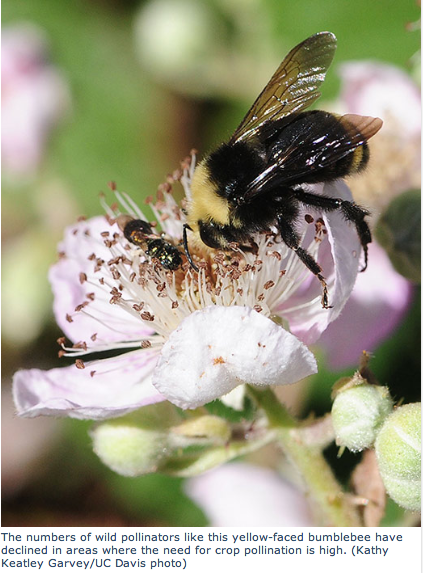
Wild bee populations have declined significantly since 2008 in Central California and some other key areas of the United States, according to a newly published study co-authored by UC Davis researchers.

The new study suggests that wild bee populations likely declined in areas comprising 23 percent of the nation between 2008 and 2013, a decline associated with conversion of natural wild bee habitat into intensive agriculture.

The paper, titled “Modeling the Status, Trends and Impacts of Wild Bee Abundance in the United States,” will be published online Dec. 22 in the Proceedings of the Natural Academy of Science.

This was the first-ever attempt to simultaneously map the trends in wild bee abundance based on recent land conversion and the demand for pollination of different crops across the nation.

The seven-member team, organized by lead author Insu Koh of the Gund Institute for Ecological Economics at the University of Vermont, Burlington, integrated a wild bee habitat model, land cover data and expert knowledge to map U.S. bee abundance and trends.

Wild bees and pollination demands

“We see striking mismatches in many places between the demand for pollination and the ability of wild pollinators to support that need,” said pollination ecologist Neal Williams, an associate professor in the UC Davis Department of Entomology and Nematology. Williams helped design the study and led efforts to assess bee habitat quality as part of the Integrated Crop Pollination Project (http://icpbees.org/).

“Indeed it is crops where demand has most increased that we estimate greatest decline in wild pollinator supply,” Williams said.

“The research is also unique in including uncertainty in our knowledge of the quality of habitat for pollinators and thus recognizes where more effort is needed to understand the vulnerability of pollination services,” he added.

Williams noted that the paper has the potential to bring wider attention to the correlation between the status of wild bee communities and crop pollination demands nationally.

Mismatch in pollination supply and demand

The researchers determined that 139 key counties, comprising 39 percent of U.S. pollinator-dependent crop area, exhibit a “mismatch between pollination supply and demand,” with large areas of pollinator-dependent crops and low expected abundance of wild bees.

The authors noted that the supply of managed honeybees has not kept pace with pollination demand and needs, due to management challenges and colony loss over the last decade. “There is growing evidence that wild, unmanaged bees can provide effective pollination services where sufficient habitat exists to support their populations,” they wrote.

Some of the most important crop pollinators are bumblebees, which have declined over the past decades. “Our mapped index of bee abundance clearly shows that areas of intense agriculture (e.g. the Midwest Corn Belt and California’s Central Valley) are among the lowest in predicted wild bee abundance,” the authors pointed out.

Helping agriculture preserve wild pollinators

The authors agreed that the study results may help farmers and agricultural stakeholders develop management efforts to preserve wild bee populations and their pollination services in farmland. Just like honeybees, wild bees are important pollinators and face many of the same threats including habitat loss, environmental pesticide exposure, and climate change.

In addition, the results may help wild bee researchers focus attention on poorly understood regions, the authors said.

Responding to White House call

The study comes on the heels of a 2014 U.S. presidential memorandum calling for a national assessment of pollinators to promote the health of honeybees and other pollinators. One goal of that federal strategy is to set aside 7 million acres over a five-year period for pollinators (http://1.usa.gov/1c40ShF).

“The study’s new assessment is highly valuable in response to these calls at the federal level to direct research and management efforts to wild pollinators,” Williams said. “I really hope the paper will generate additional original efforts to improve our understanding of the challenges facing pollinators and their critical role in sustainable food supply.”

Collaborators and funding

In addition to Koh and Williams, the team included Claire Brittain of the Neal Williams lab, UC Davis Department of Entomology and Nematology; Eric Lonsdorf of Franklin and Marshall College, Lancaster, Pennsylvania; Rufus Isaacs and Jason Gibbs of Michigan State University, East Lansing; and Taylor Ricketts of the Gund Institute and the University of Vermont.

The study was completed with support from the Specialty Crop Research Initiative of the U.S. Department of Agriculture’s National Institute for Food and Agriculture.

Additional information:
* Related: Wild bees pollinate crops, but that’s not why they should be conserved: http://blogs.ucdavis.edu/egghead/2015/06/16/wild-bees-pollinate-crops-but-thats-not-why-they-should-be-conserved/
* Related: Forager bees ‘turn on’ gene expression to protect against microorganisms, toxins: http://news.ucdavis.edu/search/news_detail.lasso?id=11361
* Related: Evolutionary question answered: Ants more closely related to bees than to most wasps: http://news.ucdavis.edu/search/news_detail.lasso?id=10740

Ag Beat: Tax Breaks Passed / Nut Thefts / Cellulosic Ethanol

December 18,2015-

Farms Get New Tax Breaks

Screen Shot 2015-12-18 at 10.14.40 AMOn Friday, Congress passed Protecting Americans from Tax Hikes (PATH), a bill that includes two important provisions affecting farmers. The bill will permanently cap small business deductions for capital expenses at $500,000, up from the previous limit of $25,000. The PATH Bill also extends the existing bonus depreciation for the purchase of new capital assets for another 5 years at 50 percent for 2015-2017, 40 percent in 2018 and 30 percent in 2019.  “These tax provisions allow farmers to reinvest in their operations – and that has a ripple effect across the entire agriculture industry and rural communities,” said National Corn Growers President Chip Bowling.

Nut Thefts Hit Local Plants

An informational conference on the rash of nut thefts  held in Visalia a few weeks ago detailed the scope of the thefts in the Central Valley. According to Western Farm Press the thieves used DOT data to steal truck info and drive off with loads worth $500,000.
“Two Central Valley pistachio companies – Setton Farms and Horizon Nut Company – reported multiple loads of product stolen with what appeared to be legitimate shipping documents. Others, including Hughson Nut Company, an almond processor near Modesto, have had similar incidents in the past couple years.
In November, a single load of pistachio kernels valued at almost $500,000 was stolen from Horizon Nut Company in Tulare after a trucker presented what appeared to be legitimate paperwork. That load was never recovered.
About the same time a processor of cashews in Fresno had six loads stolen before officials caught on.”

Pacific Ethanol Begins Commercial Production of Cellulosic Ethanol at Its Stockton Plant

– Seeks EPA Approval to Qualify for High-Value D3 Cellulosic RINs –
SACRAMENTO, Calif., Dec. 16, 2015 (GLOBE NEWSWIRE) — Pacific Ethanol, Inc. (NASDAQ:PEIX), a leading producer and marketer of low-carbon renewable fuels in the United States, announced it is now producing cellulosic ethanol at its Stockton, CA facility using Edeniq, Inc.’s Pathway Technology.
Neil Koehler, the company’s president and CEO, stated, “We are now commercially producing cellulosic ethanol using Edeniq’s Pathway enzyme at our Stockton facility. This is an important step in our strategy to increase production yields at our plants and our mission to be the leading producer and marketer of low-carbon renewable fuels. We are working with Edeniq and the Environmental Protection Agency to qualify these gallons for generating D3 cellulosic RINs, which carry a premium over conventional ethanol, and we expect to receive EPA approval in the first quarter of 2016.”
Edeniq’s Pathway Technology integrates Edeniq’s Cellunator™ high shear equipment with cellulase enzymes to convert corn kernel fiber to fermentable sugars. Edeniq’s Pathway Technology includes a proprietary technical validation process that enables customers to quantify the amount of cellulosic ethanol produced within their plants and comply with the registration, recordkeeping, and reporting required by the EPA to generate cellulosic D3 Renewable Identification Numbers (RINs) as defined by the Renewable Fuel Standard.
“Our Pathway Technology enables ethanol plants to produce cellulosic ethanol directly in existing fermentation vessels at a very low cost,” said Brian Thome, President and CEO of Edeniq. “Pacific Ethanol’s production of cellulosic ethanol is an important landmark for both of our companies, and for the ethanol industry.”
The Stockton plant, a facility with a production capacity of 60 million gallons per year, is expected to produce up to 750,000 gallons per year of cellulosic ethanol with the Pathway process.

Handling El Nino Rain: Return To Flood Irrigation?

December 10,2105-

from Scientific American
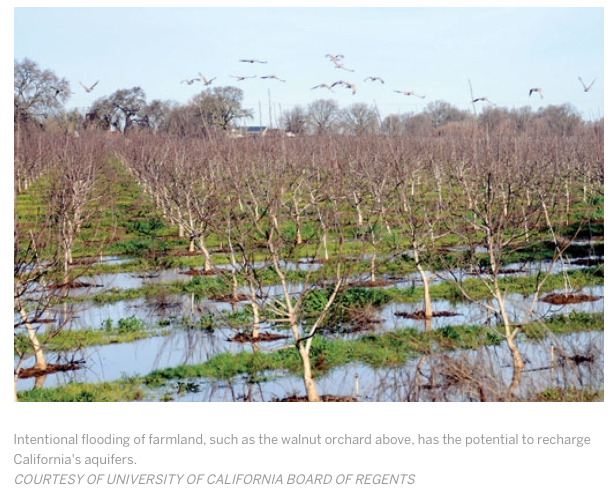
Intentional flooding of farmland, such as the walnut orchard above, has the potential to recharge California’s aquifers.

Screen Shot 2015-12-10 at 6.39.35 AM
California is parched. Rivers that usually surge now trickle, and once large reservoirs stand as puny pools. Those most critically affected by the state’s four-year drought are the Central Valley’s farmers, whose livelihoods are threatened. Without rain to irrigate croplands, growers repeatedly turn to underground aquifers, but the overpumping has taken a toll, causing water tables to drop dramatically.
Fortunately, this winter’s forecast in California calls for plenty of rain, most likely amplified by strong El Niño conditions. Storm drainage systems typically redirect most floodwater out to sea, but given the region’s intense water deficit, hydrology scientists at the University of California, Davis, are experimenting with so-called groundwater banking, which involves sending storm water to flood fallow fields where it can percolate into the soil and replenish aquifers. Storm water absorbed in the winter can then serve as a reservoir of summer refreshment for growing crops, says U.C. Davis’s Helen Dahlke.
For two months this winter Dahlke and her team will flood almond orchards in the Central Valley near Davis to a depth of two feet by redirecting rainfall through a network of ditches originally designed to divert floodwater away. To measure success, they will then monitor how much water filters into the water table over the course of two years. They will also test the quality of the infiltrated water and check trees for root rot, which could be detrimental to crop yield. If the method pans out, pear, plum and walnut tree orchards might also benefit from intentional flooding, according to a recent study led by Anthony O’Geen of the University of California’s Division of Agriculture and Natural Resources.
Previous tests of the technique have proved successful. In 2011 Terranova Ranch manager Don Cameron diverted Kings River floodwater in Fresno County onto 240 acres of vineyards and other farmland, inundating them for five months. “They looked like rice fields, but the grapes did fine,” Cameron says. Seventy percent of the water percolated into the water table, where it was available for pumping back onto fields during the next growing cycle.

Walnuts Prices Collapse / Strong Dollar Hurts Valley Grapes

December 1,2105-

Walnut Prices Collapse

Screen Shot 2015-12-01 at 11.29.33 AMCentral Valley walnut prices have dropped from over $2 a pound last year,a record high, to only “$1.20 for the best quality nut if we are lucky” says Visalia walnut grower Sam Sciacca. “Right now the world has more supply than demand” shrugs Scaicca, noting that Chinese production of walnuts has grown in the past few years and their importing of US-grown walnuts has dropped.
“It’s not the high quality we have” says Sciacca, adding that the European market is still strong for US exports.
“The Chinese are taking our in-shell nuts, processing them and selling them back to us.”USDA says walnuts were averaging about 85 cents a pound back in 2009. By 2014, the average per-pound price had nearly doubled to $1.62 and up to over $2 per pound for south Valley nuts.
To compound the price issue California has produced a record crop this year and Sciacca expects it to be above 600,000 tons. Among other factors shipping delays caused by the port slowdown last winter have hurt.
The rapid decline in prices have hurt some processors too with Crisp Walnuts in Stratford in Kings County announcing they would restructure after a slew of lawsuits from growers over payment.“Unfortunately, recent sudden and drastic changes in the walnut market proved too damaging for our fledgling business to absorb. We’re therefore currently attempting to restructure, and we hope to serve the community again in some capacity in the future.” The company employs 35 at during its peak season. Besides over planting the high value of the US dollar is hurting all ag export sales.

Strong Dollar Hurts California Wine Grapes

Case in point – wine imports that hurt Central Valley wine grapes. Allied Grape Growers say bottled imports from the top wine producing countries are reported to be up by 5 percent. On the export side, the trending strength of the dollar continues to provide challenges in exporting California wines, while making imports more affordable to U.S. consumers and wine buyers. “Just since the beginning of last summer, the U.S. dollar has strengthened by over 20 percent to the euro, over 23 percent to the Chilean peso and by about 30 percent to the Australian dollar. In a time where we are long on much of California’s wine supply, a stronger dollar does not help us in our effort to move the product off-shore or to fight off competition within the U.S.”

Ag Beat : Farm Jobs Higher? / HLB Updates / AGR News

Ag Beat

Kern Psyllid Infestation Concern

Screen Shot 2015-11-21 at 11.57.29 AMThe Asian citrus psyllid was recently detected at over 50 sites in residential areas of Kern County. It is clear that a breeding population is present, and that a probable cause for the infestation is the movement of plant material along high traffic corridors. The industry must act collectively to ensure loads are free of stem and leaf material and that, if fruit is moving to or through a non-quarantine area the load is tarped and that it is accompanied by an ACP Free Declaration, meaning the fruit was either treated just prior to harvest or was field cleaned.
At a meeting in Kern County Thursday morning Dr. Beth Grafton-Cardwell, Director of Lindcove REC & Research Entomologist, emphasized the importance of coordinated treatments through area-wide management programs. Although the sheer number of detections recently in Kern County is concerning, Grafton-Cardwell was optimistic that if local growers begin coordinated treatments during the next Fall flush, eradication is a likely possibility.
Kern County Grower Liaison for the Citrus Pest and Disease Prevention Program Judy Zaninovich reports that all commercial groves nearby the residential treatment areas have been treated. CDFA has 4,500 delimitation traps placed throughout the county, including 3,500 in Bakersfield alone. CDFA anticipates as many as 30,000 residential property owners will be impacted.

Early Detection Seminar For Citrus Disease

Early detection technologies can become valuable tools for identifying Huanglongbing (HLB) positive trees before physical symptoms of the disease appear. A massive amount of research is being conducted but for a variety of reasons the new technologies are not being utilized in the field or for regulatory application. California Citrus Mutual and the Citrus Research Board invite you to learn more about these complex technologies at the HLB Early Detection Technology Summit to be held at the Visalia Convention Center on Tuesday, December 1 at 9 a.m.
The Summit will include presentations from the lead researchers working on early detection technologies, and a panel discussion featuring California Department of Food and Agriculture and United States Department of Agriculture officials and industry representatives on if, when, and how these technologies can be used in California.
Citrus scientist Beth Grafton-Cardwell says right it now it takes a year to identify if a tree has HLB but several technologies being tested have the promise of shortening that time significantly. Both dogs and devices being tested to do emissions sniffing.

Huh? Ag Jobs Rise In Parts of State Despite Drought

Screen Shot 2015-11-21 at 11.52.13 AMAg jobs have dropped by 500 year over year in Fresno County,what you might expect as the drought idles more land statewide. An economist at CSH Channel Islands, Sung Won Sohn notes that “Close to half a million acres of productive farm land have been taken out of production, and more will be set aside as the drought continues,” Sohn said in a news release. “This will continue to reduce jobs in farm and supporting industries.”
But look here. Statewide, EDD reports in the past day that there were 7000 more farm jobs on the books in October 2015 than a year earlier. Say what?
In parts of the state farm jobs this October rose big time on year over year basis according to the latest state figures. In Ventura County there was an incredible 2900 more farm jobs in October 2015 than a year earlier. Merced County logged 500 more. In Stanislaus the EDD says there were 1200 more.Tulare County farm jobs are up 100 from year ago.
We will look for answers.

AGR Partners completes two new growth capital investments

Visalia-based AGR Partners has announced the completion of investments in two companies — 3D Corporate Solutions, operating in the food ingredients and pet food industry and Tru-Test Limited, operating in the dairy and livestock industry.
“We are excited to work with Tru-Test and 3D as both are outstanding businesses with strong teams and we look forward to being a supportive partner to facilitate their growth,” said Ejnar Knudsen, managing member of AGR Partners.
AGR Partners has provided growth capital to 3D Corporate Solutions, based in Monett, Mo. 3D Corporate Solutions, Monett, Mo., is a leading manufacturer and distributor of value-added pet food and food ingredients.
“We are excited about AGR’s investment into the group and their ability to connect us to other players in the sector that will bring more value-added opportunities for our customers and suppliers,” said 3D CEO Scott Walker.
“3D is an outstanding business with a strong team that we are excited to work with. We believe this partnership is highly strategic to AGR. The connectivity 3D has to an array of agricultural industries including poultry and seafood, as well as non-grain ingredients globally is unique. We look forward to supporting 3D’s mission to listen, serve and solve all of their customer and supplier needs.” said Knudsen.
AGR Partners has provided growth capital in the form of subordinated debt and non-controlling equity in the dairy and livestock equipment company Tru-Test Limited headquartered in Auckland, New Zealand.
Tru-Test Limited designs, manufactures and markets critical farm equipment for over 100 countries around the world. The company developed and commercialized the world’s first proportionate flow milk meter in 1964 and is the world’s leading manufacturer of livestock weigh scales, milk metering equipment and electric fencing. In addition, Tru-Test is the largest manufacturer of on-farm milk storage tanks in New Zealand and develops dairy automation and milk cooling solutions.

Central Valley Co-op Gin Hangs It Up

November 20,2105-

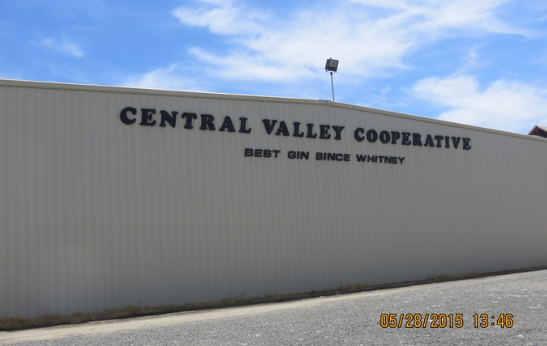
Screen Shot 2015-11-20 at 12.50.29 PMCentral Valley Cooperative Gin has ginned their last bale this month and will close after more than 75 years in the business. The property is for sale and includes 73 acre of land as well as the facilities that are located at 10th and Hanford Armona Rd near Hanford. The price tag is $2.3 million.

The closure of the gin continues a trend in California that mirrors the  steady decline in cotton acreage from the old days when cotton really was king.

Figures from the state Pink Bolworm survey this year show Kings County cotton growing acreage adds up to 51,260 acres as of August.That compares to around 75,000 acres in 2014, 103,000 acres in 2013, 133,000 in 2011 and 287,000 acres planted back in 1979.Statewide cotton acreage is the lowest since the 1920s.

California once had near 300 gins operating but today it’s down to just 26 in the Central Valley says Roger Isom, president of the California Cotton Ginners and Growers. Despite the decline, Isom is upbeat,

“I think we’ve hit the bottom” he says. “Growers tell me they are going to plant more cotton next next year” when there may be more water.
Isom notes that “San Joaquin Valley cotton quality is the best in the world.”

While upland cotton is definitely on a downward slide, long staple pima cotton prices and demand are on the upswing.Brandon La Mattino, gin manager at County Line Gin in Hanford says they installed a roller gin operation some years back that handles the pima variety.  Central Valley Co-op, on the other hand, did not and could not process pima. “I don’t think any of gins that that installed roller gin equipment have gone out. It’s a matter of keeping up with growers plans.”  But it take a major capital investment.

Cotton acreage in the Valley clearly is down for lack of water but that is not the only factor.  LaMattino adds that all over the Valley field crop acreage has been converted to nut trees.

LaMattino says the cooperative structure of gins allows growers to keep all the profits within the membership. ”Everyone is an owner.”

Largest Valley Biomass Plant To Shut Down


Air District Sees Crisis For Growers As Dead Trees Pile Up
                                              “This Is  A Big Deal”–Dave Warner -SJVAPCD
November 18,2015-
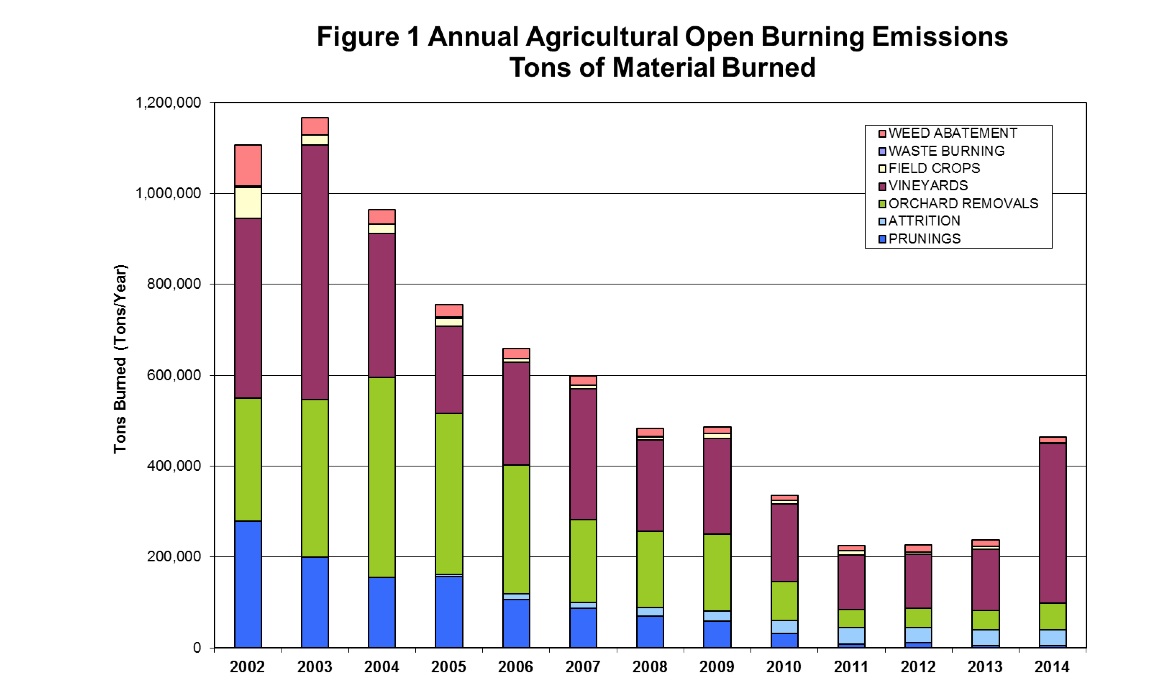
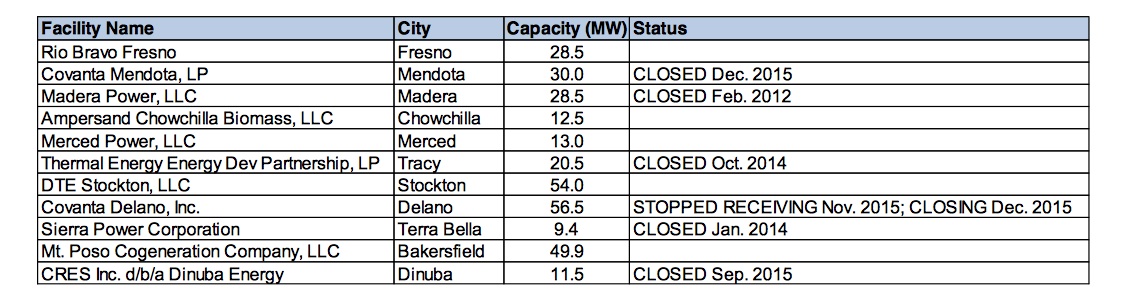
Since 2003, the Valley Air District has worked with farmers throughout the Valley and has instituted a number of measures that have resulted in an 80% reduction in the open burning of agricultural waste.But now the severe drought conditions that the San Joaquin Valley has experienced and the recent demise of the biomass power industry that provided an alternative to open burning for a significant amount of the agricultural waste generated in the Valley – has “created a severe problem that requires urgent attention by the  Air District” says a strongly worded staff report as the board of the district meets this week.
“This is a big deal” says Dave Warner, one of the Air Districts’ top staffers.
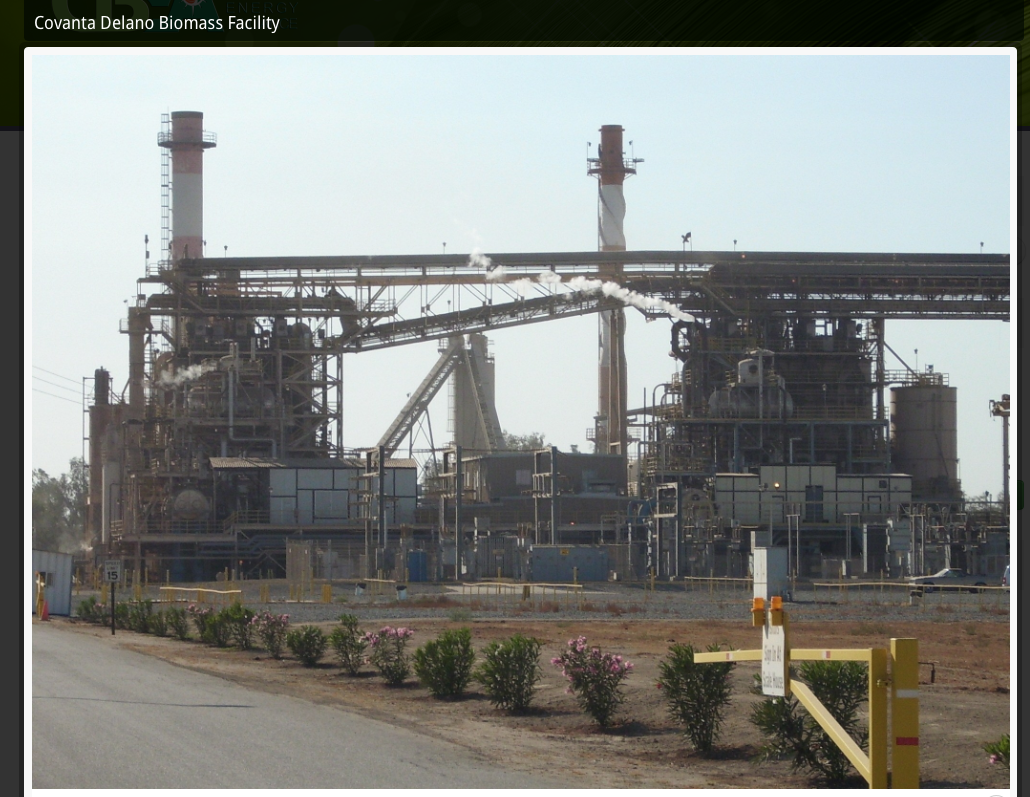
Screen Shot 2015-11-18 at 1.27.52 PMThe latest sign of trouble brewing comes as news that the Valley‘s largest biomass plant in Delano will shut down next month.
Since 2012, five Valley biomass facilities have shut down operations says the District including a plant in Dinuba in September. The Valley’s largest biomass plant – Covanta Delano has stopped receiving new material as of November 1, 2015, and has informed the District that they “plan to shut down operations at the end of the year because they have been unable to secure a viable Purchase Power Agreement.”
Going To Get Worse
The staff report says“ the District is facing numerous requests from growers to burn agricultural materials due to the lack of sufficient biomass power capacity. If the biomass power capacity does not return to previous levels, this situation will only get worse, especially given the hundreds of thousands of acres of orchards, vineyards and other agricultural crops that have been fallowed in response to the drought.”
If an adequate number of feasible alternatives to open burning are not made available, the Valley may either have to roll back the successful measures that have reduced emissions from open burning of agricultural waste “ or endure the economic devastation of Valley agriculture.”
To assure that open burning of agricultural materials does not cause any violations of health-based ambient air quality standards, open burning has only been permitted under the District’s comprehensive Smoke Management System (SMS), which uses real-time meteorological information to analyze the impact of burning on air quality and appropriately limit burn allocations by area. Under the District’s SMS program, the Valley is divided into 103 zones. The amount of burning allowed in a given zone on a specific day is based on factors such as the local meteorology, the air quality conditions, the atmospheric holding capacity, the amount of burning already approved or happening in a given area, and the potential impacts on downwind populations.
The District’s stringent residential wood burning regulation has also had a significant impact on reducing agricultural burning during the peak PM2.5 season (November through February). In addition to the phase-out implemented through the agricultural open burning program, agricultural open burning is also prohibited on fireplace curtailment days, even when air quality conditions in rural areas would support some level of agricultural burning.
Effects of the Drought on Agricultural Burning

click to enlarge
click to enlarge

Exacerbating the reduction in biomass capacity in the Valley is the increase in agricultural waste over the past few years as a result of the extreme drought emergency currently facing California and the Western United States.  There has been a major increase in agricultural burning as a result of the extreme drought conditions and the inability of agricultural operations to water their crops( see chart). To date hundreds of thousands of acres of orchards, vineyards and other agricultural crops have been fallowed in the San Joaquin Valley in response to the drought warns the report.biomass shutdown

What To Do?
The staff report will ask the board to consider these measures.
1.Allow agricultural open burning for certain crop categories through a class action stipulated order of abatement as an intermediate response to the current lack of feasible alternatives to dispose of agricultural wood waste.
The loss of these facilities has considerably reduced the available options to dispose of agricultural wood waste, especially material from large orchard removals. As a result, many agricultural growers have lost the primary economically feasible disposal options for their orchard removal material. This could not come at a worse time as there has been an increase in the number of large orchard removals over the past year due in large part to the effects of the extreme drought emergency currently facing the state.
“There are currently 11 growers who have approached the District over the past month with orchard removal material sitting in the fields and the lack of sufficient biomass capacity has left no cost-effective options to clear their parcels. Timelines associated with removing and replacing a crop are tight and extremely rigid, with crop services lined up and paid for months or even years in advance.
With the insufficient biomass capacity and inability to burn the material, these growers face losing tens or hundreds of thousands of dollars if they are not able to remove the existing materials and get their new crops planted.”
Under the abatement order rule chg\ange, the class could contain only those situations where there is not a feasible alternative to open burning and where burning the material would not cause a nuisance to neighbors. If abatement orders are pursued as a remedy, the recipient will be required to pay a penalty of at least that which they would have paid to have the material chipped, hauled and disposed at a biomass plant.
2. Send a written request to the California Public Utilities Commission to extend Power Purchase Agreements with existing biomass facilities at current pricing levels similar to what is called for by the Governor’s State of Emergency proclamation on the State’s tree mortality epidemic for existing forest bioenergy facilities receiving feedstock from high hazard zones
Some History
The biomass power industry is primarily the product of the Public Utility Regulatory Policy Act (PURPA), which was enacted in 1978 at the height of the energy crisis to promote the use of alternative nonutility power generation. Today, these facilities are fully depreciated and have lost, or are nearing the ends of, their long-term contracts to sell their power to the utilities.
Much has changed in the energy markets since PURPA was implemented. Natural gas has replaced oil for electricity generation, and supplies of natural gas have increased, driving down the wholesale cost of electricity. California has adopted a Renewable Portfolio Standard (RPS) that requires 33% of the power that is purchased by utilities be renewable. This has driven competition to fill the renewable energy needs of the state. Under the RPS, Investor Owned Utilities (IOUs) have tended to favor lower cost intermittent sources of renewable power, such as solar and wind. This has left the biomass industry in a position where the power that they produce is not desirable, since most biomass plants provide baseload power instead of intermittent power, and the current rate being paid for power does not allow them to remain viable says the report.
Given the current energy policy, the biomass industry does not compete well under the current procurement policies of the state’s IOUs. Historically, the biomass facilities have demanded 12-13 cents per kilowatt-hour, which has been necessary to retain economic viability. Pricewise, this places biomass facilities at a competitive disadvantage with other renewable fuels that can be procured at a much lower cost. Under the state’s RPS, program pricing information is confidential, however, anecdotal evidence is that currently the IOUs are purchasing power from solar and wind facilities at approximately 8 cents per kilowatt-hour.”
Another factor that negatively impacts the competitive position of biomass generated power is due to the fact that such plants provide “baseload” power. As baseload generators, biomass facilities cannot produce power that can be turned on quickly, and therefore, cannot meet the power system’s demand for “ramping services”. The demand for ramping services is compounded by continued increase in the use of wind and solar renewable sources, which is partially triggered by the state’s RPS goals.
“ If current trends persist, this issue will worsen in the future. It is estimated that by 2020, solar and wind will account for three-quarters of the state’s renewable power and 20% of the state’s total electricity supply. The net effect of this is a further transition away from baseload generators to more flexible generators that can be turned-on and turned- off when needed. Under this scenario, not only do biomass facilities have difficulty competing directly on price, but they also do not provide the type of power that is desired. While under this scenario the state can meet its renewable power goals, the potential loss of biomass plants can impact the state’s broader greenhouse gas reduction goals under AB 32 by increasing GHG emissions in sectors that currently rely on biomass plants for disposal of materials including the agricultural industry, landfills, and forests.”
The District argues that “ biomass plants provide other societal benefits that may warrant additional support. Without biomass plants, much of the progress in reducing open burning is likely to be undone.”
Reducing Wildfires
Additionally, reducing fuel loads in the forest is a primary method of controlling wild fires. The biomass industry provides an outlet for forest debris and materials from forest thinning projects.
This reduces the occurrence of catastrophic wildfires and the attendant damage to public resources, property, and air quality impacts. Finally, biomass plants burn materials that would likely be placed in landfills if the plants were no longer viable, so biomass plants play a role in meeting the state’s landfill diversion requirements.
The report concludes “As we pursue potential power pricing remedies, fairness dictates that we explore potential means of compensation for the societal benefits provided by biomass plants.”_____
3 Attachments

Ag Beat Market Watch,Farm Credit Merger

November 17,2015-

Screen Shot 2014-11-06 at 3.49.02 PMSaputo’s Earnings Down 4.6% – Canadian Company Has Plants In Tulare – Concern Over Dairy Price Slump

Dairy operators are suffering this fall as stubbornly low milk prices are not rising as hoped. World prices are to blame as are the high value of the dollar affecting our milk exports. The latest evidence comes from lower earnings at Saputo Inc with several plants in Tulare. This week  Canadian based Saputo recorded lower adjusted earnings for the second quarter of fiscal 2016. The company’s earnings totaled $148.6 million, decreasing $7.1 million from the same quarter last year, or 4.6 per cent. The company said falling dairy prices in the U.S. shaved $229 million off its bottom line.
This week the cheese market showed continued weakness with prices down to $1.44/lb, lowest since late 2010 during the worst of the dairy slump. On the bright side, butter prices are strong. Some processors are reporting a milk shortfall as statewide production is down 4%.
“I think production will stabilize” says local dairyman Tom Barcellos.  “The dairy industry here is not going to go away.”

Farm Credit West Building New Dinuba Office – Announces Merger

Ag lender Farm Credit West is building a new Dinuba office at 940 W El Monte relocating their current smaller office they have been in since 2004.The company expects to move.in by early 2016.

In September, 2015, the stockholders of Farm Credit West and Farm Credit Services Southwest approved a merger. Final regulatory approval for the Plan of Merger was received in late October, 2015.  Southwest has branch offices in Tempe, Yuma and Safford, Arizona and an office in California’s Imperial Valley. To give some perspective, the combined Farm Credit West and Southwest assets totaled $9.0 billion at September 30, 2015, which includes an $8.5 billion diversified portfolio of agricultural loans across three western states.

Mixed Picture For Local Ag Economy

In their report to stockholders Farm Credit West made these comments  on the local farm economy.
“Tree nuts are the largest commodity concentration in FCW’s loan portfolio at 16.2%. Almonds and pistachio prices have remained relatively strong, but walnut prices dropped significantly due to weakening exports. Water availability continues to be a concern for this segment of our portfolio. Also, a continued strong U.S. dollar may further weaken export demand.
FCW’s dairy portfolio is the second largest commodity concentration in our loan portfolio at 13.2%. Overall the dairy industry did fairly well last year as record-high milk prices helped most dairy customers to rebuild liquidity in their operations. The drought conditions in California have increased forage prices which tends to reduce margins for dairy producers. With lower milk prices and higher forage costs in 2015, many producers are at or near break even, adding some stress to this portfolio.”