Tulare County’s jobless rate in January 2013 was 16.8%,up from 15.9 % in December 2012 but down from 17.7% in January 2012. Almost 2000 fewer people were unemployed in January 2013 compared to a year earlier. The uptick in January vs December 2012 is largely due to a 4000 person increase in the labor pool meaning more were looking for work. There were some 2700 more non-farm jobs in Jan 2013 compared to Jan 2012 led by 1000 more in manufacturing and 1400 more in trade and transportation.The hospitality industry added 400 more jobs year over year.
More Hotel Rooms Sold
February saw a nice uptick in in hotel room occupancy in both Tulare and Fresno Counties,but not Kern. Fresno hotel occupancy rose to 54.9% from 51.6% in Jan 2012. Tulare County recorded a 54.9% occupancy – up from 49.9% a year earlier.Bakersfield hotel occupancy fell year over year to 59.5% from 63.1%. Rooms sold in Fresno were up 7%,Tulare County up 9.9% but Bako was down 4.6%. Tulare County’s nearly 10% improvement was the best in the state according to Smith Travel.
Badger Fire Station
Badger will get a new fire station according to a public notice The new facility would sit on 2.3 acres at Wildhog Canyon and Hwy 245.
Ag Land Values
The Ranch Co’s annual statistic report shows ag land prices excluding rangeland way up to an average of $12,162 an an acre in 2012,a 68% increase over 2011. Owner John Grimmius notes some walnut orchards are going for as high as $36,000 an acre.
Gas Prices Down In March
California gas prices have fallen more than 20 cents this month to around $4 a gallon. Several stations in Tulare are selling at $3.79 a gallon this week.
Power Plants To Be Scrapped
The mothballed solid fuel power plants owned by GWF Energy in California have been sold at a March 20 auction and according to one source sold for scrap including the idle plant in Hanford. The auction company for the old coke fired power facilities has requested bids to demolish several of the plants including Hanford. that closed in 2011.The demo will require a permit from the Valley Air Board over any asbestos issues. GWF Energy has six mothballed coke plants in the state – out of favor due to their greenhouse gas emissions. As of December GWF is now owned by Highstar Capital with ownership of a 334 MW combined cycle power plant in Tracy and the 2 ‘peaker plants’ in Kings County,one in Hanford and one near NAS Lemoore.(Henrietta). All three nat gas plants have agreements with PG&E through 2022.
Heavy rains in December has helped fill Lake Shasta to above average levels.
The California Department of Water Resources announced that water allocations for the State Water Project are being reduced from 40% to 35% due to a dry January-March period, coupled with pumping restrictions imposed in December and January to protect Delta smelt and salmon.
The Bureau of Reclamation announced that Central Valley Project allocations for south-of-Delta agricultural contractors are being reduced from just 25% down to 20%. Municipal and industrial contractors south of the Delta will see their allocation decreased from 75% to 70% of their historic use.
Local communities face more than $1 billion in lost economic activity due to reduced water supplies for farmers in Westlands Water District ,the district estimates.
“The water supply reductions facing farmers will devastate the local communities. We understand that the most recent cut imposed by Reclamation is a result of record dry conditions experienced in January, February, and March; but this reduction is being imposed after the loss of hundreds-of-thousands of acre-feet of water experienced during a record wet December. Those losses are difficult to comprehend,” said Thomas Birmingham, general manager of Westlands Water District. “Once again, the needs of our community and the livelihood of our workers are being sacrificed due to questionable decisions by federal officials to protect Delta smelt.”
While rainfall the second half of this water year has been low a wet November and December helped fill a number of key northern California reservoirs to above historical average including Shasta,New Melones and Oroville.
California Senator Dianne Feinstein said “A water allocation of 20 percent for South-of-Delta farmers is a crippling blow to California’s farm community. This is the second very low allocation since 2009, so it should be clear that California needs to store water from the dry years for the wet years. Any water bond put on the ballot must have a strong storage component. Absent that, California will be in deep trouble with respect to water.
“With respect to this 20 percent allocation, all I can say is it’s devastating. In 2010 we were able to work out—thanks to the Department of the Interior, Bureau of Reclamation, water contractors and the state—an additional 150,000 acre feet. I encourage Interior and Reclamation to follow that same formula this year. The water allocation must be increased if California farmers are going to be able to produce.”
Friant Division contractors’ water supply that waters the Valley’s eastside is delivered from Millerton Reservoir on the upper San Joaquin River. The first 800,000 acre-feet of water supply is considered Class 1, and the next 1.4 million acre-feet is considered Class 2. Based upon DWR’s February WY 2013 Runoff Forecast, the Friant Division water supply allocation is currently 65 percent of Class 1. There are fears that could be lowered if the mid Sierra gets no more storms.
Grading for the construction a 236 boutique hotel in Paso Robles has started. Ayres Hotels of Southern California has started work on the first phase of its planned development on 20 acres on Buena Vista Dr. The city approved the big project last year designed to service the city’s growing tourism business. Ayres operates 20 upscale hotels around southern California with a European flair. The first phase with 169 rooms with fireplaces and patios is expected to be open in the summer of 2014.
SLO Year Over Year Unemployment Falls
The unemployment rate in the San Luis Obispo County in January 2013 was 7.5 percent, up from a revised 7.2 percent in December 2012, and below the year-ago estimate of 8.9 percent.
The rise in unemployment in January came in response to an increase in the number of people in the labor market in January – almost 3000 more in one month. From December 2012 to January of this year there were 2300 more people working indicating a robust job market although more than had joined the search for a job.
Year over year, SLO County recorded an 8.1% increase in the number of people working from101,2000 in Jan 2012 to 109,400 in Jan 2013 That included 800 more farm jobs year over year.
SLO To See 17,900 Jobs Added By 2020.
Total employment in SLO County should reach 132,000 by 2020 in San Luis Obispo County – a new EDD projection estimates. Some 61% of those new jobs are expected to come in four sectors.
Retail trade sector is projected to grow 25.4 percent over the 10 year
period, adding 3,300 jobs.
Leisure and hospitality industry is expected to increase by 19.6 percent
,with almost 90 percent of its growth in the accommodation and food services sector (2,600 jobs.
Professional and business services employments projected to add 2,600 jobs,through the projections period.
Mining, logging and construction is expected to be the fastest
growing industry with a 44.9% growth rate.
Visalia News : Airline Cancels Las Vegas Route
Great Lakes Airlines has canceled its Visalia to Las Vegas flights as of March 31 says airport manager Mario Cifuentes. The flight cancellation coincides with plans by the federal government to halt Essential Air Service flights from Ely Nevada that helped provide a plane to use for Visalia flights.
Cifuentes says he is hopeful the airline will offer Visalia an additional roundtrip flight to LAX soon – a route that has much more importance to Visalia he says. He expects some word in coming weeks. Great Lakes has a AM and noon hour flight to LAX currently. Visalia City Manager To Retire in Fall
City Manager Steve Salomon has announced his intent to retire from the City of Visalia in the Fall. While he gave no definitive date, he had previously informed the City Council that he would give six month notice if he planned to leave.
“Steve has helped shape this city into truly the best in the Central Valley,” said Visalia Mayor Amy Shuklian. “Through both good and challenging times, Steve always maintained a calm approach to deal with issues. His ability to forge relationships with community stakeholders is unprecedented. It will be difficult to imagine the City of Visalia without Steve Salomon as City Manager.”
In announcing his plans to retire, Mr. Salomon said, “I have had the pleasure and honor of working for the City Councils and the community since 1996, over 16 years. Much has been accomplished and the community’s quality has been enhanced.” Mr. Salomon also acknowledged the hundreds of City employees with whom he has worked. “Visalia, without a doubt, has the finest municipal organization in the State.”
He also thanked the City Council members he has worked with during his tenure. “Visalia has been blessed for decades with elected officials who serve only with the desire to make this place stronger and better. It shows in all facets of the community.”
During his tenure as Visalia’s City Manager, his accomplishments are highlighted with the expansion of services to meet the needs of Visalia citizens. They include: The passage of Measure T, the first sales tax augmentation in the State to fund on-going public safety operations; the opening of two new police substations in north and south Visalia; the addition of two new parking structures to keep up with the demands of a vital, thriving downtown; the opening of Visalia’s sixth fire station on Lovers Lane; the expansion of the Kaweah Delta Medical Center facilities, and; the opening and expansion of the Visalia Transit Center and the Transit Maintenance Facility.
Plan to Help Keep CA Dairies Afloat Gains Traction
WASHINGTON, D.C. – Congressman Costa joined fellow Valley Representative David Valadao in introducing legislation that would allow California dairy producers the option to enter into the Federal Milk Marketing Order. Currently, California operates under its own state-based order that establishes the price milk processors pay based on the dairy products they make, but many dairy producers have expressed concerns that they are paid less for their milk than producers in federal order states. The California Federal Milk Marketing Order Act is similar to the approach Costa advocated for during the Farm Bill negotiations last Congress.
“Far too many dairies in California have been forced to shutter their operations due to high feed prices and low returns on their products,” said Costa. “Having grown up working on a dairy, I know the industry’s unique challenges and am deeply committed to help dairymen and women keep their operations afloat. Our legislation will put control back in dairymen and dairywomen’s hands and give them the option to choose what works best for their business.”
The bipartisan legislation would not require California to enter the Federal Milk Marketing Order. Instead, it would allow producers the option to petition the Secretary of Agriculture for entrance into the Federal Order. Two-thirds of producers would have to vote in support of the change before California could transition to the new order.
Heiskell Buys Out LOL Feed Interest Here
TULARE, CA J.D. Heiskell & Co. announced March 5 that it has purchased the 50% interest in Golden State Feed & Grain (GSF&G) held by Purina Animal Nutrition, its partner in that joint venture since the inception of the business in August of 2010. Purina is a Land O Lakes company. Heiskell will now hold 100% interest in the feed operations in both Pixley and in Guernsey near Hanford where the Penney Newman facility is located.
Golden State Feed & Grain serves livestock producers and dairy farmers in California with mixed feeds, rolled grains, mineral mixes, commodity blends and a variety of animal health and nutrition products. Heiskell plans to retire the GSF&G brand over the coming months and will transition all employees and products into the current J.D. Heiskell & Company business platform in California. Customers and vendors should notice little change in the business relationship they have had with GSF&G other than the name of the business. Rick Bowen, the current General Manager for the venture, will continue to serve in the same capacity for Heiskell.
“We want to thank the Purina Animal Nutrition team for their support and professionalism as a partner during the life of the business venture,” said Heiskell President and CEO Ryan Pellett. “In addition we are excited about the loyal and committed group of employees that create excellence daily at GSF&G and look forward to having them as members of the Heiskell team going forward.”
Last week, the California Farm Bureau Federation, the Marin County Farm Bureau and the Sonoma County Farm Bureau joined in a petition to a federal appeals court, urging the court to give the Drakes Bay Oyster Co. a new hearing—and a new chance to continue its sustainable aquaculture operation.
The company and its owners, Kevin and Nancy Lunny, carry on a decades-long tradition of mariculture in Drakes Estero. The oyster farming operation has been there since the 1930s—so long that few people remember the estero before the farm existed. It was there long before the Point Reyes National Seashore was established in 1960.
Despite a record as excellent stewards of the land and of the estero, the Lunnys and their farm face eviction.
The National Park Service determined that the oyster farm had to go and pulled out all the stops in its efforts to evict the farm, even though its presence adds to the overall character of the area. The Lunnys, Sen. Dianne Feinstein, Farm Bureau and other advocates have pointed out a long history of shoddy, slanted pseudo-science used by the Park Service in an effort to justify removing the oyster farm.
Despite protests from the West Marin community, Interior Secretary Ken Salazar decided last November that the farm would have to leave when its lease expired. Only a last-minute stay from a federal court last month allowed the Lunnys to remain in business, while the court considers their appeal.
If you’ve been following the case like I have, you know that Drakes Bay Oyster Co. is a prime example of the local, sustainable agriculture that many Bay Area residents prize. If you haven’t been following the case, you might be surprised by the range of individuals, groups and organizations that joined together in the petition last week on behalf of the Lunnys.
Along with CFBF and the two county Farm Bureaus, the petitioners included famed Berkeley chef Alice Waters; the Hayes Street Grill, a fish restaurant in San Francisco; the Tomales Bay Oyster Co.; the Marin County agricultural commissioner; Food Democracy Now; Marin Organic; and the Alliance for Local Sustainable Agriculture.
These folks may all come at this issue from different angles, but we end up at the same place: What’s happening to the Drakes Bay Oyster Co. is wrong.
The petition was written by Judith Teichman, a San Francisco attorney who assembled the coalition favoring the farm’s continued operation. It notes that closing down Drakes Estero as a source of fresh, sustainably raised shellfish would wreak havoc with the world-famous local, sustainable food and agriculture of the Bay Area. It would also disrupt shellfish cultivation on Tomales Bay. It would put 31 people out of work, some of whom have worked for the oyster farm for 30 years.
Closing the oyster company would also be a serious setback for modern environmental thinking, the petition says. Leading voices in the environmental movement have called for 21st century conservationists to embrace a more people-friendly ethic that supports working landscapes—just the sort of operation that Drakes Bay Oyster Co. represents.
Old-fashioned environmental activists want to force people off the land, to return it to some sort of pre-human condition. That thinking leads to confrontation instead of collaboration, and to situations where progressive, thoughtful farmers and ranchers like the Lunnys get pushed aside because of someone’s interpretation of the purity of nature.
For Farm Bureau, the case has implications beyond Drakes Estero.
Half of the land in California is owned by the federal or state government. Rural communities, where many Farm Bureau members live and work, depend on multiple use of these lands. National parks and wilderness areas operate under land-management rules that allow for human presence and use, even when the primary mandate is for preservation and environmental protection.
To ban an operation such as Drakes Bay Oyster Co. on the ideological belief that it should not exist in a national park or wilderness area—despite evidence that the farm provides important economic, cultural and social benefits—sets an awful precedent for everyone who believes that humans and nature can and must co-exist sustainably.
That’s why Farm Bureau supports the Lunnys and Drakes Bay Oyster Co. If the bureaucrats and the kick-the-humans-out branch of environmentalism can run the Lunnys out, you can bet they’ll keep trying to throttle more wise uses of taxpayer-owned lands.
That narrow, preservationist vision never worked and doesn’t now. The appeals court will hear the oyster farm’s case in May, and we hope it will restore common sense to the management of the Point Reyes National Seashore
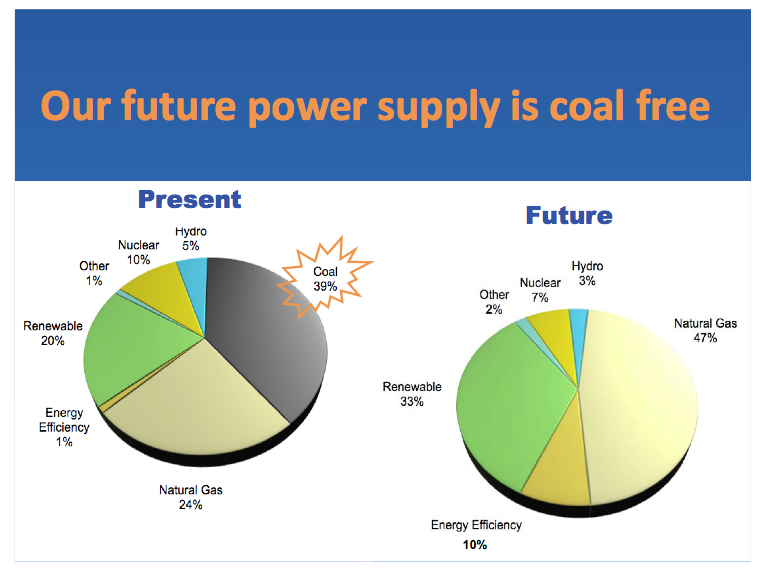
LOS ANGELES— The Los Angeles Department of Water and Power took historic steps this month towards eliminating coal from LA’s power supply when it announced that representatives of LADWP and Salt River Project have reached sufficient progress on the principle terms to sell its stake in Navajo Generating Station for the two utilities to move forward to negotiate a definitive agreement that would end LA’s use of coal-fired power from the plant by the end of 2015 – four years earlier than mandated by California state law. In addition LADWP would end a contract with a a second coal plant in Utah by 2025 at the latest, with efforts to begin that transition no later than 2020.
click to enlarge
“The era of coal is over. Today we affirm our commitment to make Los Angeles a cleaner, greener, more sustainable city,” said Mayor Villaraigosa. “By divesting from coal and investing in renewable energy and energy efficiency, we reduce our carbon footprint and set a precedent for the national power market.”
Thomas R. Sayles, President of the Board of Water and Power Commissioners, said, “Today we continued the Board’s efforts to meet environmental mandates efficiently and in a cost effective manner while maintaining a reliable power supply for our customers.”
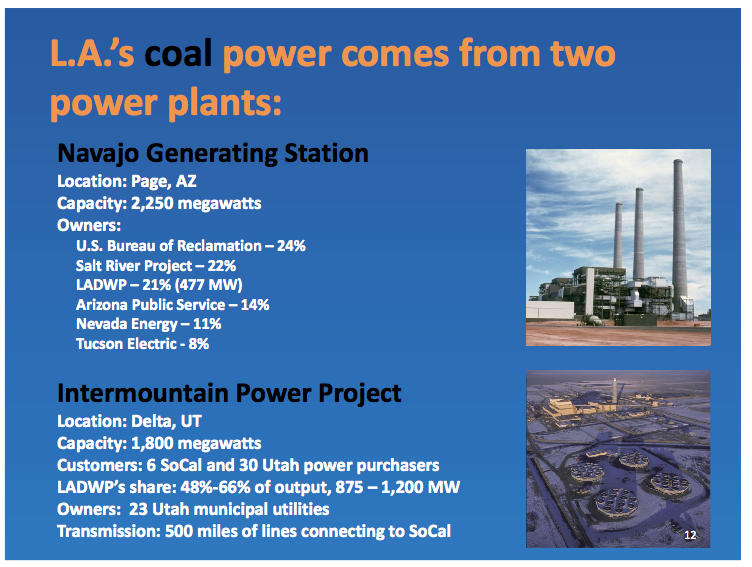
LADWP currently owns a 21% interest in the 2250 megawatt (MW) Navajo Generating Station, receiving 477 MW of coal-fired power from the plant. “We are very pleased that we have made progress with Salt River Project to enable moving forward with the negotiation of the final agreements that would enable LADWP to fully divest of coal power from Navajo by the end of 2015,” said Ronald O. Nichols, LADWP General Manager. “This will close a chapter on our reliance on coal-fired power in Los Angeles. Our efforts to create a clear path to ending our use of coal-fired power from the Intermountain Power Project is also a major achievement for a complex arrangement involving 30 Utah public power utilities and 6 California municipal utilities who receive power from that project. This allows us to focus on the new low-carbon future of Los Angeles.”
Eliminating coal power from Intermountain Power Plant (IPP) was more complex than negotiating the terms of sale of Navajo because LADWP does not own any part of IPP. LADWP is one of six Southern California municipal utilities that purchase coal power from the 1,800-megawatt (MW) Intermountain Power Project located in Delta Utah under a long-term power purchase agreement that expires in 2027. IPP is owned by 23 municipal utilities in Utah and supplies power to 30 utilities in Utah and six utilities in Southern California, including LADWP. Under California law, SB 1368, electric utilities will not be allowed to import power into the state that exceeds a fossil fuel emissions cap after their current contracts expire. The emissions cap is set at the level of an efficient, combined cycle natural gas power plant.
The Board’s action today approves LADWP’s portion of the amendment to the long-term power sales agreement to stop taking coal power from IPP earlier than 2027 and build a smaller natural gas plant that complies with California emission standards. LADWP and other Southern California municipal utilities will
continue to receive renewable energy from Southern Utah from the Milford Wind project; with power delivered over the same transmission line that presently also delivers power from the Intermountain Power Project. The contract provides for beginning LADWP’s transition out of coal power from IPP with the commencement of engineering, design and construction of the smaller natural gas-fired generating plant by 2020 and completely eliminating coal power from IPP no later than 2025. The smaller plant, estimated at between 600 – 1200 megawatts, will allow LADWP and the other local municipal customers to develop more renewables and bring it to Southern California along existing transmission lines.
“Working with IPP and its other customers, we have developed a win-win-win solution that is good for Southern California and good for Utah,” said Aram Benyamin, LADWP Senior Assistant General Manager – Power. “Siting and building a new power plant and the transmission lines to deliver replacement power to Los Angeles would have cost at least twice that of rebuilding at IPP. By using an existing power plant site and existing DC Southern Transmission System for delivery of power from the future project and transforming it we will save money, time, reduce emissions by over 2/3 that of the existing plant, be able to build more renewables and bring that power home to Los Angeles. That’s a homerun.”
The amendment is subject to approval by the Los Angeles City Council, will be considered by the other municipal purchasers and is currently being ratified by the 23 Utah owners.
Today’s actions by the Board are the latest steps taken to transform LA’s energy supply and create a clean energy future. Other major accomplishments include reaching 20% renewables in 2010, establishing and implementing a 150 MW Solar Feed-In Tariff program, approving the largest utility-scale solar developments of any municipal utility in the country, completing the utility-built Adelanto and Pine Tree Solar Plants and more than doubling the LADWP’s investment in energy efficiency, among others. The transformation of LADWP’s historic energy supply is well-underway. “Eliminating coal is one leg of our transformation, but we can’t stand on that leg alone – we have to replace that power supply,” said Ronald O. Nichols, LADWP General Manager. “That is why for several years now and for several more to come, LADWP has been taking steps to replace coal power with a combination of greatly increased commitment to energy efficiency, expanded renewable energy, and balancing that with a necessary amount of low-carbon natural gas power. “All of these elements will come together to ensure a reliable, cost effective power supply transformation.”
# # #
Honey production in 2012 from producers with five or more colonies totaled 147 million pounds, down 1 percent from 2011. There were 2.62 million colonies producing honey in 2012, up 5 percent from 2011. Yield per colony averaged 56.1 pounds, down 6 percent from the 59.6 pounds in 2011.
In California where fears of a bee shortage have been told colonies were down says USDA, to 340,000 compared to 370,000 in2011.
Even more dramatic was the decrease in honey production in California over the same period declining from 17.7 million lbs in 2011 to 11.9 million lbs in 2012.
Colonies which produced honey in more than one State were counted in each State where the honey was produced. Therefore, at the United States level yield per colony may be understated, but total production would not be impacted. Colonies were not included if honey was not harvested. Producer honey stocks were 32.9 million pounds on December 15,2012, down 10 percent from a year earlier. Stocks held by producers exclude those held under the commodity loan program.
Record High Honey Prices
Honey prices increased to a record high during 2012 to 195.1 cents per pound, up 11 percent from 176.5 cents per pound
in 2011. Exports Key For Dairy:
A new report from Rabobank has recommended that product innovation and export markets are key for future dairy industry growth.The Rabobank Agribusiness Research and Advisory (FAR) group released its dairy industry report “California Dairies: Getting More Moola”.
The report offers insight into how value in the dairy industry could be maintained for the benefit of both producers and processors.Authored by Vernon Crowder, agricultural economist and senior vice president at Rabobank and James DeJong, dairy industry analyst with Rabobank, the report looks at moving the industry more in line with the free market system.The report states that infrastructure investment and different practices are necessary in order to move away from milk marketing orders (MMO), the long standing protection for farmers against unbalanced pricing.Despite refinements over the years Crowder and DeJong state that minimum price formulas and the redistribution of milk revenue to farmers remains the same. The future of dairy farming, they predict, will depend on product innovation and tapping into the value of dairy produce internationally.”There’s a growing demand on the world market for a variety of milk by-products and California dairies need to position themselves to capture that market share,” said Mr Crowder. “California dairies can’t simply continue to produce and market products for the satisfaction of their own domestic market, they really have to think globally.
Since 2008, the export market has started to offer greater possibilities alongside domestic revenues. Rabobank recommend that US farmers follow New Zealand’s lead and tap into markets by tailoring products for exportation.Referencing The Northwest Dairy Association (Darigold) as an example of a cooperative that targets good relationships with key export customers, Rabobank suggest that processors need to initiate expansion.
Goats’ Milk With Antimicrobial Lysozyme Speeds Recovery From Diarrhea
Milk from goats that were genetically modified to produce higher levels of a human antimicrobial protein has proved effective in treating diarrhea in young pigs, demonstrating the potential for food products from transgenic animals to one day also benefit human health, report researchers at the University of California, Davis.
The study is the first on record to show that goats’ milk carrying elevated levels of the antimicrobial lysozyme, a protein found in human breast milk, can successfully treat diarrhea caused by bacterial infection in the gastrointestinal tract.
The findings, slated to appear March 13 in the online scientific journal PLOS ONE, offer hope that such milk may eventually help prevent human diarrheal diseases that each year claim the lives of 1.8 million children around the world and impair the physical and mental development of millions more. Milk Specialties Global Begins Visalia Production
Milk Specialties Global began production from the Visalia plant partnering with Provisions Foods in the former Kraft plant in Visalia.
David Lenzmeier, CEO stated, “Tulare County, California is one of the largest milk producing counties in the US. The ability to produce Milk Protein Concentrates in this county allows us to take full advantage of a fresh, local supply of milk, providing the highest quality Grade A, rBGH-free Milk Protein Concentrates to our customers. We are really excited to be able to meet our customers’ growing needs, and I would like to send my deepest appreciation to our MSG family for all of their hard work in getting our fifth food grade facility up and running.”
The Milk Protein Concentrate market is expanding in the areas of Sports Nutrition, for sustained release and Functional Foods, for protein fortification. Major growth categories include: ready-to-drink nutritional beverages, Greek yogurt, sports nutrition powders, processed cheeses and chocolates and candy.
Suvash Kafley, Director of Research & Development says, “With the growing demand of milk proteins and micellar casein, we have dedicated our Visalia, CA facility to Milk Proteins Concentrate and Isolate production. We will also be making native micellar caseins and low-grit micellar caseins, as well as caseinate replacers for creamer applications. The plant can produce high quality liquid or powder milk protein concentrates and isolates in less than 24 hours, allowing us to provide an estimated 1 million pounds each month, of milk protein concentrates and milk protein isolates to the market place, in order to meet current demand.”
HANFORD – Adventist Health announced plans to build a new $40 million Family Birth Center to provide obstetrics and delivery services for Kings County families.
The Adventist Health corporate board in Roseville, Calif., approved funding for the project on Feb. 11, and groundbreaking is expected to occur this year for the 49,000-square-foot center that will be built adjacent to Adventist Medical Center – Hanford. It will replace the current birth center at Central Valley General Hospital on Douty Street in Hanford.
“We’re excited to announce a new birthplace for Kings County families,” said Adventist Health / Central Valley Network president and CEO Wayne Ferch, today. “The Family Birth Center helps us serve our region as a resource for starting healthy and happy families.”
Features of the new facility include:
All private rooms
34 beds for mothers
6 neonatal intensive care beds
New equipment and technology
Two operating rooms
Design focused on the patient’s experience
The new center is also expected to help attract physicians to the region. Currently, about six babies are born every day at Central Valley General Hospital. Project funding will be provided through private gifts and Adventist Health, requiring no public taxes.
WASHINGTON, DC and BOSTON, MA – GTM Research and the Solar Energy Industries Association® (SEIA®) today released U.S. Solar Market Insight: Year-in-Review 2012, the definitive analysis of solar power markets in the U.S.
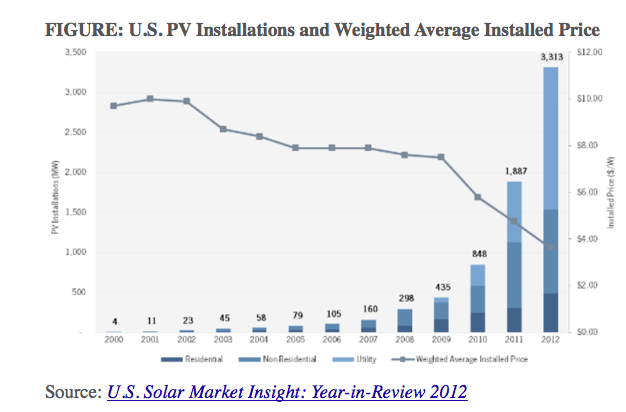
With another record-breaking year, solar is the fastest growing energy source in the U.S., powering homes, businesses and utility grids across the nation. The Solar Market Insight annual edition shows the U.S. installed 3,313 megawatts (MW) of solar photovoltaics (PV) in 2012, a record for the industry. Perhaps most importantly, clean, reliable, affordable solar is continuing a major growth pattern that has made it a leading source of new electricity for America that’s increasingly competitive with conventional electricity across dozens of states today.
Even with the cost of solar falling for consumers, the market size of the U.S. solar industry grew 34 percent from $8.6 billion in 2011 to $11.5 billion in 2012—not counting billions of dollars in other economic benefits across states and communities. As of the end of 2012, there were 7,221 MW of PV and 546 MW of concentrating solar power (CSP) online in the U.S. — enough to power 1.2 million homes.
At the state level, 2012 was another year for breaking records. California became the first state to install over 1,000 MW in one year, with growth across all market segments. Arizona came in as the second largest market, led by large-scale utility installations, while New Jersey experienced growth in the state’s non-residential market. The top 10 largest state solar markets in megawatts in 2012 were:
1. California – 1,033 2. Arizona – 710 3. New Jersey – 415 4. Nevada – 198 5. North Carolina – 132 6. Massachusetts – 129 7. Hawaii – 109 8. Maryland – 74 9. Texas – 64 10. New York – 60 MW of PV installed during 2012
In addition to record annual installations, the fourth quarter (Q4) of 2012 shattered all-time quarterly records as well, with 1,300 MW of installed PV, besting the previous high by a whopping 64 percent. The residential and utility segments had their best quarters ever, installing 144 MW and 874 MW respectively.
“2012 was a busy year in the U.S. solar market,” said Shayle Kann, vice president at GTM Research. “The market value of U.S. solar installations reached $11.5 billion in 2012, up from just $3.6 billion in 2009. Amidst this boom, the industry faced newly-imposed import tariffs on Chinese solar cells and ongoing consolidation in the manufacturing space. In 2013, we expect another strong year, driven in part by new mechanisms to increase the availability, and lower the cost, of solar project financing.”
The residential market saw meaningful growth in California, Arizona, Hawaii, Massachusetts, and New York, as average residential system prices dropped nearly 20 percent in one year – from $6.16 per watt in Q4 2011 to $5.04 per watt in Q4 2012. SEIA and GTM Research expect residential solar to surge in 2013 and beyond, as third-party solar financing options spread across the country.
The non-residential segment, which includes commercial, governmental, and non-profit systems, installed more than 1,000 MW in 2012. Leading non-residential markets included California, New Jersey, Arizona, Massachusetts, and Hawaii.
Meanwhile, the utility market continues to be dominated by installations in the desert southwest. There were 152 utility solar installations in 2012, and eight of the ten largest projects currently in operation were completed in 2012. These installations represented 54% of total installed capacity, or 1,782 MW.
“There were 16 million solar panels installed in the U.S. last year – more than 2 panels per second of the work day – and every one of these panels was bolted down by a member of the U.S. workforce,” said Rhone Resch, president and CEO of SEIA. “We’ve brought more new solar online in 2012 than in the three prior years combined. This sustained growth is enabling the solar industry to create thousands of good jobs and to provide clean, affordable energy for more families, businesses, utilities, and the military than ever before. This growth simply would not have occurred without consistent, long-term policies that have helped to ensure a stable business environment for this country’s 5,600 solar companies – many of them small businesses.”
SEIA and GTM Research expect the growth to continue into 2013 and beyond. For this year, the report forecasts 4,300 MW of new PV installations, up 29 percent over 2012, and 946 MW of concentrating solar power. Over the next four years, the residential and non-residential markets are expected to gain market share as system prices decline, the industry becomes even more efficient, and new financing channels arise. “All of these data point to solar having turned the corner,” added Resch. “Solar is an affordable option for homes and businesses today, and is well on its way to becoming a substantial part of America’s energy portfolio.” Key Report Findings
PV installations grew 76% in 2012 to reach 3,313 MW
There are now more than 300,000 PV systems operating across the U.S.
The U.S. installed 11% of all global PV in 2012, the highest market share in at least fifteen years
Cumulative PV capacity operating in the U.S. as of the end of 2012 stood at 7,221 MW and cumulative operating concentrating solar stood at 546 MW
Twelve states installed over 50 MW of solar each in 2012, up from eight in 2011
There were over 90,000 solar installations in 2012, including 83,000 in the residential market alone
The non-residential segment, which includes commercial, governmental, and non-profit systems, installed more than 1,000 MW in 2012. Leading non-residential markets included California, New Jersey, Arizona, Massachusetts, and Hawaii.
Weighted average PV system prices fell 27% in 2012, reaching $5.04/W in the residential market, $4.27/W in the non-residential market, and $2.27/W in the utility market

 Tulare County Jobless Rate Improved
 Power Plants To Be Scrapped