Utah Wind Farm Could Power LA

$8-billion green energy initiative proposed for Los Angeles

Project would link one of nation’s largest wind farms to one of world’s biggest energy storage facilities
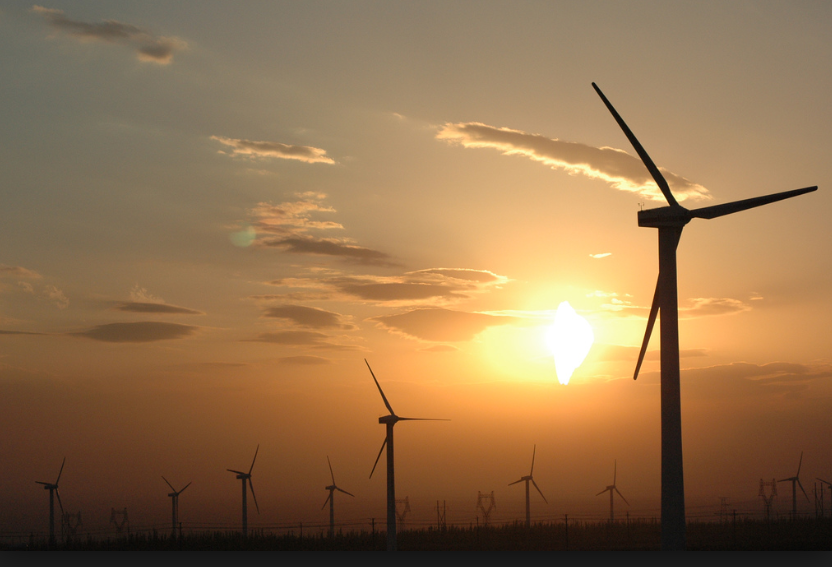
Screen Shot 2014-09-23 at 7.58.21 AMLOS ANGELES, Sept. 23, 2014 /PRNewswire/ — Four companies today jointly proposed a first-in-the-U.S., $8-billion green energy initiative that would bring large amounts of clean electricity to the Los Angeles area by 2023.
The project would require construction of one of America’s largest wind farms in Wyoming, one of the world’s biggest energy storage facilities in Utah, and a 525-mile electric transmission line connecting the two sites.
“This project would be the 21st century’s Hoover Dam – a landmark of the clean energy revolution,” said Jeff Meyer, managing partner of Pathfinder Renewable Wind Energy, one of the four companies involved in the initiative.
The proposed project would generate more than twice the amount of electricity produced by the giant 1930s-era hydroelectric dam in Nevada – 9.2 million megawatt-hours per year vs. 3.9 million megawatt-hours.
A key component of the project – a massive underground energy storage facility – would yield 1,200 megawatts of electricity, equivalent to the output of a large nuclear power plant and enough to serve an estimated 1.2 million L.A.-area homes.
The four companies – Pathfinder Renewable Wind Energy, Magnum Energy, Dresser-Rand and Duke-American Transmission – will formally submit their proposal to the Southern California Public Power Authority by early 2015 in response to the agency’s request for proposals to supply the Los Angeles area with renewable energy and electricity storage.
The underground energy storage facility would help solve one of renewable energy’s biggest challenges – its intermittency. Wind farms produce no electricity when there’s no wind; solar farms produce no electricity when there’s no sun.
Linking the wind farm to the energy storage facility would enable the wind farm to function largely like a traditional coal, nuclear or natural gas power plant – capable of reliably delivering large amounts of electricity whenever needed, based on customer demand.
The energy storage facility also would reduce the need for L.A.-area utilities to build expensive backup power plants and power lines to serve customers on days when there’s no wind, at night when there’s no sunlight, and during other periods when traditional wind and solar farms are unable to produce electricity.
Key components of proposed project
Wind farm – Pathfinder Renewable Wind Energy would build, own and operate the $4-billion wind farm – near Chugwater, Wyo., 40 miles north of Cheyenne – which would generate 2,100 megawatts of electricity.
Energy storage facility – Pathfinder Renewable Wind Energy, Magnum Energy and Dresser-Rand would install the $1.5-billion “compressed air energy storage” system at a site near Delta, Utah, 130 miles southwest of Salt Lake City.

Four vertical caverns – carved out of an underground salt formation at the site – would be key components of the storage system.

Each cavern would be about a quarter-mile in height, 290 feet in diameter and 41 million cubic feet in volume. The four caverns combined would store the energy equivalent of 60,000 megawatt-hours of electricity. 

During periods of low customer demand, the storage facility would use excess electricity from the Pathfinder wind farm to compress and inject high-pressure air into the caverns for storage.

During periods of high customer demand, the facility would use the stored, high-pressure compressed air, combined with a small amount of natural gas, to power eight generators that would produce electricity.
Electric transmission line – Duke-American Transmission proposes to build the $2.6-billion, 525-mile, high-voltage electric transmission line that would transport the Wyoming wind farm’s electricity to the Utah energy storage facility.

The transmission line – a shorter alternative to Duke-American Transmission’s previously proposed 850-mile Zephyr transmission project – would traverse Wyoming, Colorado and Utah, with a target in-service date of 2023. 

A separate, existing 490-mile transmission line – traversing Utah, Nevada and California – would transport electricity from the Utah energy storage facility to the Los Angeles area.

Savings At The Pump As Oil/Gas & Ethanol Prices Fall

September 22,2014

Oil prices are again falling this week down to $91.46 a barrel for WTI even as refineries are starting a switch to cheaper winter blends of fuel for your car and paying less for ethanol going forward. The ethanol is blended at 10 percent into your gasoline.

Falling oil prices
Falling oil prices

California gasoline prices are down to a low of $3.29 at scores of stations according to Gas Buddy although the state average is now $3.73, the lowest since February.Winter gas prices are typically lowest when demand is soft with last years average winter price falling to as low as $3.50 A consumer friendly combination including a glut in supply,reduced demand and now the calendar is helping to reduce gas prices at the pump. “September marks the start of refineries beginning their yearly transition to producing a winter blend of gasoline“, said Cynthia Harris, AAA Northern California spokesperson. “This blend is cheaper to produce because it does not need to meet the emissions requirements that are in place to prevent pollution when temperature are warmer, therefore, registering cheaper prices at the pump.”

Falling ethanol price

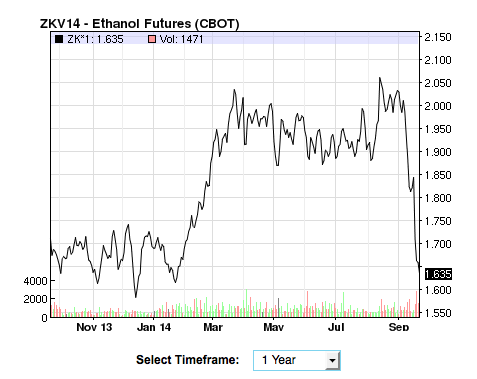
Also helping to drive prices down as we move into October are lower  wholesale ethanol prices that have dropped about 40 cents this month  due to an abundant corn crop being harvested this month and falling corn prices. Will California retail gas prices get down to $3 between now and the end of the year? Gas Buddy’s Tom Kloza does not think so but they will fall more, he says. Meanwhile,AAA expects the national average to fall another 10-20 cents by the end of October.

Energy Briefs: Solar & Biofuel

September 16,2014

8MW Solar Project In Kings County

ImModo plans a 60 acre  8MW solar project south of Lemoore on 19th Ave says county planner Chuck Kinney. The company already has a solar project  near Hanford under construction.

Dominion Plans To Acquire Two Solar Energy Projects In Valley

RICHMOND, Va., Sept. 15, 2014 /PRNewswire/ — Dominion (NYSE: D) announced an agreement to acquire two solar energy projects totaling 42 megawatts from EDF Renewable Energy, one of North America’s largest independent power producers and renewable energy project developers. The acquisitions of the California projects are expected to close in 2015. The Cottonwood project, with solar sites located in Kings, Kern and Marin Counties, has secured a 25-year power purchase agreement (PPA), interconnection agreements and engineering, procurement, construction (EPC) contracts. The company anticipates that the 24-megawatt solar energy facility will come online in the first half of 2015.
The Catalina Solar 2 project, located in Kern County, has secured a 20-year PPA, an interconnection agreement and an EPC contract. The 18-megawatt solar energy facility is expected to enter service in the second quarter of 2015.
Earlier in 2014, Dominion announced agreements to purchase solar energy projects totaling 159 megawatts in California, including the 20-megawatt CID solar energy project from EDF Renewable Energy. All of these projects are under construction and are expected to be operational by late 2014.
With the anticipated addition of Cottonwood and Catalina Solar 2, Dominion’s total contracted solar generating portfolio would consist of 274 megawatts.

Giant King Grass Harvested at UC Research Center

Screen Shot 2014-09-16 at 8.06.56 AMGiant King Grass is a fast-growing, high-yield grass that grows under a variety of soil conditions, according to Viaspace Green Energy Inc. It is propagated vegetatively and, with sufficient rain or irrigation, can grow 15 to 18 feet high in six months.
At the UC Desert Rec, scientists compared two planting processes:
Planting single nodes that grow into individual plants with some space between them.
Planting whole stalks continuously end to end, which results in a dense row of plants about six inches apart.
Preliminary results showed the whole stalk planting germinated earlier and grew more quickly. The individual plants had a significant number of skips where the nodes failed to germinate.
Two harvesting regimens were tested:
Harvest when the plant is 6 to 8 feet tall every two months for animal feed and to produce biogas for anaerobic digestion.
Harvest when the plant is 15 to 18 feet tall for bioenergy applications, such as direct combustion in a power plant, energy pellets or cellulosic biofuels.
“It was 108 degrees when I arrived in Holtville last Monday evening (Sept. 8, 2014) at 6 p.m.,” said Carl Kukkonen, CEO of Viaspace. “Giant King Grass is planted in the worst soil at the University of California site, and still the results are good. I am pleased that Giant King Grass grows well in this extremely hot and dry environment.”

PG&E Says Research Confirms Earthquake Safety at Diablo Canyon

PG&E news release

September 10, 2014

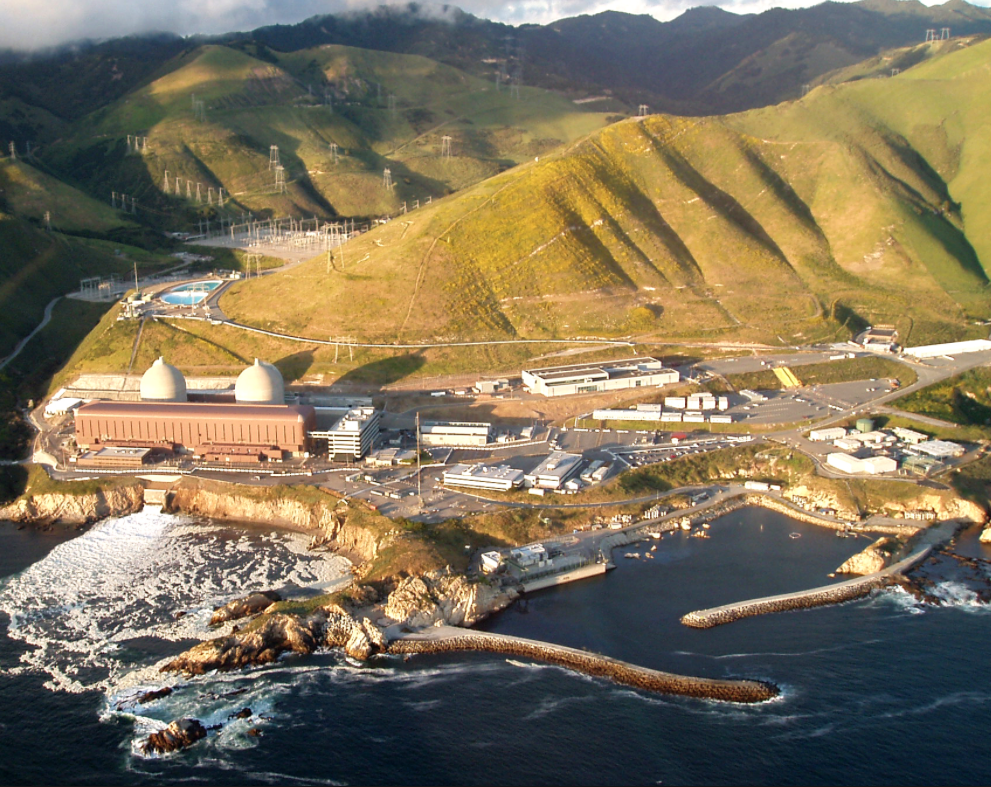
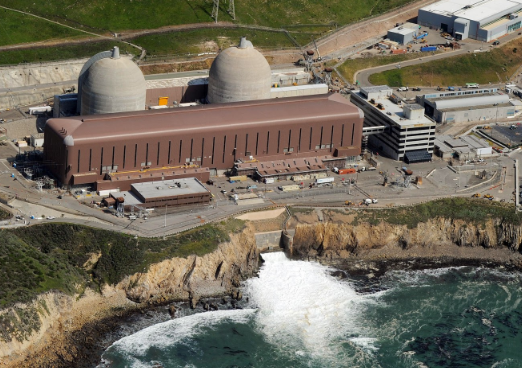
Screen Shot 2014-09-10 at 11.56.47 AMAVILA BEACH, Calif.– Extensive scientific research performed in the area surrounding Pacific Gas and Electric Company’s (PG&E) Diablo Canyon Power Plant demonstrates the facility remains seismically safe and able to withstand the largest potential earthquakes in the region.

This was the main finding in a report PG&E submitted today to the federal Nuclear Regulatory Commission (NRC), the chief safety regulator for the nation’s commercial nuclear power plants. The report was also presented to the California Public Utilities Commission’s (CPUC) Independent Peer Review Panel (IPRP), an advisory task-force that reviewed how the advanced seismic studies would be performed and provided insight and comments to the utility’s researchers.

“This research effort, utilizing the latest technologies, demonstrates Diablo Canyon continues to be seismically safe,” said Ed Halpin, Senior Vice President and Chief Nuclear Officer at PG&E. “These studies provide scientists and regulators an unprecedented scientific analysis of the seismic characteristics near Diablo Canyon.”

“Vast resources have been devoted to examine onshore and offshore fault systems in the region of interest to better understand potential hazards,” said Neal Driscoll, a professor of geology and geophysics at the Scripps Institution of Oceanography at the University of California, San Diego. “In my opinion, outside of oil and gas exploration, the offshore areas by Diablo Canyon are one of the most studied continental regions in the world.”

An example of one of the significantly improved techniques used in this research is the use of state-of-the-art 3D PCable equipment to survey fault systems offshore. This technology provides detailed imaging of steeply dipping faults that are difficult to image using traditional 2D multichannel seismic data. The 3D data provide measurements of fault offsets at unprecedented scales, both vertically and more importantly horizontally. Offset information is a critical input to informing hazard assessments.

The advanced seismic research report contains a summary and 12 detailed, technical reports of key regional seismic features. It also provides updated information on the level of potential ground motions, or shaking that could be produced by earthquakes on local geologic faults.

Knowledge of ground motions is used by engineers to design and evaluate structures to determine if they are seismically safe. Ground motion strength is derived from determining both the magnitude of an earthquake and the distance from a fault line to a specific location. It also depends on natural features, such as whether a structure is built on sturdy bedrock, like Diablo Canyon, or weaker soil, like sand.

“This research confirms previous analyses that the plant is designed to withstand the ground motions from earthquakes in the region, and that major components can continue to perform their safety functions during and after a major seismic event,” said Halpin.

In addition to providing the research to federal and state oversight bodies, PG&E is also sharing the information with local public agencies. They will be able to incorporate the information into their respective emergency preparedness plans and in safety evaluations of critical infrastructure.

PG&E will also use the data to support its Long Term Seismic Program (LTSP), which continually assesses seismic safety at Diablo Canyon. The LTSP is a unique program in the U.S. commercial nuclear power plant industry and was required by PG&E’s licenses to operate the facility. It is comprised of a geosciences team of professionals who partner with independent seismic experts on an ongoing basis to evaluate regional geology and global seismic events to ensure the facility remains safe.

The research will also support a new, NRC-mandated seismic hazard re-evaluation that is being required for all U.S. commercial nuclear power plants. Under this process at Diablo Canyon, existing and new seismic information is being peer-reviewed and publically evaluated by independent experts as part of the NRC required Senior Seismic Hazard Analysis Committee (SSHAC) process. The SSHAC process conclusions will be used to update the models that characterize the seismic hazard near Diablo Canyon. The seismic hazard re-evaluation is due to the NRC in March 2015.

“As a scientist and a member of the SSHAC process, I look forward to reviewing the data presented in these new reports,” said Driscoll. “The information gathered will be of benefit to researchers for decades to come.”

Seismic Research Background

PG&E began its advanced seismic research in 2010. The research focused on providing a more detailed picture of the region’s complex geology and on further defining the level of seismic activity and ground motions that earthquake faults in the region are capable of producing. PG&E completed onshore and offshore seismic surveys at the end of 2012, and installed ocean-bottom seismometers in 2013 to detect and record seismic activity. An evaluation of the survey data has been underway since that time.

About Diablo Canyon Power Plant

Diablo Canyon Power Plant is a nuclear power facility owned and operated by PG&E. Its two units together produce approximately 2,300 net megawatts of carbon-free power. It provides nearly 10 percent of all electricity generated in California, and enough energy to meet the needs of more than three million Northern and Central Californians. Diablo Canyon has a $920 million annual local economic impact and is the largest private employer in San Luis Obispo County.

About PG&E

Pacific Gas and Electric Company, a subsidiary of PG&E Corporation (NYSE:PCG), is one of the largest combined natural gas and electric utilities in the United States. Based in San Francisco, with more than 20,000 employees, the company delivers some of the nation’s cleanest energy to nearly 16 million people in Northern and Central California. For more information, visit pge.com and pge.com/about/newsroom.

Energy Briefs: Solar / Nat Gas / Midway Sunset Oil

September 10,2014

Cuyama Valley Solar Project Gets Green Light

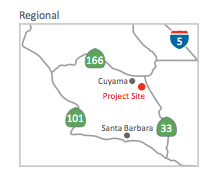
Screen Shot 2014-09-10 at 9.45.22 AMThe Santa Barbara County Board of Supervisors certified the final Environmental Impact Report for a proposed 40-megawatt solar farm being developed by First Solar.The project is located on 327 acres of previously disturbed farmland in the Cuyama Valley, located in Santa Barbara County, California. First Solar expects to break ground in 2015  and be in operational by 2016.
Kern Solar Gets Google Investment

Screen Shot 2014-09-10 at 12.37.32 PM

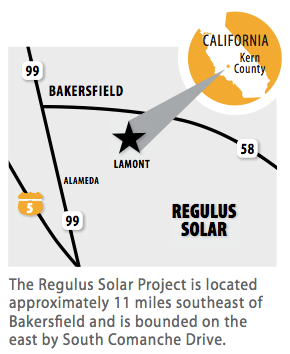
SunEdison, North America’s largest solar energy services provider, is developing a 82 MW solar photovoltaic (PV) system in Kern County, California. The system will be located on a 743-acre site about 11 miles southeast of Bakersfield, California.

Google Inc. is investing $145 million to support SunEdison Inc.’s plan to build thesolar power plant on abandoned oil and gas fields in Kern County, California, the companies announced Wednesday, touted as enough to power more than 10,000 homes.

The 737-acre Regelus solar project is expected to begin operating later this year, supplying power to Southern California Edison through a 20-year purchase agreement. Google said that SunEdison’s plant will spruce the parcel with “high-tech sleek panels.”

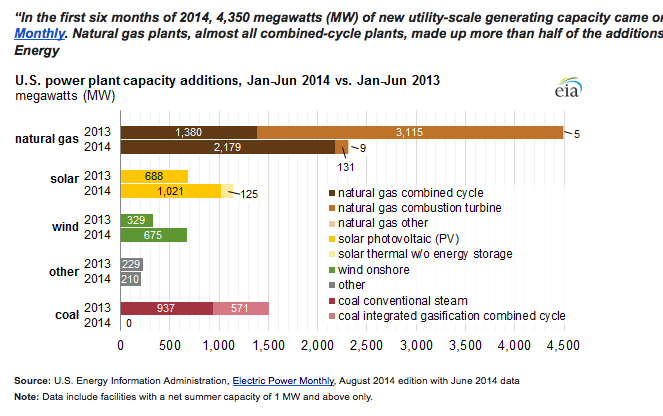
Renewable, Nat Gas Power Generation Grow. Coal is No-Growth

The Energy Information Administration said this week-
Screen Shot 2014-09-09 at 9.24.14 AM

“In the first six months of 2014, 4,350 megawatts (MW) of new utility-scale generating capacity came online, according to preliminary data from the U.S. Energy Information Administration’s Electric Power Monthly. Natural gas plants, almost all combined-cycle plants, made up more than half of the additions, while solar plants contributed more than a quarter and wind plants around one-sixth.”—EIA’s Today in Energy

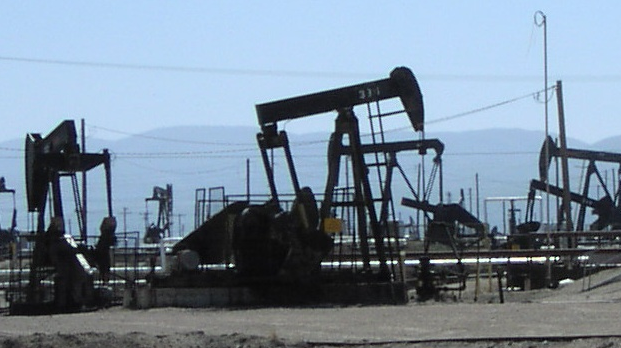
Midway Sunset Oil Down To $88.99

Screen Shot 2014-09-10 at 11.26.48 AMKern County’s Midway Sunset oil is following WTI crude down this week (WTI-today $91.50) to levels not seen since  2011. The posted price for the most quoted California oil used by the state’s refiners is $88.99 today compared to around $96 a barrel at the start of the year and $107 per barrel at the beginning of 2013. Chevron posts the daily price on their website.The lower cost for Midway is helping to drive down gasoline prices in the state this September.The lowest price for gas in the state is $3.39 in Bakersfield says Gas Buddy.

Utility Wants Local Power

SDG&E To Procure More Local Energy Resources

Screen Shot 2014-09-09 at 7.16.37 AMSAN DIEGO, Sept. 8, 2014 – Today, San Diego Gas & Electric (SDG&E) announced it is seeking between 500 and 800 megawatts (MW) of new, local resources to help replace the power previously provided by the San Onofre Nuclear Generating Station as well as the retirement of older, coastal power plants that use once-through-cooling technology. The California Public Utilities Commission’s (CPUC) Energy Division approved SDG&E’s procurement plans earlier this year outlining the company’s approach to procuring 500 to 800 MW of new resources by 2022, with a minimum of 200 MW coming from “preferred resources.”

Preferred resources include energy efficiency, demand response, renewables, combined heat and power resources and distributed generation. Additionally, a minimum of 25 MW of energy storage is included in the mix. SDG&E, through a competitive solicitation, seeks new and innovative solutions to deliver these resources and will evaluate all of them together to ensure that customers are receiving the greatest benefit at the lowest cost. Another important aspect of this effort is that any new resource included will be in the local area which means that the resources obtained will be close to the customers who will be served by them.

“With the region facing a future without the San Onofre Nuclear Generating Station, we must take new and creative approaches to the problem to help sustain reliability in the region at the lowest cost,” said James P. Avery, senior vice president of power supply for SDG&E. “As our customers value sound environmental solutions, we’re committed to achieving this by adding additional cleaner fuels to our portfolio to help to pave the way for a greener, brighter energy future.”

Bids for the all-source solicitation for new and preferred local resources are due Jan. 5, 2015. SDG&E delivered more than 23 percent renewable energy in 2013 and expects to reach 33 percent renewable energy by the end of this year, six years ahead of the state-mandated target. This achievement will be possible due in large part to the construction of the Sunrise Powerlink, a 500-kV transmission line that connects SDG&E’s service territory to abundant renewable resources to the east. Of the 10 solar and wind contracts SDG&E signed in Imperial County, seven are now delivering a total of more than 900 MW across the Sunrise Powerlink.

SDG&E also will evaluate conventional resources as part of this “all source” solicitation. SDG&E already is seeking regulatory approval of a power purchase agreement with the Carlsbad Energy Center, a proposed 600-MW, state-of-the-art conventional peaking facility. If approved, the Carlsbad Energy Center would provide the quick-start flexibility needed to reliably integrate the increasing amount of intermittent renewable energy that is being added to the system. The proposed plant would also be available when customer demand is highest in the late afternoon and early evening when renewable power slows or stops producing. If the CPUC approves the Carlsbad Application, the amount of local resources being sought in the all source solicitation would be reduced accordingly.

SDG&E is a regulated public utility that provides safe and reliable energy service to 3.4 million consumers through 1.4 million electric meters and 861,000 natural gas meters in San Diego and southern Orange counties. The utility’s area spans 4,100 square miles. SDG&E is committed to creating ways to help customers save energy and money every day. SDG&E is a subsidiary of Sempra Energy (NYSE: SRE), a Fortune 500 energy services holding company based in San Diego. Connect with SDG&E’s Customer Contact Center at 800-411-7343, on Twitter (@SDGE) and Facebook.

– See more at: http://www.sdge.com/newsroom/press-releases/2014-09-08/sdge-to-procure-more-local-energy-resources-for-long-term-regional-reliability#sthash.XKCoHiLc.dpuf

BioJet Fuel Gets Boost

September 5,2014

Screen Shot 2014-09-05 at 12.51.28 PMLA ‘s AltAir Fuels will receive a $5 million grant to be approved by the California  Energy Commission September 10 to increase  their production of renewable diesel fuel from 30 to 40 million gallons. A CEC staff report says “AltAir Fuels, LLC proposes to expand its existing facility (Phase II), located at the Paramount Petroleum Refinery, 14700 Downey Avenue, Paramount, CA 90723, to produce 40 million gallons per year of renewable biodiesel and allow for processing of an additional feedstock.” The money will be used to upgrade tanks.

United Airlines has said they agreed to purchase biojet fuel from AltAir Fuels. The announcement is said to be a positive step for clean fuels in California, and proof that advanced biofuels are becoming commercially available. United’s agreement with AltAir Fuels, announced last year, calls for the purchase of 15 million gallons of renewable fuel annually.AltAir Fuels’ renewable jet fuel expected to achieve at least a 50 percent reduction in greenhouse gas emissions on a lifecycle basis
AltAir Fuels, who will produce the fuel at a retrofitted petroleum refinery in Los Angeles. The low carbon fuel will supply flights out of Los Angeles International Airport beginning in 2014.
The site is an existing sour and heavy crude oil refinery facility that has been integrated into the surrounding community for the past 50 year says a CEC report. “Wirtz Elementary School, Paramount High School, a convalescent hospital, dental clinic, and homes are in the immediate vicinity (within 1⁄2 mile). No day care facilities are known in the surrounding area.
Air emissions from operation of the proposed project are minimal as the proposed equipment includes emission control technology and the project proposes use of mostly existing equipment and infrastructure at the Paramount Petroleum Refinery. As compared to the existing Paramount Refinery and the authorized and historical emissions of the refinery, the air emissions of the proposed project are much lower and well within overall site allowed emissions with minor permit changes. The majority of raw materials will be transported by rail. Additional truck transport for the project will be a maximum of 28 trucks per day, assuming all fuel and feedstock shipment is by truck. Total truck traffic will remain significantly less than historical truck volumes at the facility.”

More Oil Will Ride The Rails in Middle California – Big Time

Issue On Front Burner in Kern and SLO County

September 2,2014

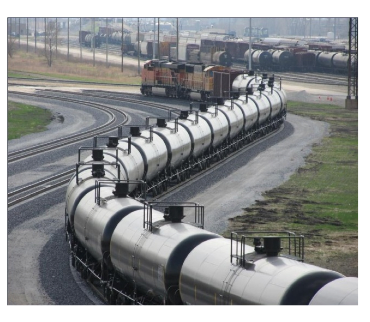
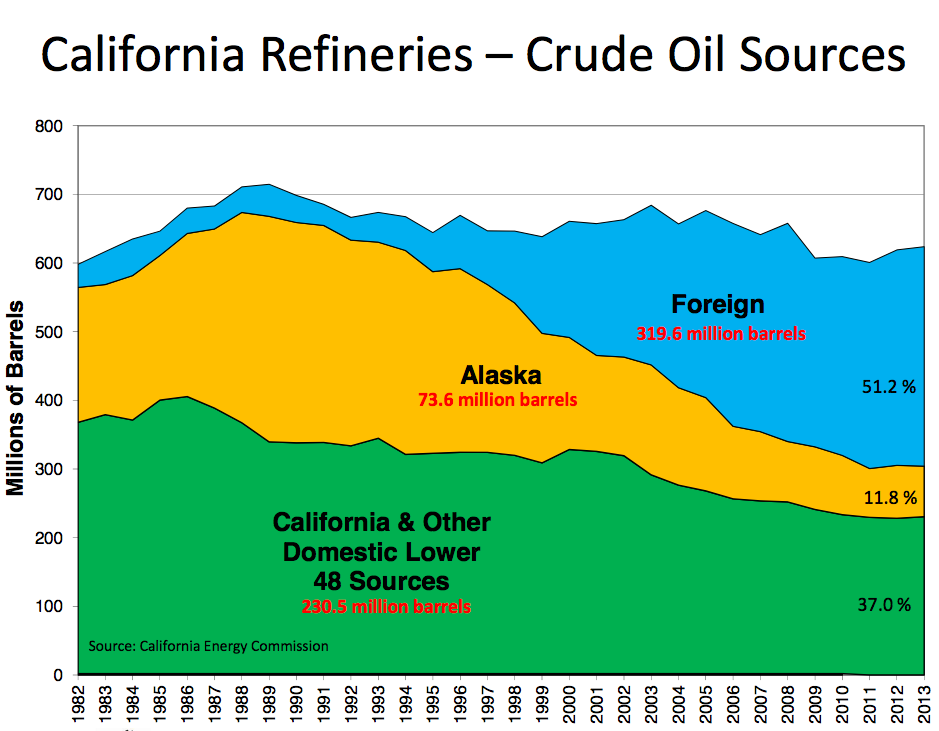
Screen Shot 2014-09-02 at 11.43.35 AMA recent California Energy Commission (CEC) report predicts 80 to 100 car oil trains will be a part of California’s future especially in this blog’s reading area – Central California. Statewide we could see a dramatic rise in the number of these trains. Today about 1 percent of oil is brought into California by rail. By 2016 the supply of oil coming into the state by rail could rise to 23 percent estimates officials. Despite an expectation there will be an in-state oil boom sometime soon coming out of the Monterey Shale deposits, the percentage of oil that is produced in California continues to decline. From 1985 to 2103 in state production is down nearly 50% says the CEC.

Screen Shot 2014-08-31 at 3.45.00 PM Yes We Have No Bonanza

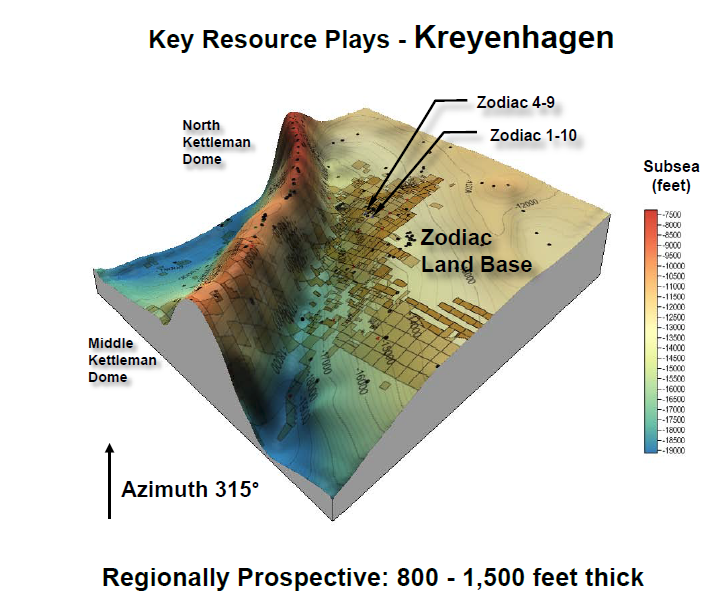
Earlier this year a federal energy agency threw cold water on all the  “black gold” boom talk – slashing by 96% the estimated amount of recoverable oil buried in California’s Monterey Shale deposits in Central California. Instead of 13.7 billion barrels thought to be recoverable, the US Energy Information Agency said it was more like 600 million barrels. You could feel the balloons deflate across the state’s oil patch. Drillers like Zodiac Explorations who have helped fuel talk of a new oil bonanza in Kern, Kings and San Luis Obispo counties have seen their stock deflate. Zodiac has said they had 86,000 acres in Kings County alone they hoped to drill on back in 2011. Today the company has gone through a name change,just fired their chief financial officer and saw its stock plunge from $1.80 a year ago to 0.29 cents.

Kings County oil play.Click to enlarge

Now called Mobius Resources Inc  the company now claims to have some 67,000 acres in the Valley. In their most recent filing they say they have “continued ongoing efforts to seek out partners to jointly develop Mobius’ land or monetize the California properties through discussions with several companies.” The same report issued Aug 28 2014 shows a $55 million net loss for the first nine months the year.

Refiners Seek CBR

If there is no turn-around in California oil production the state needs to get oil from somewhere either by rail, pipeline or boat.  Interstate pipelines connected to California are now used to export transportation fuels to Arizona and Nevada, so dont’ count on pipelines to bring the cheaper crude from the Midwest,Canada or Texas. On the other hand other hand North Dakota oil interests looking to get rid of a gusher supply offer a discount of about $14 a barrel to refiners in Southern California says a CEC report. With the boom in oil production elsewhere in the US in Texas and North Dakota as well as Canada  – the importation of oil by rail into the state went from 1.21 mm barrels in 2012 to 6.3mm barrels in 2103 says the CEC. So far this year Crude by Rail (CBR) into California is up 95% compared to the same period in 2013. At issue are concerns is that this variety of crude that may be both more flammable and more explosive than the region’s heavy oil with routes through populated areas both in the Central Valley and on the Coast down the main UP line, where Amtrak runs, in SLO County. Helping to boost the expected volume are several Central California oil / rail terminals in the works or under construction now. The most immediate is the Plains All American facility in Bakersfield (near Taft) that will be operational later his year. This company will be able to ship cheaper  crude oil north to Bay Area refineries and south, so they will obviously have customers lined up says an energy official. Between the Plains AllAmerican and the proposed Alon USD refinery rail project – Bakersfield and the Central Valley will see three 100-car CBR trains a day. Every town along the route has to be paying attention because of the accident potential CRB is arriving both on the BNSF and UP lines.

Alon Plans

Alon refiner’s former owner went bankrupt in 2008. Now the new Dallas-based owners see expansion on the horizon with their plan set to go to the county Planning Commission September 9 and on to the Board Of Supervisors after. The staff report says the objective of the project is to provide ” greater flexibility” for the existing Alon refinery  to utilize a variety of crude types,not just the SJV’s heavy crude. Crude will be transferred by rail and either processed into products in Bakersfield or shipped by pipeline. The company has another refinery in LA. One fact in the report is that with the new supply – the refinery will be able to increase pipeline shipments to Fresno of diesel and gasoline   from 8736 barrels per day to 19,000 BPD. That would replace truck shipments of product from the Bay Area refineries to Fresno daily argues Alon. Alon says they will build the infrastructure improvements  and refinery modifications  n 9 months and will be ready to receive by the last quarter of 2015.

SLO County Project Draft EIR Expected This Month

Besides these two Bakersfield CBR projects Central California will also see crude by rail shipped into San Luis Obispo County under a proposal by Phillips 66 at their Santa Maria/ Nipomo refinery.  The plan calls for  five 80 car unit trains a week delivering oil through what is termed a “twisty approach” on this rail line and offloading within 2000 ft of homes says a description of issues presented June 25 at an energy commission CBR hearing. The CEC hearing cites other hazards to be wary of including a number of schools, a hospital, earthquake faults and a host of “sensitive species” in a “pristine coastal area.” The County is seeking an early warning system in the event of an accident. The SLO Board of Supervisors are expected to weigh in by early 2015 after a new draft EIR is circulated this fall. The company wants to bring in about 41,000 BPD by rail. Phillips 66 says the feedstock would be sourced from oilfields throughout North America based on market economics and other factors. The most likely sources would be the Bakken field in North Dakota or Canada says a CEC analysis. But a Phillips 66 spokesperson denies  they will receive any lighter Bakken oil. In April the Tribune reported “We told the county to put it right in the project description that we will not receive Bakken crude,” said Jim Anderson, project manager for the rail spur proposal. Some opponents said that their concerns remain despite any promises about the type of crude oil coming by rail into the county. “Regardless of the type of oil, the trains coming through here are a bad idea,” said Martin Akel. Members of the Mesa Refinery Watch group say Phillips 66’s proposal would dramatically transform its business model locally by creating a new, high-intensity operation with 250 more oil-hauling trains traveling through the county and significantly increasing the potential for accidents.”

The Mesa Refinery Group Facebook page says this week a ”revised draft environmental impact report for a proposed rail spur extension at the Phillips 66 refinery is expected to be released by the first or second week of September, San Luis Obispo County officials told a group of residents at a recent meeting organized by Mesa Refinery Watch.”

Visalia Walmart To Get 1 MW Solar Unit

August 29,2014
Home Rooftop Solar More Than Double Last Year’s Pace In Valley

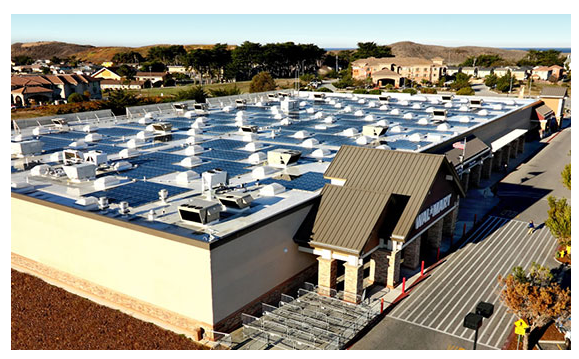
Screen Shot 2014-08-29 at 4.50.48 PMSolarCity will install a1044kw (1MW) solar system on the roof of the Visalia Mooney Walmart according to a building permit filed at the city. Walmart is already the number one commercial solar energy user according to an industry report with 89 megawatts at 215 locations. The company is recognized as the largest on-site renewable energy user in America by the EPA’s Green Power Partnership. The annual Solar Means Business report released in October ranked America’s solar leaders by install capacity with Walmart at No. 1, followed by Costco, Kohl’s, Apple, IKEA, Macy’s, Johnson & Johnson, McGraw Hill, Staples and Campbell’s Soup rounding out the top 10.

“One of SolarCity’s biggest challenges is that customers are still stuck with the stigma that clean energy is expensive,” said Lyndon Rive, CEO of SolarCity, in a press release. “Walmart’s scale, brand, and leadership is sending the signal that solar is cost effective. Walmart is showing you can be sustainable, and you can do it at prices that meet or beat the price of energy from the grid.”

Also this week SolarCity received a permit for a roof mounted units at the City of Visalia Corp yard at 525 Cain. The units will generate 672.7KW

Looking at the bigger picture – solar construction on homes in Tulare County is ahead of last year’s pace with 948 rooftop units installed in the county through this August  compared to 665 through the same period in 2013. But the price per project has gone down as the price for soar panels has fallen.

Across the Central Valley the number of solar projects on homes has more than doubled from 2114 through August of 2013 to 4710 through August 2014 according to figures from Construction Monitor.

More Local Projects

Also on the commercial front Apex Natural Renewable is installing a 750kw unit on the corner of Rd 120 and Hwy 63 east of Orange Cove,

In Kings County Con Edison Solutions is seeking to expand their Corcoran  solar projects pending approval of the county planning commission by adding 40 acres and 11.25 megawatts (MW) to the previously approved solar energy generating facility located at 6734 Nevada Avenue, Corcoran, CA.That will increase the size of the project from 8.5 MW to 19.75 MW and increase the acreage of the project site from 84 acres to 124 acres. Also they want approval to establish a new 20 MW solar energy generating facility for the CED Corcoran Solar 3 Project on 130 acres located at 7094 Nevada Avenue, Corcoran, CA. The Kings Planning Commission will meet September 8.

Fishermen Oppose One Of Two Wave Park Plans Off Morro Bay

August 29,2014
Screen Shot 2014-08-29 at 4.13.22 PM

Estero Bay off the bluffs and Estero Point

The Morro Bay Commercial Fishermen’s Organization (MBCFO) has  penned a letter opposing one of two plans by power plant owner Dynegy to site wave parks off the Morro Bay waters. The applications have been made to the Federal Energy Regulatory Commission(FERC).

The plan by Dynegy calls for two separate wave parks with energy producing buoys offshore tied back to Dyngey’s substation on shore by underwater cable. The fishing group led by president Tom Hafer does not oppose the project proposed for sandy bottom Estero Bay but has a big problem with the proposal off Estero Point,a site that measures 4 miles by 1.5 miles and “is in the rocky reef area where there is heavy local fishing.” Estero Point is a favored fishing area, they say.

Hafer says he was surprised to see the Estero Point proposal to FERC since the concept had been floated earlier this year and “we specifically told them it wouldn’t work.”

The matter is coming to a head as the city is being asked to weigh in on the plans.The Morro Bay Harbor Commission will hear a staff report at their September 4 meeting and could make a recommendation to the city council.

The letter to FERC from fisherman Tom Hafer says “the Central Coast has already lost several  miles of fishing area to Marine Protected Areas,Rock Cod Conservation Areas, Essential Fishery Habitat and a nuclear power plant.”

“We need to protect what fishing areas we have left especially Estero Point which is one of the few area left close to port.”

The Harbor Commission staff report suggests “the City does share these concerns.” In addition they add concerns over the safety of buoys (wave energy converters) that may pose a hazard of both vessels and whales and want to know what mitigation measures might be taken.

The FERC application points out that the projects would start small with just one 1MW buoy for testing purposes.But eventually it could grow the number of buoys to 650 MW of power generated, the amount of power that they were permitted to send from their now mothballed Morro Bay Power plant.