Controversial Kings Power Plant Gets Extension

December 10,2014

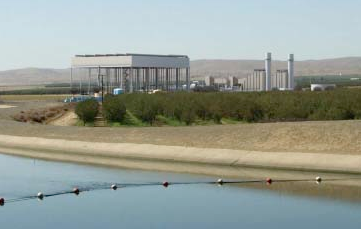
Avenal Energy has received approval of the California Energy Commission to extend the deadline to commence construction of their  controversial 600 MW power plant by nine months from December 16, 2014 to September 16, 2015. The natural gas powered project in Kings County’s westside had received CEC approval  to move forward as far back as 2009 but have been tied up by litigation with environmental groups since. Now the owners want a few more months to decide whether to keep trying or throw in the towel.

Screen Shot 2014-12-10 at 12.38.03 PM


California Average Gas Price Drops To $3

December 5,2014

Screen shot 2012-06-09 at 7.35.08 AMCalifornia average gas price has dropped to $3.01 today according to Gas Buddy making it likely that this weekend drivers will see a below $3 average. Some stations in the state are selling regular today for as low as $2.53 a gallon with the price falling 7 cents in the past week.

Nationwide the average gas price has plunged to $2.71 a gallon while a few stations are selling regular below $2.

As local wholesale prices dipped to their lowest levels since 2009, many Southern California areas are very close to seeing average gasoline prices below $3 a gallon after five straight months of price declines, according to the Automobile Club of Southern California’s Weekend Gas Watch.

In the reading area – SLO Costco is selling regular today for $2.89. At the Visalia Costco gas is selling for $2.69.

Energy Official: Gas Prices To Stay Low In 2015

November 12, 2014 –

Outlook For Oil / Gasoline

Screen Shot 2014-09-10 at 11.26.48 AMU.S. Energy Information Administration Administrator Adam Sieminsk offered his view that gas prices will likely remain below $3 nationwide in 2015 on a glut of crude in the market.

The news comes as WTI crude oil fell to $76.80 today and retail gasoline for sale in California dropped as low as $2.73 a gallon at one Sacramento station. The statewide average today is $3.20 says Gas Buddy. Sieminsk adds he expect the price to continue to decline.

Sieminsk issued the following comments on EIA’s November 2014 Short-Term Energy Outlook, which was released on Wednesday:

Crude Oil:
“Lower crude oil prices may curb drilling activity in some lower-producing U.S. basins, but total domestic oil production should continue to increase through next year as crude prices will be high enough to support most drilling in the major shale oil producing areas of Texas, North Dakota, New Mexico, and Colorado.”
“Rising U.S. crude oil production boosted estimated commercial oil inventories by 20.2 million barrels in October, the biggest increase in oil stocks for the month in 12 years and the fourth largest since 1920.”
“Global oil markets loosened considerably over the last two months, as world oil inventories increased by about 600,000 barrels per day in September and October, marking the third straight month of rising oil stocks. Recent global inventory builds are in contrast to this time last year, when stocks fell by 700,000 barrels per day.”
“Continued growth in global oil supply in the face of weak oil demand will push crude prices lower in the near-term. The average price for Brent crude oil is expected to be about $18 a barrel lower next year than previously forecast.”
Gasoline:
“U.S. gasoline prices are expected to sink further below the $3 a gallon threshold through the end of this year and average under $3 for 2015.”
“The decline in gasoline prices reflects the sharp drop in crude oil costs for refiners caused by rising crude oil production and weak fuel demand.”
Winter Fuels Outlook:
“Lower oil prices are not only driving down gasoline costs, but U.S. consumers should also see bigger savings in their heating oil and propane bills this winter, freeing up money in the family budget.”
“Households that use heating oil should see a savings of nearly $600 in their heating bills compared to last winter, while Midwest propane users will pay about $850 less.”
Natural Gas:
“The U.S. heating season began this month with ample natural gas inventories of almost 3.6 trillion cubic feet, after average gas injections into storage exceeded the five-year average for 29 straight weeks.”
“A record 2.7 trillion cubic feet of natural gas was put into storage by the start of the U.S. heating season this month.”
Electricity:
“Power generation capacity in the Northeast is undergoing a significant change as the Vermont Yankee nuclear power plant is scheduled to cease operations in December and nearly three gigawatts of coal-fired capacity has been retired in the region in the last year.  Much of the lost nuclear and coal-fired electricity generation capacity in the Northeast will be replaced by generation from natural gas-fired power plants and by increased imports of hydroelectricity from Canada.”
Coal:
“Higher electricity demand and higher natural gas prices will increase coal consumption this year for U.S. electricity generation.”

Kern Oil Price Falls To Low $70s – Updated

November 4,2014 –

Screen Shot 2014-11-04 at 11.16.28 AMMidway Sunset oil has dropped in price to $73.52 a barrel as of November 3, a decline of around 30% from this summer’s high when it was $104 per barrel.

(they fell further to $72.18 posted Nov 4)

It was over $120 a barrel as recently as 2012. Midway Sunset from  California’s largest oilfield, tends to follow the WTI crude oil price which has fallen to the high $70s this week on abundant US and world supplies. Chevron posts the price of oils by origin they sell on a daily basis with oil from fields in the Midwest today with several in the low $60s.

Reacting to low prices worldwide Saudi Arabia said they too would lower the price of their crude this week. US production ha surged in recent years and in October the US produced more oil than Saudi Arabia,the first time that has happened in 40 years.

With the Saudi’ s move some speculate that the country with the largest oil reserves is now ready to go even lower to squeeze US production.

One causality has been the decline in the value of the Canadian dollar down today to around $87.63 vs the US dollar.

The increasing value of the US dollar is said to be pushing down oil prices.

A recent Motley Fool report says”Bakken shale producers have spent the past few years investing billions of dollars to push North Dakota to new oil production records. That is likely to change in 2015 as plunging oil prices should cause producers to cut back on investing in exploration for new sources of oil. In fact, according to a recent Bloomberg report, producers already expect capital spending to be flat in 2015 rather than the previously anticipated 5%-10% growth. And if oil prices continue to fall so will capital spending.”

Lower prices may be good for businesses, farms and consumers, even in California enjoying $3 a gallon gas at the pump – but it could also mean job layoffs in Kern County and a drop in property values there and the rest of the state’s oil patch.

The Bakersfield Californian reported last month that some oil industry reps are concerned

“Kern’s Excalibur Well Services Corp. hasn’t experienced any slowdown related to the price drop, Vice President Gordon Isbell said. But he offered a guess as to exactly what level oil prices would have to drop to, and remain for a month or more, before triggering a pullback that would claim maybe 20 percent to 30 percent of local oil field jobs.

“If you see oil get down to $65 (per barrel) … I think that’s going to be probably the shakeout number right there,” he said. For conventional wells that don’t require enhanced stimulation, he estimated the trigger at $45 or $50 per barrel.”

The Midway Sunset oil field in western Kern has been in slow decline in recent years with production of 28.8 million barrels last year compared to 34.2 million in 2009.
Ironically falling oil prices may quiet the calls for even more drilling even as the GOP increases its power in Washington .The Keystone pipeline project to bring oil from Canada may face a new hurdle with prices below $75. An environmental analysis released by the State Department said oil prices would have to fall to $75 a barrel for Keystone XL to affect development of Canadian heavy crude. A recent report said” At $75, a government analysis said producers may be discouraged from developing Canada’s oil sands without pipelines like Keystone.”

“It changes the narrative quite a bit,” Anthony Swift, an international lawyer at the Natural Resources Defense Council in Washington, said of the tumble in crude prices.”

The group opposes more crude from Canada because of they say it produces higher greenhouse gas emissions.
“The pace of oil-sands production is key in the debate over Keystone, a Canada-to-U.S. line TransCanada Corp. (TRP) proposed in September 2008 when oil was more than $100 a barrel.”

Today on CNBC oilman T Boone Pickins said “Stop Drilling” to the industry.What happened to ‘Drill Baby Drill?’,Another guest predicted gas prices nationwide will fall to $2.50.

The US EIA reported in October that motor gasoline consumption grew by 160,000 bbl/d (1.9%) in 2013, the largest increase since 2004. But consumption of that fuel falls by 20,000 bbl/d (0.2%) in 2014 and by a further 20,000 bbl/d in 2015 as improving fuel economy in new vehicles offsets highway travel growth.

GE Closing Tehachapi Wind Power Plant

November 3,2014
From WindPower Monthly
by David Weston
Screen Shot 2014-11-03 at 1.46.56 PMGE has announced plans to close its turbine manufacturing plant in Tehachapi, California as part of a cost-cutting initiative. The facilities manufacture GE’s 1.7MW platform
GE described the closure of the hub and nacelle factory in the US as “streamlining”. In November, all activities at the Tehachapi plant will be transferred to the company’s second nacelle factory in Pensacola, Florida, southeast US.
GE said 37 jobs would be impacted as a result of the closure. The company will retain the plant as a testing facility and servicing base with around 14 “high-tech” jobs remaining.
Pensacola and Tehachapi both produce turbine components for North America for its 1.7MW turbine platform.
The Tehachapi plant was in operation since the mid-2000s and manufactured components for the 150MW Alta I project – part of the 947MW Alta Wind Energy Centre now owned by NRG Yield. The project in Kern County is now completed,
In a statement, GE said, “When constructing a wind farm, delivering the most advanced technology at the lowest landed cost is a commitment that GE makes to our customers.

Tigher Emission Rules On Refiners

From Gas Buddy

California’s  Bay Area Air Quality Management District (BAAQMD), the public agency responsible for regulating stationary sources of air pollution in the nine counties that surround San Francisco Bay, has launched an aggressive plan to cut emissions from the region’s five refineries.

By unanimous vote on Oct. 15, BAAQMD’s board passed a resolution that commits the agency to completing a series of actions over the next several months to further a newly announced goal of reducing local refinery emissions.

The resolution also calls for staff to create a “companion rule” to PRET that would set emissions thresholds for each refinery to be used as a measure, or baseline, for mitigating any potential future emissions increases.

Staff evaluations of emissions-reducing approaches as well as a recommended strategy for meeting the 20% reduction target are due to the board by December, while the finalized PRET and companion mitigation rules are to be presented by spring 2015, according to the resolution.

BAAQMD said it plans to have a final set of rules in place to meet the new emissions reduction goal by year-end 2015.

According to the latest draft version of PRET, dated July 17, refiners would be required to:

• Provide a detailed and comprehensive health risk assessment of hazardous substances and regulated air pollutants dispersed into the surrounding areas.

• Compile and submit an annual inventory of emissions from their operations.

• Report, on an annual basis, certain composition characteristics of crude oils they process.

• Install, operate, and maintain fence-line and community air monitoring systems.

According to Oil & Gas Journal, much of what BAAQMD proposes with PRET replicates requirements that Bay Area refiners already face under other state and national regulations, while the companion rule raises legal issues related to current operating permits legally granted to the refineries following thorough New Source Review and Prevention of Significant Deterioration permitting practices as delegated to BAAQMD by the US Environmental Protection Agency.
“The companion rule is more or less another version of the baseline rule, which was removed in April from [PRET] due to a series of legal challenges under California law,” said Guy Bjerke of the Western States Petroleum Association (WSPA).

Read more at https://blog.gasbuddy.com/posts/California-tightens-emissions-regulations-on-refineries-again/1715-588318-2715.aspx#98X59OWHKJime2xU.99

Pacific Ethanol Reports Profitable Third Quarter 2014 Results

October 29,2014

Screen Shot 2014-10-29 at 2.52.30 PMSacramento-based Pacific Ethanol reported a profitable third quarter as well as 9 months this week – beating earnings estimates.

“We delivered solid financial results for the third quarter of 2014, supported by efficient operations and continued strong ethanol market fundamentals,” stated Neil Koehler, the company’s president and CEO. “Over the last twelve months, Pacific Ethanol generated adjusted EBITDA of $96.9 million. To sustain our profitable growth, we are implementing several capital expenditure projects to improve efficiencies, diversify feedstock and develop our advanced biofuel initiatives.”

Analysts had estimated 21 cents EPS and the company reported 33 cents earnings per diluted share.Revenue also beat estimates.

The company’s stock had been under pressure until a few days ago as lower ethanol prices followed gasoline down – hurting margins.  The price of ethanol has dropped more than 50 cents in September. But the industry’s main input – corn is also much cheaper this fall than a year ago and going forward. Their stock fell in September from a high of around $25 down to $10 in October until the past few days rising to near $13.It is down today in after hours trading to $11.50.

For the third quarter Pacific Ethanol sold West Coast ethanol at an average price of $2.32 a gallon compared to $2.62 a for the third quarter of 2013.

They paid $5.15 a bushel for delivered corn in the latest quarter  compared to $7.44 in the quarter a year ago.

Financial Results for the Three Months Ended September 30, 2014

Net sales were $275.6 million, an increase of 18%, compared to $233.9 million for the third quarter of 2013. The company’s increase in net sales is attributable to its record total gallons sold resulting from increases in both production and third party gallons.

Gross profit was $18.0 million, compared to $3.5 million for the third quarter of 2013. The improvement in gross profit was driven by significantly improved production margins and corn oil production.

Selling, general and administrative (“SG&A”) expenses were $4.4 million, compared to $2.5 million for the third quarter of 2013. The increase in SG&A is primarily due to an increase in compensation costs tied to the company’s continued profitable results and an increase in professional fees from higher corporate and plant activities.

Operating income was $13.6 million, compared to $1.0 million for the third quarter of 2013.

Fair value adjustments and warrant inducements were $4.4 million, including $1.5 million in warrant inducements in July 2014, as well as $2.9 million in adjustments for intra-quarter warrant exercises. As of October 29th, the company had less than one million warrants remaining outstanding.

Interest expense, net, was $1.1 million, compared to $4.5 million for the third quarter of 2013. This reduction is due to significantly lower debt balances in 2014.

Net income available to common stockholders was $3.7 million, or $0.15 per diluted share, compared to a net loss of $5.3 million, or a $0.40 loss per diluted share for the third quarter of 2013.

Adjusted net income, which excludes fair value adjustments and warrant inducements and extinguishments of debt, was $8.1 million, or $0.33 per diluted share, compared to an adjusted net loss of $3.5 million, or a $0.26 loss per diluted share, for the third quarter of 2013.
Adjusted EBITDA was $15.5 million, compared to $3.4 million for the third quarter of 2013.

Cash at September 30, 2014 was $56.3 million, compared to $5.2 million at December 31, 2013.

Bryon McGregor, the company’s CFO, stated: “During the third quarter, we further strengthened our balance sheet and operating liquidity. Since December 31, 2013, we increased our cash balances by over $51.1 million. As a result, our working capital increased to approximately $93.3 million from $51.2 million at the end of 2013.”
Financial Results for the Nine Months Ended September 30, 2014
Net sales were $851.3 million, compared to $693.1 million in the same period of 2013.

Net income available to common stockholders was $7.8 million, or $0.35 per diluted share, compared to a net loss of $10.3 million, or a $0.91 loss per diluted share, in the same period of 2013.

Adjusted net income was $49.9 million, or $2.26 per diluted share, compared to an adjusted net loss of $10.0 million, or an $0.88 loss per diluted share, for the same period of 2013.

Adjusted EBITDA was $78.7 million, compared to $10.4 million for the same period of 2013.

California Solar Increased 350 Percent in 2013

 Oct 21,2014
From California Energy Commission

UPDATE: See a short interview with Commissioner David Hochschild  about California’s effort to reach the 33 percent by 2020 goal for renewable energy generation.

Solar energy systems are on rooftops throughout California and figuratively blasting through the roof, according to new data compiled by the California Energy Commission. The latest Tracking Progress report for renewable energy shows that solar thermal and photovoltaic (PV) generating capacity increased by 350 percent last year. This growth trend is expected to continue. Solar thermal and PV systems capable of producing 825 megawatts (MW) of electricity have been installed so far this year and an additional 1,650 MW of capacity is being built.

This chart shows solar PV generation is skyrocketing. Solar thermal generation is down slightly.

As you can see from the second chart, solar is a small but growing part of the renewable energy mix in California. The cost of solar PV panels has dropped 80 percent since 2008, which has helped make large-scale PV plants more feasible. At the same time, incentives from state programs such as the New Solar Homes Partnership (NSHP) are helping drive adoption of residential solar. The goal of the NSHP program is to install 360 MW of solar photovoltaic capacity by the end of 2016 and the Energy Commission has distributed more than $100 million with another $80 million reserved for pending NSHP projects.

The Tracking Progress report covers all types of renewable energy in California: solar, wind, biomass, small hydroelectric and geothermal. The report also shows that wind production continues its significant growth. Wind accounted for 45 percent of renewable generation in 2013, up from 41 percent in 2012. We have seen large-scale solar development in our state for many years, but 2013 data make clear that the dramatic transition to large-scale solar is now changing California’s energy portfolio.

The report estimates that in 2013, California served about 22 percent of retail electricity sales from renewable energy. That exceeds the required level of renewable energy in the state’s aggressive Renewables Portfolio Standard (RPS). For 2011 through 2013, the RPS requires all electricity retail sellers to procure an average of 20 percent of retail electricity sales from renewable sources. The target gets higher as we move forward. Renewable energy sources should provide 25 percent of our energy by the end of 2016 and 33 percent by the end of 2020, targets that we are on track to meet.

California’s growth in solar energy tracks with national growth, which was up 418 percent from 2010 to 2014, according to the U.S. Energy Information Administration’s April 2014 Electricity Monthly Update.

Morro Bay Opposes Wave Park Plans

September 26,2014
With the urging of the towns fishermen Morro Bay has opposed proposed locations for a wave park of the Central Coast by Dynegy, owner of the shuttered Morro Bay Power Plant.

The city sent a letter September 10 to the agency overseeing the proposed permit. Some are suggesting a location further away from the community. The city had until September 22 to intervene.

At the most recent Harbor Advisory Board meeting Mr. Endersby displayed an ocean map on screen for the Board to see the proposed locations of the two wave parks by Dynegy. Mr. Hafer said two meetings were held by Dynegy which he and members of the MBCFO and others discussed these two sites, saying that neither location was acceptable to the fishermen. He said the best location would be five miles off shore, directly in line with the former Chevron tanker tie-up location that now holds the pipeline with cables. Mr. Hafer said the Dynegy representatives accepted this site, agreeing with the fishermen. However, this current ocean map of the proposed wave parks only shows the original two unsatisfactory locations. Mr. Joseph Conchelos, local fisherman who attended these meetings, said this permit application does seem to be a foot-in-the-door scheme by Dynegy; he described the enormous size of just one single wave-generating vessel as being 230-feet long, 59-feet wide, 30-feet deep into the water and 35-feet rising in the air above the water.
Mr. Conchelos said the meeting of the MBCFO and Dynegy ultimately was a bait-and-switch proposal by Dynegy. The MBCFO asked Dynegy if the wave-generating vessels could be placed inside a Marine Protected Area (MPA) and were told these were not allowed in any MPAs. Mr. Conchelos said if these are not environmentally sound enough to be placed in an MPA, then he does not trust them going into waters where he makes a living by fishing.

The Morro Bay city council concurred saying both locations as proposed would cause significant disruption to commercial and recreational fisheries.

On September 10, largely with input and recommendation from the Harbor Advisory Board, the City Council approved sending a letter to the Federal Energy Regulatory Commission (FERC) in unanimous opposition to the proposed Dynegy wave parks offshore in local waters. In addition, the City filed a “Notice of Motion to Intervene” in any Dynegy wave park permitting process. If the motion is granted, it means the City reserves the right to request FERC to rehear any decision made in the permitting process, including the ability to have FERC decisions brought to a court for review.

Central California To Get Largest Battery Energy Storage Project in North America

Tehachapi Energy Storage Project, partially funded by the Department of Energy, aims to modernize the grid to integrate more clean energy.

ROSEMEAD, Calif., Sept. 24, 2014 — For Southern California Edison (SCE), building a smarter grid started many years ago with smart meters and upgrades in distribution equipment. Today, the company takes another leap forward with the opening of the largest battery energy storage project in North America — the Tehachapi Energy Storage Project — to modernize the grid to integrate more clean energy.

The demonstration project is funded by SCE and federal stimulus money awarded by the Department of Energy as part of the American Recovery and Reinvestment Act of 2009.

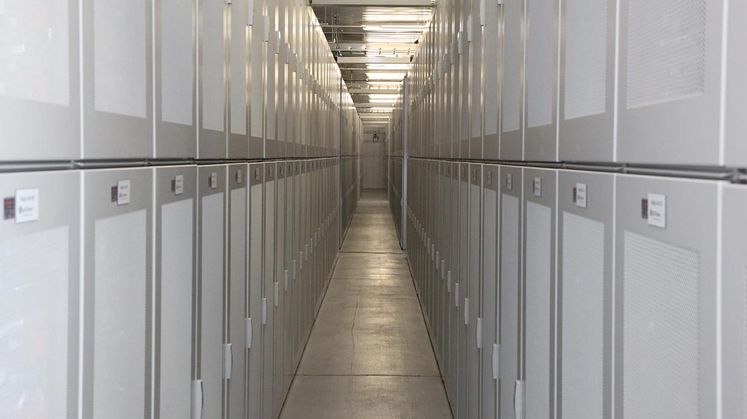
The 32 megawatt-hours battery energy storage system features lithium-ion batteries housed inside a 6,300 square-foot facility at SCE’s Monolith substation in Tehachapi, Calif. The project is strategically located in the Tehachapi Wind Resource Area that is projected to generate up to 4,500 MW of wind energy by 2016.

“This installation will allow us to take a serious look at the technological capabilities of energy storage on the electric grid,” said Dr. Imre Gyuk, energy storage program manager in the energy department’s Office of Electricity Delivery and Energy Reliability. “It will also help us to gain a better understanding of the value and benefit of battery energy storage.”

The project costs about $50 million with matching funds from SCE and the energy department. Over a two-year period, the project will demonstrate the performance of the lithium-ion batteries in actual system conditions and the capability to automate the operations of the battery energy storage system and integrate its use into the utility grid.

“The Tehachapi Energy Storage Project is a significant milestone for SCE and for energy storage in California” said Doug Kim, director of Advanced Technology at SCE. “Grid-scale energy storage is an integral part of our company’s Storage Portfolio Development Framework that will contribute to optimizing grid performance and integrating more renewable energy resources. This demonstration project will give us a significant amount of insight into the operational capabilities of large-scale, lithium-ion battery storage.”

Primary goals of the project are to demonstrate the effectiveness of lithium-on battery and smart inverter technologies for improved grid performance and to assist in the integration of variable renewable energy resources like wind and solar power.

The battery system supplied by LG Chem is comprised of 604 battery racks, 10,872 battery modules and 608,832 individual battery cells – the same lithium-ion cells installed in battery packs for General Motors’ Chevrolet Volt.

“The successful commissioning of the Tehachapi Storage Project marks a key milestone for LG Chem in delivering large-scale energy storage solutions,” said Sung-Hoon Jang, vice president of the Energy Solution Company at LG Chem.  “As a turnkey solutions provider, LG Chem looks forward to its continued collaboration with SCE during the next two years of system operation. The role of energy storage in the electric grid will continue to increase with the growth of renewable energy and distributed energy systems and our collaboration with SCE will provide key insights for current and future energy storage projects.”

About Southern California Edison

An Edison International (NYSE:EIX) company, Southern California Edison is one of the nation’s largest electric utilities, serving a population of nearly 14 million via 4.9 million customer accounts in a 50,000-square-mile service area within Central, Coastal and Southern California.