Diesel Fuel Price Keeps Dropping

February 2,2015

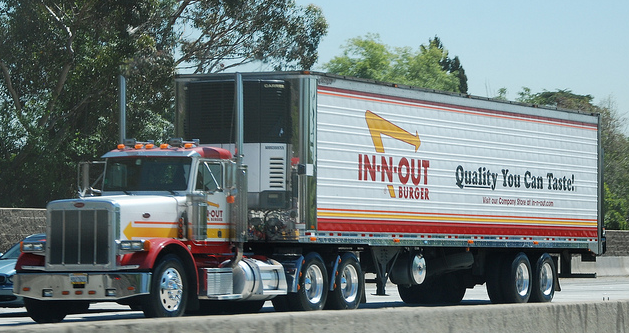
U.S. diesel fuel price continue to decrease – lowest level since February 2010 The U.S. average retail price for on – highway diesel fuel fell to $2.83 a gallon on Monday. That’s down 3 ½ cents from a week ago, based on the weekly price survey by the U.S. Energy Information Administration.

Screen Shot 2015-02-02 at 3.10.12 PMDiesel prices were highest in the Central Atlantic region at 3.04 a gallon, down 3.7 cents from a week ago.

In California the average price was down to $2.88 a gallon with the lowest price in the state down to $2.35. Tulare’s lowest was at $2.57.The average price a year ago was about $4.12.

Low prices for this fuel help move goods more cheaply as well as farmers operate their pumps and farm equipment at a fraction of historical costs.

Visalia: Edeniq Secures $16 Million in Funding

Funding Supports Roll Out of New Products and Expansion into New Markets for Clean Energy Technologies

Screen Shot 2015-01-20 at 11.04.44 AM VISALIA, Calif.  January 20, 2015 – Edeniq, a biorefining and cellulosic technology company, today announced it has raised more than $16 million in equity.  Edeniq is a leading provider of technology solutions for biofuel production, developing next generation cellulosic technologies. Edeniq uses combined mechanical and biological processes for maximum efficiency and lowest cost.

The equity investment was led by I2BF Global Ventures, an existing investor; Draper Fisher Jurvetson, Angeleno Group, Flint Hills Resources Renewables, The Westly Group, Cyrus Capital, and Nimes Capital also continued to support Edeniq.

“Edeniq has a proven track record with customers and is now poised to roll out new products and expand into new markets,” said Alexander Nevinskiy, Partner at I2BF and newly appointed member of Edeniq’s board of directors. “I2BF believes Edeniq’s technologies are helping to solve the industry-wide shortage of low-cost, sustainable fuels and chemicals.”

The funding will support the roll-out of Edeniq’s PATHWAY™ Platform, which increases ethanol yield at existing plants by three to six percent through a more complete conversion of starch and cellulosic corn kernel fiber into ethanol.

Edeniq’s technologies efficiently break down biomass to liberate cellulosic sugars that can be converted into ethanol, chemicals, and other products. Edeniq owns and operates a fully integrated two ton per day pilot plant in Visalia, California, which is currently in operation converting cellulosic feedstock into low-cost cellulosic sugars. Key to the process is Edeniq’s patented technologies, including mechanical pretreatment of biomass with the Cellunator™.

Edeniq and Usina Vale are currently constructing a 20 ton per day demonstration plant to produce cellulosic sugars from sugarcane bagasse, the fibrous by-product of sugarcane juice extraction. The plant is co-located with Usina Vale’s ethanol and sugar production suite in Sao Paulo State, Brazil.

“Edeniq is committed to delivering low capital, highly operable solutions to biofuel and biochemical producers,” said Brian Thome, President and CEO, Edeniq.  “The investments by these prestigious organizations allow Edeniq to accelerate the PATHWAY™ Platform expansion in the U.S. and continue to build valuable partnerships abroad.”

Edeniq recently announced the company has entered a partnership with Global Bio-chem. The two companies plan to integrate their technologies in a commercial demonstration plant at Global Bio-chem’s facility in the Jilin Province of China.  Construction has been initiated on the plant, with a target to produce 50,000 metric tons per year of sugars from corn stover.

Lower Oil Prices Hurting Renewables? Maybe Not

January 20,2015

Alternative energy advocates have worried that low oil and gasoline  prices may hurt the effort to cut greenhouse gas emissions with renewable energy.
The counter argument is that renewables are being mandated by governments around the world to insure that does not happen and even increase their use.
Even oil rich United Arab Emirates says it ain’t so.
“Our interconnected energy landscape has evolved beyond the point where the price of oil determines the fate of clean energy,” said minister of state Sultan al-Jaber who is also chairman of Masdar, Abu Dhabi’s renewable energy company.
Oil prices have fallen by almost 60 percent since June, crashing on worries over global oversupply and weak demand in a faltering world economy.
Speaking at the World Future Energy Summit opening ceremony in Abu Dhabi, Jaber said that globally, investments in clean energy have increased by 16 percent during the past 12 months amounting to $310 billion.
Meanwhile, production capacity of wind turbines and solar energy panels increased by 26 percent during the same period, producing 100,000 megawatts.
That’s true for ethanol in the US where government mandates the fuel mix be at least 10% renewable blended ethanol despite what price oil is selling for.
In California Governor Brown has called for an increase in mandated renewable uses to generate power to 50%.
Power generation does not come from oil but coal and nat gas in the fossil fuel category.
To cut gasoline use in the state Brown has backed solar and wind powered high speed rail.

Solar: You Got To Believe!


Parkfield 280MW Solar Project Gets OK

January 20,2015

The Monterey County Planning Commission on an 8 to 0 vote approved a huge solar plant to be located nearby Parkfield in Central California.
The Commission will recommend that the Board of Supervisors approve the California Flats Solar project. The 3,000-acre, 280-megawatt photovoltaic solar farm would be located off an existing power transmission line in the Cholame Valley near the SLO County line.
The plant is being proposed by First Solar who built a solar farm in the Carrizo Plain nearby.
The Monterey newspaper reported that “Attorney Tony Lombardo, representing the applicant, pointed out the project site on the 72,000-acre Jack Ranch, owned by the Hearst Corp., had been identified by the state as a preferred site for a solar farm. He argued the rows of solar panels would resemble vineyards from the nearby Van Boxtel family ranch, whose owners showed up to oppose the project.”


Screen Shot 2015-01-20 at 7.21.37 AM

PG&E, BMW Partner on Pilot Project to Extract Grid Benefits from Electric Vehicles

January 10,2015
Screen Shot 2015-01-10 at 10.58.52 AMSAN FRANCISCO – PG&E and automaker BMW are teaming up to test the ability of electric vehicle batteries to provide valuable services to the electric grid. If successful, the pilot program could pave the way for significant utility payments that could stimulate further customer purchases of electric vehicles.
PG&E selected BMW after a competitive solicitation to manage a minimum of 100 kilowatts of electric demand on PG&E’s system, much as other large industrial and commercial customers do today as part of the utility’s demand response programs. Those programs improve reliability, lower costs and help the environment by incenting customers to cut usage during periods of high peak demand.

PG&E sponsored a test drive of electric vehicles, including the BMW i3, at the 2014 San Francisco International Auto Show.
Demand response programs can save money by delaying the need to upgrade power lines, transformers and other equipment to handle infrequent peaks in demand. They can reduce the need to buy expensive and polluting fossil-fueled power to meet such spikes in demand. And, with further refinement, they may help utilities manage and smooth out the intermittent flow of energy from renewable sources such as wind and solar generation.
BMW will help PG&E manage power demand on its grid in two ways. First, the automaker will create a large energy storage unit at the BMW Group Technology Office in Mountain View, using lithium-ion batteries that were once installed in MINI E demonstration vehicles. Like other storage systems, these “second life” batteries can absorb cheap surplus electrical energy when demand is low and release it on request when demand soars.
Second, BMW will enlist up to 100 customers of its new BMW i3 electric vehicles to take part in the BMW i ChargeForward Program. If PG&E needs to curb customer demand for whatever reason, it will send BMW an alert over the Internet, indicating how much load to cut and for how long. BMW then will signal the telemetry equipment in each participating vehicle, telling it to halt its charging for the duration of the event.

Brown Proposes 50% Renewables

January 8,2015

California already has one of the nation’s strongest renewable energy targets, and now Governor Jerry Brown wants to make it even stronger.

Using his January 5 inaugural address as his vehicle, Brown proposed that the state increase its renewable energy target to 50 percent of the state’s electricity by 2030. California’s current renewable portfolio standard, considered a landmark piece of legislation when it was first established in 2002, calls for one-third renewables by 2020 as a result of later legislation. The 2002 legislation included benchmarks of 20 percent by the end of 2013 and 25 percent by the end of 2016.

“Under laws that you have enacted, we are on track to meet our 2020 goal of one-third of our electricity from renewable energy,” Brown reported in his inaugural address.

Having accomplished such benchmarks, it’s now “time to establish our next set of objectives for 2030 and beyond,” he said.

In addition to the renewable energy initiative, Brown also proposed to cut current petroleum use in cars and trucks by up to 50 percent and to double the efficiency of existing buildings.

The governor acknowledged his proposals are only a launching point. “How we achieve these goals and at what pace will take great thought and imagination mixed with pragmatic caution,” he said. “It will require enormous innovation, research and investment. And we will need active collaboration at every stage with our scientists, engineers, entrepreneurs, businesses, and officials at all levels.”

Pacific Ethanol Enters Into Merger Agreement With Aventine Renewable Energy

Would Double Size Of Sacramento Based Producer

Screen Shot 2014-12-31 at 7.28.22 AMSACRAMENTO, Calif., Dec. 31, 2014 (GLOBE NEWSWIRE) — Pacific Ethanol, Inc. (Nasdaq:PEIX), the leading producer and marketer of low-carbon renewable fuels in the Western United States, and Aventine Renewable Energy Holdings, Inc. (“Aventine”), a Midwest-based producer of ethanol and related co-products, announced they have entered into a definitive merger agreement under which Pacific Ethanol will acquire all of Aventine’s outstanding shares in a stock-for-stock merger transaction.

“With this transaction, Pacific Ethanol strengthens its unique production and marketing advantages by diversifying into two additional discrete markets and connecting its Western markets with Aventine’s Midwest and Eastern markets for low-carbon renewable fuels,” said Neil Koehler, CEO of Pacific Ethanol. “The merger offers a rare opportunity to combine the experience, market presence and diversification that Aventine brings with our industry leadership in Western US markets. It will complement our existing business as we balance assets across new regional markets, expand our footprint for the production and marketing of low-carbon renewable fuels, diversify our technology and increase our mix of co-products.”

“This transaction will more than double our annual ethanol production capacity, and it will establish Pacific Ethanol as the fifth largest producer and marketer of ethanol in the United States. Once closed, we expect the transaction to be immediately accretive to earnings with expected operational synergies and the expansion of our ethanol and co-product marketing business. We are impressed with the both the quality of Aventine’s assets and the seasoned employees operating the business, and we look forward to integrating our teams,” concluded Koehler.

“In late 2012, the new Aventine management team defined a very aggressive turnaround strategy,” stated Mark Beemer, CEO of Aventine. “Our mission has been accomplished with our plants achieving five new production records; over $30 million invested in the Pekin facilities, including coal-to-natural gas conversion; and additional capital investments in our Nebraska facilities. In 2014, Aventine achieved record earnings and successfully restarted its 155 million gallons of ethanol production in Nebraska. We look forward to making a successful transition of the business to Pacific Ethanol and bringing the combined strength of the two companies to the market.”

Under the terms of the merger agreement, Pacific Ethanol expects to issue approximately 17.75 million shares of its common stock upon closing in exchange for all of the issued and outstanding shares of Aventine’s common stock. Upon completion, existing Pacific Ethanol shareholders will own approximately 58% of the issued and outstanding shares of common stock of the combined entity, and Aventine will nominate two representatives to be named later to Pacific Ethanol’s board of directors, increasing the total board count to nine.

Aventine will be operated as Pacific Ethanol’s wholly-owned subsidiary. Aventine currently has $135 million in term loan debt.

Aventine’s ethanol production assets include its 100 million gallon per year wet mill and 60 million gallon per year dry mill located in Pekin, Illinois, and its 110 million gallon per year and 45 million gallon per year dry mills in Aurora, Nebraska. Combined with Pacific Ethanol’s current ethanol production capacity of 200 million gallons per year, the combined company will have a total ethanol production capacity of 515 million gallons per year, and together with Pacific Ethanol’s marketing business will sell over 800 million gallons of ethanol annually.

The closing of the transaction, which is expected to occur during the second quarter of 2015, is subject to customary and other closing conditions and regulatory approvals, as well as the approval of Pacific Ethanol’s and Aventine’s shareholders.

For Pacific Ethanol, Troutman Sanders LLP served as legal advisors and Craig-Hallum Capital Group LLC provided a fairness opinion to the Board of Directors of Pacific Ethanol. For Aventine, Akin Gump Strauss Hauer & Feld LLP served as legal advisors and RPA Advisors, LLC served as financial advisors.

Conference Call

The Company will host a conference call and live webcast on Wednesday, January 7th at 1:30 p.m. Pacific Time to discuss the merger. To participate, interested parties should dial 1-877-847-6066 in the United States or 1-970-315-0267 from international locations, conference ID 60307901. A webcast of the conference call will be available at http://www.pacificethanol.net/investors with an accompanying slide presentation that may be accessed on that page and through the webcast link.

A playback of the call will be available until January 14th by dialing 1-855-859-2056 within the United States or 1-404-537-3406 from international locations, passcode 60307901.

About Pacific Ethanol, Inc.

Pacific Ethanol, Inc. (PEIX) is the leading producer and marketer of low-carbon renewable fuels in the Western United States. Pacific Ethanol also sells co-products, including wet distillers grain (“WDG”), a nutritional animal feed. Serving integrated oil companies and gasoline marketers who blend ethanol into gasoline, Pacific Ethanol provides transportation, storage and delivery of ethanol through third-party service providers in the Western United States, primarily in California, Arizona, Nevada, Utah, Oregon, Idaho and Washington. Pacific Ethanol has a 96% ownership interest in PE Op Co., the owner of four ethanol production facilities. Pacific Ethanol operates and manages the four ethanol production facilities, which have a combined annual production capacity of 200 million gallons. These operating facilities are located in Boardman, Oregon, Burley, Idaho, Stockton, California and Madera, California. The facilities are near their respective fuel and feed customers, offering significant timing, transportation cost and logistical advantages. Pacific Ethanol’s subsidiary, Kinergy Marketing LLC, markets ethanol from Pacific Ethanol’s managed plants and from other third-party production facilities, and another subsidiary, Pacific Ag. Products, LLC, markets WDG. For more information please visit www.pacificethanol.com.

Cautionary Statement Regarding Forward-Looking Statements

Statements contained in this communication that refer to Pacific Ethanol’s estimated or anticipated future results, including estimated synergies, or other non-historical expressions of fact are forward-looking statements that reflect Pacific Ethanol’s current perspective of existing trends and information as of the date of this communication. Forward looking statements generally will be accompanied by words such as “anticipate,” “believe,” “plan,” “could,” “should,” “estimate,” “expect,” “forecast,” “outlook,” “guidance,” “intend,” “may,” “might,” “will,” “possible,” “potential,” “predict,” “project,” or other similar words, phrases or expressions. Such forward-looking statements include, but are not limited to, statements about the benefits of the acquisition of Aventine, including future financial and operating results, Pacific Ethanol’s or Aventine’s plans, objectives, expectations and intentions and the expected timing of completion of the transaction. It is important to note that Pacific Ethanol’s goals and expectations are not predictions of actual performance. Actual results may differ materially from Pacific Ethanol’s current expectations depending upon a number of factors affecting Pacific Ethanol’s business, Aventine’s business and risks associated with acquisition transactions. These factors include, among others, the inherent uncertainty associated with financial projections; restructuring in connection with, and successful closing of, the Aventine acquisition; subsequent integration of the Aventine acquisition and the ability to recognize the anticipated synergies and benefits of the Aventine acquisition; the ability to obtain required regulatory approvals for the transaction (including the approval of antitrust authorities necessary to complete the acquisition), the timing of obtaining such approvals and the risk that such approvals may result in the imposition of conditions that could adversely affect the combined company or the expected benefits of the transaction; the ability to obtain the requisite Pacific Ethanol and Aventine stockholder approvals; the risk that a condition to closing of the Aventine acquisition may not be satisfied on a timely basis or at all; the failure of the proposed transaction to close for any other reason; risks relating to the value of the Pacific Ethanol shares to be issued in the transaction; the anticipated size of the markets and continued demand for Pacific Ethanol’s and Aventine’s products; the impact of competitive products and pricing; the risks and uncertainties normally incident to the ethanol production and marketing industries; the difficulty of predicting the timing or outcome of pending or future litigation or government investigations; changes in generally accepted accounting principles; costs and efforts to defend or enforce intellectual property rights; successful compliance with governmental regulations applicable to Pacific Ethanol’s and Aventine’s facilities, products and/or businesses; changes in the laws and regulations; changes in tax laws or interpretations that could increase Pacific Ethanol’s consolidated tax liabilities; the loss of key senior management or staff; and such other risks and uncertainties detailed in Pacific Ethanol’s periodic public filings with the Securities and Exchange Commission, including but not limited to Pacific Ethanol’s “Risk Factors” section contained in Pacific Ethanol’s Form 10-Q filed with the Securities and Exchange Commission on November 12, 2014 and from time to time in Pacific Ethanol’s other investor communications. Except as expressly required by law, Pacific Ethanol disclaims any intent or obligation to update or revise these forward-looking statements.

Important Information for Investors and Stockholders

This communication does not constitute an offer to sell or the solicitation of an offer to buy any securities or a solicitation of any vote or approval, nor shall there be any sale of securities in any jurisdiction in which such offer, solicitation or sale would be unlawful prior to registration or qualification under the securities laws of any such jurisdiction. In connection with the proposed merger between Pacific Ethanol and Aventine, Pacific Ethanol will file with the Securities and Exchange Commission a registration statement on Form S-4 that will include a joint proxy statement of Pacific Ethanol and Aventine that also constitutes a prospectus of Pacific Ethanol. The definitive joint proxy statement/prospectus will be delivered to Pacific Ethanol’s and Aventine’s stockholders. INVESTORS AND SECURITY HOLDERS OF PACIFIC ETHANOL AND AVENTINE ARE URGED TO READ THE DEFINITIVE JOINT PROXY STATEMENT/PROSPECTUS AND OTHER DOCUMENTS THAT WILL BE FILED WITH THE SECURITIES AND EXCHANGE COMMISSION CAREFULLY AND IN THEIR ENTIRETY WHEN THEY BECOME AVAILABLE BECAUSE THEY WILL CONTAIN IMPORTANT INFORMATION. Investors and security holders will be able to obtain free copies of the registration statement and the definitive joint proxy statement/prospectus (when available) and other documents filed with the Securities and Exchange Commission by Pacific Ethanol through the website maintained by the Securities and Exchange Commission at http://www.sec.gov. Copies of the documents filed with the Securities and Exchange Commission by Pacific Ethanol will be available free of charge on Pacific Ethanol’s internet website at www.pacificethanol.net or by contacting Pacific Ethanol’s investor relations agency, LHA, at (415) 433-3777.

Participants in the Merger Solicitation

Pacific Ethanol, Aventine, their respective directors and certain of their executive officers and employees may be considered participants in the solicitation of proxies in connection with the proposed transaction. Information regarding the persons who may, under the rules of the Securities and Exchange Commission, be deemed participants in the solicitation of the Pacific Ethanol and Aventine stockholders in connection with the proposed merger will be set forth in the joint proxy statement/prospectus when it is filed with the Securities and Exchange Commission. Information about the directors and executive officers of Pacific Ethanol is set forth in its proxy statement for its 2014 annual meeting of stockholders, which was filed with the Securities and Exchange Commission on April 28, 2014. Information about the executive officers of Aventine is set forth in www.aventinerei.com. Additional information regarding the participants in the proxy solicitations and a description of their direct and indirect interests, by security holdings or otherwise, will be contained in the joint proxy statement/prospectus filed with the above-referenced registration statement on Form S-4 and other relevant materials to be filed with the Securities and Exchange Commission when they become available.

CONTACT: Company IR Contact:
         Pacific Ethanol, Inc.
         916-403-2755
         866-508-4969
         Investorrelations@pacificethanol.com

         IR Agency Contact:
         Becky Herrick
         LHA
         415-433-3777

         Media Contact:
         Paul Koehler
         Pacific Ethanol, Inc.
         916-403-2790
         paulk@pacificethanol.com

company logo

Source: Pacific Ethanol, Inc.

Released December 31, 2014

Energy Beat: Gas / Diesel / Texas Pipeline

December 19,2014

California Gas Prices Still Heading Lower

California’s average price for gasoline falls to $2.78 per gallon today.
Gas Buddy says one station in the state is selling gas for $2.19. The lowest price for gas in Visalia is $2.45 at several stations. On the Coast in SLO, Costco is selling gas today for $2.55.

Farmers Should Be Winners With Diesel Down Below $3

Screen Shot 2014-12-19 at 8.46.47 AMLike gasoline diesel prices are at a three-year low this month helping to move trucked goods more cheaply to customers.For farmers who need diesel to power their equipment, it is a welcome break in the cost of business as well. The national price for diesel has not fallen as fast as gas and is still $3.50 a gallon but falling while the California average is $3.32 on December 15 says the energy commission.  Diesel  is available in Visalia for below $3. Diesel powers a large majority of California farm equipment, moves products to market, and pumps a large share of the water used in irrigation.
One rice farmer in California who farms 2,000 acres and uses 80,000 gallons of diesel per year. His diesel expense is up approximately $80,000 over last year’s but is falling now. This week  diesel prices were as low as $2.65  gallon in the LA area. The state’s diesel prices was near $4.50 a gallon in 2012.

Kinder Morgan Talks Texas To California Pipeline

The Bakersfield Californian reports that Kinder Morgan has renewed  plans to build an oil pipeline from Texas to Maricopa California. The paper says the the proposal “has undergone changes designed to make oil from the Permian Basin more palatable to California refiners. Refineries in the state generally process the kind of heavy crude commonly produced here and in Alaska. Kinder Morgan’s modified proposal would process lighter Texas crude to make it more suitable to refineries in the Golden State.”

Biofuel Tax Break Passes – But Good Only Through 2014

December 17,2014
On December 16 the U.S. Senate passed a short-term tax extenders bill. The legislation includes one-year extensions of the second-generation biofuel production tax credit and the accelerated depreciation allowance for cellulosic biomass properties, as well as recently expired tax credits for alternative fuel vehicle refueling infrastructure and alternative fuel mixtures. The completed legislation, which was passed by the House of Representatives and now goes to the President for his signature, retroactively applies the incentives to 2014, but does not extend them through 2015.
The tax measure includes the $1 per gallon biodiesel and renewable diesel tax credits. The tax credits will be stated retroactively back to Jan. 1, 2014, and is good only through Dec. 31 of this year. President Obama is expected to sign the legislation within days.
Bob Dinneen, president and CEO of the Renewable Fuels Association, released the following statement:
“Today’s tax extenders package is a step in the right direction. The cellulosic production tax credit will help bolster the emerging cellulosic ethanol industry as plants in Iowa and Kansas are now in production. The alternative fuel vehicle refueling infrastructure tax credit will help expand E85 availability to consumers by assisting gasoline marketers in making the infrastructure investments necessary to enhance greater choice at the pump.
“These incentives can help to level the playing field in a tax code that is overwhelmingly tilted toward incumbent fuels and established oil extraction technologies. In fact, the International Energy Agency’s World Energy Outlook recently found that fossil fuels received an astounding $550 billion in subsidies worldwide last year. In the U.S. specifically, oil companies benefitted from billions in accelerated depreciation, intangible drilling expenses, and countless other tax breaks embedded permanently in the tax code. This drastic imbalance is why fundamental tax reform is so necessary.
“Comprehensive tax reform is also necessary because today’s legislation is a short term solution to a long term problem. Once signed into law, the tax credits will be retroactively applied to 2014 and are only applicable until the end of the month. This once again forces investors and cellulosic ethanol producers to hope for the best but prepare for the worst. Today, Congress should be commended for helping businesses and consumers alike. But next year is a whole new ball game and in order to balance the scales and make future tax incentives truly helpful, Congress must take a good hard look at overarching tax reform legislation.”
–

Visalia Firm – Chinese Co Ink Chinese Development Deal

Edeniq and Global Bio-chem Enter Into Joint Development Agreement

Partnership brings innovative technologies together for the production of low cost sugars from corn stover

Screen Shot 2014-12-10 at 2.46.23 PM

VISALIA, Calif.–()–Edeniq, Inc. (“Edeniq”), a biorefining and cellulosic technology company, today announced a Joint Development Agreement with Global Bio-chem Technology Group Limited (“Global Bio-chem,” HKG:0809), a leading manufacturer of chemicals from industrial sugars. Following a letter of intent forged in July, the companies further cement their cooperation on developing the lowest cost process for converting corn stover to cellulosic sugars for use in the production of bio-based chemical products.

“Through this partnership, we are further demonstrating our commitment to developing next generation cellulosic technologies and the lowest cost route to efficient biofuel and biochemical production.”

Ms. Xu Ziyi, Executive Director of Global Bio-chem, said, “China has a large and growing demand for bio-based products. This partnership will allow us to further develop and commercialize our technology platform utilizing the millions of metric tons per year of corn stover available in the Jilin Province, while significantly reducing the production costs of corn stover-based sugar.”

Edeniq and Global Bio-chem plan to integrate their technologies in a commercial demonstration plant at Global Bio-chem’s facility in the Jilin Province of China. Construction has been initiated on the plant, with a target to produce 50,000 metric tons per year of sugars from corn stover. The two companies not only intend to supply the cellulosic sugars to Global Bio-chem for utilization in its existing sugar-based chemical production facilities, but also plan to forge partnerships with other companies to enable the production of a broad array of biochemicals and biofuels from its sugars.

“Edeniq is known for our capital efficient solutions, and this relationship with Global Bio-chem will allow us to quickly expand into the growing markets in China,” said Brian Thome, President and CEO of Edeniq. “Through this partnership, we are further demonstrating our commitment to developing next generation cellulosic technologies and the lowest cost route to efficient biofuel and biochemical production.”

About Edeniq

Edeniq delivers integrated process innovations that unlock sugars. These technological innovations uniquely combine mechanical and biological processes. Edeniq’s capital light and operationally efficient solutions can be easily integrated into existing biorefineries that produce ethanol, other biofuels, biochemicals, and/or bio-based products. Edeniq currently sells or licenses its technologies to biorefineries in the United States and Brazil. Edeniq was founded in 2008 and is headquartered in Visalia, California with locations in Omaha, Nebraska and São Paulo State, Brazil. More information can be found at http://www.edeniq.com.

About Global Bio-chem

Global Bio-chem has been listed on the Main Board of the Stock Exchange of Hong Kong Limited since 2001. The Group is principally engaged in the manufacture and sale, research and development of corn-based biochemical products in the People’s Republic of China (“PRC”). Its products are sold in the PRC and worldwide. Headquartered in Hong Kong and with its production facilities based in various provinces in the PRC, Global Bio-chem is the largest vertically integrated corn-based biochemical product manufacturer in Asia and is one of the leading lysine players in the fermentation industry worldwide. The Group is one of the pioneers in applying corn starch as raw material for the commercial production of polyol chemicals. Global Bio-chem is also the parent company of Global Sweeteners Holdings Limited, one of the largest corn sweeteners producers in the PRC, which is also listed on the Main Board of The Stock Exchange of Hong Kong Limited.