Tesla Powerpack Chosen For SCE Energy Storage

September 15, 2016

Tesla News Release
screen-shot-2016-09-15-at-12-36-03-pmLast October, a catastrophic rupture in the Aliso Canyon natural gas reservoir caused a methane gas spill that displaced more than 8,000 Californians and released an unprecedented 1.6 million pounds of methane into the atmosphere. Today, the Aliso Canyon leak is considered the worst in U.S. history, with aggregate greenhouse gas emissions said to outweigh those of the 2010 Deepwater Horizon oil spill.

Following the disaster, authorities closed the Aliso Canyon facility, which had been feeding the network of natural gas peaker plants in the Los Angeles basin, deeming it unfit to store the fuel safely and environmentally.

One year later, Los Angeles is still in need of an electric energy solution that ensures reliability during peak times. As winter approaches, homes and buildings in the basin will need more natural gas for heat. These demands apply uncharacteristically high pressure to the energy system, exposing the Los Angeles basin to a heightened risk of rolling blackouts.

Following the leak, California Governor Jerry Brown issued a state of emergency, and in May, the California Public Utilities Commission mandated an accelerated procurement for energy storage. Southern California Edison, among other utilities, was directed to solicit a utility-scale storage solution that could be operational by December 31, 2016. Unlike traditional electric generators, batteries can be deployed quickly at scale and do not require any water or gas pipelines.

Last week, through a competitive process, Tesla was selected to provide a 20 MW/80 MWh Powerpack system at the Southern California Edison Mira Loma substation. Tesla was the only bidder awarded a utility-owned storage project out of the solicitation.

Upon completion, this system will be the largest lithium ion battery storage project in the world. When fully charged, this system will hold enough energy to power more than 2,500 households for a day or charge 1,000 Tesla vehicles.

The Gigafactory’s ability to produce at a large scale will allow this system to be manufactured, shipped, installed and commissioned in three months. The system will charge using electricity from the grid during off-peak hours and then deliver electricity during peak hours to help maintain the reliable operation of Southern California Edison’s electrical infrastructure which feeds more than 15 million residents. By doing so, the Tesla Powerpack system will reduce the need for electricity generated by natural gas and further the advancement of a resilient and modern grid.

In order to achieve a sustainable energy future, one which has high penetration of solar and electric vehicles, the world needs a two-way, flexible electric grid. The electric power industry is the last great industry which has not seen the revolutionary effects of storage. Working in close collaboration with Southern California Edison, the Tesla Powerpack system will be a landmark project that truly heralds the new age of storage on the electric grid.

Visalia Schools To Add More Solar

September 13,2016-

screen-shot-2016-09-13-at-2-54-45-pmVISALIA – Solar installations at schools throughout Visalia Unified School District have saved an estimated $1.7 million in energy costs – and have fueled interest in expanding the solar program.The total savings reflect the documented $1.2 million in reduced energy costs as of July 2015, plus an estimated $500,000 in savings expected in 2015-2016.
The solar effort began in 2013 with Measure E-funded installations at 12 schools throughout VUSD, explained Robert Gröeber, assistant superintendent of administrative services. A second phase followed at six additional sites, funded through Proposition 39 and local funds.
Due to the savings generated, VUSD evaluated additional solar to meet the Board of Trustees’ goal that the entire district “go green,” Gröeber explained, and got the green light to move forward.
The next wave of solar installations at 10 district sites is in the final design phase now. Site work and construction is expected to be complete by the end of the year.
“In addition, all new schools in our district will have solar installations as part of the board’s commitment to clean energy,” Gröeber said. “We are also working toward a new solar battery project that will allow us to ‘bank’ power so the District is charged at the cheapest rate. The money the District doesn’t have to spend on electricity is invested back into education, and we are being good stewards of the environment.”
To enable the next solar installation, VUSD has entered into a Power Purchase Agreement (PPA) with SolarCity Corporation, in which Solar City installs, owns and maintains the solar facilities and sells the solar energy to the district at a lower price than current utility rates, Gröeber explained. Under the PPA, prices will remain fixed for the life of the contract.

Cellulosic Ethanol Technology Approved At Existing Corn Ethanol Plant

September 13,2016-

EPA Approves First Registration for D3 RINs From Edeniq Pathway Technology
Pacific Ethanol is generating valuable D3 RINs from cellulosic ethanol produced with Edeniq’s technology

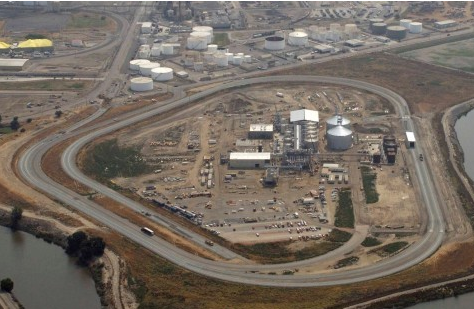
screen-shot-2016-09-13-at-2-48-54-pmVISALIA, Calif.–(BUSINESS WIRE)–Edeniq, Inc., a leading cellulosic and biorefining technology company, this week announced that the U.S. Environmental Protection Agency (EPA) has approved Pacific Ethanol, Inc.’s (NASDAQ:PEIX) registration of its Stockton, CA ethanol plant to generate D3 cellulosic Renewable Identification Numbers (RINs) using Edeniq’s Pathway Technology.
“This approval is a landmark for the ethanol industry and our company,” said Brian Thome, President and CEO of Edeniq. “This opens the door for low-cost production of cellulosic ethanol from corn kernel fiber in existing fermentation vessels to drive yields to 3 gallons per bushel. While we have long heard the story – ‘Cellulosic ethanol will be here in five to ten years,’ Edeniq’s Pathway Technology for profitably producing cellulosic ethanol is here today. A 120 million gallon per year corn ethanol plant can increase its revenue by up to $10 million or more through integration of Pathway, with very little investment and a less than one-year payback. This is a game-changer for the cellulosic ethanol industry, which has historically focused on investing in new plants.”
Edeniq’s Pathway Technology is the lowest-cost solution for producing cellulosic ethanol from corn kernel fiber utilizing existing fermenters at corn ethanol plants. Edeniq is the leader in developing analytical methods to quantify cellulosic ethanol co-produced with conventional ethanol during fermentation, which is required to access regulatory value including D3 RINs, California Low Carbon Fuel Standard (LCFS) credits, and the Second Generation Biofuel Producer tax credit.
The Pathway Technology combination of cellulase enzyme and Edeniq’s Cellunator high-shear milling equipment produces up to 2.5% cellulosic ethanol, up to a 7% increase in overall ethanol yield due to yield enhancement from starch and cellulose, and up to a 30% increase in corn oil recovery.
Stockton Plant More Profitable
Pacific Ethanol began producing cellulosic ethanol at its 60 million gallon per year Stockton, CA plant in December 2015 using the Pathway Technology. Neil Koehler, the company’s president and CEO, stated: “The EPA-approved registration for generating cellulosic ethanol and D3 RINs is an important milestone in our strategy to be a leading producer of cellulosic ethanol. We expect to produce over one million gallons per year of cellulosic ethanol at our Stockton facility. With the high-value D3 RINs, the carbon credit under California’s Low Carbon Fuel Standard, and the federal Second Generation Biofuel Producer tax credit, we expect that cellulosic ethanol production will materially contribute to the profitability of our Stockton facility. As we confirm and optimize our cellulosic ethanol production process, we will look toward expanding this to other Pacific Ethanol plants.”
“Our Pathway Technology offers a very attractive value proposition for every plant configuration,” said Cam Cast, Chief Operating Officer of Edeniq. “Customer interest in our Pathway Technology is very strong right now, and market adoption of our technology in the U.S. alone could add over 300 million gallons per year of cellulosic ethanol. We are excited to be working with ethanol plants on several new commercial trials in addition to previously announced licenses. Our team is inside plants on a weekly basis working side-by-side with our customers, and our pipeline continues to grow. We particularly want to thank the Pacific Ethanol Stockton plant for their partnership in commercializing the Pathway Technology.”
Edeniq is also pleased to announce the closing of a financing round to support an accelerated roll-out of the Pathway Technology.

Morro Bay Wind Farm Project Moves Forward

Competitors Have Till Mid September To Request Bid

August 21,2016-

A thirty day period started August 17 to both comment on the proposal and offer any competitive interest in bidding on the lease that is 33 miles offshore Morro Bay.

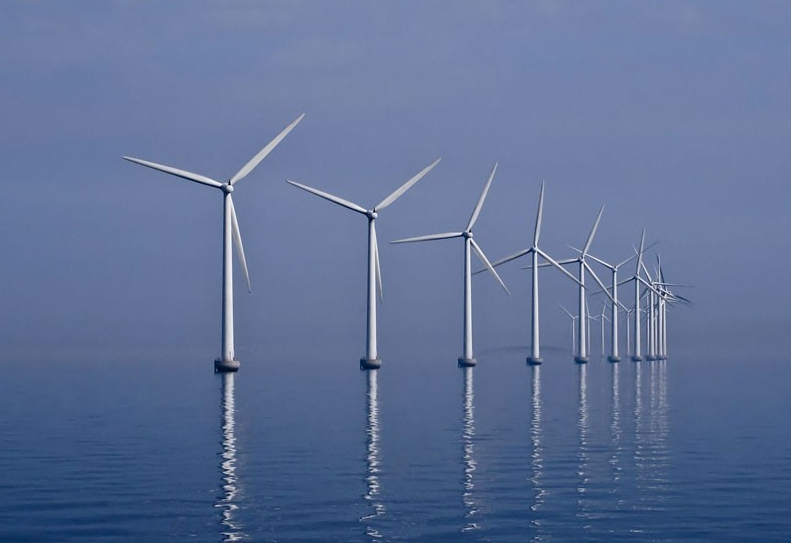
As part of President Obama’s Climate Action Plan to create American jobs, develop clean energy sources and cut carbon pollution, the Bureau of Ocean Energy Management (BOEM) Director Abigail Ross Hopper today announced a major step forward in supporting wind energy development in federal waters offshore California. The Department is issuing a Request for Interest in a lease area requested by Trident Winds, LLC for its proposed 765 megawatt (MW) floating wind energy project.
Screen Shot 2016-08-21 at 8.17.38 AMA thirty day period started August 17 to both comment on the proposal and offer any competitive interest in bidding on the lease that is 33 miles offshore Morro Bay.
“This announcement represents a significant step in facilitating the responsible development of offshore renewable energy to help California meet its energy needs,” said BOEM Director Abigail Ross Hopper. “We are working closely with the State of California, industry and a broad range of stakeholders to ensure that planning for future commercial wind leasing is done in a transparent manner that engages stakeholders throughout the process.”
In consultation with the State of California, BOEM has determined Trident Winds LLC is qualified to hold an Outer Continental Shelf lease and now must determine whether it is appropriate to issue the company a lease on a non-competitive basis, or whether a competitive process is required. The proposed project would consist of 100 floating foundations, each supporting a wind turbine generating 7-8 megawatts of energy. A single transmission cable would bring the electricity to shore. The proposed lease area, about 33 nautical miles northwest of Morro Bay, covers 67,963 acres of federal lands in water depths of 2,600‐3,300 feet.
“This is a compelling opportunity that would assist California in meeting its ambitious and critically important renewable energy goals,” Director Hopper noted. “We will continue our work with public and private stakeholders to create a path forward for sustainable energy development in the right places with the lowest conflicts offshore the Golden State.”
“As California moves forward to meet 50 percent of the state’s energy needs with clean, renewable energy by 2030, wind power will play an important role,” said California Energy Commissioner David Hochschild.
“California has shown the nation that thoughtful planning and coordination can advance sustainable energy solutions,” said Assistant Secretary for Land and Minerals Management Janice Schneider. “Under the leadership of Governor Brown and the California legislature, together we are making progress on creating the policy framework necessary to spur the development of offshore wind energy technology, helping further their goal of producing 50 percent of the State’s electricity from renewable sources by 2030.”
If there is competitive interest, BOEM will initiate the competitive leasing process. If no expressions of interest are received, BOEM will proceed with the noncompetitive leasing process. BOEM is also seeking public comment on the project proposal, its potential environmental consequences, and the use of the area in which the proposed project would be located. According to the National Renewable Energy Laboratory, areas off the U.S. west coast and Hawaii could generate 1.5 terawatts of offshore wind energy, enough to power more than 500 million homes.
BOEM will publish a Potential Commercial Leasing for Wind Power on the Outer Continental Shelf (OCS) Offshore California, Request for Interest in the Federal Register on August 17, 2016. The notice includes a 30-day public comment period. BOEM will accept comments in the following ways:
Electronic comments can be submitted at: http://www.boem.gov/Public-Engagement-Opportunities/. Click on the “Open Comment Documents” link and follow instructions to view documents and submit comments.
Written comments should be sent to: 
Jean Thurston 
Bureau of Ocean Energy Management 
Pacific OCS Region, Office of Strategic Resources 
760 Paseo Camarillo, Suite 102 
Camarillo, California 93010
BOEM received the unsolicited request for a commercial wind lease from Trident Winds, LLC on January 14, 2016. A public copy of the lease request can be viewed at: http://www.boem.gov/California
In May, at the request of California Governor Jerry Brown, Interior Secretary Jewell announced the formation of a California Intergovernmental Renewable Energy Task Force to examine opportunities for offshore renewable energy development. The task force, a non-decisional entity, will facilitate coordination and communication in a partnership between BOEM and state, local, and tribal governments and federal agencies concerning potential renewable energy leasing for research activities and commercial development on federal submerged lands on the OCS offshore California. The first task force meeting will be held later this year.
To date, BOEM’s offshore renewable energy program has awarded 11 commercial wind energy leases off the Atlantic coast. Nine of those leases were issued as a result of competitive lease sales that generated about $16 million in winning bids for more than one million acres. Last week, the Department announced a proposed lease sale for 122,405 acres offshore North Carolina for commercial wind energy leasing, and in June, a proposal to hold a competitive lease sale for an area offshore New York later this year. In the Pacific, BOEM has received three unsolicited commercial floating wind lease requests offshore Hawaii and this one offshore California. BOEM has invested millions of dollars in ongoing environmental and technological studies designed to inform its regulatory process as offshore development proceeds.

Self-Driving Trucks Tested On Concord Naval Grounds

August 21,2016-

No one at the wheel
No one at the wheel

CONCORD (KPIX 5) — Self-driving cars are rolling around America’s roads, and commercial vehicles are close behind.
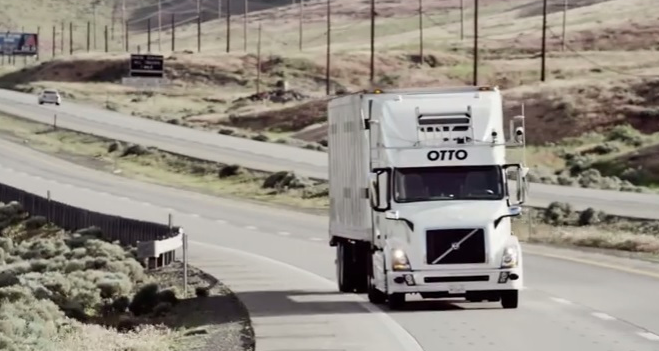
Two Bay Area companies are partnering to produce the first generation of autonomous trucks, and testing them at Concord’s naval weapons station.
“We focus on self-driving trucks,” Otto Technologies co0founder Lior Ron told KPIX 5.
The trucks are equipped with sensors, radar, lasers, cameras, and GPS.
“What we’re trying to do is build technology into vehicles that will drive safer than people,” Anthony Levandowski, the other co-founder of Otto said.
The testing is still working on adverse weather like heavy rain and snow, but engineers say the system has several big advantages.
“The system is always alert, and not trying to send text messages or check Facebook while driving is a big thing, and the computer doesn’t get drunk or get sleepy,” Levandowski said.
The system is not meant to drive on city streets – it’s being optimized for long haul freeways.
The developers say the computers would take control of the truck as it enters the freeway on-ramp, and maintain that control until it reaches its destination off-ramp. That off-ramp could be anywhere in the nation.
“The problem in the united states is that we don’t have enough drivers and as the population grows is that we are going to need more services,” Randy Iwasaki, Executive Director of the Contra Costa Transportation Authority said.
Drivers nearby were a little cautious.
“I don’t think it’s safe. What about mechanical failure,” one driver asked.
“When a big rig crashes into something, typically there’s some sort of flammable, dangerous something or other in the back,” another driver said.
The developers say there is still a lot of work to do.

TOP 10 SLO County Cities With Most Solar.

August 21,2016-

Screen Shot 2016-08-21 at 7.12.35 AMHow Does San Luis Obispo County Compare To The National Average?  Only 1.3% of U.S. HOMES (owner-occupied housing units) HAVE GONE SOLAR .But 7.9% of CALIFORNIA HOMES HAVE GONE SOLAR while 9.6% of SLO COUNTY HOMES HAVE GONE SOLAR according to the SLO-based Solarponics company

Paso Robles has the highest number of homes with solar, with  1,118 Homes With Solar. Shannon has the highest adoption of solar per OOHU, with 21% of homes with solar (or 56 of 267 OOHU). Nipomo  saw a 65% solar growth rate in 2015. SLO County saw 167 solar system installs per month on average in 2015.

The TOP 10 Municipalities In SLO County With The Most Solar Installed (solar permits pulled since 2008): 1. Paso Robles – 1,118  2. Arroyo Grande – 763,3. Atascadero – 661 4. Nipomo – 549 5. SLO – 376 6. Templeton – 353 7. Los Osos – 324  8. Grover Beach – 116  9. Morro Bay – 115 10. Cambria – 89 (Go Cambria).

How much more room is there for solar to grow SLO County? We expect things to slow a bit, but still see 40% growth for 2016, and reaching 25% saturation of OOHU with solar in SLO COUNTY by the end of 2020.

OIL: HIGHER US PRODUCTIVITY & RIG COUNT ADDS UP TO MORE OIL

July 24,2016-

From EIA

Increased drilling may slow pace of Lower 48 states crude oil production declines

Higher and more stable crude oil prices are contributing to increased drilling in the United States, which may slow the pace of production declines. Benchmark West Texas Intermediate (WTI) crude oil prices averaged $46.59 per barrel (b) over the last three weeks, a 40% increase over the average price in the first quarter. The Lower 48 states onshore oil active rotary rig count, as measured by Baker Hughes, stood at 336 rigs on July 15, 29 rigs above the end-June number. While declines from existing wells are expected to result in a net decrease in production, increased drilling and higher well productivity are expected to soften the decline.
Screen Shot 2016-07-24 at 10.14.01 AMIn addition to having more rigs drilling new wells, the average productivity of rigs continues to increase. The new-well oil production per rig through July 2016 averaged 796 barrels per day (b/d) in the Bakken region (within the Williston Basin), 983 b/d in the Eagle Ford, and 470 b/d in the Permian, according to EIA’s latest Drilling Productivity Report (Figure 2). This represents productivity increases of 155 b/d, 226 b/d, and 111 b/d per well, respectively, over the 2015 averages for these regions.

Recent announcements from U.S. exploration and production companies also confirm renewed activity in drilling and capital investment. Several companies with comparatively strong financial positions recently announced large mergers and acquisitions to acquire assets, with average value per deal in the second quarter of 2016 reaching $182 million, the largest since the third quarter of 2014. The trend continued through the first three weeks of July, with seven announcements averaging $199 million per deal. The largest deal, announced on July 13, was Diamondback Energy’s purchase of Permian Basin leasehold interests from Luxe Energy LLC for $560 million. Diamondback Energy is one of several companies that plan to increase capital spending and production for the rest of the year.
The July Short-Term Energy Outlook (STEO) forecasts crude oil production from the Lower 48 states to continue to decline through the rest of 2016, then level off in the first and second quarters of 2017. This production forecast is predicated on the WTI price forecast in STEO, which rises from an average of $47/b in third-quarter 2016 to an average of $50/b in second-quarter 2017. The price forecast is highly uncertain, and any significant divergence of actual prices from the projected path could change the pace of new-well drilling, which would in turn affect the production forecast.

California Gas Prices Head Lower

July 14,2016-

California gas prices are back  down to where they were before the July 4th run up selling this week for $2.86 average.Nationwide the price of gas is lower as well.
Prospects for lower prices going forward are good with this week’s wholesale prices in Los AnScreen Shot 2016-07-14 at 12.01.10 PMgeles down about 27 cents from late June ( Los Angeles Reformulated RBOB Regular). Those wholesale prices should trickle down to a pump near you in the next few weeks.
A July 12 Energy Information Agency report says “U.S. regular gasoline retail prices this summer are forecast to average $2.25/gallon (gal), 2 cents/gal lower than forecast in last month’s STEO and 39 cents/gal lower than last summer, measured as April through September. U.S. regular gasoline retail prices are forecast to average $2.12/gal in 2016 and $2.28/gal in 2017.”

Around Kings County: Solar Shines – Corcoran Hospital Sale

July13,2106-

Solar Keeps On Shining In Kings County

Screen Shot 2016-07-13 at 12.16.32 PMHome owners, small businesses, farmers and large utility-size developers continue to invest in new solar projects in sunny Kings County.
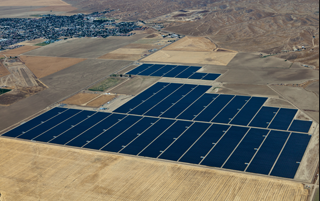
The latest evidence are new filings with the county planning department for more utility-scale solar permits in the county. Sunpower has filed a new application says planner Sandy Roper for a 15MW solar farm along Highway 41 at Java Ave near Lemoore. It’s called Java Solar.  The proposal is expected to be heard by the county planning commission September 12. Also a new project called Trafalgar Solar LLC, submitted by consultant Quad Knopf is a 20 MW,182-acre complex on 25th,south of Utica. Roper says this application is not finalized to set up a hearing.

Nearby the proposed Java Solar – the much larger Henrietta Solar farm  is under construction starting in May and as of a few days ago has a new owner. Southern Company subsidiary Southern Power and SunPower Corp. announced that Southern Power has acquired a controlling interest in the 670 acre, 102-megawatt Henrietta Solar Project from SunPower, which will own the remaining interest.This is the first acquisition for Southern Power in Kings County. Existing Southern Power customer Pacific Gas and Electric Company will purchase the electricity and associated renewable energy credits (RECs) generated by the facility under a 20-year power purchase agreement. Southern Power, a subsidiary of Southern Company, is a leading U.S. wholesale energy provider meeting the electricity needs of municipalities, electric cooperatives, investor-owned utilities, and other energy customers with major projects primarily in the South.

Deployment of utility-scale solar began in Kings County in 2010 with construction of the Avenal solar projects, at the time the largest system in the state at 57MW. Now something like dozen or more large scale solar projects are built,under construction or expected to be built in a year or two here. That includes a 150MW solar farm on Navy land at NAS Lemoore.

On the residential front home owners have increased the pace of  rooftop solar deployment here in 2016 permitting 557 units in the county as of midyear compared to 438 projects during the same period in 2015. Larger commercial solar projects permitted in the county so far this year number 9 valued at $22.9 million.That’s more than double the value last year with 10 projects valued at $10 milion.
Among new commercial solar projects are a number at local dairies. Just announced at the Wreden Ranch Dairy in Hanford were contracts to Sunvalley Solar Inc. of Walnut to install two separate 1.1-megawatt solar systems.The system utilizes 6,920 high efficiency 320-watt poly-crystalline solar panels. The total cost is over $4 million. Construction will start soon. In 2015, three major milk cow operations in Kings County deployed large solar-panel systems, including Medeiros and Son Dairy in Hanford. “We’re extremely focused on improving efficiencies across the entire farm” said owner Brian Medeiros. Pioneering solar deployment here was Mike Monteiro and brother Manuel who operate Lakeside Dairy south of Hanford and installed an 891-kilowatt solar-power system in 2011.

Shuttered Corcoran Hospital To Seek Buyer, Plans November Ballot Measure

Screen Shot 2016-07-13 at 12.15.04 PMShut down since October 2013 the old 32-bed Corcoran District Hospital is for sale and its board is seeking voter approval to to sell off its remaining assets.That will require approval of voter this November. “We believe Adventist Health is interested but we have received no formal offer” says chair of the board Mike Graville. Adventist currently runs a rural health clinic in part of the old hospital building.Asked about this Adventist spokesperson Amanda Jaurigu said” Corcoran is an important community to us. Since we’ve leased the building, we’ve expanded specialty services and hours. We’re open late on weekdays and on Saturdays. We are interested in purchasing the building to continue expanding clinic and diagnostic services to the community.”

Gravell will hold a public meeting at Corcoran city hall at 5:30 P.M., on Wednesday, July 20. Graville is under no illusion the structure could attract a new hospital .”We do not think the building could house a hospital again but we need a formal appraisal to make a sale.”The vote this November would require 50% plus one vote.”There is no more equipment in the old building. Gravell says he hopes a sale could at least pay off the district’s debt of around $1.5 million, Meanwhile Corcoran residents have two clinic operators in Adventist Health and United Health.

Cal Poly Plans Highway 1 Solar Farm

July11,2016-

Screen Shot 2016-07-11 at 9.36.07 AM

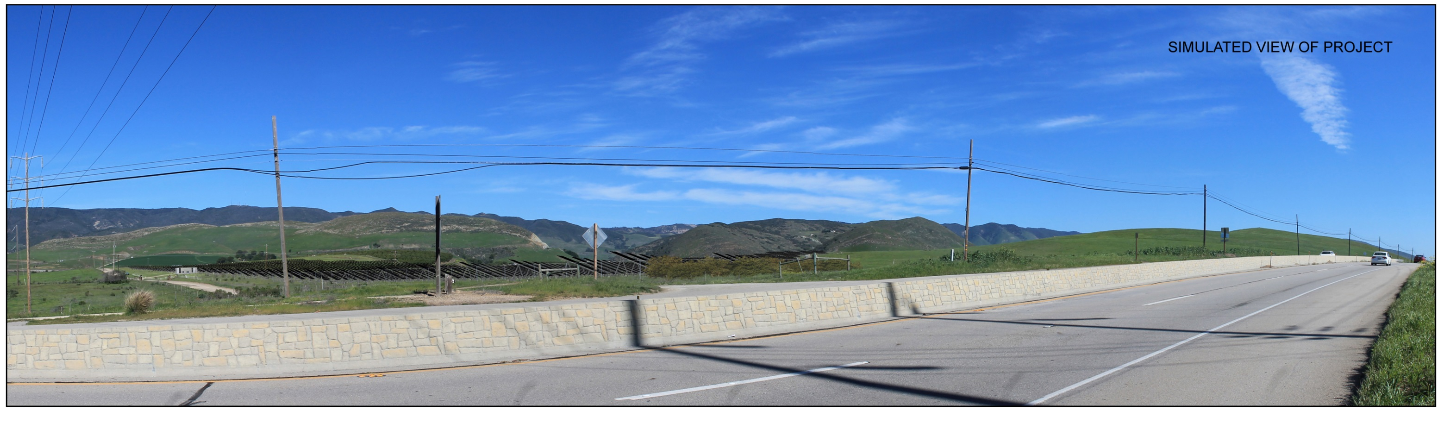
( pictured; view from Highway 1 toward the proposed solar farm)

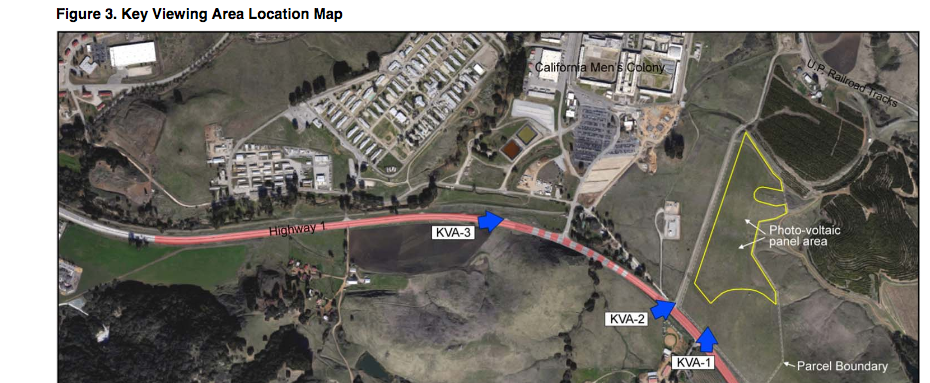
Cal Poly wants to build a five-megawatt solar farm on their land located on the east side of Highway 1 near the Men’s Colony. The solar farm with 1500 solar modules could be built and operating within a year hopes Joel Neel, Director of Facilities Planning for the college.
With the addition of a one megawatt rooftop solar project now underway on the new dormitory, the university will have enough solar power generation in-house to provide the majority of its power needs expects Neel.
The project would be located on 18.5 acres up Gold Tree Road next to the PG&E substation. Neel says the facility would be designed to have a low profile to motorists passing by on Highway 1,not rising above any ridge-line but visible nevertheless (see picture).”We know the facility is located along the a scenic corridor as you enter San Luis but we think it is fairly inconspicuous.”
Neel says the plan is to have a private developer build the project starting perhaps in a matter of months and selling the power back to the college.
”We are working to have most – if not all our power – come from renewables” says Neel. There is still some interest in developing wind power on campus land as well, he adds.
Screen Shot 2016-07-11 at 9.34.40 AMThe news comes at a seemingly opportune time as local power provider PG&E plans to close its nuclear power plant in coming years, just announced recently.
Neel says the final approval of the project based on a mitigated negative declaration – rests with the vice chancellor’s office.

pictured: The Mens Colony complex withe new solar farm next door- outlined in yellow