With All That Rooftop Solar – PG&E Says Big Transmission Line May Not Be Needed

January 15,2017-

Screen Shot 2017-01-15 at 8.29.15 AMFresno-area residential solar units continue to climb atop Central Valley rooftops including Kings County. Figures show 729 homes in Kings County hooked up to their own rooftop solar in 2014, some 966 in 2015 and 1180 homes last year.
With the growth in more home energy production and increased energy efficiency
state energy planners and PG&E now say the Fresno region may not need some of those big cross-valley transmission lines they told the public as recently as last year were required to keep the lights on in the near future.
The forecast for Fresno-area rooftop solar power generation is pointing higher in the next few years from around 60 megawatts in 2016 to 215 megawatts by 2020 and to 600 megawatts by 2026 says a recent California Energy Commission study.
California Independent System Operator (CAISO) spokesperson Steven Greenlee, citing a November 2016 report says “there is less need for” the proposed 70 mile “Central Valley Power Connect project because of primarily growth of rooftop solar and demand response and energy efficiency.”
PG&E had been pushing to build the $145 million proposed 230-kilovolt (kV) transmission line stretching from the Gates Substation near Coalinga to the Gregg Substation in Madera County. The idea was to provide the electric transmission capacity needed to supply forecasted growth in the region. The line would have traveled through Kings County and was at one time scheduled to be use by 2020.
Now that seems unlikely although the CAISO is to make a decision in March.
In 2015 PG&E said that the new transmission line was necessary to accommodate west Fresno County’s growing electricity demand, which PG&E said was largely due to farmers growing use of irrigation pumps. PG&E also stated that the existing transmission poles could not provide the expected additional capacity required.
But instead of bringing in more distant power there has been a major increase in so called “distributed energy” – making more power close to where the demand is.
Another factor in the possible cancellation of the project is that daily power loads in the region have been shifted to later in the day as the public has reduced demand in midday. That frees up Helms, the big PG&E pumped storage plant in Sierra, to store energy for other uses on the statewide grid rather than meet Fresno’s hunger for power midday. “That helps free up congestion in the system” says PG&E spokesperson Lynsey Paulo.
Of course it is not just homes that are generating their own power theses days. Businesses including big energy users on the farm, dairies and ag processors are all  joining the crowd. The latest example locally is at Westlake Farms who is installing ground-mounted solar units next to their landmark Hwy 41 ranch and yard. “This will take care of most of our power needs” says owner Ceil Howe.

Cal Poly Loses $40 Mil Federal Grant For Wave-Energy Test Site

January 6,2017-
Led by CalPoly’s Institute for Advanced Technology and Public Policy, the CalWave proposed national wave energy test center project looked to be riding a wave of support of its own. For the past two years CalWave had landed back to back Department of Energy (DOE) funding for their studies totaling $2.25 million. But now CalWave has fallen short on the big prize they were competing for – a DOE grant of $40 million to actually build an offshore wave-power test site, losing out to Newport, Oregon’s Northwest National Marine Renewable Energy Center at Oregon State University.

The announcement came December 21 from the Department of Energy.
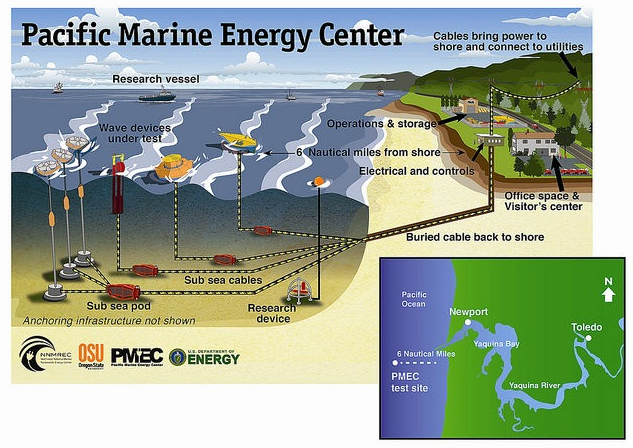
screen-shot-2017-01-06-at-12-43-25-pmThe new test facility, called the Pacific Marine Energy Center South Energy Test Site, will be constructed off the Oregon coast with a combination of federal and non-federal funds says DOE.The planned facility, to be completed by early 2020, includes four grid-connected berths where researchers can test full-scale wave energy conversion device concepts.
Here in San Luis Obispo,a local partnership had prepared a strong rival application they thought had a leg-up on Northwest test site.

The Cal Poly’s rival application sought to locate a test center for wave energy off the Central Coast adjacent Vandenberg Air Force base, five miles offshore. The site along California’s open coast was supported by a half dozen partners including the State of California seeking to advance ocean based energy here. The US Department of Defense was exited about the plan as well.

Reached with the news after the holidays, CalWave project manager Bill Toman said “ of course we are disappointed, but this is not unexpected. OSU had a big head start in time, previous DOE grants, designation as part of DOE’s Northwest National Marine Renewable Energy Center, actual permitting done, widespread PNW political support and had an effective Washington, DC lobbying firm. The $40 million grant money is contingent upon Congressional authorization which is anyone’s guess with the new Administration.”

The DOE announcement aims to move wave energy to commercial development.

“Testing innovative wave energy devices at full scale in open water is an important step toward harnessing one day a reliable energy resource. Anyone who has swum or surfed in moderate ocean waves knows something of the power they represent,” said Franklin Orr, Under Secretary for Science and Energy at the Energy Department. “This new facility will help us to advance the science and technology of wave energy devices, and to identify the challenges we will ultimately need to overcome in order to achieve commercial deployment.”
The DOE statement continues “The pre-permitted Oregon site was designed to meet the Department’s specifications as well as industry and community needs, letting researchers focus on the technological challenges inherent in testing—instead of permitting and regulatory matters. The site is expected to be a flagship test facility for wave energy converters globally, playing a critical role in advancing wave energy technology into commercial viability.

Recent studies estimate that America’s technically recoverable wave energy resource ranges between approximately 900–1,230 terawatt hours (TWh) per year, distributed across the coast of Alaska, the West Coast, the East Coast, the Gulf of Mexico, Hawaii, and Puerto Rico. For context, approximately 90,000 homes can be powered by 1 TWh per year. This means that even if only a few percent of the potential is recovered, millions of homes could be powered by wave energy as the technology progresses.”

Toman and his team led by Dr. Sam Blakeslee believed that Cal Poly’s application enjoyed some advantages in that it would be grid connected to a much larger electricity market in California as well as the potential to provide renewable energy to a key military base who very much supported the project. Toman had also raised the possibility the project could use offshore cable already in place to bring power in.

CalWave’s current funding to study the California site ends in February and before the recent DOE announcement Toman shrugged that “only one site on the West Coast is going to win.” A national wave energy test site here would have meant likely future high tech investment and jobs for this area and a clear feather in the cap for Cal Poly. Cal Wave had projected it could build a center starting in 2018 and be in operation by 2021. Companies wanting to test their technology would have flocked here.

Given the uncertainty over the nation’s energy future under Donald Trump – Toman is on the one hand unsure of federal funding for renewable projects like this – wherever they are located – but maintains that wave energy potential here is strong. Already the coast off Morro Bay is being targeted for large offshore wind energy projects and the state of California has recently signed-on to support these ocean based technologies.

The potential is great.The California Energy Commission has estimated that the California coastline could generate 7400megawatts of electricity from ocean wave,unlike solar – waves don’t shut down at night.The CalWave project was expected to generate up to 50MW.

As Toman notes, the $40 million grant offer will be managed and supported or not by Trump’s new energy secretary – Texas’s Rick Perry it looks like, who as governor supported wind energy in his state.
Now it looks like the Newport-based site will be the first open-water test facility for wave power connected directly to the power grid in the U.S. Supporters say clean, renewable energy found in waves and tidal currents holds the potential to deliver up to one-third of our nation’s electricity needs, according to the DOE.

In the summer of 2016 America’s first wave-power project went online in Hawaii.

Governor Brown Seeks To Halt More Offshore Oil, Add More Ocean Renewables

12-13-2016

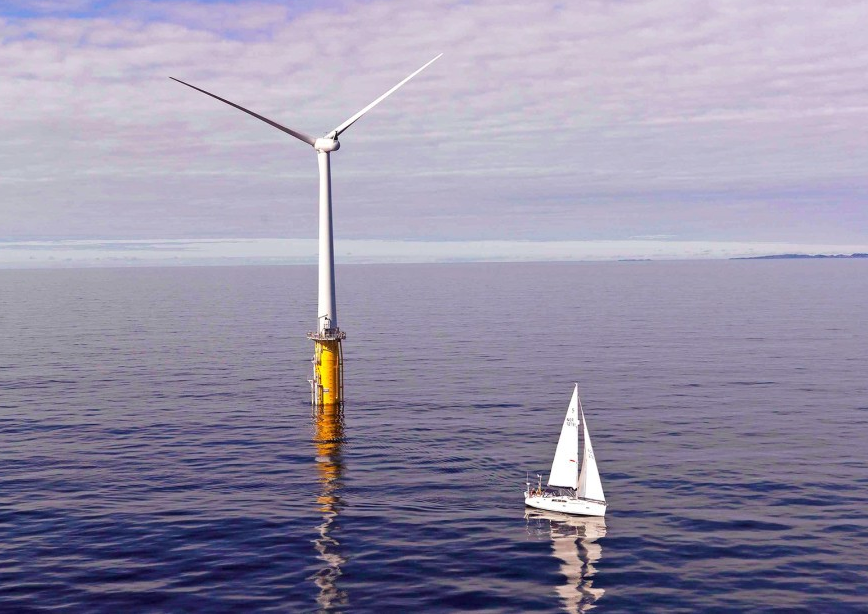
Statoil Scottish wind farm

CORONADO – Taking action to combat climate change and help protect California’s oceans, Governor Edmund G. Brown Jr. today called on President Barack Obama to use his authority to permanently prohibit new offshore oil and gas leasing in federal waters off the coast of California, signed an agreement with U.S. Secretary of the Interior Sally Jewell to help expand offshore renewable energy development and joined global leaders to launch the International Alliance to Combat Ocean Acidification.

“Climate change degrades our oceans and coastline,” said Governor Brown at a meeting of the International Alliance to Combat Ocean Acidification in Coronado. “Today, California is taking additional steps to reduce ocean acidity, boost renewable energy and prevent further coastal oil and gas drilling.”

Stopping Offshore Oil and Gas Drilling

In a letter sent today to President Obama, Governor Brown called on the administration to use its authority under Section 12(a) of the Outer Continental Shelf Lands Act to permanently withdraw federal waters off the coast of California from new offshore oil and gas leasing and guarantee that future oil and gas drilling in these waters is prohibited.

“Clearly, large new oil and gas reserves would be inconsistent with our overriding imperative to reduce reliance on fossil fuels and combat the devastating impacts of climate change,” Governor Brown wrote. “Now is the time to make permanent the protection of our ocean waters and beaches from new oil and gas drilling.”

Boosting Offshore Renewable Energy

Governor Brown also signed a Memorandum of Understanding (MOU) with U.S. Secretary of the Interior Sally Jewell today to renew and expand a joint commitment to develop more renewable power, including offshore clean energy. Under the agreement, California and the U.S. Department of the Interior will coordinate the environmental review of potential marine renewable energy projects, such as offshore wind and wave energy, continue to identify offshore areas for potential projects, and update permitting guidance for these projects. Today’s MOU builds on the creation of the California Intergovernmental Renewable Energy Task Force launched earlier this year.

Addressing Ocean Acidification

Additionally, Governor Brown joined Washington State Governor Jay Inslee, Oregon Governor Kate Brown, Deputy Chief of Mission at the Embassy of Chile in the United States Patricio Utreras and Consul General of France in San Francisco Emmanuel Lebrun-Damiens today to launch a new partnership of jurisdictions around the world committed to protecting coastal communities and economies from the threat of rising ocean acidity, called the International Alliance to Combat Ocean Acidification.

The ocean absorbs a third of the carbon dioxide that humans release into the atmosphere, which raises the water’s acidity and harms sea creatures that are vital food sources for marine life. The rising levels of poisonous ocean acidity, along with warming waters, also damage coral reefs, dissolve oyster shells and harm marine fisheries around the world. The oceans have become 30 percent more acidic since scientists began taking measurements, and the average acidity of the surface ocean is projected to double over pre-industrial levels by the end of this century.

California is combatting ocean acidification through a number of landmark policies to reduce carbon dioxide emissions and other greenhouse gases. Today’s announcement builds on the ongoing work of the California Ocean Protection Council, which has also joined with other states to help address ocean acidification. Earlier this year, Governor Brown signed legislation to support this work and develop projects, in coordination with other states, that reduce carbon dioxide levels through marine habitat conservation and restoration.

California’s Leadership on Climate Change

California is playing a world-leading role in setting aggressive climate goals, broadening collaboration among subnational leaders and taking action to reduce climate pollutants.

In recent weeks, Governor Brown issued a joint release with the governors of Oregon and Washington and the premier of British Columbia reaffirming their commitment to climate action at the close of COP22. The Governor also announced 29 new members to the Under2 Coalition, an international climate pact formed by California and Baden-Württemberg, Germany among cities, states and countries to limit the increase in global average temperature to below 2 degrees Celsius, the level of potentially catastrophic consequences. A total of 165 jurisdictions have now joined the coalition representing more than a billion people and $25.7 trillion in combined GDP – more than one-third of the global economy.

In September, California took bold action to advance its climate goals, establishing the most ambitious greenhouse gas emission reduction targets in North America and the nation’s toughest restrictions on destructive super pollutants. The Governor also signed legislation that directs cap-and-trade funds to greenhouse gas reducing programs which benefit disadvantaged communities, support clean transportation and protect natural ecosystems.

This action builds on landmark legislation the Governor signed in October 2015 to generate half of the state’s electricity from renewable sources by 2030 and double the rate of energy efficiency savings in California buildings. Governor Brown has also committed to reducing today’s petroleum use in cars and trucks by up to 50 percent within the next 15 years; make heating fuels cleaner; and manage farm and rangelands, forests and wetlands so they can store carbon.

Sunpower Proposes New 130MW Solar Farm in SW Kings County

December 4,2016-

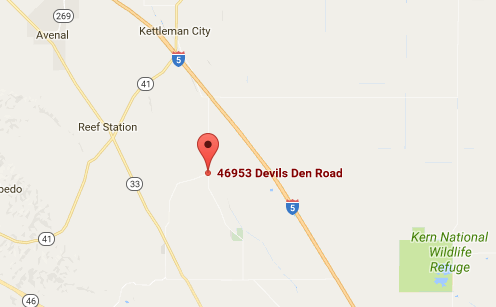
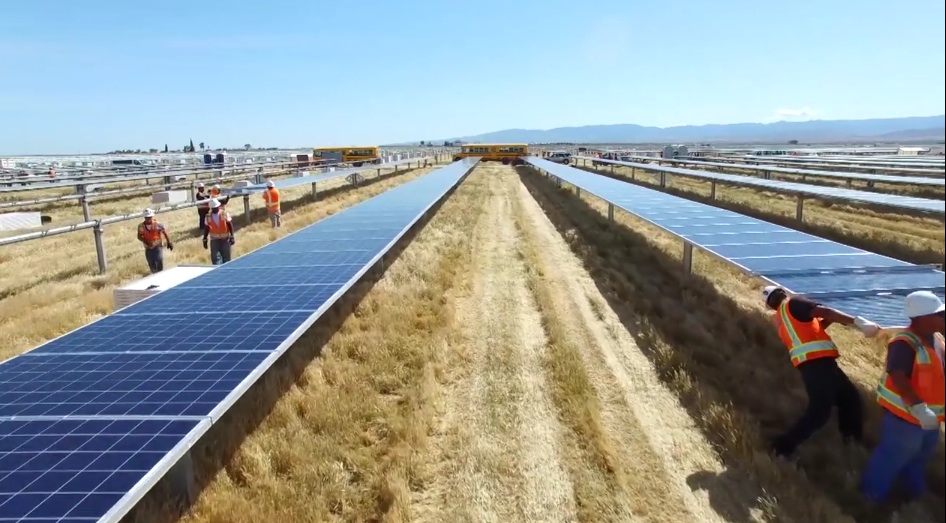
screen-shot-2016-12-01-at-1-18-22-pmSan Jose-based Sunpower, who built the 670 acre, 102 MW Henrietta Solar farm near NAS Lemoore has applied to Kings County for a conditional use permit to build an even larger 130MW solar facility in southwest Kings County. The project is called Alamo Springs ,a 985 acre solar farm to be built at 46953 Devils Den, along Highway 33 near the Kern County line. The remote location is west of I-5.
Sunpower applied for their permit November 15 with the filing of an initial study says county planner Chuck Kinney.
The addition of 130MW of planned solar brings the county total of projects either built or in the pipeline to over 1200MW. That’s a similar total in next door Fresno County. A pipeline of 2400MW of future power is more than enough to offset the 2000MW set to mothballed at Diablo Canyon nuclear plant in 2025.
Of the 27 solar project in the county 18 of them have been built. The largest is Mustang Solar at 160MW that went on line in late August. Fresno County has several huge solar farms in the works that will each generate 400MW not far from the Fresno/Kings County line in the Westside.

Plans For More Big Solar Farms

November 30,2016-

Fresno County is processing three more large, utility-sized solar projects on impaired ag land on the Westside – north of the Kings County line. All three are in the early stage of the approval process preparing to do EIRs for the county, says planner Chris Motta.

tranquility-solar-2016-11-28-at-5-18-21-pmAlready Fresno County has approved a second phase of the huge Tranquility solar project. The first phase went on-line in September generating 200MW of power sold to SCE. Developer Recurrent Energy – who already has a half dozen projects in Kings County next door, including the just announced 167MW NAS Lemoore solar farm – is working on plans for another 200MW in Fresno County. Regards this second Tranquility project Recurrent spokesperson Seth Israel says they recently signed an agreement to sell 100MW of that future power to Marin Clean Energy.

But there’s more. Recurrent, a subsidiary of Canadian Solar, has filed a new plan for another 400MW this November, says Chris Motta.This project on 4000 acres, is called Scarlet and would be located near their other project not far from the town of Tranquility in west Fresno County. The EIR process is just starting on Scarlet.

And more still. First Solar has filed plans for their Little Bear solar farm that would generate 180MW of power southwest of Mendota.

Lastly, European developer E.On plans a190MW solar farm with 20MW of battery storage near Highway 5 at Jayne Ave just north of the Avenal Cutoff. This big project filed with Fresno County in September 2016, would sprawl over 2450 acres.

All these huge renewable energy projects will bring millions in construction spending, hundreds of local construction jobs and millions in taxes to both the state and county.

If all the projects just mentioned here came to pass it would add up to nearly 1000MW not yet on-line. Fresno County has 329MW of utility-size solar projects generating power now.

Tax Credits

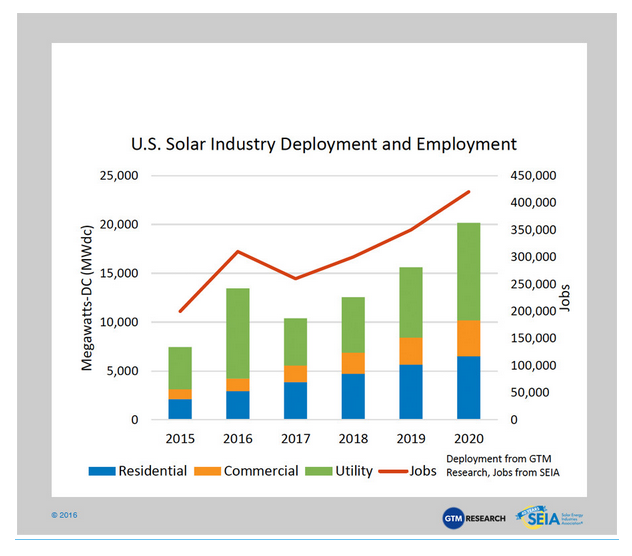
screen-shot-2016-11-30-at-6-35-18-amWhile the state is an important driver of added solar capacity here, federal legislation extending the Solar Investment Tax Credit (ITC) signed into law on December 18th, 2015, is a huge factor. The bill extends the 30% Solar Investment Tax Credits for both residential and commercial projects through the end of 2019, and then drops the credit to 26% in 2020, and 22% in 2021 before dropping permanently to 10% for commercial projects and 0% for residential projects.

Competition Surfaces for Morro Bay Wind Farm Lease

STRUGGLE FOR POWER

Norwegian Oil Company Has Floating Wind Farms Off European Waters

November 21,2016-
The federal agency that leases US waters for energy production, the Bureau of Ocean Energy Management (BOEM), has been working with Trident Winds on a 650 to 1000 MW wind energy farm, 100 turbines, beyond the 3 mile mark off Morro Bay. After receiving an unsolicited request to lease about 56 square miles offshore back in January – BOEM put out a formal notice to see if others who would might like to bid on the same area. Last month they got their answer from Norwegian-based Statoil, a $109 billion in assets oil and gas firm who is rapidly getting their feet wet in renewable energy. Recently Statoil has been on a fast track to establish wind farms off European waters – the same rough and deep waters they have drilled successfully for North Sea oil and gas for decades.

Statoil Scottish wind farm

Last month BOEM announced they had “reviewed Statoil Winds submission to assess filing completeness and has determined they are legally, technically, and financially qualified to hold an Outer Continental Shelf renewable energy commercial lease.”

26 Miles Across The Sea
The Morro Bay site is located at 2,600 – 3,300 feet water depth some 26 miles from Point Estero, California. Power would come ashore near Morro Rock connecting to a PG&E substation near the idle Morro Bay power plant.The big draw – a huge population nearby hungry for clean power and infrastructure on land to deliver that power to the grid.Then there is the matter of a retiring 2,000MW nuclear power plant here. And abundant wind energy for the tapping just offshore.

Now Statoil will have to detail their own proposal for a wind farm the way Trident has and then the bidding will begin. In the end BOEM will decide. It’s clear now that Seattle-based Trident has some serious competition from a well capitalized and experienced world energy player to build the first floating wind farm off the West Coast. And the spotlight is on little ol’ Morro Bay.
Statoil has operations in 36 countries and is 67 percent owned by the Norwegian government. Launched as an oil and gas exploration company the international firm has seen its profits dwindle with the price of oil, they lost $4.6 billion last year. In the past few years they have launched five European projects to utilize abundant wind power offshore including its first off Norway that has been generating electricity since 2009.
Earlier this year the Norwegian energy company, was granted a lease off the east coast of Scotland to build the globe’s first floating wind farm in deep waters.Called the Hywind project,the farm will feature five 6-megawatt turbines.Turbines are set to be installed next year. The project will also include a 1-MWh lithium-ion battery that is expected to improve the efficiency of the system.
Now they have their sights set on the US where Statoil has indicated strong interest in waters off New York, Hawaii and as of a few weeks ago – Central California.

Going Deep
While a number of projects offshore are being developed in shallow depths off the Atlantic Coast the US West Coast coastal waters fall off the shelf requiring new deep water technology to anchor turbines. As BOEM says on their website. “While the first offshore wind project was installed off the coast of Denmark in 1991. Since that time, commercial-scale offshore wind facilities have been operating in shallow waters around the world, mostly in Europe. With the U.S. Department of the Interior’s “Smart from the Start” initiative, wind power projects will soon be built offshore the United States. Newer turbine and foundation technologies are being developed so that wind power projects can be built in deeper waters further offshore.”
Meanwhile,with low world oil prices and their balance sheet suffering Statoil is cutting back on oil exploration while investing more in alternative energy. With their deep water experience and track record with floating wind, there is a better chance today than yesterday that someone will be building this huge project.
Whoever builds it they will need to raise money from investors and the cost won’t be cheap.To do that they need a utility to agree to buy the power when it will be available around 2025.They have to gauge the regulatory receptiveness for the renewable power project in a state that has committed to cut greenhouse gases from fossil fuels to a nation now led by a president that is not too excited about it, in fact wants more coal. It will be the Trump administration who will manage these federal waters now and may want to return to ‘drill baby drill.’
Trident has offered no estimate of the cost but Bloomberg Energy has said this technology may cost $9 million per megawatt or a cool $9 billon for 1000MW. This comes at a time when other renewable prices like utility-solar continue to fall. For ratepayers the good news is that competition offers a better chance for them to get a fair deal.
On several levels this is a struggle for power.

Recurrent/PG&E Plan New Kings County Solar Farm

screen-shot-2016-10-17-at-5-13-46-pmA new solar farm in Kings County would be the eighth owned by Recurrent Energy. The Canadian based firm recently  switched on the 100MW Mustang Solar project near Lemoore and now is moving on their  150 MW Mustang Two project. The solar farm would also have a battery storage component.

The Federal Energy Regulatory Commission on Sept. 22 accepted an Aug. 4 filing by Pacific Gas and Electric (PG&E) of an Engineering and Procurement Agreement with RE Mustang Two LLC covering interconnect work for a 150-MW photovoltaic generation and battery storage plant project located in Lemoore, California.
The E&P Agreement will enable Mustang to engage PG&E in providing engineering and procurement services prior to the execution of a pro forma Large Generator Interconnection Agreement. The E&P Agreement sets forth the terms and conditions of the engineering and procurement activities agreed to by PG&E and Mustang. PG&E estimates that it will cost approximately $3,025,000 to provide the engineering and procurement services. They have a place in line with the state ISO.

Just announced, Recurrent will build a 167MW solar farm on leased Navy land nearby.


200 MW Solar Project Completed in Fresno County

screen-shot-2016-10-17-at-12-21-31-pmRecurrent Energy is a U.S. subsidiary of Canadian Solar Inc. with more than 4 GW of solar projects in development in North America. The company just announced they have completed the nearby 200 megawatt Tranquillity Solar Project in Fresno County.

In addition Recurrent has 8 utility-size solar projects either built or under development in Kings County – fast becoming the King of all counties in California solar development.

Electricity and the associated renewable energy credits (RECs) produced by the Tranquillity solar facility will be sold under long-term power purchase agreements to offtakers including Southern California Edison (SCE). In August 2015, Southern Power signed an agreement to acquire a 51 percent controlling interest in the Tranquillity solar power project. Canadian Solar retains 49 percent ownership of the facility.

The Tranquillity solar facility, which is expected to generate enough electricity to power approximately 50,000 homes, is sited on 1,900 acres of retired agricultural land in Fresno County.
“Recurrent Energy’s Tranquillity solar project is a Smart from the Start project that uses drainage impaired, marginally productive farm lands being retired from agricultural production,” said Carl Zichella, Director of Western Transmission for the Natural Resources Defense Council (NRDC). “Recurrent Energy should be commended for its responsible development practices.”
Construction of the Tranquillity project created 456 peak construction jobs, with approximately 57 percent of workers hailing from within 50 miles of the project site. More than $5M was spent locally on materials and services to support construction activities, with Signal Energy Constructors providing engineering, procurement and construction services.

Navy To Host Largest Solar Farm

lem0ore-solar10-17-at-2-08-38-pm

October 17,2016

Announced late last week,the Department of the Navy and Recurrent Energy has signed a lease agreement to site a 167 megawatt (MW) direct current (DC) solar photovoltaic (PV) facility on roughly 930 acres of land at Naval Air Station Lemoore in Kings County. Construction is expected to start next year and be completed by 2019.

In the planning for several years this solar facility will be the largest on Department of Defense land with the ability to power more than 23,000 homes, more than half of the number of houses in Kings County.

Through this agreement, the Navy will receive electrical infrastructure upgrades including on-base, biofuel-capable, back-up generation and other infrastructure upgrades to support uninterrupted base operations during grid outages in exchange for use of its land.

Officials decided last year the environmental impact of the proposed project was negligible, so now they could move forward with ongoing negotiations with several private solar firms.

The Navy says this project will not have a significant effect on the environment as determined by the Finding of No Significant Impact and will enable the Navy to meet critical renewable energy and security goals.The U.S. Navy has a goal to develop 1 gigawatt (1,000 MW) of renewable energy by 2020.

PROJECT HIGHLIGHTS

– 167 MW DC solar facility
– Largest solar facility on Department of Defense land
– Ability to power more than 23,000 homes
– Project will provide the Navy with on-base, biofuel-capable, back-up generation and other infrastructure upgrades to support uninterrupted base operations during grid outages
– Expected project completion by late 2019
– The Navy would receive compensation for the 37-year lease, but would not directly receive the power generated by the solar PV system.Recurrent would sell the generated power the regional customers, typically a municipality or utility. Recurrent would be responsible for all maintenance and service of the system; no federal tax dollars would be used for maintenance/service.

WATER SAVINGS

The agreement would remove agricultural land (the majority of which is irrigated) from production and install a solar PV system. The development would have substantially lower water demands than active agriculture, and thus NAS Lemoore would need less water overall to irrigate. This trend of replacing productive agricultural land with solar PV projects is echoed by eight additional large-scale solar PV projects in the vicinity of NAS Lemoore. The upshot is the cumulative result of these solar PV projects would be a regional net decrease in demand for water for irrigation. This would, in turn, reduce regional groundwater withdrawal and slow the regional rate of subsidence according to the environmental document. Today, more than two-thirds of the land in NAS Lemoore is utilized for agricultural purposes.Recurrent Energy is a U.S. subsidiary of Canadian Solar Inc. with more than 4 GW of solar projects in development in North America. The company just announced they have completed the nearby 200 megawatt Tranquillity Solar Project in Fresno County.

In addition Recurrent has 8 utility-size solar projects either built or under development in Kings County – fast becoming the ‘King of all counties’  in California solar development.

In a news release from the California Energy Commission an agreement between the state and the US Navy will bring 205 electric vehicles to Navy bases in the state including Lemoore.

Pacific Ethanol to Install 5 Megawatt Solar Energy System at Madera Plant

screen-shot-2016-09-26-at-7-57-00-amSACRAMENTO, Calif., Sept. 26, 2016 (GLOBE NEWSWIRE) — Pacific Ethanol, Inc. (NASDAQ:PEIX), a leading producer and marketer of low-carbon renewable fuels in the United States, announced it is installing a 5 megawatt (MW) solar photovoltaic (PV) power system designed and built by Borrego Solar Systems at Pacific Ethanol’s Madera, California plant. The solar PV system is expected to reduce Pacific Ethanol’s operating costs and improve its carbon score.
Neil Koehler, the company’s president and CEO, stated: “The integration of solar power at our Madera plant underscores our commitment to optimize our plant assets, lower the carbon intensity of our ethanol and reduce our operating costs. We are proud to build the first ever commercial solar electricity system at a U.S. ethanol plant. Pending the completion of interconnection agreements with our local utility, Pacific Gas & Electric Co., we expect to begin operating the solar PV system at full capacity in early 2018.”
5 MW Solar PV System
Through the displacement of more than 30 percent of the grid electricity currently used, the solar PV system is expected to reduce the Madera facility’s annual utility costs by more than $1 million as well as drive premium pricing on the ethanol produced due to improvements in its carbon-intensity score. The system also qualifies for the Energy Investment Tax Credit, further improving its attractive investment profile.
“Pacific Ethanol represents the new generation of fuel companies—low carbon fuel production powered by zero carbon energy,” said Chris Otness, Borrego Solar project developer. “This will be one of the largest single-site net metered projects in PG&E territory. Historically these types of projects were limited to a single megawatt, but given the recent CPUC NEM 2.0 ruling, large energy users are now able to go above that threshold and offset a significantly larger portion of their overall usage. In addition, by financing this project through PACE, Pacific Ethanol is able to retain full ownership of the system from day one and capture the tax incentives afforded to solar system owners.”
SolarPACE™ Program Financing
Pacific Ethanol financed $10 million of the expected $11 million total investment through the CleanFund SolarPACE program for a term of 20 years, which enables immediate net cost savings and positive cash flow from the project.
Greg Saunders, chief executive officer of CleanFund, stated, “We are honored Pacific Ethanol selected CleanFund as its capital partner and is utilizing our SolarPACE financing partner program to provide long-term financing for a state of the art solar system. The demand for commercial PACE financing continues to grow rapidly because it represents a large-scale opportunity to provide cost-effective, long-term financing for renewable energy, energy efficiency and water conservation measures for most non-residential properties. We are excited to partner