Fact Check: Setting the record straight on President Trump’s recent wind comments

-December 24,2019-

from American Wind Energy Association
GREG ALVAREZ
Screen Shot 2019-12-24 at 6.12.42 AMThis weekend, the President made a series of inaccurate statements about wind energy while omitting the many benefits it brings to communities throughout the country, particularly in the Midwest. A number of media outlets have already fact-checked the President’s remarks, but here’s a quick rundown of reality.
WIND ENERGY IS NOT EXPENSIVE
Wind is now the cheapest source of new electric generating capacity in many parts of the country, according to sources like Wall Street investment firm Lazard Inc. In fact, wind’s costs have fallen by 70 percent over the last decade, and in many cases it’s now more cost-effective than coal or natural gas plants. Another recent study from Vibrant Clean Energy looked at Colorado’s energy future and found transitioning to wind and solar is the lowest-cost path moving forward.
WIND POWER CREATES AMERICAN MANUFACTURING JOBS
Over 500 U.S. factories build wind turbine parts, employing more than 25,000 Americans. Many of these facilities are located in states that played a key role in President Trump’s election. Ohio leads the nation with 60 wind factories, while Texas is runner up with 46. Large wind manufacturing footprints are also found in Michigan (26 factories), Wisconsin (28 factories) and Pennsylvania (29 factories).
WIND POWER SUPPLIES POLLUTION-FREE ELECTRICITY
Wind turbines are largely composed of steel and concrete, the same materials as other power plants and countless other things in our modern world. A typical wind turbine repays its carbon footprint in less than six months and generates carbon-free electricity for the remainder of its 20 to 30 year lifespan. In 2019, wind helped avoid 43 million cars’ worth of carbon emissions. Wind also avoids significant amounts of air pollution like sulfur dioxide, nitrogen oxides and particulates, which create smog and trigger asthma attacks.
STUDIES SHOW WIND DOES NOT AFFECT PROPERTY VALUES
The most comprehensive study to date, published in a peer-reviewed journal in 2015 by researchers from the Lawrence Berkeley National Lab (LBNL), the Federal Reserve Bank of Kansas City, Texas A&M University and San Diego State University, and involving data from more than 50,000 home sales among 27 counties in nine U.S. states concludes: “We find no statistical evidence that home values near turbines were affected in the turbine post-construction or post-announcement/pre-construction periods.
Three of the most influential factors that affect property values include tax levels, school system quality, and strength of the local economy, and wind plays a positive role in all three. Wind farms nationwide paid over $1 billion in state and local taxes and land lease payments in 2019. Rural communities that often have low tax bases benefit tremendously from the influx of new tax revenue wind farms bring. For example, the town of Sheldon, New York eliminated its local taxes for eight years because wind revenue covered the community’s entire budgetary needs. In Ohio, the Lincolnview School District was able to provide every student with a laptop because of new wind resources. And wind improves local economies, strengthening family farms by paying over a quarter of a billion in lease payments every year and creating well-paying wind technician positions in rural communities.
WIND ENERGY IS WILDLIFE FRIENDLY
Wind causes less than 0.01 percent of all human-related bird deaths. Exponentially larger sources include tall buildings (550 million) and cars (80 million). “You can’t be against renewable energy, wind and solar, if you are for protecting birds,” said David O’Neill, chief conservation officer at the Audubon Society.
Wind also has vanishingly small impacts on bald eagles– only a few bald eagles in the four-decade history of the industry have ever been impacted by wind projects. There is no certain number of bald eagles a wind turbine can kill before it must be shut off.
Many of President Trump’s supporters are from communities in the Wind Belt, which stretches from Texas up through the Dakotas. In fact, American wind power has invested $125 billion in states that voted for the President, and almost 80 percent of the wind farms built in the U.S. since 2016 are in states the President carried. At the Congressional level, 78 percent of Republican districts have a wind farm, wind-related factory, or both. We hope the President recognizes these positive impacts moving forward.

Energy notes

-December 17,2019-

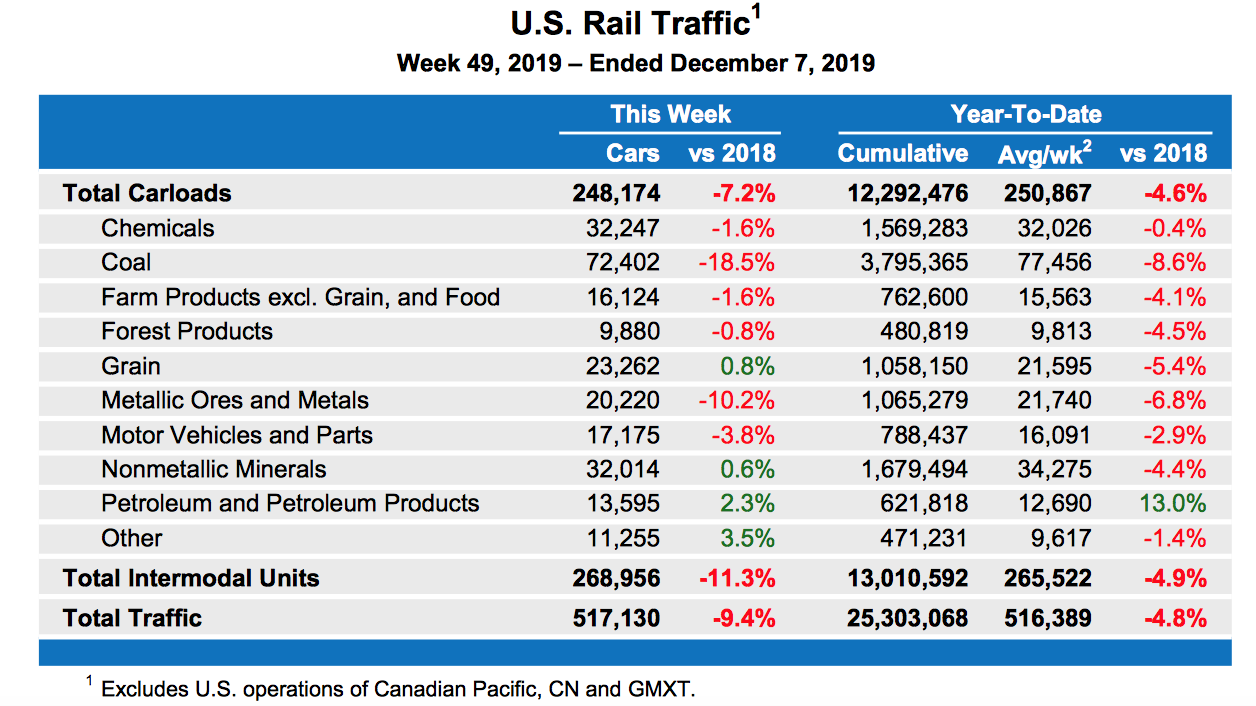
Screen Shot 2019-12-17 at 8.37.13 AMEstimated U.S. coal production totaled about 12.7 million short tons this past week says the EIA. That is 15.9%lower than the production estimate in the comparable week in 2018.U.S. year-to-date coal production is 6.1%  lower than the comparable year-to-date coal production in 2018.Shipments of coal by rail is down 18.5% vs the same week a year ago.

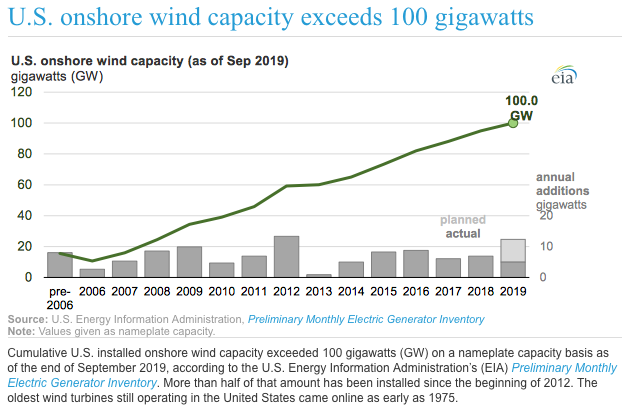
Screen Shot 2019-12-17 at 8.40.23 AMUS onshore wind projects continue  to add power to the grid in the US. As of this year the EIA says onshore wind capacity is now over 100 gigawatts

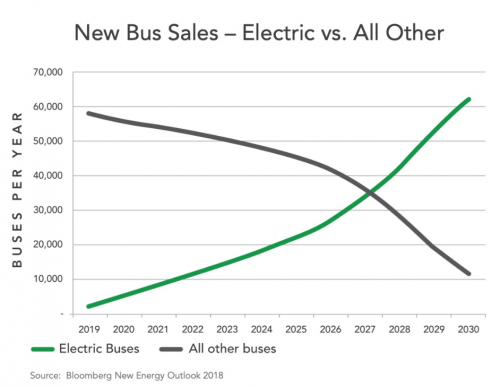
Canada-based Green Power  Buses continues to make  electric buses in Porterville and sees a bright future for their lineup. Bloomberg  predicts that by 2030 84% of all bus sales will be electric.The company leases 50,000sf in Porterville producing a van sized electric shuttle and still has plans for a144,000sf manufacturing plant in town on 9.3 aces they own.

Screen Shot 2019-12-17 at 6.23.48 AM

Top rated cars for 2020:  The car shopping experts at Edmunds today announced the winners of its 2020 Top Rated Awards.The winners of the 2020 Edmunds Top Rated Awards are: • Top Rated Sedan — Honda Accord • Top Rated Luxury Sedan — Mercedes A-Class • Top Rated Electric Vehicle — Tesla Model 3• Top Rated SUV — Kia Telluride • Top Rated Luxury SUV — Mercedes GLE • Top Rated Sports Car — Chevrolet Corvette  Top Rated Truck — Ram 1500The 2020 Edmunds Top Rated award winners were selected by the Edmunds editorial team based on the team’s extensive vehicle testing and ranking process.

Congress expected to extend tax credits for wind, boost biodiesel but step-down solar and stiff EVs

reports from Green Tech Media and others

-December 17,2019-

After months of lobbying, the clean energy industry secured minimal tax credit extensions in the $1.37 trillion end-of-year deal U.S. lawmakers eked out this week to fund the government in 2020.

In a nutshell the wind industry was a clear winner getting an extension of the production tax credit through 2020. Developers qualifying projects in 2020 will receive 60 percent of the PTC if they bring those projects online by the end of 2024. Projects qualified in 2019 will still receive only 40 percent of the incentive.This is said to benefit offshore wind producers.

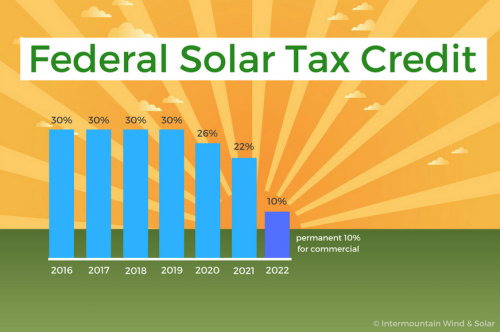
“Meanwhile, lawmakers left solar— the industry that most aggressively fought for an extension of its ITC — and electric vehicles out of the deal. Solar ITC will now fall to 26% in 2020Screen Shot 2019-12-17 at 4.17.41 PM from 30% in 2019.

Storage, which lawmakers had sought incentives for in legislation like the November GREEN Act, will continue without credits.

In the end, wind emerged with at least a modest victory; though lawmakers on both sides of the aisle have supported clean energy tax credit bills, wind’s lingering dominance in many conservative states may have smoothed the way for its credit extension.”

As far as electric vehicles  one news report says “The Trump administration and Congress ignored pleas from Tesla and General Motors to extend a crucial tax credit for electric vehicle buyers, a move expected to result in declining sales of the zero-emission cars just as the consequences of climate change intensify.

The current $7,500 tax credit, which reduces the price of all-electric vehicles, phases out after an automaker has sold 200,000 EVs, a threshold only Tesla and General Motors have hit. The credit will be available to consumers buying an EV from other automakers until their cumulative EV sales reach 200,000.”

Regards biodiesel Agri Pulse reports” Congressional negotiators have agreed to revive and extend through 2022 the expired $1-a-gallon tax credit that subsidizes biodiesel and renewable biodiesel production.

The tax incentive lapsed at the end of 2017, but the extension through 2022 was included in a 58-page tax package that will be considered as a manager’s amendment to a massive fiscal 2022 domestic spending bill to fund the departments of Agriculture, Interior and other departments and agencies. The credit will be retroactive to Jan. 1, 2018.

The “deal provides the policy certainty that the biodiesel industry has been seeking to support investments and continued growth of production,” said Donnell Rehagen, CEO of the National Biodiesel Board. “NBB and its members are grateful that congressional leaders are providing a positive signal before the year’s end.”

A tax credit for short-line railroads also was made effective through 2022, and the tax package also includes extensions for tax breaks that subsidize cellulosic biofuels, electric vehicles and alternative fuels equipment.

Adventist Health launches solar initiative across Central Valley hospitals

Dec 4, 2019

Positioning itself as a leader in energy efficiency, Adventist Health is launching a years-long solar project that will reduce its system’s carbon footprint throughout the Central Valley.

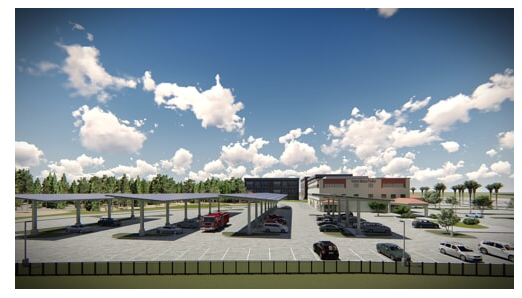
Screen Shot 2019-12-06 at 12.12.58 PMThe project will launch on Dec. 3, 2019, and involve placing solar arrays at Adventist Health hospitals in Hanford, Bakersfield and Tehachapi. There are plans to also include solar arrays at 13 other Adventist Health sites spanning from Los Angeles to Mendocino County that will collectively save tens of millions of dollars while reducing greenhouse gas emissions.

The solar array planned at Adventist Health Hanford includes a combination of 9,180 rooftop, ground and carport panels that will produce enough energy to offset 60% of the hospital’s energy consumption, totaling a savings of an estimated $4.3 million over 20 years. Construction is expected to be complete by August 2020.

“We have long strived to be a leader in healthcare, and now we are proud to be leading the way in our region to a more environmentally conscious future,” says Andrea Kofl, president of Adventist Health in the Central Valley. “These types of green initiatives not only help reduce pollution but energy costs that we can put right back into the hospital to continue to care for our community.”

Adventist Health is continuing its partnership with Jones Lang LaSalle, a global real estate and facilities management leader, to transition its hospitals into a renewable energy future.

VISTRA FILES PLAN FOR ENERGY PROJECT IN MORRO BAY

200MW battery storage facility slated for mothballed power plant

From offshore wind storage to keeping the lights on in emergencies, batteries my be the answer

-November 27,2019-

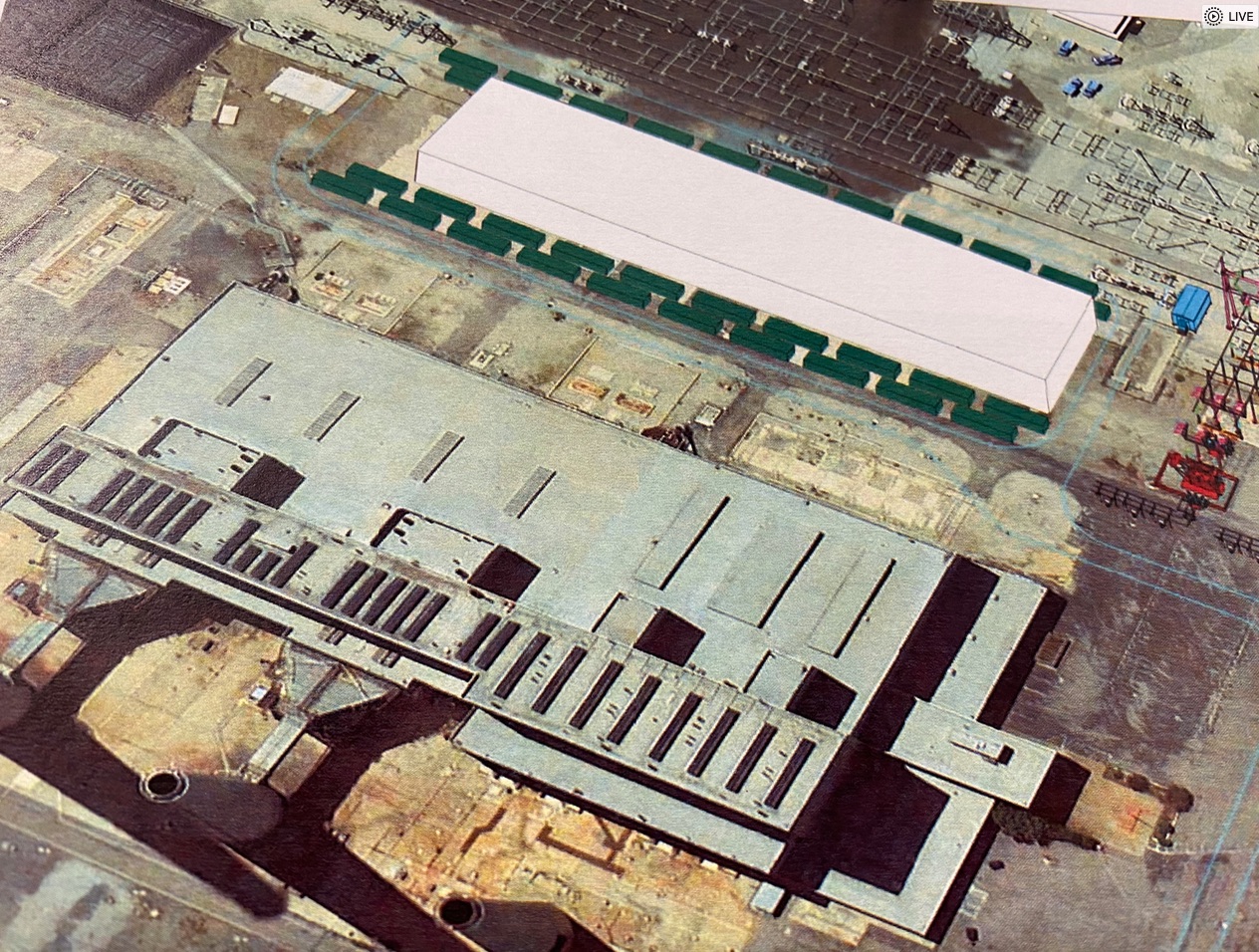
Morro Bay Battery map 2019-11-25 at 2.25.31 PMIrving Texas-based Vistra Energy has filed a plan November 12 to build a 4-acre, 200 megawatt battery storage facility just behind their mothball power plant and next to the big PG&E substation there. City Community Development Director Scot Graham says the Vistra proposal follows similar storage projects the company is building at their power plants in Moss Landing and in Oakland.

Vistra rendering of site for proposed 200MW battery plant building(in white) behind mothballed Morro Bay power plant and next to PG&E substation.Morro Bay visitors will probably not even see it

The Morro Bay application says the company wants to build a new 90,000sf building to house some 60,000 battery modules using lithium-ion technology. They also plan to build a new substation to connect to the PG&E station that connects by high voltage transmission lines to the rest of California.

The application says the company expects to be under construction by 2023 after all approvals are met including permits from the City, SLO County, Costal Commission and the California Independent System Operator (CAISO) who manages the state’s grid. In Morro Bay, community meetings on the project are several months away.

Eric Cherniss, Senior Director, Corporate Development and Strategy for Vistra Energy, says the decision to site the energy project here allows the battery units to connect to both the existing grid and by transmission lines to those big renewable  energy projects to the east including those in the Central Valley as well as to the west – where offshore wind power could come online in the future including the big 1000MW Trident Winds project off of Morro Bay.

“We have multiple options to receive, store and distribute power and provide reliability for the grid as well” says Cherniss.

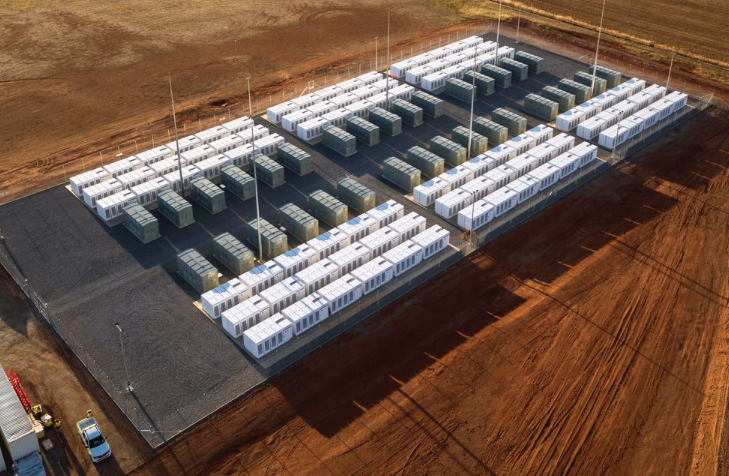
Utility scale battery plant2019-11-22 at 12.30.59 PMOne scenario- batteries can absorb solar energy when rates are low and sunshine is plentiful. Then from 4 p.m. to 9 p.m.batteries can be activated so customers do not have to pay for the high-priced electricity.

Battery energy projects can help extend renewable power by storing solar energy generated in daylight hours and deliver that energy back to the grid after the sun goes down and the need for power is great. That is where CAISO grid management comes in.


More plans in works?

Cherniss says the decision to build a new large energy storage building for the battery units allows Vistra some flexibility to make plans to develop the existing vacant power plant into some kind off mixed-use facility in the future, apparently the subject of some discussion.He hints that the height of the building might be attractive to some developers.

To that end Cherniss says they have applied to the County for a lot line adjustment that could allow the battery project to be separated from the rest of the 107 acre Vistra property that includes those iconic 450 ft tall stacks.

The Vistra Moss Landing battery project at 300MW/1,200-MWh is said to be the largest of its kind in the world as California is demanding more storage of solar power.  Unlike here, the Moss Landing plant still operates. The big project is under construction now and should be operating a year from today.Also in the works at the same site is a Tesla battery storage facility not owned by Vistra.

The Morro Bay power plant was commissioned in 1953 and decommissioned in 2014. It has not generated electricity since but could. But there are no plans to do so. It will not be connected to this new battery facility.

Retiring fossil fuel plants

Since its $1.7 billion merger with Dynegy in April 2018, Vistra has been backpedaling on fossil fuel generation including coal and toward renewables. Since 2010, Vistra brags that they and its predecessor companies have retired, or announced plans to retire nearly 13 GW of fossil generation, including 14 coal generation plants and 3 natural gas generation plants while opening multiple solar and battery energy projects.

In California  they are retiring so called gas-fired peaker plants that have provided standby emergency power needs but are considered a dirty source.

Recently Vistra signed an agreement with East Bay Community Energy, a community energy provider for Alameda County. It will replace a jet-fuel peaker in downtown Oakland with a 20-megawatt, 4-hour-duration lithium-ion battery plant. Unlike solar and wind this energy source can dispatch on-command.

California is demanding more battery energy for the grid requiring the state’s three investor-owned utilities to buy 1,325 MW of storage by the end of 2020.And it’s not just the investor utilities but the community-based aggregators like Monterey Bay Community Power that demands more as long as it is carbon free. The 11 agency member group includes the town of Morro Bay.

As of September, Monterey Bay Community Power (MBCP) is looking to acquire 10 megawatts to 100 MW of front of the meter battery storage capacity and discharged energy over a two-hour to eight-hour period.

Ina news release MBCP noted in a Sept. 13 request for offers that the storage capacity and discharged energy is being sought in order to satisfy a projected long-term need for capacity and energy delivery beginning in 2021. This Vistra project is expected to start up after that date.

Adding to the potential demand are more calls for back up systems after millions of Californians underwent days-long black outs this fall under the fire-prevention power outage plan of bankrupt utility Pacific Gas & Electric. Only now ,at the end of November is California’s brutal fire season ended.

Tom Habashi, the CEO of Monterey Bay Community Power says storage will help with the state’s renewable energy problem.

“The bottom line is, if we are to further reduce our carbon emissions in a significant way, we must reduce our need for natural gas and other fossil fuels during the hours that renewables are not producing electricity through storage.”

Batteries have the potential to capture energy as it’s being produced and discharge it whenever consumer demand is high enough.

One analysis point out that “Critical community facilities—from schools to hospitals and fire stations—could also begin to rely on solar and battery storage systems to keep running when the grid goes down. In the Bay Area, some schools closed on Wednesday. Some people couldn’t work. In Santa Rosa, where a fire burned entire neighborhoods in 2017, fire stations lost power in the current outage. California could learn some lessons from Puerto Rico, where some critical infrastructure added solar microgrids after Hurricane Maria. One California-based disaster relief center now uses a Tesla battery and solar power to ensure that it can continue operating when the grid is down. Santa Rosa Regional Hospital, run by Sutter Health, recently installed solar panels and now plans to add battery storage to prepare for future outages.”

As of last year, California has the goal to meet 100% zero emission electricity by 2045 for its 40 million residents.


Photo of utility-scale battery plant 

Market share of hybrid & electric vehicles climbs in California

California auto sales stall  

-November 26,2019-

Californians are buying fewer hybrid or electric vehicles in the state this year. But by percentage this category’s market share is up. That’s because overall new car sales are down about 5.1% for all types of new vehicles in 2019 when compared to the year before.

The market share for hybrid and electric vehicles is up to 13.4% of all sales through the first nine months of 2019 says the California New Car Dealers Assn. That’s up from  just 7.7% in 2016 and 12.0% of all sales in 2018.

Screen Shot 2019-11-22 at 8.56.48 AMThis year hybrid and electric car sales by market share were up but plug-in hybrids fell.

By percent the fastest growing brand of all types of vehicles sold in the state was Tesla up by 32%.This past week Tesla introduced a new pick-up truck that will be sold this coming year. News reports says “ During a presentation of the Tesla Cybertruck last week, the Californian company displayed a video with the electric pickup in a tug of war with a Ford F-150. The short clip showed a comfortable win for the futuristic EV truck against what is currently the best-selling vehicle in the United States.” Now there may be a rematch.

 An industry sources says “Almost half of US EV sales are in California, where state and local incentives are added to the federal tax credit and a complicated Zero Emission Vehicle (ZEV) mandate requires that EVs be a certain percentage of sales.”

Sales slump continues for all cars

Overall new vehicle registrations in the Golden State have been  down for 10 consecutive quarters says the dealer association           

Passenger car sales fell by 10.8% in the latest quarter while light high truck sales declined only slightly.

The state will likely see new registrations of  1.91 million this year compared to a high of 2.09 million units in 2016.

The latest report says Toyota,Honda and Ford are market leaders here. Falling the most this quarter is the Chrysler brand – down 40%. VW sales have come back – up 6.3% this year.

Californians are buying more light trucks than a passenger cars and used truck sales were up nearly 4% The Civic is best selling used vehicle.

The slump in new car sales are mostly blamed on sticker shock

The LA Times recently reported ”New Jeep Gladiators — the truck version of the rugged Wrangler model — can easily fetch $50,000 and are emblematic of a trend toward eye-popping prices that carmakers are commanding for the pickups and sport utility vehicles making up an ever-greater share of their sales. Even as manufacturers and lenders increasingly stretch out auto loan terms to more than seven years and subsidize interest rates with incentives, average monthly payments keep climbing.”

Energy briefs

-November 12,2019-

More tribes tap solar/storage

Southwest tribes are adding solar and battery storage to their portfolios. In California the San Pasqual Band of Mission Indians has issued a request for proposals that seeks design-build services for a hybrid microgrid that would supply electricity to essential buildings during utility outages. SPBMI seeks a grid-connected microgrid that will use solar, energy storage, and liquid propane for six essential facilities at the tribe’s administration campus, part of a 2,656-acre community with 350 homes near San Diego. The project springs from the tribe’s plan to make San Pasqual energy independent by 2021.

In Nevada, the Moapa Band of Paiutes in 2017 blazed the tribal
utility-scale solar trail with a 250megawatt (MW) installation that

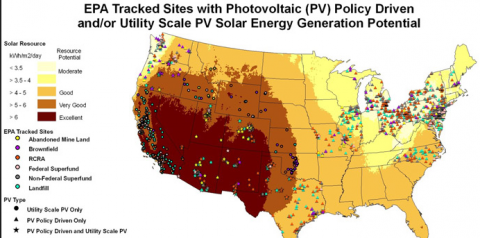
solar potential in the Southwest

supplies power directly to the Los Angeles Department of Water
and Power. The tribe is proceeding now with the development of
two new solar farms, one 200MW and the second 300MW, that
will provide power to NV Energy, the biggest utility in Nevada.

In New Mexico, the state’s first tribal utility-scale solar
project onJicarilla Apache land, will send power via the
PublicService Company of New Mexico to the City of
Albuquerque as part of a larger plan to replace generation that
will be lost in the closure of the coal-fired San Juan Generating
Station.

In Arizona and Utah, the Navajo Tribal Utility Authority has
partnered with the Salt River Project in Phoenix on a 55MW solar
park that feeds into the regional grid, and the tribal utility has
struck a deal with 16 Utah cities to buy electricity from a planned
66MW solar farm on tribal land in San Juan County, Utah.

Shale slump drives U.S. producers to scrap fracking fleets

Reports

The downturn in shale drilling has been so steep and brisk that oilfield companies are taking the unprecedented step of scrapping entire fleets of fracking gear.
With almost half of U.S. fracking firepower expected to be sitting idle within weeks, shale specialists including Patterson-UTI Energy Inc. and RPC Inc. are retiring truck-mounted pumping units and other equipment used to shatter oil-soaked shale rock.
Whereas in previous market slumps, frackers parked unused equipment to await a revival in demand, this time it’s different: Gear is being stripped down for parts or sold for scrap.

EIA

Estimated U.S. coal production the first week in November totaled about 12.6 million short tons which is16.6% lower than the production estimate in the comparable week in 2018.

Oil giant Shell buys into Kern solar

reports

EDP Renewables SA through its fully-owned subsidiary EDP Renewables North America (EDPR NA) and Shell Energy North America (SENA) have closed on a 15-year power purchase agreement (PPA) for 200 MW that will bring the Sandrini Solar Park to Kern County, California.
Located near Bakersfield, the 200-MW Sandrini Solar Park, which is anticipated to be operational in 2022, represents an estimated capital investment of more than $200 million and will generate enough clean electricity to annually power more than 91,000 average California homes.
“We are proud to enable the development of the Sandrini Solar Park,” said Glenn Wright, president of the Shell subsidiary. “This opportunity will increase the supply of renewable power in California while simultaneously reducing Shell’s carbon footprint. We recognize that customers and communities are demanding a shift in the way power is generated and we are adapting to the demand for more clean energy solutions.

Energy updates

-October 29,2019-

Murray Energy Files for Bankruptcy, Casualty of Coal’s Decline

Wall St Journal

Robert Murray, the last U.S. coal baron, couldn’t convince the Trump administration to bail out the industry

Murray Energy Corp., the coal producer led by outspoken Trump administration ally Robert Murray, has filed for chapter 11 protection, a stark example of coal’s diminished role in the U.S. energy sector. The company was the largest coal producer in the US. Alliance Resource Partners now the only top-5 coal company in US not to file for Chapter 11 bankruptcy reorganization recently.

Micro power grids emerge as way to keep electricity on during shutoffs

KQED

For two days, life in Northern and Central California was completely upended by PG&E’s power shutdowns, affecting hundreds of thousands of customers. The outages renewed questions about why the utility did not include resilient grid technology, such as the microgrids employed at three Fremont fire stations, outfitted with a sophisticated power system designed to keep running when the grid goes down. Fremont is one of the first cities in the U.S. to install a microgrid, a small, self-contained electrical system, around a fire station. Fremont’s microgrid includes solar panels, batteries, and a generator. Control software allows the stations to operate independently from PG&E’s grid. The California Public Utility Commission is examining how projects like the one in Fremont can help shore up the system and make power shutoffs less disruptive.

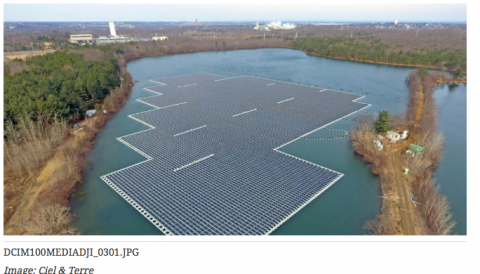
Screen Shot 2019-10-29 at 6.32.36 AMFloating solar project  completed: New Jersey 


EVs could shift all residential peak load

Microgrid Knowledge

Functioning as a virtual power plant (VPP), it would take just 10% electric vehicle (EV) market penetration in Southern California Edison’s (SCE)  service territory, 5,000 customers, to shift residential peak power load to evening hours, according to an independent, self-funded study from Jackson Associates.

Screen Shot 2019-10-29 at 6.43.26 AM“We were surprised both at the relatively small 10% EV market saturation required to completely clip the SCE residential peak and the large annual savings of $560/EV per customer even after paying for nighttime recharging,” said white paper author and company president Jerry Jackson. “These results suggest that utilities should shift from defensive, managed charging strategies to an offense strategy that draws on electric vehicle battery storage during peak hours with overnight recharging.”

The EV battery power “offsets the increase in electricity use of other customers that typically occurs in these four hours, thus clipping the peak from the utility’s perspective,” Jackson said in an interview.

Jackson Associates chose SCE because the analysts wanted an area that had a reasonably high level of summer air conditioning load and would benefit from an VPP based on peak and off-peak electric price differentials, Jackson explained.

“Reducing EV customer electricity use to zero in each of the four peak hours by drawing on EV battery power offsets the increase in electricity use of other customers that typically occurs in these four hours — thus clipping the peak from the utility’s perspective” he told Microgrid Knowledge.

Jackson calculated an average utility cost savings to consumers of $560/year by doing so, and a net cost savings of of $400/year when the customers’ costs of additional charging cycles was added in. “There will be some utility costs to provide the infrastructure and run the program; however, most of the costs savings should flow through to customers, Jackson commented.

Solar deal prices called “astoundingly low”

-October 28,2019-

news reports

The state of California has witnessed yet another claim of ultra-low solar prices, recorded in the context of a major contracting exercise by a community energy group.

The board of East Bay Community Energy (EBCE), the power supplier of San Francisco-neighboring Alameda County, waved through deals last Friday to acquire 225MW of solar and 80MW / 160MWh of battery energy storage.

The late September procurement – coming off the back of earlier deals in June and July – brings EBCE’s purchase pipeline volumes up to 550MW of clean energy and 137.5MW / 390MWh of energy storage, set to supply residents in Oakland and others in the county.

According to EBCE, the solar portfolio resulting from this year’s procurement raft was contracted at average prices of US$22/MWh. Commenting on the latest deals on social media, the group’s CEO Nick Chaset described the figure as “astoundingly low”.

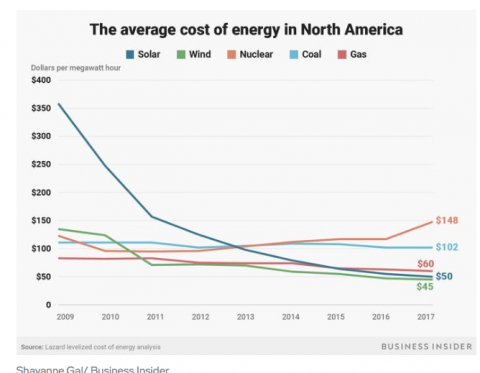
This 2017 chart shows solar dropping to 50Mwh.This deal is less than half that price.
This 2017 chart shows solar dropping to $50MWh.This deal is less than half that price.

One of the newest two deals will see EBCE acquire the entire output of sPower’s Solar + Storage Project, set to mix PV (125MW) and batteries (80MW / 160MWh). The buyer will have “full control” to tap the storage battery as required by the peaks and troughs of solar generation.

The second deal concerns the 100MW Edwards Solar Project Terra-Gen is developing within a 600MW complex at the Edwards Airforce Base, in Kern County. According to EBCE, the agreement foresees the possibility of rolling out energy storage systems onsite.

Edwards’ “solar plus virtual storage” contract means Terra-Gen can install and run batteries to protect the project from negative pricing, EBCE said, adding: “[We have] the right to procure resource adequacy in the event storage is added.”

Cheap solar draws eyes to Golden State

For EBCE, the sPower and Terra-Gen projects cleared in September will sit alongside schemes – including EDPR’s 100MW / 30MW solar-plus-storage venture in Fresno – it gave the green-light to earlier this year all across California.

The contracts will see PV developers back EBCE’s community investment scheme with contributions of US$1 million, with a commitment to use union-backed labour and sponsor training hours for volunteers and others.

The EBCE deals look set to cement California’s status as home to some of the cheapest solar ventures in the US. A solar-plus-storage project claiming to offer the country’s lowest solar tariffs – US$19.97/MWh – has cleared various planning hurdles in Los Angeles.

Designed with a total 400MW of solar arrays and up to 1,200MWh in battery systems, 8minute Solar Energy’s Eland hybrid bagged earlier in September 25-year power purchase agreements from the LA Department of Water and Power (LADWP).

However, some in the solar ranks have questioned whether ultra-cheap Eland can remain money-making for 8minute. Writing for PV Tech in August, Gensol Group vice president Ali Imran Naqvi said his firm’s modeling would see the developer reap equity returns of only 5%.

LA authorities recently moved to triple the size of the city’s rooftop solar feed-in tariff program, in a bid to build momentum towards clean energy goals. Under current targets, LADWP’s current renewable share of 31% should grow to 55% by 2025, 80% by 2036 and 100% by 2045.

Where is state’s cheapest gas?

Screen Shot 2019-10-24 at 11.35.16 AM-October 24,2019-

Gas prices are on everyone’s mind this fall but AAA says this week they are finally dropping across California. Gas price averages tumbled by 10 cents a gallon in Los Angeles and the statewide average is now $4.10 a gallon for regular unleaded – seven cents lower than last week says AAA.

Meanwhile the state Energy Commission(CEC) just put out a  report on why our California gas prices are higher by about $1 more than the national average.  The concluded that consumers are willing  to pay the higher prices due to concentration of” market power” – translation- lack of competition.

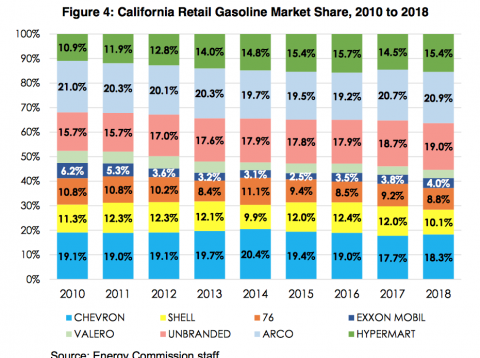
They point to substantially higher prices being offered by the top brands in the state – Chevron,Shell and 76.”While all retailers in California have increased their retail margins above the national average, higher-priced brands such as 76, Chevron, and Shell have increased those margins far beyond their competitors” says the October 21 CEC report.

These top brands have market power in Visalia for example with 18 location in town.Easy to find. But as to the low price leader in Visalia- Costco, there is only one location.

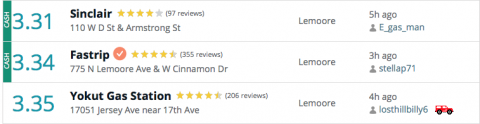
For some reason the lowest prices for a fillup in California are in Lemoore and Farmersville, with Lemoore sporting the three lowest prices  gas options in the state according to Gas Buddy.Competition  here seems alive and well.

According to AAA, the state’s average price for a gallon of gasoline recently was $4.14, while the national average was about $2.65. That’s a difference of $1.49. Are California’s high gas taxes to blame?

Critics of California say the difference is high gas taxes in the state compared to other states. The state gas tax stands at 47 cents since July, up from 41 cents as of Nov 2018. But gas prices at the pump this July were $3.44 compared to $4.14 today. That’s a 70 cent jump in what we had to paying recent months but no increase in tax!

Even within the state there are cluster of stations in towns that are always lower than the state average like those in Lemoore, 80 cents lower a gallon than the state average. Sure Lemoore has an Native American-owed station but local independents compete with them successfully.

Perhaps the secret is for cities to zone retail corners in their community for four gas stations to boost competition.That might be better that what the Wall Street Journal suggested recently. Move to Texas.

Caption: Hypermarket category is Costco/Safeway gas stations

Screen Shot 2019-10-24 at 12.35.58 PM