
reports from Green Tech Media and others
-December 17,2019-
After months of lobbying, the clean energy industry secured minimal tax credit extensions in the $1.37 trillion end-of-year deal U.S. lawmakers eked out this week to fund the government in 2020.
In a nutshell the wind industry was a clear winner getting an extension of the production tax credit through 2020. Developers qualifying projects in 2020 will receive 60 percent of the PTC if they bring those projects online by the end of 2024. Projects qualified in 2019 will still receive only 40 percent of the incentive.This is said to benefit offshore wind producers.
“Meanwhile, lawmakers left solar— the industry that most aggressively fought for an extension of its ITC — and electric vehicles out of the deal. Solar ITC will now fall to 26% in 2020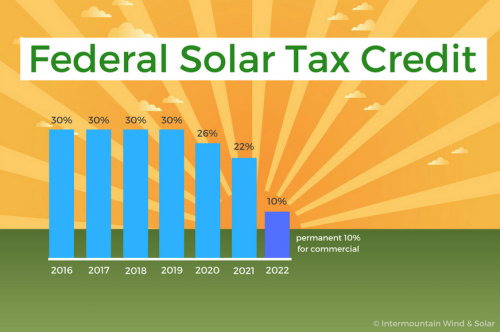 from 30% in 2019.
Storage, which lawmakers had sought incentives for in legislation like the November GREEN Act, will continue without credits.
In the end, wind emerged with at least a modest victory; though lawmakers on both sides of the aisle have supported clean energy tax credit bills, wind’s lingering dominance in many conservative states may have smoothed the way for its credit extension.”
As far as electric vehicles one news report says “The Trump administration and Congress ignored pleas from Tesla and General Motors to extend a crucial tax credit for electric vehicle buyers, a move expected to result in declining sales of the zero-emission cars just as the consequences of climate change intensify.
The current $7,500 tax credit, which reduces the price of all-electric vehicles, phases out after an automaker has sold 200,000 EVs, a threshold only Tesla and General Motors have hit. The credit will be available to consumers buying an EV from other automakers until their cumulative EV sales reach 200,000.”
Regards biodiesel Agri Pulse reports” Congressional negotiators have agreed to revive and extend through 2022 the expired $1-a-gallon tax credit that subsidizes biodiesel and renewable biodiesel production.
The tax incentive lapsed at the end of 2017, but the extension through 2022 was included in a 58-page tax package that will be considered as a manager’s amendment to a massive fiscal 2022 domestic spending bill to fund the departments of Agriculture, Interior and other departments and agencies. The credit will be retroactive to Jan. 1, 2018.
The “deal provides the policy certainty that the biodiesel industry has been seeking to support investments and continued growth of production,” said Donnell Rehagen, CEO of the National Biodiesel Board. “NBB and its members are grateful that congressional leaders are providing a positive signal before the year’s end.”
A tax credit for short-line railroads also was made effective through 2022, and the tax package also includes extensions for tax breaks that subsidize cellulosic biofuels, electric vehicles and alternative fuels equipment.