-July 13,2022- On July 8th the Bureau of Reclamation increased the 2022 water allocation for Friant Division Class 1 contractors from 15% to 20%. As in the prior two years, Friant Division Class 2 contractors did not receive an allocation, which continues to reflect that the hydrology for the 2022 water year is very dry. “The increase in the Class 1 allocation is a welcome change, especially given other challenging conditions in the Friant Division, such as the deliveries of water supplies from Millerton Lake to the San Joaquin River Exchange Contractors that began on April 1.”
In their statement July 8th Friant said “ As those deliveries ramp down, it increases our certainty that the remaining water in Millerton Lake can be allocated to the Friant Contractors. Based on current reservoir levels and forecasts, it appears that there may be an opportunity to increase the Class 1 allocation to 30% if no additional water in Millerton is required by the Exchange Contractors. FWA is optimistic that today’s revised allocation is the first step towards achieving that number.”
A 30% allocation would amount to 240,000 acre feet instead of the initial 10% or 80,000 acre ft.
Bureau of Reclamation spokesperson Mary Lee Knecht confirms reports today the agency will increase the allocation for Friant Contractors above 15% later this month.
“Delta supplies are expected to improve this summer due to late season precipitation throughout much of Northern California; as a result, Reclamation is considering an update to allocations for the Friant Division in mid-July.”
Friant sources say they heard 20% but perhaps more.
According to Fresno County Farm Bureau CEO, Ryan Jacobsen the tomato crop is less than expected because of the drought, at 6.9% below forecasts.-Central Valley News
Prospect of harvesting 2.8 billion pounds of almonds this year — just shy of the 2.9 billion pounds in 2021 and the record 3.1 billion pounds in 2020 — has industry leaders both excited and worried. That’s because about 1.3 billion pounds of unsold almonds are still sitting in piles at processing and packing facilities. The problem comes at a time when inflation and a historic drought are pushing the costs of production and water supplies to an all-time high, and the price of almonds has fallen to an all-time low of about $2 per pound. It’s a sharp reversal for the industry after four decades of relentless expansion across 1.6 million acres in California’s agricultural Central Valley –LA Times
Valley watermelon farmers are anticipating a booming business this summer. Watermelon prices for the San Joaquin Valley crop are running ahead of last year’s pace, according to data from the U.S. Department of Agriculture Agricultural Marketing Service. As of June 30, a 35-count carton of valley seedless watermelons was selling for $150 to $154, while the 45-count carton went for $158 to $161. That’s up $119 to $126 from June 2021.
Seedless miniatures—”personal size,” were going for $12.95 to $13.95 for cartons of six- to nine-count melons at the end of June 2022, according to USDA. Last year, the price was $8.95 to $10.95 per carton of six- to eight-count melons.
Growers say oversupply was a factor in last year’s market, noting that 2021 was a lower-price, lower-volume year.
California Citrus Mutual reports this week that the navel crop is 100% harvested and shippers expect to finish shipping remaining inventories by the end of June. Prices for all sizes are very strong at over $23 per carton. That compares to $16 a carton last season.Looking ahead to next season, industry estimates project the 2022 navel crop will be of an average size.
Meanwhile the Valencia season is in full swing and 31% harvested. The average domestic price for the week was just over $19. The market is characterized as strong. Demand is picking up on larger sizes. Demand for smaller sizes is starting to fall off which is typical with schools closing for the summer break. The price is well above average but mostly below last year’s strong showing when consumers were eager for Vitamin C.
Psyllid finds negative for HLB bacteria
Tulare County farmers are breathing just a little easier this week after multiple Asian Citrus Psyllid finds in Woodlake/Lemon Cove and elsewhere a few weeks ago.Now Victoria Hornbaker, APHIS Citrus Program Manager reports that for the Tulare County finds,” all of the psyllid that were collected were tested to see if they were carrying the bacteria that causes HLB, and those all came up negative.” Officials are still conducting testing on the ACP detection in Fresno County.The industry fears the spread of citrus greening disease from these insects that has devastated Florida’s citrus industry.
– Kings sees 19% turnout: Kings County saw a 19% voter turnout in the June primary, better than the state average at 16% at this count.Tulare County reported just a 10% turnout.
– Valadao vs Salas this fall: The race for the congressional seat in the 22nd district will feature Democrat Rudy Salas vs GOP’s David Valadao this fall, the top vote getters in this week’s primary.
– Verboon, Neves, Robinson to lead BOS: Kings County Board of Supervisors will seat Doug Verboon, Joe Neves and newcomer Rusty Robinson as a result of this week’s election.
– Hurtado vs Shepard in State Senate District 16 race: Melissa Hurtado easily beat out Nicole Parra on the Democrat side and will face off with Republican David Shephard this fall.
– Firefighter measure fails Measure F, titled The Kings County Fire and Emergency Services Initiative, that would have established a half-cent sales tax increase to be used for the Kings County Fire Department, was turned down by voters by a two-thirds margin.
Milk/beef prices heading lower?
Two huge Kings County ag commodities are enjoying high prices for producers but the market expects both milk and beef prices to moderate going forward.
As for beef, Rabobank says “the first signs of softening consumer confidence are apparent in most markets, with wholesale prices for beef coming under pressure even though production costs are higher. A downward adjustment of cattle prices and upstream input costs will be needed to restore processor margins and to maintain beef’s competitiveness with consumers. We expect ongoing adjustments of consumption and margins in all markets as we head into Q3 2022.” For now, cattle values are significantly higher this year, with steer prices netting 17.5% more at slaughter than last year. And for number one Kings crop- milk- dairy farmers are happy to see all-time high milk prices at $25.21 per 100 pounds of milk -over $6 higher compared to last year. Meanwhile margins may be moderating, says Western United Dairymen, based on nearby futures prices. July grain contracts slipped while third quarter Class III and Class IV futures climbed to $24.47 and $25.85 per hundredweight. Lower milk output around the world is spiking prices higher
But these lofty dairy product prices may erode consumer’s appetites and dairy futures price are trending down in a break for costomers.In May USDA said the” all-milk price forecast for 2023 is $23.55 per cwt, $2.20 lower than 2022 projection.Higher milk supplies projected in 2023 and relative stable demand are expected to contribute to lower prices for the main dairy products compared to 2022 projections” says USDA. The agency projects the national dairy herd to increase.
Foster Farms sells
Valley-based Foster Farms, a family-owned poultry producer, has sold its operations to a conglomerate -Connecticut-based Atlas Holdings announced on June 7. Foster Farms acquired many of the ranches in Kings County, formerly owned by family-based Zacky Farms. Afterward, Foster Farms indicated it wanted to reopen and modernize the ranches and raise chickens including free range. We will see if they follow through under the new owners.
Processing tomato production expected down on drought
As of May 15, California’s tomato processors reported they have or will have contracts for 11.7 million tons of processing tomatoes for 2022. This production estimate is 4.1% lower than the January intentions forecast of 12.2 million tons, but 8.9% above the final 2021 contracted production total.
The May contracted acreage of 234,000 is 4.5% below the January intentions forecast of 245,000 acres, but 5,000 acres more than last year’s final contracted acreage. Fresno County remained the top California county in contracted planted acreage for 2022 with 50,000 acres. King’s cotton plantings stand at 27,000 acres, down from 29,800 in 2021.
Drought Monitor worse An already grim situation just got worse for California in this week’s U.S. Drought Monitor report.
‘Exceptional drought’ expanded in parts of California’s agricultural Central Valley north of Los Angeles in this week’s report. That is the most severe of the weekly update’s four drought categories.
The area includes portions of Kern, Tulare, Fresno, Madera, Mariposa and Tuolumne counties. The flat region that dominates the central part of the state has some of the most productive farmland in the country, including vast crop fields with fruits, grains, nuts and vegetables.
Friant gets some possible good news
Reclamation will meet with Friant Contractors on June 10th to discuss potential operations scenarios on the Friant system based on June 1st conditions and the updated export forecasts. The Central Valley Operations (CVO) Office in Sacramento has updated its operations forecast based on May 1st conditions and they are now indicating the likelihood that exports will increase from one pump to 2-3 pumps on or near July 1st. Such a change would eliminate the need to continue releases from Friant Dam and increase the potential that the Friant water supply allocation could increase above 15%. The potential amount and timing of any increase is still uncertain.
California’s top crop is down for the second year based on lower yield, according to an annual survey.
USDA has announced that the initial subjective forecast for the 2022 California almond production is 2.80 billion pounds.
Forecasted production is 4% below last year’s production of 2.92 billion pounds. Forecasted bearing acreage for 2022 is a record high of 1,370,000.
Forecasted yield is 2,040 pounds per acre, 8% lower than the 2021 yield of 2,210 pounds per acre.
Similar to last year, the 2022 almond crop experienced a mostly dry winter throughout the state. Although there were a few scattered storms, snowpack and water levels continue to be well below normal.
The almond bloom began in early February with favorable weather for pollination. Warm temperatures encouraged a shorter bloom period than has occurred in recent years. The North Region, with an earlier bloom than the Central and South Regions, was hit the hardest by a freeze that occurred during the last week in February. Frost damage was observed, with reports that some acres would be left unharvested without an adequate nut set. In addition to variability in expected yields across regions, the impact of the freeze appears to differ by variety, as late-blooming varieties were reported to have fared better than the early- blooming varieties.
Excellent weather in April helped the crop develop, with a few instances of spring rain bringing some relief to areas impacted by drought conditions. The lack of water continues to be a top concern for almond growers.
Despite record-high bearing acreage, the 2022 crop is not expected to be as large as the past two years. The price per pound has trended lower in the past few years at $1.76 in 2021 down from $4/lb in 2014.One report says this Spring we are seeing prices around $1.42/lb.
53 digesters are operating, under construction, or are approved and funded in the county
-May 7,2022-
Looking to cut climate warming dairy emissions Tulare County has reduced GHG emissions by 303,618 metric tons per year as a result of projects in operation in 2020, which is 28.9 percent of emissions reductions needed to achieve the Dairy CAP reduction target.The target has been agreed to by the County under a settlement agreement with the Sierra Club in 2019.
To meet the target, County dairies and feedlots will need to reduce emissions by an additional 746,382 metric tons per year by 2023, according to a report heard by the Board of Supervisors this past week .
At present, there are an additional 677,589 metric tons per year of upcoming emissions reductions from County solar, digester, and AMMP projects that have either started operating after 2020, are currently under construction, or are approved and funded for construction.
To meet the Dairy CAP reduction target, another 68,793 metric tons per year of emissions reductions from yet-to-be identified solar, digester, AMMP, or enteric projects will need to be implemented by 2023. So, additional projects will be needed in order to reduce emissions by 6.552 percent to meet the Dairy CAP reduction target of 1.05 million metric tons/yr. by 2023.
With the projects in operation in 2020, and the County solar, digester, and AMMP projects that have either started operating after 2020, are currently under construction, or are approved and funded for construction, the amount of emissions reductions for Tulare County will reach 93.448 percent of the the Dairy CAP reduction target.
Finger pointing by both Democrats and Republicans don’t tell the story here. But the charts don’t lie.
All those key ingredients of your morning breakfast are way up in price. From milk to eggs to bacon, coffee and orange juice – all are double digits higher than consumers paid a year ago.
Of course those breakfast price hikes might scramble your budget but you cant go without breakfast ,right? Each product has their own story to tell, but all are in short supply.
Breakfast foods are reaching a 10-year high thanks to supply chain woes, bad weather, war, reduced supply and renewed demand as the pandemic eases.
Bacon is a whopping $1.71 more than it was pre-pandemic. A pound of coffee beans will set you back an extra dollar. And for just toast – an extra 17 cents.
And the squeeze is on when it comes to oranges and orange juice too.
Collapse of the Florida orange industry
The Department of Agriculture predicting the smallest crop of oranges in Florida since 1945 with orange production down 16%, but at the same time – demand for orange juice continues to climb. Experts expect prices to climb and attribute the low crop to citrus greening, an incurable plant disease caused by infection from an Asian insect that turns oranges bitter and green. Add those deep freeze events and hurricanes, each associated with global warming, that adds up to a virtual collapse of the Florida citrus industry in the past decade.
Consider that Florida in the 1990s regularly harvested 200 million boxes of oranges each year -221 million 1996. By 2011 it was down to 147 million boxes.
In the latest forecast for 2022, Florida will harvest a pitiful 38 million cartons – down nearly by half from just one year earlier! Looking closer – USDA says the lower supply is coming from an estimated 51% fruit that simply drops from the trees.
The decrease in orange volume has hit the orange juice market where most of the state’s crop end up.
So the price of OJ futures is up 59% based on low supply and consistent demand- people thirsty for that Vitamin C rush.
OK, it hard to blame anyone but Mother Nature for all this. Prices of oranges, tangerines and other types of citrus jumped 6.8% in February as overall food prices continue to rise, according to the U.S. Bureau of Labor Statistics’ Consumer Price Index.
The increase in price has helped another state California – where the industry, not impacted by citrus greening, is producing an expected 51 million boxes, higher than Florida’s 38 million.
Milk producers enjoy higher prices
How about milk? Dairy operators will tell you their biggest input cost is feed – led by corn.And corn too is sky high. Farmers have to ship corn to California with the price near $8 a bushel compared to half that in 2020.You can blame multiple factors including oil and diesel fuel transportation costs impacting fertilizer prices as well.
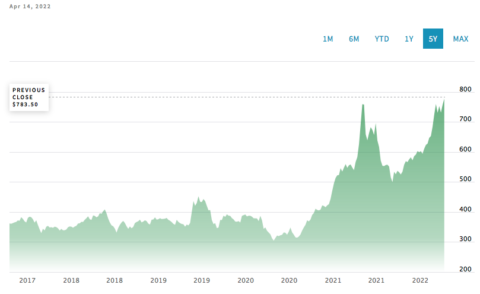
To compensate, milk prices stand at near $25 per/cwt.This milk price chart looks like many other farm commodities.Dairy operators say this is the first time in a few years they making money.
Prices are likely to remain high as long as global milk output is in decline. USDA’s Dairy Market News described the situation in Europe, offering a summary that will surely feel familiar to American dairy producers. “Farmers would like to take advantage of strong milk and dairy prices, but the increased costs of feed, labor, replacement heifers, and other farm inputs make expansion difficult.” The upshot is less supply of this breakfast item too.World shortages has juiced US milk production with record exports leaving less milk for domestic use.
This week corn futures rose to an almost 10-year high of $7.86 per bushel on prospects of stronger demand against smaller production and supply chain issues.The price is highest since 2012. Surging crude oil prices, and news from the Biden administration that it will increase ethanol usage this summer helped to support new buying. At the same time, dry conditions in Brazil, smaller-than-expected planting areas in the U.S, and delay in China’s corn planting amid lockdowns are set to cause significant production losses. This added to the already existing fears of supply disruptions from Russia and Ukraine, the two major global corn exporters. Since Russia invaded Ukraine, Ukraine suspended commercial shipping at its ports while Russia paused grain trade following the West’s trade sanctions on Moscow.
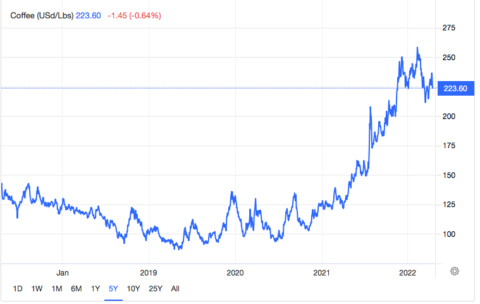
What about coffee? Here is five-year chart for coffee prices.Coffee prices have been rising for 17 consecutive months. Coffee consumption in US reached a 20-year high, according to National Coffee Association. The NCA’s 2022 Spring National Coffee Data Trends report found 60% of the US population drinks coffee every day – a 14% increase since January 2021.
Couple this with good demand and falling supply due in part to extreme weather events, it seems.
One report notes that In 2021, both frost and drought struck coffee crops in Brazil, the world’s largest exporter, with losses .estimated around 10 million bags, equivalent to more than a third of annual U.S. coffee purchases. U.S. consumer coffee prices are now at a nine-year high, and the shortage isn’t going away any time soon. In addition to weather extremes, climate change is fueling pests and disease damage, such as coffee leaf rust, which wreaked havoc across Latin America in the past decade and is now hitting crops in Hawaii.
As for bacon – all meat prices are up as the industry has consolidated. Ground beef prices rose nearly 13%; pork — including ribs and roasts, whose prices rose 14.22%; chops, which saw a 14.5% increase in price; bacon and breakfast sausages, whose prices spiked nearly 16%.
Corn prices up too
Corn pricesAll these meat sources depend on corn with fewer US corn acres forecasted to be planted this year.That has driven up the future price of corn late this year.Higher fertilizer prices are an incentive to not plant corn. Meanwhile there is concern over 500 million corn bushels still trapped in Ukraine for the foreseeable future.If there is some good news for you to chew on -look to Kellogg’s,
All these meat sources depend on corn with fewer US corn acres forecasted to be planted this year.That has driven up the future price of corn late this year.Higher fertilizer prices are an incentive to not plant corn. Meanwhile there is concern over 500 million corn bushels still trapped in Ukraine for the foreseeable future.
If there is some good news for you to chew on -look to Kellogg’s,
the big cereal maker who transforms 200 tons of corn every day into Snap/ Crackle & Pop and the rest – 25% more than in 2016.
Around half is used to create Cornflakes and Coco Pops, a kids favorite. The good new , since 2011 Kellogg’s has removed 11,000 tons of sugar from its cereals and plans to cut down on salt.
No, the water year is not over as of April 12. Concern that no storms will come into
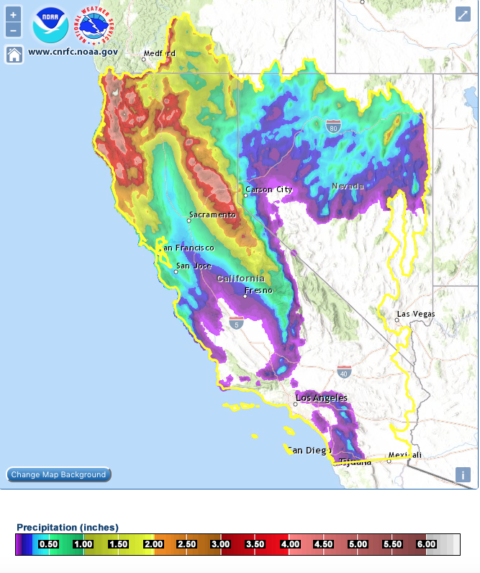
6 day forecast shows nearly 5 inches expected near Shasta
California this month (like January and February) leaving us in extreme drought may be overblown as a parade of moderately wet storms comes into northern California through the end of the month according to the GFS models.
This latest 6-day forecast for the 12-18th shows nearly 5 inches of precipitation could fall in the Shasta area -home of the state’s most important reservoir as well as Oroville.
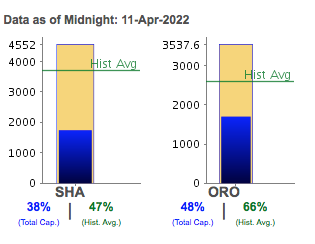
The water level at Shasta Dam is a key metric of whether water will flow south of the Delta this summer or not.
Shasta sits at just 38% of capacity now having received just 36 inches of precip this water year. In 2019 around this time, the reservoir had seen nearly 80 inches.
So adding an additional 5 inches in the next week will be welcome by both farmer and fish.Today there was a foot of new snow in the Tahoe area as the state switched from extreme heat to nice and cold.
After the 18th, there are apparently three more storm with moderate moisture that will dive into the state according to models.
Storms are dropping down from the north on the 19th, 22nd and 24th -with some reaching down to Central California and depositing snow in the southern Sierra. These are not sure things but at least there is some hope.
UPDATE: Series of incoming storms into N California fueled by Pacific typhoon. April 14 –West Pacific Typhoon #Malakas now appears likely to substantially perturb North Pacific jet stream as it recurves in coming days, possibly bringing a substantial (though much welcomed!) late-season rain event in Oregon and the northern 1/3 of California.

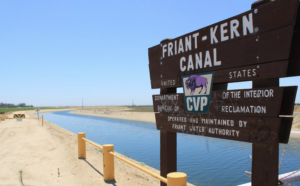 On July 8th the Bureau of Reclamation increased the 2022 water allocation for Friant Division Class 1 contractors from 15% to 20%. As in the prior two years, Friant Division Class 2 contractors did not receive an allocation, which continues to reflect that the hydrology for the 2022 water year is very dry. “The increase in the Class 1 allocation is a welcome change, especially given other challenging conditions in the Friant Division, such as the deliveries of water supplies from Millerton Lake to the San Joaquin River Exchange Contractors that began on April 1.”
 Bureau of Reclamation spokesperson Mary Lee Knecht confirms reports today the agency will increase the allocation for Friant Contractors above 15% later this month.
 Valley watermelon farmers are anticipating a booming business this summer. Watermelon prices for the San Joaquin Valley crop are running ahead of last year’s pace, according to data from the U.S. Department of Agriculture Agricultural Marketing Service. As of June 30, a 35-count carton of valley seedless watermelons was selling for $150 to $154, while the 45-count carton went for $158 to $161. That’s up $119 to $126 from June 2021.
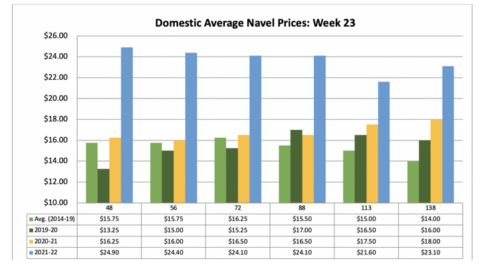 California Citrus Mutual reports this week that the navel crop is 100% harvested and shippers expect to finish shipping remaining inventories by the end of June. Prices for all sizes are very strong at over $23 per carton. That compares to $16 a carton last season.Looking ahead to next season, industry estimates project the 2022 navel crop will be of an average size.
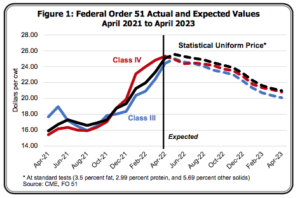 And for number one Kings crop- milk- dairy farmers are happy to see all-time high milk prices at $25.21 per 100 pounds of milk -over $6 higher compared to last year. Meanwhile margins may be moderating, says Western United Dairymen, based on nearby futures prices. July grain contracts slipped while third quarter Class III and Class IV futures climbed to $24.47 and $25.85 per hundredweight. Lower milk output around the world is spiking prices higher
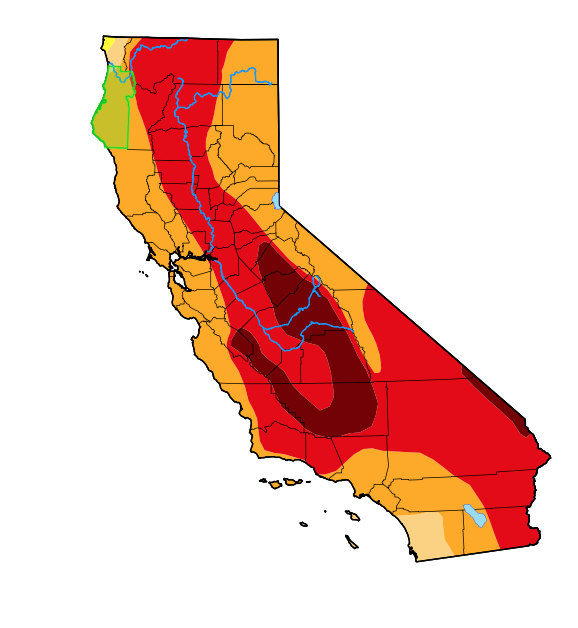 An already grim situation just got worse for California in this week’s U.S. Drought Monitor report.
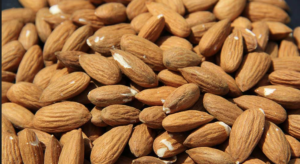 USDA has announced that the initial subjective forecast for the 2022 California almond production is 2.80 billion pounds.


 Of course those breakfast price hikes might scramble your budget but you cant go without breakfast ,right? Each product has their own story to tell, but all are in short supply.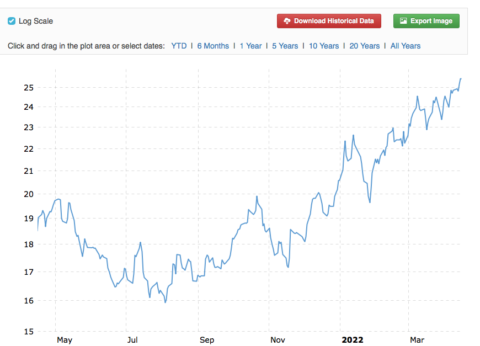

 No, the water year is not over as of April 12. Concern that no storms will come into