Kings County crop value up 7.5 percent in 2021


October 8,2022-

Screen Shot 2022-09-03 at 1.16.13 PMKings County’s crops fetched $2.34 billion in 2021, a 7.5% increase. Ag Commissioner Jimmy Hook presented the report to the Board of Supervisors this past week noting that the Fruit & Nut category grew by $83.5 million, up 12.9% based on more acres and higher prices for nuts.Pistachio acres came into production growing to 40,316 from just under 33,000 acres the year before.

Milk continued to be the top commodity with production steady and a bump in price to $19.10 per hundredweight

(this year, it is up to the mid $20s!). Pistachios were number 2 followed by almonds and then cotton. A look back 50 years shows cotton was the top crop ahead of milk.

Pima cotton was the big winner in 2021 based on price per bale but less production. Pima crop acres in 2021 was just 3,7561 – a  decline of more than half. Alcala acres were also down but the price per bale was higher. Farmers continue to face several years of drought conditions.

Tulare County farm receipts reach $8 billion in 2021

 -October 8,2022-

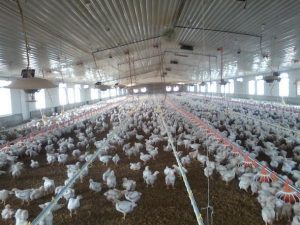
Hen house in Tulare County allows room to stretch

The value of all ag products reached $8.089 billion in 2021, a record for Tulare County, the Ag Commissioner reported this past week. That is more than 13% higher than 2020, an increase of almost one billion dollars.

As usual, milk led the way with $1.9 billion in gross receipts, up about 1 percent from the previous year. The increase is mainly due to the rise in the per hundredweight price – up from $18.60 in 2020 to $19.10. Nut valuation was up in 2021 as well from $3.8 billion in 2020 to $4.6 billion, a 20% increase, says Tom Tucker, Ag Commissioner.Walnuts fetched a better price while almonds were flat and pistachio prices were down. But pistachio production per-acre climbed.

Both poultry and livestock value was up. Poultry production in the county was higher in 2021 as was the price.Cattle prices were higher.

Citrus shines

Even though navel orange production was down in 2021 the value was up on price per pound bringing the total to $973 million compared to $844 million in 2020. Other citrus crops did well too including lemons fetching $347 million compared to $269 million in 2020. Again, the price per pound was significantly higher even though tonnage was down. Tangerine acreage and price were up as well .Grapefruit too was higher.

If you add the value in 2021 of citrus produced in the county it is higher than milk!

Grapes wear higher as well bringing in $683 million compared to $569 million in 2020 even though acreage is down.

Alfalfa – key feed for the dairy industry – saw its value increase largely on price as acreage fell but the value jumped from $60 million in 2020 to $83 million in 2021.

As for honey, production was up but the value was down on a big drop in price.Nursery products were up.

Exports

Tucker notes that Tulare County exports to over 90 countries around the world.Korea was the largest export destination accounting for 44% of orange crop exports (4.5 million cartons) and 11% of all grapes. China imported 1.4 million cartons of Tulare oranges and Japan took in 2 million cartons of oranges. Japan took 18% of our almonds as did Korea followed by India.
Whether our total of $8.1 billion in gross receipts will be enough to be the top ag producing county remains to be seen. Fresno County and Kern County haven’t reported for 2021 yet. Both were in the high $7 billion range last year.

caption: Tulare County produced more honey in 2021 but prices were down per pound

Water storage up compared to last year

Sept 15,2022

Millerton keeps rising (320,00af on Sept 30)Screen Shot 2022-09-30 at 11.54.41 AM

Looking for a bit of silver lining to an endless drought? Before the rainy season this winter regulators are storing more water according to the state’s latest reservoir report than they did last year. Despite dry conditions downstream a number of key Sierra reservoirs hold more water than the same time in 2021 that was also a drought year.

Today the state’s largest federal reservoir, Shasta, is hurting with just 1.6 milAF at 35% of capacity as of Sept 5. Still, that is improved over last year at this time when only 1.2 milAF was in storage.

Likewise at the largest California-managed reservoir – Oroville -that sits at 1.3 milAF compared to just 800,000AF as of Sept 5, 2021.

Folsom, above Sacramento, holds 423,000AF. But in September 2021 the lake held just 236,000AF.

A key Valley reservoir near Los Banos -San Luis Reservoir – holds 558,000AF compared to just 265,000AF at this time last year.

Above Fresno, Millerton is storing more with 250,00AF vs 232,000AF last year at this time. That does not include upstream storage that feeds Millerton.

Several reservoirs are not better off in 2022 including Trinity and New Melones.

One big local reservoir that does not show improvement this year – Pine Flat – has just 132,000AF with a capacity of one millionAF. Last year at this time, it held over 200,000AF. Kings River water officials say Valley irrigators drained more of the lake this year because, of course, they needed it. With the low level in the lake now they are not likely to draw it down more this year.

By the way, Kings River watershed did get a pulse of precipitation from that August monsoon storm that hit the Valley adding up to an extra 20,000AF -unusual for summers.

Adding it all up, the latest Department of Water Resources report says California has 17.2 million acre-feet in storage this year compared to 15.4 million acre-feet this time last year.
That is 68 percent of average for this time and 45% of capacity.

This week we are all focusing on the heat- Merced was 116 degrees, which broke the previous all-time record. But there are thunderstorms in the Sierra too.

Speaking of rain,Hanford NWS forecasters are watching moisture from a Baja hurricane moving into So California and Arizona this weekend predicting the Sierra could get some modest precipitation. We’ll take it.
Grow Agave on California’s Westside?

Agriculture in California faces an uncertain future as drought, wildfires and other climate extremes become more commonplace in the West. But a fledgling industry focused on growing and distilling agave plants, which are used to produce tequila and mezcal in Mexico, could be California’s answer to fallowed fields and a lack of water.

Earlier this year a group of growers, distillers and retailers formed the California Agave Council to foster collaboration and offer a chance to share knowledge among members who previously had no formal network.
Now, the University of California, Davis, has established the Stuart & Lisa Woolf Fund for Agave Research to focus on outreach and research into the plants and their viability as a low-water crop in the state.

“The rainfall patterns and growing conditions in California are different from those where tequila is made,” said Ron Runnebaum, an assistant professor of viticulture and enology. “It is exciting to begin to harness the capabilities at UC Davis to determine which agave varieties can be grown commercially in California and what flavors can be captured by distillation to make unique California agave spirits.”

The fund was created with a $100,000 seed gift from Stuart and Lisa Woolf, who are Central Valley farmers and have a test plot of about 900 agave plants on 1.5 acres. They hope this gift will encourage others to also contribute.

The gift is focused primarily on optimizing production in California relative to Mexico, where labor costs are lower, and the farmers rely on rain rather than irrigation for water. Stuart Woolf believes California producers could grow larger plants with higher sugar content.

“I really believe we could be very competitive with Mexico,” he said.

The research also offers a chance to better understand the impact of location on the growth of the plant, which can be a source of fiber and alternative sweetener as well as the distilled spirits it can produce. “As a drought-tolerant plant, agave holds great potential in water-stressed California,” Woolf said. “It’s a crop that could get by with little to no water during periods of extreme drought.

Record butter prices

Kings County dairymen should not complain about high grocery prices considering the hefty price they are getting for a key commodity in preparing meals every day – butter. With the fall baking season coming up, the wholesale price for butter on the commodity market now stands at $3.12 per pound.That is at or above an all time high and almost double what butter costs a year ago.( $1.78) Blame low supply in storage and reduced supply in the hot summer months. Processors have been turning more milk into cheese, say sources. Dairy operators defend themselves facing sky high production costs from feed to labor and fuel.They say processors are pocketing the extra receipts.
Prices for retail butter have outpaced most other goods — up 13% this year according to the Bureau of Labor Statistics. Some have said with consumers already facing sticker shock in the grocery store, heightened butter prices may cause consumers to back away from the dairy aisle.

 

Ag Beat: Fewer walnuts/ tomatoes /butter / ethanol

Fewer Walnuts

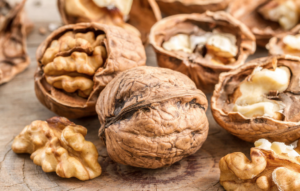
Screen Shot 2022-09-03 at 1.16.13 PMUSDA says the 2022 California walnut production is forecast at 720,000 tons, down 1% from 2021’s production of 725,000 tons. The forecast is based on 400,000 bearing acres, up 3% from 2021’s estimated bearing acreage of 390,000.

The 2022 Walnut O.M. Survey utilized a total of 711 blocks with two sample trees per block. Survey data indicated an average nut set per tree of 981, down 1% from 2021’s average of 992. Percent of sound kernels in-shell was 98.0% statewide. In-shell weight per nut was 20.2 grams, while the average in-shell suture measurement was 32.4 millimeters. The in-shell cross-width measurement was 33.2 and the average length in-shell was 37.9 millimeters.

California benefitted from heavy rain and significant snowpack in late 2021, however the state has since experienced hot and dry conditions. As a result, water allocations were significantly reduced in many areas. During the last two weeks of February, the Sacramento Valley experienced several nights of freezing temperatures. Frost damage was observed.

Estimated nut sets, sizing measurements, average number of trees per acre, and estimated bearing acreage were used in the statistical models.

Ethanol is loser in California new car ruling

The California Air Resources Board approved California’s Advanced Clean Cars 2 regulation, which establishes an escalating ban on the sale of gasoline and diesel-fueled cars and trucks, culminating with a 100% ban by 2035. Ethanol supporters say the action misses out on other solutions, including ethanol, for reducing carbon emissions beyond just the use of electric vehicles.
The regulations will take effect starting in 2026, when 35% of all car sales in the state must be for zero-emission vehicles, more than doubling the current share of ZEVs. In 2019, the last full year before COVID, California used 1.59 billion gallons of ethanol representing just over 10% of national consumption, according to the Renewable Fuels Association. Sales of E85 flex fuel in California surged to a new record in 2021, jumping 55% over 2020 levels and nearly doubling since 2018.

Valley tomato production down 5 percent

USDA says contracted production for California processing tomatoes this year is forecast at 10.5 million tons, averaging 46.9 tons per acre. The current production forecast is 2% below last year’s contracted production, and 10% below the May forecast.

The projected harvested acreage of tomatoes grown under contract is 224,000 acres, which is 1% lower than in 2021.
Expected production continued to decrease as the season progressed. Acres that were planted early were hit by frost damage that affected yields and crop quality.

Concern over low supply was prevalent as the lack of water availability and high summer temperatures have made it difficult for growers to meet market demand.

Harvest began during the second week of July. At this point, the flow of tomatoes has been consistently below last year. The Processing Tomato Advisory Board published shipments through August 27, 2022, showing a 5% decrease compared to the end of August in 2021.

Near record butter prices

Local dairyman maybe should not complain about high grocery prices considering the hefty price they are getting for a key commodity in preparing meals every day – butter. With the fall baking season coming up, the wholesale price for butter on the commodity market now exceeds three dollars a pound.That is near an all time high and almost double what butter costs a year ago. Blame low supply in storage and reduced supply in the hot summer months. Processors have been turning more milk into cheese say sources. Dairy operators defend themselves facing sky high production costs from feed to labor and fuel.They say processors are pocketing the extra receipts.

‘Pucker Up’

Tulare Co retains crown as state citrus king

-August 11,2022-

Screen Shot 2022-08-11 at 6.35.31 AM Screen Shot 2022-08-11 at 6.32.35 AMTulare County is still  the largest citrus growing  county in California as  seen in the  2022 California Citrus Acreage Report published in August.
The county leads in a number of categories including navel and Valencia acres.Tulare County has about half the navel acreage in the state at 64,679 acres. The county is also the top Valencia county with 11,600 acres out of 26,224 acres statewide.


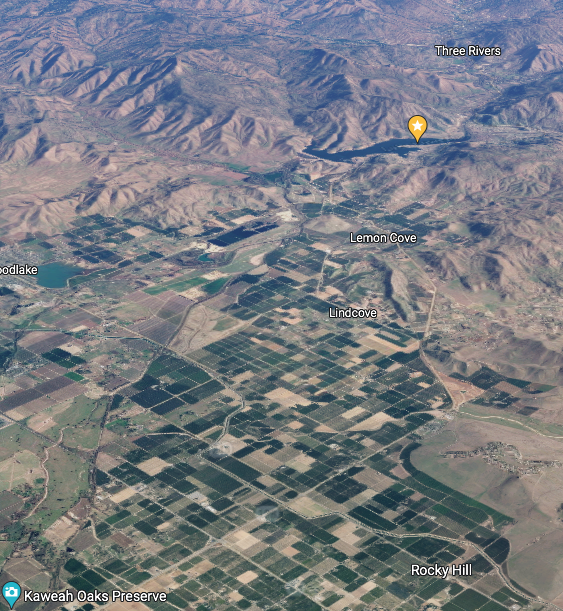
pictured” citrus growing region near Lemon Cove in Tulare County

Likewise for the fast growing category of Mandarins with about 26,000 acres in the county of out 67,000 acres in the state.

Even with the lemons where costal climate Ventura County leads the state with 18000 acres, Tulare is second with 10,000 acres.

Altogether, Tulare County has around 114,700 citrus acres in 2022 out of about 268,000 citrus acres in all of California or a bit over 40%.

Ag beat

-August 11,2022-

Prices of key milk products head lower

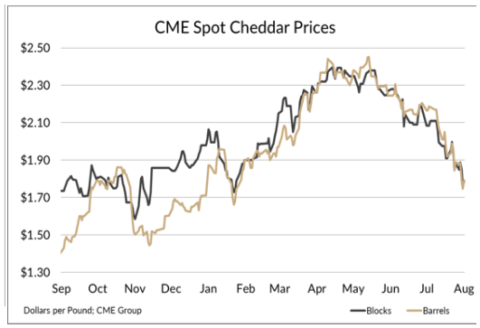
Screen Shot 2022-08-09 at 5.20.40 AMWestern United Dairymen reports that the price of cheddar cheese and dry milk powder, key milk commodities, are heading lower this summer,down from highs earlier this year. Cheddar prices had reached a high of $2.40 a pound in May, but are now down to $1.80 and NDM has dropped from $1.90 to near $1.40 following other ag commodities lower.

Nut exports soar 

California agricultural exports in June rose by 15.5% to $3.941 billion from $3.416 billion as overseas shipments of almonds, pistachios, and walnuts – three of the state’s top five farm exports – all soared. Shipments abroad of Food & Kindred products gained by 14.2% rising to $3.301 billion from $2.890 billion.

Beef exports up one third

U.S. beef exports remained on a red-hot pace in June, topping $1 billion for the fifth time this year (after twice hitting $1 billion in 2021), according to data released by USDA. Exports of U.S. pork remained below last year’s large totals in June, while lamb exports continued to trend higher.

June beef exports totaled 130,638 metric tons, down slightly from the record volume posted in May but up 16% year-over-year and the fourth largest on record. Export value was $1.05 billion in June, also down slightly from the May record but 31% above last year. For the first half of 2022, beef exports increased 6% from a year ago to 743,904 mt, valued at $6.19 billion (up 33%).

Western Growers honor John Harris

Local ag leader John Harris will be honored by Western Growers at a Award of Honor Dinner Gala at the Western Growers 2022 Annual Meeting in Las Vegas Nov. 2-5, 2022.

John Harris was born to a farm family whose operations in California extend back more than a century. He graduated with a degree in agricultural production from the University of California, Davis and then served two years in the U.S. Army. Besides his tenure as CEO and sole shareholder of Harris Farms and his 11 years on the Western Growers Board of Directors, Harris served five terms as president of the California Thoroughbred Breeders Association. The Harris Farms Thoroughbred Division produced California Chrome, the winner of the 2014 Kentucky Derby and Preakness Stakes. In 2014 he received the Agriculturalist of the Year award from the Fresno Chamber of Commerce.

Speculators leave ag commodities markets 

Wall St Journal

“An exodus of hedge funds and other speculators from commodities markets has intensified the fall in prices for wheat, corn, soybeans and other staples.

It is a sharp reversal from earlier this year when money managers, worried about inflation and war-related supply problems, helped run up commodity prices by piling into futures markets with bets that prices would rise. Wheat and soybeans notched price records earlier this year and corn climbed close to an all-time high, but since then speculators have exited from agricultural markets, taking profits, closing out inflation trades and battening down for recession.”

Attachments area

Nut exports way up…. through California ports

-July 28,2022-
Screen Shot 2022-07-28 at 4.49.27 PM

From Pacific Merchant Shipping Association’s (PMSA) West Coast Trade Report

Pictured Port of Oakland

There’s a controversy over California nuts. Specifically, nuts exported through California ports. Are the export nut totals up or down? Are the nut exports being diverted to other ports as has been suggested by media reports?
According to the Pacific Merchant Shipping Association’s (PMSA) West Coast Trade Report for June 2022 California tree nut exports shipped through California ports, including the Port of Oakland, are rising and there is little evidence that exporters are utilizing the Port of Houston as an alternative export port.
PMSA says tree nut export tonnages shipped via California ports during the second quarter, 2022, are way above 2021 levels:
• Almonds (+21.9%)
• Walnuts (+40.9%),
• Pistachios (+53.6%).
The PMSA report said almond exports shipped through California ports had risen by 29.4% in May 2022 up from May 2021 and cited the California Almond Board reporting that almond exports in June were up by 38.3% up from June 2021.
A spokesman for the California Almond Board (CAB) confirms these export increases: “The May and June almond export figures were record months for May and June. There has been a log jam at the ports, but that situation seems to be getting better. Nobody is saying that the crisis is over but there are hopeful signals. Normally, our best months have been in the Fall but this year we have had these record numbers in May and June. June wasn’t usually such a great month but this year it has been. Demand for almonds remains high and you are seeing this reflected in these export figures.”
The PMSA report says that problems at California ports have been exaggerated: “One allegation has it that tree nut shipments are being stymied by California’s ports and by the ocean carriers serving those ports. As a result, growers are stuck with enormous unsold inventories and have had their reputations as reliable sources of tree nuts tarnished. A related assertion is that inhospitable conditions at California’s ports – either too many vessels or too few, shipping lines with their own imperatives, and the prospect that obstreperous dockworkers or truckers could disrupt West Coast port operations this summer – have compelled the state’s tree nut exporters to divert substantial volumes of their overseas shipments to other U.S. ports, most notably the Port of Houston.”
The PMSA report goes on to say that few shipments have been diverted to the Port of Houston: “Houston not only handled a mere 0.95% of the nation’s total almond export tonnage in May (the latest month for which port-of-export data are available), but the 893.7 metric tons of almonds that were shipped from Houston that month was down 14.4% from a year earlier. By comparison, the Ports of Long Beach and Los Angeles handled 16,502 metric tons, while 76,093 metric tons of almonds were shipped from the Port of Oakland. In the end, the three major maritime gateways in California handled 98.6% of all of the nation’s ocean borne exports of almonds, California’s single most-valuable agricultural export.”
PMSA reported walnut exports through California ports, including Oakland, are also up: “On July 8, CNBC aired a report featuring interviews with walnut shippers upset with their alleged inability to move product to overseas customers through the Port of Oakland. What was particularly weird about this report was not merely that the reporter was plainly unaware of May’s huge bump in walnut exports. It was that the California Walnut Board was simultaneously releasing shipment numbers for June, which showed walnut exports up 47.8% from a year earlier.”
The California Walnut Board’s data confirms that walnut exports for June 2022 were up compared to June 2021 but not by 47.8%. The Board reported that June 2022 exports of shelled walnuts were up: 31.06% from June 2021. According to the Board’s figures shelled exports in June 2022 totaled 22,950,153 pounds compared to June 2021 when exports totaled 17,511,818 pounds.
In addition, year to date exports of walnuts for the period September 1st, 2021 to June 30th, 2022 were up as well, but only by 4.54%

OKIEVILLE RECHARGE BASIN PROJECT

-July 28,2022-

Source Friant Water Users
Screen Shot 2022-07-28 at 7.16.33 AMOne Friant Division contractor, Tulare Irrigation District (TID), is leaning into the Friant Division’s conjunctive water use legacy by implementing a groundwater recharge project designed and strategically located to improve water supplies for the Tulare County community of Okieville. Okieville (pop. 300) was originally settled by migrants from Oklahoma during the Dust Bowl, and is currently designated by the State of California as a severely disadvantaged community. Okieville’s domestic and community wells have frequently gone dry in drought years; and, when water is available to pump, it’s contaminated with both nitrates and uranium.

The Okieville Recharge Basin Project involves the construction of a 20-acre recharge facility and supporting infrastructure up-gradient of Okieville. The project is expected to provide, on average, 630 acre-feet per year in normal years and 1,400 acre-feet in wet years of high-quality Sierra watershed surface supplies dedicated to recharging aquifers adjacent to the community, which should improve the quality of local groundwater pumped by the Okieville-Highland
Acres Mutual Water Company’s well and delivery system. TID also intends to implement a monitoring program, including a system of monitoring wells, to determine the empirical bene ts of groundwater recharge on the quantity and quality of groundwater available to Okieville.
“While we believe the project is going to provide water quality and supply bene ts to Okieville, we’re also implementing a monitoring system to evaluate exactly how well it accomplishes that goal,” said Aaron Fukuda, TID General Manager. “If the bene ts can be demonstrated, we hope this project can serve as a model for others who are looking to provide clean drinking water bene ts through recharge.”
The project’s proponents have ample reason to be optimistic about the potential bene ts to both TID and Okieville. The project’s origins go back to 2015, when community-based organization Self-Help Enterprises began monitoring one of TID’s ponding basins for its effects on nearby domestic wells that were going dry but also had suffered from longtime nitrate and uranium contamination. Self-Help Enterprises found that nitrate levels were 8.4 parts per million (ppm) about 300 feet from the ponding basin but increased to 86 ppm in wells located 2,500 feet
away from the ponding basin, and uranium levels also decreased in wells closer to the basin.
TID completed environmental review under CEQA for the project in March 2022, and is now undertaking permitting, property acquisitions and design. The project is slated to be in construction by late 2022 and should be ready for recharge activities by late 2023. The estimated total project cost is just under $2.5 million, with about $1.9 million in grant funding from the California Department of Water Resources and the remainder of the funding provided by TID.

Friant Water supply bumped to 30%

-July 27,2022-

Screen Shot 2022-07-23 at 7.28.58 AMFor the second time in a few weeks the federal Bureau of Reclamation has increased Friant Water’s allocation of water available to be sent down the 150-mile Friant Kern Canal to thirsty farms and communities from Fresno to Arvin.
The latest good news is that as of July 20th, Reclamation announced that the Friant water supply allocation was increased from 20% Class 1 to 30% Class 1, effective July 20th.

The east side water contractors, many from Tulare County, had been advised earlier there wasn’t enough water to allow more than 15% supply. A full allocation would be 800,000 acre feet.


Caption: Work on the parallel canal is underway this summer

It has now been increased twice as Friant lobbied and has convinced the federal agency that there was enough snowmelt stored in dams above Fresno to allocate additional supply. At the same time, Friant was relieved of the obligation to send more water down the river to the San Joaquin Exchange Contractors since Reclamation found enough water north of the Delta to meet those contractors’ needs. The unexpected supply apparently came from heavy spring precip in the greater Sacramento mountain area.

With a 30% allocation, up from the original 15%, the supply of 120,00 acre feet has now been doubled to 240,000 acre feet.

Also on July 15th, the San Joaquin River Restoration Program notified Friant Contractors of the availability of an additional 31,450 AF of Tier 2 water available to Class 1 Contractors. The water is priced at $188.87, which goes into the SJRRP Reclamation Fund and must be paid at the time of scheduling.

caption

Work to build a parallel canal along the Friant Kern continues this summer

Attachments area

California cotton acres are up in 2022

-July 13,2022-
 
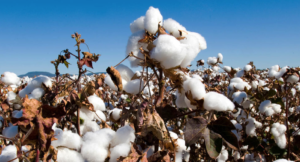
Screen Shot 2022-07-13 at 2.45.30 PMThe state of California Pink Bollworm program reports that San Joaquin Valley cotton acreage is up this year vs last. Cotton mapping for the Valley was completed the week of June 13, 2022.
The current total mapped acreage for the SJV is 120,564 acres (up from 102,218 acres in 2021). The breakdown of cotton acreage is 31,382 acres in Fresno County (up from 24,579 acres in 2021), 9,463 acres in Kern County (up from 8,607 acres in 2021) 45,541 acres in Kings County (up from 42,552 acres in 2021), 28,778 acres in Merced County (up from 20,279 acres in 2021), 253 acres in Madera County (up from 249 acres in 2021), and 5,144 acres in Tulare County (down from 5,952 acres in 2021.
 
While acreage is up this summer, prices on the US market are down about one third in the past few weeks at a 20 month low reflecting a decline in many ag commodities.