
-July 28,2022-
Source Friant Water Users
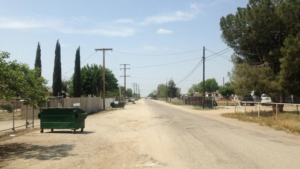 One Friant Division contractor, Tulare Irrigation District (TID), is leaning into the Friant Division’s conjunctive water use legacy by implementing a groundwater recharge project designed and strategically located to improve water supplies for the Tulare County community of Okieville. Okieville (pop. 300) was originally settled by migrants from Oklahoma during the Dust Bowl, and is currently designated by the State of California as a severely disadvantaged community. Okieville’s domestic and community wells have frequently gone dry in drought years; and, when water is available to pump, it’s contaminated with both nitrates and uranium.
The Okieville Recharge Basin Project involves the construction of a 20-acre recharge facility and supporting infrastructure up-gradient of Okieville. The project is expected to provide, on average, 630 acre-feet per year in normal years and 1,400 acre-feet in wet years of high-quality Sierra watershed surface supplies dedicated to recharging aquifers adjacent to the community, which should improve the quality of local groundwater pumped by the Okieville-Highland
Acres Mutual Water Company’s well and delivery system. TID also intends to implement a monitoring program, including a system of monitoring wells, to determine the empirical bene ts of groundwater recharge on the quantity and quality of groundwater available to Okieville.
“While we believe the project is going to provide water quality and supply bene ts to Okieville, we’re also implementing a monitoring system to evaluate exactly how well it accomplishes that goal,” said Aaron Fukuda, TID General Manager. “If the bene ts can be demonstrated, we hope this project can serve as a model for others who are looking to provide clean drinking water bene ts through recharge.”
The project’s proponents have ample reason to be optimistic about the potential bene ts to both TID and Okieville. The project’s origins go back to 2015, when community-based organization Self-Help Enterprises began monitoring one of TID’s ponding basins for its effects on nearby domestic wells that were going dry but also had suffered from longtime nitrate and uranium contamination. Self-Help Enterprises found that nitrate levels were 8.4 parts per million (ppm) about 300 feet from the ponding basin but increased to 86 ppm in wells located 2,500 feet
away from the ponding basin, and uranium levels also decreased in wells closer to the basin.
TID completed environmental review under CEQA for the project in March 2022, and is now undertaking permitting, property acquisitions and design. The project is slated to be in construction by late 2022 and should be ready for recharge activities by late 2023. The estimated total project cost is just under $2.5 million, with about $1.9 million in grant funding from the California Department of Water Resources and the remainder of the funding provided by TID.