AG Updates

17-21% tariff slapped on Mexico tomatoes this week

The U.S. has pulled out of a 30-year trade agreement with Mexico this week adding a 17 to 21% tariff on most Mexican tomatoes coming into the country. The move is expected to raise consumer prices for the popular vegetable with 70% of all tomatoes consumed in the US coming from Mexico.

“The [Tomato Suspension Agreement] has failed to protect U.S. tomato growers from unfairly priced Mexican imports, as Commerce has been flooded with comments from them urging its termination. This action will allow U.S. tomato growers to compete fairly in the marketplace,” the department said in a news release on April 14.

The U.S. imported $3.12 billion worth of fresh tomatoes from Mexico last year.The new announcement is separate from Mr. Trump’s trade war escalation promising new 30% tariff on the European Union and Mexico that will take effect on August 1.Concern in the Valley ag community looks to avoid a trade war with Mexico- a country that is a “key destinations for U.S. dairy exports, casting further doubt over U.S. dairy trade prospects in the coming months.”

The tomato tariff is being hailed by Florida growers but not by farmers in Texas and Arizona who worry that consumers will see higher prices. “We don’t want tomatoes to become the new egg crisis,” Rep. Vicente Gonzalez, D-Texas, said during a news conference on Friday, according to the Rio Grande Guardian.Gonzalez, along with other Texas lawmakers and the Texas International Produce Association (TIPA), are requesting a 90-day delay to withdraw from the agreement to allow more consideration and resolutions for the issue.Dante Galeazzi, CEO of TIPA, said the Tomato Suspension Agreement is crucial to South Texas.

“Terminating this agreement will undo three decades of stability and bring about a 17% duty on all Mexican tomatoes entering this country,” Galeazzi said during the same Friday news conference as Gonzalez.

The Packer,a major produce newspaper, reports that U.S. consumers could see increased tomato prices due to potential shifts in the U.S.-Mexico tomato trade, specifically the termination of the 2019 tomato suspension agreement. While field-grown tomatoes cost approximately $1.70 per pound in May 2025, the termination of this agreement could lead to a 10% price increase and a 5% decrease in demand, according to a professor of agribusiness at Arizona State University.

NatureSweet, a major greenhouse tomato grower based in Mexico chimed in.The company told FOX Business the suspension agreement has stabilized prices for nearly 30 years and its removal could lead to volatile supply and price spikes.

“As a Texas-based U.S. company in a low-margin business, we will really have no choice but to raise prices by close to 10% in order to be able to continue bringing our healthy vine-ripe specialty tomatoes to our consumers,” Skip Hulett, chief legal officer for NatureSweet, told FOX Business last week.

June farm equipment sales are down

Associated Equipment Manufacturers (AEM) reports U.S. sales of agricultural tractors and combines didn’t see any increases in June 2025. Total agricultural tractor sales fell 4.4%, while combine sales dipped 43.7% compared to June 2024.

“The ongoing slump in U.S. combine and tractor sales demonstrates the market challenges facing the agricultural sector,” said AEM Senior Vice President Curt Blades. “We know farmers are hesitant to make major investments with global trade instability, high interest rates, and increased input prices.

Big Beautiful Bill has water supply surprise

Milk Producers Council representative Geoff Vanden Heuvel writes that tucked away in the Big Beautiful Bill is a billion dollars of grant money to pay for “construction and associated activities that restore or increase the capacity or use of existing conveyance facilities constructed by the Bureau of Reclamation or for construction and associated activities that increase the capacity of existing Bureau of Reclamation surface water storage facilities.” Interestingly the final sentence of the section states: “None of the funds provided under this section shall be reimbursable or subject to matching or cost-sharing requirements.”

One thought: the money could be used to help restore capacity of Valley canals like the Friant-Kern facing reduced capacity from land subsidence coupled without local cost sharing obligations. Vanden Heuvel expects it could make water more abundant in the state.

Growing oranges is expensive

California Citrus Mutual (CCM) says it costs $4,215 per acre to grow navel oranges in California in 2025. That’s up from $3,300 in 2020 (a 35% increase), $2,712 in 2015 (a 75% increase), $2,099 in 2010 (a 125% increase) and $1,555 in 2005 (a 171% increase). Additionally, CCM reported that picking and hauling costs for navels are $1,210 per acre in 2025. Those costs are up 45% for five years, 60% for 10 years, 90% for 15 years and 110% for 20 years.

Eggs protect against Alzheimers

Older adults who eat eggs more than once a week may be less likely to develop Alzheimer’s dementia, according to a new study published in The Journal of Nutrition. The researchers found that participants who ate eggs weekly had a lower rate of clinical diagnosis and fewer Alzheimer’s-related brain changes after death. The study also identified dietary choline, a key nutrient found in eggs, as one possible contributor to this protective effect.

Focus on Chinese ag companies could impact major firms

National Hog Farmer writes” Multiple members of President Trump’s cabinet joined U.S. Secretary of Agriculture Brooke Rollins Tuesday morning to announce a new Make Agriculture Great Again initiative: USDA’s National Farm Security Action Plan. According to the administration, the plan aims to address urgent threats from foreign adversaries, strengthen the resilience of the nation’s food and agricultural systems, and “claw back” farmland belonging to Smithfield Foods and Syngenta.

Secretary Rollins said the administration is looking at every available option and the U.S. will “likely see an executive order on this very soon from the White House” and will be “looking at multiple different authorities within the federal government to begin to claw that back.”

Smithfield owns the Farmer John’s label.

Some fear return of bird flu to poultry ranches

California hasn’t seen a recurrence of widespread bird flu at poultry and egg ranches in the state since early this year. Kings,Fresno,Tulare and Kern counties lost millions of birds to the disease in late 2024. In early 2022 a new outbreak of highly pathogenic avian influenza (H5N1) hit flocks of egg-laying hens across the United States, leading to almost continuous outbreaks across multiple states. These outbreaks, and the subsequent loss of hens due to the disease and the long-standing “depopulation” program intended to eradicate the disease, have led to the loss of more than 60 million U.S. egg-laying hens from 2022 through 2024. In California, the disease led to the destruction of around 10.6 million laying hens, with another 1 million table-egg pullets (young hens about to start laying) also destroyed, says UC Davis.

But now is the crisis over?

No. In nearby Arizona, the industry has been hit hard again this May and June with losses of around 6 million birds at the state’s largest egg ranches. At one of the hardest hit, Hickman’s Egg Ranch, 95% of the company’s Arizona chickens have been lost to avian flu.

The newspaper Arizona Republic writes that owner Glenn Hickman states “the outbreak and loss of egg-laying hens means for the first time in 81 years, the company will not be able to fulfill all of its customer demand.” The company employs about 850 people, and hundreds are expected to lose their jobs. In 2024 the company was also hit by the nationwide spread of bird flu as well.Wild bird migration is considered the source of the virus that can be spread airborne.

Vaccination for bird flu

Vaccination could have prevented widespread death, Hickman suggests. He adds that the meat bird industry’s lobbying efforts against an avian flu vaccine for the nationwide outbreak.The broiler industry, which supplies meat to foreign countries as well as the United States, has opposed the use of an avian flu vaccine for birds because some foreign countries will not buy vaccinated meat, Hickman told the paper.

“If Hickman’s chickens had been vaccinated when the company had been lobbying for it in January, the effect of the outbreak “would have been significantly decreased”, Hickman said. The Arizona Department of Agriculture has been lobbying the federal government to begin a vaccination pilot program, he said, but the ultimate decision will be made by the U.S. Department of Agriculture.

Hickman notes poultry ranchers vaccinate chickens already for other diseases like chickenpox and USDA has tested a vaccine that could be used to inoculate birds against the bird flu”so we can start protecting our flocks in this country.”

Nationwide, the bird flu has cost millions of dollars not just to the industry but the public forced to pay sky-high egg prices due to significant shortages. Nationwide,a dozen eggs cost more than $8 a dozen as of this March before falling to $2.70 average now.For the industry, taxpayers pick up the tab for the lost birds with the Animal and Plant Health Inspection Service spending $1.25 billion on payments to farmers since the outbreak started in 2022.

Hickman Eggs is a partner in the Kern County-based Central Valley Eggs company, one of California’s largest. That ranch near Wasco also was hit last year by the bird flu that wiped out 2 million birds there. This was just one of the egg and meat chicken ranches in the Valley that resulted in the losses last fall. One report claims that Central Valley Eggs received $10 million in compensation from USDA. Central Valley Eggs suffered a fire at their Wasco facility July 1 of this year that reportedly resulted in no loss of birds or harm to people.

Now many egg ranchers and industry experts fear the return of bird flu in 2025 as fall approaches and the annual north/south bird migration gets underway.California could be the epicenter again.

Bird migration starts August 1

The fall migration period generally runs from August 1 to November 30, peaking from September 1 to November 15, as millions of birds travel south along the Pacific Flyway to their wintering grounds or use the state as a stopover point.The Central Valley is often the super highway south with pit stops from Sacramnto to Tulare Lake to Kern County

Last year California was the hardest hit of all the states not only at poultry farms but at Central Valley dairies where farms were quarantined for months; some cows died, and production suffered and is still down. A UC Davis paperestimates that California milk production fell by 6.4%, 10.3%, and 8.4% in October, November, and December 2024, compared to what would have occurred without the disease. Workers in both industries caught the flu but most human cases have been mild.

Industry newspaper Egg News calls the likely return of the virus “inevitable”, reporting that Dr. Scott Gottlieb, who served as the 23rd Commissioner of the Food and Drug Administration in the first administration of President Trump is critical of the current administration’s approach led by Rober F. Kennedy Jr’s anti-vaccine stance.
‘
Gottlieb says Kennedy, Secretary of the Department of Health and Human Services advanced the suggestion that HPAI should be allowed to spread unchecked through flocks in the hope that a few survivors would express genes for resistance to avian influenza.

Gottlieb points out that “We have vaccines for bird flu made by American companies and used overseas but so far federal officials don’t seem poised to use them here.” He points to” the deployment of vaccines in France, China and Mexico among other nations and cast doubt on the various distortions of science advanced by opponents of vaccination to support ongoing exports of broiler leg quarters.”

“The avian influenza strains now in circulation have persisted continuously among birds and mammals for nearly two years and there’s growing evidence that it could become a permanent feature of North America – part of a new normal to which the poultry industry must inevitably adjust for both the physical and economic health of Americans.”

EggNews points out that “Newcastle disease (VVND=END) in Europe, Asia and Africa was in every way as catastrophic as avian influenza but was effectively controlled principally by vaccination supported by biosecurity.”

Another North Visalia shopping center takes shape

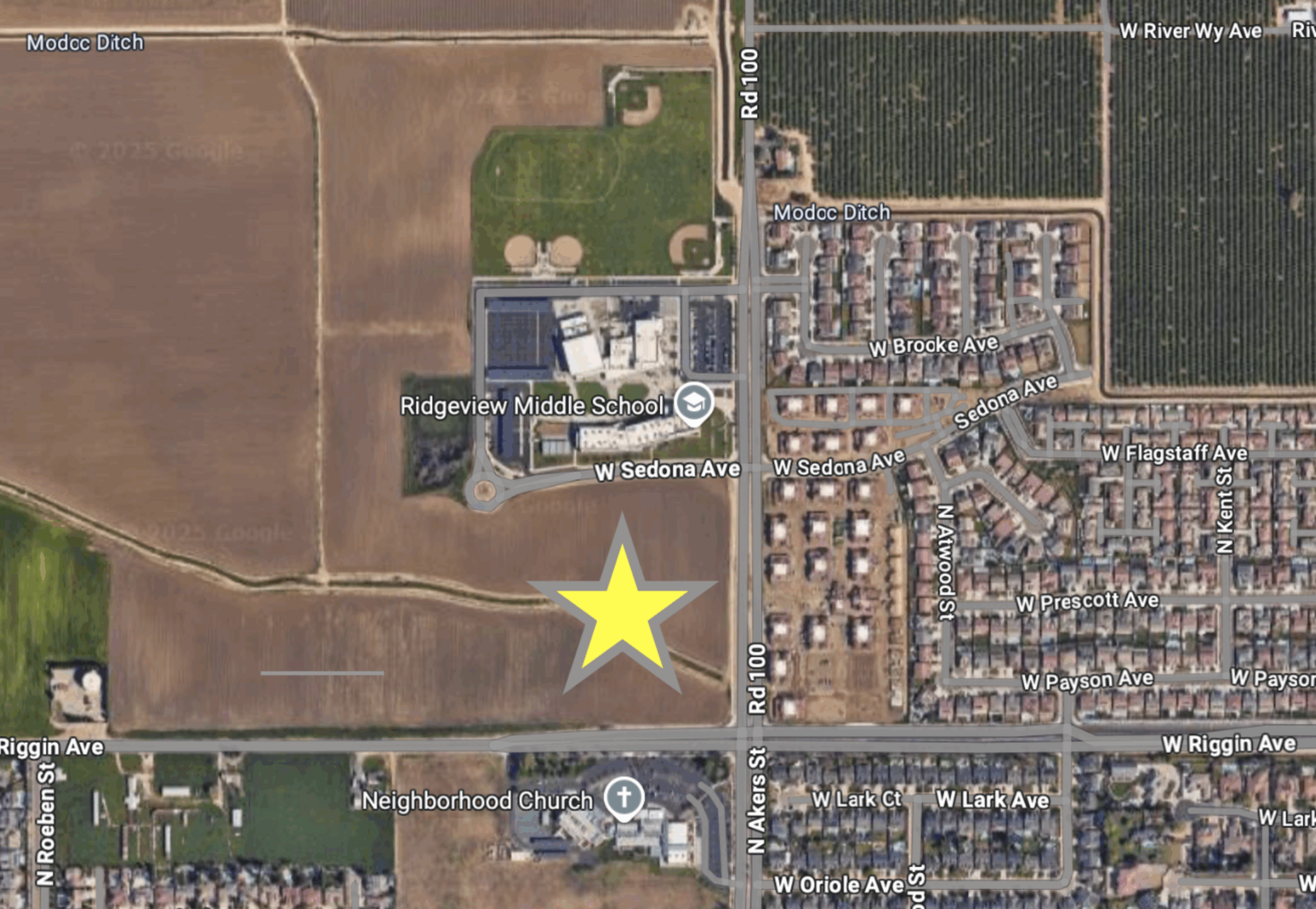
The Visalia Planning Commission is expected to approve a plan to rezone 16-acres of city owned land at the northwest corner of Akers and Riggin for a possible shopping center.The Commission will take the matter at their August 11 meeting.

The idea to rezone the property, now bare land, has been taken up at several city council study sessions. The proposal is to change the land use designation on a 16-acre portion of a 21-acre parcel from Parks/Recreation to Commercial Mixed Use. The rezoned land is likely to be sold to a developer, likely through an RFP process, and should attract buyers in this northside corridor where plenty of new homes and commercial retail activity is underway like the new Costco nearby.

On the same block of land are several VUSD schools and a planned 30-acre multifamily development to the west. A widened Riggin road should improve access to the development.

Staff at the city planning department have bounced around the idea of a mixed-use retail center similar to one in San Luis Obispo that features multi-tenants with a big food court.

Valley jobless rates tick higher


Weakness in travel sector seen here

South Valley counties including Fresno, Kings, Tulare and Kern all reported higher jobless rates month over month and year over year in June 2025. California too reported the same trends as employers shed 6,100 jobs in June. California’s unemployment rate increased slightly to 5.4 percent according to the latest Employment Development Department (EDD) data that comes from two separate surveys. Ofcourse Valley counties reported double or nearly double this 5.4% jobless rate (the highest in the nation) but all jurisdictions are reporting a negative trend over time.

Economists are watching the US and California jobless rates for signs that the economy is either growing or shrinking. This latest snapshot of the Valley’s nonfarm economy is registering a slight downturn.

In the Valley there appears to be weakness in travel and leisure spending that impacts demand for hotels, resorts and entertainment sectors.

Drilling down, Kern County reported more farm jobs year over year in June but big declines in professional and business service, and a drop seen in manufacturing, mining as well as construction and leisure/hospitality services.

The unemployment rate in Kern County was 9.6 percent in June 2025, up from a revised 8.7 percent in May and above the year-ago estimate of 9.0 percent.

In Fresno County the unemployment rate was 8.5 percent in June 2025, up from a revised 7.8 percent in May 2025, and above the year-ago estimate of 7.8 percent. Fresno had a year over year increase in nonfarm employment – up 7800 jobs but 600 fewer farm jobs. Health and education jobs soared by 5200 and there were 2000 more local government jobs.Federal government jobs fell by 100.

Like the other Valley counties, Fresno reported a drop in the Leisure services /Hospitality sector – down 1300. Also we see a decline in professional and business services by 1000 jobs.

The unemployment rate in Kings County was 9.7 percent in June 2025, up from a revised 8.7 percent in May and above the year-ago estimate of 9.0 percent.

Again in this county there were losses in Leisure/Hospitality, down 300 year over year.There were 400 more farm jobs reported between June 2024 and June 2025.

In Tulare County, the unemployment rate was 10.7 percent in June 2025, up from a revised 9.9 percent in and above the year-ago estimate of 10.2 percent. The county shed jobs in manufacturing year over year, down by 500 as well as 200 fewer construction jobs. There were also 500 fewer Business and Professional service jobs nad 100 less in the hospitality sector.. On the plus side there were 2400 more farm jobs in June 2025 compared to June 2024.

One might figure the losses in the hospitality industry in the Central Valley might be due to a reported decline in travel both domestically and internationally but in California as a whole, the EDD reports that Leisure and Hospitality jobs statewide were up 4300 month over month and up 2700 year over year.

Also statewide, Private Education and Health Services (+9,900) posted a gain for the 41st consecutive month, a similar trend to that in the Valley

The largest gains were in Health Care and Social Assistance (+2,700). This includes jobs in continuing care retirement communities and assisted living facilities, and nursing and residential care facilities, partly attributed to California’s aging population.

Professional and Business Services (-9,900) posted the State’s largest month-over loss as jobs declined in administrative and support services and temporary employment services. Losses also occurred in accounting, tax preparation, bookkeeping and payroll services, and computer systems design.

This year California tourism is projected to see a slight decline, estimated at 0.7% in overall visitor volume but down in international travel numbers due to a strong US dollar and negative sentiment towards the US over trade issues.

There appears to be less domestic travel by air this year. LAX reported a 5% decline in domestic passenger traffic in May along with a 2.7% drop in international passengers.

One attachment
• Scanned by Gmail

Visalia Industrial Park’s new big building

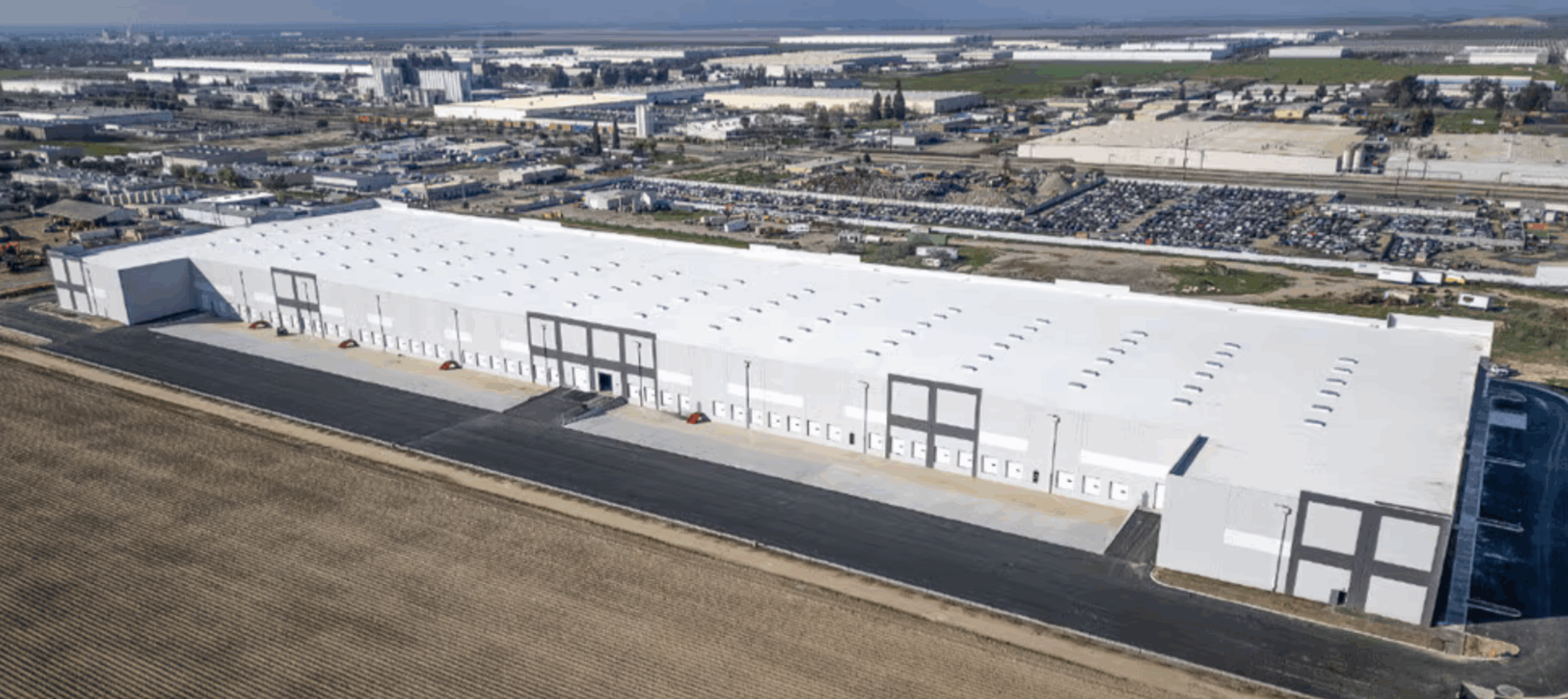
Fowler-based G3 has completed construction on a new 310,000sf tilt-up warehouse that has been built “on spec” in the Visalia Industrial Park. The big building was just recently finished, says broker Ethan Smith.”The phone has been ringing but we have no one under contract yet” says Smith. The complex with 380 parking places and 46 loading docks is located at 30152 Road 84, Kelsey, between Hurley Ave and Goshen Ave.

The new shell building adds to the inventory of several other large industrial buildings here.. There are several available in the Visalia industrial Park, but this offers more opportunity to snag new companies who want to choose which size works for them in what has become more of a buyers market.

Smith says activity in the industrial park started out more active at the first of the year, but has since slowed due to uncertainty in the economy.

Tulare Supervisors approve Swap Meet north of Visalia

Tulare County Board of Supervisors recently approved a zone change for the old Elbow Creek Gin at 12021 Avenue 328 to be repurposed for a swap meet two days a week.

The zone change from the AE-40 (Exclusive Agriculture – 40 Acre Minimum) Zone was approved to the C-2-MU (General Commercial with a Mixed Use Overlay) Zone. Special Use Permit No. PSP 24-074 requests to establish a swap meet with parking, food trucks, & a beer garden as an adaptive reuse of an equipment/storage yard.The property is owned by the Ritchie family who have been searching for a new use. The existing buildings would be retained. Supervisors agreed that they did not want the property to be available for use as a “party barn.”

Engineering of Los Osos pipeline gets green light

On July 10, the Los Osos Community Service District (CSD) Board of Directors approved a request by general manager Ron Munds to provide $630,000 in funding to design and pre-engineer the proposed intertie pipeline for the community. The pipeline would connect to the State Water Project in Morro Bay and bring 200 to 600 acre-feet of water to supplement the community’s groundwater supply.

The basin pumps about 1800 acre feet of water annually to provide both domestic and ag users with water.

Munds expressed some urgency to provide a new source of water for the town of 15,000 after a bombshell hydrologist study showed pumping of groundwater in town is “not sustainable” at the current level. The study was supported by 5 hydrologists in peer reviews, says Munds.

Recent findings from the Basin Management Committee (BMC), including results from a newly developed Transient Groundwater Model, underscore the
urgency of improving water supply sustainability suggesting that seawater is already intruding into the basin and could move 45 feet a year inland long term.

Despite the need, there is no firm commitment of construction funding to build the $8 million, 2.5 miles pipeline.

“I am feeling the pressure to get a shovel ready project ready for an outside funding source. The earliest the Army Corp of Engineers grant funds will be available is their 2027 work plan but there are no guarantees.”

Munds told the CSD board he had a “a great meeting” with representatives for Corps indicating they may fund up to $5 million in the future but this is not guaranteed as of yet. Congress last year earmarked $8 million for the project signed by President Biden.

There are other sources he is working on.

“There are Prop 4, California Climate Bond grants coming up later this year but there are no guarantees there either.”

Munds says an agreement to share costs with all the water purveyors is coming together but not yet in place.

“The CSD does not have a formal agreement with Golden State Water or S&T Mutual at this time, but we are working on it. With the recent update to the status of the groundwater, I’m feeling the urgency to move forward with the project even with the funding unknowns; as a community, we need to do something to address our water supply problems.”

“I believe this project is a giant step forward and a partial solution to our long-term water supply needs. “

Board members agreed the CSD would have a better chance to get funding for construction if the project is shovel ready.

This week the CSD board decided they are willing to take the risk of authorizing the expenditures for the design of the project with no guarantees as long as bids come in no more than 20% higher than estimated.

The board approved funding now of $80,000 toward the $630,00 engineering estimate with the expectation that the other purveyors will partner up.

At the July 10 meeting it was suggested the county should be part of the solution since the rural and ag portions of the basin use about half the groundwater pumped annually but are not paying to fix the water supply shortfall.The urban parts of Los Osos are served by the three water purveyors who are stepping up to the plate.

The staff report says “Given the urgency highlighted by the Transient Model and the importance of project readiness for grant applications, staff recommends proceeding with detailed design services to make the project “shovel ready.” This will better position the project for funding opportunities and will greatly enhance the District’s
chances of securing outside funding from state or local sources.

Staff will continue to discuss the project with the Golden State Water Company and S&T Mutual Water Company, both of which are very supportive. As those talks proceed, staff will bring updates and any framework for agreements to the Board for consideration.”

Meanwhile the basin’s watchdog, the Los Osos Basin Management Committee will continue its study of the new Transient Model including evaluating different recycled water and supplemental water supply alternatives to help improve the Basin’s sustainability. This work should be completed in the August/September timeframe. This portion of the study will provide broad cost estimates which can inform future decisions for water supply development.The BMC is set to meet again in the next week.

Not everyone agrees the new model shows we are pumping too much. BMC member and County Supervisor Bruce Gibson says more study is needed before we come to that conclusion.But Gibson is a fan of the pipeline project.

On the other side of the question, Beth Reineke (S&T Mutual Water Co Mgr) BMC board member offered her take at the June 18 BMC meeting. Fellow board member Bruce Gibson tried to convince the board that since consultant Spencer Harris was not present to discuss his memorandum and the new model, policy decisions should not be discussed prematurely. Mr. Harris was said to be under the weather.

But Reineke,who is a water quality analyst, said the consultant’s written report spoke for itself and added that the impressive peer reviewed information prompted her today to make a call to action to address the “dire state of our basin.”

“We are currently over-pumping by a large and yet-to-be-determined amount.”

She advocates a reduction in pumping to stop and reverse seawater intrusion including connecting to the State Water pipeline to help offset pumping from our basin in wet years. This could prevent the pumping of 200-600 acre feet a year (AFY) from our basin. Reineke also has a half dozen water saving measures she advocates.

Port of LA to expand exports through Central Valley

City of Shafter & The Wonderful Company sign deal


Wonderful Logistics Center Shafter
June 26, 2025 – The Port of Los Angeles has signed a Memorandum of Agreement with the City of Shafter, Calif. and The Wonderful Company to promote more efficient two-way trade connections with California’s Central Valley, with a focus on bringing more U.S. exports through the port and its terminals.

Central to the agreement is the Wonderful Logistics Center, a 3,400-acre, master-planned industrial development owned by The LA based Wonderful Company. Located strategically along the BNSF rail mainline in Shafter—a fast-growing economic area near Bakersfield—the logistics hub and container depot already serves multiple Fortune 100 companies, including Ross, Amazon, Target, Walmart, among others, and is uniquely positioned to support exports from the San Joaquin Valley and beyond. 

“Both The Wonderful Company and the City of Shafter have a well-planned vision for creating jobs and promoting economic growth in the Central Valley, and the Port of Los Angeles stands ready to help,” said Port of Los Angeles Executive Director Gene Seroka. “This agreement represents our commitment to support faster and more efficient service to and from the Central Valley right to our terminals and to markets across the world.” 

“Our partnership with the Port of Los Angeles marks a significant evolution in the supply chain, enhancing cargo velocity and enabling California’s farmers to become more competitive and agile in the global marketplace,” said Wonderful’s Vice President of Logistics Sepehr Matinifar. 

Specifics of the agreement include a pledge to promote sustainable and efficient two-way domestic and international trade connections between the Wonderful Logistics Center and the Port; conduct exporter outreach in the Central Valley; strategize on ways to develop mutually beneficial business opportunities; collaborate and educate supply chain stakeholders on the partnership benefits to the state and national economy; and share best practices on goods movement workforce training and development. 

The Wonderful Company will also be adding a new international rail terminal in Shafter, scheduled for completion in 2026. Serving importers and exporters with a dedicated shuttle train running between the San Pedro Bay port complex and Shafter, the rail terminal will increase efficiency and capacity, and deliver significant environmental benefits by reducing truck traffic and streamlining container movement. Nearby housing, job training and other community amenities are also planned to support the Center’s expansion.
Shafter City Manager Lance Lippincott hailed the plan. Lippincott is the former head of the Kings County EDC. 

Signing of the agreement supports recent efforts by the Port of Los Angeles to better leverage the surplus of empty containers at its terminals, and more efficiently position those for agricultural exporters.  The Wonderful Company is one of the largest agriculture, real estate, and consumer packaged goods companies in the U.S, and one of the largest owners and operators of farming and business properties in the Central Valley – major producers of tree nuts, citrus and pomegranates and wine. Company orchards cover 200 square miles of California’s Central Valley—a region that is home to 5,000 of their employees and their families.

A recent Bakersfield Californian newspaper article details Wonderful’s expansion plans around Shafter.
At the heart of the company’s proposal is a plan to expand its existing, 1,600-acre industrial park, which now employs an estimated 13,000 people. Its goal is to add 1,300 acres comprising 21 million square feet of warehouses.

Other Wonderful investments that are part of the distribution hub are designed to maximize efficiencies involved in moving products to and from ports in Southern California.

One that opened in January at a temporary site within the complex is a container depot allowing importers to drop off empty shipping containers for use by the region’s agricultural exporters. By Wonderful’s estimate, the operation cuts the number of miles trucks must travel by 42%.

A separate facility planned to open in the first quarter of next year is a rail-served inland port that will measure 134 acres. Its purpose is to receive containers, place them on a chassis and send them to a warehouse within the park, where it will be unloaded and returned to the rail facility.

Also connected to the existing BNSF Railway railroad will be a five-acre cold storage facility handling refrigerated shipments of meat and other goods from the Midwest. The project is allowed by right and won’t require the city council’s approval.

North of the industrial park, Wonderful proposes to develop up to 3,500 new single-family homes on 650 acres a mile east of downtown Shafter. The company said the homes, designed in consultation with community focus groups, will be affordable for the center’s workers but not government-subsidized.

Inventory of homes for sale builds in Tulare County, nationwide

Sales of existing homes are down 6% in the US West compared to a year earlier, says the National Association of Realtors. The nationwide combination of lower sales and higher inventory of homes on the market matches the local trend. The number of homes for sale is the highest in years in Tulare County according to the latest Tulare County Association of Realtors figures.The number of homes sold in May in the county is down 42% from a year earlier. As of May 2025 there were 700 homes on the market for sale. In May 2022 the county had an inventory of about 460 homes on the market. Inventory builds when sales slow. There were about 225 homes sold in the county in May compared to nearly 300 in May 2022. On a brighter note, May 2025 pending sales showed an uptick.

The number of homes sold in May in the county is down 42% from a year earlier.As of May 2025 there were 700 homes on the market for sale. In May 2022 the county had an inventory of about 460 homes on the market.

The California Association of Realtors (CAR) says existing single-family home sales statewide totaled 254,190 in May, down 5.1 percent from 267,710 in April and down 4.0 percent from 264,850 in May 2024. May’s statewide median home price was $900,170, down 1.1 percent from April and down 0.9 percent from $908,000 in May 2024.

Other key points from C.A.R.’s May 2025 resale housing report include at the regional level home sales in all but one major region in California recorded a sales decline in May as home purchase desire pulled back across the state. The Central Coast region experienced the biggest sales drop from last year with a decline of 8.4 percent, as three of its four counties recorded year-over-year losses. The San Francisco Bay Area followed closely behind with a drop of 8.2 percent, while sales in Southern California fell 7.6 percent and the Central Valley dipped 5.2 percent. The Far North region (0.5 percent) was the only region with a gain from last year, but the increase was essentially flat.

The CAR report says the median price of homes sold in Tulare County was $385,000 in May and sales were down 12% year over year. The slowdown in sales shows up in the time it takes to sell a home – rising to 23 days in May 2025 from 15 a year ago.

The trend in higher inventories nationwide is also seen in new home sales with 507,00 new homes on the market compared to approximately 300,000 in 2020 – before the pandemic. Figures are from the Census Bureau.The US new home inventory is 8% higher than a year ago. For-sale inventory in California’s largest metros averages 36% above a year earlier for April 2025, from data released by Zillow. Home builders are affected with 102,000 completed, unsold homes sitting on their builder lots- the highest level since 2009.

Home builders in Visalia have more than doubled the number of new homes they have permitted through June compared to the year before as multiple annexations have created an opportunity to build. So far this year Visalia has permitted 321sf new homes compared to 157 this time last year.Multi family construction is down 42%. Will home builders be rewarded or punished?

Lower prices coming?

Another report says “The number of homes for sale in the U.S. market has just passed the 1 million mark, according to data from Realtor.com and Reventure App, as inventory continues piling up in the market without finding enough willing buyers.Before the pandemic, in May 2019, there were 1,180,934 active listings on the U.S. market. During the pandemic home buying frenzy, spurred by historically low mortgage rates and the rise of remote work, U.S. housing inventory plunged to 447,670 in May 2021—a shortage that brought up prices for the few homes available on the market. Since then, inventory crawled back up slowly.Last month was the first May since 2019 when active listings were above the 1 million mark. At 1,036,101, however, they are still below pre-pandemic levels. This surge in the number of homes for sale is putting significant downward pressure on home prices, which some experts now expect to fall by the end of the year.”

Dollar Index down 12% this year

The WSJ Dollar Index has fallen about 1.6% this week, putting it on track to settle at its lowest level since 2023 says the newspaper.

It is trading at 97 today, down from 110 in mid January.

The Wall St Journal writes “The dollar hits a three-year low and faces further falls if President Trump selects a replacement for Federal Reserve Chair Jerome Powell early, MUFG Bank’s Lee Hardman says in a note. The Wall Street Journal reported that Trump was toying with this idea amid frustration over Powell’s careful approach to interest-rate cuts. An early replacement could be used to undermine the Fed’s policy making under Powell, providing a further potential trigger for a loss of investor confidence in the dollar, Hardman says. “A candidate who is perceived as being more open to lowering rates in line with Trump’s demands would reinforce the dollar’s current weakening trend.”

A falling dollar index means the US dollar is weakening against other major currencies. This can make US exports cheaper and more competitive globally, but it also increases the cost of imports and may drive inflation.

Investopedia writes that a “weak dollar refers to a downward price trend in the value of the U.S. dollar relative to other foreign currencies. The most commonly compared currency is the Euro, so if the Euro is rising in price compared to the dollar, the dollar is said to be weakening at that time. Essentially, a weak dollar means that a U.S. dollar can be exchanged for smaller amounts of foreign currency. The effect of this is that goods priced in U.S. dollars, as well as goods produced in non-US countries, become more expensive to U.S. consumers.

KEY TAKEAWAYS
A weak dollar means that the U.S. dollar’s value is declining compared to other currencies, most notably the euro.
A weak currency creates both positive and negative consequences.
The Fed usually employs a monetary policy to weaken the dollar when the economy struggles.

One analysis says “President Trump’s “Make America Great Again” (MAGA) agenda has often included protectionist trade policies, tariff impositions, and efforts to boost US manufacturing competitiveness – all of which can exert downward pressure on the US dollar.
During his first term, Trump repeatedly criticised a strong dollar, arguing it put American exporters at a disadvantage. His administration has hinted at direct intervention in currency markets and pushed for lower interest rates to keep the dollar subdued.
Well, direct intervention or not, it looks like the President is about to get his wish. The US dollar is flirting with its lowest levels in nearly two years, and my charts suggest it could go substantially lower. It’s a development that could carry sweeping ramifications – not just for the American economy – but for global markets as a whole.”

Honey…they shrunk the economy!


The US economy contracted at an annualized rate of 0.5% in Q1 2025, a larger decline than the government’s second estimate of a 0.2% drop and the first quarterly contraction in three years. The updated news was posted this week by the US Bureau of Economic Analysis.

The weaker gross domestic product figure, shrinking faster than previously thought, was largely due to downward revisions to consumer spending and exports. Consumer spending rose only 0.5%, the slowest pace since the Covid times in 2020 and down from 1.2% in the previous first quarter estimate.
The first quarter 2025 slowdown compares to strong 4% growth of the economy during the last three months of 2024. 
The latest estimate says exports grew only 0.4% compared to the earlier estimate of 2.4%. These declines were  partially offset by a lower revision to imports (37.9% vs 42.6%). The increase in imports was said to be due to a rush by businesses and consumers to stockpile goods ahead of anticipated price increases prompted by tariff announcements. Meanwhile, federal government spending dropped 4.6%, the steepest decline since Q1 2022, and in line with the second estimate.

The report said the first quarter PCE, a measure of inflation, was up 3.7%.The Consumer Price Index (CPI) and Personal Consumption Expenditures (PCE) price index are both measures of inflation, but they differ in their methodology and scope, leading to variations in their reported figures. The PCE is the Federal Reserve’s preferred inflation gauge, while the CPI is more commonly reported in the media. 
Earlier this week news reports say Federal Reserve Chair Jerome Powell told a House committee that businesses’ rush to build their inventories earlier this year ahead of tariffs taking effect has helped delay inflationary impacts from the higher import duties.He added that he expects inflation to show up in coming months.