
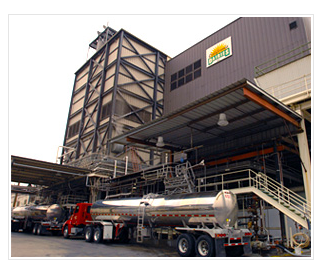
 VISALIA, Calif. — November 2, 2012 — With the recent interest in California joining the Federal Order pricing system, the CDI Board of Directors and management have taken a proactive step to investigate what impacts might be expected as a result of adopting federal milk pricing regulations. Accordingly, CDI has commissioned a comprehensive modeling study of a California federal milk marketing order, the first of its kind. Committed to working together to ensure the sustainability of the California dairy industry, Dairy Farmers of America Western Area (DFA) and Land O’Lakes (LOL) have agreed to join CDI and participate in the study.
CDI has contracted with Dr. Mark Stephenson, director of dairy policy analysis at the University of Wisconsin’s College of Agricultural and Life Sciences, and Dr. Chuck Nicholson, Clinical Associate Professor of Supply Chain Management at Penn State University, to perform the five-month study and assess what can be expected by replacing the state milk marketing order with a federal counterpart.
About California Dairies, Inc.
California Dairies, Inc. is the largest member-owned milk marketing and processing cooperative in California producing 43 percent of California’s milk. Co-owned by more than 420 dairy producers who ship more than 17 billion pounds of Real California Milk annually, California Dairies Inc. is a manufacturer of quality butter, fluid milk products and milk powders. In addition, California Dairies Inc. is the home of two leading and well-respected brands of butter – Challenge and Danish Creamery. California Dairies’ quality dairy products are available in all 50 United States and in more than 50 foreign countries. For additional information on California Dairies, Inc., visit www.californiadairies.com.
###

California Gas Prices Down 75c Since October 9
 The average price of gas in California has dropped this week to $3.94 a gallon,down 75 cents from the high reached only a few weeks ago according to Gas Buddy.
In the S2S reading area there are 7 stations in Visalia below $3.80,Fresno there are around 50 stations selling regular below $3.70 and one at $3.59. In San Luis Obispo’s less competitive market only Costco is below $4 today at $3.89.
Statewide, the lowest price is $3.39 a gallon in the Bay Area.
Gas prices have fallen across the US from $3.89 average in mid September to $3.51 today.
In the past month the price of crude has plunged even as California refiner margins that had skyrocketed to $1.22 a gallon in early October have dropped to 55 cents as of October 29 according to the California Energy Commission.Meanwhile, WTI crude oil has dropped in price from $101 a barrel in mid September to around $85 a barrel today.

California Dairies Inc Buying SoCal Diary Co-op
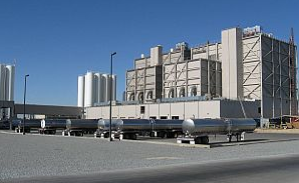
Visalia-based California Dairies Inc.(CDI) has purchased the assets of Security Milk Producers Association,a milk cooperative that produces around 1.3 billion pounds of milk a year with sales if around $300 million. According to CDI’s president Andrei Mikhalevsky, the CDI board will finalizes a deal this week at their regular meeting.
“We have invited Security members to apply to join our cooperative” says Mikhalevsky. The Security Milk cooperative dates from 1974 and is based in Chino,California. The group has just 43 members statewide but is still the 22nd largest milk co-op in the nation according to Hoard’s Dairymen annual ranking.
By contrast CDI has some 490 members, produces 16.9 billion pounds milk annually and is the nation’s second largest milk cooperative. revenues in excess of $3 billion have been cited.
California Dairies, Inc. is the result of a 1999 merger of three of California’s most financially successful cooperatives; California Milk Producers, Danish Creamery and San Joaquin Valley Dairymen.
Less Milk
Mikhalevsky notes that this year milk volumes have been down around 5% from its historic range and is expecting that in 2013 member milk volume will be down around 4% largely due to the loss of some producers who have exited the business and the tough margins in the the business right now.
Mikhalevsky says Security has no physical assets except their fleet of trucks that deliver milk to Southern California processors. Most LA kids drink Security milk in their morning cereal every day.
Security general manager Hank Perkins said he could not comment but a another Security official who declined to be identified says the merger approved makes sense “because CDI already is very efficient and we need to work together to get prices up in California.” The dairyman says “things are really rough right now with the high feed prices.”
A few years ago Perkins was searching in Tulare County for a site to build a milk plant.Sources say Security,more recently, was looking to buy a so-called balancing plant that would convert milk to powder when processors did not take all the fluid milk the co-op produced but lost an opportunity and decided to hook up with CDI who has a large balancing capacity.
Both dairy co-ops have been lobbying CDFA ag secretary Karen Ross to modify rules that affect how much the state’s dairymen get for their product sold to cheese companies. California dairy producers say cheese makers pay much less here than dairymen are paid outside of California for their milk.
After some heavy lobbying there are signs Ross may entertain a new hearing on the matter sources say.

Alternative Fuel Watch:
Tulare Algae Farm Expansion
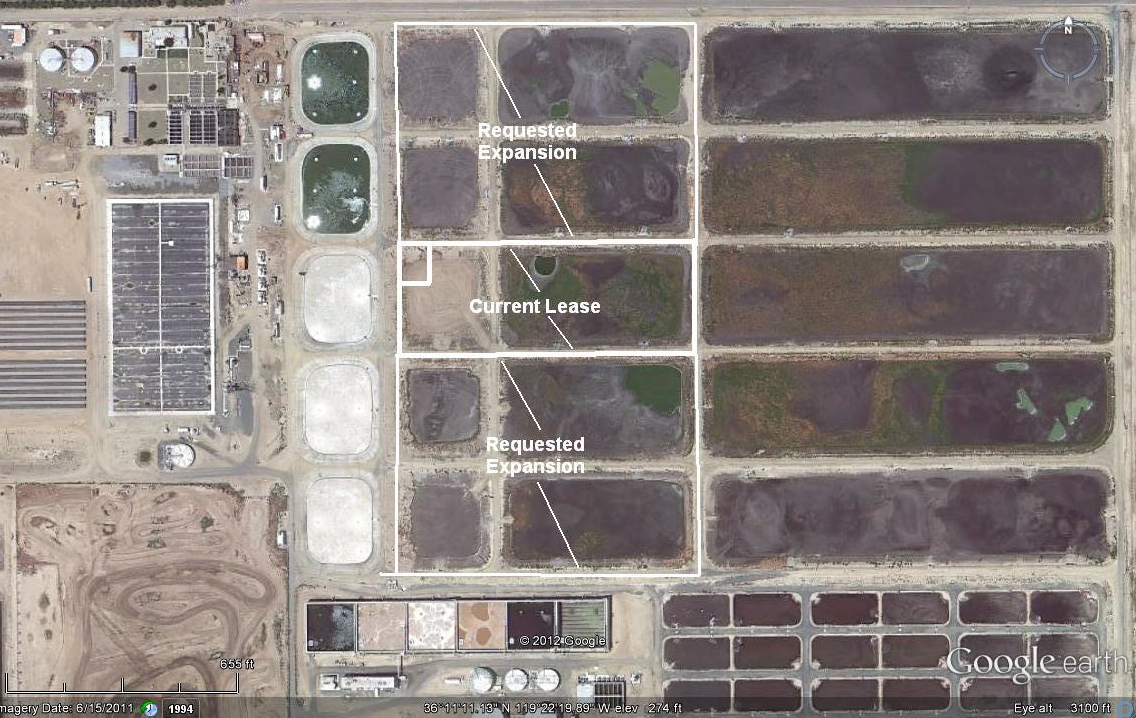
The company that is experimenting on four acres near the Tulare wastewater treatment plant to grow algae for fuel wants to enlarge the test plot to 20 acres. Pacific Algae,backed by Texas investors already leases four acres in the old industrial wastewater treatment ponds. This site was selected because of the availability of nearly pure CO2 in the exhaust from the fuel cells that would be used to grow algae for the production of oil as a base for synthetic fuels says city Public Works director Lew Nelson.
The company has identified a number of providers of technology for various parts of the process, for growing seed algae, for growing the algae to maturity, for harvesting and drying the algae and for processing the oil in preparation for production of synthetic fuel. Many of the technologies are currently bench scale or small pilot processes and would benefit from use at the large commercial pilot scale that is being proposed at the treatment plant says Nelson.
One huge target market – bio-aviation fuel.
Tulare Firm Wants To Make Biofuel
Harvest Container who has a composting facility on Lovers Lane near Tulare is working on an EIR with the county and published this notice recently.The Harvest-Tulare composting facility currently holds operating permits to compost green material, food, and dairy manure. The proposed project will increase and shift types of materials and quantities accepted at the facility. Harvest Power California LLC is proposing to add an anaerobic digester to the existing Harvest-Tulare composting operations to process organic materials into fuel and digestate that will contribute to soil amendment production. Both a high solids digester (processing food and green material) and a low solids digester (processing primarily food material) alternatives will be evaluated in the environmental document. The proposed project will increase total tonnage at the site from 86,000 tons per year to a potential 216,000 tons per year. The increase includes both the proposed anaerobic digester and increasing tonnages at the composting facility. The facility will produce transportation fuel either through a compressed natural gas (CNG) refueling station or by injecting directly into a nearby natural gas pipeline. Therefore, both a CNG refueling station and direct injection to the natural gas pipeline will be evaluated.
Cap & Trade To Start In California
California’s cap-and-trade system to reduce greenhouse gas emissions is set to launch January 1, 2013, when emission permits that can be traded will be issued. Emitting firms can use the permits that they receive from the state government, buy permits, or buy offsets for their emissions from projects that remove carbon dioxide or other greenhouse gases from the atmosphere.
AB 32 aims to reduce California’s emissions to 1990 levels by 2020, a reduction of about 30 percent.

Biodico and Navy Sign Renewable Fuel Agreement
PORT HUENEME, California – This month Biodico announced signing a new agreement with the U.S. Navy for the development and evaluation of advanced biofuels and bioenergy. The goal is to jointly develop renewable fuel and energy technologies that are appropriate for use at U.S. Naval and DoD facilities worldwide. The collaboration between the Navy and Biodico will optimize the operation of sustainable biorefineries producing renewable petroleum diesel equivalent liquid fuels, bio-based products and energy using renewable resources at Department of Defense (DoD) facilities. The optimization will allow production at the lowest possible cost. The production process will also benefit the commercial sector by providing a cost-effective process to produce renewable fuel and energy in a sustainable manner. The collaboration is partially supported by grants from the California Energy Commission.
Secretary of the Navy, Ray Mabus, has directed the Navy to reduce its dependence on petroleum by 50% by 2020. By producing petroleum diesel equivalent liquid fuels, bio-based products and energy on site, the Navy can help meet this objective and provide better security for its energy supplies. Work under the new contract will include a range of technologies including but not limited to transesterification, gasification, gas to liquids, hydrogenation, anaerobic digestion, catalysis, and the production and processing of feedstocks and co-products.
California State Senator Fran Pavley (D-Agoura Hills) remarked, “This announcement is an exciting outcome of the collaboration between Biodico, the Navy and the California Energy Commission. This work is a direct result of California’s commitment to reduce our dependence on foreign oil. The collaboration between Biodico, the Navy and the California Energy Commission will enhance our national security, provide new jobs and improve the environment. It will demonstrate and commercialize advanced biofuel and bioenergy technologies that will be utilized throughout the world. The integration of sustainable agriculture with renewable combined heat and power produced on-site will produce inexpensive advanced biofuels.”
According to Biodico’s President and Founder, Russell Teall, “As part of this agreement we are building a sustainable biorefinery at Naval Base Ventura County that will produce biofuel and bioenergy at prices competitive with unsubsidized conventional fuel and power. The facility is privately funded, with some of the innovations supported by grants from the California Energy Commission. Sen. Pavley’s landmark initiatives have helped make this project possible. ”

Ag Beat
Nurseries Sell Out Of Trees & Vines
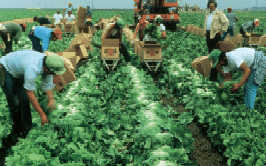
The growing popularity of almonds, walnuts and other orchard and vineyard crops affects demand for the commercial plant nurseries that sell young trees and vines. Nurseries say demand from farmers for new trees and vines is so high that some nurseries have already sold out for new plantings to take place this winter, and are already taking orders for next year. In addition to filling customer demand, new tree and vine varieties often resist disease and drought better.
Weather, Markets Affect Raisin Crop
With the raisin harvest now complete, farmers and analysts say both weather and market forces reduced the crop. The Raisin Administrative Committee estimates this year’s crop is one of the smallest of the past decade, down about 20 percent from last year. The dry and cold winter and spring contributed to a smaller crop because the fruit was not able to develop as well as usual. And many grapes were sold to winemakers instead of being dried for raisins.
Small Raisin Crop Helped Labor Situation
Farm leader Manuel Cunha told the Capitol Press that a light raisin crop cut harvest demand this year so farmers did not feel the full impact of a perceived labor shortage. Cunha says many growers say they were short workers this year “however crops were harvested. Cunha said he doesn’t know of any crop not harvested because of the picker shortage.”
October Farm Prices Up 8.8%
USDA reports that the preliminary All Farm Products Index of Prices Received by Farmers in October, is up 8.8 percent from September. The Crop Index is up 15 points (6.7 percent) and the Livestock Index increased 4 points (2.6 percent). Producers received higher prices for milk, hogs, grapes, and corn and lower prices for eggs, apples, lettuce, and soybeans. In addition to prices, the overall index is also affected by the seasonal change based on a 3-year average mix of commodities producers sell. Increased monthly movement of soybeans, corn, grain sorghum, and cottonseed offset the decreased marketing of wheat, milk, cattle, and grapes.
The preliminary All Farm Products Index is up 25 points (14 percent) from October 2011. The Food Commodities Index, at 194, increased 14 points (7.8 percent) from last month and increased 20 points (11 percent) from October 2011.
Prices Paid Index Up 2 Points
The October Index of Prices Paid for Commodities and Services, Interest, Taxes, and Farm Wage Rates (PPITW) is 220 percent of the 1990-1992 average. The index is up 2 points (0.9 percent) from September and 15 points (7.3 percent) above October 2011. Higher prices in October for complete feeds, concentrates, nitrogen, and feeder cattle offset lower prices for mixed fertilizer, supplements, gasoline, and diesel.
CFB contributed to this report

Pacific Albacore Carry Barely Detectable Fingerprints Of Fukushima Disaster
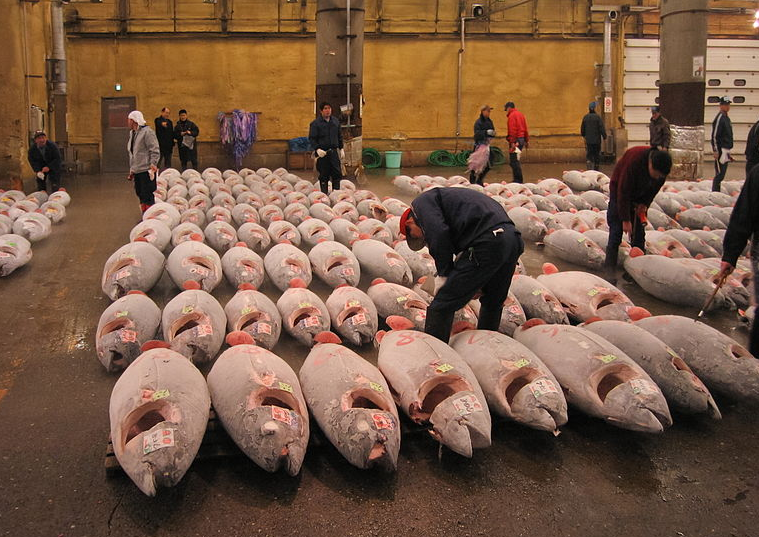
CORVALLIS, Ore. – Samples of albacore tuna caught off the West Coast of the United States show minute traces of radiation that can be traced to the Fukushima reactor disaster, according to an interdisciplinary team of scientists from Oregon State University and the National Oceanic and Atmospheric Administration.
The radiation levels in fish analyzed to date are far below anything that would pose a risk to humans who consume the fish, the research team emphasized. The findings are preliminary; additional fish remain to be tested.
But the findings could reveal new information about where Pacific albacore travel during their migratory lives – and how what happens in one part of the ocean can affect the food web thousands of miles away.
The team has collected and tested fish caught off the U.S. West Coast both before and after the devastating March 2011 Japanese tsunami and subsequent release of radioactive material into the ocean by the Fukushima Daiichi nuclear reactor.
“We’re still processing new fish, but so far the radiation we’re detecting is far below the level of concern for human safety,” said Delvan Neville, a graduate researcher with OSU’s Radiation Health Physics program and a co-investigator on the project.
People are constantly exposed to radiation from the natural environment, Neville pointed out. “To increase their normal annual dosage of radiation by just 1 percent, a person would have to eat more than 4,000 pounds of the highest (radiation) level albacore we’ve seen.”
Neville will present the team’s preliminary findings on Oct. 27 at the Heceta Head Coastal Conference in Florence. Richard Brodeur, the NOAA Northwest Fisheries Science Center biologist who serves as lead investigator on the project, reported the same findings to the recent annual meeting of PICES, the North Pacific Marine Science Organization, in Japan. The researchers also plan scientific journal articles.
The OSU team’s findings are consistent with those of California researchers who announced in May that they had found traces of Fukushima-linked radionuclides in bluefin tuna caught off the California coast. The bluefin news came as a surprise to the scientific and regulatory community. Shortly after the March 2011 Japanese tsunami and reactor disaster, the U.S. Environmental Protection Agency, Food and Drug Administration and NOAA jointly expressed “high confidence” in the safety of U.S. seafood products, suggesting it was unlikely that migratory fish such as tuna would be contaminated to “significantly elevated radiation levels.”
Relying on agency statements, fisheries organizations such as the Oregon Albacore Commission predicted that 2-to-5-year-old albacore, a mainstay of the U.S. troll and pole fishery, would be unaffected because their migration patterns do not take them through the waters where the radiation leak occurred.
But scientists differ on the details of albacore migration and behavior. Some suggest that not all albacore follow the same migration routes between western Pacific waters and feeding grounds off the U.S. West Coast. Some believe North Pacific albacore may even comprise two separate sub-stocks with different migratory paths.
That’s one of the questions Jason Phillips, then a graduate fisheries researcher in OSU’s College of Earth, Ocean, and Atmospheric Sciences, was investigating with support from Oregon Sea Grant, when the 2011 disaster struck Japan. He wondered whether the radiation released by the Fukushima nuclear plant could be used as a “natural tag” to help unravel some of the questions about fish migration. He put together a pilot study, but soon found he needed more fish samples – and access to additional equipment for detecting and measuring extremely low levels of radiation.
Brodeur, the NOAA biologist overseeing Phillips’ research, introduced him to Neville, a graduate student in OSU’s Radiation Health Physics program who was looking for Ph.D. research topics – and who had access to the specialized instruments needed to analyze the albacore samples for the type of radionuclides released by the Japanese reactor. He also obtained a modest NOAA grant to support the research.
The researchers first identified two Fukushima-linked isotopes – Cesium-137 (Cs-137) and Cesium-134 (Cs-134) – this July, in samples of fish caught and frozen in 2011.
This particular combination of radioactive isotopes is produced by fission in nuclear reactors, and less commonly, nuclear weapons. Cs-134, in particular, is considered key to the Fukushima nuclear “fingerprint” because it decays very rapidly, with a half-life of just more than two years. While Cs-137, which persists for decades in the environment, could come from other possible sources, scientists say, the Cs-134 could only have come from the Fukushima reactors.
But the team needed more evidence to support the radioactivity findings. Phillips spent this summer collecting more fish at sea, off Oregon and Washington, as well as from scientists, fishermen and other sources along the West Coast. Neville ran more tests, validating his methods against freeze-dried fish standards tested by dozens of labs – and got the same results. They also shared fish samples with the Washington state Office of Radiation Protection, where radiation health physicist Lynn Albin is analyzing them as an additional check.
As more fish were tested, the results were consistent with the initial findings: No Cs-134 in fish caught before the disaster, but traces of the isotope in a significant number of fish caught since.
“This is what we’ve seen after testing about 70 pounds of tuna,” Neville said. “When you’ve run one or two samples, you can’t really say much about the population you’re testing yet. When you’ve run five or six, you could make some guesses. When you’re up to, at this time, 18 samples and everything has fallen fairly neatly into two groups of results, you can start to make some predictions about that population.
“What we can say is that we have detected Cs-134 in fish thousands of miles from where that Cs-134 came from, and over a year since it was released,” Neville added. “It’s very interesting scientifically, and it can tell us more about tuna migration and what happens to radioactive releases, but it’s nowhere near enough to be concerned about food safety.”
Jason Phillips, whose fisheries research launched the investigation, says it will take more work to unravel the mysteries of albacore migration.
“We are finding evidence that the albacore caught in Oregon and Washington in the summer have spent the winter in different locations in the North Pacific,” he said. “But other researchers have been trying to figure out how albacore migrate for decades. We need to increase the number of fish and locations we test before we can start getting at the bigger questions.”
About Oregon Sea Grant: For more news about science, marine education and related activities on the Oregon coast, subscribe to “Breaking Waves,” the Oregon Sea Grant news blog, at: http://blogs.oregonstate.edu/breakingwaves/.
Media Contact
Pat Kight,
541-737-2011
Source
Delvan Neville, 480-907-8629
Jason Phillips, 541-231-5021
Richard Brodeur, 541-867-0336

Jason Phillips

Delvan Neville

News and Research Communications
Oregon State University
416 Kerr Administration Bldg.
Corvallis, Oregon 97331
541-737-4611
Contact us
Copyright © 2012
Oregon State University
Disclaimer
Marketing
Web Com

Hedgerows Enhance Bird Abundance & Diversity On Farms
- Author: Rachael Freeman Long
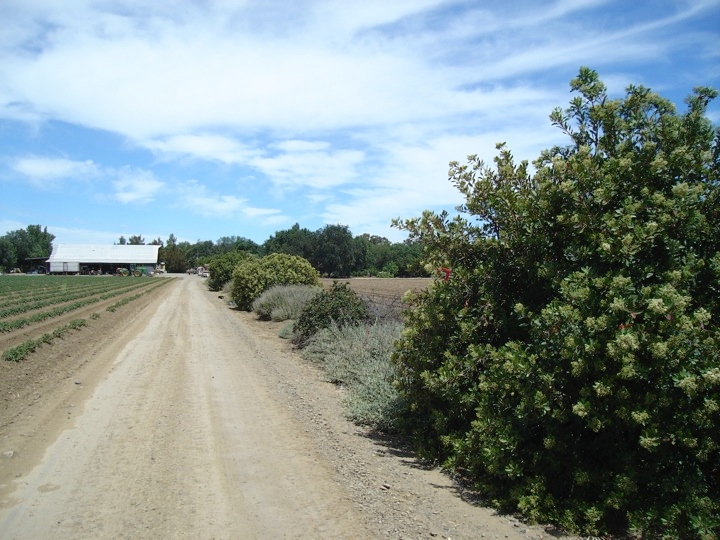
California’s Central Valley is home to a rich diversity and solid abundance of birds. Many are year-round residents, while others are migrants that winter in our valley or travel to destinations further south. Currently more than 400 species of birds call the Central Valley their home; these include raptors, songbirds, ducks, geese, shorebirds, hummingbirds, and others. (Download a checklist of Central Valley birds here.)All birds depend on habitat for food, shelter and nesting sites. With a decline in habitat in the Central Valley, primarily due to agricultural expansion, urbanization and water diversions, there has been a significant decrease in the numbers and types of birds. Many bird species are now endangered, threatened or listed as species of special concern. Approximately 36 percent of our state’s historical grasslands, 9 percent of the original wetlands, and 2 to 7 percent of the original riparian forests remain. The Central Valley alone has lost more than 90 percent of the riparian, oak woodland and shrub land habitats.

Despite this loss and fragmentation of habitat, many birds continue to use remnant or restored riparian and upland vegetation around farms. Crops such as rice and alfalfa also provide important habitat and foraging areas for birds. Interest is also surging in restoring lands to enhance habitat for birds, including planting hedgerows of California native shrubs and grasses along field edges.In a recent study by UC Cooperative Extension and Audubon California in Yolo County, researchers determined that hedgerow plantings along field margins helped increase the abundance and species richness of birds on farms, both for winter migrants and year-round species. Their data analyses, examining farms with and without hedgerows, showed that the presence of hedgerows tripled bird abundance and doubled bird species richness in these linear habitat features, but did not increase the bird abundance in the adjacent crops. Of the 2,203 birds counted during the winter and spring of 2011-12, hedgerows drew 41 species of birds, as compared to 22 species in control areas (weedy, semi-managed field edges). In addition, more than three times as many birds used the hedgerows during wintertime, compared to the spring breeding season. This highlights the importance of this habitat for migrating and overwintering birds.

Of significant interest was the finding that bird pest species were using crops regardless of field edge habitat. That is, crop fields with hedgerows showed the same numbers of bird pest species (such as blackbirds that can damage seed crops), compared to crop fields without hedgerows. The researchers observed a total of 1,642 birds, representing 30 species using the adjacent agriculture fields. The minimal species overlap indicated that a different bird community was using crop fields, regardless of the presence of hedgerows. The researchers also found that crops were more heavily used in the winter than during the breeding season.Hedgerows provide a variety of ecosystem services in agricultural landscapes, such as attracting native bees to enhance pollination and natural enemies to control pests in adjacent crops. Birds also feed on insects and rodents, potentially helping with pest control in crops. The value of hedgerows on farms for enhanced biodiversity and ecosystem services will hopefully encourage more landowners to establish them on field edges for conservation purposes.

For more information on establishing hedgerows on farms, download the free UC ANR publication Establishing Hedgerows on Farms in California. A more thorough discussion of the study results highlighted in this blog will be published in the upcoming December 2012 issue of the California Society of Ecological Restoration newsletter, Ecesis. A conservation innovation grant from the Natural Resource Conservation Service will help expand and continue this important research.

Kern Hydrogen Plant Would Use Coal
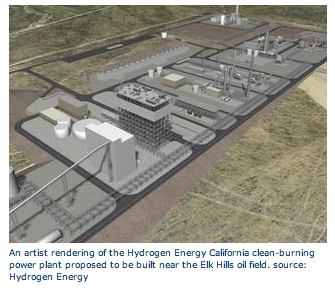 NEXT HEARING SET FOR NOVEMBER 7
Withe the backing of the Obama administration a $2.8 billion Kern County energy project would use Utah coal in the San Joaquin Valley to make hydrogen and electric power as well enhance oil recovery and make fertilizer. How can they use coal in our polluted basin?
That’s what the Sierra Club wants to know raising objections about the innovative yet controversial project in recent months.
Its called Hydrogen Energy California (HECA) and here’s the pitch according to the applicant.
“The Hydrogen Energy California project (HECA) will generate clean energy for California while creating jobs and economic and environmental benefits for Kern County. This video describes HECA’s unique method of creating clean hydrogen from coal and petroleum coke, and its “closed loop” process for capturing and safely storing underground 90% of its carbon dioxide (CO2) emissions.” says applicant SCS Energy.
The project is called HECA was formerly owned by Hydrogen Energy International (HEI) jointly operated by BP and Rio Tinto); Fluor, URS and GE Energy The location is Elk Hills – west of Bakersfield.
SCS Energy agreed to take over the HECA project in May 2011. BP and Rio Tinto had both invested $55 million to lay the groundwork for HECA’s feasibility.
Department of Energy has invested $54 million in the project under a financial assistance agreement with HECA. HECA can access the remaining $354 million in financial assistance under HECA’s Clean Coal Power Initiative (CCPI-3) award which is a US $308 million awarded from the DOE in July 2009. The California State Public Utilities Commission also awarded $30 million in February 2009; $17 million of which had been received as of June 2010.
The project would gasify blends of petroleum coke (25 %) and coal (75%) to produce hydrogen to fuel a combustion turbine operating in combined cycle mode. The gasification component would produce 180 million standard cubic feet per day of hydrogen to feed a 400 megawatt gross, 288 MW net combined cycle plant providing California with baseload power to the grid.
The gasification component would also capture approximately 130 MMSCFD of carbon dioxide (or approximately 90 percent at steady-state operation) which would be transported and used for enhanced oil recovery and sequestration (storage) in the Elk Hills Oil Field Unit. The HECA project would also produce approximately 1 million tons of fertilizer for domestic use.
Pollution Questions
While the proponents emphasize the economic benefits- critics point to potential environmental consequences.
A Sierra Club rally at the Kern County Administration Building
on Truxtun in July,20 residents gathered to speak out against the Hydrogen Energy California (HECA) project followed by a hearing where farmers and others raised serious concerns about the proposed plant. The critics pointed to the shipping of material to the Valley with the resulting pollution.
Sierra Club staff attorney Andrea Issod said “California doesn’t need the electricity that HECA would generate, but it does need better air quality. HECA is a bad investment in an old, dirty fuel that harms people from cradle to grave.”
Issod added, “Redirecting that investment to cleaner renewable technologies would be a much smarter move for California’s energy future.”
Farmers like Franz are also concerned about threats to livelihood. “HECA will cut their prime farmland in half with a rail spur and damage their crops with additional air pollution.” Franz was among several farmers who spoke at the hearing.
Sierra Club letters to the California Energy Commission have questioned the extent of air impacts from the project.
Sorting all this his out is the California Energy Commission who will make the decision if the project moves forward.The California Energy Commission staff will conduct a data response workshop for the proposed Hydrogen Energy California (HECA) project. All interested parties, agencies and members of the public are invited to participate in the workshop which will be held: WEDNESDAY, November 7,2012 3:00 PM 6:00 PM for public questions and comments at the Double Tree Inn , Bakersfield California Room , 3100 Camino Del Rio Court ,Bakersfield, CA 93308.

Higher Ag Income Fuels Demand For “Good Ground”
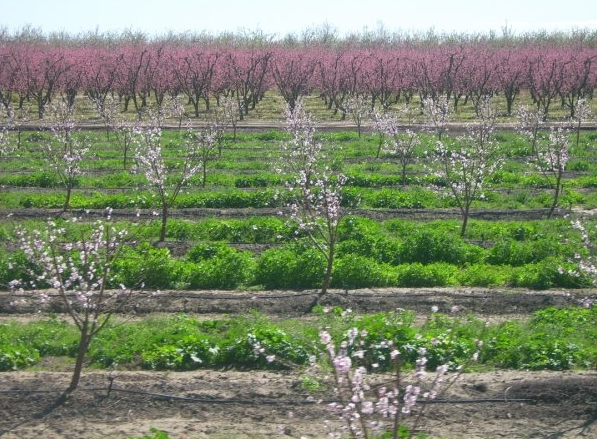
With the exception of the dairy sector the rest of the Valley’s farm commodity markets are having a banner year and that is fueling demand for farm properties says Jim Olivas,a veteran farm realtor with Pearson Realty. “Prices for farmland are up 30% in the past two years in Kings and Tulare counties “says Olivas who says he” has just one word for it… unbelievable”.
Olivas adds that his biggest struggle is finding suitable properties for buyers. The increase in sales activity is confirmed by Visalia Wells Fargo bank manager Bill Hoover who offers “We’re just slammed with loan applications and the appraisers are too” noting that some of the activity may have to do with the approaching year-end tax deadline and potential changes in the tax code.
Noting the extremely low loan interest rates right now – banks and appraisers say they are busy with refinance applications as well.
Farmland broker John Grimmius say “investors now have the sentiment that with all the dollars being printed and bonds being bought up – people want to invest in something that won’t fly away – like farmland.”
Visalia appraiser Keith Hopper agrees. “It’s not just good commodity prices but the fact this investment is tangible and the rates of return are very good compared to other ways to invest money.”
Role Reversals
Hopper adds that the economics favor not just open land in the countryside but so called transitional land near urban areas like Visalia.
Historically, this land would be much higher in value because of the opportunity to covert it to urban uses like new home subdivisions.Today, the market for some of those edge-of-town lands is “to plant permanent plantings, like walnuts” says Hopper.”These investments are long term,at least a decade.” With much less new development slated in urban areas, the price and demand for land held to be converted to subdivisions later is down while farmland is up. It is a role reversal from where it was just a few years ago.”
If they are not selling as many new homes here, California is selling lots more more fruit and nuts overseas with record crop sales appearing to be a driving force.
Commodity Prices Drive Higher
Just last week, the USDA reported walnut sales for the crop year ending Aug 31,2012 averaged $1.46 per pound compared to $1.02 the year before, 85 cents in 2009 and 64 cents in 2008. Raisin prices were at record levels in the latest crop year as well with prices at $1,632 per ton compared to $1.489 in 2010, $1292 in 2009 and $1,273 in 2008.
Then there’s almonds who set a record too. US domestic almonds shipments of 48.3 million pounds were 11% ahead of 2011 while export shipments (91.4 million pounds ) were up 34%. Total shipments were 139.6 billion pounds or 25.2%. In 2011, for the first time ever, the value of the California almond crop surpassed the state’s iconic grape industry to move into second place, behind dairy.
Acreage Up Nearly 4X
Forty years ago, California farmers produced less than 100 million pounds of almonds on about 200,000 acres of almond orchards. Mechanization, improved irrigation efficiency, advances in insect and disease management, pruning research and fertilization studies have fueled explosive growth in the industry. Farmers in California’s Central Valley now tend 760,000 acres of almond trees, producing about 2 billion pounds of shelled nuts a year. “Even with this record production, we have more demand than we have supply,” said Bob Curtis of the Almond Board.
Grapes and nuts were not alone with USDA reporting in the past few weeks that cattle income was up 20%,greenhouse nursery up 14% and hay income was up 68% in this most recent crop year ending August 31.
Like so much in the state’s ag sector – hay is up on export demand,to China of all places. Alfalfa exports to China from America ballooned to 177,423 metric tons in 2011 from 2,321 metric tons in 2007, and they are on pace to exceed 380,000 metric tons in 2012 says the Wall Street Journal.
Another Role Reversal
There is even opportunity knocking in the troubled dairy sector but more to do with the potential conversion of large dairy field cropland,used to grow feed,and dairies themselves into other crops.
“Right where I am standing (on a Kings County dairy) everywhere I look I see land being planted to pistachios” shrugs Hanford dairyman Joaquin Contente. Jim Olivas confirms the trend. ”I have a dairy owner who is downsizing and there are plenty of offers for his land”.
Ag broker John Grimmius who specializes in dairy has seen it all. The boom years where scores of dairies from the Southland relocated to Kern, Kings and Tulare Counties pushing up demand for open ground. The number of cows in Tulare County went from around 60,00 in 1970 to just under half a million in 2011 with an equal number of replacement animals that all need to be fed and surrounding crop used to deposit manure. Translation,lots of land needed.
”As recently as 2008 it was dairy buyers who were crowding out other buyers because they could pay more.”
Not today. Because of several tough years for milk prices and the sky high cost of feed – it is now dairy operators who are being crowded out, says Grimmius. Another role reversal.
Dairyman Contente says because his industry is dependent on feed from the Midwest he would like to buy more land to grow more of his own feed but can’t compete with investors wanting to plant trees.
“I can’t afford to pay $15,000 to 18,000 an acre like they can.”
Grimmius points out another factor that mirrors what is happening in the existing home sales market right now.”It’s a tight market because landowners don’t want to sell unless they have to.”
With low returns elsewhere in the economy and fear on Wall Street “ag land sales are in a perfect storm right now, when you consider how much demand is way up” says Pearson real estate agent Mark Johnson.
The increase in farmland values reflects crop values like in Kings County where last year the dollar value of crops produced was up 29%.

Almonds California’s Second-Most Valuable Commodity
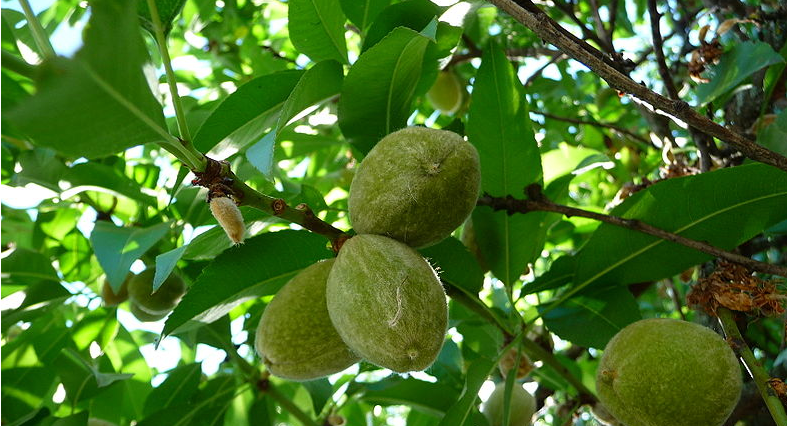 With help from UCCE, the value of almonds in 2011 surpassed the value of grapes.
When California publishes its crop report in November, there will be a significant change in the ranking order of the state’s top agricultural commodities. In 2011, for the first time ever, the value of the California almond crop surpassed the state’s iconic grape industry to move into second place, behind dairy.
California almonds are on a roll. In the last 20 years, scientific discovery and grower ingenuity have nearly doubled almond per-acre productivity. A good yield in the 1980s was 1,400 pounds per acre. The average yield for 2011 was 2,670 pounds of shelled almonds per acre.
Forty years ago, California farmers produced less than 100 million pounds of almonds on about 200,000 acres of almond orchards. Mechanization, improved irrigation efficiency, advances in insect and disease management, pruning research and fertilization studies have fueled explosive growth in the industry. Farmers in California’s Central Valley now tend 760,000 acres of almond trees, producing about 2 billion pounds of shelled nuts a year. The crop, which represents 100 percent of U.S. almond production and 75 to 80 percent of world production, was valued in 2011 at $3.87 billion, surpassing table, wine and raisin grapes, which were valued at $3.86 billion.
“Even with this record production, we have more demand than we have supply,” said Bob Curtis of the Almond Board. “The driver behind that is nutrition studies that show almonds are a healthy food and snack.”
A tremendous amount of UC research is behind the California almond success story, said Bruce Lampinen, UC Cooperative Extension specialist in the Department of Plant Sciences at UC Davis, an expert in almond canopy management.
“Higher density plantings of almonds and a trend towards less pruning, and improved water management have led to much higher yields,” Lampinen said.
Many almond growers have replaced flood irrigation with micro-sprinkler or drip irrigation, said Larry Schwankl, UC Cooperative Extension specialist in the Department of Land, Air and Water Resources at UC Davis. These irrigation systems increase the precision of water and fertilizer application. Over the years, UC Cooperative Extension advisors and specialists established demonstrations of micro-sprinkler and drip systems in many parts of the Central Valley and reached out to farmers to show how they could be managed to optimize production.
“Twenty years ago, we simply guessed at the amount of water that the trees needed and we applied it on a calendar basis,” said Joe MacIlvaine, president of Paramount Farming Company in Kern County, one of the state’s largest growers of almonds, pistachios and pomegranates. “Today, we are delivering water and nutrients directly to the root zones when they are needed.”
Two decades ago, a granular form of nitrogen fertilizer was generally applied to almond orchards in the fall to allow winter rain and irrigation to move it into the soil for use by the trees in spring and early summer. Nitrogen use efficiency was believed to be about 40 percent. Now, nitrogen fertilizer is applied through the irrigation system during the growing season, when the tree needs it.
“Today, our nitrogen use efficiency can be as high as 85 percent,” said Blake Sanden, UCCE advisor in Kern County, an irrigation expert. He and Patrick Brown, UCCE specialist in the Department of Plant Sciences at UC Davis, have conducted nitrogen trials in almonds with Paramount Farming.
“When you increase the conversion of applied nitrogen fertilizer to higher crop yield, there is significantly less potential for nitrogen to leach below the rootzone and contaminate groundwater,” Sanden said. “But each field is unique and requires site-specific management to achieve these high levels of efficiency.”
Another area where UC research has led to significant crop yield growth is in canopy management and tree spacing. Research by Mario Viveros, UCCE advisor emeritus in Kern County, and other scientists showed that a tendency among growers to over prune was taking a toll at harvest time.
“A lot of farmers who are now growing almonds had experience with fresh fruits, where you do need to prune to get light on the fruit for good color. In almonds more canopy generally means more yield,” Lampinen said. “Today, most almond growers only prune when branches are growing in the way of tractors or other equipment.”
UC research also found that orchards planted with traditional wide spacing between the trees weren’t making the most efficient use of sunlight on the farms. Older orchards had 60 to 70 trees per acre. Today, almond orchards are planted at an average density of about 110 trees per acre based on results of UC research.
However, studies have also shown that crowding still more trees into orchards triggers diminishing returns. In almond production, the nuts are shaken from the trees to dry on the ground before they are harvested.
“If the orchard floor becomes too shaded by trees planted too densely, the orchard floor temperature and humidity become optimal for growth of pathogens that could become a food safety problem,” Lampinen said. “You want enough sunlight to hit the orchard floor to reduce potential pathogens, like salmonella.”
MacIlvaine acknowledged the role of UC Cooperative Extension in helping the almond industry achieve the production milestone in 2011.
“The University of California has been a wonderful partner in improving our farming practices,” he said. “The whole system is not only more efficient, but more sustainable at the same time.”