China Plans To Ban Sale of Gasoline/Diesel Cars

September 10,2017-Screen Shot 2017-08-05 at 9.38.00 AM

from CNBC

China is joining France and Britain in announcing plans to end sales of gasoline and diesel cars.

China’s industry ministry is developing a timetable to end production and sale of traditional fuel cars and will promote development of electric technology, state media on Sunday cited a Cabinet official as saying.

The reports gave no possible target date, but Beijing is stepping up pressure on automakers to accelerate development of electrics.

China is the biggest auto market by number of vehicles sold, giving any policy changes outsize importance for the global industry.

A deputy industry minister, Xin Guobin, said at an auto industry forum on Saturday his ministry has begun “research on formulating a timetable to stop production and sales of traditional energy vehicles,” according to the Xinhua News Agency and the Communist Party newspaper People’s Daily.

Siempra Acquires Fresno Solar Project From Recurrent Energy

News Release

September 2,2017-

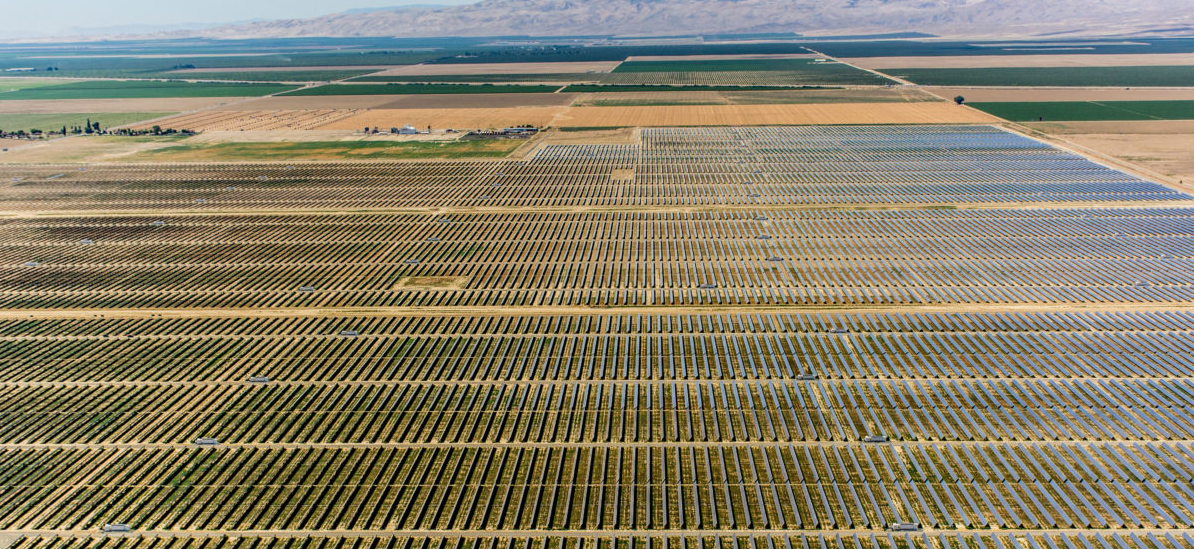
Screen Shot 2017-09-02 at 7.19.11 AMRecurrent Energy, a wholly owned subsidiary of Canadian Solar Inc., has announced that Sempra Renewables LLC, a unit of Sempra Energy, acquired its 200 MW-AC Great Valley Solar project, previously called Tranquillity 8.

“We are pleased to work with a market-leading partner like Sempra Renewables on this transaction,” says Dr. Shawn Qu, chairman and CEO of Canadian Solar. “Recurrent Energy’s strong portfolio of U.S. solar assets continues to create value for our customers and shareholders.”
The Great Valley Solar project, currently under construction in Fresno County, Calif., is located on approximately 1,600 acres adjacent to the 200 MW-AC Tranquillity Solar Facility. The Tranquillity facility was completed by Recurrent Energy in late 2016 and is majority owned by a subsidiary of Southern Power.
The project, which is expected to be fully completed by Sempra Renewables in the third quarter 2018, should generate enough clean electricity to meet the energy needs of approximately 50,000 homes. Sempra Renewables has assumed construction of the project and will operate the facility, which is fully contracted under four independent long-term power purchase agreements.

Wind Turbines and Birds

August 6,2017-

Screen Shot 2017-08-06 at 8.28.35 AMIt is true that wind turbines kill birds. Here are some things that kill more birds according to the US Fish and Wildlife Service.

Cats – 400 million
Buildings – 303 million
Cars – 200 million
Poison – 72 million
Electrical line collisions – 25 million
Communication tower collisions 6.5 million
Electrical line electrocution – 5.4 million
Oil Pits – 750,000
Wind Turbines – 174,000

US Fish and Wildlife: “Threats to Birds: Migratory Birds Mortality“
https://www.fws.gov/birds/b…

SLO Green Waste Plant Snags $4 Mil Grant

August 4,2017-

European digester
European digester

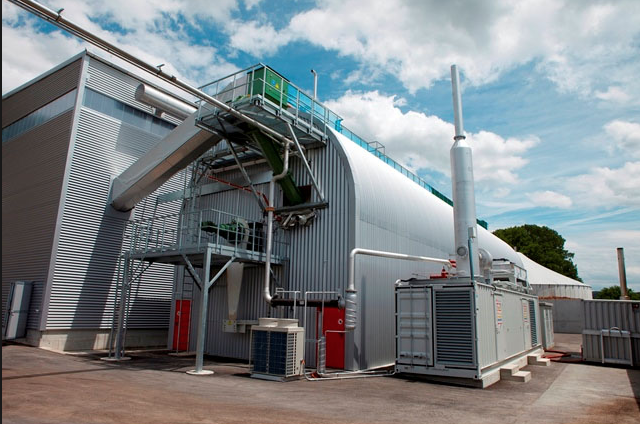
A state-of- the-art anaerobic digestion facility designed to convert organic waste from San Luis Obispo County into renewable electricity will receive a $4 million grant from the California Energy Commission.

The CEC meets August 9 and is expected to approve the funding to HZIU Kompogas SLO, Inc for a demonstration project to utilize local food waste and green waste to create renewable electricity, compost, and liquid fertilizer.

The plant is already under construction on 12.5 acres near the SLO airport at 4388 Old Santa Fe Rd. The project was originally approved by the Board of Supervisors in November of last year. The plan has been to remodel an existing warehouse and build a 36,000sf processing plant, and 5000sf anaerobic digester. The project has been valued at $21 million.

In cooperation with waste haulers, the feedstock will be locally sourced from cities, communities, and unincorporated areas of San Luis Obispo County. Food collection and distribution programs will also be incorporated into the project to ensure recoverable food is used for human consumption before being used as feedstock for the facility. The resulting electricity, about 733kW, will be sold and exported.

Newly adopted state goals have called for increased production of renewable energy, increased waste diversion from landfills, and a reduction of short lived climate pollutant emissions, says a CEC staff summary.

“Increased deployment of anaerobic digester systems can help meet all of these goals by producing renewable energy, diverting organic waste from landfills, and reducing associated short lived climate pollutant emissions. However, anaerobic digester systems tend to be logistically complicated, technologically complex, and prohibitively expensive. There is a need to demonstrate and deploy cost-effective anaerobic digester systems in local communities.

The San Luis Obispo County Integrated Waste Management Authority (SLO IWMA) and Waste Connections (the franchised waste hauler) worked together to plan and design a unique, community-scale bioenergy facility. A regional organics collection program will be established to provide feedstock to the facility which will create renewable electricity, compost, and liquid fertilizer. Waste Connections conducted a thorough technology assessment and through competitive solicitation selected Hitachi Zosen Inova U.S.A., LLC as its technology partner and facility operator.” The parent company is based in Zurich, Switzerland.

The project its expected to create 5 jobs and have a $1.1 million operational impact.

The energy commission hopes that this technology, used widely in Europe, will be validated for use in California.

Kettleman City To Get Tesla Supercharging Station

July 22,2107-

NEW MODEL SPURS EXPANSION


Screen Shot 2017-07-22 at 7.22.00 AM

Elon Musk’s Tesla company has applied to Kings County to build a 40-car supercharging station along I-5 in Kettleman City. The solar-powered station would be reconstructed in a former Burger King in town. The development would be larger than the existing charging station at Harris Ranch – the only other along this long stretch of Interstate 5.

Tesla owners could access the station and lounge 24/7 for a 30-minute recharge of their electric cars. Additional recharging capacity may be needed with a new lower cost Tesla being made this year that could boost the number of the company cars on the road.

The new Model 3, rolling of the production line in California this month, will go 0 to 60 in 5.6 seconds The car has a 215+mile range. Kettleman City is 170 miles from LA and 215 miles from SF.

Tesla says owners will have to pay for supercharging the $35,000 Model 3. Model S owners get it for free.


Volvo Goes All Electric

July 6,2017-

Screen Shot 2017-07-06 at 6.53.02 AMVolvo Cars, the premium car maker, has announced that every Volvo it launches from 2019 will have an electric motor, marking the historic end of cars that only have an internal combustion engine (ICE) and placing electrification at the core of its future business.

 The announcement represents one of the most significant moves by any car maker to embrace electrification and highlights how over a century after the invention of the internal combustion engine electrification is paving the way for a new chapter in automotive history.

 “This is about the customer,” said Håkan Samuelsson, president and chief executive. “People increasingly demand electrified cars and we want to respond to our customers’ current and future needs. You can now pick and choose whichever electrified Volvo you wish.”

 Volvo Cars will introduce a portfolio of electrified cars across its model range, embracing fully electric cars, plug in hybrid cars and mild hybrid cars.

 It will launch five fully electric cars between 2019 and 2021, three of which will be Volvo models and two of which will be high performance electrified cars from Polestar, Volvo Cars’ performance car arm. Full details of these models will be announced at a later date.

Dairy Biogas Plan / Making Solar Steam

Hanford Forum Discusses Dairy Biogas Plan

June 22,2017-
Screen Shot 2017-04-19 at 12.57.55 PMCalifornia Division of Food & Agriculture will soon award between $29 million and $36 million for the installation of dairy digesters in California that they say, will reduce greenhouse gas emissions. Existing milk producers and dairy digester developers can apply for funding of up to $3 million per project for anaerobic digestion projects that provide quantifiable greenhouse gas reductions. The program requires a minimum of 50 percent of total project cost as matching funds.

One developer, Maas Energy Works, is holding a community meeting June 8 to discuss a Kings County project that could pipe biogas from 5 to 6 dairies to a central digester – then be injected in the SoCal gas pipeline as renewable natural gas. The meeting will happen Thursday at 6 PM at the Comfort Inn Sierra Room in Hanford. Founder Daryl Mass expects to lay out a plan to be done in phases, starting with two local dairies he would help build a digester at their ranches if their projects are funded through CDFA. Applications and all supporting information must be submitted by June 28. Awards will likely be announced by September and Maas expects some projects could be online by the end of the year.

Digesters cut methane emissions from lagoons and are typically used to generate electricity at the farm. Using the gas to make renewable biogas for transportation fuel may pay more although there is “more risk” adds Maas. But the payoff could be good for the bottom line. Renewable biogas sells for 5X to 9X as much as natural gas, says Maas. His group is also doing a parallel project in Tulare County that includes as many as 11 dairies who are planning to pipe gas to a Hwy 99 ethanol plant to used there.Mass has helped several Kings dairies build digesters. At least one other local developer is working with dairies to do a similar plan.

CDFA  is offering the funding after legislative mandates were passed to have California dairies cut their methane emissions in a move too help air quality.


Solar Technology May Cut Local Food Processor Fuel Costs 

Sunvapor and Horizon Nut announced this spring that they are teaming up to demonstrate new technology that transforms solar energy into heat that can be used for all of the food industry’s needs like steam pasteurization, drying, blanching, cleaning, and roasting. The technology is said to be cost competitive with natural gas and will cut greenhouse gas emissions.

The project, now under construction near Firebaugh, is funded under the second phase of a $2.2 million U. S. Department of Energy “SunShot” award at Horizon Nut’s pistachio processing plant.This month, the California Energy Commission also promised $150,000 toward the cost of the demonstration.

“We are very eager to find a renewable alternative to fossil fuels so that we can produce more and save money. Expanding production, which is limited by emissions, is important to the economy of the region which suffers from low employment” said Andrew Howe, Director of Operations and General Manager of Horizon Nut.

California State Assemblyman Jim Patterson says “This is exactly the kind of breakthrough we need: technology, once it is mature, that can stand on its own without government subsidies. The opportunity to build a solar steam economy in the region has the potential to create thousands of good jobs and improve the air quality.”

The state grant will demonstrate a patent-pending solar collector that disruptively reduces the cost of solar steam by prototyping and testing in real world conditions at the Horizon Nut processing plant. They are redesigning the parabolic trough collector by using low-cost, high strength, low- embodied energy, self-assembled, biodegradable, fiber-reinforced materials, instead of steel in the construction of the Parabolic Trough Collector.

SunVapor says the technology can cut the average cost of fuel from $8/$9 dollars per thousand cubic feet for industrial customers in the state to about $6 using their solar technology.


Vandenberg Solar Project To Supply 35% of Power Needs

Trump Backing Renewables?

May 25,2017-

Screen Shot 2017-05-24 at 5.30.43 PMDespite President Trump scoffing at government support for green energy, his Department of Defense appears to be on track to increased use of renewable power both on their bases and in the field.

In the case of the battlefield, military sources say green energy literally saves lives with the use solar power to replace diesel generators who require frequent military convoys to bring in fuel and are highly vulnerable to attack.

The clearest evidence the the US military wants to avoid the politics and think security first is news that right down the road – the Air Force is going solar.

San Jose-based SunPower Corp. has broken ground on a 28-megawatt solar photovoltaic system at Vandenberg Air Force Base near Lompoc, a project expected to create about 150 jobs at peak of construction. Upon operation, it’s anticipated to be the largest behind-the-meter solar power system in the Air Force where 100 percent of the energy generated will be consumed onsite.

“A solar project that is grid-connected to the Base enables us to meet our electric demand with renewable energy and increase our energy security,” said Ken Domako, Chief, Portfolio Optimization, Vandenberg Air Force Base. “We look forward to increasing the Air Force’s energy independence with competitively priced, dependable solar from SunPower.”

The security factor has nothing to do with politics but is important  to the military in the case the electric grid is attacked and the base needs to be self sufficient.

The SunPower’s solar power system will be installed on land that has gone unused since 2007, just outside the gates of Vandenberg where Air Force housing once stood. The Base will purchase energy generated by the plant under a power purchase agreement (PPA), providing Vandenberg with competitive, fixed electricity rates over the next 25 years. The Air Force will retain all environmental credits associated with the system.

“The Air Force has an aggressive target to meet that requires full energy assurance for key missions,” said Dan Gerdes, Air Force Civil Engineer Center rates and renewables division chief. “By diversifying our energy mix at Vandenberg to include SunPower’s high efficiency solar technology, we’re confident we’ll have the electrons we need, when we need them, creating long-term value for our operations.”

Once complete, the system will provide a projected 54,500 megawatt hours of energy annually, meeting about 35 percent of Vandenberg’s total energy needs. It will also contribute to the entire Air Force’s goal of meeting 25 percent of its electricity demand with renewables.

The Air Force has solar units at Nellis Air Force base in Nevada. In the Central Valley the Lemoore Naval Air Station will soon be developing a giant 167MW solar farm, operated by Recurrent Energy, on the base’s idled farmland due to drought.

Vandenberg has also been interested in getting ocean-based wind or wave power to help power the base in the future.

SunPower is well known on the Central Coast having built a 250 MW facility operating now in the Carrizo Plain in San Luis Obispo County.

Valley Biofuel Makers Update

April 19,2017-

More Cellulosic Ethanol

Screen Shot 2017-04-19 at 8.01.25 AMPacific Ethanol will now make cellulosic ethanol at their Madera plant by the third quarter of this year. The Madera plant has a total annual production capacity of 40 million gallons, and is expected to produce up to one million gallons per year of cellulosic ethanol with Visalia-based Edeniq’s Pathway process. Advanced biofuels get a high return .In a company statement they said “Once commercial scale production is reached at Madera, we expect the technology will increase earnings by over $2 million annually. We will be working with the EPA to qualify this production for generating D3 cellulosic RINs, which provide an important premium, and we expect the approval to be received near or shortly after we begin commercial operations. We are also working with the California Air Resources Board to qualify our cellulosic production at both our Stockton and Madera facilities for additional carbon credit under the California Low Carbon Fuel Standard.”

From California Ag Today…..
Innovative Biomass Conversion to Help Ag

By Patrick Cavanaugh, Farm News Editor
A new biomass process will convert woody ag waste, including almond hulls and shells, into ethanol, which has a demand and makes the conversion possible.
Eric McAfee is Chairman, CEO and co-founder of Aemetis Inc., a Culpertino-based industrial biotechnology company producing renewable chemicals and fuels using patented microbes and processes. The current bio-generations and biomass plants are shutting down left and right because they have lost their profit due to low electricity prices.

“The fundamental problem that we have is that the biomass energy business makes electricity, and that electricity is being replaced by solar energy and wind energy, which is funded by a 30 percent federal tax credit,” McAfee said.
“When the cost of energy is 30 percent lower because the federal government has supports, of course the biomass energy producers are challenged to compete with that lower cost source of energy,” McAfee explained.
Data shows that about 70 percent of the plants in California are already shut down, and more are shutting down each month.
That’s where Aemetis steps in. “Our view is that biomass in the form of orchard waste, vineyard waste – even forest waste, actually – has a very valuable opportunity to become the fuels that could go directly into California automobiles,” McAfee said. “Converting the biomass into fuels rather than biomass into electricity has been the missing link.”
Doing all the conversion work is a proprietary microbe. “It’s a little organism that acts sort of like yeast in that it takes in these wood molecules, and it converts them into different molecules in its body, and then it excretes ethanol as one of the products it makes,” McAfee said.
It’s similar to the wine industry, where the yeast takes sugar from the grape juice and converts it to alcohol.
“We’re taking orchard wood, and we’re producing liquid fuels that are very valuable in California because they’re high in oxygen, so they burn more cleanly than gasoline, and they’re high in octane, so they make the engine perform sort of like a high performance racing engine would. It’s very valuable as a fuel and good for the environment. The plant that will do all this is currently being built in Keyes, CA. We’re actually in initial engineering right now. We expect to have it up and running in … approximately 18 months,” McAfee said.
And McAfee noted that the conversion process is not just a theory. “This technology has been actually produced in six different plants around the world. Over 200 million dollars of investments have been made in the development of the technology,” he said.
“We’re essentially taking an agricultural waste, and we’re adding the additional volume of ethanol that’s mandated under California law. It’s a 10 percent blend in California, but the federal government has approved a 15 percent blend. I do expect over time that California will be at not only 15 percent, but even higher blends,” McAfee said.
“There’s a lot to work with – literally hundreds of thousands of tons of agricultural waste produced every year in addition to the removal of the orchard wood itself after its useful life of 20 to 30 years,” McAfee said.
And while several UC Cooperative farm advisors are working on orchard chipping and leaving it in the orchard – as well as bringing almond shells and hulls back into the orchard, which could be beneficial to the orchard soil – McAfee noted that the industry will figure out a balance.
“What we’re going to see over time is the right balance of the biomass that needs to go back into the field verses really true waste biomass that needs to be removed,” he said.

“There’s about a million acres of almonds in California, and over a 20 to 30 year lifespan, it means 40,000 to 50,000 acres a year of almonds gets removed. That’s a tremendous amount of biomass that has to be put somewhere, and right now, turning it into electricity in these large plants has been a solution, but we certainly think that turning it into liquid fuels and supplying California motorists is going to be an exciting future for these farmers,” McAfee said.

“There’s about a million acres of almonds in California, and over a 20 to 30 year lifespan, it means 40,000 to 50,000 acres a year of almonds gets removed. That’s a tremendous amount of biomass that has to be put somewhere, and right now, turning it into electricity in these large plants has been a solution, but we certainly think that turning it into liquid fuels and supplying California motorists is going to be an exciting future for these farmers,” McAfee said.
Again, the conversion plant should be operating by mid-2018. “We’re excited about it. It’s very good for the air quality in the Central Valley, because we don’t want to go back to the 1960s and ’70s and end up with these farmers basically having very few choices, and deciding that paying an air quality fine is the best of worst choices,” McAfee said. “I would suggest that, frankly, turning it into fuel in a very clean process, such as what we run, could be a big part of maintaining improved air quality in the Central Valley of California.”

Central Valley Biofuel Plants Get Funding

April 19,2017-

Screen Shot 2017-04-19 at 7.35.13 AMSeveral Central Valley entities are building new biofuel facilities in part due to California Energy Commission (CEC) funding approved this month. Among them are well known ag enterprise the Wonderful Company who is planning to build two new plants near Lost Hills, one converting almond shells to 4.8 million gallons per year of renewable diesel. The second will process 40 million tons of waste pistachio hulls to make 2 million gallons of renewable diesel. Owned by Stewart Resnick, the company will receive over $3.2 million for each facility to match around $6.3 million the company will spend on each of the projects. The developments will take a major disposal problem and turn it into clean burning fuel.
Also receiving funds is Calgren Renewable Fuels of Pixley who will get $3.6 million to build a 5 million gallon biodiesel plant adjacent their ethanol production facility in Hwy 99. The waste heat from the $9 million biodiesel plant, built on half an acre, will be used at the plant, making the whole operation more efficient, says a state report. The plant should in operation in early 2018.
The state is pushing to incentivize more production of clean burning biodiesel in California with total production now at 77 million gallons a year. In California all diesel is blended with biodiesel.
Screen Shot 2017-04-19 at 7.37.15 AMThe state’s largest plant is owned by Crimson Renewables in Bakersfield who will expand from 24 million gallons to 36 million gallons under the program.
Also gaining funding is the City Of Manteca waste to fuels program using waste food and solid waste material to convert to renewable biogas for city vehicles.The city will get $1.6 million in CEC funds.