-March 25,2020-
California gasoline prices approach $2/gallon
The one-two punch of the virus war and surprise oil trade war may be helping to lower California motorists gas prices approaching $2 a gallon this month but it is devastating the oil-based economies of not just California but in Texas,Pennsylvania,Mexico and Canada while boosting Saudi Arabia.
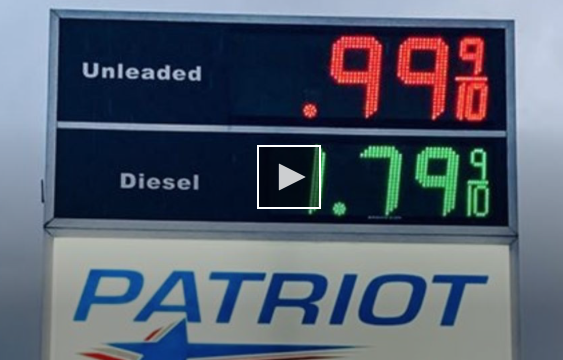
 Gas Buddy reports that the lowest price in California is ratcheting down daily – nearing the $2 level -$2.17 in Selma California today – compared to as little as $1 at a few stations in the Midwest and South, 99 cents in Oklahoma and Tennessee.
Farmers will be able tho save on diesel for their Spring planting season but they wont be cheering for any kind of world depression.
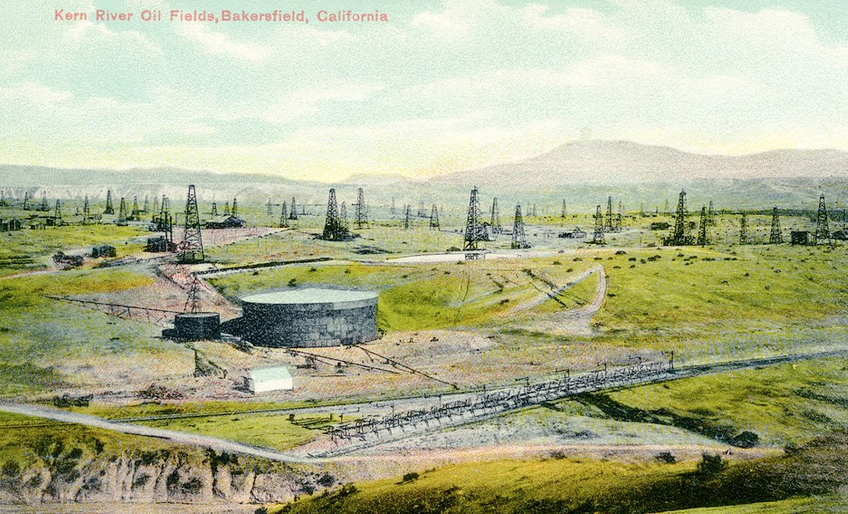
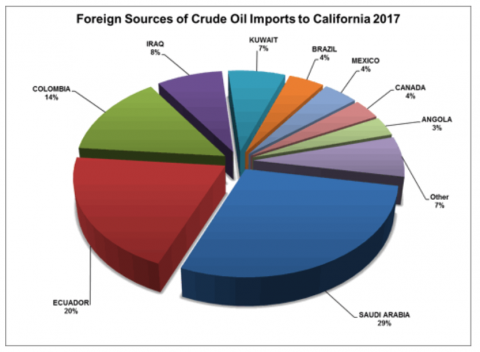
Kern oil is selling for $20 a barrel this week( lowest in decades) while Mexico’s crude is down to $14 and Canada’s western oil price has sunk to $5 a barrel. Meanwhile Saudi Arabia’s price war has likely bankrupted the US shale oil industry and threatens to make the US a net oil importer again. California already gets 29% of our oil from Saudi Arabia.
The collapse of energy prices is part coronavirus crisis combined with Saudi and Russian refusals to curb production.The competition has forced the suspension of a Shell project that Trump touted in Western Pennsylvania last summer to bring jobs to that state. Texas is in the same sinking boat.
 Politco reports that “ The crash is also estimated to knock out about half of all shale producers, according to analysts at Raymond James Inc., if prices remain at between $20 and $30 per barrel. (The price as of midday Monday was $22.73 per barrel by the standard West Texas Intermediate benchmark.) A price at that level would cost thousands of jobs and deal a serious blow to the vision of U.S. energy independence.
“There is no sugar coating it, U.S. oilfield activity will collapse with oil prices well below $30,” on the WTI benchmark, said analyst Praveen Narra of Raymond James in a market update published on March 23. “The pace of rig count declines is likely to occur at a pace we have not seen before.”
Worse, some industry executives say, Trump seems either not to recognize the threat or to be unwilling or unable to address it, touting instead his excitement over lower prices for consumers.
“Good for the consumer, gasoline prices coming down!” Trump tweeted on March 9, as the domestic oil price fell by 25 percent.”
Ethanol producers have that sinking feeling
With the Trump administration undecided on who to back in a closely watched court battle between the oil industry and the Midwest corn ethanol sector, prices for ethanol blended with gasol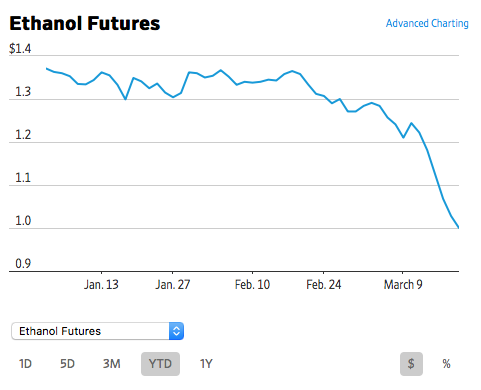 ine are following gas prices to the basement as well as to economic ruin.
Domestically, the Trump administration has granted waivers to petroleum refiners, allowing them not to follow federal mandates to blend ethanol into motor fuel. Now a court may limit those waivers.
Some ethanol companies (Poet) are shutting down and California-based Pacific Ethanol is hurting with its stock price down around 24 cents.
The US could help clear Mexican skies if they would buy US made ethanol but recently the Mexican Supreme Court ruled against the modification of a fuel rule that would have allowed higher ethanol content in gasoline, similar to content rules in the US, arguing that regulators exceeded their authority.
Distillers switch to hand sanitizers
Distillers including Tito’s Handmade Vodka are using their excess alcohol to make hand sanitizers, after federal regulators loosened restrictions on producing sanitizers amid a nationwide shortage reports the Wall Street Journal.
Carbon capture plan produces liquid fuel
Liquid fuels produced with renewable energy could be cost competitive with petrol and gasoline within the next two years, according to a new commentary published on the prospects of ‘direct air capture’ techniques that convert carbon dioxide into net zero emission fuels.
The prospects for cost competitive renewable fuels have been detailed by the founder and CEO of silicon valley start-up Prometheus, Rob McGinnis, in the academic journal Joule. Prometheus is a US-based company that is commercialising techniques for drawing carbon dioxide from the air and using it to produce liquid fuels.
“Recent breakthroughs in separations and catalysis, along with long-trend reductions in solar and wind electricity costs, have significantly increased the potential for cost-competitive renewable fuels from direct air capture (DAC) of CO2,” McGinnis says in the paper.
The “DAC” technique being developed by Prometheus captures carbon dioxide from the air and dissolves it in water. The process then uses a form of electrolysis to combine carbon and hydrogen together to produce a form of syngas.
The process, which effectively combines a form of carbon capture with the production of renewable fuel, could be a key tool in reducing emissions in the transport sector.

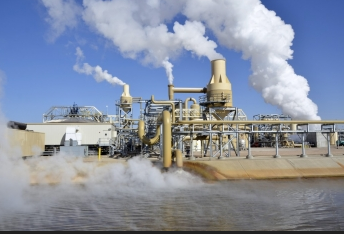 Lithium recovery projects awarded in May 2020 are designed to help reduce costs and environmental impact. They include:
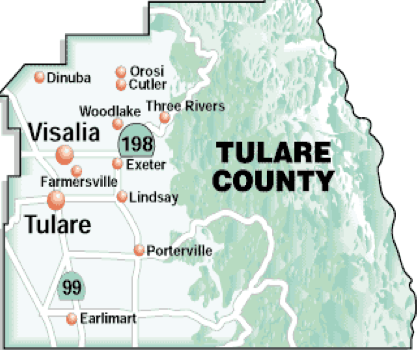 The Tulare County Board of Supervisors is in support of SB 1352 (Hueso) which would require California natural gas utilities to procure at least 20 percent of gas for residential and small-to medium-sized businesses from renewable resources. They approved a letter of support this week.

 A symbol of the time that oil wells covered large swaths of southern California, Rincon Island – off the south coast near Ventura- is about to lose more of its oil wells.The job should be complete by June 2021.



 The Gulf of Mexico and Caribbean waters have warmed to 88 degrees in some locations this month sending land temps soaring and increasing chances for violent storms, stronger hurricanes in coming months and flooding in the South and Midwest.Like last year farmers cant get into their fields. Last Friday, the state of Yucatan, Mexico tied its all-time high with 113°F in Motul…and on Sunday, Miami had its warmest April low on record: 81°F.


 California’s 10,000 gas stations are looking at a decline of 40 to 70% of the average amount of gas sold in April according to a Sacramento trade group.
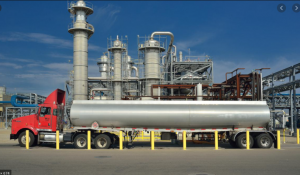 California-based Pacific Ethanol is on to ropes this month announcing in the past week they would look to restructure the Sacramento company after losses mounted during
 Rural Fresno gas stations are leading the way as gasoline prices continue
 Renewable milk cartons are here