
-April 3,2020-
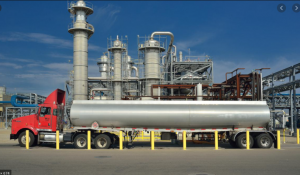 California-based Pacific Ethanol is on to ropes this month announcing in the past week they would look to restructure the Sacramento company after losses mounted during the coronavirus crisis.
In a Securities and Exchange Commission (SEC) filing March 30 the company said ‘We do not expect to have sufficient liquidity to meet our anticipated working capital, debt service and other liquidity needs unless we successfully restructure our debt, sell assets, experience a significant improvement in margins and/or obtain other sources of liquidity.”
With no sign margins might improve anytime soon, the SEC statement added “If margins do not promptly and sustainably improve from current levels, we may be forced to further curtail or cease production at one or more of our operating facilities.”
The company, the largest producer and marketer of low-carbon renewable fuels in the United States but is only the 6th largest producer with nine plants including 2 in California supplying the ethanol fuel blended with California gasoline.
The company noted the latest virus impact is not the only factor citing “significant adverse conditions throughout most of 2018 and 2019, and thus far into 2020, as a result of industry-wide record low ethanol prices due to reduced demand and high industry inventory levels.”
Plants in California include facilities in Madera and Stockton. There is one plant in Oregon and one in Idaho as well as 5 in the Midwest.
On an annualized basis they market nearly 1.0 billion gallons of ethanol and over 3.0 million tons of ethanol co-products on a dry matter basis.
In March, Pacific Ethanol secured a two-month deferral of principal and interest payments on its secured debt through May 20th, as the company works with its lenders to restructure its balance sheet and improve liquidity while continuing to pursue its strategic initiatives. To support Pacific Ethanol in these efforts, the company has engaged a Chief Restructuring Officer, Winston Mar, on a consulting basis. In addition, the company is on track to close the sale of its 74% ownership interest in Pacific Aurora, LLC to Aurora Cooperative Elevator Company, the definitive agreement for which the company signed in February.
In their investor presentation the company said they will idle at least 60%of their capacity.
Meanwhile, Pacific Ethanol says they are now focusing on alcohol production to be used in santizers and are doing everything possible to increase capacity to meet the uptick in alcohol demand.
The collapse of oil and gas prices has further impacted fuel ethanol margins as Saudi Arabia decided to flood the global market with crude has caused gasoline and, by extension, ethanol prices to fall to multi-decade lows. This happened at a time the supply of ethanol had grown to all time highs.
The trade war hurt ethanol exports at the same time.
Pacific Ethanol was founded in 2003 in Fresno by farmer and former California Secretary of State Bill Jones and Green Party member Neil Koehler.Their business model included extracting ethanol from the corn, and selling a byproduct of the extraction process, wet distillers grain–one of the most nutrient-rich cattle feeds available–to dairy farms in central California. It was ethanol’s capability of serving as a total or partial replacement for gasoline that prompted the federal government to encourage its use in the wake of the Arab Oil Embargo of 1973.
Legislation including the passage of the Clean Air Act in 1992, mandated the use of oxygenated fuels in certain areas, but the market for oxygenates quickly was dominated by another smog-fighting gasoline additive, Methyl Tertiary Butyl Ether, or MTBE, derived from natural gas and petroleum. At the turn of the century, however, MTBE began to lose its grip on the market. In 1999, some states began to ban MTBE’s use after it was discovered that the additive polluted groundwater and caused cancer in animals, prompting the Environmental Protection Agency (EPA) to recommend a national ban the following year.
As the outlook for MTBE soured, ethanol, including a derivative of ethanol, Ethyl Tertiary Butyl Ether (ETBE), stood as the only other commercially viable way to make mandated oxygenated fuel.
Pacific Ethanol, has claimed their renewable fuel helps to clear the air.“Ethanol a clear net benefit. As a fuel additive, ethanol changes the emissions profile of gasoline, creating a cleaner, safer motor fuel. Real-world evidence demonstrates that ethanol blending reduces municipal smog levels and cuts down on atmospheric concentrations of harmful toxins.” the company said.