Can’t beat them … join them!

Kern oil industry may join effort to remove greenhouse cases

From Bakersfield Californian

Screen Shot 2021-06-22 at 4.27.09 PMEnvironmental attacks on Kern County oil and gas production are increasingly being met with industry calls to move forward with carbon-burying technologies seen as helping the state achieve its climate goals while also creating substantial local employment opportunities.
The idea, voiced most recently by the new head of Bakersfield-based oil producer Aera Energy LLC, is that local oilfield operators have the expertise — and ideal access to vast geological formations — required to remove greenhouse gases directly from the atmosphere or industrial emissions and store it deep underground in a process called carbon capture and sequestration, or CCS.
At least one such project proposed locally is in design stages, and the company behind it, Santa Clarita-based California Resources Corp., announced last month it expects to accelerate its work with CCS technology using “a number” of depleted oilfields in California.

Scientists with the Lawrence Livermore National Laboratory have highlighted Kern’s CCS potential, as have leaders of the B3K economic development collaboration. But to date no such projects have begun construction in California, nor does there exist the regulatory or financial framework needed to support them.

BETTER ALTERNATIVE?
Aera President and CEO Erik Bartsch said in a newsletter sent out Tuesday that California policymakers should embrace CCS instead of banning hydraulic fracturing, the controversial oilfield technique better known as fracking, which Gov. Gavin Newsom recently ordered an end to statewide by 2024.
Bartsch asserted the oil industry has the engineering and project management skills needed to develop competitive CCS projects — assuming the state contributes appropriate regulatory and legislative support.
“Creating legislative and regulatory pathways to encourage this industry to develop a CCS hub in the Central Valley is a win/win for the state and its people,” he wrote.
Newsom’s office says it’s working on it. Asked for a response to Bartsch’s comments, the governor’s office affirmed CCS has a role in helping California meet its climate goals. But it also by email said the state needs to come to a better understanding of exactly where and how to proceed.
An interagency workgroup is working on coordinating different policy and regulatory efforts in support of CCS, Newsom’s office stated, as the California Air Resources Board works to address what role carbon sequestration might have in the state’s efforts to achieve carbon neutrality by 2045.
Among CARB’s considerations on the matter, it said, is folding CCS into California’s Low Carbon Fuel Standard, which forces oil companies to contribute financially or operationally to the fight against climate change.
CARB did not respond to requests for comment.

DIFFERENT FORMS
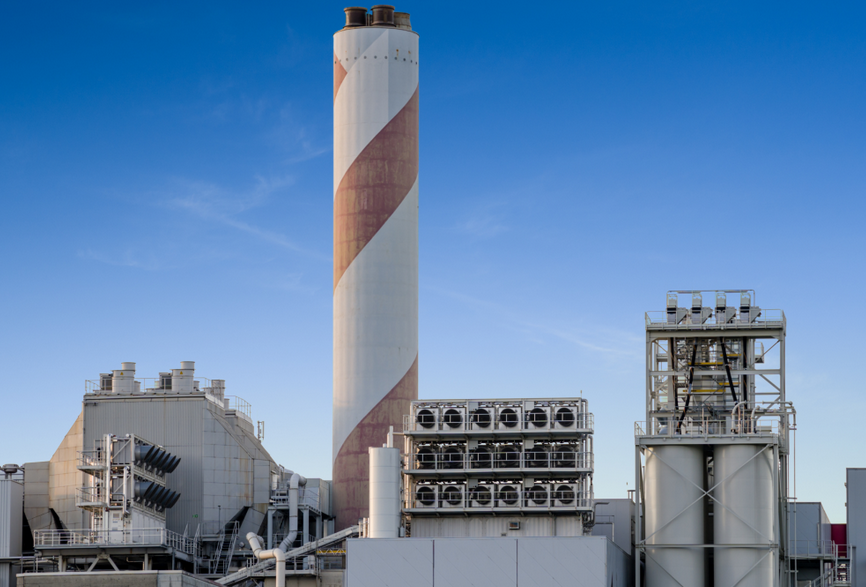
Carbon capture and sequestration can take different forms. It typically uses high amounts of energy to extract carbon dioxide from the air, or a specific waste stream, then turns it into a solid such as biochar or a liquid that can be stored underground.
CRC’s project proposes to retrofit the company’s 550-megawatt Elk Hills Power Plant with equipment allowing it to remove three-quarters of the CO2 produced at the site and bury it more than a mile underground. The company has estimated the project would bury up to 1.5 million metric tons of CO2 per year, the equivalent of taking more than 300,000 passenger vehicles off the road.
One aspect of the process that makes CCS so attractive in Kern, besides the availability of large reservoirs where carbon dioxide could be stored, is the way CO2 can be used to promote local oil production by making thick crude less viscous and therefore easier to extract.
CRC has said the project would generate nearly 3,500 jobs statewide and more than $200 million in taxes during its three-year construction period, plus 150 permanent jobs and $200 million in taxes over 20 years.
Another model proposed by proponents of CCS would suck carbon straight from the atmosphere. Still another would take so-called biomass such as agricultural waste and use a process called gasification to remove methane or hydrogen and then bury the leftover biochar, which is said to increase an orchard or field’s capacity to retain water.
AFFORDABLE SOLUTION
Scientists at Lawrence Livermore released a report early last year concluding California can essentially dispose of 125 megatons per year of carbon dioxide by 2045 through a combination of land management practices, waste material processing and CCS. Specifically noting Kern oilfields’ CCS potential, it said the entire effort would cost less than $10 billion per year, or less than half of 1 percent of the state’s economic output.
Leaders of B3K, a Brookings Institution-led effort that stands for Better Bakersfield & Boundless Kern, have also pointed out the local benefits of CCS, saying it would offer employment potential greatly exceeding that of solar- and wind-based renewable energy projects.
Aera, in an email separate from Bartsch’s newsletter statement, noted that the International Energy Agency and a United Nations panel on climate change have advocated widespread adoption of CCS for meeting the challenge of global climate change.
“As California aims to meet its climate goals,” it stated, “the state must adopt an all-of-the-above strategy that includes (CCS that incorporates industrial utilization of greenhouse gases) and facilitates the unique role that the state’s oil and gas companies can play in providing the capital and technological expertise needed to move these technologies forward.”

New pumped hydro around the world: Tried and tested long-duration storage tech makes comeback

from Energy Storage

By:Andy Colthorpe
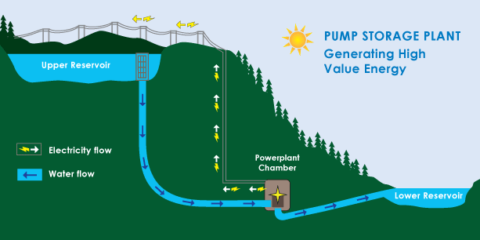
Screen Shot 2021-06-15 at 9.30.35 AMFor over 100 years, pumped-storage hydroelectric power (pumped hydro) has supported electricity consumption around the world. The principles of the technology are fairly simple, but ingenious: when electricity demand peaks, water falls from an upper reservoir into a lower reservoir, passing through turbines which generate power. The process is then reversed and water is pumped back up the hill during off-peak times when electricity is cheaper such as at night, or perhaps when there is abundant renewable energy such as solar, to drive the pumping.

Statistics vary a little from source to source, but at least 100GW of pumped hydro is thought to be in operation today and according to the International Hydropower Association (IHA) those plants can store about 9,000GWh of power in total. While lithium-ion dominates new energy storage installations, pumped hydro still represents more than 90% of the world’s storage of electricity for the grid and many of these facilities can enable several hours of low-emissions energy at a time.

That said, while the marginal economic and environmental costs of pumped hydro plants are relatively low, the development of new pumped hydro plants is greatly restricted by factors including the need for land and the ability to either find appropriate sites with large upper and lower reservoirs or to develop the land to add those bodies of water.

However, with the growing need to decarbonise the electricity system and accommodate higher shares of renewable energy, developers are seeking out opportunities to build new pumped hydro facilities. Here are just a few of the recent projects that Energy-Storage.news has come across — from projects at their earlier stages of development to those that are nearing shovel-ready status.

Uzbekistan

Regular readers of our sister site PV Tech will have noted that the central Asian state of Uzbekistan has become a hotbed of solar PV development over the past year or so. Government tenders and power purchase agreements (PPAs) have spurred massive projects for the likes of independent power producer (IPP) Total Eren and developer Masdar — which in April also broke ground on Uzbekistan’s first wind power plant.

State-owned hydropower producer and project developer JSC Uzbekhydroenergo (UGE) is also currently considering constructing a 200MW pumped hydro storage project in the Tashkent region of the country. Uzbekhydroenergo held meetings with French state-owned utility giant and power project developer EDF in April about the project, along with consideration of plans to develop floating solar PV systems on reservoirs.

Those discussions for what would be the country’s first pumped storage plant remain at an early stage, with the pair reaching preliminary agreements, ahead of the signing of a more formal Memorandum of Understanding (MoU), but UGE chairman Sanginov Abdugani said dialogue at meetings had been constructive.

“Uzbekistan’s hydropower potential is growing, and we want to work with international, best-in-class partners who can help us achieve an optimal use of Uzbekistan’s natural resources, boost energy efficiency and increase renewable energy’s share in our country’s energy mix,” Abdugani said.

United Arab Emirates

From the first in Uzbekistan to the first for the entire Arabian Gulf region, a 250MW pumped hydro plant is under construction in the Hajar Mountains of the United Arab Emirates (UAE), developed by the Dubai Electricity and Water Authority (DEWA). DEWA has been one of the more proactive Gulf state power companies in moving to adopt renewable energy, with Dubai targeting 75% clean energy in its electricity mix by 2050.

The project is being built at the Hatta dam, about 140km from the city of Dubai and will use about 880 million gallons of water dropped about 300 metres from an upper reservoir being built into the dam’s mountain. Water will be sent back up the hill using solar PV power generated from the massive 1GW Mohammed Bin Rashid Al Maktoum solar park which is also currently under construction.

It’s expected to go into service early in 2024 and technology company Hitachi ABB Power Grids said in late May that it is providing grid connection equipment and systems to ANDRITZ Hydro, the specialist hydroelectricity construction company building the facility. Hitachi ABB will supply AC excitation systems tech based on power converters.

Pumped hydro plants use turbines that can be reversible to act as motors, driving the pumping of water back up to the upper reservoir and Hitachi ABB’s systems will enable those pumps to operate at variable speeds to maximise efficiency. The tech company will also provide gear to connect the plant to DEWA’s 132kV transmission network.

California

Pumped hydro could provide a vital and significant share of the energy storage the US state of California needs to achieve its aggressive renewable energy targets and help ensure blackouts like that seen in August 2020 are not repeated, according to the developer of a 1,300MW pumped hydro plant with 18 hours of storage at the mountainous site of a former mining facility. The project would repurpose abandoned iron mining pits at the site into reservoirs.

Eagle Crest Energy, a developer planning the Eagle Mountain pumped storage plant in Riverside County filed comments with the California Public Utilities Commission (CPUC) regulatory authority in May. Eagle Crest argued that while the state has recognised it needs long-duration energy storage of several hours to integrate higher shares of wind and solar onto energy networks, California could be “painting itself into a corner” through regulatory processes which largely only consider batteries.

This is because large-scale infrastructure projects like Eagle Mountain which take longer do not appear to be part of state agencies’ procurement process consideration, targeting instead ‘Mid-Term Reliability’ — capacity which can come online within the next year to five years. Eagle Mountain has been in development since 2007 and approved federal approval in 2008, then a Federal Energy Regulatory Commission (FERC) license to operate and construct in 2014. It could be online by 2027, Eagle Crest Energy said and NextEra Energy Resources, one of America’s biggest renewables project companies, has said it is ready to construct Eagle Mountain.

However, although the project became one of the first pumped hydro plants to win FERC’s approval in over 30 years, the chances of Eagle Mountain becoming the US’ 25th such plant in operation currently hang in the balance. Local groups are concerned about the use of groundwater and environmental impact at the site, which is close to California’s Joshua Tree National Park, although Eagle Crest Energy founder Steve Lowe rejected those arguments in a 2020 interview with the Los Angeles Times. The project’s development now hinges on gaining CPUC regulatory approval.

Scotland

Scotland’s iconic Loch Ness, known for the mythical monster that may or may not live in its 22 square miles of water, looks set to be home to a different kind of large-scale inhabitant.

ILI Group, a developer of energy storage projects including grid-scale lithium-ion batteries as well as pumped hydro, said last week that proposals for a 450MW pumped hydro plant on the shores of Loch Ness have been approved by the Scottish government.

Consent was granted by the government Energy Consents Unit after nearly three years of deliberation, to an application made by ILI Group via infrastructure consultancy Aecom. The project, called Red John, will be worth about £550 million (US$774 million) and would create up to 700 direct and indirect jobs while supporting Scotland’s renewable energy growth.

“The Scottish Government has long been supportive of pumped hydro storage for its role in ensuring resilience in our electricity supplies, and for the tremendous opportunity it provides to unlock the potential of renewable energy and support Scotland’s net zero ambitions,” Scottsh cabinet secretary for net zero, energy and transport Michael Matheson said.

“Scotland is a leader in this field, with excellent hydro-electric power heritage built over the last century and this new scheme at Loch Ness will only add to that. As we add more renewable electricity generation across Scotland, investing in pumped hydro storage will be key to balancing our electricity demand with supply and keeping the system secure, as well as creating high quality, green jobs and enabling a green recovery from the COVID-19 pandemic.”

Matheson said Scotland’s government continues to call on the UK government to “take the urgent action required” to provide investors with revenue certainty and unlock investment in pumped hydro in Scotland, which he said has significant potential.

In a report published in March by industry group Scottish Renewables, the UK’s government was warned that climate change targets cannot be met without deployment of long-duration energy storage capacity, including pumped hydro. Indeed the national government already said in a white paper on energy in December 2020 that long-duration energy storage would be crucial, but did not propose any market mechanisms designed to target this deployment.

Australia

Energy-Storage.news reported in late May that Australia’s first new pumped hydro plant in nearly 40 years is set to go ahead, with developer Genex having achieved financial close on the project.

The 250MW / 2,000MWh Kidston Stage 2 facility in Queensland will cost about AU$777 million (US$600 million) in total, including the cost of associated infrastructure to connect the plant to the transmission network and to Australia’s National Electricity Market (NEM).

Construction on that project is set to be completed by 2024. There are at least two other large-scale pumped hydro plant projects in development in the country, Snowy 2.0 — which would increase the capacity of an existing pumped hydro plant to as much as 2GW / 350GWh and Oven Mountain, a 600MW / 7,200MWh project. Both of those are in the state of New South Wales.

India

Slightly old news now, but worth mentioning is Pinnapuram Pumped Storage Project, a pumped hydro scheme in India for which developer Greenko Group won a government tender which was considered the lowest cost solar-plus-storage project proposal in the world.

Awarded a tariff of US$0.054 per kWh, the project will provide power at peak times in the mornings and evenings. The project, in the state of Andra Pradesh, will combine 2GW of solar PV with 400MW of wind and 1.2GW of pumped hydro energy storage. Japanese financial services group ORIX Corporation invested about US$980 million in Greenko to acquire a 20% stake in the company in September 2020, while consultancy AFRY India signed a contract with the developer to provide design engineering services earlier in the year.

Read this Energy-Storage.news Guest Blog from March 2020, by Kowthamraj VS, — a ‘young professional’ at India’s national innovation agency NITI Aayog at the time he wrote it before moving on to pastures new — for some analysis.

As Kowthamraj VS notes in his blog, pumped hydro depends on finding the right specific site to work, and benefits from having local renewable energy capacity nearby with the right transmission infrastructure. If those criteria can be met, he said, the technology can be very attractive and could be an integral part of India’s renewable energy journey.

 

Kings County solar boom going ‘wall to wall’

Projects up number of battery storage units

-June 6,2021-
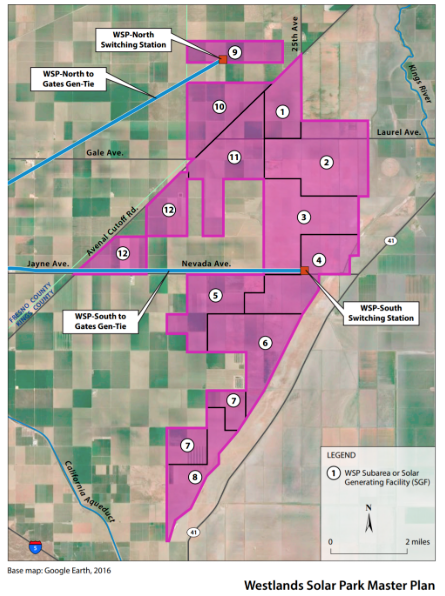
This month the Kings County Planning Commission will approve three huge but modified solar projects that will sprawl over the westside of the county flanking Highway 41 and the Avenal Cutoff – all part of the huge Westlands Solar Park project.

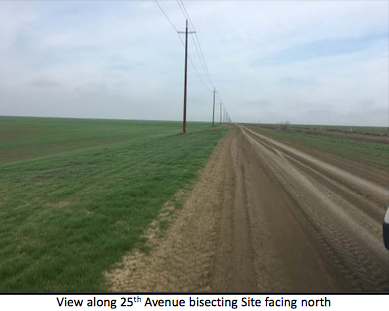
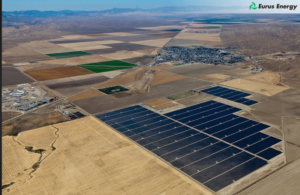
Westlands Solar Park (WSP) is a master planned solar complex covering 21,000 acres in west-central Kings County – that featureless landscape that looks like it was an ancient lakebed- because it was. The developers are covering this flat land with a sea of solar panels the will soon stretch ‘wall to wall’ along both sides of the Avenal Cutoff for miles between NAS Lemoore and I-5.

masterplan calls for 12 solar projects

The 2018 Westlands Solar Park master plan calls for a total of 12 solar power generating facilities to be developed in a period of 12 years. The installed capacity of each solar farm near the Fresno/Kings county lines is planned to be up to 250MW.

Already 6 of the 12 projects have, or are in the process, of being permitted- clustered near each other connected to the grid by a new tie-in line ( Gates Gen-Tie).

The 250MW WSP project called Aquamarine is expected to go on line this fall.

The three solar projects being heard by the planning commission are Westlands Grape Solar – a 250 megawatt alternating current solar farm the includes construction of an electrical substation and a large battery energy storage facility. Located on the north side of Nevada Avenue, the new solar farm is planned to be constructed over a 14-month period ,starting in mid-2022, with completion scheduled for mid-2023.The facility will include approximately 250 battery storage units, larger than other WSP projects in the past.

The other 2 projects are already approved but are increasing the number of battery storage units as the state calls for more of the units to spread the impact of solar generation to the grid into the evening hours

2. Westlands Chestnut Solar – The applicant is proposing to amend a previously approved Conditional use Permit to allow for an increase the area covered by battery storage units from approximately 2 acres to 6 acres and a central microwave communication tower up to 175 feet tall. The number of battery storage units will go from 44 to 150. The site is 24998 Nevada Avenue.

3. Westlands Blue Solar –The applicant is proposing to amend a previously approved Conditional use Permit and increase the permitted battery storage units from 84 units to 250 units covering 9 acres instead of 3 acres. The location is 25959 Laurel Avenue, Lemoore.

The Westlands Aquamarine project will sell 50MW to Valley Clean Energy Alliance, which executed a contract with WSP in early 2020. Valley Clean Energy is a locally-governed electricity provider for the California cities of Davis, Woodland, Winters and unincorporated portions of Yolo County.

“We believe Westlands Solar Park is ideally positioned to be a leader in California’s program to reduce the state’s carbon footprint and meet its Renewable Portfolio Standards targets. With Aquamarine advancing to full operation before year-end, we are realizing our vision for Westlands Solar Park to become a major clean energy provider as well as meeting a significant commitment in our company’s ongoing sustainability program,” said Avi Shemesh, co-founder and principal, CIM Group. “With Aquamarine and the future phases of Westlands Solar Park, we also are bringing clean energy jobs to the region and generating revenue for the local government and area businesses.”
.
“With the imminent completion of Aquamarine, we are in active discussions with numerous entities to supply the clean energy that is critical to meeting the short- and long-term goals for renewable energy — vital to improving communities,” Shemesh said.

Aquamarine recently entered into a 75-MW power purchase agreement (PPA) with Santa Clara, joining other off-takers Anaheim Public Utility, and is currently negotiating additional PPAs with other potential counter parties.

WSP has the capacity to grow to more than 2,700 MW of renewable energy at full buildout and the potential to provide clean energy to more than 1,200,000 homes.

old lakebed
old lakebed

Unlike other California areas targeted for solar like the Mojave desert, this tainted farmland in Kings County remains short on water and unusable for agriculture due to excess salt pollution.The big project has no opposition and has been even promoted by environmental groups for use of solar farms. The developer says the are” repurposing selenium-contaminated and drainage impaired farmland for the development of clean energy at WSP.”

31 solar projects approved

Impressively, 31 solar PV generating projects that have approved or pending Conditional Use Applications in unincorporated areas of Kings County, for a total potential generating capacity of 2,658 MW. To date, a total of 27 solar PV projects, with a total generating capacity of 1,828 MW, have been approved by Kings County. Of these, 24 solar projects have been completed or partially completed, for a total of 1,425 MW. The 3 remaining approved (but not yet constructed) solar projects have a total potential generating capacity of 403 MW. These include the 250 MW Solar Blue Project located adjacent to the northwest, the 150 MW Chestnut Solar Project located adjacent to the north, and the 3 MW Leo Solar Project located in southern Kings County. An additional four solar PV projects, with a potential generating capacity of 830 MW, have pending CUP applications with Kings County, including the subject 250 MW Grape Solar Project, the 250 MW Cherry Solar Project located across Nevada Avenue to the south, and the 130 MW Alamo Springs Solar Project and 200 MW Pelican’s Jaw Solar Project, both located in southern Kings County.

Still to came are at least 2 more WSP projects with names like Westlands Almond and Westlands Pomegranate.

Fresno & Tulare County Solar/Battery projects make news

-June 4,2021-
 
Fresno County is processing two new solar project applications, each near the Tranquility area part of a West Fresno county cluster of solar projects on mostly marginal ag land.
 
Screen Shot 2021-04-02 at 7.35.35 AMThe Scarlet Solar Energy Project is proposed by RE Scarlet LLC, a wholly owned subsidiary of EDP Renewables North America LLC.  They seek a Conditional Use Permit to construct, operate, maintain, and decommission a solar photovoltaic (PV) electricity generating facility and energy storage system and associated infrastructure. The Solar Facility would generate up to 400 megawatts (MW) of alternating current on approximately 4,089 acres in unincorporated western Fresno County.

 
Also Luna Solar would generate and store up to 200 megawatts alternating current on approximately 1,300 acres of land, primarily owned by Westlands Water District , north of the existing Tranquillity Solar Project.The project is owned by SF- based Clearway Energy.
 
The proposed energy storage system would extend the period of time each day that the Project could contribute PV-generated energy to the electrical grid. To interconnect the Project with the electrical grid, PG&E would extend the footprint of its existing Tranquillity Switching Station by approximately 200 feet to the north, and would construct a new, approximately 1,300-foot-long 230-kilovolt (kV) transmission line.
 
In Tulare County a permit for a new 80MW battery storage facility is being processed by the Planning Commission this month.The applicant is Viridity Energy Solutions of Philadelphia, PA  who wants to construct a 43,560 square foot structure and operation of an 80 MW/320 MWh Battery Energy Storage System.The site is at 21642 Avenue 24, Richgrove next toe SCE Vestal Substation. Viridity owns battery storage facilities across the US.
 
Advanced battery storage applications offer multiple benefits: greater system resilience, enhanced flexibility in managing peak demand, increased uptake of renewable energy, and greater overall efficiency.
 
Also being processed –Tulare 40 Generation Facility Project, a
Mitigated Negative Declaration for a 40 MW solar generation facility located on approximately 237 acres.The site is 5 miles east of the City of Tulare and is east of Road 152. The proposed Project would include the construction of an on-site substation, wiring and inverters, fence, access roads, and a new distribution interconnect power line along public road rights of way to the existing substation located approximately 2.5 miles southeast of the Project location at the Southern California Edison (SCE) Bliss Substation. The southern proposed development areas of the Project would potentially include a 5 megawatt-hour (MWhr) storage component in the form of batteries. The applicant is Coldwell Solar I, LLC 500 Menlo Dr. # 100 Tulare CA .

Chicken / Seaweed / permits / Amazon

-June 1,2021-

Visalia’s Downtown A&W to become Doc’s Chicken

Teen and Papa burgers are out but chicken will be in when the new owner of the Downtown A&W property reopens the place in the next few months.Nasser Yehya who owns Doc’s Drive-In on Main St has purchased the long time hamburger stand at 301 Willis and plans to put in a drive thru to make it easer for customers.

Screen Shot 2021-06-03 at 7.02.37 AMThe Van Horn family closed the landmark And W in the past few weeks with Craig Van Horn remembering that his dad purchased the place when her was just 8 year old in 1967. The eatery was a gathering spot for Visalia Cruise Night display of classic cars and also featured old fashioned car hop service.But Van Horn says in recent years sales were heading in the wrong direction.
Ironically the deal was made at the last Cruise Night event attended by the buyer.

Meanwhile,Mr Yehya’s Docs eateries are on the grow after his relocation from Acequia a few years ago to Main Street.Now He is working on a plan to establish new Dos’s restaurant in at the former AAA building on Mooney at Burrell.

Switching the menu from the staples at A&W will take a advantage of the popularity of chicken.USDA says per capita consumption of chicken has gone from 28 lbs in 1960 to near 100 lbs as of 2021-a 4X increase.

Seaweed cuts cattle methane burps

A small amount of seaweed in cattle feed could reduce methane emissions from beef cattle as much as 82 percent, according to new findings from researchers at the University of California, Davis. Methane is a potent greenhouse gas.

“We now have sound evidence that seaweed in cattle diet is effective at reducing greenhouse gases and that the efficacy does not diminish over time,” said Ermias Kebreab, professor and Sesnon Endowed Chair of the Department of Animal Science and director of the World Food Center. Kebreab conducted the study along with his Ph.D. graduate student Breanna Roque.

“This could help farmers sustainably produce the beef and dairy products we need to feed the world,” Roque added.

Over the course of five months last summer, Kebreab and Roque added scant amounts of seaweed to the diet of 21 beef cattle and tracked their weight gain and methane emissions. Cattle that consumed doses of about 80 grams (3 ounces) of seaweed gained as much weight as their herd mates while burping out 82 percent less methane into the atmosphere. Kebreab and Roque are building on their earlier work with dairy cattle, which was the world’s first experiment reported that used seaweed in cattle.

Story reported by California Ag Network.

Visalia building permits up 44% in 2021

The value of all permits in Visalia so far in 2021 is up 44% from the same 4 months a year ago.City records show permit values in excess of $88 million last year compared to $127 million so far in 2021. The number of new home permits is up 11%,multi-family units number 106 so far this year vs just 6 units this time last year. New commercial projects number 19 this year compared to 11 this time a year ago. New commercial permits value is $38 million so far this year vs $25 million in 2020.

Amazon posts soaring sales

Few companies have benefited from the pandemic-fueled surge of online shopping as much as Amazon. Its first-quarter results showed the company’s business continues to be buoyed by the pandemic, with sales soaring 44% year over year to $108.5 billion.-WSJ

Fresno & Tulare County Solar/Battery projects make news

Four projects move forward

-May 7,2021-

Screen Shot 2021-05-09 at 7.29.20 AMFresno County is processing two new solar project applications, each near the Tranquility area part of a West Fresno county cluster of solar projects on mostly marginal ag land.
The Scarlet Solar Energy Project is proposed by RE Scarlet LLC, a wholly owned subsidiary of EDP Renewables North America LLC.  The seek a Conditional Use Permit to construct, operate, maintain, and decommission a solar photovoltaic (PV) electricity generating facility and energy storage system and associated infrastructure. The Solar Facility would generate up to 400 megawatts (MW) of alternating current on approximately 4,089 acres in unincorporated western Fresno County.

Also Luna Solar would generate and store up to 200 megawatts alternating current on approximately 1,300 acres of land, primarily owned by Westlands Water District , north of the existing Tranquillity Solar Project.

The proposed energy storage system would extend the period of time each day that the Project could contribute PV-generated energy to the electrical grid. To interconnect the Project with the electrical grid, PG&E would extend the footprint of its existing Tranquillity Switching Station by approximately 200 feet to the north, and would construct a new, approximately 1,300-foot-long 230-kilovolt (kV) transmission line.

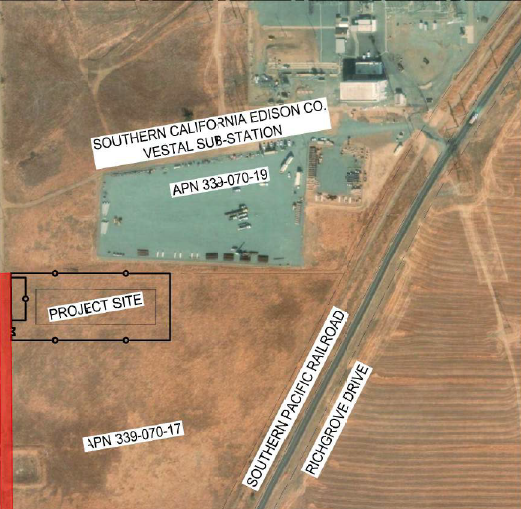
Screen Shot 2021-05-09 at 5.40.27 AMIn Tulare County a permit for a new 80MW battery storage facility is being processed by the Planning Commission this month.The applicant is Viridity Energy Solutions of Philadelphia, PA  who wants to construct a 43,560 square foot structure and operation of an 80 MW/320 MWh Battery Energy Storage System.The site is at 21642 Avenue 24, Richgrove next toe SCE Vestal Substation. Viridity owns battery storage facilities across the US.

Advanced battery storage applications offer multiple benefits: greater system resilience, enhanced flexibility in managing peak demand, increased uptake of renewable energy, and greater overall efficiency.

Also being processed –Tulare 40 Generation Facility Project, a

Mitigated Negative Declaration for a 40 MW solar generation facility located on approximately 237 acres.The site is 5 miles east of the City of Tulare and is east of Road 152. The proposed Project would include the construction of an on-site substation, wiring and inverters, fence, access roads, and a new distribution interconnect power line along public road rights of way to the existing substation located approximately 2.5 miles southeast of the Project location at the Southern California Edison (SCE) Bliss Substation. The southern proposed development areas of the Project would potentially include a 5 megawatt-hour (MWhr) storage component in the form of batteries. The applicant is Coldwell Solar I, LLC 500 Menlo Dr. # 100 Tulare CA .

Report tracks progress to cut dairy emissions

-May 7,2021-

Last week, the Tulare County Board of Supervisors heard a report on progress in cutting dairy cow and cattle emissions that cause particulate pollution and generate greenhouse gases.

Tulare County is monitoring their dairies in an annual report being done under a settlement with environmental groups in 2019.

Screen Shot 2021-05-05 at 8.59.34 AM Western MillingThrough 2019, the report says emissions are down 16% from 2013 as a result of a smaller animal herd, management efforts and installation of technology that is capturing manure-based gases. Co2-based emissions were 6.3 metric tons which was 16% less than tonnage measured in 2013. It is also 16% of the tonnage reduction target for 2023 under the state Climate Action Plan.
Not yet measured are the expected benefits to CDFA’s investment that matches dairies funding to install digesters at an impressive number of Tulare County dairies that by the latest count number 55 digesters at 52 dairies as of April 13, 2021.CDFA has contributed more than $80 million out of a total cost of $236 million for these projects.As of now, just 15 digesters are operational and 36 are under construction.

The report notes that once the fifty-five Digesters are all operating for ten years, the Greenhouse Gas (GHG) reductions will total 9.5 million metric tons- about 700,000 metric tons reduction per year or 82% of the 2023 goal.

Fifty-five dairy digesters and sixty-four solar projects

Besides this investment in dairy digesters, dairies are cutting greenhouse gases building 58 solar projects at local facilities and other measures including thermal hot water systems and alternative manure management programs. By 2020, solar projects are said to increase to 64 helping to reduce greenhouse gases.

The county’s dairies are producing more milk with fewer animals. In 2013 the number of animal units was 741 thousand compared to 707 thousand in 2019.

Capturing methane at digesters allows it to be piped to a central station and cleaned up to become renewable natural gas for transportation.

California is the nation’s biggest dairy-producing state with Tulare and Kings counties among the top producing counties.The industry is trying to reduce its overall greenhouse gases by 40 percent by 2030 and 80 percent by 2050. A 2016 law set in motion the current progress with the state offering help to make it happen.

Critics of the programs say the state is propping up large dairies instead of promoting smaller, more sustainable operations.

Others suggest giving up milk and meat.”Cutting out meat and dairy greatly helps the planet, says new research. Avoiding meat and dairy is one of the best ways to reduce your environmental impact, according to new analysis. Avoiding meat and dairy is one of the best ways to reduce your environmental impact,” according to one analysis.

Local feed company delivers with renewable fuel

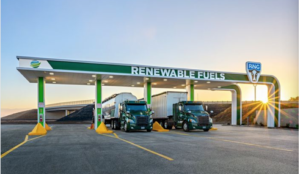
It’s full circle. Biogas from local dairy farms is being pumped into the fuel tanks of feed trucks from Western Milling, based in both Hanford and Goshen, that return to the dairy to bring feed. Late last year, Western Milling opened their Clean Natural Gas station serving customers as well as fueling 33 company-owned trucks.The station is located right off Highway 99 at the Betty Drive interchange. The company says “Our new trucks are fueled with renewable natural gas that can virtually eliminate smog-forming pollutants and reduce greenhouse gas emissions linked to climate change.” Western Mining offers a employee stock-ownership plan.The company plans to have a CNG truck fleet of over 40 trucks by mid-2021-75% of the total fleet. As more dairy digesters open. Western Milling says they will “continue to source renewable natural gas from their local dairy partners” says founder Kevin Kruse.

 Valley Pacific Petroleum buys 40 acres in Visalia Industrial Park

Plans renewable fuels trans-loading from rail

Pacific Ethanol selling Valley plants

New firm expected to convert Madera plant to renewable diesel

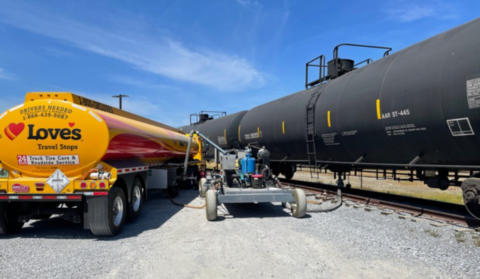
-May 3,3021-Valley Pacific Petroleum will bring in renewable diesel fuel as well as biodiesel by rail to the Visalia Industrial Park later this summer to supply the local region more directly, says CEO Nathan Crum.

Screen Shot 2021-04-30 at 10.24.13 AM
The Stockton-based company recently purchased 40 acres from the Heller Co –  two parcels north of Goshen Ave and west of Shirk. The property has a rail spur and the company will set up a trans-loading facility to put the fuel on trucks for delivery to customers in Tulare County.

Crum says some fuel comes from California but most is shipped in from out of state. Valley Pacific has a number of card lock facilities in the area including one across the street on Goshen Ave.

Crum says instead of trucking the fuel from Fresno he can bring renewable fuel into Tulare County in volume by rail more cheaply and help the region’s air quality. As more users put renewables in their tanks, Crum says he promises residents will see “a significant air quality improvement here.” A common fuel is 20% biodiesel, used by trucking firms and by farmers to meet air quality requirements.

Valley Petroleum is also a fuel hauler for Chevron who is modifying their El Segundo plant to make more renewables as the state moves away from petroleum products.

“The times are changing and we are changing with it” he vows.

Crum notes that another company in the renewable business, Seaboard Energy, just announced the purchase of the Pacific Ethanol plant in Madera and will supply diesel renewables to customers nearby.

Seaboard is expected to retool the Madera plant to make renewable diesel products like they are doing in other Midwest locations.

Last year, Sacramento based Pacific Ethanol idled ethanol plants in Magic Valley, Idaho, Stockton, California and Madera and said they would sell or repurpose those three idle plants as part of its strategic alignment and new business focus. The company said any proceeds from the sale of the assets will be used to reduce debt, invest in core operations, or for general corporate purposes.

Then last October, they announced a strategic realignment to focus on specialty alcohols and essential ingredients and away from manufacturing ethanol.They renamed the company Alto Ingredients.

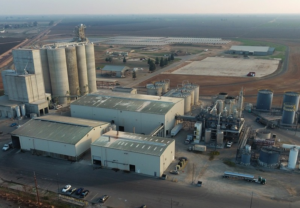
Madera PE plantSeaboard will pay $28.3 million- $19.5 million in cash and $8.8 million in assumption of liabilities. The sale of the 40 million gallon per year facility is expected to close in the second quarter of 2021.
Pacific Ethanol launched their company with much promise in 2005 from Fresno and was led by former Secretary of State Bill Jones and the Koehler brothers. But the ethanol business was a tough one to make a profit in and then the pandemic shut down many plants including Pacific Ethanol’s facilities.

Making renewable diesel

Seaboard Energy California is part of Seaboard Energy, a division of Seaboard Foods and a wholly owned subsidiary of Seaboard Corp.

Seaboard Energy also this week announced it is building a renewable diesel plant in Hugoton, Kansas, US. The facility is being built at the former Abengoa ethanol plant site that was purchased in February 2019. Since that time, Seaboard Energy has recommissioned portions of the idle assets while simultaneously building the greenfield renewable diesel production facilities.

Seaboard Energy said it is developing a greenfield fat and oil pre-treatment plant, hydrogen plant and renewable diesel plant on the 800-acre site in Kansas. The site also is being used to blend and ship biodiesel from Seaboard Energy’s other biodiesel plants located in Guymon, Oklahoma and St. Joseph, Missouri.

Once construction is complete, the plant will have the capacity to produce 85 million gallons of renewable diesel annually along with the 8.5 million gallons of renewable naphtha. The renewable fuels will be primarily derived from local animal fats and vegetable oils.

California largest renewable diesel supplier, Bakersfield-based Crimson Renewables claims that CARB data indicates that biodiesel provided over 41% of California’s total reduction of 47.1 million metric tons in climate-changing gases from fuel use, more than any other fuel, and it has reduced emissions of toxic pollutants such as those that cause smog and make it difficult for many Americans to breathe. Moreover, the federal Environmental Protection Agency says that domestic biodiesel reduces carbon emissions up to 86% compared with petroleum.

Kern County has seen interest from investors in bioenergy projects says the Bakersfield Californian.

“Four new bioenergy proposals came to the attention of the Kern Economic Development Corp. in the last half of 2020, joining four other prospects under active consideration. Most of the projects would employ more than 100 workers. One would dwarf the others with as many as 1,390 jobs across 100 to 200 acres”

One is Global Clean Energy. ”Last year Torrance-based Global Clean Energy Holdings Inc. bought the former, 67,000-barrel-per-day refinery on Rosedale Highway and announced a $365 million project to reopen the plant by early 2022 with about 100 employees producing 10,000 barrels per day of biodiesel from cooking oil. It said the refinery will later make the product from a ground-cover plant called camelina.”

Put Solar Panels on California Aqueduct – UC Merced

-April 2,2021-

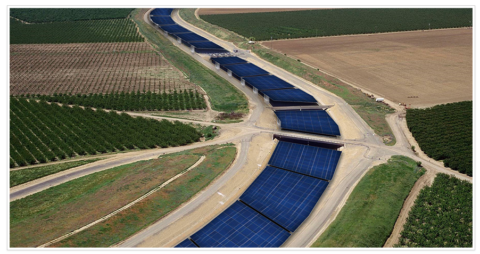
Screen Shot 2021-03-31 at 4.20.28 PMResearchers from UC Merced found the benefits of covering California’s canal system in solar panels would greatly outweigh the cost, bringing with it a bounty of clean energy and water savings.California has almost 4000 miles of canals the could be covered with solar panels producing an enormous amount of clean energy every year, and slow the evaporation of valuable water.
That includes the California Aqueduct that spans 444 miles from Contra Costa County in the Bay Area, through the Central Valley, down to Los Angeles County.

The cost could be competitive with ground-mounted installations  considering there would be no land costs.  Water saved from evaporation is also crucial, as California cities and farmers perpetually thirst for more. Just 2400 feet of canal could produce one megawatt of power. One megawatt of solar energy is enough to replace 15-20 diesel-powered irrigation pumps in California’s Central Valley, an agricultural region with notoriously bad air quality.

UC Merced photo

Attachments area

Big jump in solar/offshore wind and battery storage needed to reach 100% renewables in California

-March 20,2021-

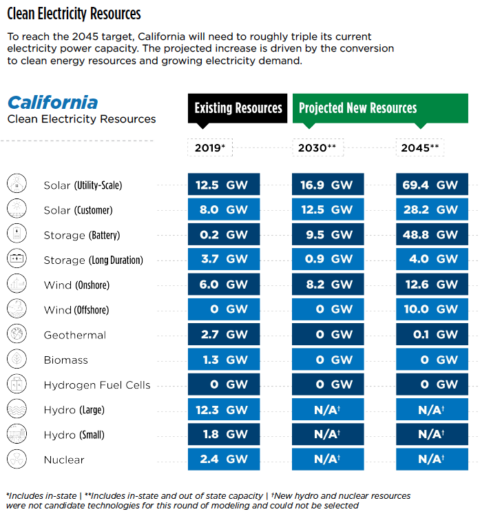
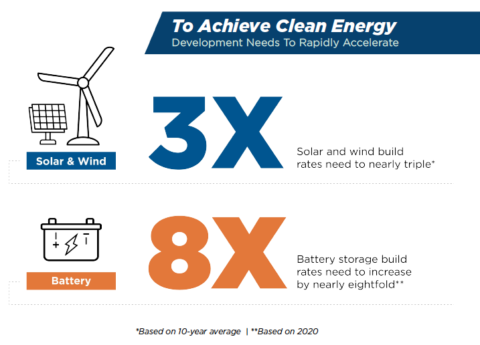
A new multi -jurisdiction report suggests 100% renewable energy is possible in California by 2045. To get there , the state needs to triple development of promising technologies including offshore wind, much more solar and a great leap in battery storage along with carbon capture. It points to the need to develop 10 gigawatts of offshore wind.

The California Energy Commission (CEC), California Public Utilities Commission (CPUC) and California Air Resources Board (CARB) on March 15 released the first joint agency report and a summary document examining how the state’s electricity system can become carbon free by 2045.

Here is the breakdown

Screen Shot 2021-03-20 at 7.31.06 AM

The report adds that investing in theses technologies will benefit California’s economic development

“California’s policies have spurred innovation and created markets for renewable energy, energy efficiency, energy storage, low-carbon fuels, and zero-emission vehicles. The state is a leader in patent registrations across all major clean technology (cleantech) categories and California’s companies have received more than 50 percent of all U.S. venture capital investment in cleantech.”

Among the report highlights

• California will need to sustain its expansion of clean electricity generation capacity at a record-breaking rate for the next 25 years. On average, the state may need to build up to 6 gigawatts (GW) of new renewable and storage resources annually. By comparison over the last decade, the state has built on average 1 GW of utility solar and 300 megawatts (MW) of wind per year. Over the next three years, electricity providers regulated by the CPUC will add another 8 GW of clean energy resources.
• In addition to social benefits such as less air pollution and improved public health, transitioning to a carbon-free electric system will also create thousands of jobs such as manufacturing and installing wind turbines and solar panels and developing new clean energy technologies.
• Modeling of the core scenario for achieving 100 percent clean electricity showed a 6 percent increase in total annual electricity system costs by 2045, compared to the estimated cost of achieving 60 percent renewable electricity by 2030.
With a need for 10,000MW of onshore wind off the California
coast –  developers identifying the Central Coast are already lining up much of that with
the state agency the California ISO – that approves future
connections to the state grid. The CAISO has listed at least
3500MW off the Diablo Canyon coast that are in a
queue that could come on line in the next few years as Diablo
Canyon nuclear power plant is retired by 24/25. Offshore wind
could utilize the same transmission lines now in place onshore
heading inland from Morro Bay as well as Diablo Canyon. Over 1000mw of battery storage is in a queue as well.

Screen Shot 2021-03-20 at 8.40.22 AM