Drought Does Not Slow Salmon Numbers – Milk, Strawberry Or Walnut Production

Despite Drought – Optimism For Central Valley Salmon Returns In 2014
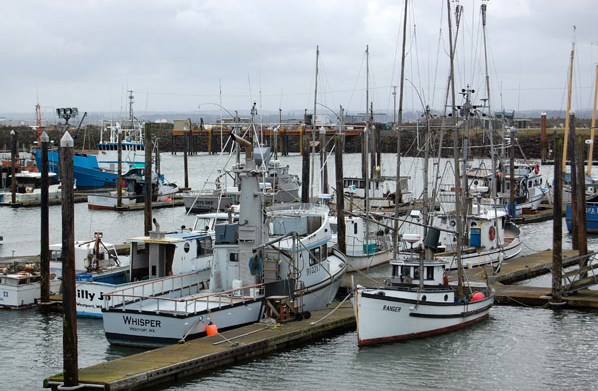
Screen Shot 2014-02-24 at 5.32.24 PMA recent Capital Journal column in the LA Times again cites an oft mentioned “decline” in salmon runs blaming it largely on the construction of dams, big pumps, and diversion of river water to grow crops instead of letting it flow to the ocean in large amounts.

But even in this dry year,as well as record drought in 2013 ,the  expected salmon abundance remains the biggest in a decade.

Sacramento River salmon have returned to spawn on the river they were born in, their numbers estimated last year at 405,000 – up from 2007 through 2009 when just 23,000 fish returned, In those years when under 100,000 fish returned for 4 years straight – there were predictions the iconic fish was about to go extinct.

But fed by improved ocean conditions as well as cooperation to improve on land habitat and flows, Chinook salmon returning numbers have improved since then and in 2014 despite the drought, an estimated 320,000 fall Chinook is the working number estimate by the Pacific Fishery Management Council. “We should have no trouble making our goal of 122,000 to 188,000 fish returning” says agency spokesman Mike Burner.

“The fish in the ocean who will return in 2014 are not affected by the drought for now, says Jennifer Simon of the  California Fish and Wildlife Service,a member of a technical advisory group to the PFMC.  The drought could affect young smolts who this Spring will make their way to ocean and require river water flows as well as returning adults this fall.

While the Sacramento run looks similar to last year, the Klamath run will be down some expects Simon.That may require the fishery council push for tightened fishing regulations on the Klamath. Exact estimates will be posted on the fishery agency website in about a week says Burner.

Despite Drought California Winter Strawberry Production Up 45%

California has produced 17.45 million flats of strawberries this year compared to just 12.04 million flats for the same period – February 20 of last year. That’s a 45% increase with info from the National Berry Report.

The nation’s total supply of strawberries remains about the same at 42 million flats but Florida’s  totals are way down this year from 2013. As of February 20,2013 20.3 million flats were picked in Florida  compared to 12.8 million over the same period through Feb 20, 2014.

A recent news story says “Cool weather in Florida has hampered production of strawberries in the state. With less fruit this season, growers are hoping good prices hold to make up for less production.

“Production is just beginning to pick up right now, but volume has been very low,” said Bob Hinton of Hinton Farms Produce. He cited unusually cool weather as the primary reason for lackluster production, and he estimated that this season’s crop could be as much as 40% smaller than last season’s crop. While volume has been down, he noted that quality of fruit has been good, which, along with lower volumes of fruit, has made for strong prices.”

Meanwhile despite the drought California has had good growing weather for strawberries, the most popular fruit with the public.

Mexican growers have also increased their output by more than 2 million flats as well as both California and Mexico make up for lost production in Florida.

California has over 39,000 acres of strawberries under production including 9000 acres in the Santa Maria /SLO area – about 27% of the states acreage.

Milk Production in California Up 4.5%

Despite dry times California  dairymen  have  increased  milk production in January by 4.7%. While there is  a bad drought in the state milk producers import most of their corn for feed  from the Midwest which is not in a drought. Milk producers are enjoying record high prices in 2014 and not about the step on the brakes.

Walnut Farmers Plant 15,720 Acres Of Trees

Despite worries about future water supply Central Valley walnut farmers have planted some 15,720 acres of walnut trees in 2013, up from 11,310 acres in 2012 says USDA. With prices exceeding $2/lb and strong export demand farmers are looking to keep the walnut industry growing. Their bet – there will be enough water for them

Around The Valley…..County Could Pull Out Of EDC,Visalia May Buy Street Lights,More

City of Visalia May Buy Street Lights From SCE

There are some 6200 street lights in the city limits of Visalia and it  cost the City $850,000 every year paid to SCE to rent and maintain them. Now the Visalia City Council is looking to buy the system and maintain it themselves for what they say could be good savings. Cost is expected to be in the $4 to 5 million range after negotiations with Edison.
“The savings could also potentially fund other system upgrades such as replacing the downtown series circuits and an energy efficiency retrofit project to convert all of the streetlights to light-emitting diodes (LEDs)” says a staff report. One Southland city put in LEDs along their city streets 6 years ago and has yet to change a light bulb.

Supervisors To Discuss Pulling Out Of Tulare County EDC

Will they stay in or pull out of the Tulare County Economic Development Corporation?

The Board of Supervisors is expected to discuss that hot topic next Tuesday as they wrestle with several options.”I want to hear what the rest of the board thinks” says Phil Cox, chair of the board.”I have been unhappy with with the Tulare County EDC for some time. Right now I am leaning toward a reduced funding level instead of puling out altogether.” The County spends around $70,000 annually to fund the organization who is also funded by municipalities and corporate interests.

SolarCity Will Power Up WWT Plant,Corp Yard

Under a Power Purchase Agreement submitted by SolarCity, the City of Visalia will contract with the publicly traded company to design, purchase, install and maintain a 1 MW solar facility at the wastewater treatment plant. The City will pay SolarCity just under $1.1 million and will receive all electricity produced by the facility for the next 20 years, with a guaranteed minimum production of electricity. The City will pay 2.2 cents per kilowatt hour compared to the City’s current SCE rate of about 10.4 cents. The 1 MW solar project has a payback period of 4 years with a net savings of over $5.6 million during the 20 year contract period.
In addition Solar City will submit a plan to build various solar panels at the city corporation yard . The company came with a good recommendation from Visalia Unified who had SolaCity build a half dozen arrays here.

SolarCity was the busiest residential solar contractor in the county last year with about 450 homes refitted with solar – about 40% of all  home solar projects in Tulare County.

Solar To Power Firebaugh Desal Unit

Panoche Water District will expand its pilot solar desalination project. SF-based WaterFX has installed a solar-powered desalination system to treat agricultural drainage water,producing almost 500 gallons of clean water per hour. Now the Firebuagh water district will ramp the system to produce  2,200 acre-feet per year. Resulting salt brine is dried and sold for various products

Homes Sales In Tulare County

New home sales in Tulare County in January numbered 41 compared to 34 in January 2013. Meanwhile existing home sales declined to 214 from 302 in January 2013. However the median sales price for an existing home climbed nearly19% to just under $145,000 compared to $122,000 a year earlier.

Big Canal May Deliver No Water To Tulare Co & Valley This Year

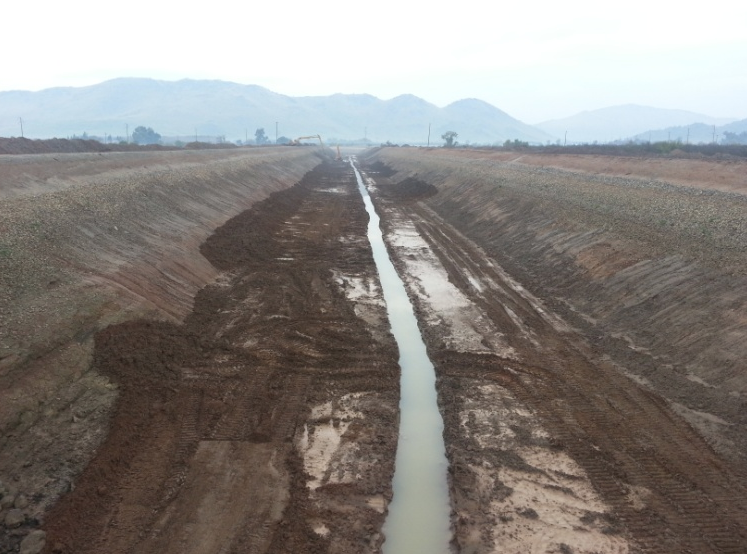
Empty Friant Kern Canal? Photo is from recent dewatering effort on canal
Empty Friant Kern Canal?
Photo is from recent dewatering effort on canal

With the announcement Friday by the US Bureau of Reclamation estimating they can deliver only 336,000 acre ft of water to the San Joaquin Exchange Contractors due to the drought,those contractors will now likely make a call for San Joaquin River this year to make up for the low volume.

In 1939, the so-called Exchange Contractors around the Los Banos area agreed to ‘exchange’ their San Joaquin River supply for water delivered by the federal government from north of the Delta. The agreement calls for 650,000 acre ft of water in a critical dry year like this one.

In a letter dated February 15, the Bureau’s regional manager Michael Jackson says they can promise just 336,000 acre ft based on Feb 1 conditions. “Reclamation can allocate 40 percent… contract entitlement at this initial stage of the water year” says the letter to the Exchange Contractors.

“That will mean the Exchange Contractors can call on San Joaquin River stored behind Friant dam” says Visalia water consultant Dennis Keller. But according to Keller the Bureau estimates there is just 94,000 acre/ft of Class 1 water available above Fraint Dam so far this year.
Precipitation in the upper San Joaquin has been less than some parts of Northern California that were hit with wet storms in the past two weeks.

That would leave Friant Water District contractors along the east side of Fresno Tulare and Kern Counties with a “zero supply“ this year, says Keller.

“We have thousands of acres of trees and vines that are at risk” confirms general manager Ron Jacobsma of Friant Water Users. The district has 1 million acres of fertile farmland dependent on the canal.

Biggest Loser

It is the largest citrus, dairy, nut and grape growing region in the world. With billions of dollars invested a zero supply of water could turn this place from a Garden of Eden into the Biggest Loser.

Jacobsma says some of the water stored at Millerton Lake needs to be retained to satisfy riparian contracts as well as set some aside for towns like Orange Cove and Lindsay for drinking water use. They need to save enough,about 40,000 acre ft , to be kept in the 152 mile Friant Kern Canal to pressurize it. Besides that, there are system losses with stored water.

In any case with the Exchange Contractors being 300,000 acre feet short and less than 100,000 acre ft available from Millerton – Friant is long way from having water to deliver to its 15,000 farmers this year.

“First we need several good storms in both northern California and in the San Joaquin watershed” to allow local contractors to keep some water that falls above Fresno. There has been better storm activity in northern California in the past two weeks.

“Even if Friant sends 100,000 acre ft of stored water to the Exchange Contractors you are looking at a 40% loss as it moves down the river” notes Dennis Keller. They would end up with far less.

Jacobsma says they are doing all they can to use alternative supplies this year with 2 south Valley Friant districts pumping about 40,000 acre/ft of banked groundwater back into the Friant Kern Canal to use later in the season when they really need water. “They are paying to run the canal backwards.”

Jacobsma says federal and state authorities must allow more export of water south when there is extra water like it was during those good storms recently. ”We got about 5000 acre/ft pumped south but the enforcement of the Endangered Species Act shut that down “ says Jacobsma

Jacobsma was among 15 ag leaders to meet with President Obama last week spending some time with Ag Secretary Tom Vilsack  to plead their case for increased money for infrastructure to store and move water and lobbying on lifting pumping restrictions south of the Delta.

Jamcobsma point out that Fraint lost hundreds of thousands of acre feet water “that spilled in 2010” to the ocean because of lack of storage that could be there now for years like this.

Lobbying Effort

Regarding the Endangered Species Act’s affect on pumping restrictions Jacobsma argues that the President could issue an executive order to temporally waive enforcement to allow the pumps to operate when there are good flows.

This would be the first time ever that a state drought has meant there was not enough water to deliver to the Exchange Contractors and clearly the first time that the Friant Kern Canal did not operate since it was built in 1951.

The government did allow the saving of 20,000 acre ft in Millerton that will not be sent down the river this year for restoration purposes and it seem clear the restoration effort will be postponed as the state struggles with record low rainfall.

Affordable Care Act Spurs New Primary Care Clinics Across Tulare County

Screen Shot 2014-02-18 at 8.09.48 AMFebruary 18,2014
New health clinics are either in development or already under construction in Tulare County’s rural areas  -likely do to more people having access to health insurance.

In a scramble to serve areas of the county that historically have had few options for medical care, activity is brisk.

New clinics underway include 2 facilities in Dinuba, in Tulare, 2 in Earlimart, 1 in Richgrove, 2 in Woodville and in Terra Bella in the south part of the county spearheaded by  area non-profits or hospital organizations.

Already, Federally Qualified Health Clinic – Family HealthCare Network (FHCN) has 14 clinics scattered across Tulare County with one each in Fresno and Kings Counties.The organization recently opened a new school-based clinic in Terra Bella, the first in this low income community.

Now another non-profit – Tulare Community Health Clinic is building a clinic in Woodville  a town already targeted by Tulare Regional Medical Center (TRMC) for a rural health clinic. TRMC is also building is a rural clinic in Earlimart.

Visalia-based Kaweah Delta is building a new rural clinic in Dinuba that is expected to open later this year. Adventist Health already has a new rural clinic in the community and there is also a non-profit, Alta Healthcare Clinic – there for years.

In Lindsay,TRMC,Kaweah Delta and others have clinics in town.

Back in Visalia,Kaweah Delta was shot down by the state late last year on their application to build a rural health clinic in the community because, the state said, Visalia no longer qualified as rural.

Still Kaweah Delta has rural clinic in Woodlake,Exeter and Lindsay where resident physicians under their new Graduate Medical Education program will practice.

Looking to cover territory not far from Kern County, Delano Regional Medical Center has contacted Tulare County saying they want to build 2 hospital-affiliated rural clinics in Earlimart  and Richgrove.

“Certainly the Affordable Care Act is a big driver to expanding primary care” says FHCN president Kerry Hydash. ”Any time we can bring in more primary care physicians to the area – the better.“

She says the difference is that FHCN serves people without insurance and rural health clinics do not.”My opinion is that all the health care providers need to work together.”

Historically,Tulare County has more of its population in the MediCal program than any other county in the state but those patients have had a hard time finding doctors who accept the insurance.There are already too few physicians to serve the insured population say sources.In 2011 Tulare County was 44th out of 58 counties in physicians per population.

Hydash adds that hospitals gain from more primary care options since it does not clog up their emergency rooms. People who get primary care are less likely to show up at an ER deathly sick.

FHCN has been expanding too adding pharmacies and dental services to some of their clinic sites.

In Visalia FHCN is under construction on their new Oak St complex but Hydash says unlike earlier plans,they are keeping their Bridge St office open for same day visits.

Visalia Firm Gets High Speed Rail Contract

HS Rail2014-02-17 at 8.48.42 AMWith plans to acquire more than a thousand parcels, many in Kings and Tulare Counties, along the proposed route for the California High Speed Rail system, the agency board last week picked a local firm to head up one team of surveyors.

The board awarded a right-of-way engineering and survey support  contract to five firms including a Visalia-based company.

Quad Knopf Inc of Visalia was awarded a $3.2 million contract to carry out the work from Fresno to Shafter over the next four years. The  award was announced at the CHSRA board meeting February 11.

Helping to make the Quad Knopf application tops of all five winners was that “all the firms on the Quad Knopf team are local to the project, and all are Certified Small Businesses” says president Mike Knopf.

In their application the company noted that “Quad Knopf is a local firm with a 40-year history of providing surveying and engineering services throughout the San Joaquin Valley. Over the years We have developed working relationships with other local surveying firms whose leadership and technical work we know and trust. To better serve the needs of this assignment, we have combined the experience and capacities of three of these companies, all of which are located close to the first phase of the California High-Speed Rail (HSR) project.”

Local firms serving on the Quad Knopf team include some familiar names. They include Lane Engineers,Tulare (surveyors)
Neil Zerlang ,Visalia, (surveyors),Bedrock Engineering, Madera/Fresno (surveyors),Vanguard Construction Services, Fresno (Document control, records and document management) and Alert-O-Lite, Fresno (traffic control).

Local familiarity may have been a strong point as the Authority seeks to smooth the per-construction effort here with the Quad Knopf application pointing out how they know the lay of the land in Kings and Tulare counties where this work will be carried out.

“Our local experts have been using these records for decades, making them highly qualified as survey researchers.”

Merger & Move Told

Additionally, Quad Knopf is announcing this week that it has merged with a Merced-based company Fremming, Parson and Pecchenino, a move “that promises to enhance the capabilities of both firms.The merged firms have approximately 100 employees.”

Quad Knopf made the news here recently when they announced they would move to their new corporate headquarters to property they bought and are remodeling at 901 E Main St in Visalia.The company will be moving into their new 12,000 sf location in coming weeks.

What’s Next?

Quad Knopf and other survey teams could begin their work as soon as the Environmental Impact Report (EIR) for the 110 mile Fresno to Bakersfield to segment is finalized or certified, something that could take place as soon as next month say sources.

The controversial project, the largest public works effort in California history, is still mired in a legal tangle over Prop 1A state bond funding questions. That process could see some clarity with a pending appeal court ruling likely in March. On Friday the Third District Court of Appeal granted a request by Governor Brown to stay Judge Michael Kenny’s ruling that blocks the release of more bond funds while the court hears the governor’s appeal.

Survey Work For Bullet Train Underway In Kings County

CHSRA survey team on Kings County farm earlier this month

February 5,2013

“Train to Nowhere” or “Little Train That Could”?

Pick your vision. Critics say the train does not connect to a major hub while Governor Brown the other day, referring to high speed rail, cited the Little Train children’s book adding “I think I can…I think I can. ”

Judging by the number of anti-train signs on farm grounds in Kings County it appears they hope he can’t.  So is just about everyone in this farm county against the controversial project?

Not so says tomato farmer Brad Johns who lives northeast of Hanford. Last week “the survey team was invited to come in,met with me and other farmers covering five miles of proposed track on the eastern alignment” says Johns. “Both myself and my neighbors were satisfied with how we were treated.”

Indeed the California High Speed Rail Authority is tiptoeing into the proverbial lion’s den in Kings County – meeting one on one with land owners and ”whoever wants to meet” says Central Valley Regional Director Diana Gomez.

Of course some Kings County farmers have been in the forefront in efforts to block the huge project through lawsuits that to date have succeed in holding up state funding through Prop 1A and sewing doubts on the federal level as well.

At a recent House hearing one vocal critic of high speed rail, Rep Jeff Denham said “A court has ruled …there is no state match.” CHSRA is supposed to make a $180 million match to federal dollars due in April.

Now the Governor has maneuvered to have a higher court review a Sacramento judge’s ruling by the end of this month.

Staff at the Authority’s Fresno office appear undaunted over all the noise hoping to work out any routing problems through Kings County “one by one.”

Discussion In Hanford

“We are meeting this week with the City of Hanford to go over issues” says Gomez who met with both administrative staff and the vice mayor February 5th. Gomez says the cost of paying for the infrastructure to build a station just east of town was on the agenda.

Other counties have asked for “reimbursement” of staff time if they work reviewing and evaluating plans and Hanford might be eligible as well. Such an agreement appears in the works with the City of Bakersfield. Fresno has several agreements in place.

Another other pot of money being discussed is a station planning grant that could be requested by the cities of Hanford and Visalia jointly. Then there is the issue if extending city infrastructure including sewer and water to the station site for which Hanford would want to be reimbursed an estimated $15 million says one source.

Baker Commodities

Addressing one of the largest businesses in the way of the planned alignment,Baker Commodities rendering plant east of Hwy 43, Gomez says “since we can’t avoid the plant we plan to mitigate by relocating part of the production facility away from the trains’ path and insuring that “they don’t lose one day of production because of the project.”

Gomez says she is “aware of the importance of the plant to the local dairy industry.”

Likewise with an alignment issue with the big pig farm run by Farmer Johns near Corcoran.”We’ve offered to meet with them on the highest level to minimize the impacts.”

“I found the train people very open” says Brad Johns adding that the planned route comes right through his living room as it does with some critics of the rail line.

“They said they would pay and I figure I will just call Dinuba House Movers and plop it down few hundred feet away and plant a Cypress grove to screen my view.” Johns says he is not worried about the potential noise saying the train “will just be a blue blur for a few seconds as it passes at 200 mph.”

Bring In The Locals

Unlike past forays into Kings County the assembled HSR staff team has a local flair for a change.

“We are looking to improve our relations in Kings county” admits Gomez who grew up in Parlier in nearby Fresno County and attended Fresno State graduating with an engineers degree.“We meet every month with Farm Bureau committees from Madera and Merced counties” says Gomez who is well aware that the mitigation work being planned along the route often flows from litigation with the same parties.

Helping Gomez in Kings County is former farm bureau chief in Tulare County Cheryl Lehn who grew up in Kings County and former Kings County chair of the Board of Supervisors Tony Oliveira, an economist and now consultant.

GeoTech Stand Off

Despite efforts to make inroads in the county the Authority can’t seem to convince Kings County to let their geotechnical survey team in to drill soil samplings that will be needed to do the construction. Unlike every other county – Kings County has refused to grant an encroachment permit to do the work along public grounds.Gomez says the Authority is looking at way to accomplish the task work – perhaps on public land or state owned right of way.

If Kings County bullet train opponents have stalled spending on the project with two rulings by that Sacramento Superior Court judge recently – an appeal to a higher court is now underway with a decision likely by the end of this month on whether the Authority can use Prop 1A state bond funds to build the project. Gomez has a different way to look at it suggesting “we are mandated to use those funds.”

Meanwhile the Authority continues to work on a final EIR for the 110 mile Fresno to Bakersfield leg east of Hanford with final approval by the HSR board coming as soon as April and federal concurrence by summer.

When will the first 29 mile segment north of Fresno break ground? ”People don’t often see a lot things that are happening because this is a design/build project in the design stage. But right of way is being bought and utilities are being relocated” adds Gomez.

If opponents complain the state‘s largest infrastructure project has been long delayed they don’t often admit it is their actions that often cause the delay. But in truth they would rather see the project dead in its tracks.

But Gomez says “people need to know – this project is moving forward and we are here to assist  in minimizing impacts in any way we can.”

Around Tulare/Kings Counties

Screen Shot 2014-02-08 at 3.59.19 PMQue Loco! Finally a Pollo Loco restaurant for Visalia coming to that vacant lot east of BevMo. A sign application request will be heard by the city Planning Commission Feb 24.

Visalia building permits up 13% in January: 2014 is off to a strong start, with new single family dwellings showing a 23% increase over last year. Total number of permits was up 13% with 3,474 over 2013’s total of 3,083. Total value of all permits was up 1% with $9,563,407.

1700 Cheers! The City reports that the Aloha Spirit cheerleading championships will be in Visalia once again this year! From February 14th-16th, the Convention Center will be booming with over 1,700 cheerleaders, family members, and coaches.  These championships are expected to generate significant business throughout Visalia.

American Crane and Tractor has relocated its distribution center from Reno to Visalia and is operating now. The company has leased 20,000sf in the Visalia Industrial Park from Diversified Development of Fresno at 8910 W Hurley. Spokesman Ahmet Kodanaz,VP operations says the facility that ships heavy equipment parts employs 5.”We chose Visalia because we can ship overnight to all of California and the fact we can offer our products to both industry and agriculture here.”

Solar: Visalia’s COS campus parking lot number 7,the large lot located on the campus westside – may get a 1MW solar shade structure installed that will help cut energy bills at the community college. Facilities director Eric Mittlestead says if the board approves the project it could be built in Spring 2015 and offset perhaps one third of their power needs.

Downtown Visalia News

Nightlife Downtown: The former Senor Flinstones may come back to life with plans filed by Juan Martinez for a night club and restaurant at 539 N.Santa Fe. Also Downtown Carol Bott is looking at a possible wine tasking lounge at 115 W Main.That’s where Link’s Mens Wear is closing.

Also Downtown, D&E Yamaha wants to relocate its Mineral King motorcycle store to Center St in the former Caskey Paper building that has been vacant for years. ”We want to have more space but also it is a chance for us to own our own building” says owner Jeff Merrill. “We want to open a nice showroom Downtown and think this area could be good for business.” Merrill figures his costs in owning his own place vs renting will go down,not up.

Kings County News

High Speed Rail :Looking to mend fences in Kings County the CHS Rail Authority says they will relocate Baker Commodities near Hanford as they build their line through county farmland. Central Valley Regional Director Diana Gomez says Authority staff has told the company that since the rail line cannot swerve to miss the rendering plant east of Hwy 43, they will relocate the production facility away from path so that “they do not lose one day of production.” She adds “we know the importance of the plant to the local dairy industry.”

Fertilizer Firm Building Mfg Plant In Hanford

Tessenderlo, Kurley Inc (TKI),a fertilizer maker and distributor already  owns land and has a warehouse in the city now wants to build a manufacturing plant on land it owns at 19724 Energy St . The 46 acres is located in the Hanford Industrial Park, The company got approval January 28 from the Hanford Planning Commission to build the 22,300 sf  manufacturing plant they say will employ 25. This month the company  also took out permits to build a new 12,500sf warehouse and 4400sf administrative office.

TKI is a leader in the slow release nitrogen market with the N-Sure® brand, a triazone-based solution widely used in many crop nutritional programs.
TKI says they are the world’s largest producer of metam-based fumigants. With the acquisition of the Sectagon 42® brand of metam sodium in 1999, TKI entered the crop protection sector that led to the creation of the NovaSource® business unit, to develop and market regulated crop protection chemicals.

Tessenderlo Kerley Formulators (formerly Ag Formulators) became part of Tessenderlo Kerley in 2007, offering toll-processing formulation and secure warehousing to expedite customer manufacturing and marketing.

TKI is a key unit of Tessenderlo Group, a Belgian-based multi-billion (USD) international specialty group founded in 1919. The group provides solutions for global needs in food, agriculture and water management and primarily serve customers in construction, agriculture, industry and health and consumer goods end markets.

Its fields of expertise are:
Sulphur-based specialty fertilizers, sulfur derivatives and crop protection
Gelatin and processing of Bio-residuals
Potassium Sulphate fertilizers and Feed Phosphates
Plastic Pipe systems and Profiles
Water treatment products and services, organic chlorine derivatives, intermediates and active ingredients for the pharmaceutical industry and compounds
Tessenderlo group employs more than 7,000 people at over 100 locations across 22 countries, making it a worldwide presence and a global market leader in many of its products areas.

Tessenderlo Group (NYSE Euronext:TESB) announced in 2012 that its subsidiary Tessenderlo Kerley, Inc. (TKI) would construct a production facility at Hanford, California (US) and, at the same time, optimize its Fresno, California facility. Both plants will produce thiosulfate fertilizers.


COS Gets Good News On Accreditation

From COS Campus newspaper

College removed from Show Cause

6-17-2013-ACCJC-meeting-27-1024x633[1].jpg

COS President Stan Carrizosa and members of the college’s Board of Trustees watch a presentation given by a member of the ACCJC in June.

College of the Sequoias has been removed from show cause, officials announced Friday.

In an internal email sent to all staff and a press release sent to the media, the college announced that it was informed by the Accrediting Commission for Junior and Community Colleges that the college was removed from Show Cause, providing an excerpt from a report that visiting ACCJC members wrote from a recent visit:

“During the visit the team met with faculty, staff, administrators, Board of Trustees members, students, and community members, and found all constituency groups to be knowledgeable, enthusiastic, and committed to the success of the College and its students.The team also examined documents provided…and observed campus facilities.The team found the College to be welcoming and fully engaged in the accreditation process, and the team appreciated the work that the College has done to address deficiencies andprepare its Show Cause Report. The team commends the College for its many accomplishments in responding to the recommendations of the 2012 External Evaluation Team Report…“

The release also states that the college’s “action letter,” as it is termed by the ACCJC, is in the mail and should receive on Monday, Feb. 10, in time for a scheduled 3PM press conference in which more information will be shared.

The Campus will be live on its website at that time and through Twitter to provide more information as it is given.

In an internal email, the college’s president Stan Carrizosa told staff:

This is the best news we could have hoped for and on behalf of our administration and COS Board of Trustees we want to thank you all for your hard work, dedication and commitment to the students of COS. This entire transformation to COS 2.0 has been a testament to the power and determination of the human spirit and exemplifies what a team of caring, talented and focussed people can accomplish. We could not have achieved this without you!

Ashley Furnture Finds A Home On Mooney

Screen Shot 2014-02-06 at 7.35.27 AMAshley Furniture will go into a vacant 43,000sf space next to Burlington Coat Factory in Visalia  confirms franchise owner Sam Tran. “We don’t yet have an opening date.” says Tran who has been looking for space in town for several months for the popular retailer.The location on Mooney Blvd fills the former Homebase building next to Walmart says property manager Clyde Barbeau. “They will be doing a new storefront on the building” he says.  Ashley Furniture HomeStore is a chain of both corporate and independently owned and operated furniture stores that first opened in 1997 and sell Ashley Furniture products exclusively. It is the nation’s fastest growing chain of furniture stores with some 480 Ashley Furniture HomeStore locations operating worldwide.Tran has franchised locations already in Bakersfield and Fresno.

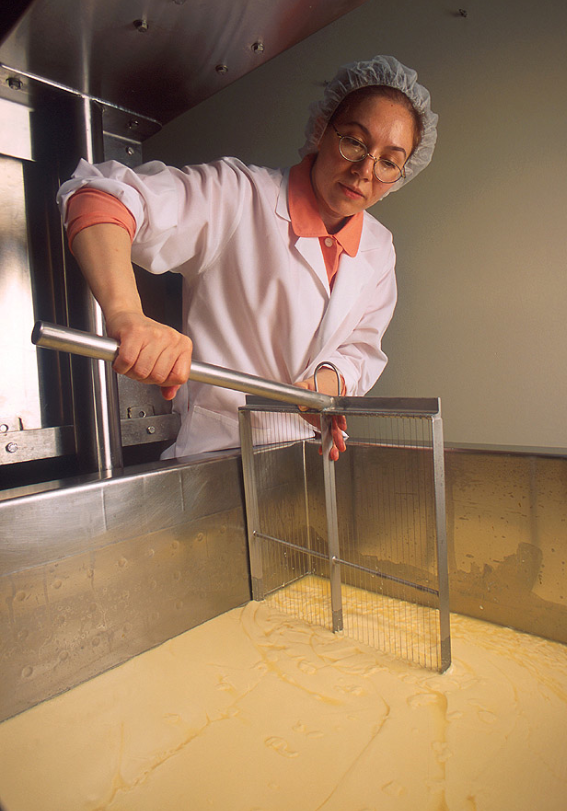
Plans For Visalia Cheese Plant

February 4,2014

family arrives in US

The De Jong family – Arie and Maartge and their 10 children relocated from the Netherlands in 1949 settling in San Diego County,launching Hollandia Dairy – what has become a dairy empire that started with few possessions, requiring plenty of family unity and grit.

Today Visalia dairyman Arie De Jong,son of the founder, says family dairies are spread across 8 states with cow numbers on the order of 250,000. Arie,like most of the De Jong clan in these parts, came to the Central Valley starting in the 1960s – an influx that spawned several decades of dairy expansion here – helping to make Tulare County the highest milk producing county in the USA.

Now the extended family appears ready to take the next step deciding it is time manufacture consumer products from all that milk they make every day. Instead of selling it to the state’s big cheese makers who reap all the rewards “we decided instead of fighting them – we will join them” says Johnny Gailey, whose mom was a De Jong.

“We are looking at making cheese in Visalia” confirms Gailey. “We don’t know yet what size plant we will build but production would probably be 2 to 3 years off.” Gailey confirms the family partners have 110 acres in escrow in the Visalia Industrial Park on Plaza Drive – right  across from the big 55 acre California Dairies Inc (CDI) plant. He says escrow is scheduled to close in March.

Lots of milk is produced near Visalia but no one actually makes cheese in the city.There is plenty coming out of Tulare and indications there will be more still with the likelihood of a new 300,000sf plant CaliCheese, being built in town. The De Jongs actually process milk in consumer size containers (under the Hollandia name) in San Diego County, something Gailey says they will probably not do in Visalia. A Hanford dairy – the Rosa Bros are now bottling milk in Tulare – following the model of vertical integration – from farm to your kitchen table.

Another son of the founder – Peter De Jong of Hanford would be a partner in the plant he confirms and says he does not know how many of the De Jong dairy farms would participate “We probably have 25 family diaries around here” with perhaps 50,000 cows.

Peter says like his parents – todays De Jongs live and breath dairying.”When we all get together…. all we talk about is cows” he laughs. Gailey adds the extended family just “on my mom’s side includes 54 first cousins.”

Tossed Salad

Visalia windmill  2014-01-30 at 2.21.34 PMAnyone who pays attention to Visalia recognizes what a “tossed salad” of ethnic groups from all parts of the globe who have gathered here and the Dutch heritage community is a proud one. Here they have founded their own church in 1965, and Central Valley Christian School, their own retirement village complete with windmill and a fearsome high school girls volleyball team that seems to tear up the court year after year.

The family dairies are mostly large, efficiently run and successful. But dairy operators,even the best,have had a number of years of tough going in the Central Valley – unprofitable for most the 2009 – 2013 years until later last year. Nearly 400 California milk producers went out of business in the past five years. The hard times have prompted producer groups like Western United Dairymen to try to reform how they get paid under a state formula. Cheese makers in other states pay more for milk they need than do California’s big cheese industry.

About 40% of all milk produced in the state is made into cheese. Dairymen say they are shortchanged in California compared to other states and it adds up to millions of dollars every year.

Whey Issue

Many local dairymen blame the state CDFA for their low compensation. CDFA says they try to balance the needs of dairymen and the financial health of cheese makers in the state convinced that our high cost of doing business here will chase them out of state. Cheese makers like Marquez Bros in Hanford have argued that the cost of processing whey, a byproduct of cheese making, is high and requires a major investment in new technology.

But speaking at a 2012 CDFA hearing Arie De Jong who has the Milky Way Dairy north of Visalia argued that utilizing the whey was a part of doing business He noted that that cheese makers made money in 2011 while most dairymen lost money and likewise in 2012. He pointed out that while some cheese makers don’t want to handle the whey – ”that’s a part of the job.” De Jong, suggesting a comparison to his own plight ,adding ” I own a dairy and I only want to milk cows.I don’t want to scrape and haul manure all day.”

California producers continue to lobby CDFA  and this week Western United Dairymen president Tom Barcellos says there is still some hope a compromise can be worked out.

But the De Jong family appears ready to go into the business themselves to insure they survive.

Screen Shot 2014-02-04 at 8.49.18 AMIt would seem like a good time to make cheese. The market price this week is at an all time record as both domestic and export markets for cheese are up. Peter De Jong notes” exports of dairy products are now 17% of milk volume compared to just 6% five years ago.” He also notes that whey these days is in high demand in all those power bars we gobble up, for example.

“It helps to make up for all those years of losses” adds Peter.

Big Parcel

What will this all mean for Visalia? If the sale is completed 110 acres is a huge parcel for one cheese plant,even a large one. There is probably room for a dairy processors industrial park. Unlike powder and butter plants – cheese making is more labor intensive and should mean some good jobs for locals. With more expansion from CDI expected to help feed Chinese babies, as well as other dairy-related companies in expansion mode, to borrow a phrase, Milk is Going “To Do Visalia Good.”