State Funding Lifts Cartmill Interchange Project To Construction

January 31

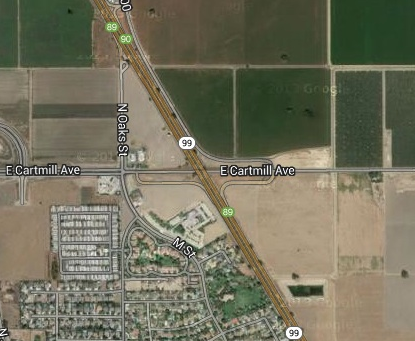
Plenty of empty land around Cartmill interchange


The California Transportation Commission (CTC) has announced funding of $7 million expected to be approved at their January 29 meeting in Sacramento for the Cartmill Interchange project in Tulare. Local officials had been told the item would be on the agenda this month and the agenda,published a few days ago, did not disappoint.

The good news means Tulare City Engineer Mike Whitlock will go to the City Council in February to get approval to bid out the $27 million interchange.

“The bidding atmosphere is still very competitive although not as favorable as it was few years ago” says Whitlock. The important interchange on the north end of the city has been in the planning  stage for a decade with the city scrambling in the past few years to fund a shortfall in the budget.

“We would hope to award the bid by April and be underway by July” adds Whitlock. He says construction could take about a year.

The interchange could mean more retail projects including new big box stores for the northern entrance to the city as well as better access to the city’s important  tourist draw – the Tulare Outlet Mall.

What was a rural interchange out in the country now figures into the city’s economic development strategy.

Tulare Mayor David Macedo says “I think when we look back at this project 20 to 30 years from now we will see this is a big event in Tulare’s history. This interchange will attract major retailers that will be a big economic driver for Tulare.” All four corners of the interchange are relatively undeveloped (see map).

CalTrans plans to widen Highway 99 through Tulare in coming years with the construction scheduled recently moved up.

Engineer Whitlock won’t be here to see the interchange transformed since he is joining a SF-based engineering firm Mendoza and Associates –  a firm bidding on construction contracts for the high speed rail through Kings and Tulare and Kern counties. He leaves the city in March.

San Joaquin River Restoration Program to Cease Flows One Month Early

January 31, 2014
Screen Shot 2014-02-01 at 6.35.51 AMSACRAMENTO, Calif. – The Bureau of Reclamation will begin reducing San Joaquin River Restoration Program’s Restoration Flows Saturday, February 1, one month earlier than called for in the Stipulation of Settlement. The action will support an effort to move juvenile salmon from the upper river reaches to downstream locations, where there is connectivity to the ocean. The unreleased Restoration Flows provided by this action will be about 13,000 acre-feet. This water will be made available by the Bureau of Reclamation, in a manner consistent with the Settlement and the San Joaquin River Restoration Settlement Act, to the Friant Division long-term contractors with first priority to meet human health and safety needs due to the current severe drought conditions.
The Settlement reached among the settling parties in 2006 includes six different Restoration Year types, each with different amounts of water to be made available to the Program. Based on current conditions, the Program is scheduled to be in the worst case scenario, the “critical low” year, starting March 1. No water is allocated to the Program in this dry year under the terms of Settlement and unless hydrologic conditions change, the Program will receive no Restoration Flows until March 2015.
In the fall of 2013, more than 360 fall-run adults in the upper San Joaquin River produced nearly 70 redds, from which juveniles have begun to emerge. This early reduction of Restoration Flows will allow the Program in mid-February to begin investigating the ability to successfully trap and move the fall-run juvenile Chinook salmon from the stretches that will be without flows due to the extreme dry year conditions and release them in downstream locations where there is connectivity to the ocean. This effort will also enable the study of juvenile capture and transport methodologies and provide valuable information on implementing similar actions in the future in similar hydrologic conditions.
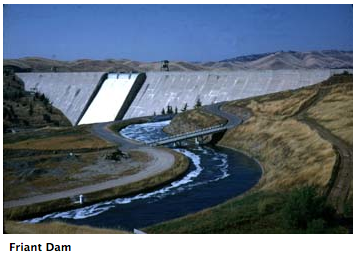
These actions were supported by the Program’s Restoration Administrator in his recommendation submitted on Friday, January 31, and reductions will begin in increments of 50 cubic feet per second starting Saturday, February 1, until the released flow from Friant Dam is about 200 cfs. At that point, the reduction will be incrementally adjusted until all Restoration Flows have stopped and Friant Dam will just be releasing water to satisfy the prior water right holders in the upper section of the river. These actions were also agreed upon by the Friant Water Authority and the Natural Resources Defense Council, in coordination with the federal settling parties.
David Murillo, Regional Director for Reclamation’s Mid-Pacific Region applauded the effort and stated, “The decision that the Settling Parties have made provides the best scenario for all involved in these very difficult conditions. It is encouraging to see the parties coming together in tough times and finding creative solutions that both benefit the Program and provide water for communities and farmers. Not only is the action consistent with the Settlement, but it is indicative of how well the parties to the Settlement can work together to find innovative solutions.”
For more information about the SJRRP, please visit www.restoresjr.net.

Rain/Snow: Nowhere To Go But Up

Screen Shot 2014-01-31 at 1.05.08 PM

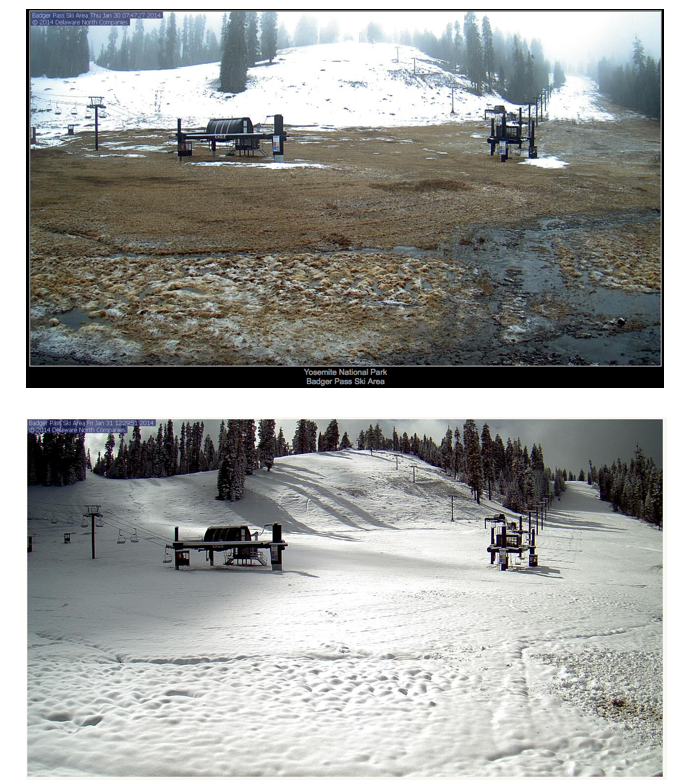
What A Difference A Day Makes….

Badger Pass Webcam: Thursday Jan 30 and Friday January 31,2014

Storm over the past day benefited Central Valley more than some other parts of the state (like the Central Coast) with Fresno picking up a half an inch of rain, and Yosemite Valley getting nearly 2 inches of precip. Snow fell on Badger Pass ski resort( 9 in) and China Peak reported they got 19 inches of snow. On the Kaweah, Hockett Meadow recorded  just under an inch of rain and on the Tule, Springville  got over an inch. On the other side Mammoth Pass got 2.2 in of precip with the ski resort reporting 14 inches of snow.Some Tahoe resorts got 14in over 48 hours.

Expedited Appeal Granted In High Speed Rail Case

Screen shot 2012-07-02 at 8.33.40 AMAt the request of Governor Brown the California Supreme Court has approved an appeal of two rulings on high speed rail this week referring the cases to the 3rd District Court of Appeal and ordering an expedited hearing. Both sides in what has become an epic struggle are to submit briefs by February 10 with the state asking for a ruling before March.

Sacramento Superior Court judge Michael Kenny in November ordered the California High-Speed Rail Authority to rescind their original funding plan for the $68 billion project saying it did not comply with the voter approved bond act – Prop 1A. Now this will be out of Judge Kenny’s hands.

The state’s request for appeal argued that the “ two rulings of the Sacramento Superior Court – which are otherwise unreviewable as a practical matter – imperil the project by erecting obstacles found nowhere in the voter-approved bond act. These erroneous rulings turn the requirements of the high-speed rail bond act on their head, threaten state and federal funding for the project,and urgently warrant review by this Court ..”

California voters approved the sale of $9.95 billion in general obligation bonds in 2008 to build the largest infrastructure project in the State’s history.

The appeal says “The trial court’s approach to these issues cripples government’s ability to function. The issue is time. The Authority is faced with a Hobson’s choice: it can pursue  appeals that may take years to resolve and incur the exorbitant costs, fiscal and otherwise….. (in an)attempt to move the project forward on the trial court’s and private parties’ terms. That is not a real choice given the responsibility the Authority has to be prudent with public funds, to use federal grant funds before they expire in 2017.”

Judge Kenny essentially blocked the use of $8 billion in bond funding   to help match federal money to begin construction now scheduled to start in the next few weeks around Fresno, say sources. The Authority has been buying up needed right of way to begin the first 28 mile leg of the route from Fresno north to near Madera but needs enough ROW to keep the contractor busy once he starts.

Brown visited Fresno recently looking to rally support for the project here where there is strong feelings on both sides.

“Sixteen other countries have high-speed rail,” he said. “America should be strong enough, big enough and visionary enough to construct high-speed rail.” Brown compared the  bullet train to the  Golden Gate Bridge, the Panama Canal and the Transcontinental Railroad suggesting they too had numerous critics but in the end benefited the country.

Critics continue to argue the financing plan is not strong even as they seek to pull back on that same public funding. At a House hearing recently the argument was heard. “A court has ruled,” said GOP  Rep. Jeff Denham, chairman of the House railroad subcommittee, and a vocal critic of high-speed rail in the state. “There is no state match.”

The state’s appeal noted the obstructionist strategy as a key reason why a quick court ruling was needed. “Congress has initiated hearings and an investigation by the Government Accountability Office in an effort to pressure federal funding partners to withhold billions of dollars in matching federal grants to construct the Central Valley portion of the high-speed rail system, and legislation has been proposed to suspend federal funding until “sufficient non-Federal funds are available.”

The crux of the dispute appears to be whether CHSRA followed Prop 1A by building the 500 mile route in segments that will connect at least two major stations like the Fresno to Bakersfield leg that the CHSRA wants to build starting this Spring. Their argument is that if no other segment of the high speed route was ever built, Amtrak could use this new”usable segment” and run speedier trains. The idea counters the notion this is a “train  to nowhere.”

Critics argue the Prop1A require all funds be available to fund a route that connects all the way to LA.

Cap & Trade?

At the same House testimony recently CHSRA chair Dan Richard said he hoped to have that funding in hand with approval of state Cap and Trade funds and that he would offer this new budget plan to Congressman Denham soon.

Besides using bond money Brown has now recommended use of Cap and Trade money – set aside to fund projects that cut air emissions.

With 40%  of greenhouse gases coming from the transportation sector uses – Brown says high speed rail will help make a dent in that. The California Air Resources Board says “HSR will reduce vehicle miles traveled in CA by almost 10 million miles a day, equating to removing from the road about 317,000 cars a day.” In addition “HSR will reduce by about a third the number of daily flights between San Francisco and Los Angeles, the busiest short-haul market in the country.”

But some are saying using Cap and Trade money for high speed rail is too far off to make a difference.The Authority can argue that their plan sets in motion emission savings  immediately through a massive tree planting effort,contracting for all renewable energy projects and pushing for affordable housing close to transit in every city they pass. That helps to mold community’s plans to a sustainable pattern that will have a lasting effect and cut greenhouse gases that appear to be affecting our weather.

SLO/ Central Valley & Sierra To Get Wet

January 27:

PG&E weatherman John Lindsey had this today about the approaching wet weather for Central California, the first good storm in a long time.

“This morning’s models are indicating that subtropical flow will increase Wednesday night into Thursday as a cold front moves through San Luis Obispo County. This system is expected to produce between 0.02 and 0.17 inches of rain on Thursday.  Snow levels will start out rather high, at around 7,500 feet, before lowering Thursday to near 4,500 feet when the col  front passes. A foot of new snow is expected above 5,500 feet, with more than 2 feet possible along the crest, as it appears this will be the first good storm for the Sierra since December 2012.”

NWS Hanford had this graphic on their website today as well suggesting rain by Thursday for Tulare County

Screen Shot 2014-01-27 at 11.44.22 AM

Tahoe snow forecaster Bryan Allegretto  said “Today( Monday) may be the only precip free day this week as several systems are set to push into Northern CA this week.  Snow levels will start high this week but will fall during the heaviest precip on Thursday.  Cold and snow showery next weekend and then another dry pattern to start next week.  Models hinting at a stormy pattern beyond 10 days.” He says Tahoe could 4 to 12 inches of snow.

Some websites are predicting more precip on Sunday.

Visalia’s So. Mooney To Get New $25 Mil Education Office

January 25:

Tulare County Office of Education (TCOE) plans to build a three story,87,000sf office building on the site of the former Mooney Drive-In theatre with work starting later this spring.

The drive-in was a Visalia fixture from 1948 to 2006.But it ended up owned by a bank and the land purchased by the TCOE

Screen Shot 2014-01-23 at 11.58.00 AMJohn Caudle,Deputy Superintendent in Charge of Business Affairs says the big project – valued at $25 million – is a chance for the department to own their own property as opposed to renting from the county as they do now.

Caudle says the new complex will house 175 people and feature a large conference room to hold countywide events.  Locating all departments in one space will also be more efficient adds Caudle. There will be parking for nearly 400 cars.

“Construction should take about a year with occupancy by July 2015.”

Musical Chairs

The education agency would vacate their current multiple locations on Burrell Ave in the county civic enter area setting off a scramble of other county agencies expected to be interested in the space.

Caudle says the county’s popular planetarium will be relocated to Liberty School.

Chair of the Board of Supervisors Phil Cox says their are a number of county departments who are likely interested in the two buildings the the TCOE now occupies. “I know the assessor,auditor and risk management are all needing more space” notes Cox.

Cox says more musical chairs are also in the works $40 million funded for a new jail at Sequoia Field. “We probably need to tear down the old  Main Jail in the Civic Center “says Cox and make plans for how to use that space.

Cox say the county also plans to reuse the old art-deco courthouse building on Court St. ”We know it will take something like $2.5 million to reoccupy it. That’s what we are planning to do.”

Drought Cast Big Shadow As Ag Prices Zoom Higher

January 25
Gloom Meets  BoomWatch out;Tulare County is being whipsawed by events out of its control, some of which are both scary and potentially exciting. Try on this little stream of consciousness:

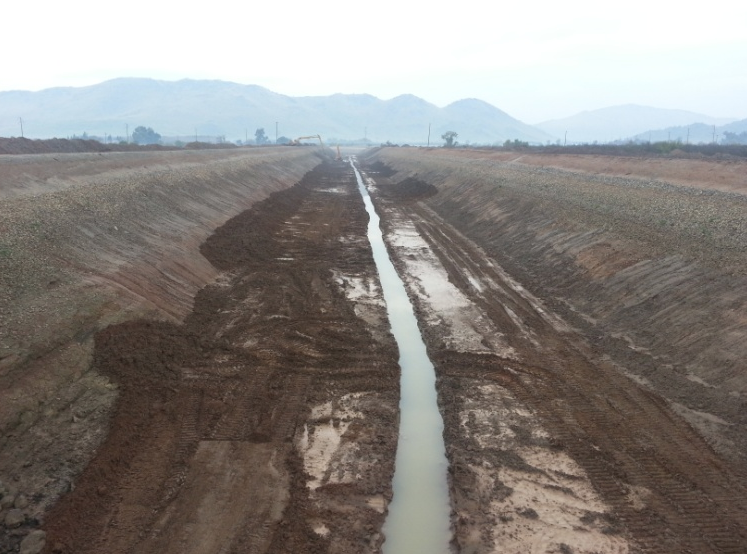
Empty Friant Kern Canal? Photo is from recent dewatering effort on canal
Empty Friant Kern Canal?
Photo is from recent dewatering effort on canal


No Water?: Friant GM Ron Jacobsma says it is likely Friant contractors get “no water” this year. We are talking about an empty Friant Kern canal! That would leave vulnerable small water districts and the Tulare County farmers they serve with no surface water supply for their trees.  A number of those districts, including some municipalities who use it for drinking have very limited or no ground water wells.“Even if the Exchange Contractors (north of Fresno) take San Joaquin water (stored behind Friant Dam), I don’t know if the Bureau can find  enough water for them.” Friant members have been lobbying the Bureau to allow about 20,000af in Millerton scheduled to be released through February for fish enhancement under the San Joaquin River settlement – to be retained by Friant for now. But Jacobsma says NRDC would have to approve it – unlikely he fears. There would be no Joaquin River releases for Restoration after February because of the drought.

But that is a small amount compared to 200,000af of water that could be shipped to the Exchange Contractors since they have a priority for the water prior to the construction of Friant Dam.

It is worse in terms of acreage on the Valleys westside where groundwater is more scarce. Here the Bureau of Reclamation is being lobbied to allow water pledged to the water district like Metropolitan (Los Angles) sitting in San Luis Reservoir to be traded to other needy districts. MET has planned for this drought – extracting other people’s water critics suggest – with a Metropolitan official stating recently” “We’re at record storage throughout our whole system.”

New Dust Bowl?

Westside farmer Ceil Howe says he “has never been so discouraged“ about prospects for farming and the weather with the “dirty gritty sky due to lack of storms only making it even more depressing.“

“I think we can keep our (small amount of ) trees alive with groundwater this year but all field crop acreage will be low or nonexistent.This is the driest 13 months in history” adds Howe who farms about 25,000 acres at Westlake Farms near Stratford and expects no Kings River water.

”It is reminding me of the dust storms we used to see out here” adds Howe. Could we see a California Dust Bowl this summer?

“There is plenty of talk moving water around but not much water to talk about” says Visalia civil engineer Dennis Keller. The good news is that “there is more than 3 months when we typically get rain.”

Gloom Meets Boom

If there is panic on the one hand – farmers who sell the Central Valley’s produce, nuts ,meat and milk are all enjoying record high prices and booming export markets.

It’s like they are getting a red light and green light at the same time.

Chicago commodity market reported a record price for block cheese Friday Jan 24 at $ 2.31/lb,eclipsing a 2008 record. Milk powder prices  are $2/lb and butter, enjoying new popularity, is close to that; all at near record highs.

What a turn around for an industry here (our largest) that seemed on the ropes and destined for collapse a year ago.

Of course dairymen are getting some welcome relief on the feed front in 2014, likely thankful this year they import much of their feed with our drought in California and plentiful rainfall in the Midwest. Corn prices are down from $8 a bushel in the summer of 2012 to $4.35 today.

Milk Processing News

With milk production rebounding,suddenly there is activity on the processing front – an industry who some had feared would soon up and leave the state.

In Turlock last week Hilmar announced it would build a new powder plant this to take advantage of booming demand in China for our products.

In Tulare this week CaliCheese got the green light to move forward on their $250 million cheddar plant project offering to pay $10,000 to Tulare for extra staff time to process their delayed purchase of 60 acres from the city. But they say it will happen.

In Visalia, not only is California Dairies expanding – an unnamed dairy foods company has 110 acres in escrow in the Visalia Industrial Park in a deal expected to close in March.

Domestically there is continued decline in fluid milk sales – down 1.3% in 2013 while organic milk sales climbed nearly 19% says CDFA.

Valley cattlemen can’t find enough foothill grass to feed their stock but  are being encouraged by record high beef prices and export demand  to places like Japan – up 48% year to date the USDA reports. Sales are up 71% to Hong Kong and 82% to Taiwan.

Milk demand is helping to drive cattle prices up with one market report saying this week ”Dairy producers are likely filling their barns with as many cows as possible, and heifers are precious. #1 Holstein springers averaged $1,900 at the Tulare Livestock auction last Saturday, up $300 from a month ago.”

If milk prices are high now – what happens when there is even less water this summer and milk production declines?

History says if the price rises too much – the consumer will balk and look elsewhere to fill their stomach.

Dairies around here have been shrinking as a number of family owned enterprises  went out of business in the past few years. But now Curti Dairy in Tulare looks to expand their herd by over 70% according to a air board permit. Other dairies are making a switch from Holstein to Jersey cows (black to brown) to increase butterfat production.

There is some good news form those who drive those big dairy milk rigs to the plants around the Valley everyday. Ruan Transportation and others have completely overhauled their truck fleets to cleaner burning trucks and fuels including some natural gas and is even considering biogas fueled trucks.

Then there is nuts were farmers are enjoying another record year even as they are extremely nervous about having enough water. Walnut prices are are in the $2 range (up from 60 cent per/lb a few years ago) and tonnage is up this market year. Pistachio shipments to date are also at record highs.

Ag Labor

If there is tension in the ag community over water – there is today a little less over another key issue – ag labor. This week local Congressman Kevin McCarthy (number three GOP leader) broke his silence on the issue in a Bakersfield media interview saying he was ready to support “a path to legal status” that would allow millions of undocumented immigrants in the country to work and pay their taxes.This would be a break from what has been the majority view in the GOP to date who claim this amounts to amnesty. The Republican controlled House may now offer a similar measure to the Senate  immigration reform version passed last year and backed by California Ag.

In the meantime …. Pray for Rain.

Tulare Hospital Census Continues To Fall

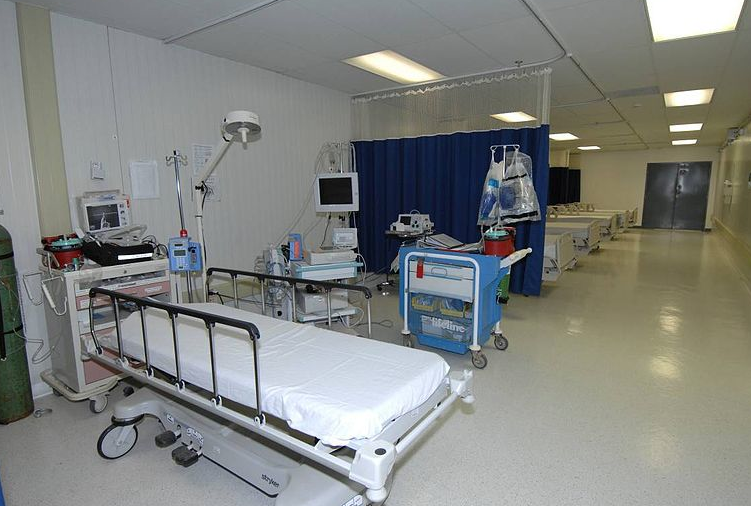
empty hospital beds courtesy Wikopedia

January 17

Figures are in for November and December 2013 for embattled Tulare Regional Medical Center (TRMC) and will be reported at next week’s district finance committee meeting.The numbers,posted January17, show the hospital’s patient census at a very low 38 in December in a facility offering 112 beds.The number of patients has declined over the past few years with 51 patients listed a year ago December and an average of 66 in 2010.

With less patient revenue the district recorded a net operating loss in December of $887,764 and a $4.2 million loss year-to-date based on its July to June fiscal year.

TRMC actually reported some rare black ink in November with a $234,691 operating gain. Compared to its $4.2 million loss so far this fiscal year the district had budged only a $1.5 million loss. At this  time last fiscal year – TRMC had lost $4.1 million.

Details of December’s performance are full of declines compared to budgeted assumptions. Surgeries were down 8% from budget,MRI procedures down 31%, admissions from ER visits were down 24%, primary care clinic visits declined in December by 41% while home health visits were down 38%.

In the past few week the district hospital entered into a new management contract to run the business with HealthCare Conglomerate Associations (HCCA)  and TRMC let go their CEO Shawn Bolouki. HCCA promises to work to turn around the financially ailing district

Also the contractor Harris Construction voluntarily dismissed their lawsuit against the district over non-payment of monies to complete  the 57 bed hospital tower after they lost a court case.

The tower expansion project financials show that as of December 31 there is $6.7 million left in cash to complete the long delayed project  that still has some months to go. Harris had complained in court filings that they did not believe TRMC had enough money to complete the project.

Building Permits Up in Tulare County

January 17,2014

 Ventura Coastal near Visalia
Ventura Coastal near Visalia

Tulare County officials say the number of building permits for both
single family homes and commercial buildings increased in 2013.
County records show 3,363 building permits were issued in 2013 – up from the 3,023 issued in 2012.

*The value of county building permits issued in 2013 increased by $40
million over the value of permits issued during 2012,” said Phil Cox,
Chairman of the Tulare County Board of Supervisors. “This is one sign
the economy is improving in the area.”

Officials say the value of all building permits issued in 2013
increased approximately 32 % – to an estimated overall valuation of
$166.3 million. Permits issued for houses increased by 23% while
commercial building permits increased by 20%.

What*s changed? Two years ago the Board of Supervisors established an
in house economic development program to foster value growth. Challenged
to make the county easier to do business with, planning administrators
developed a team-based approach toward business development. For
example, if someone wanted to fast-track construction of a medical
clinic, or expand a large ag processing facility on an aggressive
timeline, the county developed a “new” team-based process to
accommodate that developer*s needs.

“We have streamlined the process to improve service to our
customers,” said Mike Spata, Associate Director of the Tulare County
Resource Management Agency.

The planning team works with the business owner or project applicant to
determine several important details, such as project timeline and how
much should the process cost?

Ag Projects Top List

Officials say the increase in business activity and total number of
projects permitted during the last two years indicates that in addition
to signs the overall economy is finally improving, the new County*s
new economic development approach appears to be working nicely. In 2013
alone: Setton Farms pulled more than $2 million-worth of permits for
plant expansions; Paramount Citrus expanded greenhouse facilities – $2
million in permits; Family Health Care Network*s new rural medical
clinic in Terra Bella – $750,000 permit value; Ventura Coastal $1.6
million * installation of new silos to store citrus juice in Tipton.

Central Valley Counties Get Millions To Construct Jails

January 16, 2014

Screen Shot 2014-01-17 at 6.01.24 AMLOS ANGELES — The Board of State and Community Corrections has approved conditional awards totaling $500 million to 15 counties for upgrading local jails to include rehabilitative program space that meets Gov. Jerry Brown’s prison and public safety realignment goals.

Thirty six counties submitted requests for funding that were ranked according to how closely they met the requirements of AB 109’s landmark reform mandate to house and rehabilitate non-serious, non-violent, non-sexual offenders in their home communities. Realignment seeks to improve rehabilitation results by keeping offenders close to families and support systems. It includes constitutionally guaranteed funding for proven programs that support offenders’ successful transition back into the community.

Under realignment, the state is investing hundreds millions of dollars in local rehabilitation and crime-prevention programs to continue to improve public safety in our communities. The impact of these investments will be measured over years as the programs develop.

The construction funding is a result of SB 1022, which provided for the issuance of lease revenue bonds to help finance the jail modifications needed to accommodate offenders who otherwise would have been sent to state prisons.

Many jails do not have classroom space for training and rehabilitation programs. SB 1022 specified that counties would be considered that are seeking to replace or upgrade outdated facilities and provide alternatives to incarceration, including mental health and substance treatment.

The BSCC was established by 2012 legislation to serve as an independent body providing realignment leadership and technical assistance to the adult and juvenile criminal justice systems.

Central California counties awarded funds are:


Kings County: $20 million for a new Type II 24-bed mental health addition with a culinary service kitchen, vocational space, three program rooms and a day reporting center.

Santa Barbara County: $38,976,000 for a new Type II standalone jail with 228 minimum/medium security beds and treatment and program space for transitional re-entry.
Solano County: $23 million for new programming facility consisting of classrooms and space for mental health counseling and vocational training.

Tulare County: $40 million to replace the existing Men’s Correctional Facility and Day reporting center with a new Type II, 384-bed jail, day reporting center and vocational training center with program space in Visalia. The facility will be at Sequoia Field

San Joaquin County: $33.3 million toward a new Type II, standalone 384-bed facility with classrooms, vocational space, an education program center, interview rooms, medical exam room, library and administration.

Fresno County: $79,194,000 to replace the South Annex with new Type II standalone multi-story 300-bed facility consisting of pod style housing, program space, medical/mental health services, video visitation and stand-alone laundry and storage building.