Kern County town of Boron is home to the U.S. Borax Boron Mine, California’s largest open-pit mine, which is also the largest borax mine in the world. The facility is owned by Rio Tinto and employs about 800. This week a state WARN notice was given that says the company will lay off 234 workers as of November 27,2013.
Borax is used for insulation fiberglass, textile fiberglass and TFT/LCD heat-resistant glass,detergents, soaps and personal care products, ceramic and enamel frits and glazes, ceramic tile bodies and as agricultural micronutrients.
The boron mine is said to supply about half the world’s supply.
Lerdo Jail To Add Almost 200 Jobs
The final EIR is being published this month for the expansion of the Lerdo jail complex near Shafter. The Kern County Sheriff’s Lerdo jail complex, located at 17801 Industrial Farm Road is 2.5 miles east of 99 and 1.5 miles west of State Route 65. The proposed project includes an application for approval of a Conditional Use Permit allow for the expansion of the existing Lerdo Detention Facility adding 26.5 acres.
The Lerdo jail complex encompasses six parcels totaling about 297.6 acres, as well as a 35-acre undeveloped parcel immediately south of Lerdo Highway, portions of which will be used for wastewater disposal. The project would result in a total of 822 new beds for housing inmates, 194 new employees and 47 additional average daily visitors.
Tehachapi Cement Plant Will Stop Using Coal.
The Lehigh Cement Plant near Tehachapi has historically used coal and petroleum coke with a small amount of natural gas as its main fuel sources. Now the use of alternative fuels is proposed in order to reduce air pollutant and greenhouse gas emissions from the Lehigh Cement Plant, and to allow the facility operator more flexibility in the sourcing of fuels to make cement.
The plant has been the source of high amount of mercury emissions – harmful to health. The company already has worked to reduce mercury emissions earlier this year with the addition of new technology . Mercury is found in the limestone used to make cement. But mercury is also a byproduct of burning coal that the company brings in from Utah.
But now the company plans to use alternative fuels that should further reduce emissions says the final impact report on their project published this month.
Plans for 135 MW Solar Plant near Bakersfield
Plans has be been filed with Kern County to build a 135 MW solar plant near Highway 58 east of Bakersfield(see map). The proponent is a Folsom,California company,61lk 8me llc.Plans are in the form of a Notice of Preparation ,early in the permitting process.
Fresno, CA (November 8, 2013) – International air access to Mexico is increasing at Fresno Yosemite International Airport as Aeromexico announces plans to provide seasonal non-stop service from Fresno to Morelia, Mexico. Beginning December 18, the airline will provide weekly service to Morelia through the peak travel holiday period.
Morelia is a popular Mexico destination sought by Central Valley travelers. The airline will introduce the seasonal service on a trial basis with plans to consider operating the route during other peak travel periods. The addition of Morelia complements the airline’s current non-stop air service to Guadalajara, Mexico and confirms the region’s demand for air access to Mexico.
Director of Aviation Kevin Meikle stated, “The announcement of Aeromexico’s new service to Morelia supports our efforts to grow markets that serve the needs of the community.”
“Aeromexico recognizes Morelia as a strong destination and has been determined to establish a route from Fresno to Morelia. We expect the service to be successful and look forward to expanding it in the future,” stated Aeromexico Market Manager Gabriela De Anda.
The new route will operate on a 124 seat 737-700 aircraft departing Fresno on Wednesday at 2:06 a.m. and arriving in Morelia at 7:44 a.m. Returning flights will depart from Morelia on Tuesday at 10:37 p.m., landing in Fresno at 12:51 a.m. Morelia airfare information and reservations can be made at www.aeromexico.com or by calling 1-800-237-6639.
California is growing.There are more cars being sold and an uptick in freight movement too.But that does not mean traditional petroleum fuels are enjoying more demand. Far from it. There is lots of gasoline available in the state even as the oil industry advises there is a coming boom in shale oil production here, rivaling what is happening in North Dakota. What will a huge supply of product do to already weakening prices?
Oil Heads Down
They are already heading down.Oil this week is under $94 dollars a barrel and California-grown heavy oil from the state’s largest field in Kern County – Midway Sunset – is the lowest price in several years – today $92.58.That is nearly $20 lower than September’s price.
Across the US we are producing millions of barrels of new oil even as we use less in our everyday life. To get rid of it – the industry increasingly exports product.
Why should you be cheering for lower oil prices? An economist at Moody’s Economy.com has stated that every $1 decline in the price of oil saves U.S. consumers $1 billion.
Helping to drive consumption down, higher demand from an improving economy is more than offset by improved efficiencies. In vehicles for example the government’s Energy Information Agency(EIA) says fuel efficiency increased nearly 2% in the first half of of 2013.
For gasoline suppliers the result is lower demand in California where higher fuels costs compared to the rest to the nation are legendary.
Last month the state Board of Equalization reported that Californians consumed 3.68 billion gallons of gasoline in the second quarter, a 0.2 percent decline from 3.69 billion gallons used in the second quarter of last year. The average price of gasoline was $4.04 per gallon in California during the second quarter, and nationally the average price of gasoline was $3.67.
Today some stations in California are selling regular for $3.24. EIA say the average price in California this week (Nov 4) is $3.61 compared to $3.94 this week last year.
Clunkers Bit The Dust
Compared to 2008 – Californians are using about 5% less gasoline than we did then. DMV reports that the number of total vehicles registered in the state fell from 33.5 million in 2008 to 31.3 million in 2013. Translated, some 2 million plus clunkers bit the dust.
Consumers facing years of high gasoline costs have figured out way to cut their use. Here are some things they have done. As more alternative products have become available in recent years California motorists are eager to give them a try.
Tesla In,Hummers Out
Like buying hybrid cars that are less dependent on gasoline to operate. About 585,000 hybrid vehicles were registered in the state in January 2013 – up from 218,000 hybrid vehicles registered in 2008.
Some buyers are switching to electric cars,although more slowly. In a bid to spur electric car sales eight states including our own are pushing to increase EV sales to 3.3 million by 2025 by forming partnerships to build recharging infrastructure across the states. The government backed effort aims to stem emissions that are implicated in global warming largely caused by fossil fuels.
Meanwhile the darling of the California economic rebound is an electric car – Tesla – made in the Bay Area and a new favorite both on Wall Street and with the well healed buyer. Our California dream car has changed from the Hummer to a Tesla!
Also there is a change in the fuel mix that is reducing the amount of traditional gasoline sold. That includes renewable ethanol made largely from corn that has displaced 10% of the US gasoline volume and is moving to a 15% blend including California.Last year, ethanol displaced an amount equivalent to the gasoline refined from 462 million barrels of imported crude oil say advocates helping to make real the idea of energy independence.
The fuel mix is changing for diesel as well.Today California blends petroleum diesel with 5% renewable biodiesel that reduces emissions and harmful particulates.
Then there is the natural gas revolution hailed by politicians,industry and Wall Street investors. Again its not good news for traditional gas stations.
A recent NYTimes article points to the advantages of converting more vehicles to this lower emission fuel. ”According to Energy Department price information from July, natural gas offers economic advantages over gasoline and diesel fuels. If a gasoline-engine vehicle can take you 40 miles on one gallon, the same vehicle running on compressed natural gas can do it for about $1.50 less at today’s prices. To that savings add lower maintenance costs. A study of New York City cabs running on natural gas found that oil changes need not be as frequent because of the clean burn of the fuel, and exhaust-system parts last longer because natural gas is less corrosive than other fuels.”
The Nat Gas Vehicle Assn adds:
-There are about 135,000 NGVs on U.S. roads today and more than 15.2 million worldwide.
-There are about 1,300 NGV fueling stations in the U.S., and refueling appliances are available for home use.
-In the U.S., about 50 different manufacturers produce 100 models of light, medium, and heavy duty vehicles and engines.
-Natural gas currently costs from $1.50 to $2.00 less per gasoline gallon equivalent (GGE).
While some large vehicles and fleets are switching to natural gas -others like school districts are choosing propane – both cleaner and cheaper than diesel.
Even cleaner is the availability of biogas in the state now. Biogas derived mostly from waste material emits 90% less carbon emissions than diesel or gasoline, according to California Air Resource Board estimates, and requires less energy to extract and process. It also makes use of methane that would otherwise be released into the atmosphere. Facilities that capture the methane from waste material are being built in the state right now including several in the Central Valley.
Fleets can now fill their vehicles with fuel made from methane and other kinds of organic waste at 40 “gas” stations in California, thanks to Clean Energy Fuels Corp. (Nasdaq: CLNE).The company, which is backed by T. Boone Pickens, expects to sell 15 million gallons of “Redeem” this year in California and has plans for a nationwide network of 400 “gas” stations they say. Customers already include AT&T, Verizon, Mattel and Williams-Sonoma as well as large fleet operators like Hertz and SuperShuttle.
If some can now fuel up in all sorts of new ways these days other than gasoline – the increasing popularity and availability of mass transit provides another option – leave the car at home.
More efficient mass transit is helping to reduce clogged freeways in places like LA where for the first time you will be able to travel from Downtown LA to LAX by Metro, under construction now.
That prospect in turn, is changing LA’s sprawling land use patterns, encouraging more residential units along transit lines and reducing car commutes in the future.
No wonder gas prices are falling.
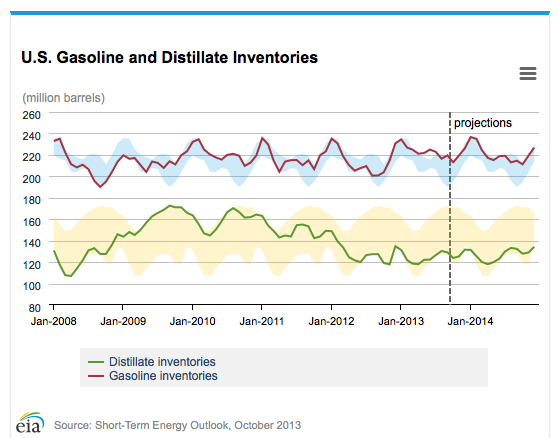
For the first half of 2013, EIA data show gasoline consumption lower than the comparable 2012 period by 50,000 barrels per day, or 0.6%, lower than in the comparable 2012 period. And supply is epected to grow as you can see from this EIA chart from the past few days.
Other Factors:
There are other factors helping to reduce gasoline prices right now. This is the low driving season,winter fuels are cheaper to produce and so far this year there have been no major Gulf storms to worry about.Add to that the relative stability of the Middle East and you see why some believe California motorists will be paying $3 a gallon for regular before Spring.
Low Carbon Push
The fight to stem the rising tide of global warming is a key factor in the state with the policy demanding the carbon intensity of our fuel be reduced. California’s low carbon fuel standard(LCFS) is now law surviving a court challenge. LCFS gives suppliers tradable credits when they reduce emissions during the production, transportation and use of the fuel. The law requires the oil industry to gradually reduce the “carbon intensity” of transportation fuels by at least 10% by 2020.
Why should you be cheering for lower oil prices? An economist at Moody’s Economy.com has stated that every $1 decline in the price of oil saves U.S. consumers $1 billion.
Sales of trucks surged in October according to Autodata. Sales of North American sold light duty trucks were up 14.6% compared to October 2012. Car sales were up 6.6%. Among car makes GM total vehicle sales were up 15.7%,Ford up 13.9% and Chrysler was up 11%; Also Toyota climbed 8.8%, Honda sales were up 7.1% and Nissan climbed 14.2%
Gasoline Price Keeps Falling
Energy Information Agency says California gasoline sold for an average of $3.56 a gallon the week of November 4, down 4 cents from a week ago and down 33 cents from a year ago.
2012 CALIFORNIA ALMOND PRICE UP 30%
Wow what a crop! USDA says the 2012 average return to California almond growers was $2.58 per pound, up from the December preliminary estimate of $2.20 per pound. This price is up 30 percent from the 2011 final almond price of $1.99 per pound. This price results in a record total value of production for California almonds of $4.82 billion, up significantly from 2011‘s total value of production of $4.01 billion.
More Freight
The amount of freight carried by the for-hire transportation industry in the US rose 0.4 percent in August from July, rising for the second consecutive month to reach the second highest level in the history of the Bureau of Transportation Statistics’ (BTS) Freight Transportation Services Index (TSI). The August 2013 index level (114.8) was 21.0 percent above the April 2009 low during the most recent recession.
Economy Growing Despite Damaging Political Discord In Washington DC
October 29, 2013—RIVERSIDE, CALIFORNIA—A new forecast for the U.S., California, and Inland Southern California economies finds that the recovery at the national, state, and regional level is continuing despite shocks to the system stemming from political pressure and uncertainty in the nation’s capital.
The forecast, authored by Beacon Economics and released in partnership with the University of California, Riverside’s School of Business Administration as part of the 2013 Riverside/San Bernardino Economic Forecast Conference, reports that the U.S. economy bounced back for 2 plus percent GDP growth in the 2nd and 3rd quarter of 2013, despite the headwinds out of Washington DC.
California’s enormous economy has also continued on a growth path and events at the national level have not significantly affected the regional Inland Southern California economy, according to the analysis. However, the series of partisan standoffs in the past few years over the ‘Fiscal Cliff’, budget negotiations, and the debt ceiling, have served to slow an already tepid recovery.
“The recovery is clearly continuing but we would be further along were it not for the inability of our national elected leaders to pass a budget and negotiate reasonably with each other over long term fiscal issues,” says Beacon Economics’ Founding Partner and one of the forecast’s lead authors Christopher Thornberg. “The tax increase and spending reduction that resulted from last year’s ‘fiscal cliff’ confrontation have meant that aggregate demand, although increasing, has not grown at the pace it would have without these drags on the economy.”
Away from Washington, the new forecast points to the real estate market as a standout in the current recovery and a key driver of the economy’s continued growth. The residential market has come roaring back with the median price of a home sold in California posting over 20% growth on a year-over-year basis at the beginning of 2013 and that pace of growth accelerating to nearly 30% since June, according to the analysis.
In Inland Southern California, the price of a median home has risen 28% from the 2nd quarter of 2012 to the 2nd quarter of 2013. And although the region’s housing market has not seen the same degree of price appreciation as some neighboring coastal areas, its relative affordability is attracting new residents, which will provide a boost to economic activity, says the new forecast.
Yunzeng Wang, Interim Dean of the School of Business Administration at UC Riverside, says that Inland Southern California’s diverse combination of industries – ranging from regional strongholds such as transportation and retail to a newer, rapidly growing high tech sector – illustrate the area’s promising future path of growth. “This region has a very unique blend of business strengths and affordability that are steadily driving us towards a more diversified economy and that have made us one of the fastest growing areas in California,” says Wang.
This is the fourth year the School of Business Administration, the only research-based business school in Inland Southern California, has partnered with Beacon Economics to release an economic forecast. The forecast event will include an in-depth discussion of economic development in California following the demise of the state’s redevelopment agencies.
Key U.S., California, and Riverside/San Bernardino findings from the forecast include:
Riverside/San Bernardino Counties: Rising household employment in the inland region indicates that many residents are finding work in neighboring employment centers along the coast. This is in line with increases in westbound morning commute traffic, as seen in data from the Department of Transportation.
California: Through August 2013, the state had recovered just under 830,000 of the nearly 1.37 million jobs lost during the recession. Currently, California is only 3.6% short of its pre-recession employment peak set in July 2007.
United States: The nation’s housing market continues to recover despite a modest recent hike in interest rates. According to the analysis, for the first time in 7 years, between 2012 and 2013, there was an increase in the number of owner-occupied housing units in the United States.
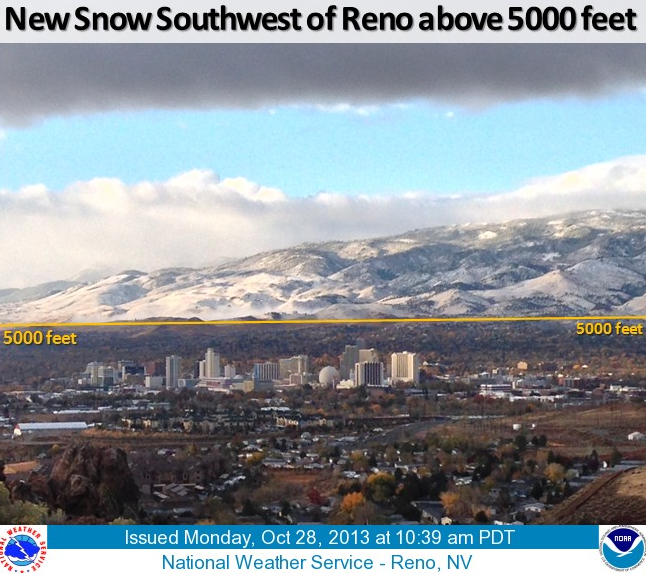
Much of California got some light rain and even snow at the higher elevations of the Sierra Monday. Rain and snow was heaviest in the I-80 corridor area with Squaw Valley posting that they have 10 inches of new snow. The RenoNWS posted this shot of the Sierra above the city.This first sprinkle of the season does not ease drought fears but does create some hope that the barn door is open for more storms.
Most of mid-California got only a few hundreds of an inch but other places really got wet. Mariposa saw 3/4 of an inch and Ash Mountain above Three Rivers saw 0.42.
In the coastal S2S reading area some areas of SLO saw up to 0.40 says forecaster John Lindsey. Arroyo Grande got a third of an inch and Los Osos around 0.20inch.
So what’s the outlook for winter as November approaches?
NOAA’s Climate Prediction Center says we are in for an ENSO neutral winter meaning neither an El Nino or La Nina pattern. That makes is hard to predict how much rain to expect. Even chances they say.
SLO’s John Lindsey is predicting San Luis Obispo will get 10 to 15 inches. He cites others who suggest bellow average precipitation while the Farmer’s Almanac says look for a wetter than average winter.
On guy who sticks his neck out is Alan Fox,a private forecaster for agriculture who predicted the timing of this Monday’s storm some weeks ago( and last year’s early wet pattern) and offers some hope for November.
He wrote early this month “The current SSTA pattern supports development of wet conditions in north-central and northern California in November.”
For the southern California avocado region he offers “November 1 to 15 – Southern California Avocado Region… The pattern is currently dry and models are not yet showing a shift to wetter conditions. Given the normal pattern in early to mid November, and the current SSTA pattern which is favorable to troughs and rain into northern California, we cautiously suggest a return to at least some showers into southern California from the 1st to the 3rd and again from the 12th to the 15th.”
“Seasonal Outlook/El Niño Update – November 15 to January 31…The latest ENSO forecast guidance from Scripps shows a gradual increase in El Niño conditions from December through April. El Niño conditions consist of a stronger southern jet stream into central and southern California, a more consistent series of storms moving into southern portions of California, and more consistent rainfall.
The month with the greatest potential for consistent rains in California would be the last week of November and in December from the 3rd to 10th, 18th to 23rd, and 27th to 30th. In December, the El Niño influence may still increase, so southern California should receive some more rains during at least some of those periods due to a more consistent southern storm track.
In January, we expect a break in the rains, possibly lasting a week or two, as the longwave trough deepens in the central U.S. and the central Pacific with less troughing at the California coast. January 2014 still appears to have lower ENSO contribution to drive the southern storm track than in December or in February/March 2014.
Scripps ECPC shows a smaller influence from El Niño during December and January than during February, March, and April. During the latter period, such activity should increase and cause more cool troughing over central and southern California. In this scenario, troughing would also be expected to include the southern deserts and cause showers and above normal rainfall.”
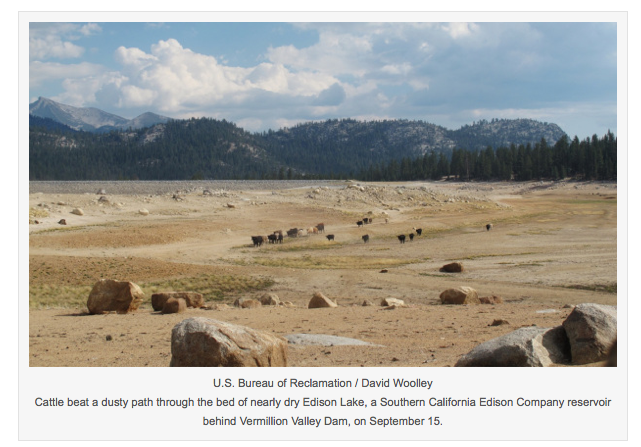
A wet early winter does not mean a wet year. ”Last winter, November and December storms were potent and generous, briefly leading to expectations of a wet winter.Those hopes dried out quickly when the storm door swung shut in January and remained locked fairly firmly through springtime”notes the newsletter of the Friant Water District posting a picture of cattle walking over a dry Sierra lakebed.( CLICK PIC TO ENLARGE)
October 24, 2013 – California’s exports jumped in August, according to an analysis by Beacon Economics of foreign trade data released by the U.S. Commerce Department.
The state’s merchandise export trade in August totaled $14.28 billion, a nominal gain of 8% over the $13.22 billion in exports recorded in August 2012. By comparison, overall U.S. merchandise exports rose by a nominal 3.1% during the same period, while exports from Texas grew by 4.2%.
The uptick in California was led by a surge in manufactured exports, which increased by a nominal 7.4% to $9.35 billion from $8.71 billion last August. “It is worth noting that despite this uptick, manufacturing employment in the state shed 1,200 jobs during the same time,” says Beacon Economics’ Director of Economic Research Jordan Levine. The U.S. Bureau of Economic Analysis reported that manufacturing output in the state grew by over 8% last year, but California has yet to experience the increase in manufacturing jobs seen in other parts of the nation––indicating that California’s growth is more concentrated in the high-productivity, less labor-intensive forms of manufactured products such as aircraft, aerospace parts, and equipment.
Meanwhile, the state’s exports of non-manufactured goods (chiefly agricultural produce and raw materials) rose 17.2% to $1.77 billion from $1.51 billion last year. Re-exports also inched up 5% to $3.16 billion from $3.00 billion.
“Augusts’ numbers were all the more impressive given evidence of a slowdown in economic growth rates abroad,” says Jock O’Connell, Beacon Economics’ International Trade Adviser.
The strong August showing boosted California’s export tally during the year’s first eight months to $109.18 billion, marginally ahead of the $108.27 billion recorded in the same period last year.
In looking at trade in specific goods and with individual countries, Beacon Economics’ analysis cautions against reading too much into month-to-month fluctuations in state export statistics. Significant variations may be attributable to large, one-off trades and may not be indicative of underlying trends. For that reason, Beacon Economics compares the latest three months (June-August) for which data are available with the corresponding period in the previous year.
Those longer term comparisons reveal that exports to Mexico, California’s largest export market, have been off by 9.3%. That shrinkage in shipments to Mexico continues to be associated with very sharp declines in exports of computer equipment that have been evident over much of the past year. Exports to Canada, California’s second largest foreign market, increased by 9.2%, powered largely by surging shipments of aerospace equipment.
California’s merchandise exports to China, the state’s third largest export destination, expanded by 24.9%. Despite a slowing economic growth rate, China is on pace to overtake Canada and become California’s second largest export market later this year. Japan and South Korea retain their standing among the top five foreign customers for California products.
On a regional basis, California’s merchandise exports to Europe increased by 14%, while exports to the Pacific Rim rose by 5.5%. Approximately 85% of California’s exports go to three regions: the North American Free Trade Area (Mexico and Canada), the Asia Pacific region, and Europe. Only about 6% of the state’s export trade involves Central and South America (excluding Mexico). California’s exports to Africa are negligible.
Beacon Economics’ outlook for the remainder of the year leans toward the upbeat. “While economic forecasts for many of California’s major export markets are being ratcheted back, this state’s exporters have shown great resourcefulness in coping with generally adverse market conditions abroad,” says O’Connell.
Would you like a cocktail with that popcorn? Tulare’s 10-screen Galaxy Theatre may soon offer the option to add a a tall brew as well as more upscale food at their multiplex if a request for a liquor license is granted. Following a trend in the industry by movie screen giant AMC – the 14 location Galaxy chain has opened its first theatre in Nevada with a bar that serves beer and wine. The idea is to attract more adults who want to make an extended evening of it when they come to the movies. Some theaters offer waiter service inside the theater as well.Chinese-owned AMC now serves booze at 45 of its 339 theatre locations around the country.
Just exactly what the plan is in Tulare is not yet clear as the representative from Galaxy has yet to return our call. The request has been posted at the theater. Just how they plan to separate the adult beverage crowd from the teens will need to be answered for skeptics.
Tulare city Planning Commission will hold public hearing for a conditional use permit for the liquor license October 28 at 7:30 PM.
September home sales in Tulare County declined year over year by 12.3% reflecting a statewide trend based on higher interest rates and economic uncertainty says the California Association of Realtors. The county is still one of the least expensive places to buy a home in the state with a median price of $163,500 – up from $137,060 a year earlier
New Montessori School In Visalia
Visalia educator Nina Clancy has for years run Greenhouse Montessori pre-school on Dans Lane to the delight of several generations of Visalia parents and kids including yours truly. Now they will offer a graduation option with the planned new Visalia Montessori School – grades 1 through 6. “We are welcoming first and second grade students for fall of 2014. Each year, one grade level will be added until the school reaches sixth grade” says the school’s website. The school will open in September 2014 and has applied for planning commission OK to build the complex at 3502 S Linwood near Caldwell. The hearing will be held October. 28.Greenhouse Montessori School first opened its doors in 1982 led by owner/directors Anne Hoffman and Nina Clancy.
New Visalia Warehouse Will Distribute Gas Co Wireless Meters For Tulare/Kings Counties
The Gas Company is installing some 6 million “advanced meters” at its southern California customer’s homes and businesses in the next few years. The smart meters are able to be read from the utility’s office rather than by a meter reader coming to your house. The rollout in Tulare and Kings counties is set to start next month and take about a year – to be supplied through a new 12,8000 sf warehouse just leased by Utility Partners of America at Shirk and Goshen – a building in the back of the former Stanley Bostich property that is otherwise still vacant.
The wireless meters are touted as a way that consumers can “better understand and manage gas use and costs” says SoCal Gas. They will also be a big labor saver for the company. The utility says the CPUC “approved a budget of $1.05 billion for the project from 2010 through 2017 to retrofit and replace an estimated six million natural gas meters with the wireless communications device. It is estimated that this upfront investment may yield operating and environmental benefits of more than $3.5 billion which will be passed on to customers over the life of the project.”
The bad news for hundreds of meter readers is they will no longer have a job.The good news for you – no more complaints about them leaving the gate open.
Franzia Winery in Tulare Plans To Increase Production
Livermore-based The Wine Group is the nation’s third largest wine producers with a plant on Mooney Bvd at the north edge of Tulare.The company produces wine brands such as Franzia, Cupcake Vineyards, Concannon, Big House, Almaden, FishEye and flipflop. It also produces Cupcake Vodka. Now the Tulare plant is seeking permission from the Air Board to increase its annual production from 650,000 gallons a year to 1.5 million gallons. Bottoms Up!
Earlimart To Get Grocery Store/Pharmacy
Plans for a new 18,000sf Hispanic-themed grocery store and pharmacy have been filed with Tulare County says county economic development staffer Mike Washam. El Toro Loco and Burg Pharmacy of Shafter are the co-applicants who want to construct the new store on Ave 56 next to Hwy 99. The building would be near the new White River Plaza development that features Auto Zone and Dollar General. The low income town does have 10 mini-markets now but no full service grocer.
Gasoline prices continue dropping for the fourth straight week in California, according to a AAA price survey Friday.The state average is $3.785 a gallon for regular – 3.3 cents lower than last week. Gas prices in Tulare are under $3.50 at several stations and at $3.39 at one place in Fresno according to Gas Buddy.
Parks Congressional Reps Split On Re-Opening Government
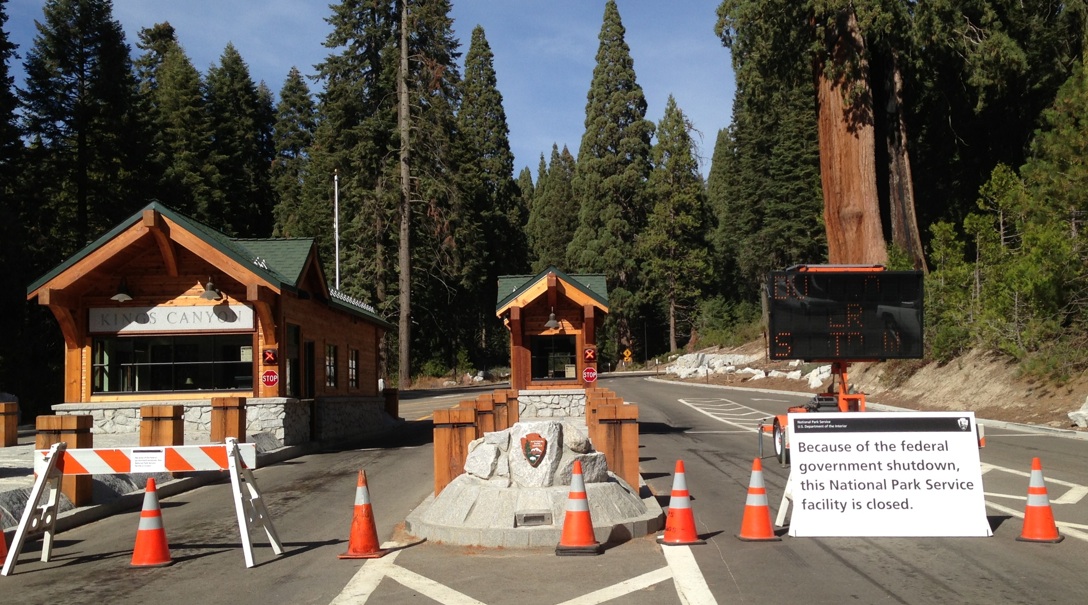
Entrance To Kings Canyon NP
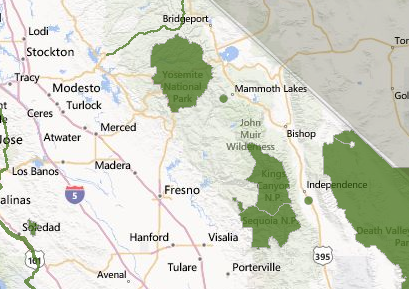
After 16 days of being shut down by the drama in Washington – the Central Valley’s largest tourist draws have re-opened for business.The news is welcome by the Valley’s gateway communities, at the base of these world famous national parks – Yosemite,Kings Canyon, Sequoia Park and Sequoia National Monument – who have been hard hit by visitor cancellations, job layoffs and big financial losses said to be in the millions.Yosemite receives an average of nearly 4 million visitors a year meaning as many as 150,000 tourists were turned away during this 16 day period. Sequoia and Kings Canyon get around 1.7 million tourists a year combined. Parks’ spokesperson Dana Dierkes says that Sequoia gets about 4000 visitors a day who want to visit the Big Trees during October meaning that perhaps 64,000 tourists were turned away in the past several weeks.The news that the parks were shuttered has reverberated in Europe where some long-made plans to visit the Western US this Fall are now long-gone despite the end to the shutdown. A state tourist industry exec says the shutdown has had a “negative impact on current international and domestic travel, as well as future bookings.”
“Early October is a huge time for visitors – particularly Europeans” says Sequoia Natural History Association director Mark Tilchen. The nonprofit group has felt the pain itself laying off 13 staffers during the government shutdown. Tilchen estimates the organization that offers educational, interpretation, research and the natural and historic preservation in these parks lost about $80,000 in revenues from visitors not spending money entering Sequoia’s Crystal Cave, run by the group, or at parks gift stores where the SNHA gets a cut.
Echoing what Three Rivers merchants said about their summer business Tilchen says Crystal Cave visitation was up 5% this summer but that the “closure in last few weeks in October have erased that.”
Yesterday SNHA hosted a dinner for laid off employees of the Park as a morale booster says Tilchen that turned into a celebration once news came out – folks were going back to work.
That’s good news for the Parks private concessionaires particularly Delaware North with National Park facilities in both Sequoia and Yosemite that were closed along with lodges in Grand Canyon and Niagara Falls.
Inside Yosemite,Kings Canyon and Sequoia boundaries 7 hotels where shut down for some period but finally open late this week.
In the community of Three Rivers the owner of one the popular motels, Glenn McIntyre of the Gateway Lodge, led a letter writing campaign to lobby our congressmen to end the budget standoff.
At a community meeting on the shutdown National Parks spokesperson Dana Dierkes stated that in October about 4000 visitors enter the park on a daily basis. The shutdown furloughed 284 NPS employees while 63 continued to work.
How They Voted
The congress members representing the parks include the GOP’s Devin Nunes who voted in favor of re-opening the government this week while another Republican – Tom McClintock who represents the Yosemite area – voted no. The votes reflect the split in the Republican party. Also voting yes to re-open were he GOP’s Kevin McCarthy of Bakersfield and the 21th District’s David Valadao while Jeff Denham of Oakdale voted no.All Democrats voted yes.
Another Three Rivers hotel owner Buckeye Lodge’s Dennis Villavicencio added that the foothill community’s businesses were ”bleeding money right now” that will never be recovered, he told the Three Rivers newspaper.
Taxes Lost
The sudden cut in revenues has hurt private business as well as the cities that depend on that spending.Tulare County’s travel impacts were nearly $400 million in visitor spending 2011 according to a Dean Runyon Associates study – with tax receipts of nearly $25 million.
Kern and Tulare County gateway towns near the Sequoia National Monument were also affected by the closure. Ironically, many foreign visitors turned away at Sequoia Park headed out to see the Giant Sequoias in lesser known reserves like Tulare County’s Balch Park and the state park Mountain Home – both near Springville.
The impact on the communities surrounding Yosemite was compounded by September’s RIM Fire that scared visitors away during the height to the travel season.
During the shutdown Yosemite Park was called a “ghost park” by one employee,Dan Williams quoted in the Bee as motorists who did use the highway to Tioga Pass were warned not to stop – even for a photo.
“I remember there was a Japanese family that arrived and there was a grandmother in the back of the sedan and she wanted to see a giant sequoia,” Williams said. “I remember having to say, ‘No, you can’t do that,’ and turn them around, and they got so close.”
If the unexpected shutdown ruined visitor plans it was tough for businesses who service the Yosemite visitor economy.
The Mariposa Chamber of Commerce released this statement on the financial impacts on October 8.
“With Yosemite Gateways still reeling from the Rim Fire, a government shutdown that forces Yosemite National Park to close will hit this region with a one two punch that will have crippling effects to our communities. It will take years to recover. Some businesses may not even survive.
The trickle down impact from over 1600 employees being laid off or furloughed from both the National Park Service and the Concessionaires inside that park will add to the disastrous effect this government shutdown yields on our local businesses. For our small rural community this equates to approximately 25% of our workforce. These unintended victims will have to hold off on purchases, cut back on simple things like dining out, and perhaps even feel it necessary to delay medical treatments. Thus deepening the effect of the government closure has on all of us.
When this happened seventeen years ago, it was winter time. We are still on the high end of our shoulder season, plus we need to account for seventeen years of inflation. Therefore, we can only anticipate the damage to be the same if not worse than it was in 1995. Then lodging occupancy dropped by 80% in Mariposa County. The concessionaire inside Yosemite National Park lost between $200,000 and $300,000 a day with hundreds of thousands more being lost daily from the gateway’s outside of Yosemite.”
That includes Fresno that advertises itself as the gateway to Yosemite and includes the Yosemite name in their airport. The Dean Runyan study says Fresno had 2011 travel spending of $1.23 billion and tax receipts of some $81 million. Travel related employment tops 12,250.
Mariposa Chamber executive director Kathy McCorry says earlier this week some lodges near the park had just a 5% occupancy as visitors trying to enter the park were turned away unless they simply drove through on the way to Hwy 395 on the state’s east side.
The same Dean Runyan study says visitor spending in Mariposa County in 2011 was about $356 million with tax receipts of $22 million.
Now that the gates are open McCorry says starting today the chamber will launch a massive media campaign with the help of a newspaper and TV station offering free exposure to get the visitors coming back.People who complain about the crowds in Yosemite might want to take this unique opportunity.
“All Trails Lead To Mariposa” is the kickoff campaign.
Mariposa County needs the money.The Dean Runyan study says 92% of Mariposa’s tax revenues comes from visitor spending.
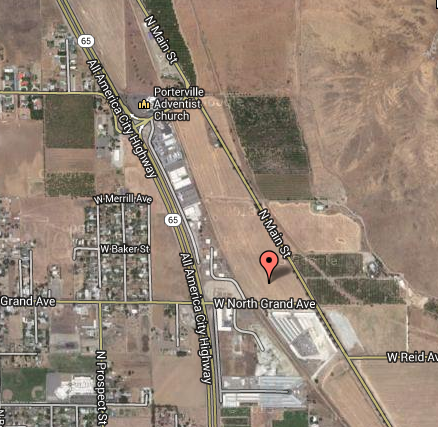
Porterville:Immodo Solar proposes annexation of approximately 10.5 acres of an island into the City of Porterville to accommodate development of three megawatt solar facility, and requires a General Plan amendment to the Industrial land use classification as well as a zone change to General Industrial. The existing planned General Plan land use and zoning for the subject site is General and Service Commercial. The project is located at the northwest corner of North Main and North Grand Avenue; the area is a portion of an unincorporated island in northern Porterville and is substantially surrounded by the City limits. Tulare Bottled Milk Co Wins Award
TULARE, CALIF. — Top O’ The Morn Farms,Inc.,a farm-fresh bottled milk home delivery company located in Tulare, Calif., recently received two prestigious awards at the World Dairy Expo Championship Dairy Product Contest in Madison, Wis.
Top O’ The Morn Farms took first place with Reduced Fat White Milk in the Open Class Pasteurized Milk category and third place in the Low-fat Chocolate Milk category with Reduced Fat Chocolate Milk.
The company was started by Ron and Evie Locke in October 2012 as a glass-bottle home delivery milk business in the heart of California’s dairy country and now delivers fresh milk and other dairy products in six cities.
“Our family has always taken pride in the milk our cows produce and the way we treat our animals,” said Ron Locke, CEO of Top O’ The Morn Farms. “Now that we are processing and marketing our own milk, it is an honor to receive this recognition. To do so against products from throughout North America makes us especially proud. It really validates that our efforts have created a high quality and great tasting product.”
Hanford Studies Sales Tax To Aid Public Safety
Hanford City Council will hold a special meeting October 29 to discuss implementing a sales tax measure to support public safety. Other Valley towns including Visalia have approved a similar addition to the sales tax by a vote of the people. The city is preparing to welcome Costco to town, a huge sales tax generator with many of the shoppers from out of town.
Cal Trans Funds 198 Expressway Study
CalTrans has funded $220 thousand to examine the possible expansion of Hwy 198 from two lanes to four from NAS Lemoore west to Highway 5. The study has the support of Kings County business interests as well as public officials. The study is expected to begin in early 2014 and be completed by February 2016.
Kings Council of Governments director Terri King says the study will look to collect data to support the need widen the 20 mile two lane stretch built with almost no shoulders,.”We see some major economic development benefits for everyone along 198″ noting that Fresno COG and Tulare’s TCAG also support the project that could aid both travelers and shippers that could use this major artery. King says any funding is likely to be “incremental.”
Dinuba Plans Business Incubator Center
Dinuba City Manager Ed Todd says the council has approved a plan to re-brand their Vocational Center as a business incubator to spur local start ups.The center may have room for both training through Reedley college and actual business locations for new companies for a short period as well as a possible commercial kitchen to encourage food related business.
Todd reports the new Kaweah Delta satellite medical center is under construction in town as well as a new DeVita dialysis clinic.

 Rio Tinto Will Lay Off 234 in Boron This Month
 Tehachapi Cement Plant Will Stop Using Coal.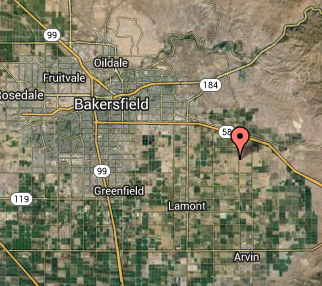















 Gateway Communities Lose Millions Of Dollars